
Flowering trees with pink blossoms bring beauty, color, and seasonal charm to any garden, park, or landscape. Whether you’re planning a new garden, looking for the best ornamental tree, or simply love vibrant spring blooms, choosing the right pink-flowering tree can make a big difference. In this article, you’ll learn 18+ flowering trees with pink blossoms, along with their names, pictures, growing tips, and unique features. By the end of this article, you’ll know which pink flowering trees are best for your climate, garden size, and landscaping style, making it easier to pick the perfect tree for a stunning outdoor space.
Flowering Trees with Pink Blossoms
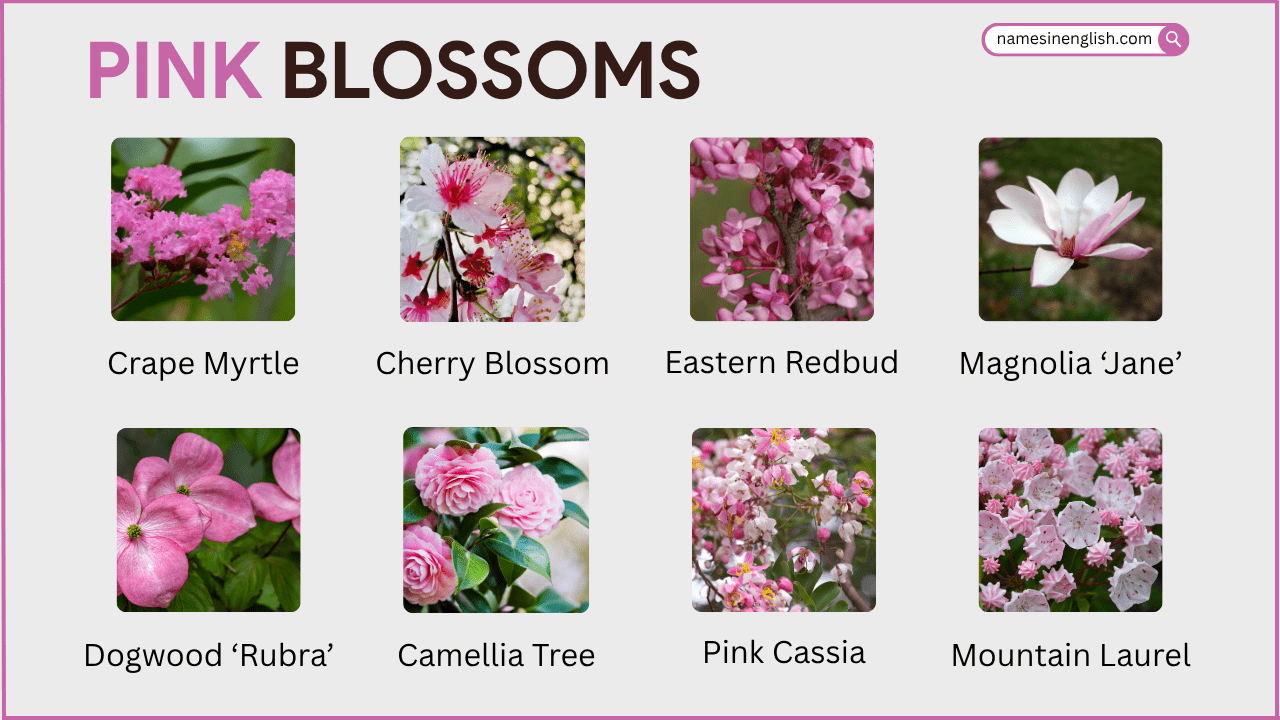
1. Cherry Blossom – Flowering Tree with Pink Blossoms
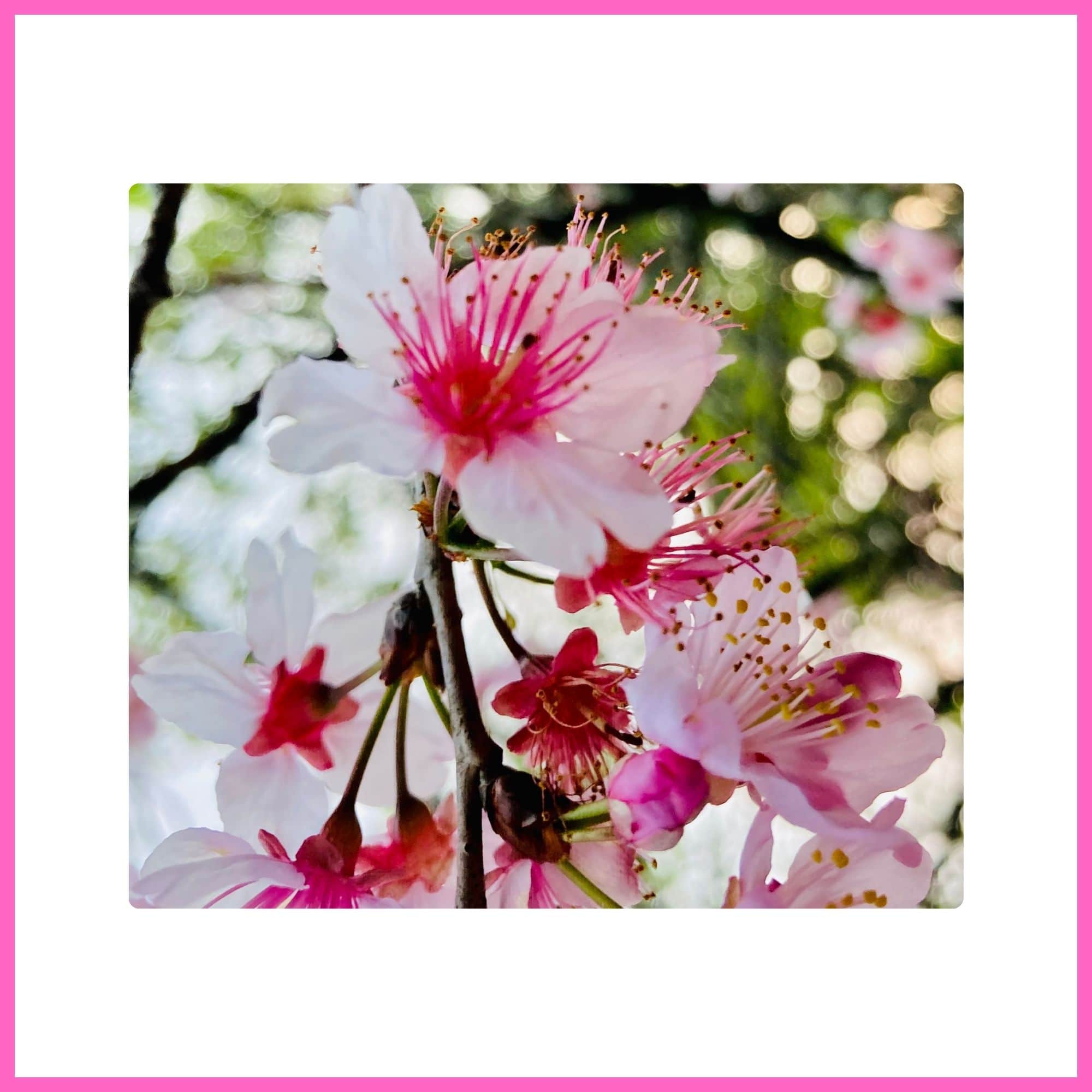
Few sights are as breathtaking as a cherry blossom tree in full bloom. These trees, often seen in Japan, Korea, and Washington D.C., burst into clouds of soft pink petals that symbolize renewal and hope. The most popular species, Prunus serrulata, thrives in temperate climates and blooms between March and April.
Cherry blossoms prefer full sun and well-drained soil, making them ideal for parks and open landscapes. While their flowers last only a few weeks, they create an unforgettable display that attracts thousands of visitors annually. Beyond beauty, cherry blossoms also hold deep cultural meaning, reminding us of life’s fleeting moments. Planting one brings elegance, serenity, and timeless charm to any garden.
Bloom time: March to April
Ideal for: Temperate climates with clear seasonal change
Why plant it: Stunning seasonal display, great for photography
USDA Zones: 5–8
2. Eastern Redbud – Small Tree with Vibrant Pink Blossoms
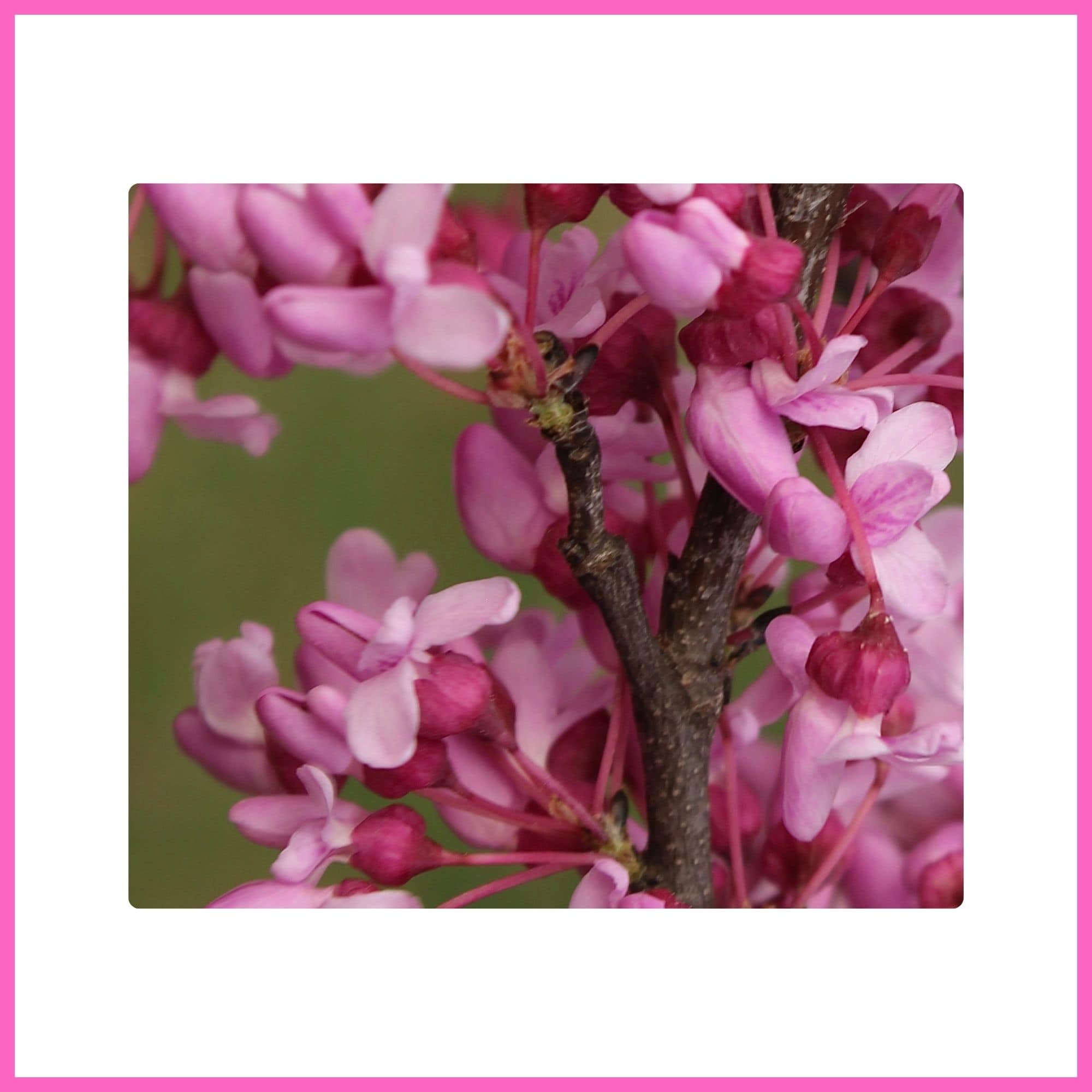
The Eastern Redbud (Cercis canadensis) is a charming small pink flowering tree that paints forests and gardens in magenta-pink hues every spring. Native to North America, it flowers before its heart-shaped leaves appear, creating a glowing effect across landscapes.
Redbuds thrive in full sun to partial shade and tolerate various soil types. Their early blooms attract bees and butterflies, adding life and color to your outdoor space. Growing up to 30 feet, it’s perfect for smaller gardens or front yards where space is limited. Easy to maintain and visually striking, the Eastern Redbud proves that even compact trees can deliver a grand spring performance.
Bloom time: March–April
Ideal for: Woodland edges, front-yards, smaller garden spaces
Why plant it: Early spring purple-pink explosion, attracts pollinators
USDA Zones: 4–9 (varies by cultivar)
3. Magnolia ‘Jane’ – Evergreen Pink Flowering Tree
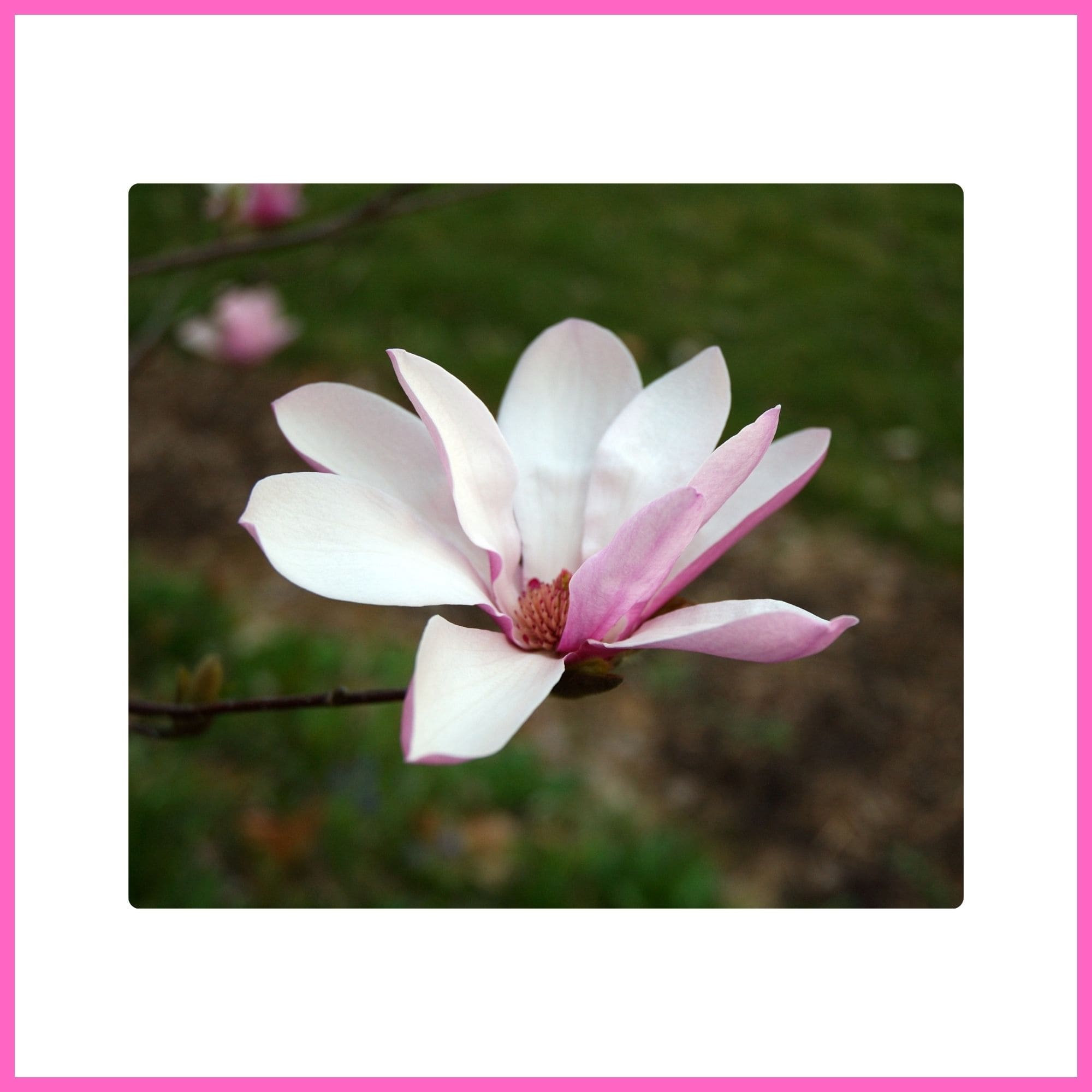
Magnolias are ancient and magnificent, and the hybrid variety Magnolia ‘Jane’ stands out for its fragrant, tulip-shaped pink blooms. This semi-evergreen tree blossoms in early to mid-spring before its leaves fully unfold, filling the air with a sweet aroma.
Magnolia trees prefer slightly acidic, well-drained soil and a sunny or partly shaded location. Their glossy leaves and large flowers make them stunning ornamental centerpieces. ‘Jane’ magnolias reach about 10–15 feet tall, making them suitable for smaller landscapes. The blend of evergreen foliage and dramatic pink blossoms ensures year-round appeal and springtime splendor in any garden.
Bloom time: Early to mid-spring
Ideal for: Small to medium gardens, partial shade situations
Why plant it: Large fragrant pink blooms before leaves appear
USDA Zones: 5–9
4. Crabapple – Flowering Tree with Pink and White Blossoms
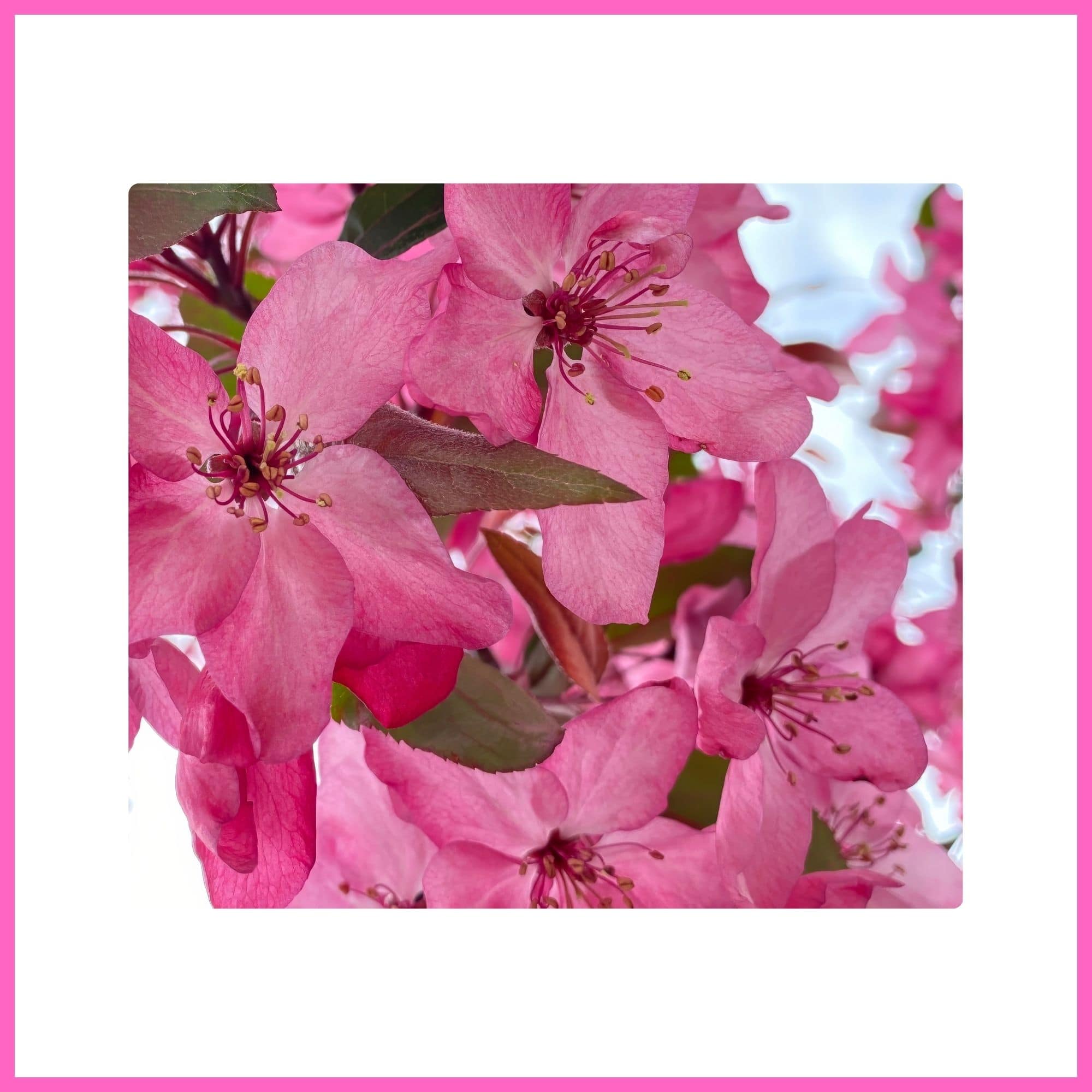
Crabapple trees (Malus spp.) are among the most versatile flowering trees with pink blossoms. They offer beauty in every season pink flowers in spring, small ornamental fruits in fall, and colorful foliage as the year closes.
These trees grow best in full sunlight and well-drained soil, thriving across temperate zones. Their spring blooms range from pale pink to deep rose and attract pollinators like bees and butterflies. Beyond aesthetics, the fruits also feed birds through winter. Hardy, adaptable, and long-lived, crabapple trees bring structure and continuous interest to any garden or park.
Bloom time: April–May
Ideal for: Temperate climates, mixed gardens
Why plant it: Dual beauty of pink blossoms + decorative fruit
USDA Zones: 4–8
5. Dogwood ‘Rubra’ – Pink Flowering Tree for Shady Gardens
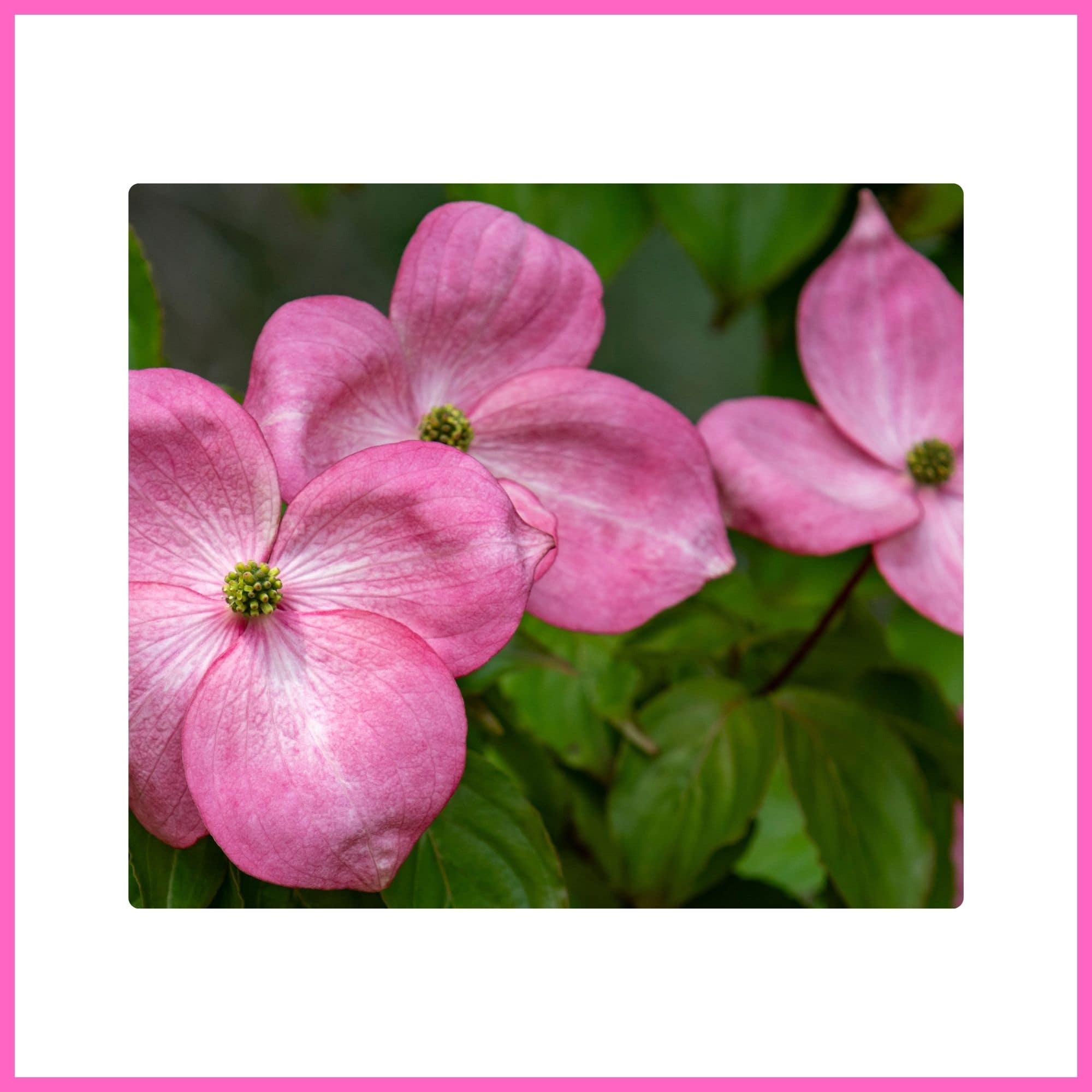
The Cornus florida ‘Rubra’, or pink dogwood, is a classic choice for woodland and shaded gardens. Its pink bracts often mistaken for petals surround tiny yellow-green flowers and create a gentle, glowing canopy each spring.
Blooming in April, this small to medium tree reaches 15–25 feet and thrives in partial shade with moist, well-drained soil. Beyond its springtime charm, dogwoods provide red berries in fall and lovely branching structures in winter. Few trees offer such four-season interest. ‘Rubra’ is perfect for adding subtle elegance to both formal landscapes and natural forest edges.
Bloom time: April
Ideal for: Partial shade, woodland gardens
Why plant it: Soft pink bracts (much-admired) plus fall interest
USDA Zones: 5–8
6. Pink Trumpet Tree – Flowering Tree with Pink Blossoms
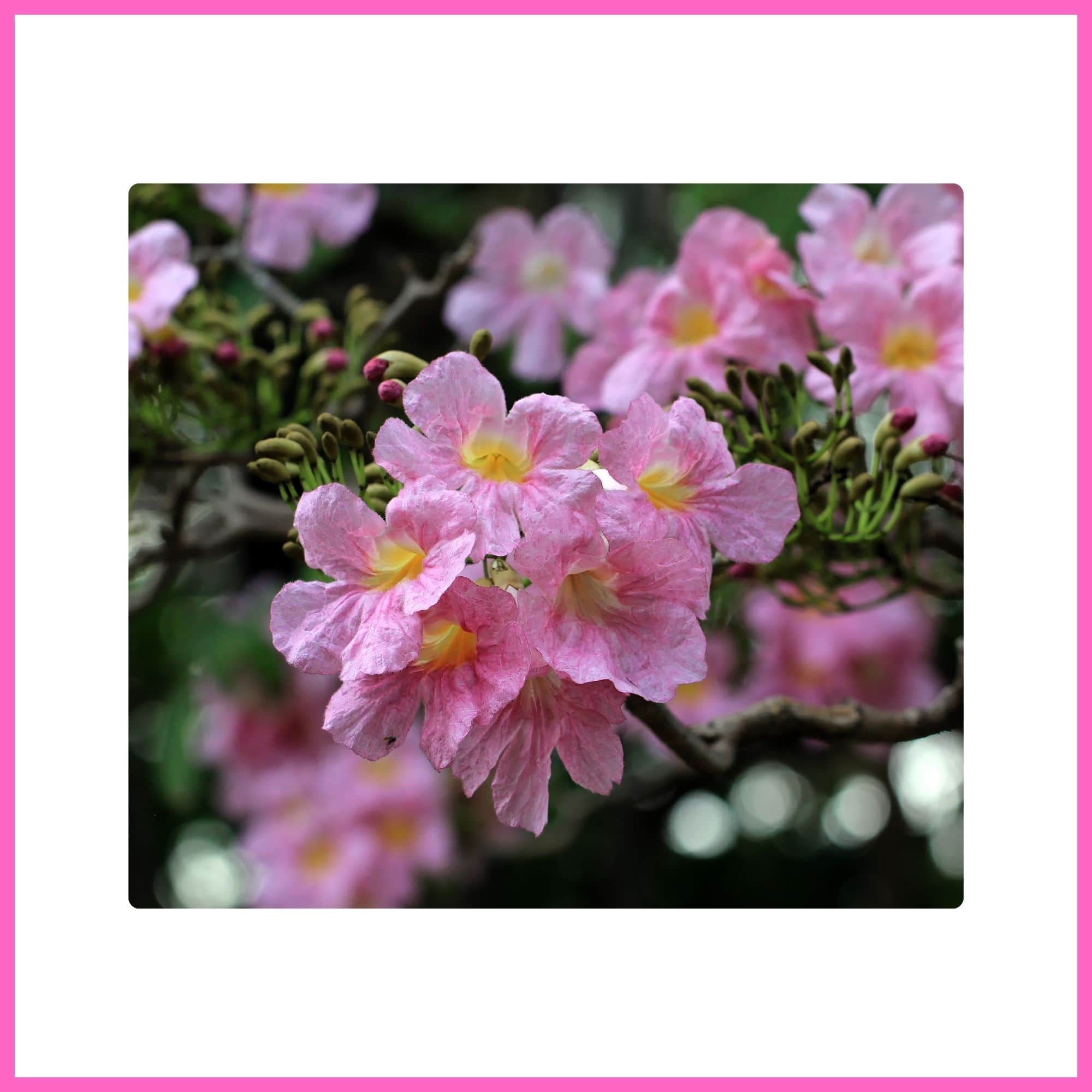
Known scientifically as Tabebuia rosea, the Pink Trumpet Tree transforms streets and gardens into pink paradises. Native to Central and South America, it bursts into masses of rosy-pink trumpet-shaped blooms in late winter or early spring.
This tree thrives in warm climates and full sun, reaching heights of 30–50 feet. Its light fragrance and long bloom duration make it a favorite ornamental species in tropical cities. Once mature, it requires little care and provides excellent shade. With its tropical charm and impressive floral display, the Pink Trumpet Tree brings exotic beauty to any sunny landscape.
Bloom time: Late winter–spring
Ideal for: Warm climates, full sun, tropical/subtropical landscapes
Why plant it: Rosy trumpet-shaped blooms, dramatic street tree
USDA Zones: 9–11
Beautiful Flowering Trees with Pink Blossoms
7. Camellia Tree – Evergreen Pink Flowering Tree for All Seasons
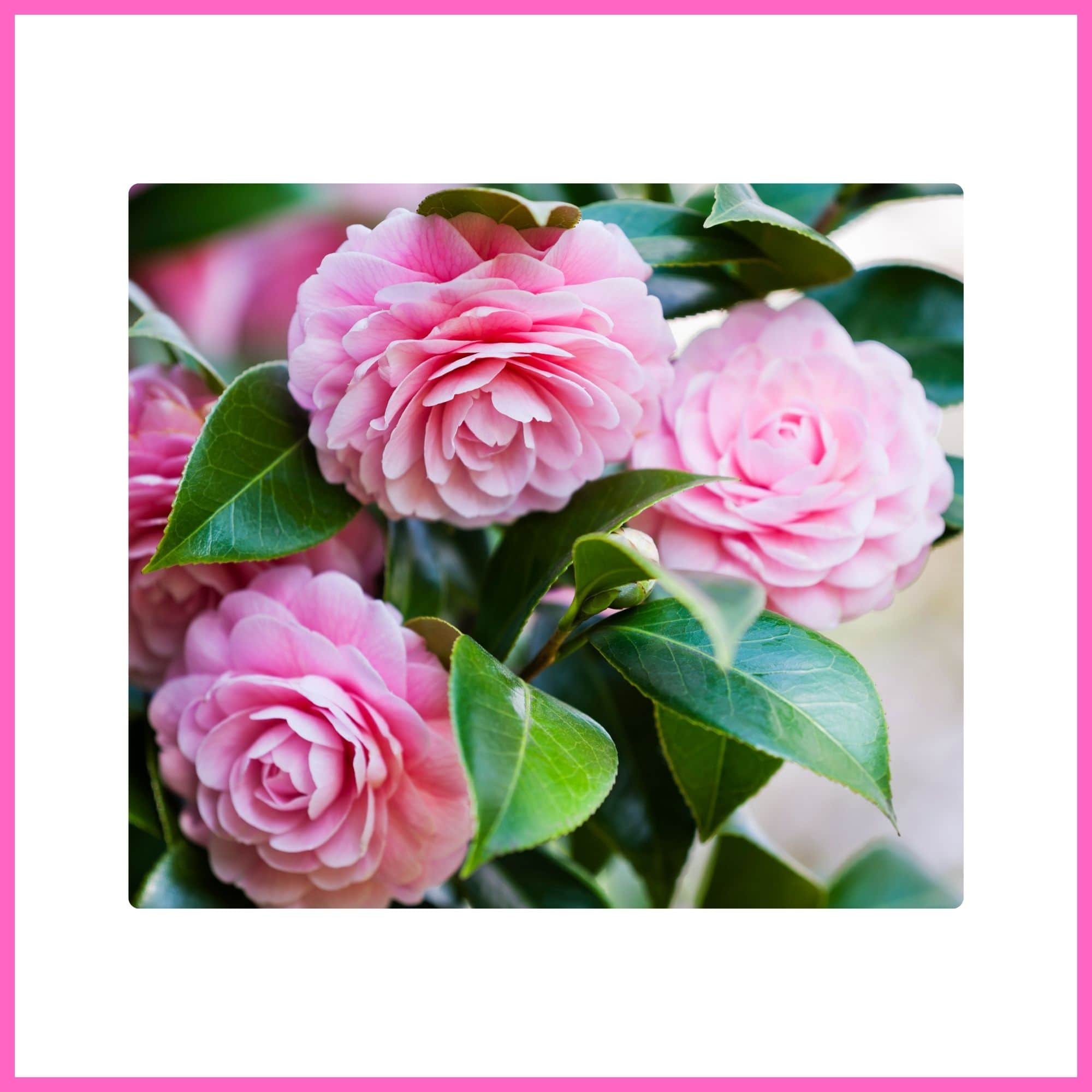
The Camellia (Camellia japonica) is an evergreen pink flowering tree that blooms gracefully from late winter through spring. Its lush, glossy green leaves stay year-round, while rose-like blossoms add color when most plants are still asleep.
Camellias prefer partial shade and slightly acidic, well-drained soil. They’re popular in Japan, China, and southern parts of the U.S., where they adorn gardens with elegance. The flowers range from pale pink to deep rose and last for several weeks.
What makes Camellia special is its timeless beauty and resilience capable of thriving for decades with minimal care. Each bloom looks like a hand-painted rose, giving your garden a sophisticated, tranquil touch all year long.
Bloom time: Late winter to early spring
Ideal for: Semi-shade, sheltered garden corners
Why plant it: Evergreen foliage plus rose-like pink blooms when little else is flowering
USDA Zones: 7–9
8. Kousa Dogwood – Flowering Tree with Pink Blossoms
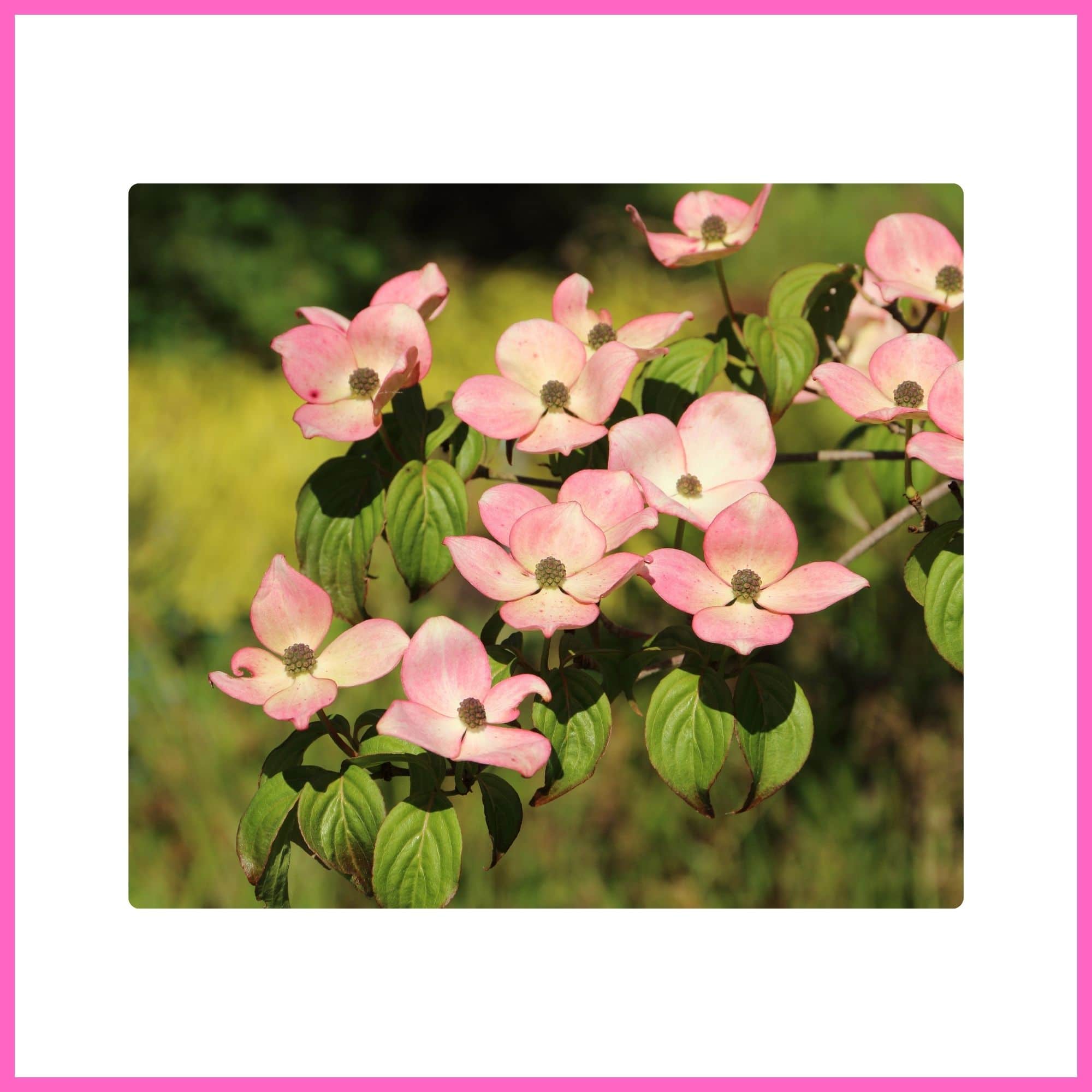
The Cornus kousa ‘Satomi’, or Kousa Dogwood, is a small flowering tree with pink blossoms that combine grace and durability. It produces star-shaped, blush-pink bracts in late spring, followed by red fruit that attracts birds in autumn.
This species is perfect for urban or suburban gardens because it tolerates poor soils and pollution. Its layered branches form an attractive shape even without leaves. The mild fragrance of its flowers and red-purple fall foliage make it an all-season ornamental gem.
If you want a refined pink flowering tree that’s easy to maintain and offers beauty across seasons, the Kousa Dogwood is a fantastic choice for compact landscapes.
Bloom time: Late spring
Ideal for: Urban gardens, poor soils, smaller yards
Why plant it: Star-shaped pink bracts, red fruit later, reliable small tree
USDA Zones: 5–8
9. Pink Cassia – The Showering Tree with Pink Blossoms
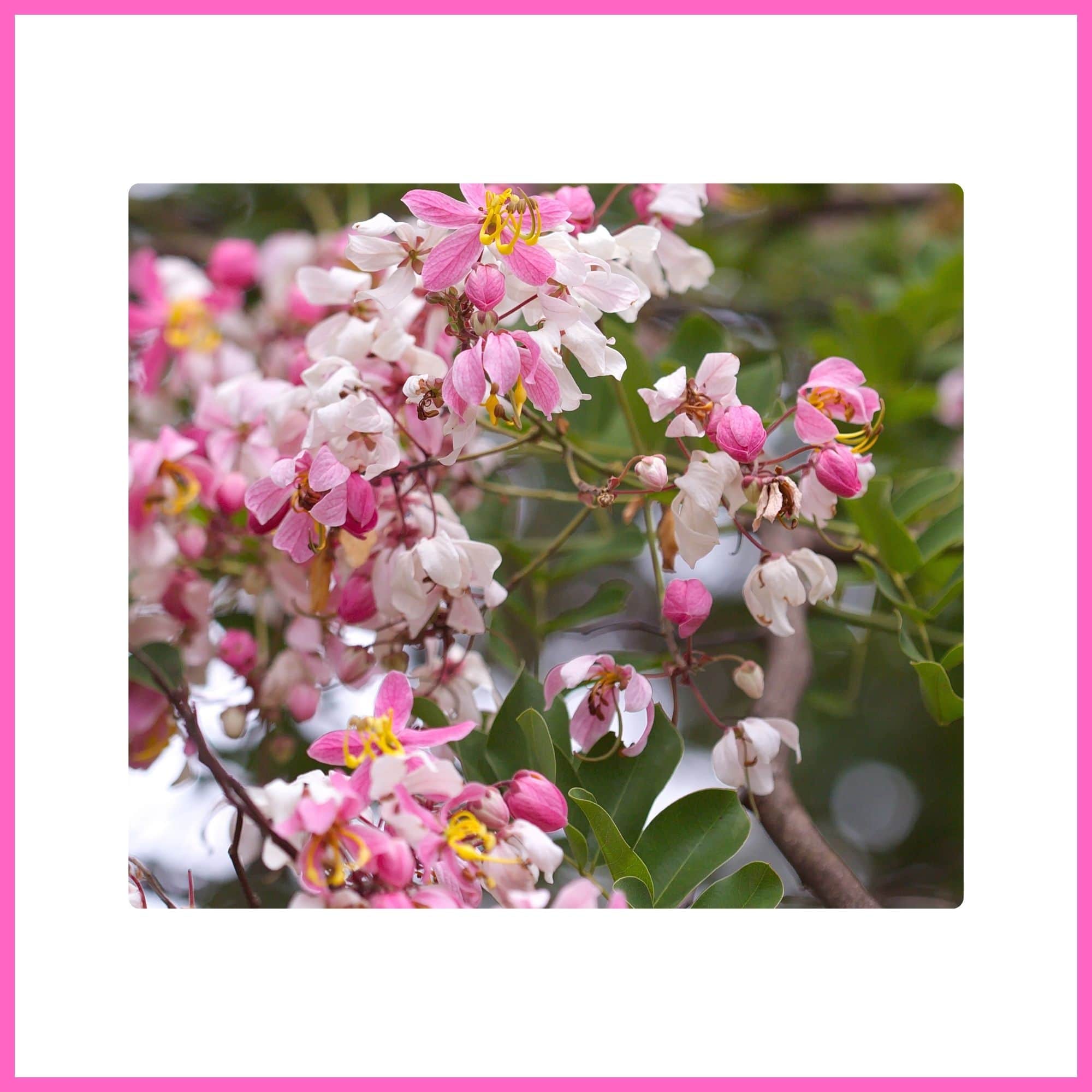
Known as the “Pink Shower Tree,” Cassia javanica is a tropical pink flowering tree that brings a spectacular display of pastel blooms. Originating from Southeast Asia, this medium-sized tree produces long, cascading clusters of pink and white flowers that resemble hanging garlands.
Pink Cassia thrives in warm, humid climates with full sunlight. Blooming from spring to early summer, it often sheds its leaves before flowering, making the pink clusters even more striking against bare branches.
Its sweet fragrance attracts bees and butterflies, making it ideal for eco-friendly landscapes. Few trees can rival the dramatic, cascading beauty of a Pink Cassia in full bloom.
Bloom time: Mid to late spring
Ideal for: Tropical to subtropical climates, full sun
Why plant it: Cascading clusters of pastel pink flowers, high-impact display
USDA Zones: 9–11
10. Persian Silk Tree – Exotic Pink Flowering Tree for Summer
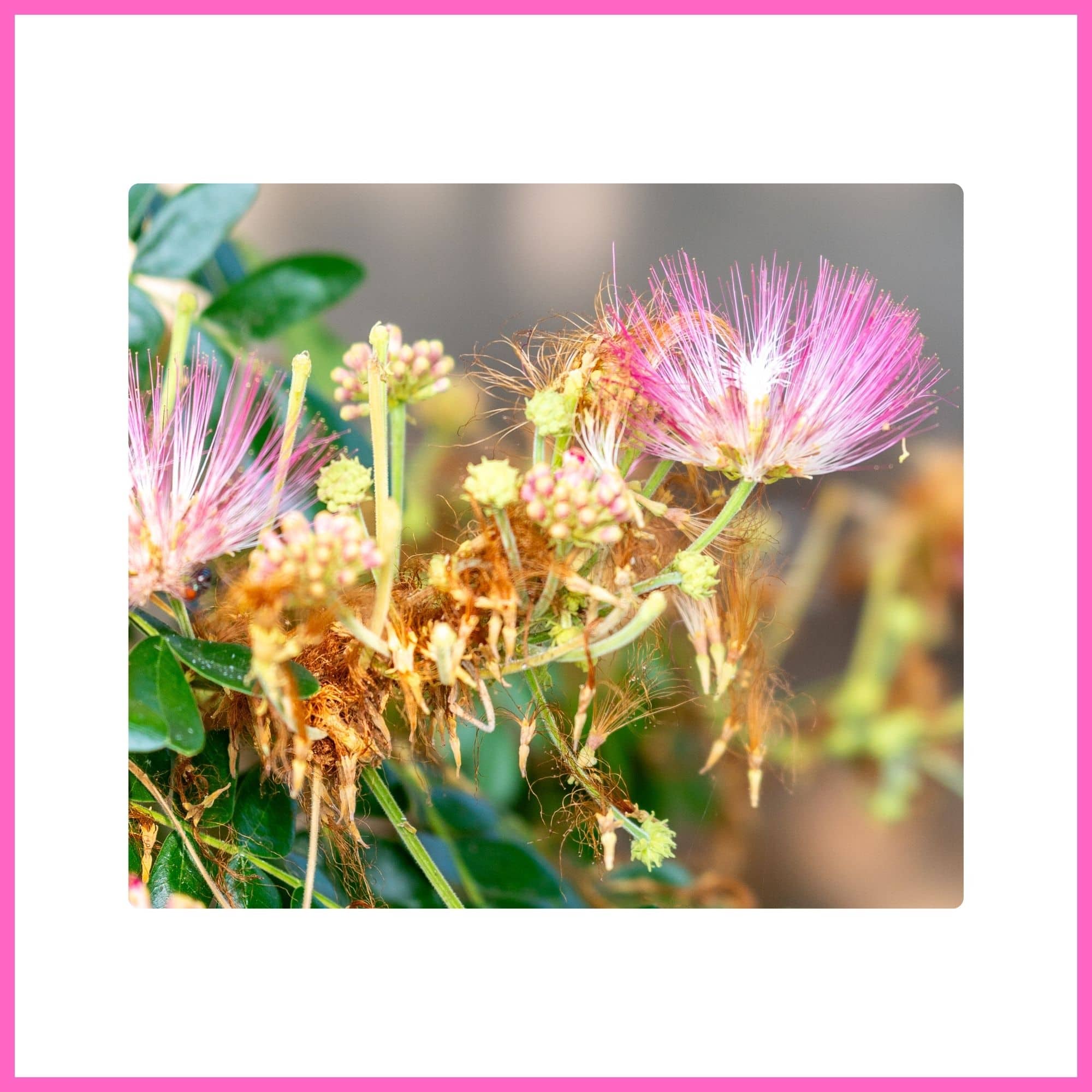
The Persian Silk Tree (Albizia julibrissin), also known as the Mimosa tree, is an exotic pink flowering tree known for its fluffy, powder-puff blooms. Native to Asia and the Middle East, it produces fragrant pink flowers that attract butterflies and hummingbirds throughout early summer.
This fast-growing tree thrives in full sun and well-drained soil, reaching up to 40 feet tall. Its wide, umbrella-like canopy provides light shade, making it a great garden centerpiece.
The Silk Tree’s feathery leaves close at night, creating a dreamy look at dusk. It’s not only beautiful but also drought-tolerant and resilient perfect for warm, dry regions where color is hard to maintain.
Bloom time: Early summer
Ideal for: Full sun, warm regions, open space
Why plant it: Fluffy powder-puff pink blooms, butterfly/hummingbird attractor
USDA Zones: 6–9
11. Mountain Laurel – Small Evergreen Tree with Pink Blossoms
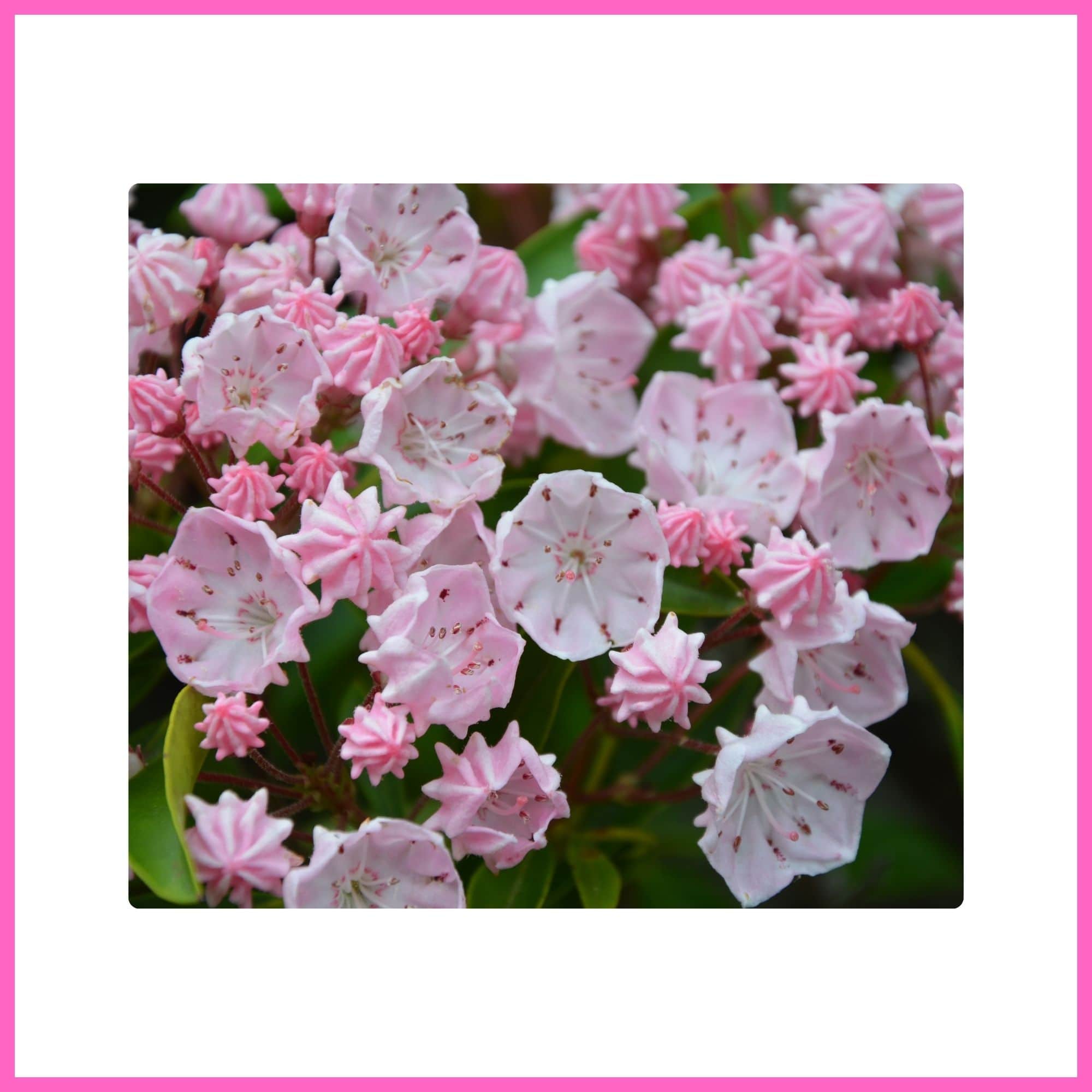
The Kalmia latifolia, or Mountain Laurel, is a compact evergreen pink flowering tree beloved for its clusters of delicate, cup-shaped blooms. Native to North America, it brightens mountain slopes and gardens alike from late spring into early summer.
Its blooms range from pale blush to deep pink with intricate patterns, resembling hand-painted porcelain. Mountain Laurel thrives in acidic, well-drained soil under partial shade similar to rhododendrons.
Despite its delicate appearance, this tree is hardy and requires minimal care once established. Its evergreen leaves, elegant flowers, and slow growth make it perfect for small gardens or natural woodland landscapes.
Bloom time: Late spring
Ideal for: Woodland or acidic soil gardens, partial shade
Why plant it: Elegant clusters of cup-shaped pink blooms, evergreen leaves
USDA Zones: 5–7
12. Pink Bottlebrush Tree – Evergreen Pink Flowering Tree for Warm Climates
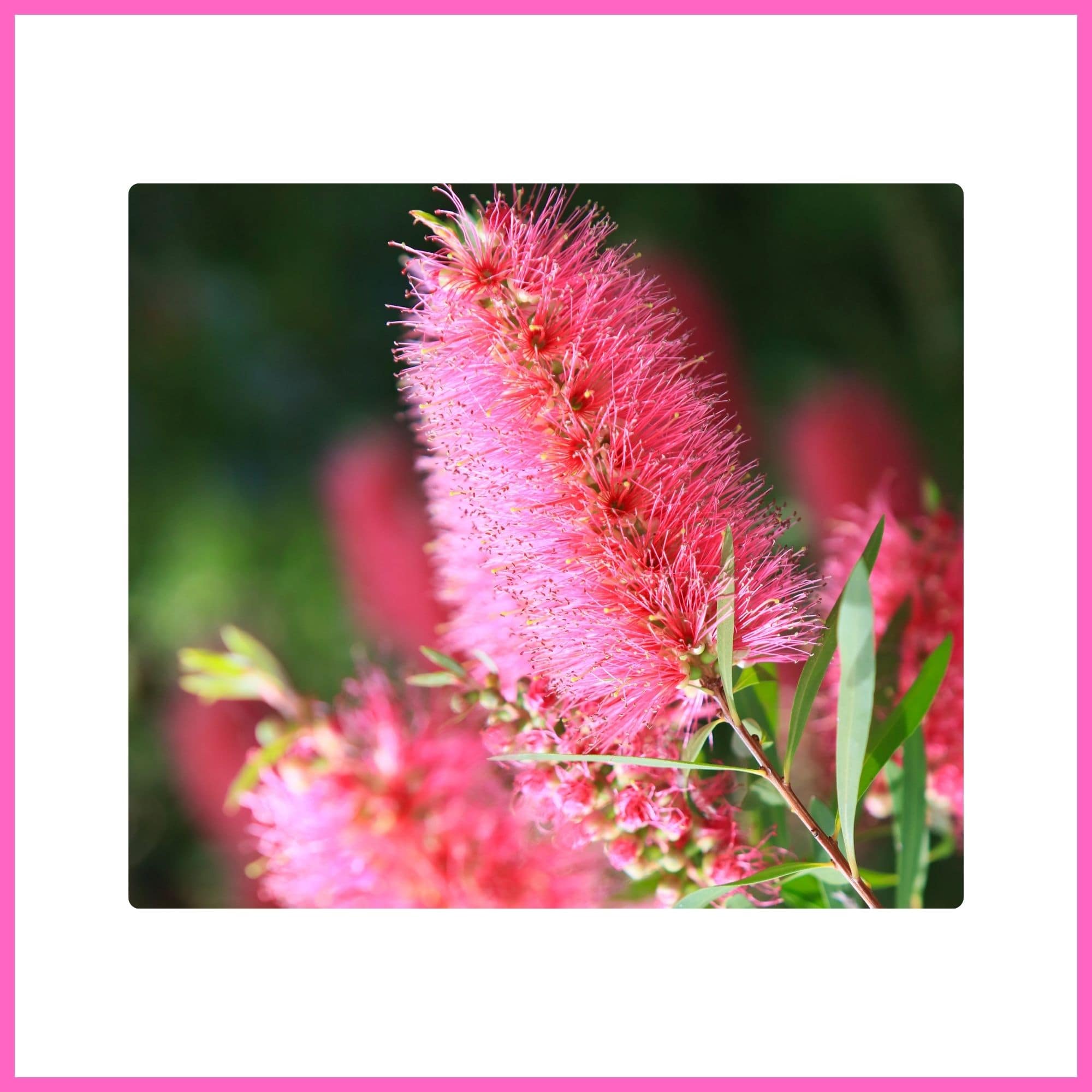
The Callistemon citrinus ‘Pink Champagne’ is a vibrant evergreen pink flowering tree native to Australia. Its cylindrical, brush-like flowers bloom in cheerful shades of pink and attract hummingbirds, bees, and butterflies.
Flowering from spring to early summer, it thrives in full sun and tolerates drought once mature. The tree also gives off a pleasant, lemon-like fragrance when touched, adding sensory appeal.
Ideal for patios, borders, or driveways, the Pink Bottlebrush Tree brings tropical color and energy to any setting. With its easy-care nature and year-round green foliage, it’s a wonderful choice for those seeking a reliable and lively pink bloomer.
Bloom time: Spring to early summer
Ideal for: Warm, full sun patios or borders
Why plant it: Cylinder brush-like pink flowers, hummingbird magnet
USDA Zones: 8–10
Rare Flowering Trees with Pink Blossoms
13. Pink Silk Floss Tree – Exotic Flowering Tree with Pink Blossoms
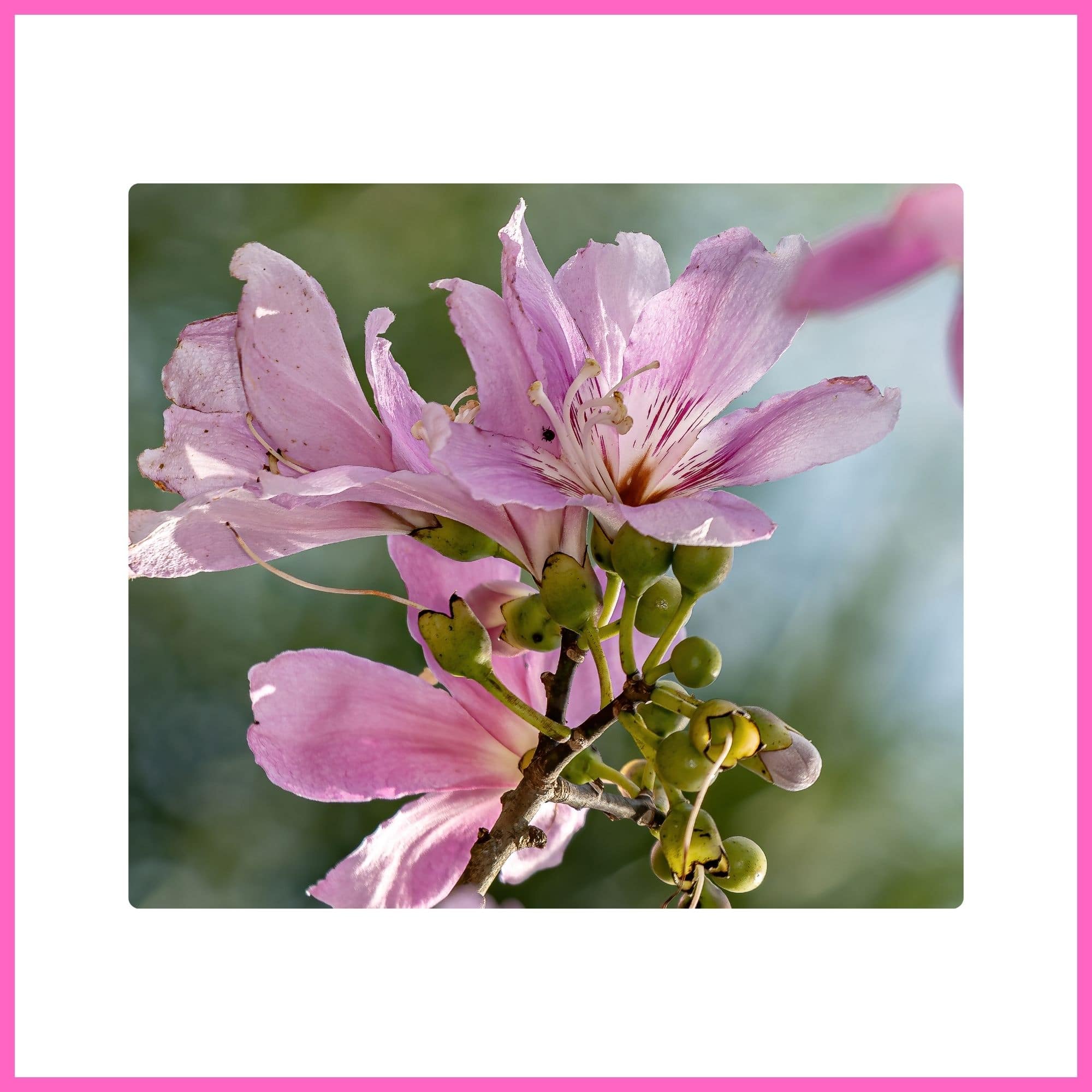
The Ceiba speciosa, or Pink Silk Floss Tree, is one of the most breathtaking tropical pink flowering trees in the world. Known for its thick, spiny trunk and massive pink-lavender flowers, this tree looks like something from a fantasy movie. Native to South America, it bursts into bloom in late summer and fall when most other trees have stopped flowering.
Each blossom has five silky petals, often striped with white and deep pink, and they can cover the entire canopy at peak bloom. The tree prefers full sun and well-drained soil, thriving best in subtropical to tropical regions.
In addition to its beauty, the Silk Floss Tree is drought-tolerant once established and can live for decades. When not in bloom, its green spiky trunk remains visually striking, adding interest year-round. Truly a showstopper, this pink flowering tree turns any landscape into a tropical wonderland.
Bloom time: Fall
Ideal for: Tropical/subtropical regions with space
Why plant it: Spiny trunk + massive pink-lavender blooms = dramatic focal point
USDA Zones: 9–11
14. Pink Magnolia ‘Susan’ – Compact Flowering Tree with Pink Blossoms
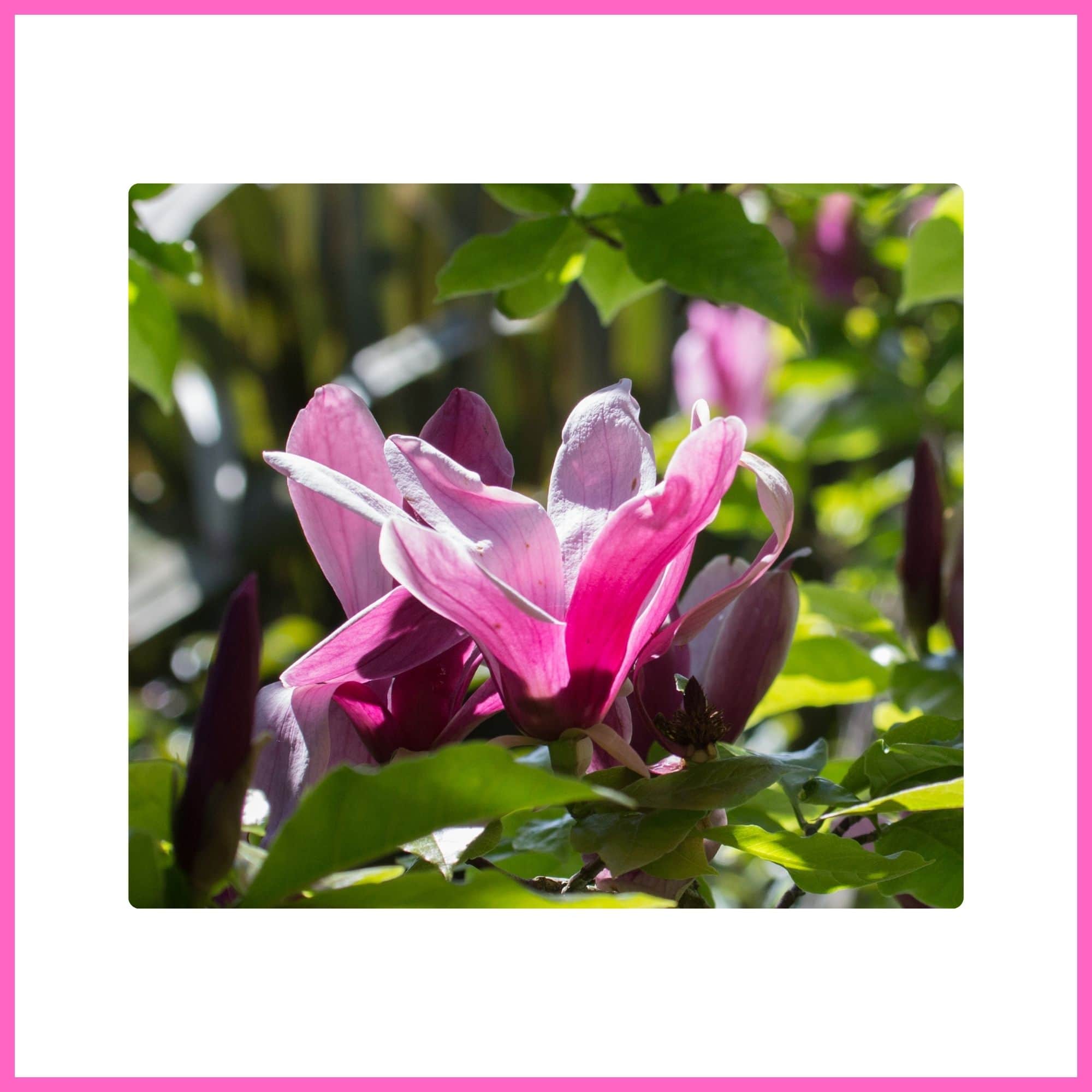
The Pink Magnolia ‘Susan’ (Magnolia liliiflora × stellata) is a stunning hybrid known for its tulip-shaped, rosy-pink blooms. It’s one of the most charming compact pink flowering trees, ideal for smaller gardens or courtyard spaces.
Unlike some magnolias that tower high, ‘Susan’ stays around 10–15 feet tall, producing its vibrant blooms in mid to late spring. Each flower opens before the leaves appear, giving the tree an ethereal glow.
The fragrance is sweet and rich, filling the air with a sense of spring freshness. Its thick, glossy leaves provide a lush background once blooming season ends. Hardy, elegant, and low-maintenance, Pink Magnolia ‘Susan’ brings sophistication and fragrance without demanding constant care perfect for home gardens seeking both beauty and ease.
Bloom time: Mid to late spring
Ideal for: Small gardens, compact landscapes
Why plant it: Tulip-shaped rosy-pink blooms, fragrant, small size
USDA Zones: 5–8
15. Peach Tree – Fruit-Bearing Flowering Tree with Pink Blossoms
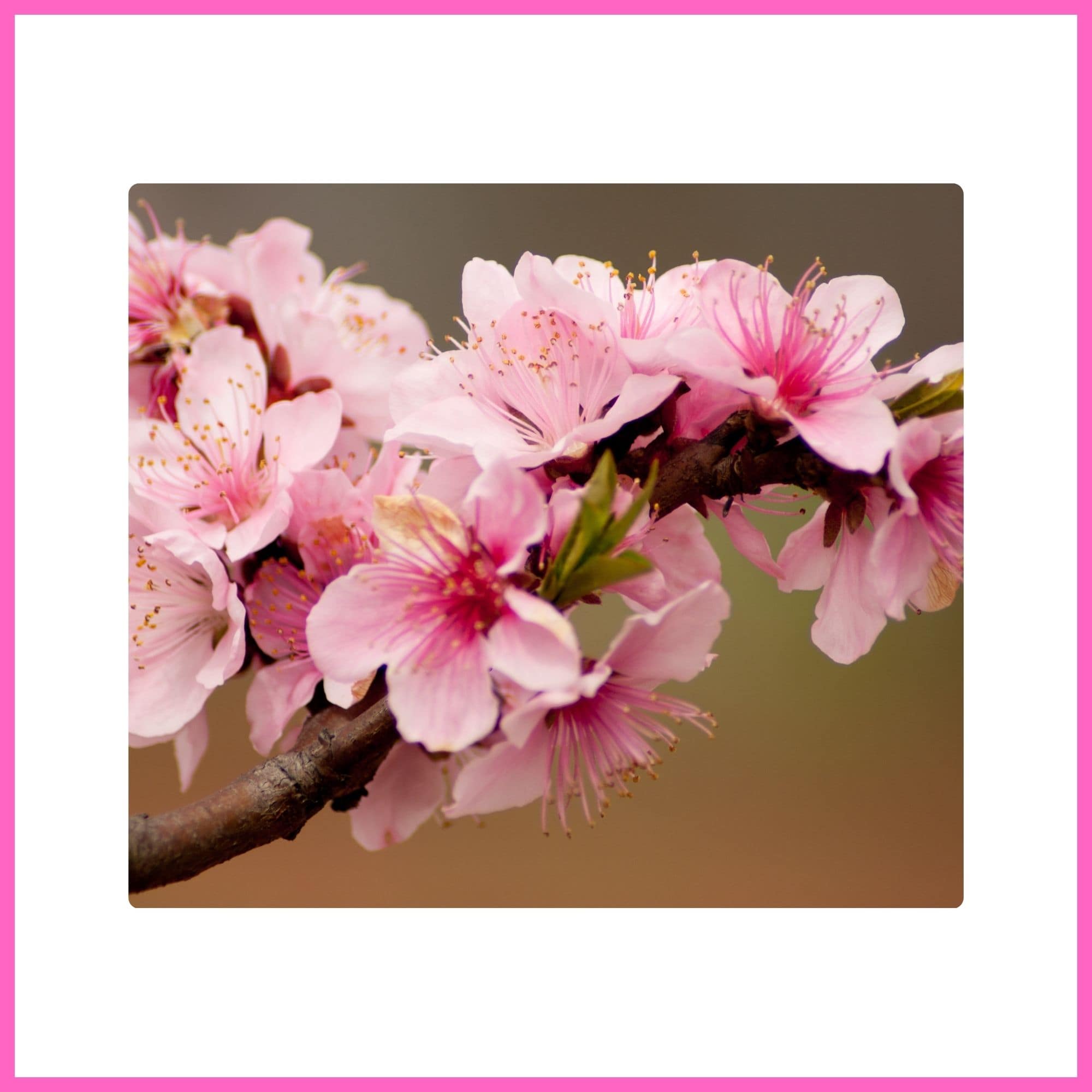
The Prunus persica or Peach Tree isn’t just about delicious fruit it’s also a breathtaking flowering tree with pink blossoms that signal the start of spring. Each year, before the leaves unfold, the branches burst into clouds of deep or pale pink flowers, filling orchards with vibrant color.
Peach trees thrive in sunny climates with well-drained soil and moderate watering. The blossoms last about two weeks, during which they attract pollinators like bees, helping ensure a good fruit yield.
For gardeners, this tree offers double the joy a spectacular floral display and sweet summer harvests. Even if you don’t care for the fruit, its early blooms make it an irresistible ornamental tree for courtyards, pathways, and open gardens.
Bloom time: Early spring
Ideal for: Sunny gardens, temperate fruit-tree zones
Why plant it: Early pink blossoms + edible fruit = dual value
USDA Zones: 5–9
16. Chitalpa ‘Pink Dawn’ – Long-Blooming Flowering Tree with Pink Blossoms
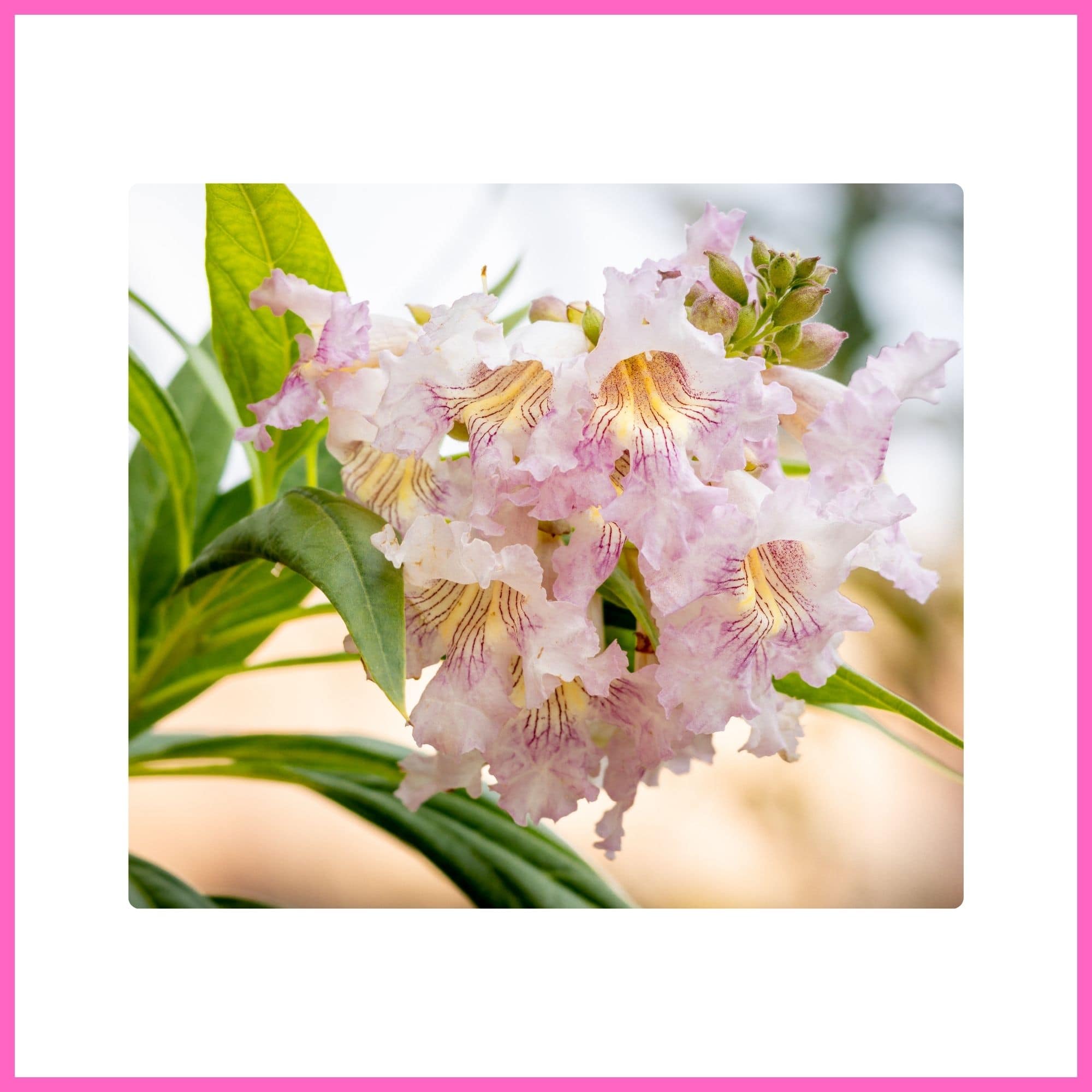
A hybrid between Catalpa and Desert Willow, the Chitalpa tashkentensis ‘Pink Dawn’ is a resilient pink flowering tree admired for its orchid-like blooms. It flowers repeatedly from late spring through fall, offering continuous color when other trees fade.
The clusters of soft pink blooms are slightly ruffled, with faint yellow streaks inside. This tree is heat- and drought-tolerant, making it ideal for regions with long, dry summers.
‘Pink Dawn’ reaches 20–30 feet tall, forming a graceful canopy that provides light shade. It’s also a favorite among hummingbirds and butterflies. For low-maintenance gardeners who crave long-lasting color, the Chitalpa ‘Pink Dawn’ is a perfect match of beauty and endurance.
Bloom time: Late spring–fall
Ideal for: Dry regions, full sun, low-maintenance gardens
Why plant it: Continuous pink blooms for months, drought tolerant
USDA Zones: 6–9
17. Pink Bauhinia – Tropical Flowering Tree with Pink Blossoms
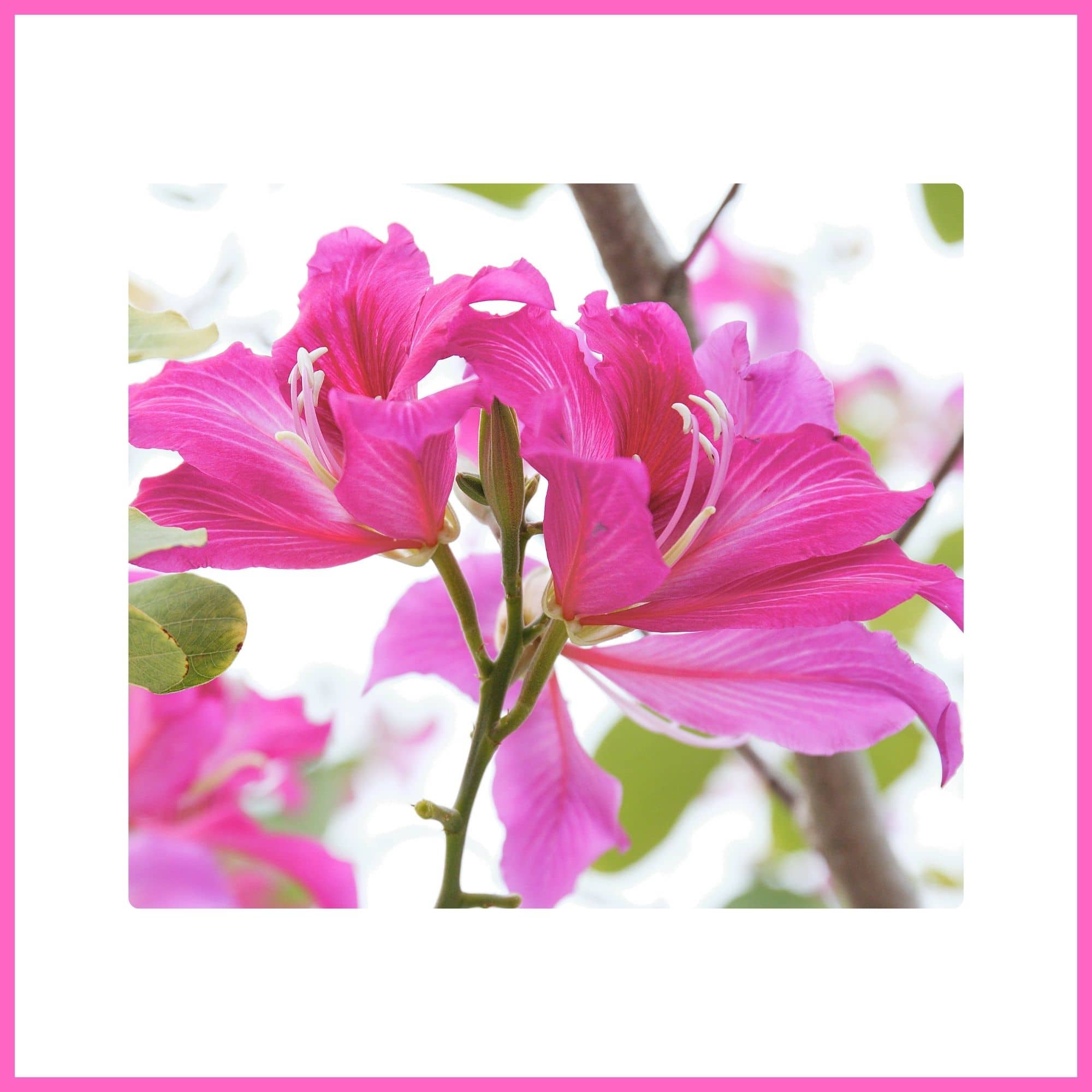
The Bauhinia purpurea, often called the Orchid Tree or Pink Bauhinia, is a semi-evergreen pink flowering tree famous across tropical regions for its orchid-shaped blooms. Its pinkish-purple flowers appear from late summer through fall, filling streets and gardens with color and fragrance.
This medium-sized tree thrives in warm, frost-free climates and enjoys full sun. Its leaves, shaped like a butterfly’s wings, add ornamental appeal even when the tree isn’t flowering.
Each bloom lasts several days and attracts bees, butterflies, and even sunbirds. The Pink Bauhinia combines tropical charm with elegance perfect for city avenues, home gardens, or large landscapes needing vibrant seasonal flair.
Bloom time: Summer to fall
Ideal for: Warm, frost-free areas
Why plant it: Orchid-shaped pink-purple blossoms cover tree, semi-evergreen
USDA Zones: 9–11
18. Rose Myrtle – Small Evergreen Pink Flowering Tree with Blossoms
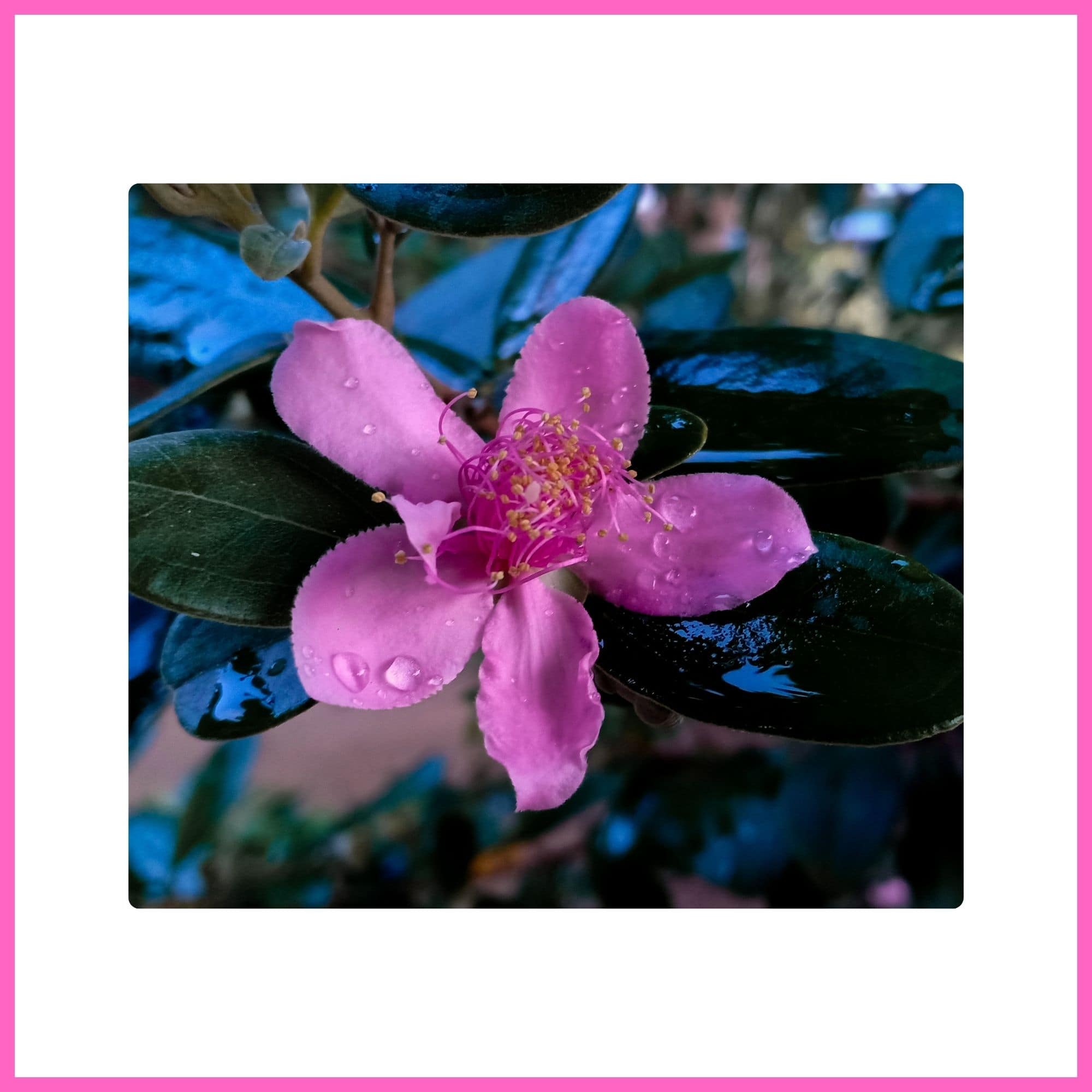
The Rhodomyrtus tomentosa, or Rose Myrtle, is a compact evergreen pink flowering tree that produces vivid pink blooms followed by small edible purple berries. Originating from Southeast Asia, it’s loved for its ability to combine beauty, fragrance, and usefulness.
Its sweet, fruity scent fills the air during its blooming season from late spring to early summer. The flowers are about 2 inches wide and contrast beautifully against the dark green leaves.
The Rose Myrtle is perfect for small gardens or as a flowering hedge. Once the blossoms fade, the berries attract birds and can even be used in jams and desserts. With its year-round greenery and bursts of pink color, Rose Myrtle is a true hidden gem among flowering trees with pink blossoms.
Bloom time: Late spring to early summer
Ideal for: Hedges or small-space gardens in warm climates
Why plant it: Pink blooms plus edible berries = both ornamental and functional
USDA Zones: 9–11
Crape Myrtle – Long-Blooming Pink Flowering Tree
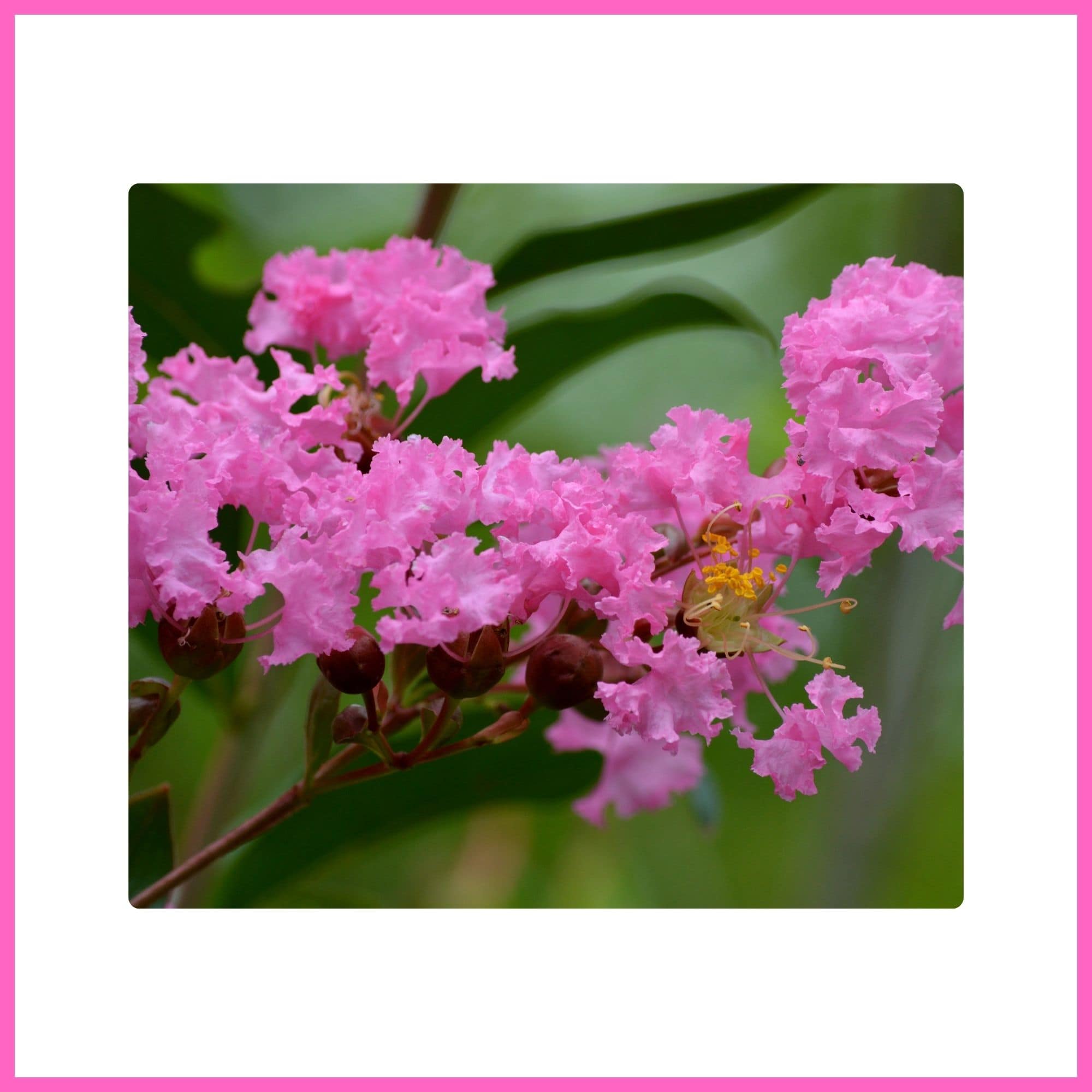
The Crape Myrtle (Lagerstroemia indica) is one of the most admired flowering trees for warm climates, celebrated for its vibrant pink, purple, red, or white blossoms that can last throughout summer and even into early autumn. Native to Asia but beloved worldwide, this hardy tree has become a staple in gardens, parks, and streetscapes due to its extended bloom time, multi-trunk beauty, and peeling, smooth bark that adds visual interest even in winter.
What makes the Crape Myrtle special is its long blooming period, often lasting up to 100 days, giving it the nickname “Lilac of the South.” It thrives in full sun and well-drained soil, and once established, it’s highly drought-tolerant. Gardeners love how easily it adapts whether you’re growing a dwarf variety in containers or a tall specimen tree along driveways. The pink-flowering cultivars like ‘Pink Velour’ and ‘Sioux’ are particularly famous for their rich magenta tones and disease resistance.
Besides beauty, Crape Myrtles are excellent for pollinator gardens, attracting butterflies and bees. Their vibrant foliage turns orange or red in fall, offering year-round appeal. With minimal care and pruning, this tree ensures a show-stopping bloom season for any sunny garden.
- Bloom time: Mid-summer to early fall
- Ideal for: Warm, sunny gardens, urban landscapes, driveways, and parks
- Why plant it: Extremely long blooming season, low maintenance, vibrant bark and foliage color
- USDA Zones: 7–9
FAQs about Flowering Trees with Pink Blossoms
Q: What’s the most popular pink flowering tree?
A: Cherry blossom trees are the most iconic worldwide for their breathtaking spring displays.
Q: Which pink trees bloom the longest?
A: Crape Myrtle can bloom for up to 3 months in summer.
Q: Are there evergreen pink flowering trees?
A: Oleander and certain tropical hibiscus varieties bloom year-round in warm climates.
Q: Do pink blossoms attract bees or birds?
A: Yes pink flowering trees are excellent for pollinators like bees, hummingbirds, and butterflies.
👉If you loved exploring these flowering trees with pink blossoms, you might also enjoy discovering other colorful blooms in our collection of flower guides:
30 Flowering Trees with White Flowers in Spring – A stunning selection of trees that light up gardens with pure white blossoms.
30 Red Flowers with Names and Pictures – Explore vibrant red flowers that make a bold statement in any landscape.
27 Brown Flowers with Names and Pictures – Discover unique brown flowers that add subtle, earthy beauty to your garden.
These related articles let you dive deeper into the beauty of colorful flowers, helping you learn more about nature’s palette while keeping your garden vibrant year-round.