
What Is the Ohio State Flower?
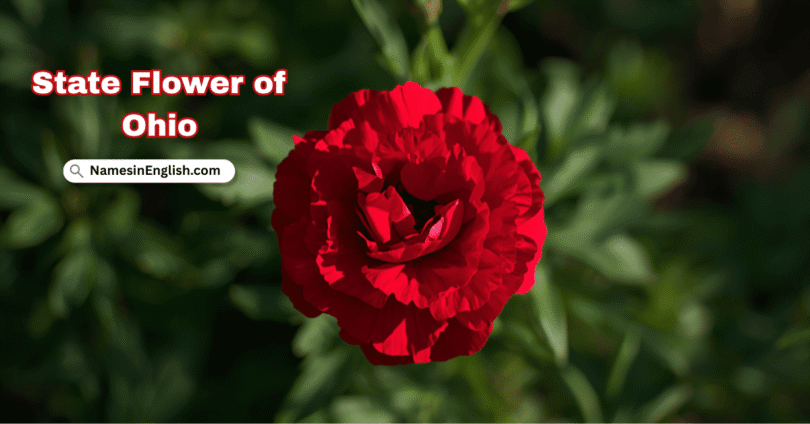
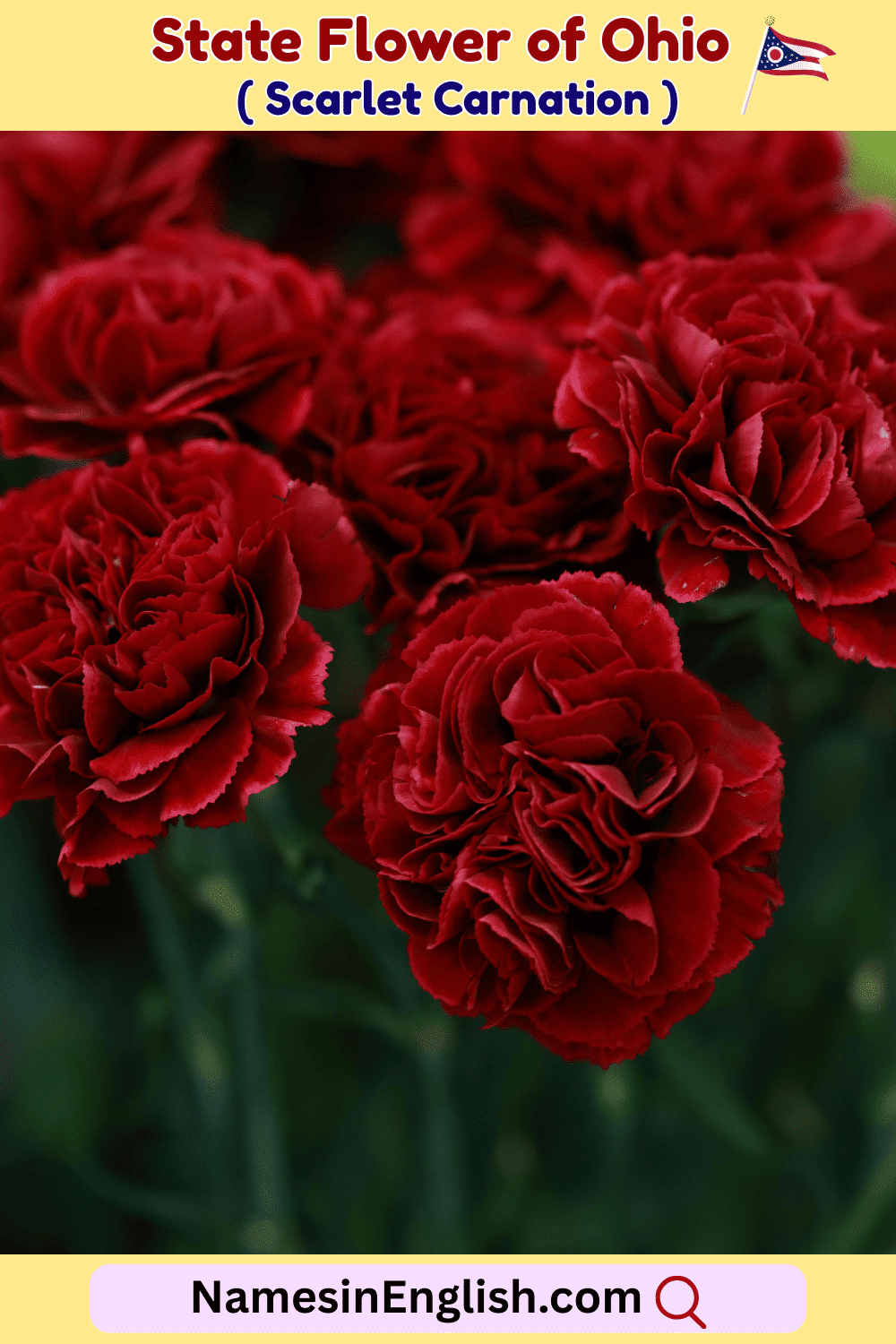
The official Ohio state flower is the Scarlet Carnation (Dianthus caryophyllus), a cultivated flowering plant known for its rich crimson-red petals and pleasant spicy fragrance. The scarlet carnation was officially adopted as Ohio’s state flower in 1904. Unlike many wildflower state symbols, this flower was selected to honor the memory of President William McKinley, who was born in Ohio and was well known for wearing a scarlet carnation on his lapel.
Scientific Classification
- Common name: Scarlet Carnation
- Scientific name: Dianthus caryophyllus
- Family: Caryophyllaceae
- Plant type: Herbaceous perennial (often grown as an annual)
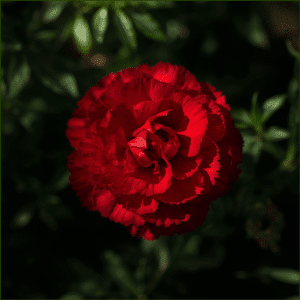
- Flower color: Deep scarlet red
- Native origin: Mediterranean region
- Bloom season: Late spring through summer
What Does the Scarlet Carnation Look Like?
The scarlet carnation is admired for its elegant appearance and vibrant color.
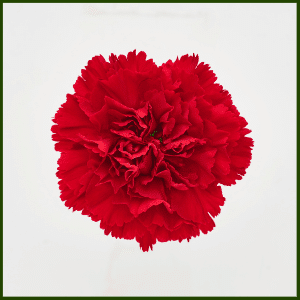
- Bright scarlet-red petals
- Soft, ruffled flower edges
- Pleasant clove-like fragrance
- Slender bluish-green stems
- Narrow gray-green leaves
- Long-lasting blooms
The flowers can grow individually or in clusters, making them excellent for gardens and floral arrangements.
Where Does the Scarlet Carnation Grow?
Scarlet carnations grow well in temperate regions with full sunlight and well-drained soil. In Ohio, they are commonly planted in home gardens, parks, botanical gardens, and flower farms. Although native to the Mediterranean, they thrive in many parts of the United States.
Growing Season
Scarlet carnations typically bloom from late spring through summer, with flowering continuing into early fall under favorable conditions. They perform best in mild temperatures and plenty of sunlight. Regular deadheading encourages more blooms throughout the growing season.
Cultural Importance of Ohio’s State Flower
The scarlet carnation is a cherished symbol of Ohio’s history and pride, honoring President William McKinley and his lasting legacy. It is featured in educational programs, memorial events, and historical celebrations across the state. The flower reminds Ohioans of leadership, patriotism, and respect for their heritage.
Economic Importance
Scarlet carnations contribute to Ohio’s floriculture industry by supporting flower growers, nurseries, and local garden centers. They are also widely used in bouquets, weddings, and special events, creating steady demand in the floral market. Their long vase life makes them one of the world’s most commercially valuable cut flowers.
Tourism Value
The scarlet carnation adds beauty to botanical gardens, parks, and memorial sites that attract visitors throughout Ohio. Historical locations connected to President William McKinley also draw tourists interested in the state’s heritage. Seasonal flower displays help promote local festivals and community events.
Interesting Facts About the Carnation Flower
- Ohio adopted the scarlet carnation as its official flower in 1904.
- It honors President William McKinley, an Ohio native.
- McKinley regularly wore a scarlet carnation on his jacket.
- Carnations are among the oldest cultivated ornamental flowers.
- The scientific name is Dianthus caryophyllus.
- The word Dianthus means “flower of the gods” in Greek.
- Carnations are widely used in bouquets because of their long vase life.
- Different carnation colors carry different symbolic meanings, but Ohio specifically recognizes the scarlet red variety.
Name of State Flower of Ohio
Learn More Helpful Articles