Flowers That Start With B tend to get buried under the usual roses, tulips, and lilies. That’s a shame, because the letter B hides some of the most unusual, collectible, and ecologically useful flowers I’ve worked with. If you’re the kind of person who treats plants like living art pieces or you’re quietly rebuilding your lawn into a biodiverse refuge, this list is for you.
I’ve intentionally avoided the obvious choices. Every flower below earns its place through rarity, form, history, or ecological value. Some are wild flowers beginning with B that thrive without pampering. Others feel almost unreal the first time you see them in bloom.
In this Article, you’ll find practical growing notes, cultural relevance, and a few contrarian takes you won’t see in the other lists.
Rare Flowers That Start With B
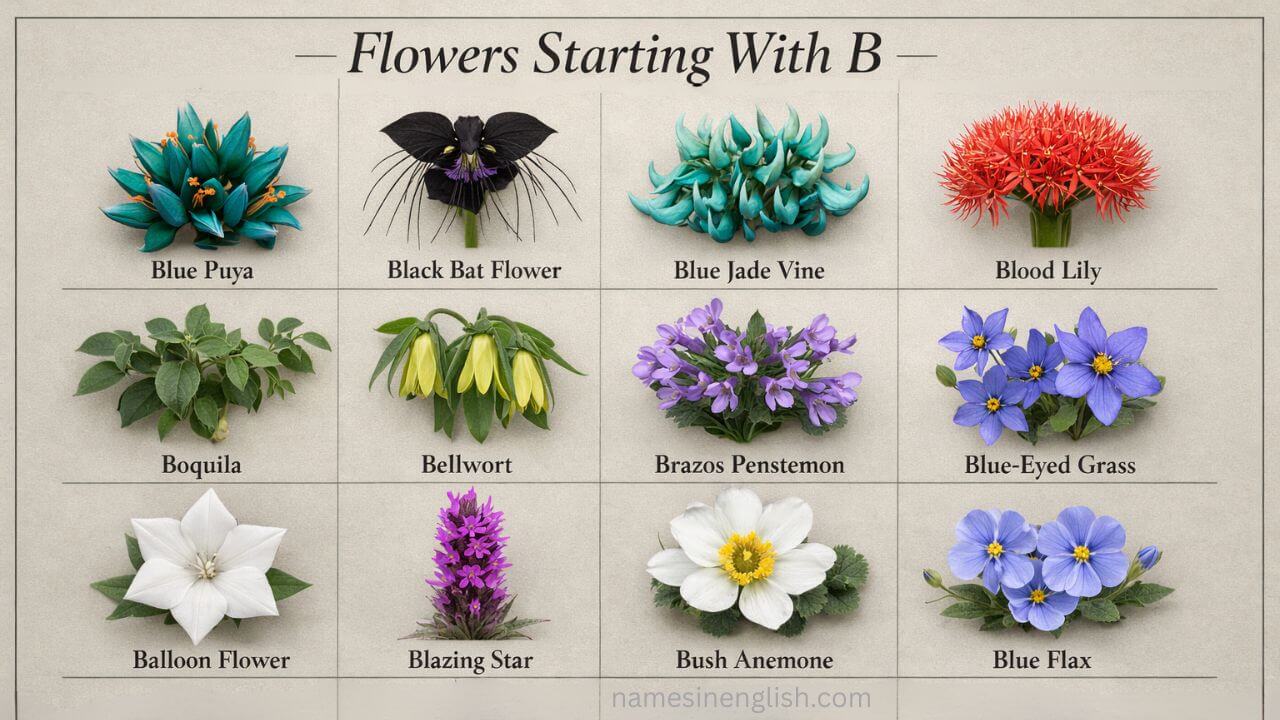
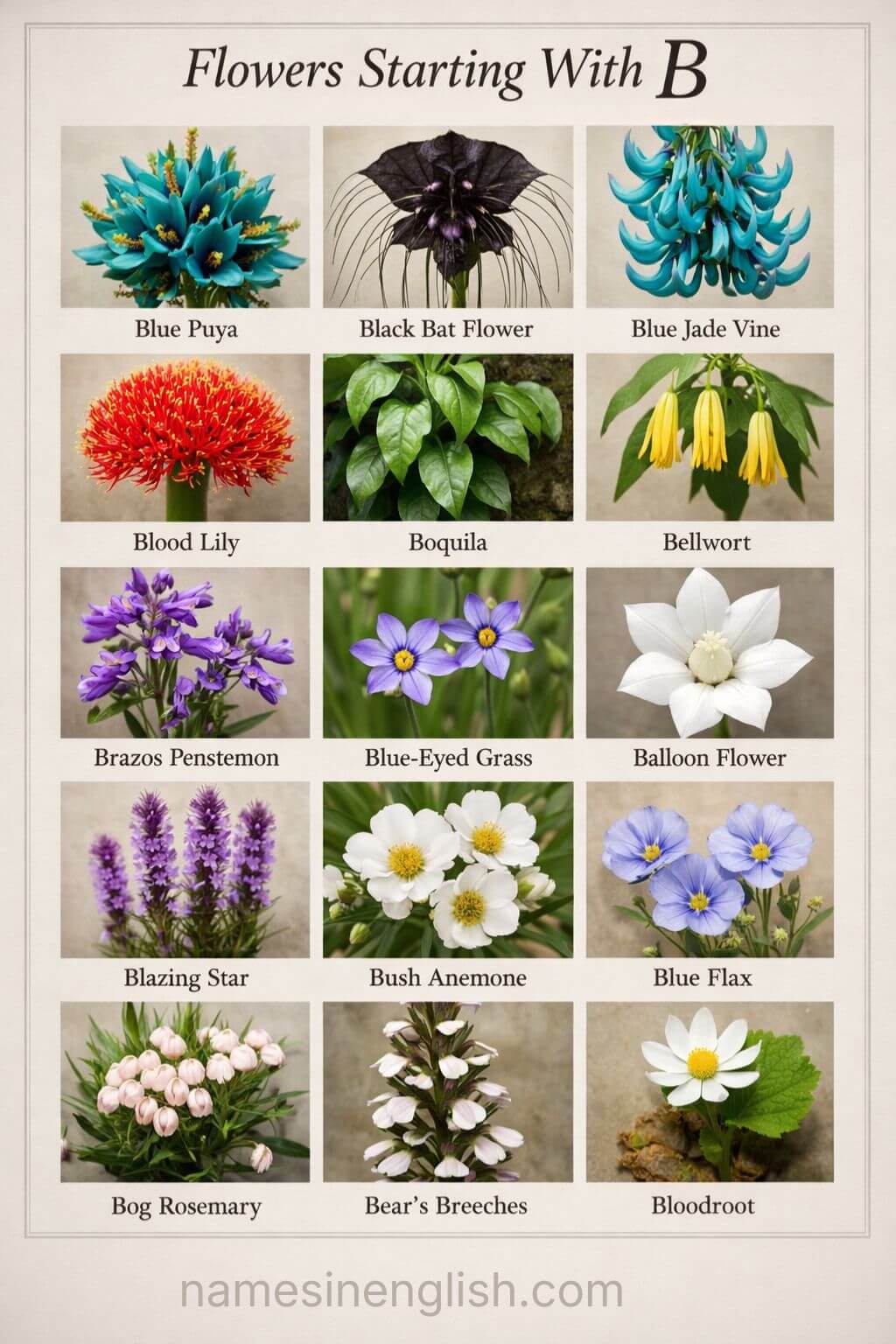
| Flower Name | Best Known For | Type/Habit | USDA Zone | Rarity |
| Blue Puya | Metallic turquoise spikes | Perennial (Succulent) | 8–11 | 💎💎💎💎💎 |
| Black Bat Flower | Gothic whisker bracts | Tropical / Indoor | 10–11 | 💎💎💎💎 |
| Blue Jade Vine | Neon glowing clusters | Woody Perennial | 10–11 | 💎💎💎💎💎 |
| Blood Lily | Spherical red “firework” | Perennial (Bulb) | 9–11 | 💎💎💎 |
| Boquila | Shape-shifting mimicry | Evergreen Vine | 8–9 | 💎💎💎💎💎 |
| Bellwort | Drooping silk tassels | Perennial (Wild) | 4–9 | 💎💎 |
| Brazos Penstemon | Airy violet mist | Perennial | 7–10 | 💎💎💎 |
| Blue-Eyed Grass | Stars hidden in grass | Perennial | 4–9 | 💎 |
| Balloon Flower | Geometric “origami” buds | Perennial | 3–9 | 💎 |
| Blazing Star | Top-down bloom spikes | Perennial | 3–9 | 💎💎 |
| Bush Anemone | Crepe-paper “relict” | Evergreen Shrub | 8–10 | 💎💎💎💎 |
| Blue Flax | “Living clock” blooms | Perennial | 5–9 | 💎 |
| Bog Rosemary | Porcelain lanterns | Evergreen Shrub | 2–6 | 💎💎💎 |
| Bear’s Breeches | Ancient Roman foliage | Perennial | 6–10 | 💎💎 |
| Bloodroot | Red sap & “cloaked” petals | Perennial (Wild) | 3–8 | 💎💎 |
Key to Rarity:
💎: Uncommon in big-box stores, but available at native or local nurseries.
💎💎: The Hidden Gems. Known to enthusiasts, but you likely won’t see them in your neighbor’s garden. They usually require a specific habitat (like deep shade or prairie soil).
💎💎💎: Specialty Collector Status. Usually requires a dedicated grower or sourcing from specialty bulb catalogs.
💎💎💎💎: The Rare Find. Genuinely difficult to track down; often restricted to specialized botanical collections or specific regional climates.
💎💎💎💎💎: Botanical Unicorn. Extremely rare, usually found only in the wild or elite botanical conservatories.
Why B Flowers Are Having a Quiet Moment
There’s a pattern I’ve noticed over the past few years. As houseplant culture matured, collectors stopped chasing volume and started chasing distinction. The same shift is happening outdoors. Unique flowers that start with B often belong to plants that feel intentional rather than trendy.
A biodiversity initiative from the Royal Botanic Gardens, Kew highlights something really interesting: gardeners who diversify beyond the usual common ornamentals support significantly higher pollinator variety. Many perennial flowers that start with B sit right in that sweet spot. They’re uncommon, but not impractical. That balance makes them ideal for anyone quietly rebuilding their garden into a biodiverse refuge. Without sacrificing style or personality.
15 Flowers That Start With B You Probably Haven’t Seen
1. Blue Puya (Puya alpestris)
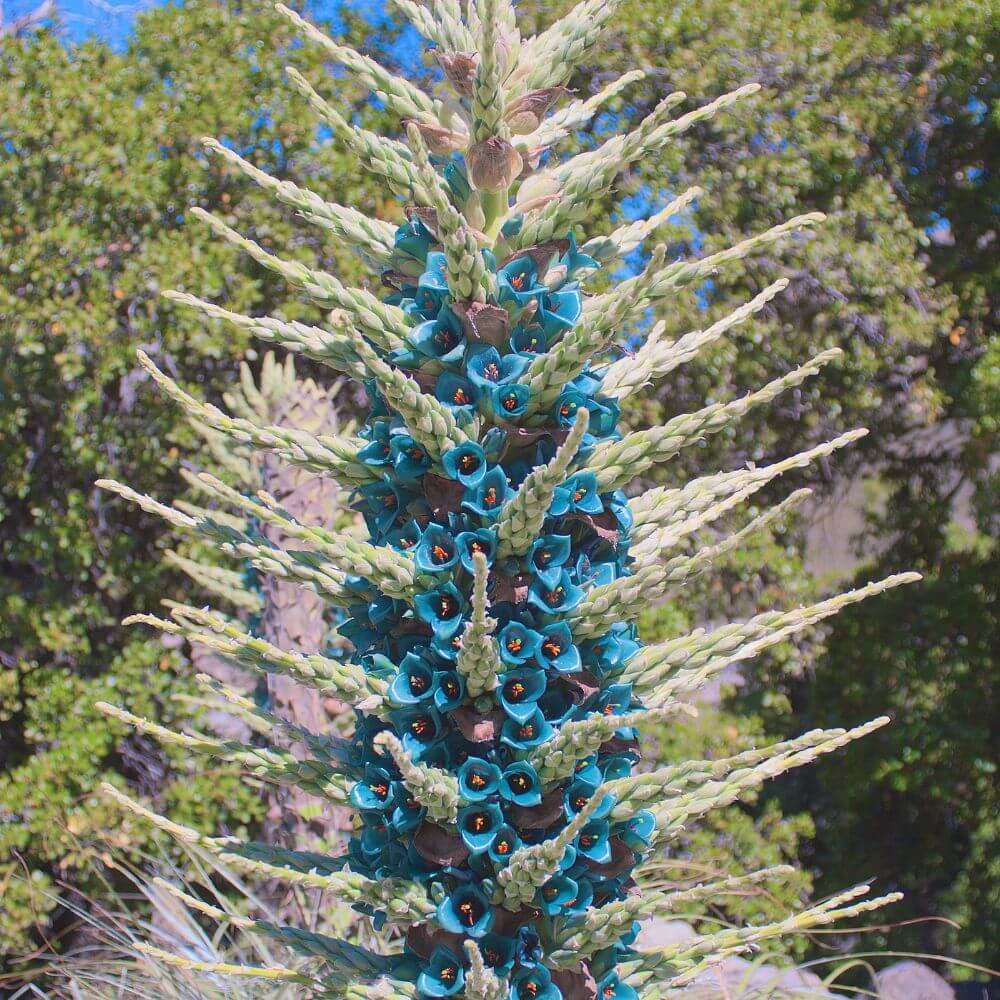
This isn’t just a plant; it’s a metallic masterpiece. Native to the Chilean Andes, the Blue Puya produces towering spikes of turquoise flowers that look like they were forged in a lab rather than grown in soil.
- The Unseen Factor: The flowers possess a neon, metallic sheen rarely found in nature, complemented by bright orange pollen that creates a high-contrast color palette.
- Collector’s Note: It is a terrestrial bromeliad, meaning it grows in the ground rather than on trees, and it can take years to produce its first otherworldly bloom.
2. Black Bat Flower (Tacca chantrieri)
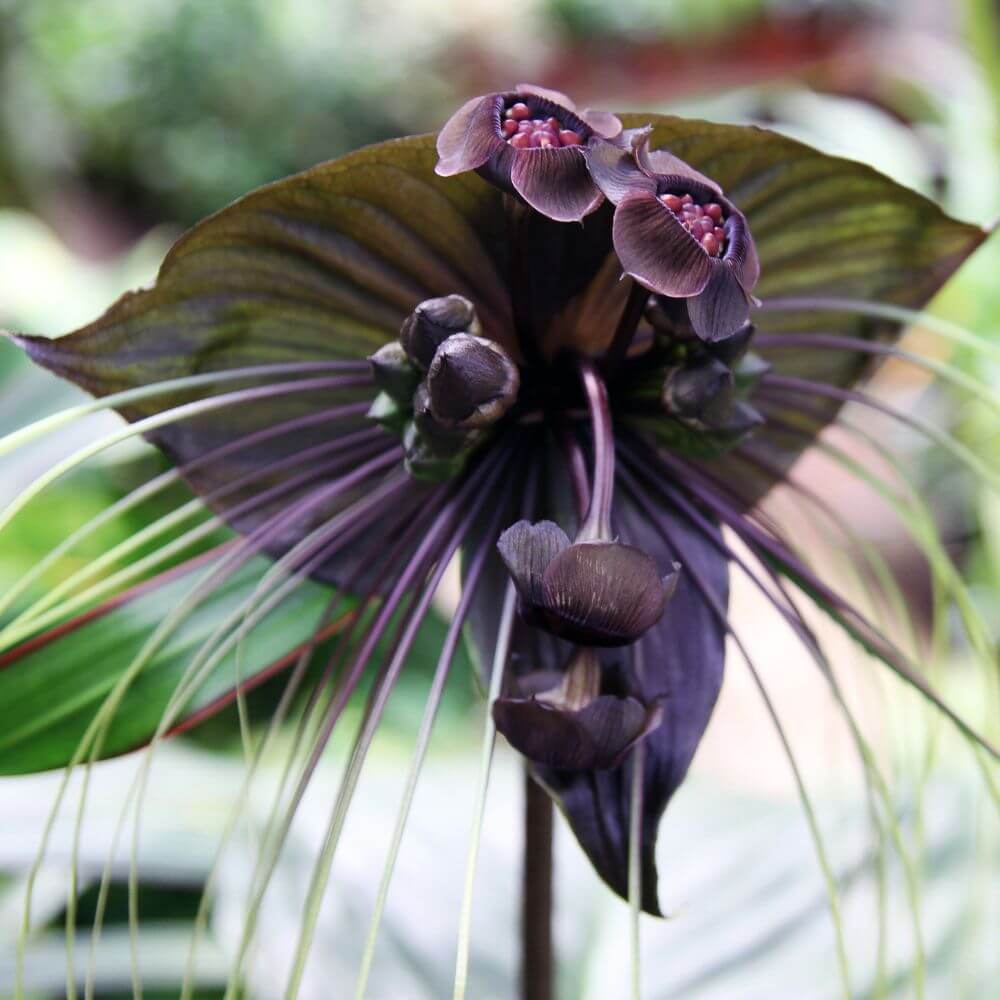
If nature had a gothic subculture, this would be its mascot. The Bat Flower features dark, maroon-to-black bracts that resemble a bat in flight, trailing 12-inch whiskers (filiform bracteoles) that catch the slightest breeze.
- The Unseen Factor: Deep black is the rarest color in the floral world. Seeing one in person feels like looking at a sentient shadow.
- Best For: High-humidity collectors who want a living conversation piece that looks back at you.
3. Blue Jade Vine (Strongylodon macrobotrys)
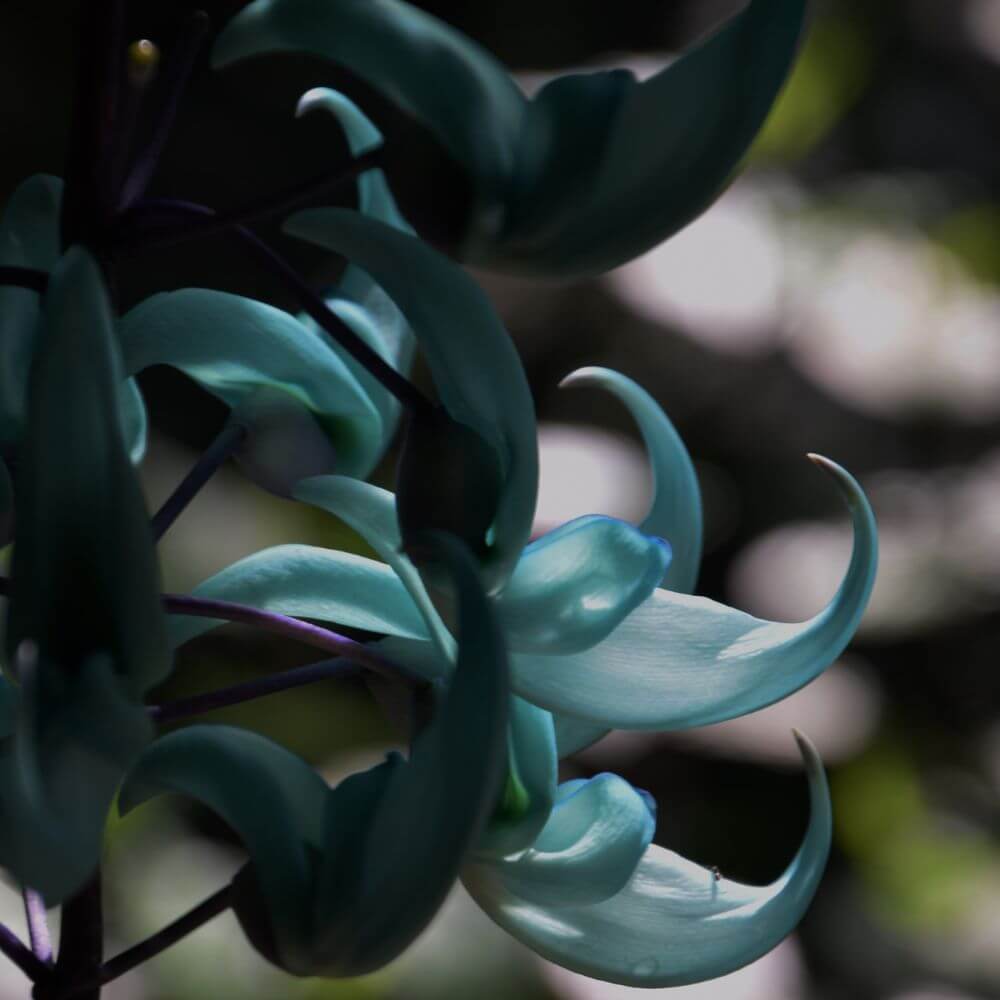
Commonly found only in tropical rainforests or elite botanical conservatories, this woody climber produces massive, hanging clusters of luminous, sea-foam green and turquoise “claws.”
- The Unseen Factor: Its color is so surreal that photos are often accused of being photoshopped. The blooms glow with an eerie, bioluminescent quality at twilight.
- Ecological Twist: In the wild, it is pollinated by bats that hang upside down to drink from the nectar-filled “claws.”
4. Blood Lily (Scadoxus multiflorus)
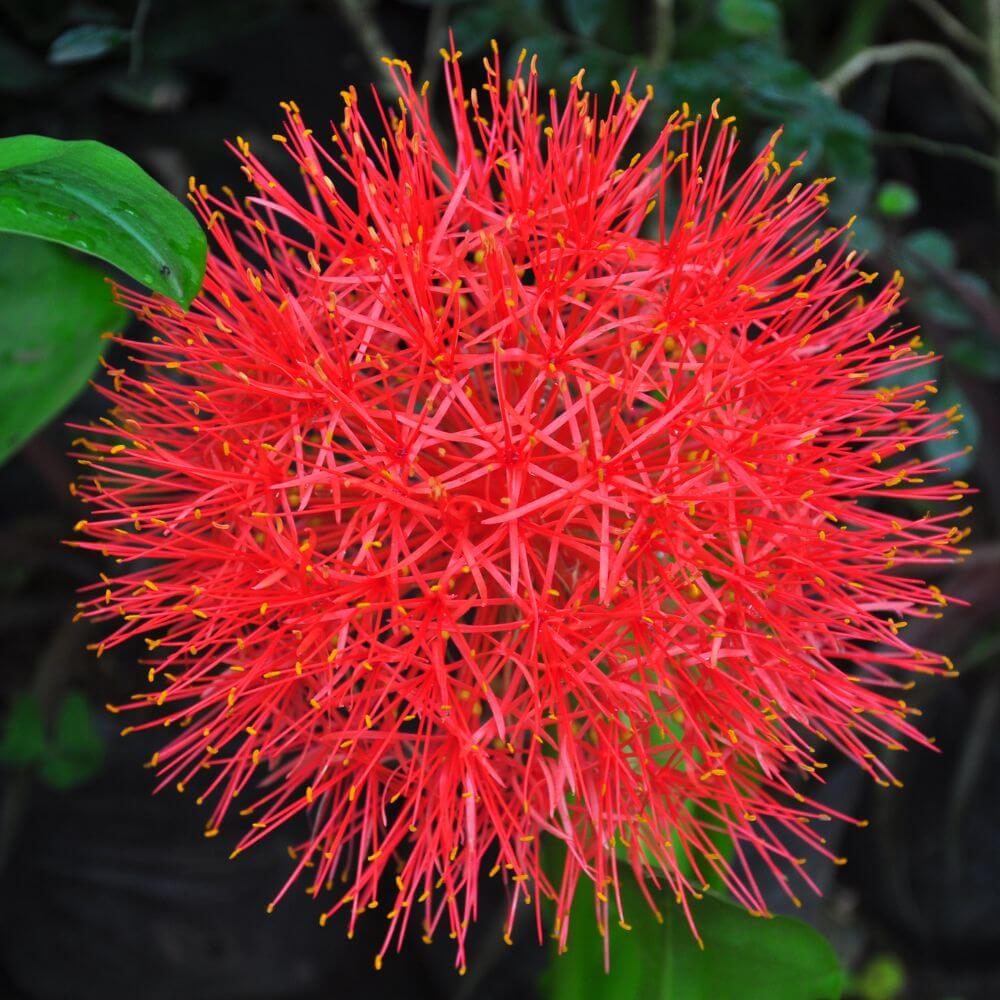
This flower doesn’t bloom, it detonates. A single bulb produces a perfectly spherical umbel made of up to 200 tiny red florets with gold-tipped stamens.
- The Unseen Factor: It looks like a dandelion gone nuclear. For a few weeks a year, it transforms a garden bed into a field of red firecrackers.
- Fun Fact: Despite its explosive look, it’s a slow-growing lily that prefers to be left entirely undisturbed.
5. Boquila (Boquila trifoliolata)
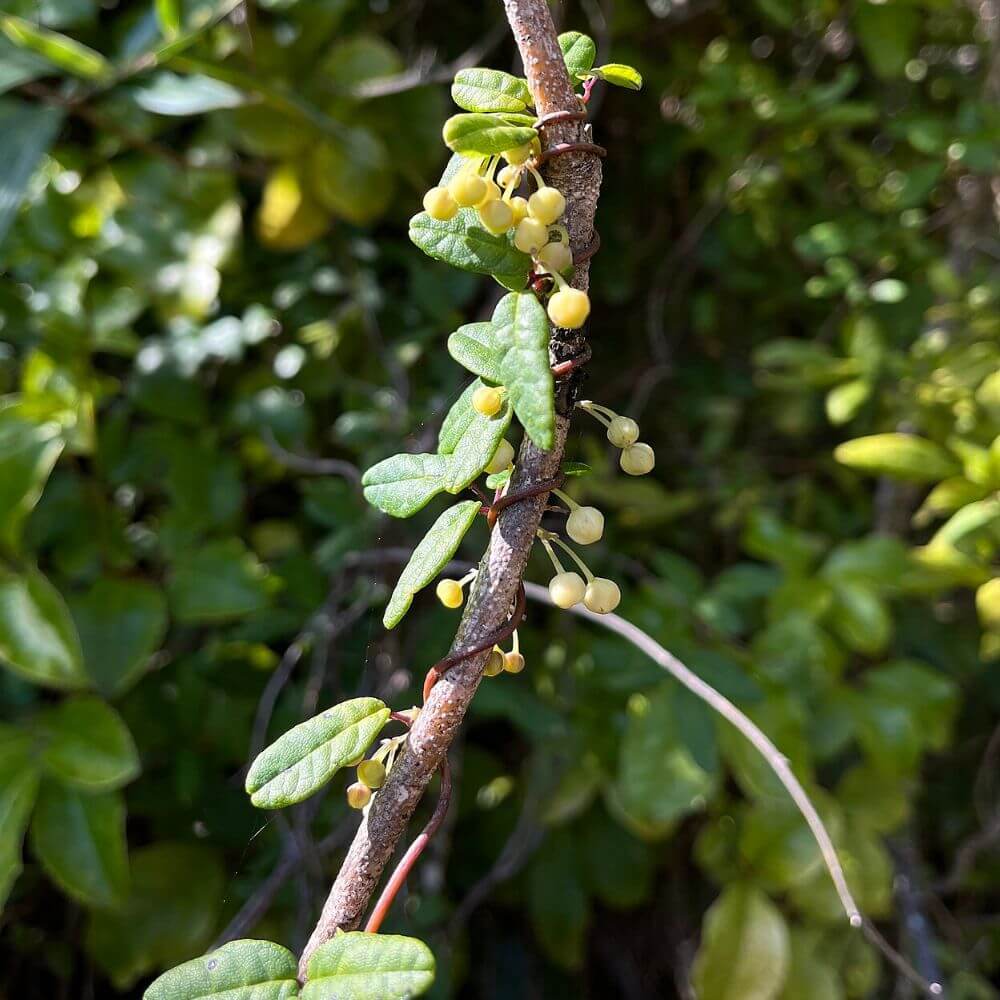
This is the Chameleon of the Woods. The Boquila is a vine that can mimic the shape, size, and even the color of the leaves and flowers of the host plant it’s climbing.
- The Unseen Factor: Most people have seen it without realizing it. It is the only plant known to mimic multiple different hosts without any physical contact.
- Why it’s Rare: It is a botanical mystery that defies our current understanding of how plants see their environment.
6. Bellwort (Uvularia grandiflora)
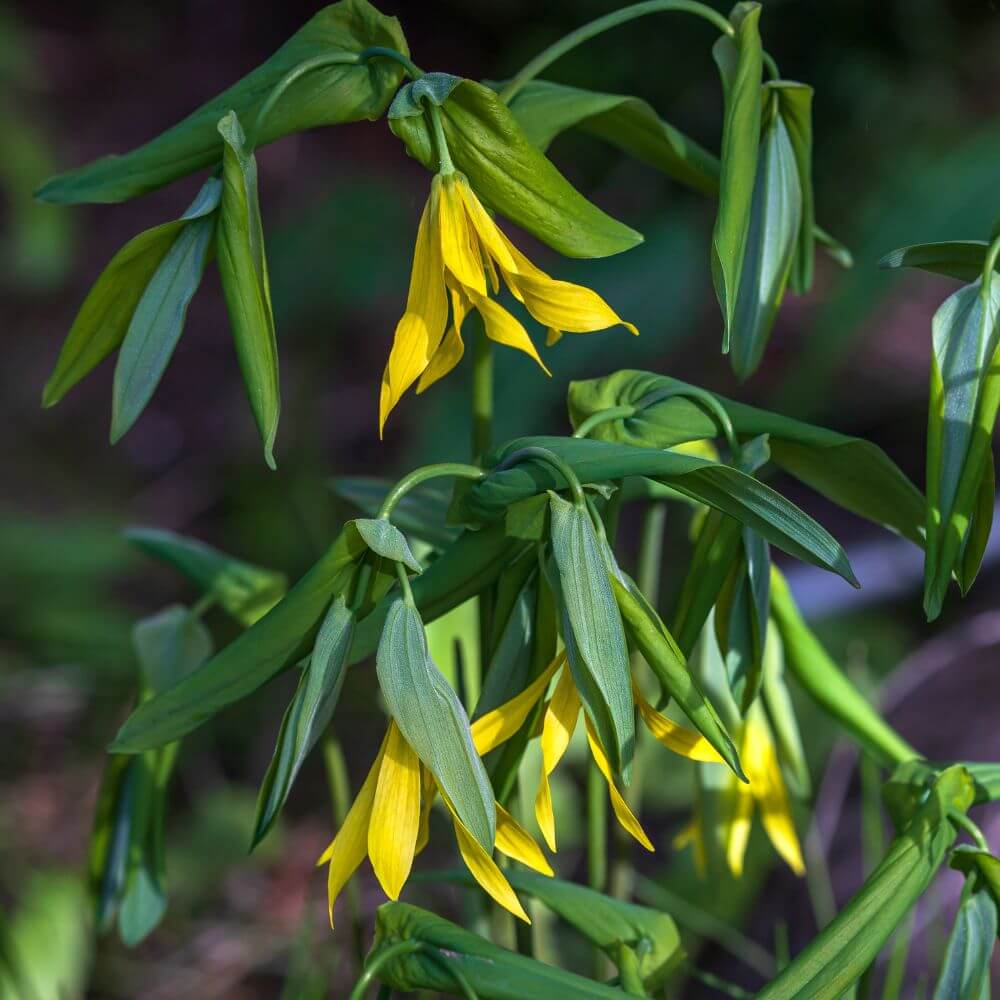
While more subtle than a Bat Flower, the Bellwort is a “ghost of the forest.” Its yellow, twisted petals hang downward like heavy silk tassels.
- The Unseen Factor: The stems appear to grow through the leaves (perfoliate), giving the plant a structural weirdness that makes it look like a Victorian earring.
- Design Tip: It is the perfect secret plant for shaded corners where you want to reward visitors for looking closely.
7. Brazos Penstemon (Penstemon tenuis)
I couldn’t find a freely usable image of this flower. If you’d like to see Penstemon tenuis in bloom, the linked USGS site (warcapps.usgs.gov) provides a clear visual reference. For Image: warcapps.usgs.gov
A rare find outside of the Gulf Coast, this plant produces clouds of tiny, violet-purple trumpets that seem to hover in the air.
- The Unseen Factor: Unlike the chunky, hybridized Penstemons found in nurseries, the Brazos variety is airy and delicate, looking more like a purple mist than a solid plant.
- Eco-Value: It is a magnet species, capable of bringing hummingbirds to a garden that they previously ignored.
8. Blue-Eyed Grass (Sisyrinchium)
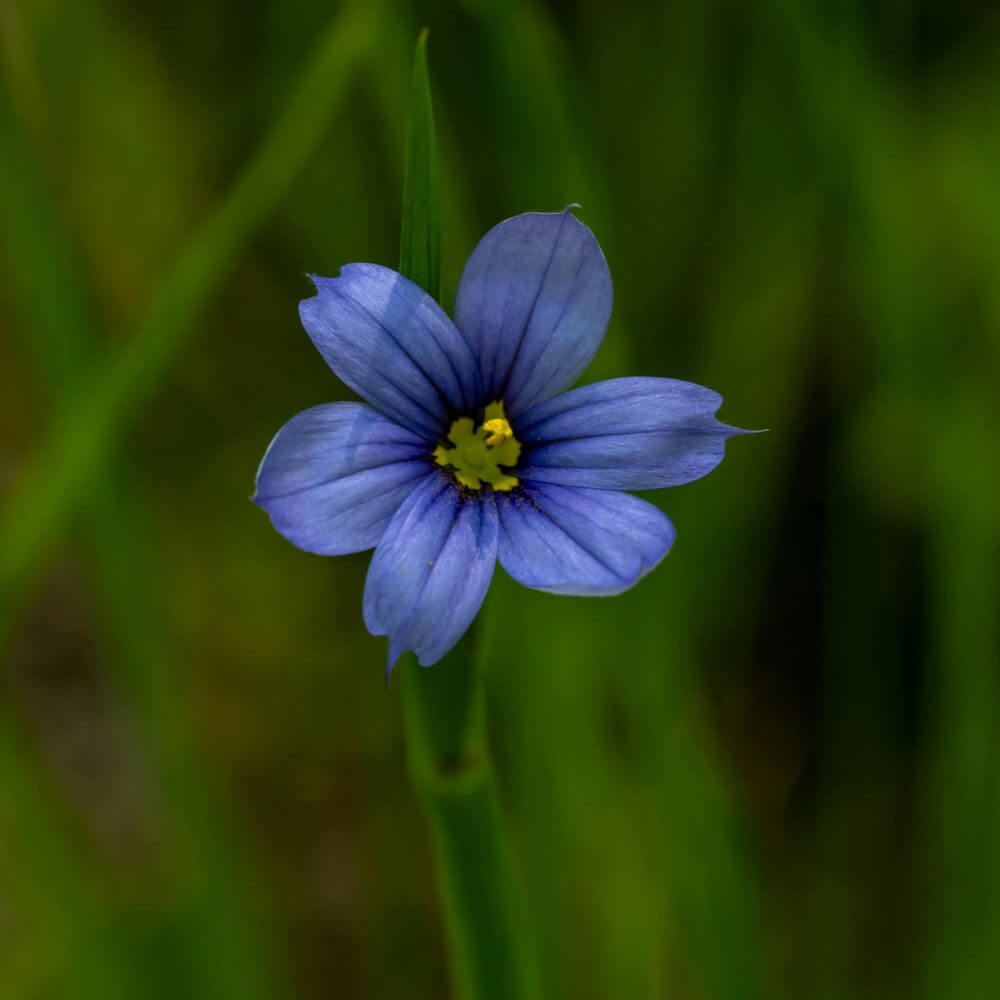
This is the ultimate “imposter” plant. It looks like a common blade of grass until a bright, star-shaped purple-blue flower with a piercing yellow “eye” snaps open at the tip.
- The Unseen Factor: The blooms only open in full sunlight. If you walk by on a cloudy day, the flower is invisible, hidden within the foliage.
- Why it’s a B Star: It’s a member of the Iris family, providing the elegance of a classic Iris in a miniature, wild-looking package.
9. Balloon Flower (Platycodon grandiflorus) – “Astra White” Variety
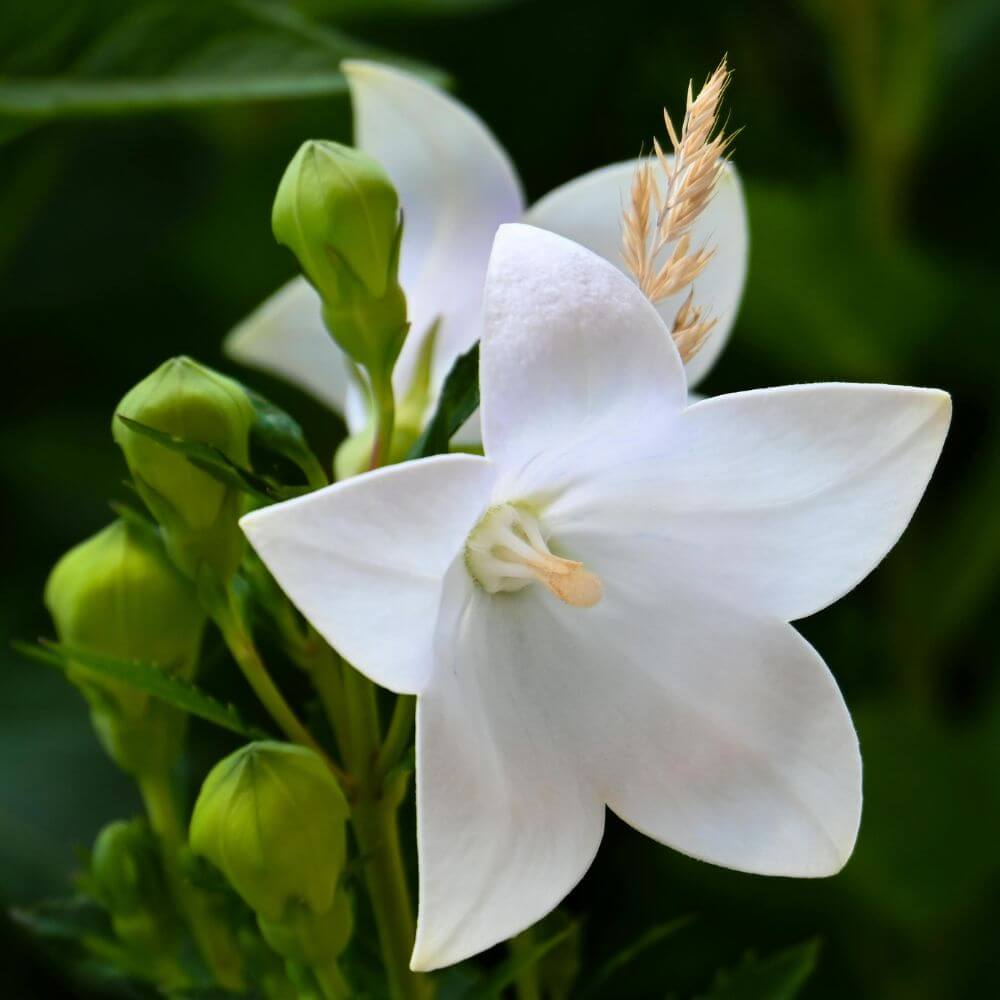
While the purple version is common, the pure white “Astra” variety looks like a collection of origami lanterns waiting to pop.
- The Unseen Factor: The geometric perfection of the bud is its true draw. It forms a seamless, five-sided pentagon filled with air before bursting into a star.
- Why it’s here: It challenges the idea that flowers must have open petals to be beautiful.
10. Blazing Star (Liatris punctata)
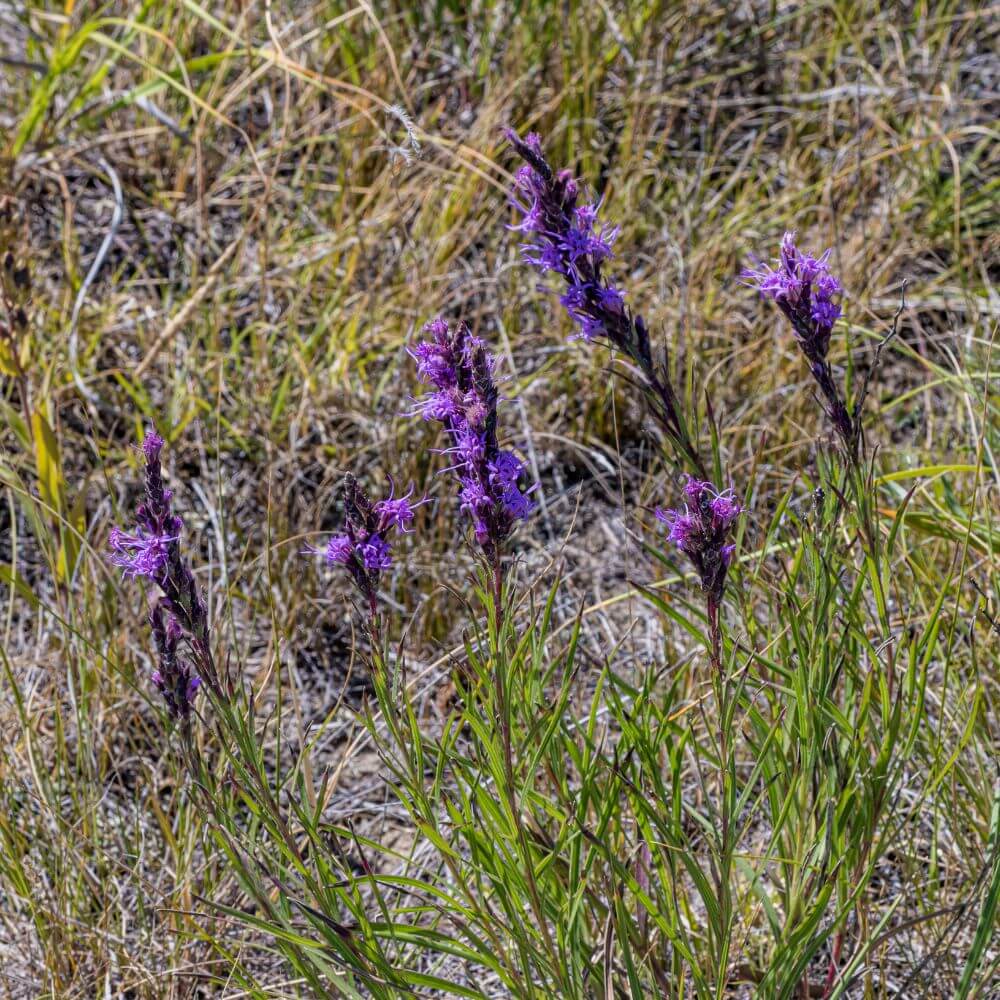
Specifically the “Dotted” variety. While most Liatris is grown for the floral industry, this wild version has evolved to survive in the harshest prairies.
- The Unseen Factor: It blooms from the top of the spike downward, a biological glitch that is the reverse of almost every other spiked flower on Earth.
- Impact: Its roots can reach 15 feet underground, making it a hidden giant.
11. Bush Anemone (Carpenteria californica)
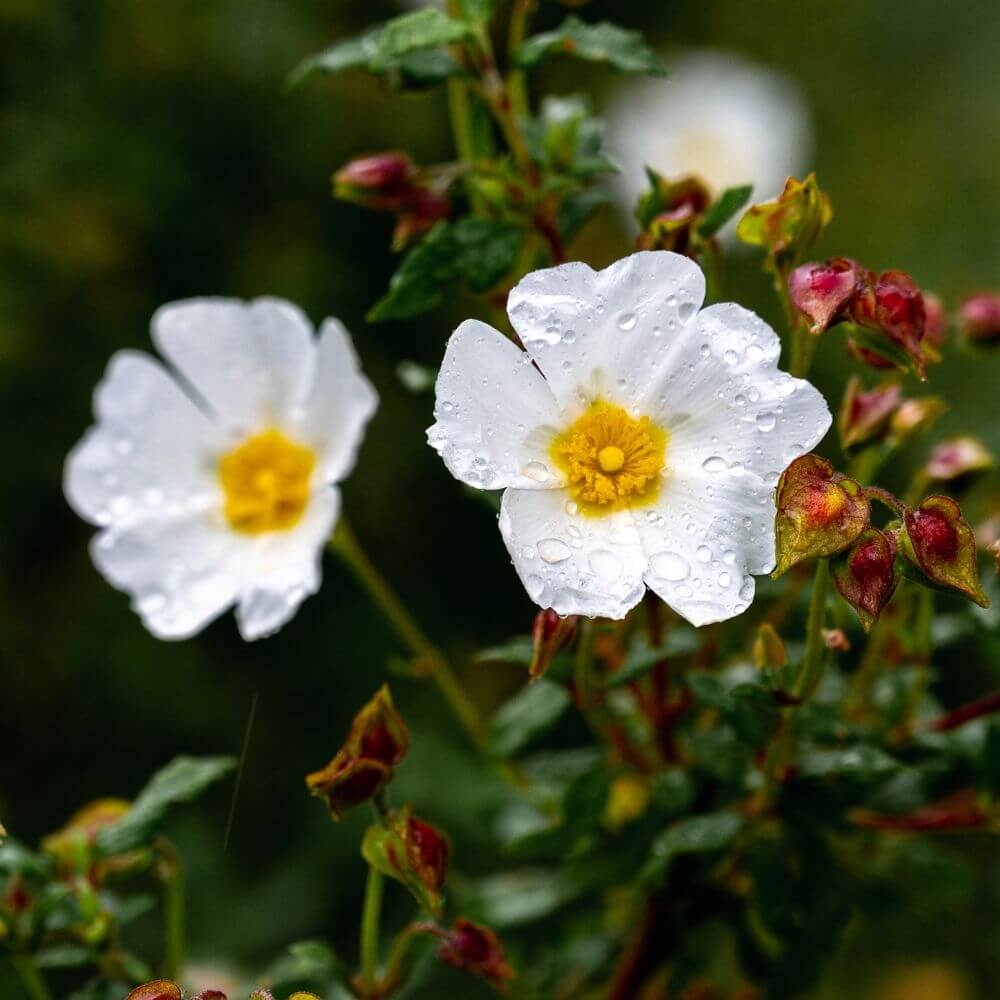
A rare evergreen shrub that produces large, snowy-white flowers with a massive “boss” of bright yellow stamens in the center.
- The Unseen Factor: It is a relict species, meaning it’s a survivor from a bygone era, now found natively in only a few spots in California.
- Visual Appeal: The petals have a crinkled, crepe-paper texture that looks incredibly fragile but is surprisingly tough.
12. Blue Flax (Linum perenne)
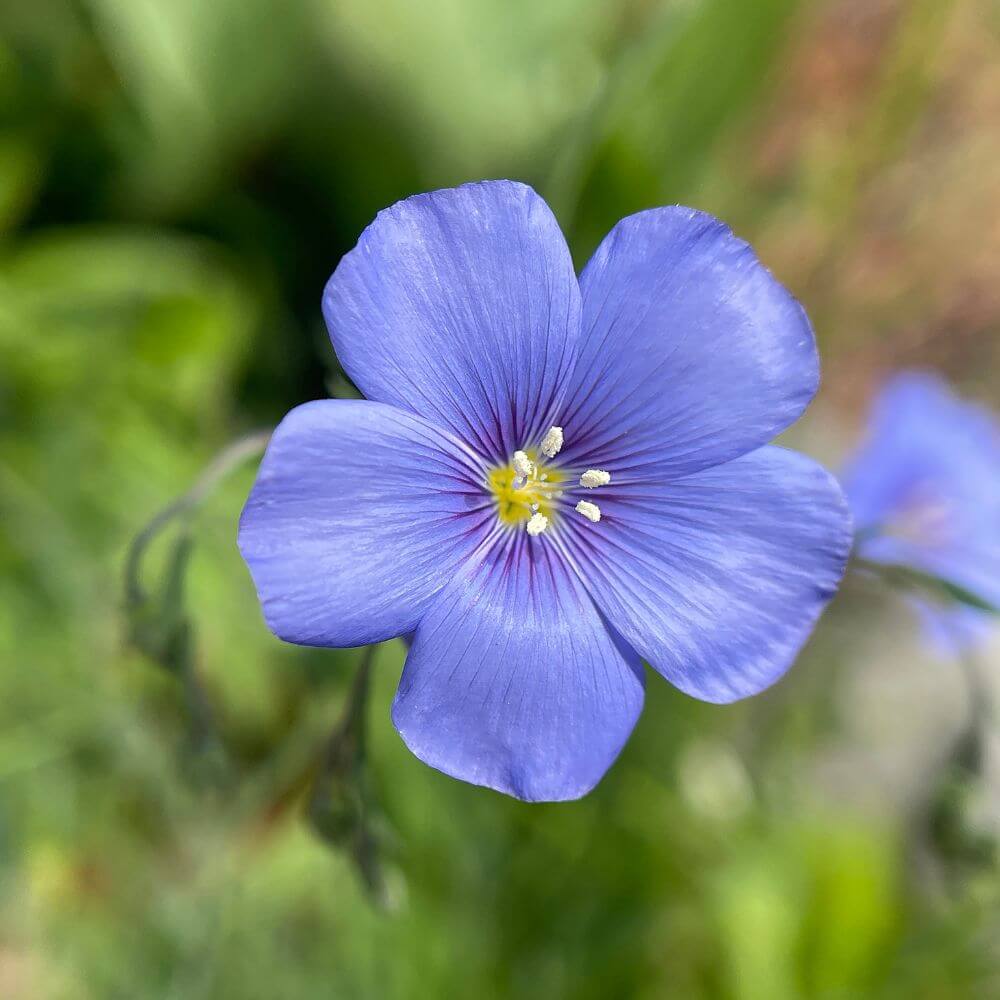
These flowers are the color of a clear summer sky, but there’s a catch: each bloom lasts only a few hours.
- The Unseen Factor: It is a “living clock.” The plant drops its petals by midday and replaces them with entirely new ones by the next morning.
- Design Tip: Plant these in a mass; the shimmering blue effect is breathtaking in the early morning light.
13. Bog Rosemary (Andromeda polifolia)
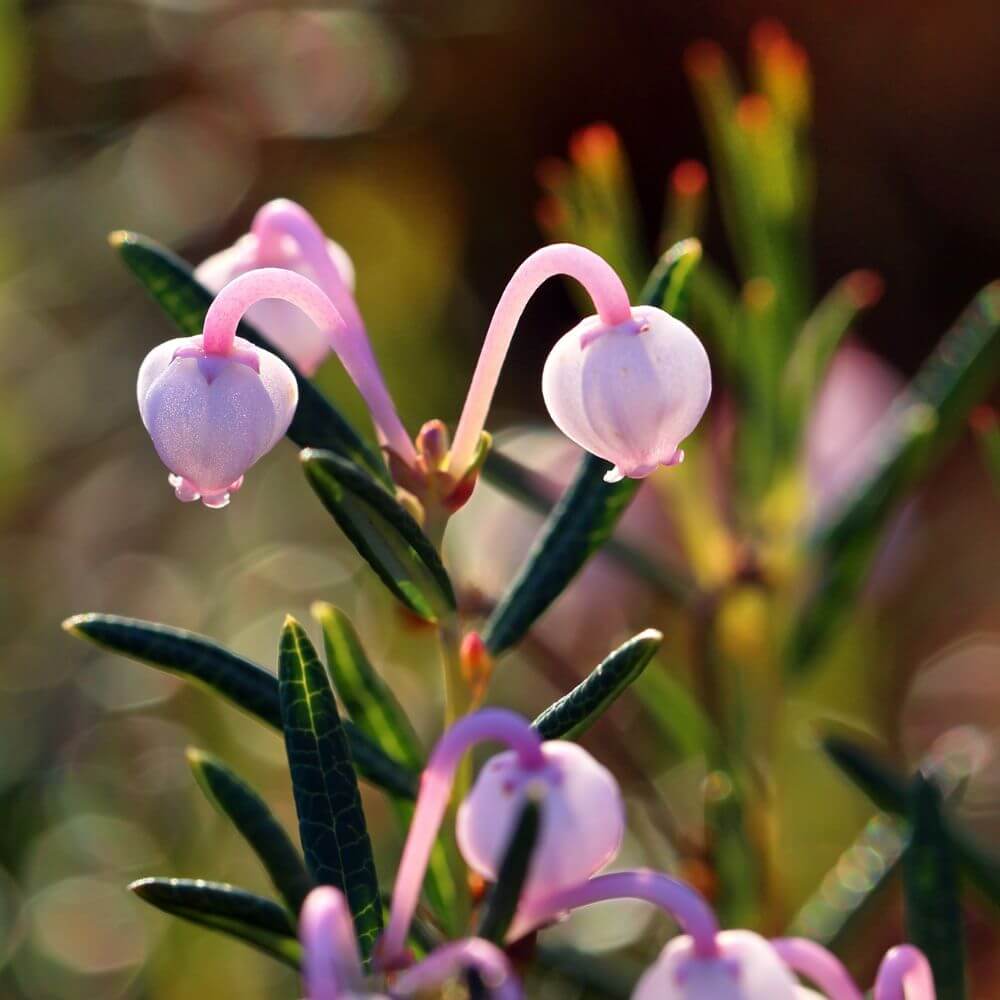
Found in the acidic peat bogs of the north, this plant produces clusters of tiny, pink, urn-shaped flowers that look like miniature porcelain lanterns.
- The Unseen Factor: It thrives in environments where almost nothing else survives (standing water and high acid).
- Warning: Despite the name, it contains grayanotoxins. It is a look but don’t touch beauty.
14. Bear’s Breeches (Acanthus mollis)
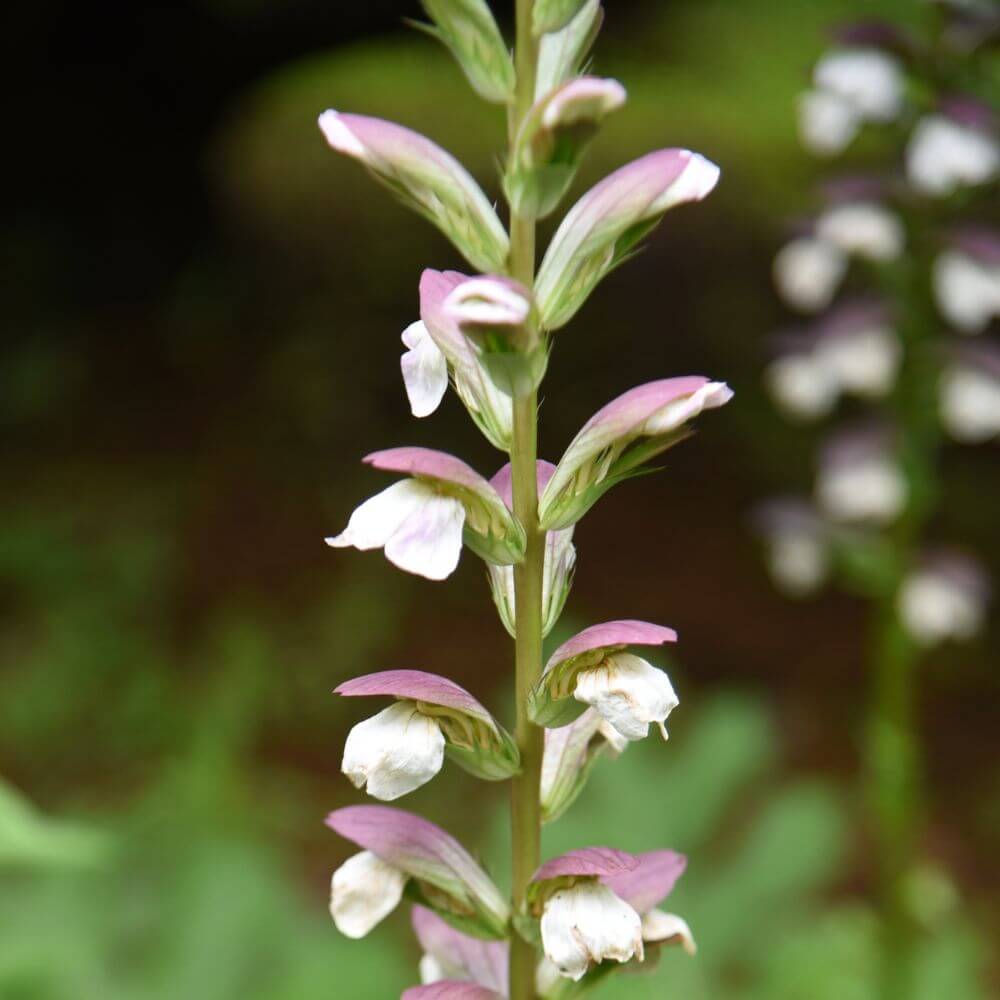
This plant doesn’t just grow; it architects. Its leaves were the literal blueprint for the Corinthian columns of Ancient Greece.
- The Unseen Factor: The flower spikes are armored. Each white flower is sheltered under a sharp, purple, hood-like bract.
- History in Bloom: It’s like having a piece of living Roman history in your backyard.
15. Bloodroot (Sanguinaria canadensis)
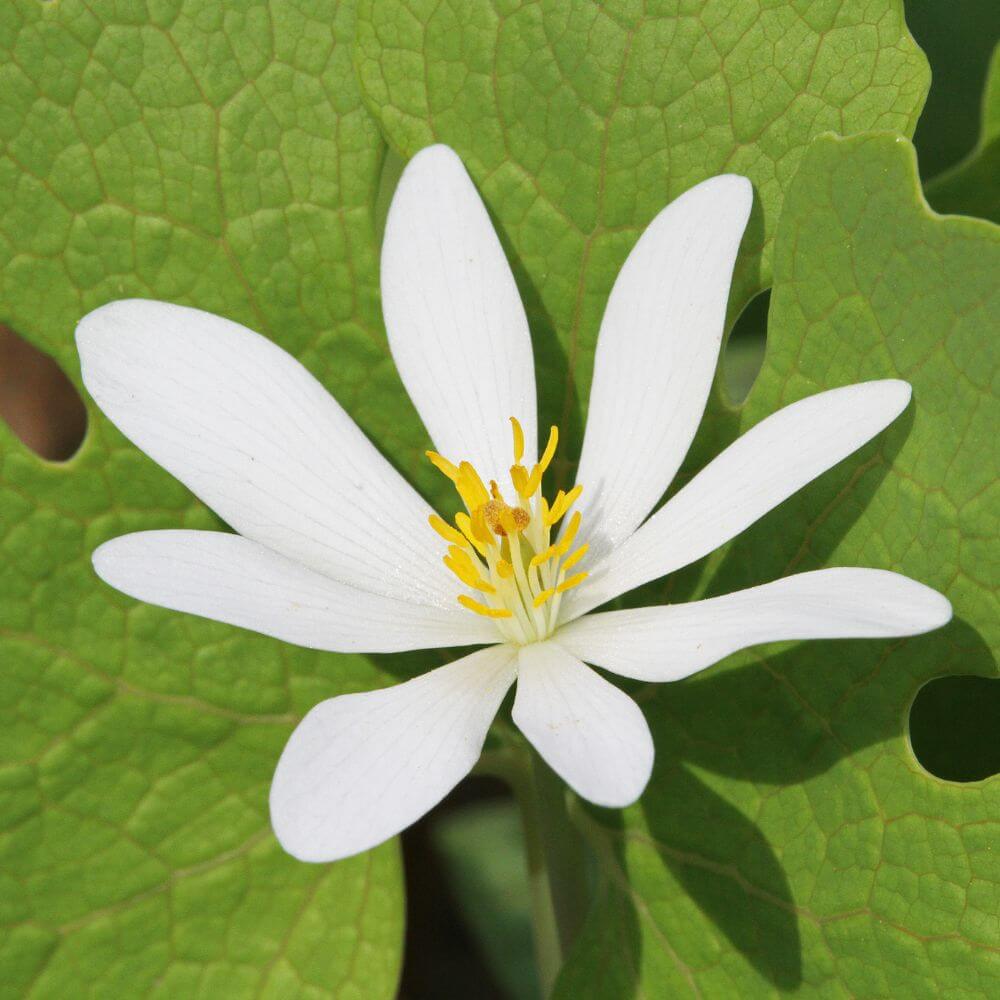
Bloodroot is the diva of the spring woods. It emerges wrapped in its own leaf, like a person in a cloak, before opening into a brilliant white flower that lasts only a few days.
- The Unseen Factor: If you break the stem, it “bleeds” a bright orange-red sap.
- Cultural Hook: It was used by Native Americans as a potent dye. Seeing a patch in full bloom is a rare timing feat for any hiker.
Curious to discover even more rare and extraordinary blooms? Check out my article on the rarest flowers of the world for a deeper dive into nature’s most spectacular hidden gems!
Popular Flowers That Start With B
These are the flowers almost everyone recognizes, even if they’ve never set foot in a nursery. You’ll see them in home gardens, public parks, weddings, and roadside plantings across the world.
1. Begonia
Begonias are classic ornamental plants known for their colorful blooms and decorative foliage. They’re widely grown in pots, balconies, and shaded garden beds due to their easy care.
2. Bougainvillea
This bold climber is famous for its vibrant pink, purple, red, and orange bracts. It’s a common sight on walls and fences in warm climates and thrives with minimal water.
3. Buttercup
Buttercups are cheerful, glossy yellow flowers often associated with meadows and childhood memories. Their simple shape and bright color make them instantly recognizable.
4. Bluebell
Bluebells produce nodding, bell-shaped blue flowers that carpet woodlands in spring. They’re deeply rooted in European landscapes and folklore, especially in the UK.
5. Balsam (Garden Balsam)
Garden Balsam is a traditional cottage-garden flower with soft, pastel blooms. It’s easy to grow from seed and commonly found in home gardens across South Asia.
6. Bachelor’s Button
Also known as Cornflower, this plant is loved for its crisp blue blooms and long vase life. It’s a staple in wildflower mixes and classic floral arrangements.
Popular vs Rare B Letter Flowers
Popular flowers offer comfort and reliability. Rare flowers reward curiosity and patience. Most memorable gardens use both.
| Category | Popular B Flowers | Rare B Flowers |
|---|---|---|
| Familiarity | Recognized by almost everyone | Known mainly to collectors or botanists |
| Availability | Common in nurseries and big-box stores | Found in specialty nurseries or native habitats |
| Visual Impact | Pleasant, predictable beauty | Unusual forms, colors, or structures |
| Maintenance | Generally easy, low learning curve | Often habitat-specific or slow-growing |
| Example Plants | Begonia, Bluebell, Buttercup | Blue Puya, Bat Flower, Boquila |
| Purpose | Decorative and traditional | Statement pieces or biodiversity support |
White Flowers That Start With Letter B
For gardeners and collectors who love the pure, calming touch of white blooms, several flowers beginning with B bring delicate elegance to any setting. White flowers often symbolize purity, renewal, and peace. Making them a meaningful choice for both gardens and floral arrangements.
- Bloodroot is an early spring bloomer with striking white petals that seem to glow against its dark green leaves. Native Americans historically used its sap as a natural dye, adding a rich cultural layer to its appeal.
- Bush Anemone offers a soft, airy look with clusters of white flowers that flutter in the breeze. It thrives in shaded woodland gardens and adds a naturalistic charm without demanding much care.
- Balloon Flower is famous for its unique balloon-shaped buds that pop open into star-shaped white flowers. The white varieties are less common than blue or purple but provide a fresh, crisp contrast in mixed beds or borders.
Each of these white B flowers can brighten shady spots or balance bold colors elsewhere in your garden, offering subtle sophistication that’s easy to appreciate.
Blue Flower Names That Start With B
Blue flowers bring a cool, calming vibe and a touch of rarity since true blue blooms are relatively uncommon in the plant world. For plant lovers hunting for those elusive blue hues, these B-named flowers deliver in style and function.
- Blue Puya stands out with its metallic turquoise flowers that almost shimmer under the sun. Native to Chile, it adds architectural drama with its spiky leaves and vibrant blooms, perfect for collectors seeking something truly unique.
- Blue Star Creeper is a charming, low-growing ground cover featuring tiny, star-shaped blue flowers. It’s a great lawn alternative that softens hardscape edges and attracts beneficial insects.
- Blue Flax boasts delicate, sky-blue flowers that seem to dance on slender stems. It thrives in meadow-style gardens and supports pollinators, making it a favorite among eco-conscious gardeners.
These blue flowers that start with B are not only visually stunning but also bring ecological benefits, blending beauty and purpose effortlessly.
Girl Flower Names Starting With B
Flower names have long inspired baby names, offering softness, nature connection, and poetic meaning. Names derived from flowers that start with B have a gentle charm, often symbolizing beauty, hope, or renewal, making them popular choices for girls.
- Belladonna, meaning beautiful lady in Italian, has a mysterious allure. Though the plant is toxic, the name’s lyrical sound has inspired poetry and baby name lists alike.
- Bluebell evokes imagery of enchanted forests and delicate spring days. It’s often associated with humility and gratitude, perfect for parents wanting a nature-inspired, whimsical name.
- Blossom is straightforward yet evocative, symbolizing growth and fresh beginnings. It’s an upbeat, joyful name that’s gained popularity due to its clear floral connection and warm feel.
These girl flower names starting with B aren’t just pretty. They carry stories and emotions, weaving nature into identity in a way that feels timeless and personal.
Rarity Isn’t Always the Goal
Rare plants are exciting, but resilience is what makes a garden feel alive year after year. Some of the most overlooked flowers that start with B are native species that don’t photograph as dramatically but outperform exotics long-term.
Blending one true showstopper like Blue Puya with reliable performers like Blazing Star creates gardens that feel curated, not fragile. The goal isn’t to impress once. It’s to build something that matures beautifully.
How to Use B Flowers in a Cohesive Garden Design
Practical placement ideas:
- Use ground covers like Blue Star Creeper to replace lawn patches
- Anchor borders with bold forms like Bear’s Breeches
- Add vertical rhythm using Blazing Star or Penstemon
- Tuck ephemeral bloomers like Bloodroot into shaded woodland edges
This approach balances aesthetics with ecological function.
FAQs About Flowers Starting With Letter B
Which popular flowers start with the letter B?
There are many beautiful flowers starting with B, including Begonias, Bluebells, Bird of Paradise, Baby’s Breath (Gypsophila), Bleeding Heart, and Bougainvillea.
What is a flower that starts with B and ends in Nia?
The most common answer is the Begonia. Another popular garden choice is the Browallia (also known as Bush Violet). Both are prized for their vibrant colors and ability to thrive in various garden settings.
What do Begonias symbolize?
Begonias traditionally symbolize caution or deep thoughts. In some cultures, they are given as a sign of gratitude or to represent a harmonious connection between people.
What is an orange flower that starts with B?
The Bird of Paradise (Strelitzia reginae) is the most famous orange B-flower. It is known for its striking resemblance to a tropical bird's head and its bright orange and blue petals.
What are 'Type A' and 'Type B' flowers?
This usually refers to the flowering cycle of Avocado trees. Type A flowers open as female in the morning and male the next afternoon; Type B flowers open as female in the afternoon and male the following morning. This unique timing encourages cross-pollination.
What is the 'Bee Flower'?
While many flowers attract bees, the 'Bee Orchid' (Ophrys apifera) is famous because its petals look and smell exactly like a female bee to attract male bees for pollination.
Are there any edible flowers that start with B?
Yes! Borage (Borago officinalis) is a well-known edible flower with a distinct blue star shape. It has a light, cucumber-like taste and is often used in salads or frozen into ice cubes for fancy drinks.
What is the difference between a Bulb and a B-flower like a Bluebell?
A 'bulb' is actually an underground storage organ, while a 'Bluebell' is the specific flower that grows from one. Not all B-flowers come from bulbs; for example, Begonias grow from tubers or fibrous roots.
Final Thoughts and What to Plant Next
Flower Names That Start With B offer far more than most gardeners expect. They carry history, personality, and ecological value in equal measure. If you’re collecting plants the way others collect art, or you’re quietly redesigning your outdoor space to work with nature instead of against it, start with one B flower this season.
Choose something that feels slightly unfamiliar. That small risk is often where the best gardens begin.