
Have you ever wondered why flowers have the names we use today? Many flowers got their names from their appearance, color, fragrance, place of origin, or the people who first discovered or studied them. Others have roots in ancient Greek, Latin, and local languages that reflect their history and symbolism. In this article, you’ll learn how flowers got their names, explore the fascinating stories behind some of the world’s best-known blooms, and discover how flower names have evolved over time.
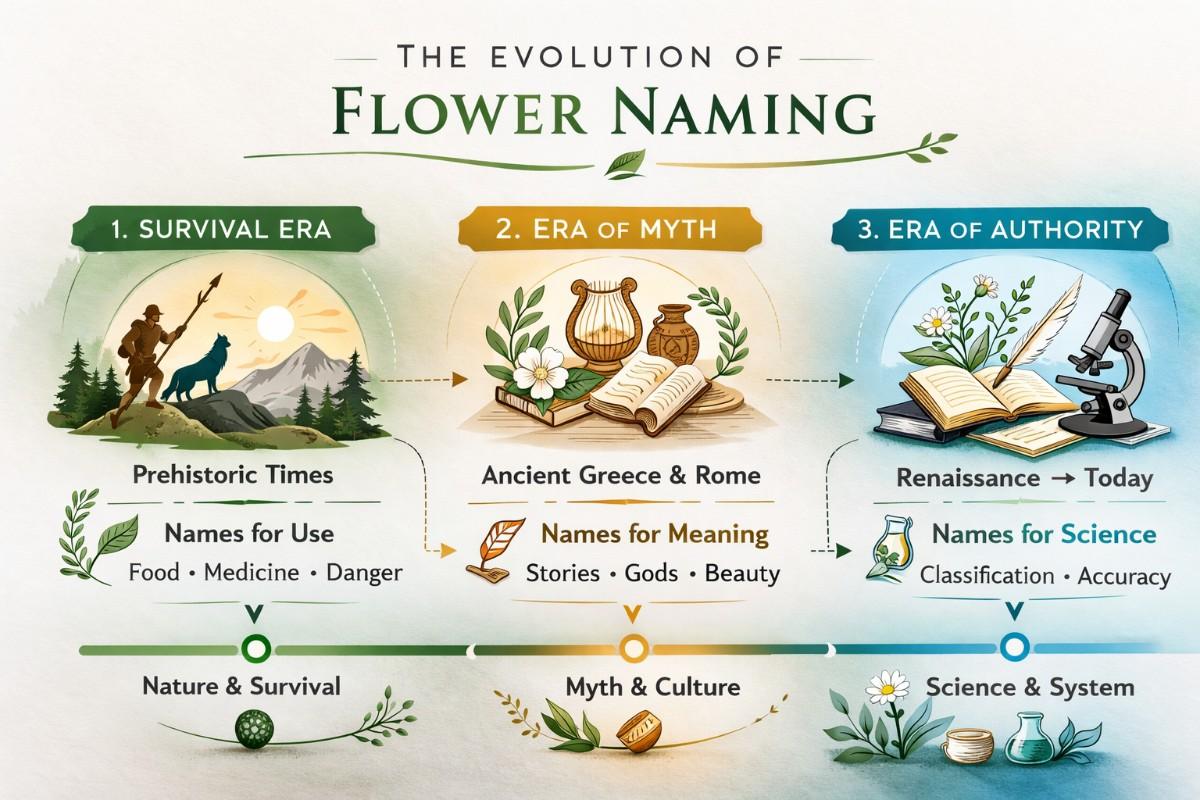
Flower naming has traveled through three distinct stages of human history, moving from practical survival warnings to poetic myths, and finally to the global scientific codes we use today
The Survival Era When Flower Names Acted As Tools Not Decoration
Early humans did not name flowers for decoration. They named them to survive. A name could tell you if a plant heals or harms. It could help you remember what to eat and what to avoid. This system worked before writing existed. Names acted like spoken labels that carried important information from one generation to the next.
Why Wolfsbane Was A Literal Warning Hidden In A Name
Wolfsbane is a strong example. The name sounds dangerous because it is. This plant was used as poison in hunting and war. People used it to kill wolves and other animals. The name itself became a warning. If you heard it, you knew to stay away. The scientific name Aconitum also appears in old texts about poison use. This shows that naming was not random. It was tied to real experience. In many cultures, dangerous plants still carry harsh or dark names. This pattern comes from survival needs, not imagination.
Buttercup Used Rhythm To Survive Oral Memory
Buttercup shows a different survival trick. It is not dangerous, but its name is simple and easy to say. The rhythm makes it easy to remember. In a time without books, this mattered a lot. Children could learn the name quickly. Adults could pass it on without confusion. The sound pattern helped the name stay the same across regions. This is why many common flowers have short and catchy names. Memory shaped language more than science did in this period.
Instantly Understand Flower Names
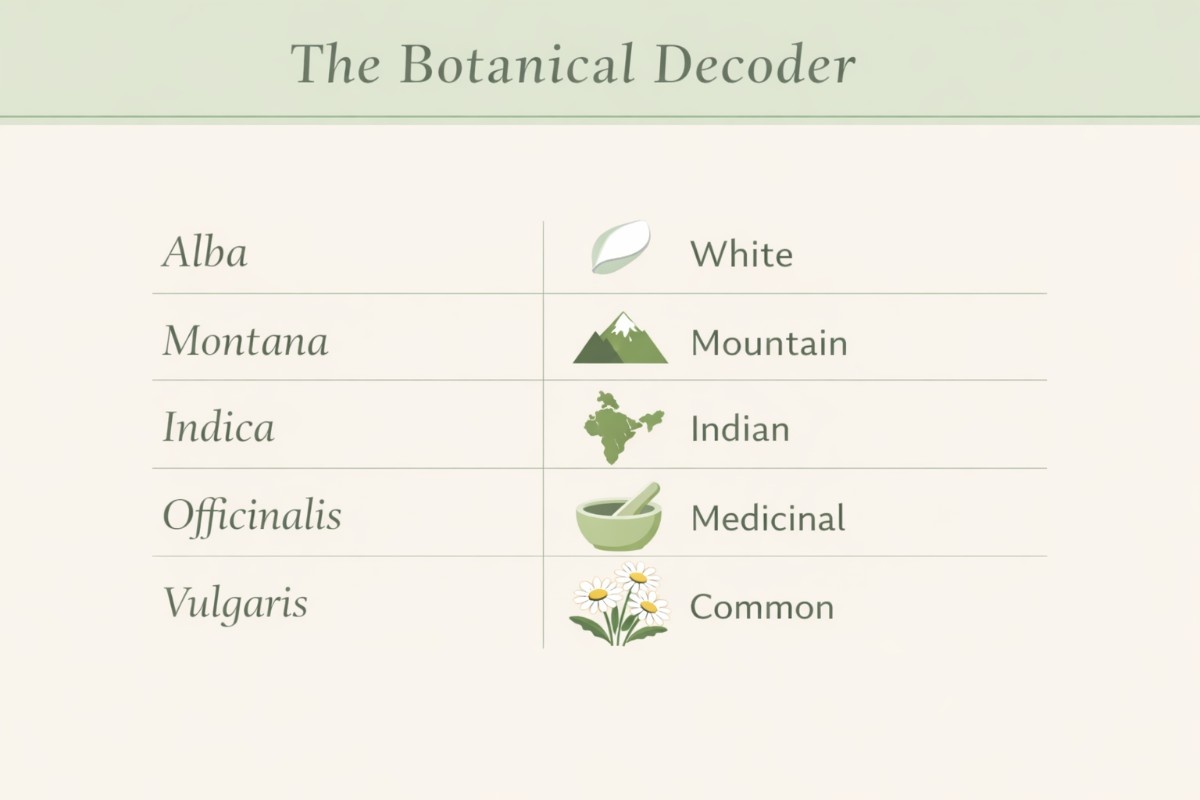
A reference chart explaining common Latin plant terms like Alba and Officinalis
You do not need to memorize thousands of names. Many plant names follow simple patterns. Once you learn a few Latin words, you can understand a lot.
Here is a quick reference:
| Term | Meaning | What It Tells You |
|---|---|---|
| Alba | White | The flower color |
| Montana | From mountains | The natural habitat |
| Indica | From India | Geographic origin |
| Officinalis | Used in medicine | Historical use |
| Vulgaris | Common or widespread | Availability and distribution |
When Myths Became Botanical Maps
As societies grew, people began to use stories to organize knowledge. Myths were not just entertainment. They helped people remember plant behavior, seasons, and meaning. A story could carry more detail than a simple label.
The Narcissus Myth Explains Why The Flower Bows
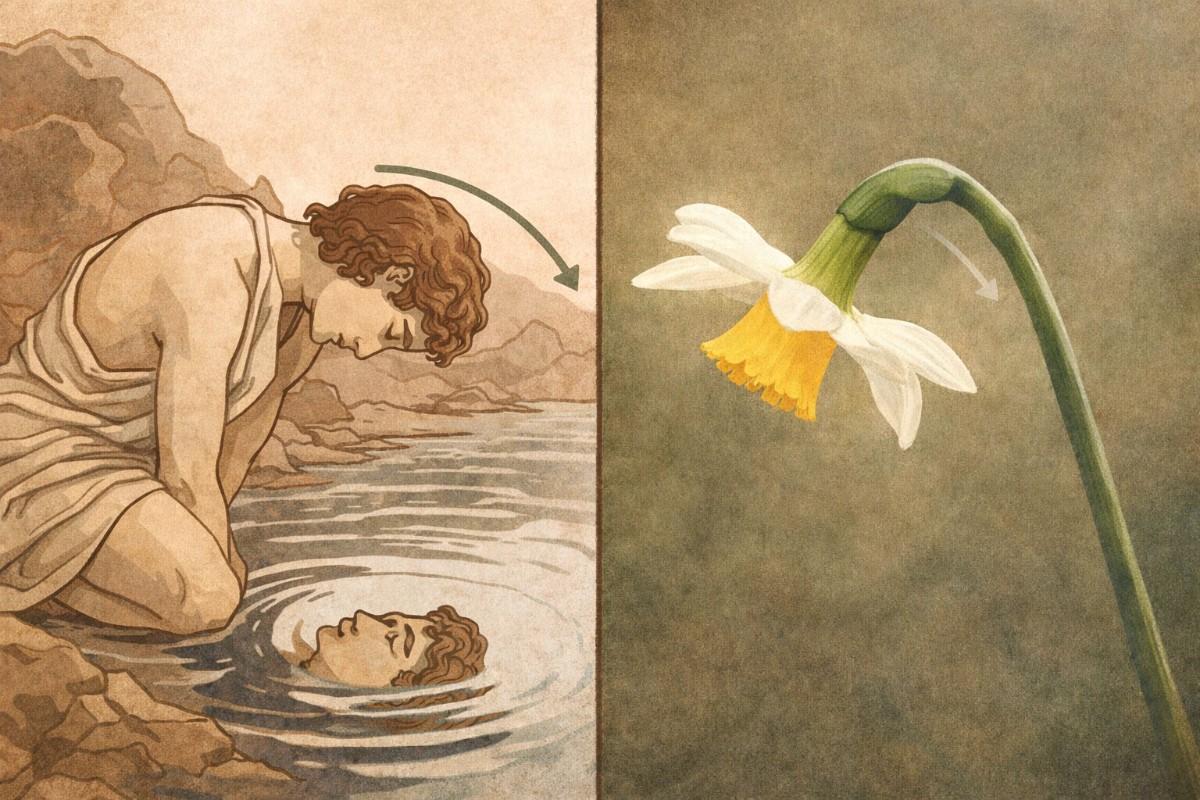
See how ancient myths acted as “visual maps”—the Narcissus flower’s unique downward bend was used as a storytelling tool to help people identify and remember the plant.
The narcissus flower bends downward. This small detail became a full story in Greek mythology. Narcissus was a young man who fell in love with his own reflection. He kept looking down at the water until he died. A flower grew in his place. The shape of the flower matches the story. It looks like it is staring down. This helped people remember the plant easily. The name became a visual clue, not just a label.
Marigold Mapped Seasons Through Religious Calendars
Marigold comes from “Mary’s Gold.” It was linked to the Virgin Mary in Christian tradition. These flowers often bloom around certain religious festivals. People used this pattern to track time. If marigolds appeared, it meant a specific season or event was near. This made flowers part of a natural calendar. The name itself carried both religious and seasonal meaning.
The Era Of Authority How Science And Empire Named The World
As exploration and science expanded, naming changed again. Now it was about control and order. Scientists wanted a system. Empires wanted recognition. This period shaped most of the names we use today.
How Linnaeus Turned Plant Names Into A Two Word Global Code
Before Carl Linnaeus, one plant could have many names. Different regions used different words. This caused confusion in trade and study. Linnaeus solved this by creating a two-word system called binomial nomenclature. Each plant gets a genus and a species name. For example, Rosa indica refers to a specific type of rose. This system is still used today. According to the Royal Botanic Gardens Kew, there are over 390000 known plant species that follow this naming structure (kew.org). This shows how important the system has become.
Magnolia And Fuchsia Were Named After Powerful Men
Not all names came from discovery. Many came from influence. Magnolia is named after Pierre Magnol, a French botanist. Fuchsia is named after Leonhart Fuchs, a German scientist. These men did not discover the plants themselves. Their names were used to honor their work or status. This shows how power shaped naming. The person with influence often decided the name, not the local people who knew the plant for centuries.
The Modern Identity Crisis Where Common Names Mislead
Today, flower names exist in two systems. One is scientific. The other is common or commercial. These systems often do not match. This creates confusion for everyday people.
Peace Lilies And Daylilies Are Not True Lilies
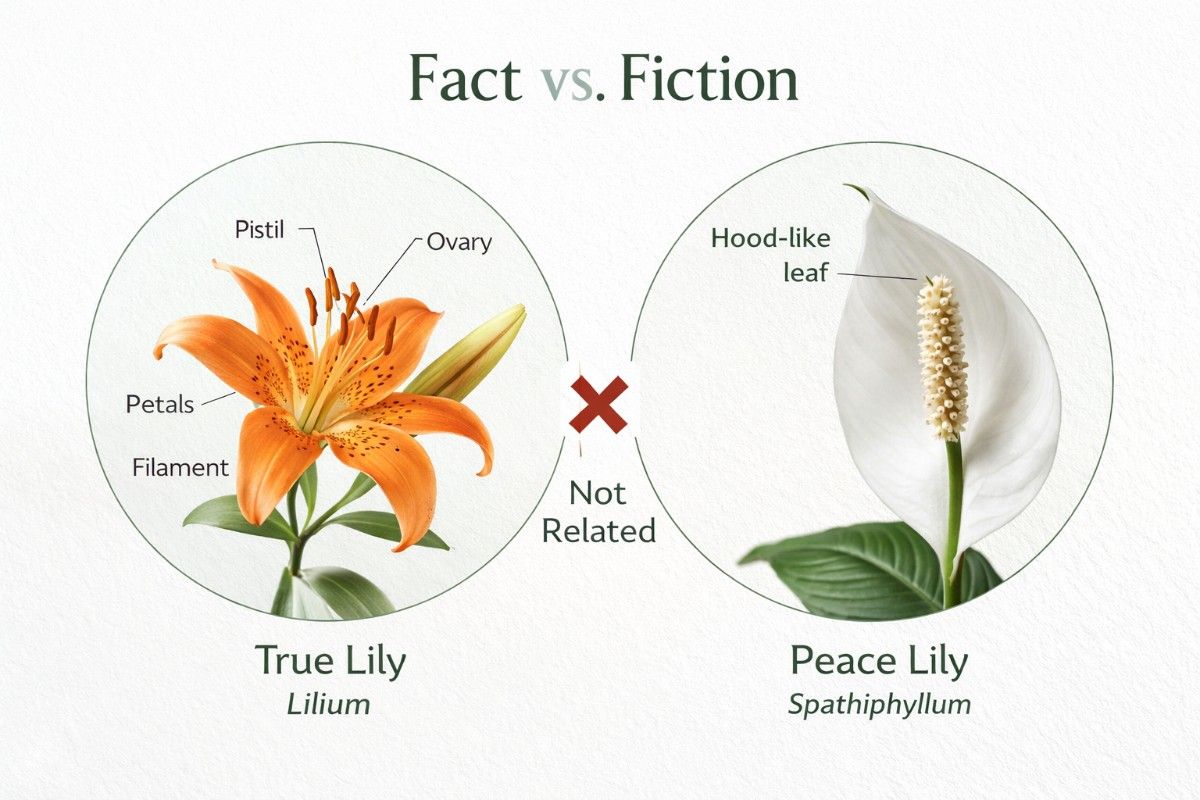
Don’t let the common name fool you—this visual breakdown shows why the Peace Lily is a botanical “imposter” compared to the true genus Lilium.
Peace lilies are not lilies at all. Their scientific name is Spathiphyllum. True lilies belong to the genus Lilium. Daylilies are also different. They belong to the genus Hemerocallis. The name “lily” is used because of their appearance, not their biology. This shows how common names can mislead. A familiar word does not always mean a scientific connection.
Florist Names Compete With Scientific Accuracy
Florists often use names that sound attractive. These names help sell flowers. They are easy to remember and pleasant to hear. Scientific names focus on accuracy. They describe structure, origin, or classification. This creates a gap between what people buy and what scientists study. Both systems exist at the same time, but they serve different goals.
Humans Still Name Flowers With Emotion Not Logic
Even with science, people still use emotion when naming flowers. Beauty, fear, and culture all play a role. Names are not only about facts. They are about how people feel.
Why Beautiful Flowers Get Romantic Names While Others Sound Dark
A rose often gets names linked to love. A toxic plant might get a name linked to death or danger. These choices reflect human emotion. This pattern has not changed over time. It connects modern naming to ancient habits. People still respond to flowers with feeling, not just logic.
FAQs
How do they name flowers?
Flowers are named using scientific rules (binomial nomenclature) based on their genus and species, often inspired by features, location, or people.
Why do flowers have scientific names?
Scientific names give each plant a unique global identity, avoiding confusion caused by different common names in different regions.
Who decides the official name of a flower?
Botanists assign official names following rules set by the International Code of Nomenclature for algae, fungi, and plants (ICN).
Can flowers be named after people?
Yes, many flowers are named after scientists, explorers, or notable individuals as a way to honor their contributions.
What factors influence a flower’s name?
Flower names often reflect color, shape, habitat, discovery location, or distinctive traits of the plant.
Explore more guides on how flowers got their names, their meanings, and the stories behind them:
- 15 Flowers That Are Named After People
- Why Flowers Have Scientific Names
- Lotus vs Water Lily Flower: Why People Confuse Their Names
- The Story Behind the Flower Name “Marigold”
- 20 Flowers That Look Exactly Like Animals
- Why Flower Names Change Across Languages
- Why the Rose Is Called Rose: Its Origin and Meaning
- What Does Hibiscus Mean & Where Its Name Comes From
- Why Are Sunflowers Named After the Sun?
- Where Did the Forget-Me-Not Flower Get Its Name?