
National Flower of Switzerland is the Edelweiss is not just a rare alpine bloom. It is a quiet symbol of identity, resilience, and the deep bond between the Swiss people and their mountains. If you have ever wandered through the Alps or planned a journey there, this small white flower carries a story worth knowing.
A Flower Born in the High Alps
Edelweiss grows where most plants give up. You will find it clinging to rocky slopes between 1,800 and 3,000 meters above sea level. The scientific name is Leontopodium nivale, and it belongs to the daisy family.
Its star-shaped appearance comes from woolly white bracts, not petals. These soft hairs protect the plant from intense UV radiation, cold winds, and sudden drops in temperature. Alpine botanists often point to Edelweiss as a textbook example of plant adaptation in extreme environments.
For travelers, spotting an Edelweiss in the wild feels like discovering a secret. For locals, it represents something even deeper.
Why Edelweiss is the National Flower of Switzerland
Switzerland does not officially declare national symbols through a single law, but Edelweiss has held this role for over a century. It became widely recognized in the late 1800s as alpine tourism grew and Swiss identity strengthened.
The National Flower of Switzerland reflects values the country admires:
- Strength in harsh conditions
- Humility rather than showy beauty
- Endurance over centuries
Swiss military insignia, folk songs, and traditional embroidery often feature Edelweiss. By the early 20th century, it had become inseparable from the image of Switzerland itself.
What is the National Flower of Switzerland?
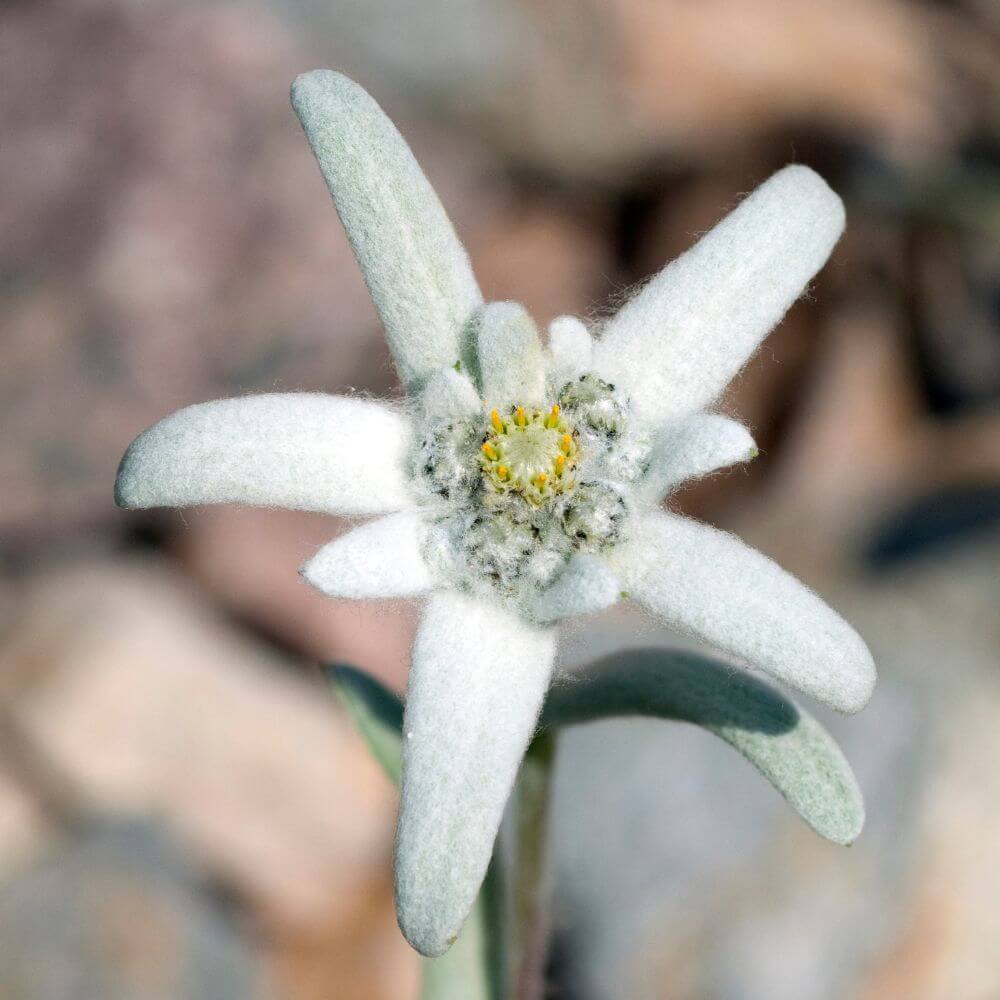
The national flower of Switzerland is Edelweiss, a rare alpine flower scientifically known as Leontopodium nivale. It grows high in the Swiss Alps and symbolizes courage, purity, and resilience in harsh mountain environments.
Cultural Meaning and Symbolism in Swiss Life
Edelweiss is not just botanical. It lives in stories.
In traditional alpine folklore, young men once risked dangerous climbs to bring Edelweiss to their loved ones. The flower became a symbol of devotion and bravery. That idea later inspired songs, most famously the Swiss folk song “Edelweiss,” which many people still associate with alpine romance and national pride.
Even today, you will see Edelweiss motifs on:
- Hiking badges and souvenirs
- Traditional Swiss clothing
- Airline logos and tourism campaigns
I find it fascinating that a flower so small became such a powerful national symbol. Switzerland chose restraint over extravagance, and that choice says a lot.
Edelweiss in Nature: Rare, Protected, and Respected
By the early 1900s, Edelweiss was nearly wiped out in some regions due to over-picking. Tourists wanted proof they had been there. Nature paid the price.
Modern Switzerland took a different approach. Edelweiss is now legally protected in many alpine regions. Picking it in the wild can lead to fines.
According to the Swiss Federal Office for the Environment, Edelweiss populations stabilized following conservation and habitat laws. While tourism was once the primary threat, climate change now pushes these alpine plants to higher, smaller territories. For more, read the official:
bafu.admin.ch
Where Travelers Can See Edelweiss Today
You do not need to break the law or hike dangerously to experience Edelweiss.
Here are responsible ways travelers encounter it:
- Alpine botanical gardens in Zermatt and Davos grow Edelweiss legally
- Marked high-altitude trails in summer sometimes pass natural clusters
- Museums and cultural centers explain its role as a Swiss national symbol
A Swiss mountain guide once told me that seeing Edelweiss is about patience, not conquest. That mindset fits the flower perfectly.
Edelweiss as a Sustainability Symbol
Most articles stop at romance and nationalism. There is another angle worth considering.
Edelweiss may be Switzerland’s quiet ambassador for sustainability.
Its survival depends on untouched ecosystems, stable snow patterns, and responsible tourism. In recent years, Swiss environmental campaigns have used Edelweiss imagery to promote climate awareness, not nostalgia.
Unlike flashy national symbols, Edelweiss reminds people of limits. Grow too fast. Take too much. Ignore balance. The flower disappears.
That lesson feels especially relevant today.
Edelweiss vs Other Alpine Flowers in Switzerland
Switzerland has many alpine flowers, but none carry the same weight:
- Alpine rose is colorful but widespread
- Gentian is striking but less symbolic
- Edelweiss is rare, modest, and meaningful
This is why the Swiss Alps flower most recognized worldwide remains Edelweiss, even among seasoned botanical enthusiasts.
Why Edelweiss Remains Relevant
The National Flower of Switzerland continues to shape how the country presents itself to the world. It appears in tourism branding, conservation education, and cultural storytelling.
For travelers, Edelweiss represents respect for nature. For locals, it reflects identity built quietly over time. For botanists, it remains a marvel of alpine adaptation.
Few flowers manage all three.
Why Edelweiss Became a Trophy for Alpine Climbers
In the 19th century, Edelweiss was seen as proof of courage. The National Flower of Switzerland grows on steep, dangerous alpine cliffs, and reaching it often required risky climbs with little equipment. Bringing one back showed that a climber had faced the high Alps and survived.
Folklore deepened the myth. Edelweiss became a symbol of bravery and devotion, often picked as a romantic gesture. Climbers wore it on hats or jackets as a visible badge of honor.
That tradition nearly wiped the flower out. By the early 1900s, over-picking forced Switzerland to protect Edelweiss by law. Today, its meaning has shifted. Edelweiss is no longer a trophy to take, but a symbol of respect for the mountains and the life they support.
FAQs About Switzerland’s National Flower
What is the Swiss famous flower?
The Swiss famous flower is Edelweiss, a rare alpine plant found in the high Alps.
Is Edelweiss the national flower of Switzerland?
Yes, Edelweiss is widely recognized as the national flower of Switzerland, even though it is not declared by a single official law.
What does Edelweiss symbolize in Switzerland?
Edelweiss symbolizes courage, purity, and resilience, reflecting life in the Swiss Alps.
Is picking Edelweiss illegal in Switzerland?
Yes, picking Edelweiss is illegal in many regions because the flower is protected.
Is Edelweiss a real flower?
Yes, Edelweiss is a real alpine flower, scientifically known as Leontopodium nivale.
Final Thoughts About National Flower of Switzerland
Edelweiss does not shout for attention. It waits high in the Alps, surviving wind, cold, and time. That may be why it feels so Swiss.
If you are planning a journey through Switzerland, take a moment to learn its symbols before you arrive. Understanding Edelweiss changes how you see the mountains around it.
If this article helped, explore more national flower stories and cultural symbols on our site. They reveal how nature and identity often grow side by side.