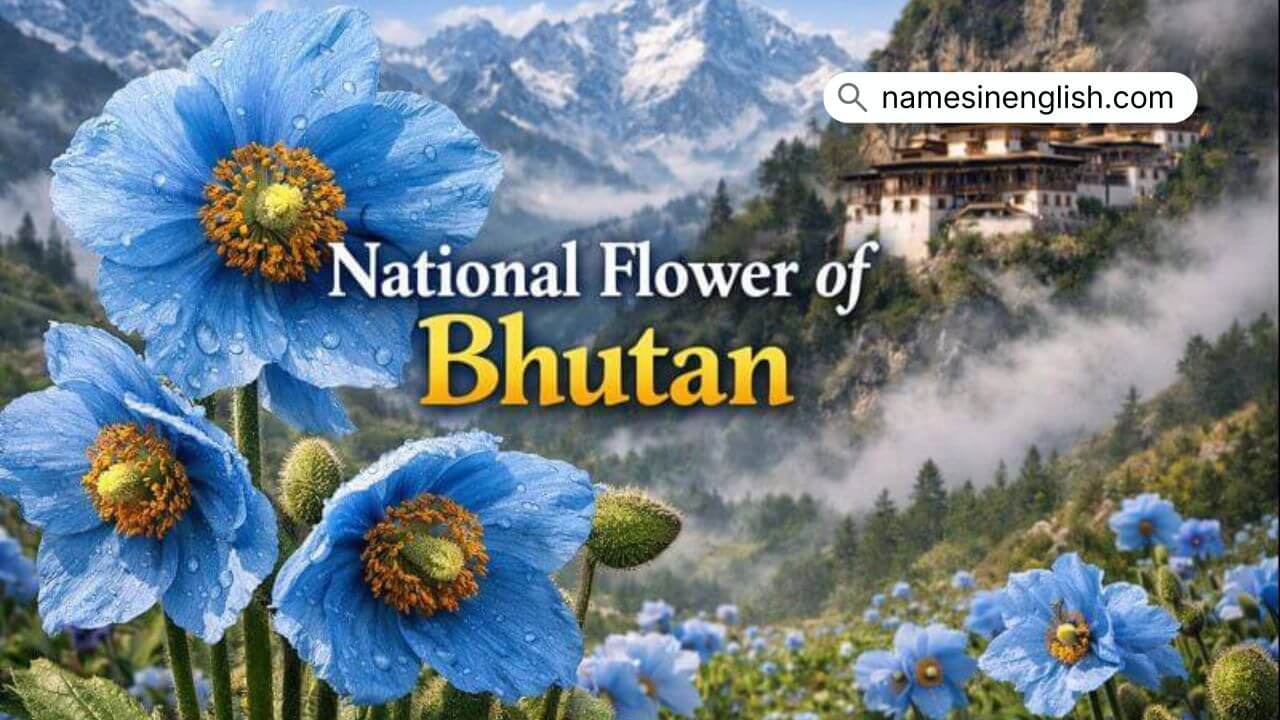

The National Flower of Bhutan, the breathtaking Blue Poppy, is one of the world’s rarest and most captivating mountain flowers. Blooming in the cool, high-altitude landscapes of the Himalayas, this striking blue blossom symbolizes purity, resilience, and the natural beauty of Bhutan. In this article, you’ll learn why the National Flower of Bhutan is so unique, explore its history and symbolism, discover where it grows, and uncover fascinating facts that make the Blue Poppy one of the most extraordinary flowers on Earth.
What Is the National Flower of Bhutan?
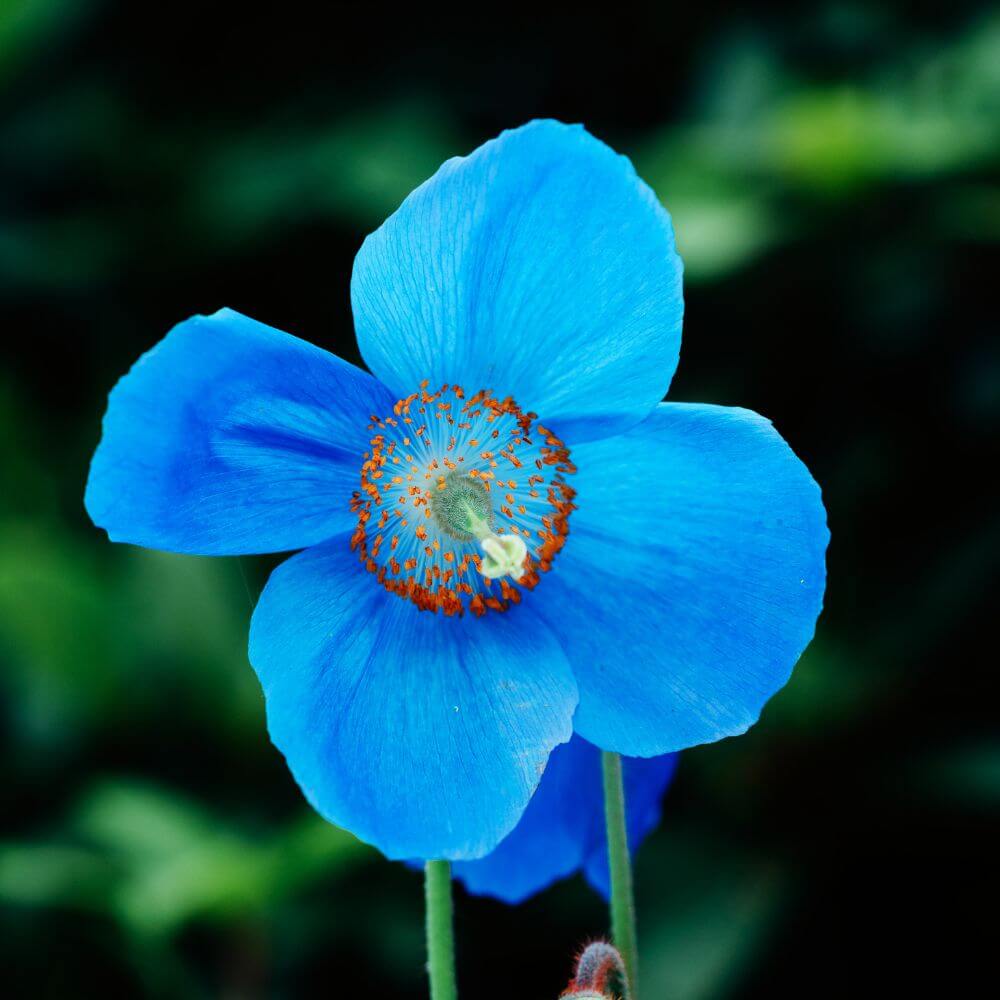
The National Flower of Bhutan is the Blue Poppy (Meconopsis grandis). It was declared Bhutan’s national flower in 1933 and naturally grows at elevations between 3,500 and 4,500 meters in the eastern Himalayas. The flower is known for its vivid blue petals, short blooming season, and extreme rarity in the wild.
Why Bhutan Chose the Blue Poppy
Bhutan doesn’t choose national symbols lightly. The Blue Poppy reflects values the country actively protects.
First, it’s native, not imported. The flower grows naturally in Bhutan’s alpine meadows and forest edges.
Second, it’s rare and fragile. Much like Bhutan’s cautious approach to modernization, the Blue Poppy thrives only when conditions are just right.
Third, it embodies quiet strength. It survives snow, thin air, and brutal winds without showiness. That resonates deeply with Bhutanese culture.
I find it telling that Bhutan chose a flower most people will never see in person. It sends a message: value isn’t measured by visibility.
The Science Behind the World’s Rarest Blue Poppy
Botanically, Meconopsis grandis is exceptional.
Researchers from the Royal Botanic Garden Edinburgh confirmed that true blue pigmentation in flowers is extremely rare in nature. Most blue flowers lean purple or violet. The Blue Poppy’s color comes from a complex interaction between anthocyanin pigments and soil chemistry.
Key scientific traits include:
- Blooms only once a year, usually June to July
- Requires cool temperatures and high humidity
- Cannot tolerate heat or direct sun for long
- Produces seeds that lose viability quickly
Where the Blue Poppy Grows in Bhutan
You won’t find the Blue Poppy in gardens or city parks.
In Bhutan, it grows mainly in:
- Lingshi and Soe regions
- Upper Haa Valley
- Jomolhari foothills
- Moist alpine slopes near melting snow
Adventure travelers sometimes hike for days without spotting one. Then suddenly, a single bloom appears beside a stream or rocky ledge. Locals consider that moment a blessing, not a guarantee.
Cultural Meaning in Bhutanese Life
Unlike lotus flowers in Egypt or cherry blossoms in Japan, the Blue Poppy isn’t heavily commercialized.
In Bhutanese symbolism, it represents:
- Purity through hardship
- Spiritual endurance
- Harmony with harsh environments
- Sacred natural balance
You’ll see it referenced in:
- Traditional paintings
- Educational materials
- Conservation emblems
- National identity discussions
Interestingly, Bhutanese folklore doesn’t romanticize the flower. Instead, it treats it with respectful distance. That restraint is part of the culture.
Is the Blue Poppy Endangered?
Yes, but not officially extinct or critically endangered.
Threats include:
- Rising alpine temperatures
- Habitat disturbance from trekking routes
- Illegal collection by plant collectors
- Reduced snowpack affecting soil moisture
Bhutan’s conservation laws strictly prohibit picking or exporting native flora. This protection is one reason Bhutan still has wild populations, while similar species have vanished elsewhere in the Himalayas.
According to conservation assessments discussed by Himalayan ecological researchers, Bhutan’s strict environmental policy has slowed population decline more effectively than neighboring regions.
Rarity as a Choice
Most articles frame the Blue Poppy’s rarity as a problem to solve.
I see it differently.
Bhutan doesn’t try to make the Blue Poppy common. There are no mass cultivation campaigns. No tourism farms. No commercialization push.
That restraint turns rarity into a cultural statement.
In a world obsessed with accessibility, Bhutan protects something by letting it remain difficult to reach. The Blue Poppy isn’t rare because humans failed to cultivate it. It’s rare because Bhutan chose not to tame it.
That’s a powerful counter-narrative.
Blue Poppy vs Other National Flowers
Compared to other national flowers:
- Japan’s cherry blossom thrives in cities
- India’s lotus grows widely in ponds
- Switzerland’s edelweiss is protected but accessible
Bhutan’s Blue Poppy stands apart because:
- It cannot survive outside alpine conditions
- It resists domestication
- It rewards patience, not convenience
For botanical researchers, that makes it invaluable. For travelers, unforgettable.
Can You Grow Bhutan’s Blue Poppy at Home?
Technically yes. Realistically no.
Some botanical gardens in Europe have managed controlled growth under lab-like conditions. Home gardeners almost always fail because:
- Temperatures are too warm
- Soil drainage isn’t precise
- Seeds lose viability quickly
- Humidity levels fluctuate
This isn’t a plant that forgives mistakes.
National Flower of Bhutan in a Changing World
The National Flower of Bhutan isn’t famous because it’s flashy. It matters because it reflects a worldview that prioritizes balance over dominance.
As climate pressures increase, the Blue Poppy reminds us that some species survive only when humans step back.
That lesson feels more relevant than ever.
FAQs About National Flower of Bhutan
What is the national flower of Bhutan?
The national flower of Bhutan is the Himalayan Blue Poppy (Meconopsis grandis), known for its rare blue color and alpine habitat.
What does the Himalayan blue poppy symbolize?
The Himalayan blue poppy symbolizes purity, resilience, and harmony with nature, reflecting Bhutan’s respect for fragile mountain ecosystems.
What is the national symbol of Bhutan?
Bhutan’s national symbol is the Druk (Thunder Dragon), representing strength, protection, and the country’s name, Druk Yul (Land of the Thunder Dragon).
What do flowers symbolize in Bhutanese culture?
In Bhutanese culture, flowers symbolize spiritual purity, impermanence, and balance with nature, often linked to Buddhist values.
Why is the Blue Poppy important to Bhutan today?
The Blue Poppy is important because it reflects Bhutan’s environmental ethics, showing how rare species survive when nature is protected rather than exploited.
Final Thoughts on National Flower of Bhutan
The National Flower of Bhutan, the world’s rarest Blue Poppy, isn’t just a botanical curiosity. It’s a symbol shaped by altitude, climate, and cultural choice.
If you’re a researcher, it offers insight into alpine resilience.
If you’re a traveler, it rewards patience and respect.
If you’re simply curious, it tells a story of a country that protects beauty by refusing to exploit it.
If this fascinated you, explore how other nations express identity through nature, or dive deeper into flora and conservation stories. Nature always has more to say if we’re willing to listen.
- National Flower of Switzerland: Edelweiss of the Alps
- National Flower of Egypt: The Death-Defying Lotus
- 23 Flower Names by Season: Spring, Summer, Fall & Winter
- Kansas State Flower: 4 Surprising Benefits of Sunflower
For detailed botanical classification and conservation research on Himalayan Blue Poppy, the Royal Botanic Garden Edinburgh provides one of the most trusted profiles on Meconopsis grandis: journals.rbge.org.uk