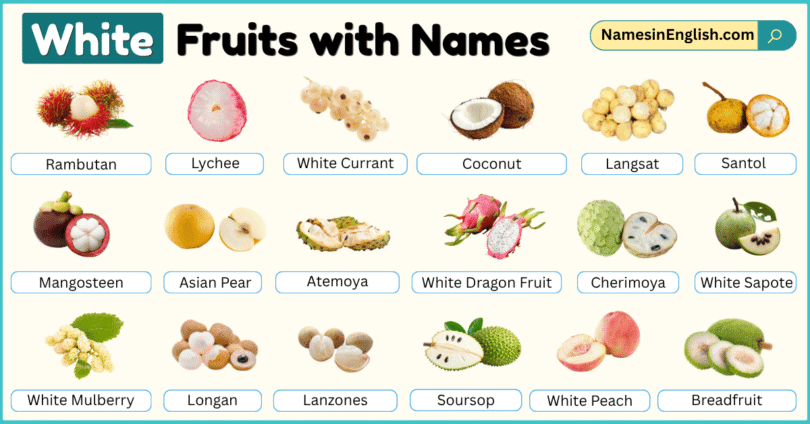

White fruits are less common than red, yellow, or green fruits, but many well-known fruits have white, creamy, ivory, or pale-colored flesh. Some examples include lychee, rambutan, mangosteen, white mulberry, white currant, coconut, pear, and dragon fruit. Learning white fruits names in English helps ESL students improve food vocabulary and describe fruit color, texture, taste, shape, and internal parts more accurately. Some white fruits are pale on the outside, while others have colorful skins with white flesh inside. In this article, you will learn common and less familiar white fruits, their characteristics, useful vocabulary, and simple ways to describe them correctly in English.
What Are White Fruits?
White fruits are fruits that naturally have white, cream, ivory, pale yellow, or translucent flesh, skin, or other edible parts when ripe. A fruit does not need to be completely white to belong to this group.
For example, lychee has red or pink skin but translucent white flesh. Mangosteen has a dark purple rind but soft white segments inside. Similarly, white-fleshed dragon fruit has bright pink skin with white pulp.
This means that the term white fruit is often based on the color of the edible flesh rather than the outer skin.
White Fruits with Names in English
The following table includes common and less familiar fruits that have white, creamy, pale, or translucent edible flesh.
| No. | White Fruit Name | Typical Flesh Color | Common Taste |
|---|---|---|---|
| 1 | Lychee | Translucent white | Sweet and floral |
| 2 | Rambutan | Translucent white | Sweet |
| 3 | Mangosteen | White | Sweet and tangy |
| 4 | White Mulberry | White to pale cream | Sweet |
| 5 | White Currant | Translucent white | Sweet and tart |
| 6 | Coconut | White | Mild and slightly sweet |
| 7 | White Dragon Fruit | White | Mildly sweet |
| 8 | Asian Pear | White to cream | Sweet and juicy |
| 9 | Longan | Translucent white | Sweet |
| 10 | Lanzones | Translucent white | Sweet and tangy |
| 11 | Langsat | Pale white | Sweet and sour |
| 12 | Santol | White | Sweet and sour |
| 13 | White Sapote | White to cream | Sweet |
| 14 | Custard Apple | Creamy white | Sweet |
| 15 | Sugar Apple | Creamy white | Very sweet |
| 16 | Soursop | White | Sweet and tart |
| 17 | Cherimoya | Creamy white | Sweet |
| 18 | Atemoya | White to cream | Sweet |
| 19 | Bael | Pale cream to orange | Sweet and aromatic |
| 20 | Breadfruit | White to cream | Mild |
| 21 | Jackfruit | Pale yellow to cream | Sweet |
| 22 | White Peach | White to cream | Sweet |
| 23 | White Nectarine | White | Sweet |
| 24 | White Strawberry | White | Sweet and mildly tart |
| 25 | White Fig | Pale cream | Sweet |
| 26 | White Pomegranate | Pale or translucent | Sweet and mild |
| 27 | White Guava | White | Sweet and aromatic |
| 28 | White Grapes | Pale green to translucent | Sweet |
| 29 | Pear | White to cream | Sweet |
| 30 | Jicama Fruit | Pale flesh | Mild |
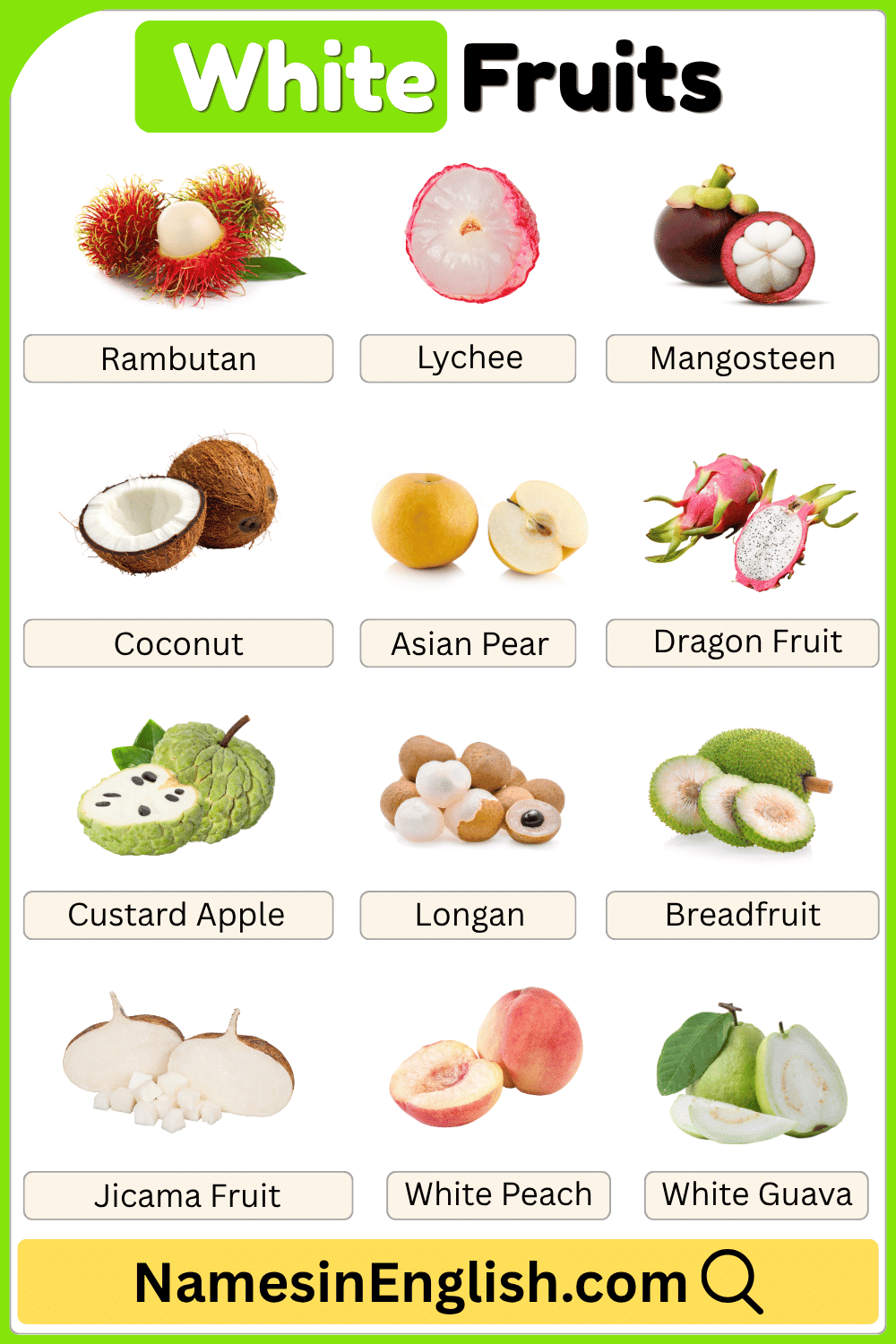
White Fruits Names in English
Common White Fruits with Names and Their Characteristics
Learning the appearance, taste, and structure of each fruit makes vocabulary easier to remember and use.
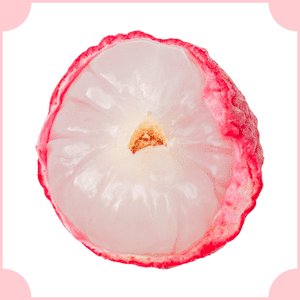
1. Lychee
Lychee is a small round fruit with rough red or pink skin. When the skin is removed, the fruit reveals smooth, translucent white flesh.
The flesh is juicy, sweet, and aromatic. A single shiny brown seed is usually found in the center. Lychee is commonly eaten fresh and is also used in drinks, desserts, and fruit salads.
2. Rambutan
Rambutan is a tropical fruit with a red, yellow, or orange outer skin covered in soft hair-like projections.
Inside, it has juicy, translucent white flesh surrounding one seed. Its taste is sweet and somewhat similar to lychee, although the texture and flavor may vary by variety.

3. Mangosteen
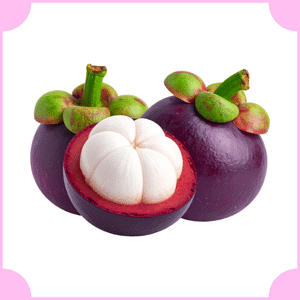
Mangosteen has a thick dark purple rind and soft white flesh divided into several segments.
The edible part has a delicate sweet and slightly tangy flavor. Mangosteen is a good example of a fruit whose outer color is very different from the color inside.
4. White Mulberry
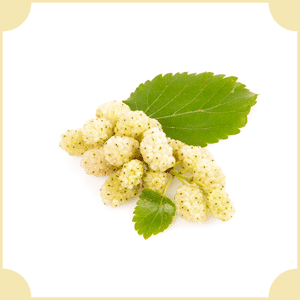
White mulberry is an elongated fruit made up of many tiny fruitlets. Despite its name, the fruit can range from white and cream to pale pink or purple depending on variety and maturity.
White mulberries are generally sweet and soft when fully ripe. They may be eaten fresh or dried.
5. White Currant
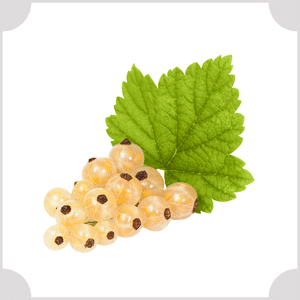
White currant is a small round fruit that grows in clusters. Its skin is pale and translucent, making the seeds inside partly visible.
The taste is usually sweet and tart. White currants are closely related to red currants and are often used in desserts, sauces, jams, and garnishes.
6. Coconut
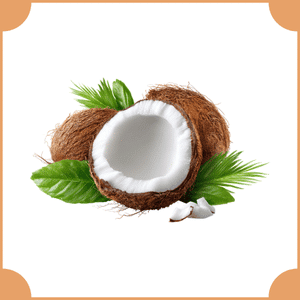
A mature coconut has a hard brown shell with thick white edible flesh inside.
The white flesh can be eaten fresh or dried and is also used to make coconut milk, cream, oil, and shredded coconut. Its taste is mild, slightly sweet, and rich.
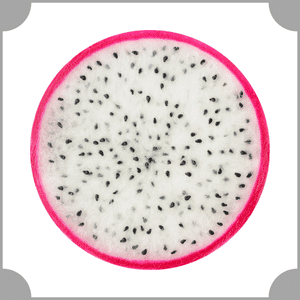
7. White Dragon Fruit
White dragon fruit has bright pink or reddish skin with green scales and white flesh dotted with numerous tiny black seeds.
The flesh is soft and juicy with a mild sweetness. Its scientific classification places it among cactus fruits.
8. Asian Pear
An Asian pear usually has tan, golden, or yellowish-brown skin with crisp white or creamy flesh.
It is rounder than many European pears and has a firm, juicy texture. Its taste is mild, refreshing, and sweet.

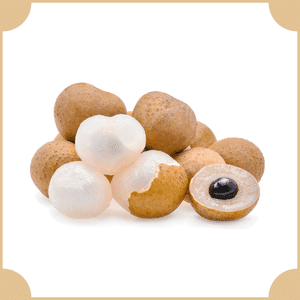
9. Longan
Longan is a small round tropical fruit with light brown skin.
Once peeled, it reveals translucent white flesh surrounding a shiny dark seed. The contrast between the pale flesh and black seed gives it an eye-like appearance, which is reflected in the meaning of its name in some Asian languages.
10. Lanzones
Lanzones, also known as langsat in some regions, are small round or oval fruits with pale yellowish-brown skin.
Inside, the fruit is divided into soft white or translucent segments. The taste can range from sweet to sweet-and-sour.

11. White Sapote
White sapote is a round or oval fruit that often has green or yellowish skin and soft white to creamy flesh.
The flesh is sweet and smooth when ripe. It contains several relatively large seeds in the center.

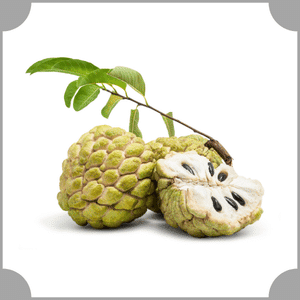
12. Custard Apple
A custard apple has green, segmented skin and soft creamy white flesh.
The flesh is very sweet and contains numerous dark seeds. Its texture is soft and custard-like, which explains its English name.
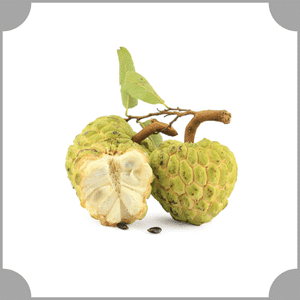
13. Sugar Apple
Sugar apple is closely related to the custard apple. It has green, knobby skin and creamy white flesh inside.
The fruit is very sweet and soft when fully ripe. It contains several hard, dark seeds that are not eaten.
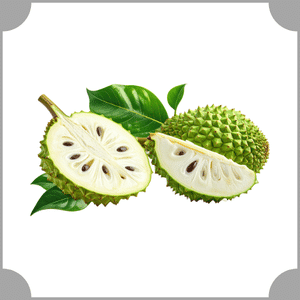
14. Soursop
Soursop is a large tropical fruit with green skin covered in soft spines. Inside, it has white fibrous flesh containing dark seeds.
Its taste combines sweetness with noticeable acidity. It is commonly used in juices, smoothies, desserts, and frozen products.
15. Cherimoya
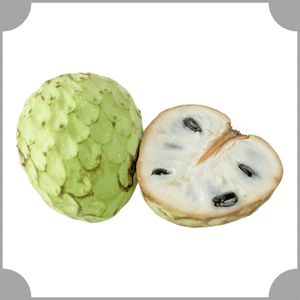
Cherimoya has green scaly skin and creamy white flesh.
Its texture is soft and custard-like, while the flavor is sweet and aromatic. Several dark seeds are usually found throughout the flesh.
White Fruits with White Flesh
Many fruits are considered white because their edible flesh is white or creamy even though their outer skin may have a different color.
| Fruit | Outer Color | Flesh Color |
|---|---|---|
| Lychee | Red or pink | Translucent white |
| Rambutan | Red, yellow, or orange | Translucent white |
| Mangosteen | Purple | White |
| Coconut | Brown shell | White |
| Dragon Fruit | Pink | White |
| Asian Pear | Tan or golden | White |
| Longan | Light brown | Translucent white |
| Custard Apple | Green | Creamy white |
| Soursop | Green | White |
| Cherimoya | Green | Creamy white |
| White Peach | Pink-white skin | White |
| White Guava | Green or yellow | White |
This difference helps learners understand useful fruit vocabulary such as skin, peel, rind, shell, flesh, pulp, seed, and segment.
Tropical White Fruits with Names
Many white-fleshed fruits come from tropical or subtropical regions.
Common examples include:
- Lychee
- Rambutan
- Mangosteen
- Longan
- Lanzones
- Santol
- White Sapote
- Custard Apple
- Sugar Apple
- Soursop
- Cherimoya
- Coconut
These fruits are useful for expanding food vocabulary beyond common apples, pears, and grapes.
Small White Fruits
Some white or pale fruits are naturally small.
Examples include:
- White Currant
- White Mulberry
- Lychee
- Longan
- Rambutan
- White Grapes
- White Strawberry
These fruits may differ greatly in texture and taste even though their edible parts are pale in color.
Large White-Fleshed Fruits
Several larger fruits also have white or creamy flesh.
Examples include:
- Coconut
- Soursop
- Breadfruit
- Cherimoya
- Custard Apple
- White Sapote
Learning fruit size together with color helps ESL students build descriptive vocabulary such as small, medium-sized, large, round, oval, and elongated.
White Fruits with Seeds
Many white fruits contain visible seeds.
Examples include:
- Lychee – usually one large seed
- Longan – one shiny dark seed
- Rambutan – one central seed
- Custard Apple – many dark seeds
- Sugar Apple – many dark seeds
- Cherimoya – several dark seeds
- Soursop – several dark seeds
- Dragon Fruit – many tiny black seeds
The number, size, and position of seeds can help learners identify fruits more accurately.
White Fruits with a Single Large Seed
Some white-fleshed fruits have one prominent seed in the middle.
Common examples include:
- Lychee
- Longan
- Rambutan
These fruits are similar in some ways because all three have pale translucent flesh surrounding a central seed.
White Fruits with Many Seeds
Other fruits contain several or many seeds.
Examples include:
- Custard Apple
- Sugar Apple
- Cherimoya
- Soursop
- White Dragon Fruit
- White Guava
Dragon fruit is particularly easy to recognize because its white flesh is covered with hundreds of tiny black seeds.
White Fruits and Their Shapes
White fruits appear in many different shapes.
| White Fruit | Common Shape |
|---|---|
| Lychee | Round |
| Rambutan | Round |
| Mangosteen | Round |
| Coconut | Round to oval |
| Dragon Fruit | Oval |
| Asian Pear | Round |
| Longan | Round |
| White Sapote | Round or oval |
| Custard Apple | Round or heart-shaped |
| Sugar Apple | Round |
| Soursop | Oval or heart-shaped |
| Cherimoya | Round to heart-shaped |
| White Peach | Round |
| White Guava | Round or oval |
| White Grapes | Round or oval |
These descriptions refer to the common appearance of each fruit. Individual varieties may differ slightly.
White Fruits and Their Tastes
White fruits can have very different flavors.
Sweet White Fruits
Fruits that are usually sweet include:
- Lychee
- Rambutan
- Longan
- White Mulberry
- White Sapote
- Custard Apple
- Sugar Apple
- Cherimoya
- White Peach
Sweet and Tart White Fruits
Some fruits combine sweetness with acidity:
- Mangosteen
- White Currant
- Soursop
- Lanzones
- Santol
- White Strawberry
Mild White Fruits
Some white fruits have a relatively mild flavor:
- Coconut
- White Dragon Fruit
- Asian Pear
- Breadfruit
Taste can change according to the variety, ripeness, and growing conditions.
Why Are Some Fruits White Inside?
Fruit color is influenced by natural pigments and plant compounds. Fruits with red, blue, orange, or purple flesh contain higher amounts of particular colored pigments, while white fruits generally have less visible pigmentation in their edible tissues.
Their pale appearance may range from pure white to cream, ivory, translucent white, or pale yellow.
Color can also vary by variety. For example, peaches may have yellow flesh or white flesh, while dragon fruit may have white, red, or pink flesh depending on the variety.
White Fruits vs. White Vegetables
White fruits should not be confused with foods commonly described as white vegetables.
Examples of white fruits include lychee, mangosteen, coconut, white currant, white mulberry, and white-fleshed dragon fruit.
Foods commonly grouped as white vegetables include cauliflower, garlic, onion, turnip, and some potatoes.
In botany, fruits develop from flowers and contain or are associated with seeds. In everyday cooking, however, foods are often categorized according to taste and use, so botanical and culinary classifications can differ.
How to Describe White Fruits in English
A useful fruit description usually includes its name, size, shape, outer color, inner color, texture, taste, and special features.
For example:
A lychee is a small round fruit with rough pink or red skin. Inside, it has juicy translucent white flesh surrounding one dark seed. It tastes sweet and aromatic.
A simple pattern for ESL learners is:
Fruit name + size + shape + skin color + flesh color + texture + taste + special feature
For example:
A mangosteen is a round tropical fruit with a thick purple rind. It has soft white segments inside and a sweet, slightly tangy taste.
This structure can be used in vocabulary tests, speaking practice, classroom exercises, and descriptive writing.
White Fruits with Names and Their Textures
Texture is another useful way to describe fruit.
| Fruit | Common Texture |
|---|---|
| Lychee | Juicy and soft |
| Rambutan | Juicy and firm |
| Mangosteen | Soft and tender |
| Coconut | Firm and fibrous |
| White Dragon Fruit | Soft and juicy |
| Asian Pear | Crisp and juicy |
| Longan | Juicy and slightly firm |
| Custard Apple | Soft and creamy |
| Soursop | Soft and fibrous |
| Cherimoya | Creamy and smooth |
| White Peach | Soft and juicy |
| White Mulberry | Soft |
Learning texture words helps students move beyond simple descriptions such as good, sweet, or soft.
White Fruits with Names for Beginners
Beginners can start with these easy and useful names:
- Lychee
- Rambutan
- Mangosteen
- Coconut
- White Mulberry
- White Currant
- White Dragon Fruit
- Asian Pear
- Longan
- Custard Apple
- Sugar Apple
- Soursop
- Cherimoya
- White Peach
- White Guava
It is usually easier to learn familiar words first and then move toward less common fruit names.
Common Questions About White Fruits
What Are Some Common White Fruits?
Common white fruits include lychee, rambutan, mangosteen, coconut, white mulberry, white currant, longan, Asian pear, custard apple, and white-fleshed dragon fruit.
Which Fruit Is White Inside?
Many fruits are white inside. Examples include lychee, rambutan, mangosteen, coconut, longan, custard apple, cherimoya, soursop, and white dragon fruit.
Which Fruit Is Purple Outside and White Inside?
Mangosteen is one of the best-known examples. It has a thick purple rind with soft white edible segments inside.
Which Fruit Is Red Outside and White Inside?
Lychee and rambutan commonly have red or pinkish outer coverings with white or translucent flesh inside.
White-fleshed dragon fruit also usually has pink or reddish skin with white flesh.
Which Fruit Is Brown Outside and White Inside?
A mature coconut has a brown shell and white flesh. Longan also has light brown skin with translucent white flesh.
Which Fruit Has White Flesh and Black Seeds?
White dragon fruit has white flesh containing many tiny black seeds. Custard apple and cherimoya also have pale flesh with larger dark seeds.
Is Coconut a White Fruit?
Coconut is commonly included among white fruits because its edible flesh is naturally white. However, its outer appearance changes with maturity. Young coconuts may be green, while mature coconuts usually have a brown fibrous exterior.
Is Lychee a White Fruit?
Yes. Although lychee has red or pink outer skin, its edible flesh is translucent white, so it is commonly included among white-fleshed fruits.
Are Pears White Fruits?
Many pear varieties have white or creamy flesh, even though their skins may be green, yellow, red, or brown. For this reason, pears can be included among white-fleshed fruits.
Is Dragon Fruit White?
Some dragon fruit varieties have white flesh, while others have red, magenta, or pink flesh. Therefore, the term white dragon fruit is more accurate when referring specifically to the white-fleshed type.
Difference Between White Skin and White Flesh
A useful distinction for English learners is the difference between outer color and inner color.
A fruit may have:
- white skin and white flesh,
- colored skin and white flesh,
- pale skin and translucent flesh,
- or white edible segments inside a dark rind.
For example, mangosteen has purple skin and white flesh, while coconut has a brown shell and white flesh.
Using precise expressions such as white-fleshed fruit is more accurate when the outside of the fruit is not white.
Final Thoughts
Learning white fruits with names in English helps students build useful vocabulary related to food, colors, textures, tastes, shapes, and fruit parts. Fruits such as lychee, rambutan, mangosteen, coconut, longan, white currant, white mulberry, custard apple, cherimoya, and white dragon fruit provide clear examples of fruits with white or pale edible flesh.
For ESL learners, it is helpful to study each fruit together with descriptive words such as white, creamy, translucent, juicy, crisp, fibrous, sweet, tangy, flesh, rind, shell, seed, and segment. Connecting the English name with the fruit’s real appearance, taste, and structure makes the vocabulary easier to remember and use correctly in speaking and writing.
Learn More Helpful Articles