
Trees are an essential part of nature, providing oxygen, food, shade, wood, shelter, and habitats for many living creatures. They come in many varieties, including oak, pine, maple, cedar, willow, and palm, each having different leaves, shapes, sizes, and growing conditions. Learning tree names in English is a useful way to improve vocabulary while developing a better understanding of the natural world. In this article, you will learn A to Z list of trees with clear names and pictures, helping kids, students, teachers, gardeners, nature lovers, and English learners easily identify, remember, understand, and use these tree names with confidence.
What Are A to Z Trees?
A to Z trees are tree names arranged according to the 26 letters of the English alphabet, beginning with A and ending with Z. This method helps learners connect letters with useful nature vocabulary and makes tree names easier to remember.
For example:
A – Acacia
B – Banyan
C – Cedar
D – Dogwood
Some letters, such as A, B, C, M, P, and S, have many common tree names. Other letters, including Q, X, Y, and Z, have fewer familiar examples.
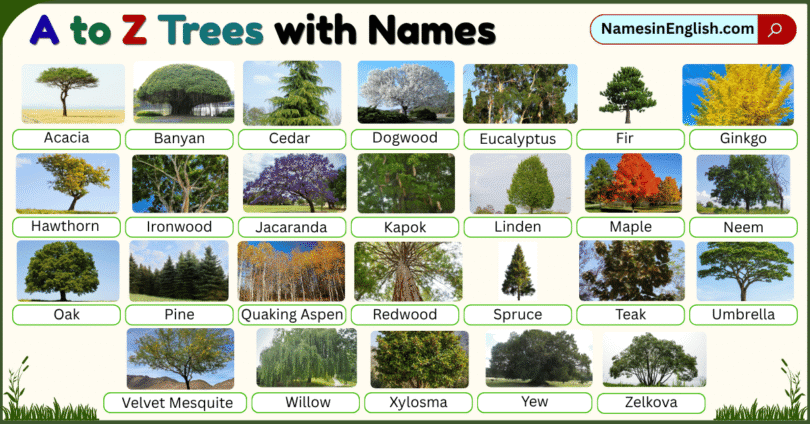
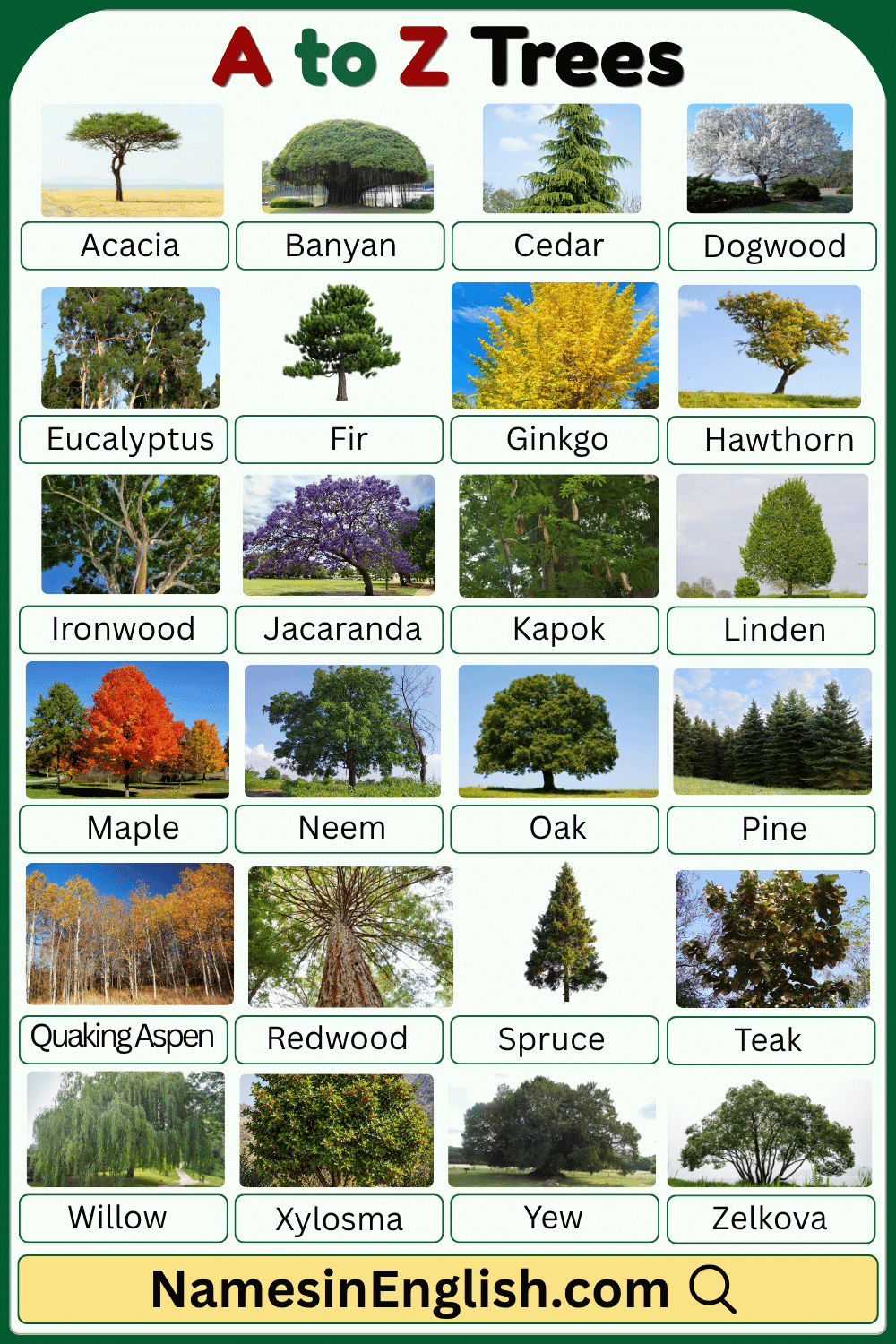
A to Z Trees Names in English
| Letter | Tree Name |
|---|---|
| A | Acacia |
| B | Banyan |
| C | Cedar |
| D | Dogwood |
| E | Eucalyptus |
| F | Fir |
| G | Ginkgo |
| H | Hawthorn |
| I | Ironwood |
| J | Jacaranda |
| K | Kapok |
| L | Linden |
| M | Maple |
| N | Neem |
| O | Oak |
| P | Pine |
| Q | Quaking Aspen |
| R | Redwood |
| S | Spruce |
| T | Teak |
| U | Umbrella Tree |
| V | Velvet Mesquite |
| W | Willow |
| X | Xylosma |
| Y | Yew |
| Z | Zelkova |
A for Acacia
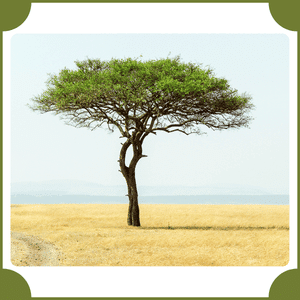
An acacia is a tree or shrub belonging to a large group of flowering plants. Many acacia species grow in warm and dry regions. They often have small leaves or leaf-like structures and produce clusters of yellow or cream-colored flowers.
Example: An acacia tree grows well in many dry areas.
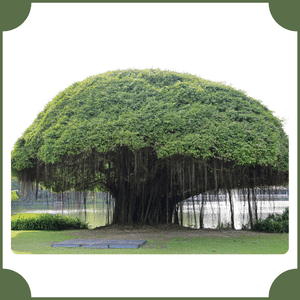
B for Banyan
A banyan tree is a large tropical tree known for producing aerial roots that grow downward from its branches. These roots can eventually reach the soil and become thick supporting structures, allowing an old banyan to spread over a very large area.
Example: People were sitting under the large banyan tree.
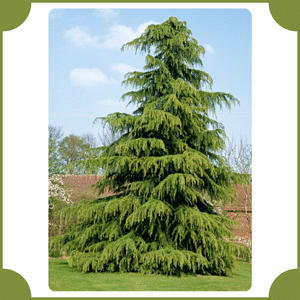
C for Cedar
A cedar is a coniferous tree belonging to the genus Cedrus. True cedars have needle-like leaves and produce cones. Cedars are well known for their attractive appearance and aromatic wood.
Example: The tall cedar tree remained green throughout the winter.
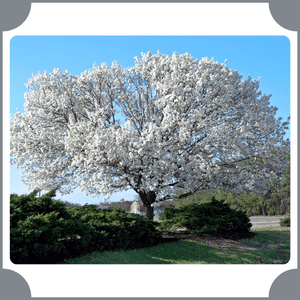
D for Dogwood
A dogwood is a tree or shrub belonging mainly to the genus Cornus. Many dogwoods are grown for their attractive spring flowers or colorful bracts. Some species also produce small fruits.
Example: The dogwood tree looked beautiful in spring.
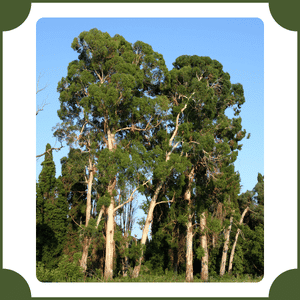
E for Eucalyptus
A eucalyptus is a tree from a large group of plants native mainly to Australia and nearby regions. Many eucalyptus species are evergreen and are recognized by their aromatic leaves.
Example: The leaves of the eucalyptus tree have a strong smell.
F for Fir
A fir is an evergreen conifer belonging to the genus Abies. Fir trees usually have needle-like leaves and upright cones. They commonly grow in cool and mountainous regions.
Example: Snow covered the branches of the fir tree.
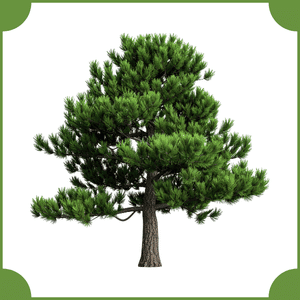
G for Ginkgo
The ginkgo is a distinctive deciduous tree known for its fan-shaped leaves. Its scientific name is Ginkgo biloba, and it is the only living species in its plant division.
Example: The ginkgo tree develops bright yellow leaves in autumn.
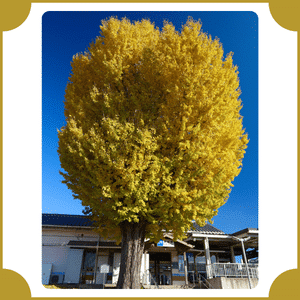
H for Hawthorn
A hawthorn is a small tree or shrub belonging to the genus Crataegus. It commonly produces white or pink flowers followed by small fruits. Many species also have thorny branches.
Example: Birds were feeding on the fruits of the hawthorn tree.
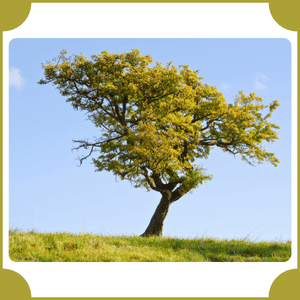
I for Ironwood
Ironwood is a common name used for several different tree species that produce especially hard or dense wood. Because the name applies to more than one species, the exact tree called ironwood can vary by country and region.
Example: The ironwood tree is known for its dense wood.
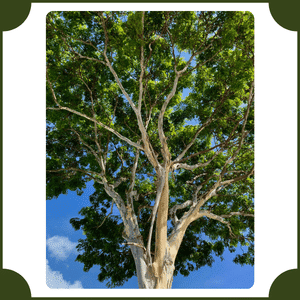
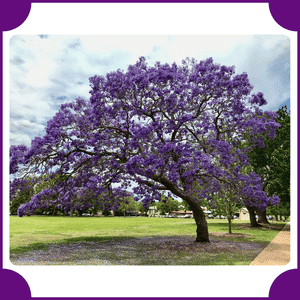
J for Jacaranda
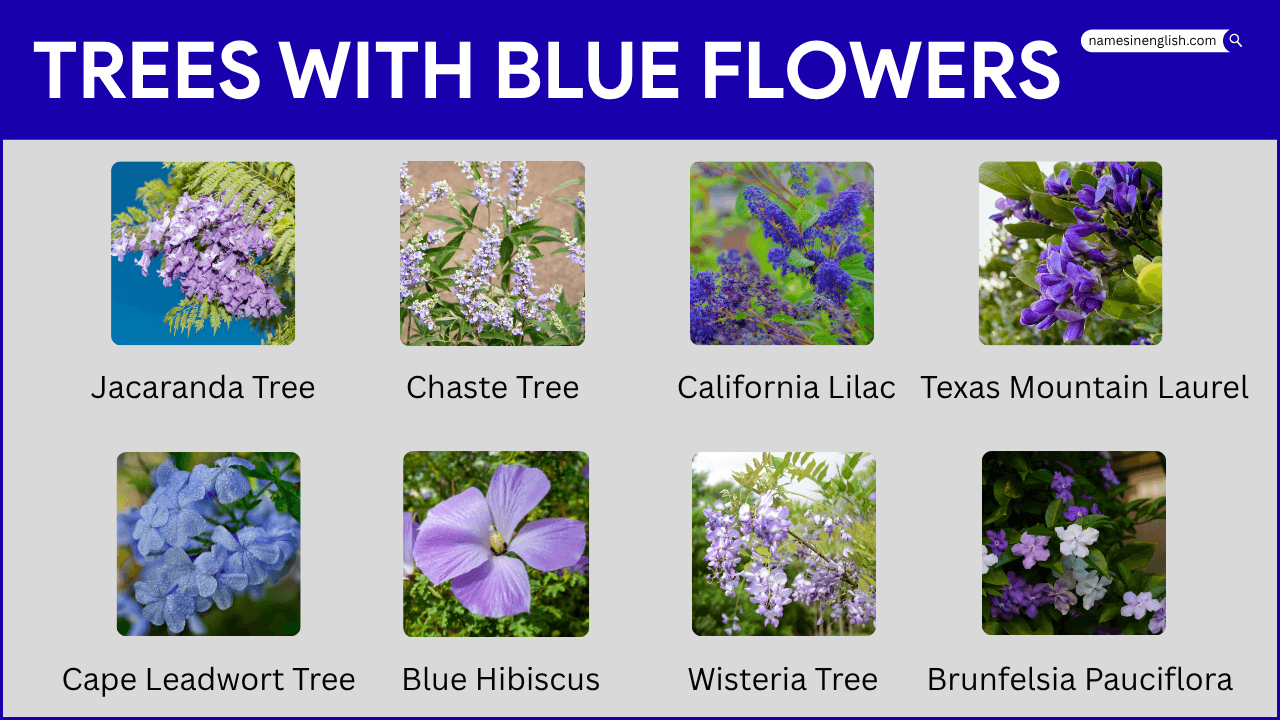
A jacaranda is a flowering tree widely grown in warm regions. It is especially known for producing beautiful clusters of blue, violet, or purple flowers.
Example: The street was lined with flowering jacaranda trees.
K for Kapok
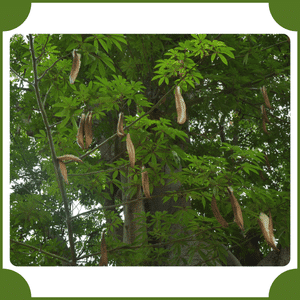
A kapok tree is a large tropical tree, commonly referring to Ceiba pentandra. It can grow very tall and produces seed pods containing soft, cotton-like fibers.
Example: The kapok tree can grow to an impressive height.
L for Linden
A linden is a deciduous tree belonging to the genus Tilia. In some regions, it is also called a lime tree, although it is unrelated to the citrus lime. Linden trees often have heart-shaped leaves and fragrant flowers.
Example: Bees were visiting the flowers of the linden tree.

M for Maple
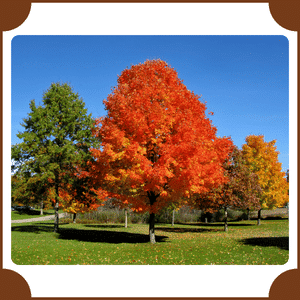
A maple is a tree or shrub belonging to the genus Acer. Many maple species are deciduous and are famous for their colorful autumn leaves. Some maples also produce sap that can be used to make maple syrup.
Example: The maple tree turned red and orange in autumn.
N for Neem
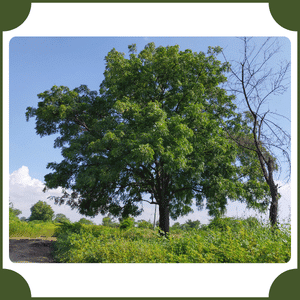
A neem tree is an evergreen or semi-evergreen tree that grows mainly in tropical and subtropical regions. It has compound leaves and small white flowers and has a long history of traditional use.
Example: A large neem tree provides shade near the house.
O for Oak
An oak is a tree or shrub belonging to the genus Quercus. Oaks are well known for their strong wood and fruits called acorns. Many oak species can live for a very long time.
Example: The old oak tree has a thick trunk.
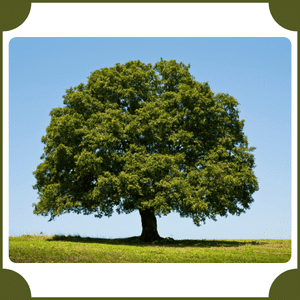
P for Pine
A pine is a conifer belonging to the genus Pinus. Pine trees usually have needle-like leaves and produce woody cones. Most pine species are evergreen.
Example: Several pine trees grow on the mountain.

Q for Quaking Aspen
A quaking aspen is a deciduous tree scientifically known as Populus tremuloides. Its leaves move or tremble easily in light wind because of their flattened leaf stalks.
Example: The leaves of the quaking aspen moved in the breeze.
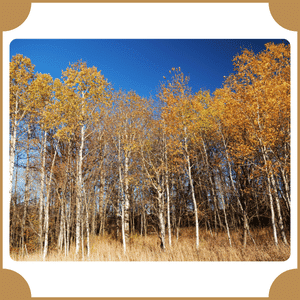
R for Redwood
A redwood is a very large conifer associated especially with western North America. The coast redwood, Sequoia sempervirens, is famous for being among the tallest tree species in the world.
Example: The enormous redwood tree rose high above the forest.
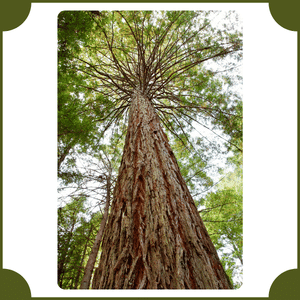
S for Spruce
A spruce is an evergreen conifer belonging to the genus Picea. Spruce trees have stiff needles and hanging cones. They are common in many cool and northern forests.
Example: A row of spruce trees stood beside the road.
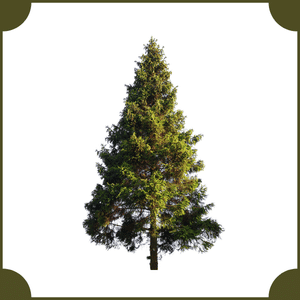
T for Teak
A teak tree is a tropical hardwood tree scientifically known as Tectona grandis. Its wood is valued for strength, durability, and resistance to moisture.
Example: Teak wood is commonly used for furniture.

U for Umbrella Tree
The name umbrella tree is used for several different plants, including species known for leaves or branches that spread in an umbrella-like shape. One well-known example is Heptapleurum actinophyllum, formerly classified as Schefflera actinophylla.
Example: The umbrella tree has large clusters of leaves.

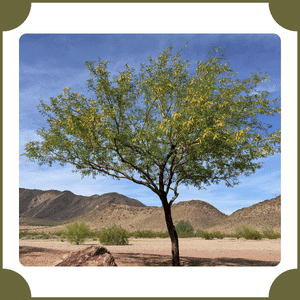
V for Velvet Mesquite
Velvet mesquite is a small to medium-sized tree native to dry parts of North America. It has small leaflets, thorny branches, and seed pods and is well adapted to arid environments.
Example: The velvet mesquite survives in very dry conditions.
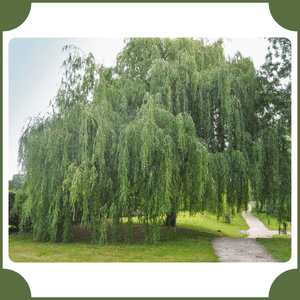
W for Willow
A willow is a tree or shrub belonging to the genus Salix. Many willows grow near rivers, ponds, and other moist areas. Some species, such as the weeping willow, have long hanging branches.
Example: The willow tree grows beside the pond.
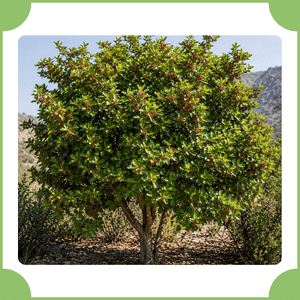
X for Xylosma
Xylosma is a genus containing shrubs and small trees found mainly in tropical and subtropical regions. Some species are grown as ornamental plants because of their attractive evergreen foliage.
Example: The Xylosma tree has glossy green leaves.
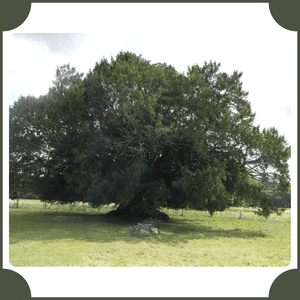
Y for Yew
A yew is an evergreen conifer belonging mainly to the genus Taxus. Yews typically have flat, needle-like leaves and can live for many years. Several parts of the plant contain toxic compounds.
Example: The old yew tree has dense evergreen foliage.
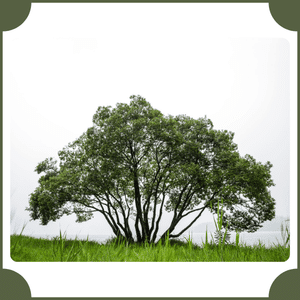
Z for Zelkova
A zelkova is a deciduous tree belonging to the genus Zelkova. It is related to elm trees and is often planted along streets and in parks. Japanese zelkova is particularly popular as an ornamental shade tree.
Example: A zelkova tree was planted beside the walkway.
More A to Z Tree Names
Here are additional tree names for each alphabet letter.
| Letter | More Tree Names |
|---|---|
| A | Acacia, Alder, Apple, Ash, Aspen |
| B | Banyan, Baobab, Beech, Birch, Buckeye |
| C | Cedar, Cherry, Chestnut, Cypress, Catalpa |
| D | Dogwood, Douglas Fir, Date Palm |
| E | Eucalyptus, Elm, Elder |
| F | Fir, Fig, Flame Tree, Frangipani |
| G | Ginkgo, Guava, Golden Shower Tree |
| H | Hawthorn, Hemlock, Hickory, Holly |
| I | Ironwood, Indian Rosewood |
| J | Jacaranda, Juniper, Japanese Maple |
| K | Kapok, Kauri, Kentucky Coffeetree |
| L | Linden, Lemon, Larch, Lychee |
| M | Maple, Mango, Magnolia, Mahogany, Mulberry |
| N | Neem, Nectarine, Norfolk Island Pine |
| O | Oak, Olive, Orange |
| P | Pine, Poplar, Pear, Peach, Plum |
| Q | Quaking Aspen, Queensland Kauri |
| R | Redwood, Redbud, Rowan, Rubber Tree |
| S | Spruce, Sycamore, Sequoia, Sassafras |
| T | Teak, Tamarind, Tulip Tree |
| U | Umbrella Tree, Upas Tree |
| V | Velvet Mesquite, Viburnum Tree |
| W | Willow, Walnut, Whitebeam |
| X | Xylosma, Xanthoceras |
| Y | Yew, Yellowwood |
| Z | Zelkova, Ziziphus |
Common A to Z Trees for Kids and Beginners
Beginners should first learn familiar tree names that are easy to recognize and use in everyday English.
Some useful examples are:
- Apple Tree
- Banyan Tree
- Cedar Tree
- Eucalyptus Tree
- Fir Tree
- Mango Tree
- Maple Tree
- Neem Tree
- Oak Tree
- Orange Tree
- Palm Tree
- Pine Tree
- Willow Tree
- Walnut Tree
- Cherry Tree
After learning these common words, students can move to less familiar names such as ginkgo, kapok, linden, redwood, yew, and zelkova.
Types of Trees in English
Trees can be grouped according to their leaf behavior, botanical structure, habitat, appearance, or practical use.
Deciduous Trees
Deciduous trees lose all their leaves during a particular season each year.
Examples include:
- Maple
- Oak
- Birch
- Willow
- Beech
- Elm
- Aspen
- Zelkova
A deciduous maple may lose its leaves during autumn and grow new leaves the following spring.
Evergreen Trees
Evergreen trees retain living foliage throughout the year. They still lose old leaves or needles, but they replace them gradually.
Examples include:
- Pine
- Fir
- Spruce
- Cedar
- Yew
- Cypress
Coniferous Trees
Coniferous trees belong mainly to groups of plants that reproduce through cones.
Common examples include:
- Pine
- Fir
- Spruce
- Cedar
- Redwood
- Yew
Most conifers are evergreen, although some, such as larches, are deciduous.
Fruit Trees
Fruit trees are commonly grown for the fruits they produce.
Examples include:
- Apple Tree
- Mango Tree
- Orange Tree
- Lemon Tree
- Pear Tree
- Peach Tree
- Cherry Tree
- Fig Tree
- Guava Tree
- Olive Tree
Flowering Trees
Flowering trees are often grown because they produce attractive flowers.
Examples include:
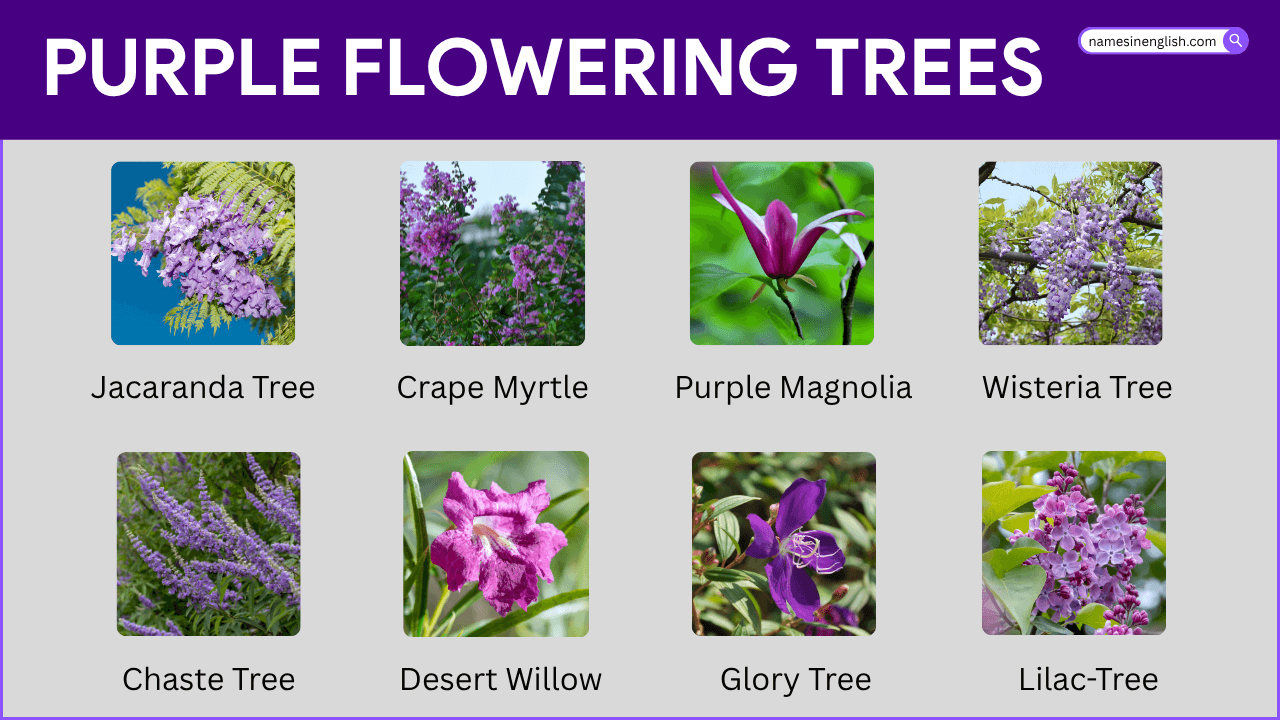
- Jacaranda
- Magnolia
- Cherry Blossom
- Dogwood
- Redbud
- Gulmohar
- Golden Shower Tree
Timber Trees
Timber trees are valued for wood used in construction, furniture, flooring, tools, or other products.
Examples include:
- Teak
- Mahogany
- Oak
- Pine
- Cedar
- Walnut
Trees with Their Common Leaf Types
| Tree | Leaf Type |
|---|---|
| Pine | Needle-like |
| Fir | Needle-like |
| Spruce | Needle-like |
| Maple | Broad |
| Oak | Broad |
| Birch | Broad |
| Eucalyptus | Broad |
| Neem | Compound |
| Walnut | Compound |
| Ash | Compound |
| Cedar | Needle-like or clustered |
| Cypress | Scale-like |
Knowing leaf types helps learners describe trees more accurately.
Parts of a Tree in English
| Tree Part | Meaning |
|---|---|
| Root | Part that anchors the tree and absorbs water and minerals |
| Trunk | Main woody stem |
| Bark | Protective outer layer of the trunk and branches |
| Branch | Woody part growing from the trunk |
| Twig | Small, thin branch |
| Leaf | Plant organ commonly used for photosynthesis |
| Crown | Upper part made of branches and leaves |
| Canopy | Upper leafy layer formed by tree crowns |
| Flower | Reproductive structure of flowering plants |
| Fruit | Structure developing from the flower ovary in flowering plants |
| Seed | Structure capable of producing a new plant |
| Cone | Reproductive structure produced by many conifers |
Useful Words for Describing Trees
English learners can use the following adjectives to describe trees:
| Word | Simple Meaning |
|---|---|
| Tall | Having great height |
| Short | Not very tall |
| Thick | Wide from one side to another |
| Thin | Narrow |
| Leafy | Having many leaves |
| Evergreen | Keeping living foliage throughout the year |
| Deciduous | Losing all leaves seasonally |
| Woody | Made of or containing wood |
| Flowering | Producing noticeable flowers |
| Fruit-bearing | Producing fruit |
| Spreading | Growing widely outward |
| Dense | Growing closely together |
| Mature | Fully grown |
| Young | Not fully mature |
| Ancient | Extremely old |
For example:
“The banyan is a large, spreading tree with many aerial roots.”
How to Describe a Tree in English
A simple tree description can mention its name, height, trunk, leaves, flowers, fruit, habitat, and important features.
Oak Tree
An oak is a woody tree or shrub belonging to the genus Quercus. Many oak species have broad leaves, produce acorns, and develop strong trunks.
Pine Tree
A pine is a conifer with needle-like leaves and cones. Most pine species are evergreen and commonly grow in temperate or mountainous regions.
Mango Tree
A mango tree is a tropical evergreen tree with long leaves and a broad crown. It produces mangoes and grows best in warm climates.
Willow Tree
A willow usually grows well in moist areas. Some willow species have narrow leaves and long, flexible branches.
Common Grammar Patterns with Tree Names
This Is a + Tree Name
This is a maple tree.
This is an oak tree.
This structure is useful when identifying a single tree.
These Are + Plural Tree Names
These are pine trees.
These are mango trees.
Use this form when identifying more than one tree.
Tree + Is + Adjective
The oak tree is tall.
The willow tree is beautiful.
This structure describes the appearance or condition of a tree.
Tree + Has + Feature
The pine tree has needles.
The banyan tree has aerial roots.
This structure is useful for describing physical characteristics.
Tree + Produces + Object
The oak tree produces acorns.
The mango tree produces mangoes.
This form explains what a tree grows or produces.
Tree, Shrub, and Plant: What Is the Difference?
| Word | General Meaning |
|---|---|
| Tree | A woody perennial plant usually having a main trunk |
| Shrub | A woody plant usually smaller than a tree and often having several stems |
| Bush | An everyday word often used for a dense shrub |
| Plant | A broad term that includes trees, shrubs, grasses, herbs, and many other organisms |
The difference between a tree and a shrub is not always strict. Some species can grow either as a small tree or as a large shrub.
Singular and Plural Forms of Tree Names
Most English tree names form their plural by adding -s or -es.
| Singular | Plural |
|---|---|
| Oak | Oaks |
| Pine | Pines |
| Maple | Maples |
| Cedar | Cedars |
| Willow | Willows |
| Birch | Birches |
| Ash | Ashes |
| Cherry | Cherries |
| Mango Tree | Mango Trees |
| Yew | Yews |
| Cypress | Cypresses |
| Peach Tree | Peach Trees |
For example:
There is one oak tree.
There are five oak trees.
Tree Names and Their Common Uses
| Tree | Common Use or Feature |
|---|---|
| Apple | Fruit |
| Mango | Fruit |
| Oak | Timber and shade |
| Pine | Timber and landscaping |
| Teak | Durable timber |
| Walnut | Nuts and wood |
| Cedar | Wood and landscaping |
| Maple | Shade, wood, and sap in some species |
| Jacaranda | Ornamental flowers |
| Banyan | Shade |
| Eucalyptus | Wood, landscaping, and oils from some species |
| Neem | Shade and traditional uses |
| Redwood | Forest tree and timber |
| Coconut Palm | Fruit and other useful plant products |
The use of a tree can vary according to the species, region, climate, and local practices.
Why Trees Are Important
Trees play important roles in natural and human environments. Their leaves carry out photosynthesis, a process in which plants use light energy, water, and carbon dioxide to produce sugars.
During photosynthesis, oxygen is released as a by-product.
Trees also:
- Store carbon in their tissues
- Provide habitats for wildlife
- Help protect soil
- Provide shade
- Produce fruits, nuts, and seeds
- Supply wood and other materials
- Form an important part of forests and ecosystems
Different tree species perform these roles in different environments.
Interesting Tree Facts
Some tree species can live for hundreds or even thousands of years.
Coast redwoods are among the tallest living trees, while giant sequoias are famous for their enormous trunk volume.
The ginkgo represents an ancient plant lineage and is easily recognized by its fan-shaped leaves.
Banyan trees can spread outward through aerial roots, while some desert trees develop adaptations that help them survive with limited rainfall.
How to Learn A to Z Tree Names Easily
Start by memorizing one tree for each letter instead of trying to learn dozens of names at once.
For example:
A – Acacia
B – Banyan
C – Cedar
D – Dogwood
After becoming familiar with these basic names, add two or three more examples under each letter.
Using pictures can make the learning process easier because learners can connect the written word with the tree’s leaves, bark, flowers, fruits, or overall shape.
Writing short sentences is also useful. Instead of memorizing only oak, learn:
“An oak tree produces acorns.”
This gives the vocabulary word clear meaning and context.
Frequently Asked Questions About A to Z Trees
What tree starts with A?
Common tree names beginning with A include acacia, alder, apple, ash, and aspen.
What tree starts with B?
Examples include banyan, baobab, beech, birch, and buckeye.
What tree starts with C?
Common examples are cedar, cherry, chestnut, cypress, and catalpa.
What tree starts with J?
Jacaranda, juniper, and Japanese maple are examples associated with the letter J.
What tree starts with K?
Examples include kapok, kauri, and Kentucky coffeetree.
What tree starts with Q?
Quaking aspen is a useful A-to-Z example beginning with Q. Queensland kauri is another possible example.
What tree starts with X?
Xylosma is a genus that includes several small trees and shrubs. Xanthoceras is another plant name beginning with X.
What tree starts with Y?
Yew and yellowwood are familiar examples beginning with Y.
What tree starts with Z?
Zelkova is a well-known tree name beginning with Z. Ziziphus also includes tree and shrub species such as jujube.
What are the most common tree names in English?
Common tree names include oak, pine, maple, willow, cedar, birch, mango, apple, neem, eucalyptus, fir, spruce, walnut, and cherry.
What are the two basic tree types based on leaf retention?
Trees are often described as deciduous or evergreen. Deciduous trees lose all their leaves during a particular season, while evergreen trees retain living foliage throughout the year.
A to Z Trees Names in English with Pictures
Learn more helpful articles