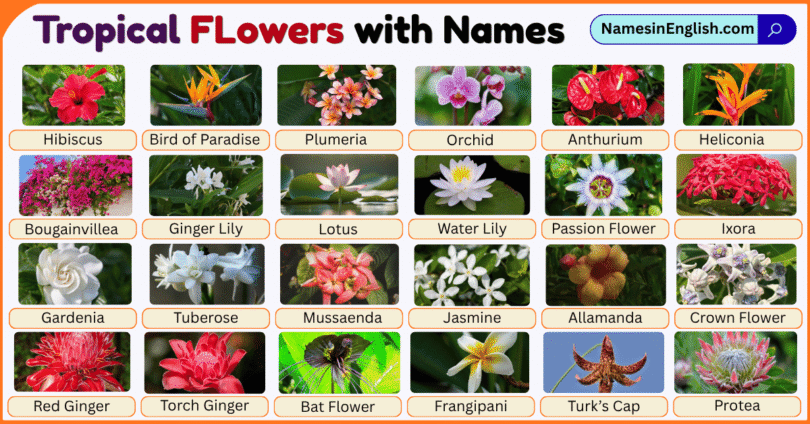

Tropical flowers are colorful, attractive blooms that grow naturally in warm regions with high temperatures and plenty of moisture. Learning tropical flowers with names in English helps kids, beginners, and ESL learners improve plant vocabulary while discovering beautiful flowers from rainforests, islands, gardens, and other tropical environments. These flowers vary greatly in color, shape, size, fragrance, and growing habit. Some grow on trees, while others grow on shrubs, vines, or herbaceous plants. In this guide, you will learn common tropical flower names, their simple meanings, major types, features, uses, differences, vocabulary, examples, interesting facts, and helpful FAQs.
What Are Tropical Flowers?
Tropical flowers are flowers produced by plants that naturally grow in tropical or subtropical climates. These regions are generally warm for most or all of the year and often receive high rainfall or humidity.
Tropical flowers are known for their bright colors, unusual shapes, large petals, strong fragrances, and decorative value. However, not every tropical flower is large or brightly colored.
In everyday English, the term tropical flower usually refers to flowers associated with warm climates. Scientifically, these plants may belong to many different families, genera, and species.
Tropical Flowers with Names in English
The following flowers are some of the most familiar and useful tropical flower names for English learners.
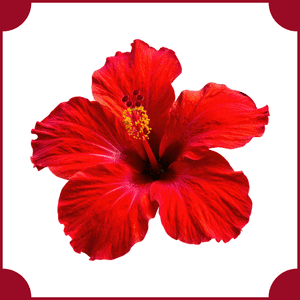
1. Hibiscus
A hibiscus is a large, showy flower that usually has five broad petals and a long central structure called a staminal column. It commonly appears in red, pink, yellow, orange, white, and mixed colors.
Hibiscus plants are widely grown in tropical and subtropical gardens because of their bright flowers and attractive appearance.
Example: A red hibiscus was growing beside the garden wall.
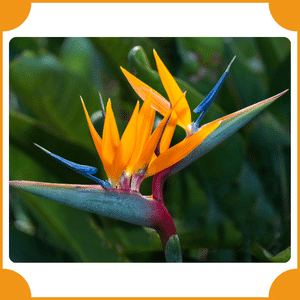
2. Bird of Paradise
A bird of paradise is an unusual tropical flower with orange and blue parts that resemble the shape of a colorful bird.
The plant belongs to the genus Strelitzia and is native to southern Africa. It is widely grown as an ornamental plant in warm regions.
Example: The bird of paradise flower looked like a bright bird.
3. Plumeria
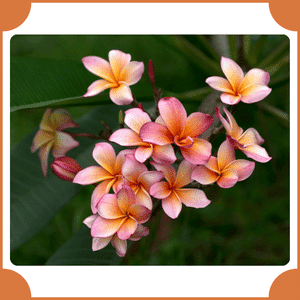
A plumeria is a fragrant tropical flower with five thick, rounded petals. It commonly appears in white, yellow, pink, red, or combinations of these colors.
Plumeria is also known as frangipani and grows on small trees or shrubs in warm climates.
Example: The plumeria flowers had a sweet fragrance.
4. Orchid
An orchid is a flower belonging to the large plant family Orchidaceae. Tropical regions contain a great number of orchid species with many different colors, shapes, and sizes.
Some tropical orchids grow on trees without taking nutrients from them. These are called epiphytes.
Example: She bought a purple orchid for her room.

5. Anthurium
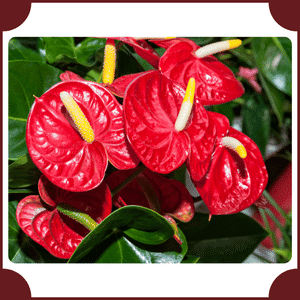
An anthurium is a tropical flowering plant known for its glossy, heart-shaped structure called a spathe, which is often red, pink, white, or green.
The small true flowers are arranged on the central spike called a spadix.
Example: The red anthurium looked bright and shiny.
6. Heliconia
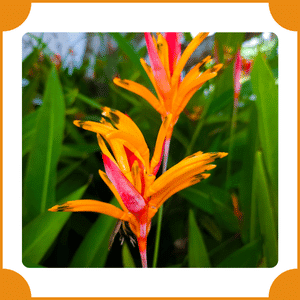
A heliconia is a tropical plant known for its striking red, orange, yellow, or pink bracts. These colorful bracts surround the plant’s smaller true flowers.
Heliconias are native mainly to tropical regions of the Americas and are popular in ornamental gardens.
Example: The heliconia added bright color to the garden.
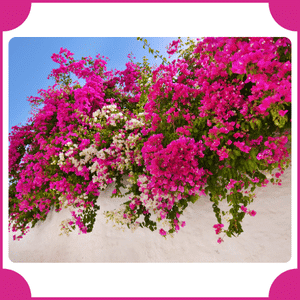
7. Bougainvillea
A bougainvillea is a tropical or subtropical climbing plant famous for its bright papery bracts. These bracts may be purple, pink, red, orange, white, or yellow.
The actual flowers are small and usually appear inside the colorful bracts.
Example: Pink bougainvillea covered the garden wall.
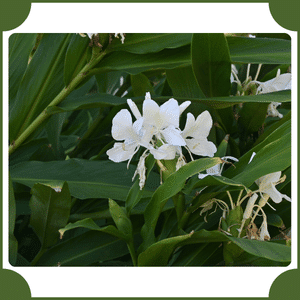
8. Ginger Lily
A ginger lily is a flowering plant in the ginger family. It produces attractive, often fragrant flowers that may be white, yellow, orange, or other colors depending on the species.
Ginger lilies are commonly grown in warm, moist gardens.
Example: The white ginger lily smelled sweet.
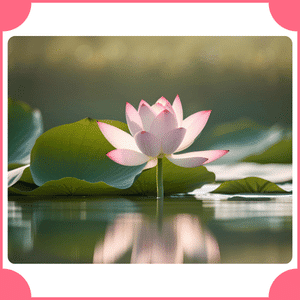
9. Lotus
A lotus is an aquatic flowering plant with large, round leaves and beautiful flowers that rise above the water.
The sacred lotus, Nelumbo nucifera, is native to parts of Asia and is culturally important in several countries.
Example: A pink lotus bloomed above the pond.
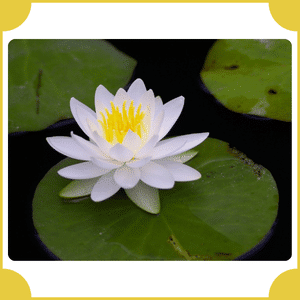
10. Water Lily
A water lily is an aquatic plant with floating leaves and attractive flowers. Tropical water lilies can produce blue, purple, pink, white, yellow, or red flowers.
Water lilies belong mainly to the family Nymphaeaceae.
Example: The water lily floated on the surface of the pond.
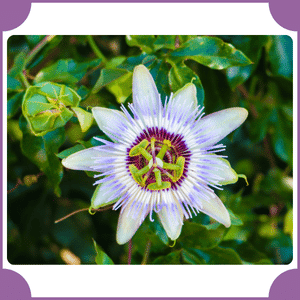
11. Passion Flower
A passion flower is an unusual flower with a complex structure and a ring of thread-like parts called a corona.
Passion flowers belong to the genus Passiflora. Many species are tropical or subtropical vines.
Example: The purple passion flower grew along the fence.
12. Ixora
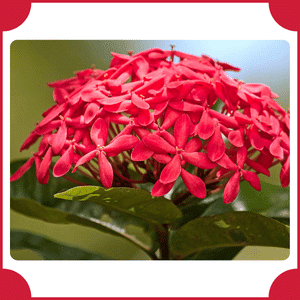
An ixora is a tropical shrub that produces clusters of many small, four-petaled flowers.
The flowers commonly appear in red, orange, pink, yellow, or white and are widely used in tropical landscaping.
Example: Red ixora flowers grew in a large cluster.
13. Gardenia
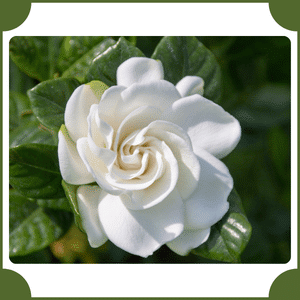
A gardenia is a fragrant flower usually known for its creamy white petals and glossy green leaves.
Many gardenia species grow naturally in tropical and subtropical regions of Africa, Asia, the Pacific, and Australia.
Example: The white gardenia had a strong, pleasant smell.
14. Tuberose
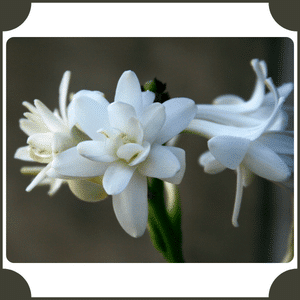
A tuberose is a tropical plant that produces tall stems of white, strongly fragrant flowers.
Its scientific name is Agave amica, though it was formerly classified as Polianthes tuberosa. It is especially valued in perfume and floral arrangements.
Example: The tuberose filled the room with fragrance.
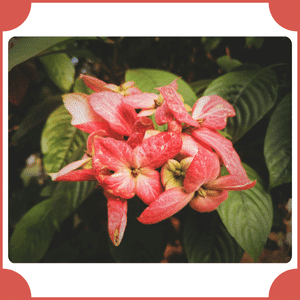
15. Mussaenda
A mussaenda is a tropical shrub known for colorful enlarged sepals surrounding its small flowers.
Depending on the variety, these decorative parts may appear pink, white, red, or other colors.
Example: The pink mussaenda looked beautiful in the garden.
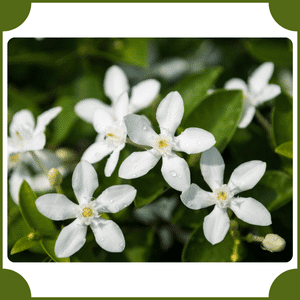
16. Jasmine
Jasmine refers to flowering plants in the genus Jasminum. Many species grow in tropical and subtropical areas and are known for strongly scented white or yellow flowers.
Jasmine is commonly used in gardens, perfumes, oils, and floral decorations.
Example: The jasmine flowers smelled sweet at night.
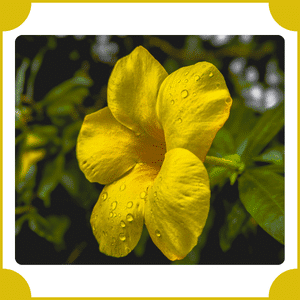
17. Allamanda
An allamanda is a tropical flowering plant known for large, trumpet-shaped flowers, usually bright yellow.
It grows as a shrub or climbing plant in warm climates and is widely used as an ornamental.
Example: Yellow allamanda flowers covered the fence.
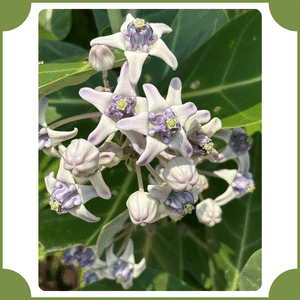
18. Crown Flower
A crown flower is produced by Calotropis gigantea, a tropical shrub with waxy, star-shaped flowers.
The flowers are commonly white, pale purple, or lavender and have a crown-like structure in the center.
Example: The crown flower had pale purple petals.
19. Red Ginger
Red ginger is a tropical plant known for bright red or pink flower-like structures arranged on upright stems.
The colorful structures are mainly bracts, while the true flowers are smaller and less noticeable.
Example: The red ginger stood tall beside the path.
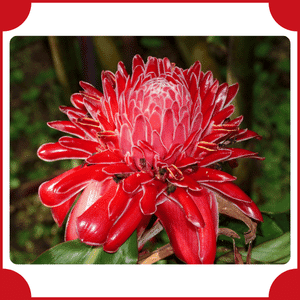
20. Torch Ginger
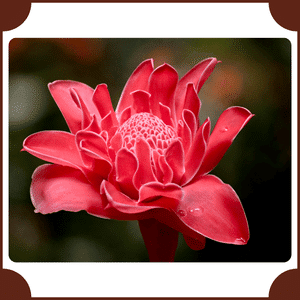
A torch ginger is a tropical plant that produces large, waxy flower heads in shades of pink, red, or white.
It belongs to the ginger family and is native to Southeast Asia.
Example: The pink torch ginger looked like a large torch.
Common Tropical Flower Names Quick Reference
| Flower Name | Common Color | Main Feature |
|---|---|---|
| Hibiscus | Red, pink, yellow, white | Large open flower |
| Bird of Paradise | Orange and blue | Bird-like shape |
| Plumeria | White, yellow, pink | Fragrant five-petaled flower |
| Orchid | Many colors | Highly varied flower shapes |
| Anthurium | Red, pink, white | Glossy spathe and central spike |
| Heliconia | Red, orange, yellow | Bright decorative bracts |
| Bougainvillea | Pink, purple, red | Papery colorful bracts |
| Ginger Lily | White, yellow, orange | Often fragrant |
| Lotus | Pink, white | Aquatic flower above water |
| Water Lily | Blue, purple, pink, white | Floating aquatic plant |
| Passion Flower | Purple, white, red | Complex flower structure |
| Ixora | Red, orange, pink | Dense flower clusters |
| Gardenia | White | Strong fragrance |
| Tuberose | White | Strong perfume-like scent |
| Mussaenda | Pink, white, red | Enlarged colorful sepals |
| Jasmine | White, yellow | Fragrant small flowers |
| Allamanda | Yellow | Trumpet-shaped flower |
| Crown Flower | White, lavender | Waxy star-like flower |
| Red Ginger | Red, pink | Bright upright bracts |
| Torch Ginger | Pink, red, white | Large torch-shaped flower head |
Common Types of Tropical Flowers
Tropical flowers can be grouped in several useful ways according to their growth habit, habitat, flower structure, fragrance, or decorative use.
These are mainly everyday or horticultural categories. They should not be confused with strict botanical classification.
Tropical Tree Flowers
Some tropical flowers grow on trees or small woody trees.
Examples include:
- Plumeria
- Magnolia species found in tropical regions
- African tulip tree flowers
- Some Bauhinia species
Tree flowers may grow directly on branches or at the ends of stems.
Tropical Shrub Flowers
Many popular tropical flowers grow on shrubs.
Examples include:
- Hibiscus
- Ixora
- Gardenia
- Mussaenda
- Crown Flower
Shrubs are woody plants that usually have several stems growing from near the ground.
Tropical Vine Flowers
Some tropical flowering plants grow as vines and need support.
Examples include:
- Bougainvillea
- Passion Flower
- Some jasmine species
Vines may climb walls, fences, trees, or garden structures.
Tropical Aquatic Flowers
Aquatic tropical flowers grow in or around water.
Examples include:
- Lotus
- Tropical Water Lily
These plants are adapted to ponds, lakes, or slow-moving water.
Tropical Epiphytic Flowers
An epiphyte is a plant that grows on another plant for physical support without taking food directly from it.
Many tropical orchids and bromeliads are epiphytes.
They may grow on tree branches where they receive light, moisture, and nutrients from rain, dust, and organic material.
Fragrant Tropical Flowers
Some tropical flowers are especially known for their strong or pleasant scent.
Examples include:
- Plumeria
- Gardenia
- Jasmine
- Tuberose
- Ginger Lily
These flowers are commonly used in perfumes, gardens, garlands, and decorations.
Tropical Flowers by Color
Color is one of the easiest ways for beginners to describe tropical flowers.
Red Tropical Flowers
Common examples include:
- Hibiscus
- Anthurium
- Heliconia
- Red Ginger
- Ixora
Red flowers are especially noticeable in tropical gardens because of their strong visual contrast.
Pink Tropical Flowers
Examples include:
- Plumeria
- Bougainvillea
- Mussaenda
- Torch Ginger
- Hibiscus
Pink shades may range from pale rose to deep magenta.
Yellow Tropical Flowers
Examples include:
- Allamanda
- Yellow Hibiscus
- Some orchids
- Yellow Ixora
- Some ginger lilies
Yellow flowers often appear bright and vivid in sunny gardens.
White Tropical Flowers
Examples include:
- Gardenia
- Jasmine
- Tuberose
- White Plumeria
- Some orchids
Many white tropical flowers are also known for their fragrance.
Purple and Blue Tropical Flowers
Examples include:
- Passion Flower
- Some orchids
- Tropical Water Lily
- Bougainvillea
True blue flower colors are less common than purple or violet shades.
Main Parts of a Flower
Learning flower parts helps ESL students describe tropical flowers correctly.
Petal
A petal is one of the often colorful parts surrounding the center of a flower.
Petals may attract pollinators such as insects or birds.
Sepal
A sepal is usually a small leaf-like structure that protects a developing flower bud.
In some tropical plants, such as mussaenda, sepals may become large and brightly colored.
Stamen
The stamen is the male reproductive part of a flower. It usually includes an anther and filament.
The anther produces pollen.
Pistil
The pistil is the female reproductive structure of many flowers.
It typically includes the stigma, style, and ovary.
Bract
A bract is a modified leaf associated with a flower or flower cluster.
In plants such as bougainvillea, heliconia, and red ginger, the colorful parts people often notice are mainly bracts rather than petals.
Flower Cluster
A flower cluster, or inflorescence, is a group of flowers arranged together on a stem.
Ixora is a good example because many small flowers form one dense cluster.
Tropical Flowers vs. Ordinary Garden Flowers
The difference between a tropical flower and an ordinary garden flower is mainly related to climate and natural origin, not simply appearance.
Tropical flowers are generally associated with warm climates where frost is rare or absent.
Many common garden flowers, such as tulips and daffodils, naturally prefer temperate climates and often require cooler seasonal conditions.
However, some tropical flowers can be grown indoors or in greenhouses in colder countries.
Tropical Flowers vs. Subtropical Flowers
Tropical plants generally originate from regions close to the equator where temperatures remain relatively warm throughout the year.
Subtropical plants grow in slightly cooler regions that may experience mild winters.
In everyday gardening, these categories often overlap, so some flowers may be described as both tropical and subtropical depending on the species and growing conditions.
Tropical Flowers Used in Gardens
Tropical flowers are popular in landscaping because they can provide bold colors, unusual forms, and long flowering periods in suitable climates.
Common garden choices include:
- Hibiscus
- Bougainvillea
- Ixora
- Bird of Paradise
- Heliconia
- Gardenia
- Allamanda
- Mussaenda
Gardeners must consider temperature, sunlight, water, soil, and humidity when choosing tropical plants.
Tropical Flowers Used in Bouquets and Decorations
Several tropical flowers are widely used in floral arrangements because of their unusual appearance and long-lasting decorative qualities.
Examples include:
- Anthurium
- Orchid
- Heliconia
- Bird of Paradise
- Ginger flowers
- Plumeria
Some tropical flowers are also used in garlands, ceremonies, weddings, and cultural celebrations.
Tropical Flowers Used in Perfume
Strongly scented tropical flowers are important in perfume and fragrance products.
Examples include:
- Jasmine
- Gardenia
- Tuberose
- Plumeria
- Ylang-ylang
The fragrance may be extracted or recreated for perfumes, oils, soaps, and cosmetics.
Useful Tropical Flower Vocabulary in English
| Word | Simple Meaning |
|---|---|
| Flower | The reproductive structure of a flowering plant |
| Petal | A colorful part of a flower |
| Stem | The part that supports leaves and flowers |
| Leaf | A flat green plant structure |
| Bud | A flower before it opens |
| Bloom | An open flower |
| Fragrant | Having a pleasant smell |
| Tropical | Related to warm regions near the equator |
| Shrub | A woody plant with several stems |
| Vine | A plant that climbs or spreads |
| Bract | A modified leaf near a flower |
| Pollen | Fine powder involved in plant reproduction |
| Nectar | Sweet liquid produced by some flowers |
| Pollinator | An animal that transfers pollen |
| Evergreen | Keeping leaves throughout the year |
Easy English Sentences About Tropical Flowers
These examples help beginners use flower vocabulary naturally.
- The hibiscus has large red petals.
- The plumeria smells sweet.
- A pink lotus is growing in the pond.
- The orchid has purple flowers.
- The bougainvillea is climbing the wall.
- The anthurium has a glossy red spathe.
- The jasmine blooms near the window.
- The bird of paradise has an unusual shape.
- The ixora grows in bright flower clusters.
- The gardenia has white fragrant flowers.
- A water lily floats on the pond.
- The torch ginger has a large pink flower head.
How to Describe Tropical Flowers in English
ESL learners can describe flowers by talking about their color, shape, size, smell, texture, and growing habit.
Useful describing words include:
- Bright
- Colorful
- Fragrant
- Large
- Small
- Soft
- Waxy
- Glossy
- Trumpet-shaped
- Star-shaped
- Delicate
- Showy
- Tropical
- Exotic-looking
For example:
- The hibiscus is large and bright red.
- The gardenia is white and fragrant.
- The anthurium has a glossy, waxy appearance.
- The allamanda has yellow trumpet-shaped flowers.
- The passion flower has a complex and unusual shape.
Interesting Facts About Tropical Flowers
- Tropical flowers belong to many different plant families rather than one single scientific group.
- Some of the colorful parts of tropical plants are bracts, not petals.
- Bougainvillea’s bright papery structures are modified leaves called bracts.
- Anthurium’s colorful heart-shaped structure is also a bract called a spathe.
- Many orchids grow naturally as epiphytes on trees.
- Some tropical flowers depend on birds, bats, bees, butterflies, or other animals for pollination.
- Tropical water lilies may produce blue or purple flowers.
- Hibiscus flowers can be found in many different colors and forms.
- Some tropical flowers, such as jasmine and tuberose, are important in perfume production.
- Tropical plants may require protection from frost when grown in colder climates.
Frequently Asked Questions About Tropical Flowers
What are the most common tropical flowers?
Common tropical flowers include hibiscus, orchid, plumeria, bird of paradise, anthurium, heliconia, bougainvillea, jasmine, ixora, gardenia, lotus, and water lily.
Which tropical flower is known for its large red petals?
Hibiscus is one of the best-known tropical flowers with large red petals, although hibiscus flowers also appear in many other colors.
What tropical flower looks like a bird?
The bird of paradise has an unusual flower shape that resembles a colorful bird, which is why it received its common name.
Which tropical flowers have a strong fragrance?
Fragrant tropical flowers include jasmine, gardenia, plumeria, tuberose, and some ginger lilies.
Are orchids tropical flowers?
Many orchids are tropical, but not all orchids grow in tropical climates. The orchid family includes species from many different environments around the world.
Is bougainvillea a flower?
Bougainvillea is a flowering plant, but the colorful papery parts people usually notice are bracts. Its true flowers are small and located inside them.
Can tropical flowers grow in cold countries?
Yes, some tropical flowers can be grown in greenhouses, indoor containers, or protected areas in colder climates. However, many cannot survive frost outdoors.
What is the difference between lotus and water lily?
Both are aquatic flowering plants, but they belong to different plant families. Lotus flowers and leaves often rise above the water, while many water lily leaves float directly on the surface.
Conclusion
Learning tropical flowers with names in English helps kids, beginners, and ESL learners improve plant vocabulary while discovering the wide variety of flowers found in warm regions. Hibiscus, plumeria, orchid, anthurium, heliconia, bird of paradise, jasmine, lotus, and bougainvillea are just a few familiar examples.
Learners can also use words such as petal, bract, stem, bud, fragrant, bloom, vine, shrub, pollen, nectar, and pollinator to describe flowers more accurately. Understanding their colors, shapes, habitats, uses, and botanical features makes it easier to talk, read, and write about tropical plants confidently in everyday English.
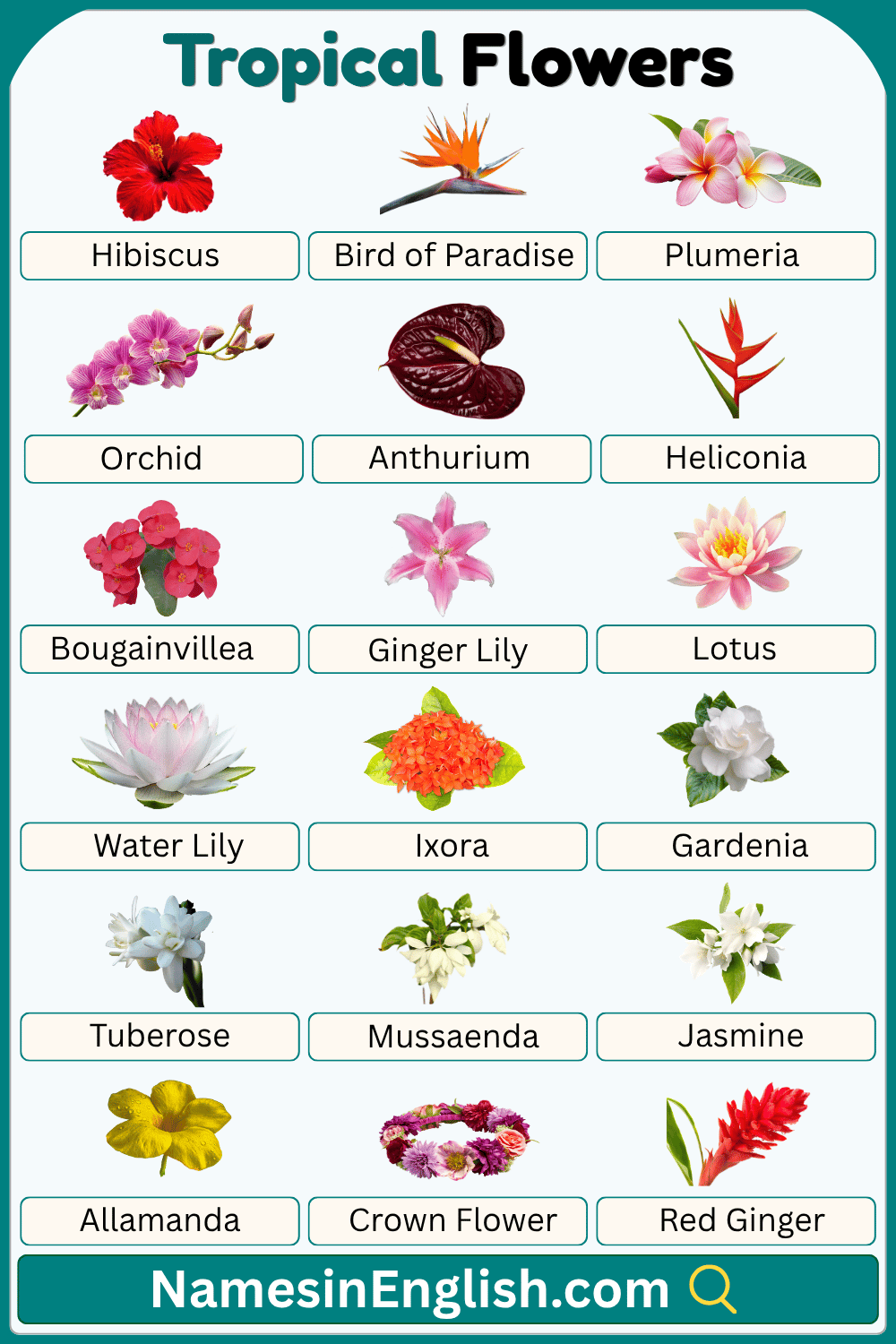
Tropical flowers with names and pictures
Learn More Helpful Articles