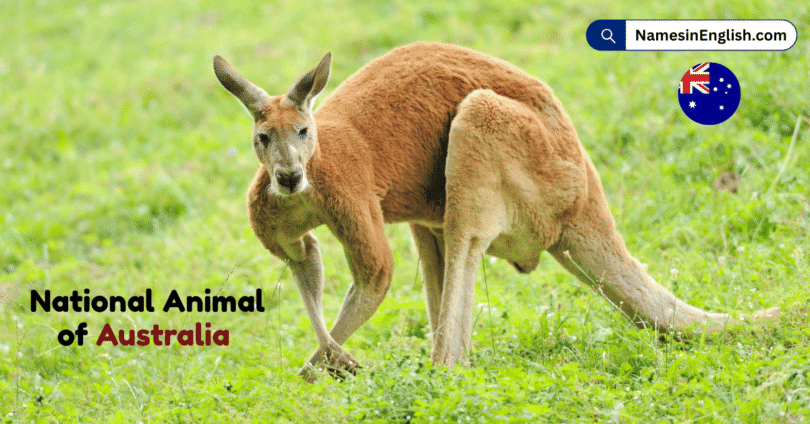

Australia is home to some of the world’s most unique wildlife, and the National Animal of Australia, the Red Kangaroo, is one of its most famous symbols. Known for its powerful legs, distinctive pouch, and remarkable ability to survive in harsh environments, the kangaroo represents Australia’s natural heritage, strength, and resilience. In this article, you’ll learn about the kangaroo’s history, symbolism, habitat, diet, lifespan, cultural significance, and why it remains an important national emblem today.
What Is the National Animal of Australia?
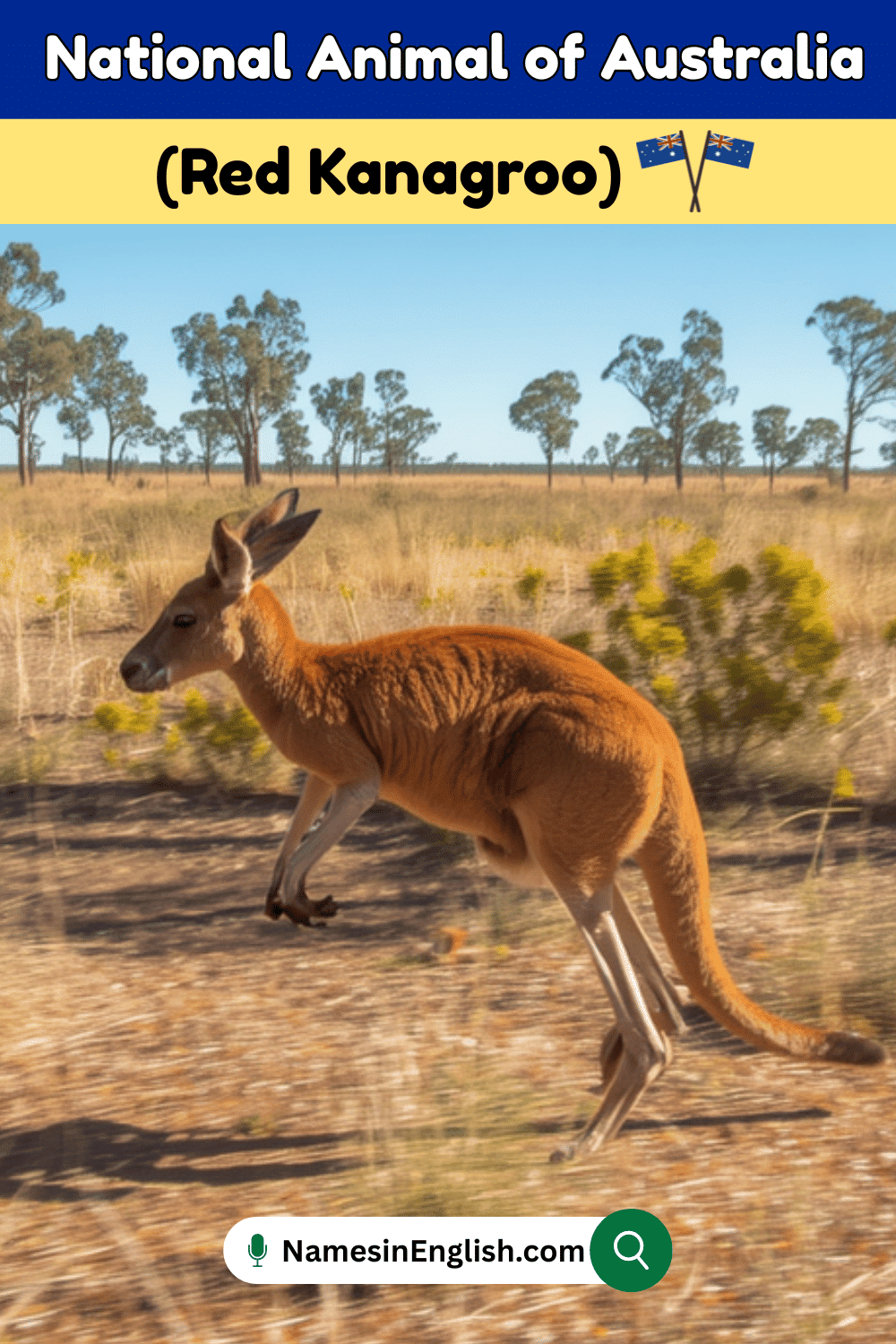
The national animal of Australia is the Red Kangaroo (Macropus rufus), the largest marsupial in the world. Kangaroos belong to a group of mammals known as marsupials, which carry and nurse their young in a pouch.
History of the Red Kangaroo in Australia
Ancient Origins
The Red Kangaroo evolved in Australia millions of years ago as the continent became drier. It adapted to open grasslands and arid regions, making it one of Australia’s most successful native animals.
Importance to Indigenous Australians
For thousands of years, Indigenous Australians have lived alongside Red Kangaroos. They used them for food and included them in traditional stories, ceremonies, and rock art.
Discovery by Europeans
European explorers first encountered kangaroos in the late 18th century. The unique animal quickly attracted attention and became a symbol of Australia’s distinctive wildlife.
Becoming a National Symbol
The kangaroo gained national recognition when it was featured on the Australian Coat of Arms in 1908. Its inclusion highlighted its importance to Australia’s identity and heritage.
Modern-Day Significance
Today, the Red Kangaroo is recognized around the world as a symbol of Australia. It represents the country’s wildlife, resilience, and connection to nature.
Symbolic Meaning of Kangaroo in Australia
Symbol of Progress
The kangaroo is often seen as a symbol of progress because it rarely moves backward. This reflects Australia’s forward-looking attitude and continuous development.
Symbol of Strength
With its powerful legs and ability to survive in harsh environments, the kangaroo represents strength and resilience. It symbolizes the determination of the Australian people.
Symbol of Freedom
Kangaroos roam freely across Australia’s vast landscapes. This makes them a symbol of freedom, independence, and the country’s open natural spaces.
Symbol of Adaptability
The kangaroo thrives in a variety of habitats, from deserts to grasslands. Its adaptability represents the ability to overcome challenges and succeed in changing conditions.
Symbol of Natural Heritage
As one of Australia’s most famous native animals, the kangaroo represents the nation’s rich biodiversity. It highlights the importance of protecting Australia’s unique wildlife and ecosystems.
Cultural Importance of the Kangaroo
The kangaroo is a powerful symbol of Australian identity and heritage. It appears on the Australian Coat of Arms, currency, and sports logos, and has been featured in Indigenous Australian art and traditions for thousands of years.
Scientific Name and Classification
- Common Name: Red Kangaroo
- Scientific Name: Macropus rufus
- Kingdom: Animalia
- Phylum: Chordata
- Class: Mammalia
- Infraclass: Marsupialia
- Order: Diprotodontia
- Family: Macropodidae
- Genus: Macropus
- Species: Macropus rufus
How Does a Kangaroo Look Like?
Kangaroos are easily recognized by their unique appearance and movement.
- Large, powerful hind legs designed for hopping.
- Long, muscular tail used for balance and support.
- Small front arms with clawed paws.
- Long ears that can move independently to detect sounds.
- Narrow head with a pointed snout.
- Soft fur, usually reddish-brown, gray, or tan in color.
- Strong feet that help it travel long distances quickly.
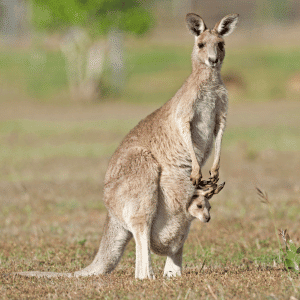
- Females have a pouch for carrying and nursing their babies (joeys).
Weight of red Kangaroo: Typically 18 to 90 kilograms (40 to 200 pounds), depending on age and sex.
Size of Red Kangaroo: The Red Kangaroo is the largest marsupial in the world, with a body length of up to 1.6 meters (5.2 feet), excluding the tail.
Male Red Kangaroos can grow over 1.8 meters (6 feet) tall and weigh more than 90 kilograms (200 pounds).
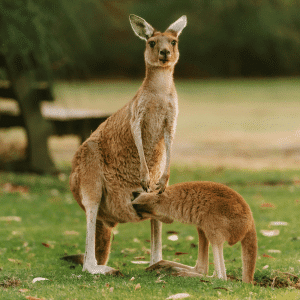
What Is a Baby Kangaroo Called?
A baby kangaroo is called a joey. After birth, the tiny joey crawls into its mother’s pouch, where it continues to grow and develop. The pouch provides warmth, protection, and nourishment until the young kangaroo is ready to live independently.
What Do Kangaroos Eat?
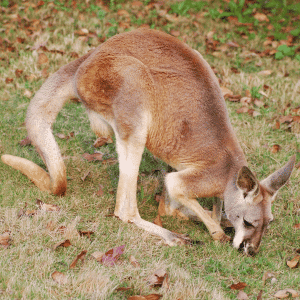
Kangaroos are herbivores, meaning they eat plants. Their diet mainly includes: Grass, Leaves, Shrubs, Flowers, and Young plant shoots. Kangaroos usually feed during the cooler parts of the day, such as early morning and evening.
Where Do Kangaroos Live?
Kangaroos are found throughout Australia in a variety of habitats, including: Grasslands, Open woodlands, Savannas, Semi-arid regions, Desert areas. They are highly adaptable and can survive in some of Australia’s harshest environments.
Average Life Span of a Red Kangaroo
A Red Kangaroo typically lives for 8 to 12 years in the wild, although some individuals may live longer under favorable conditions. In zoos and protected environments, they can survive for up to 20–25 years due to regular food, veterinary care, and protection from predators.
Environmental Importance
Kangaroos play an important role in maintaining healthy ecosystems by grazing on grasses and vegetation. Their feeding habits help support biodiversity and contribute to the natural balance of Australia’s landscapes.
Educational Importance
The kangaroo is widely used in schools, museums, and wildlife programs to teach people about marsupials, biodiversity, and Australia’s unique ecosystems. It helps raise awareness about wildlife conservation and environmental protection.
Tourism Value of Red Kangaroo
Kangaroos are among Australia’s most famous tourist attractions and draw millions of visitors each year. Seeing kangaroos in the wild or in wildlife parks is a memorable experience that supports the country’s tourism industry.
Conservation Status of the Red Kangaroo
The Red Kangaroo is currently classified as Least Concern by the International Union for Conservation of Nature. It has a large and stable population across Australia, and the species is not considered endangered.
Interesting Facts About the Kangaroo
- Kangaroos are the largest marsupials on Earth.
- They can hop at speeds of over 70 km/h (43 mph).
- A kangaroo’s tail acts like a fifth limb for balance and movement.
- Newborn joeys are only about the size of a jellybean.
- Kangaroos cannot walk backward easily.
- Australia has millions of kangaroos living in the wild.
- Kangaroos are featured on the Australian Coat of Arms.
National Animal of Australia with Name and Picture
Learn More Helpful Articles