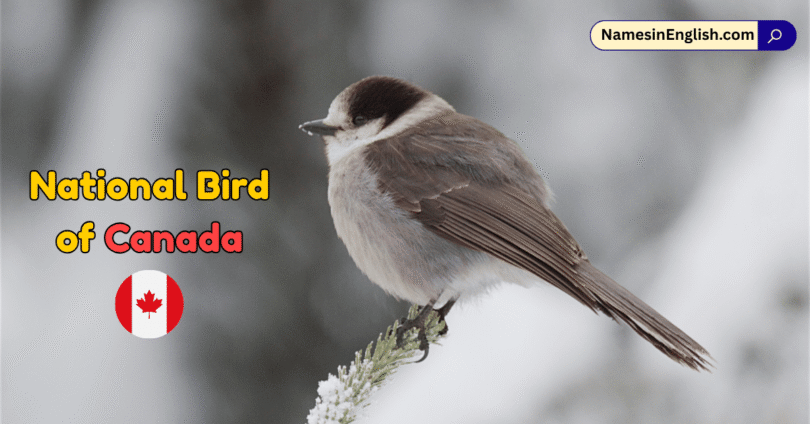

The National Bird of Canada, the Grey Jay, is a fascinating bird known for its intelligence, friendliness, and ability to survive Canada’s harsh winters. Found across the country’s vast forests, this unique bird has become a powerful symbol of Canadian nature and resilience. Understanding the National Bird of Canada with Name and Picture helps us appreciate the country’s wildlife heritage and the important role birds play in the environment. In this article, you’ll learn about the Canada Jay’s history, appearance, habitat, symbolic meaning, cultural importance, and some interesting facts that make it one of Canada’s most beloved national symbols.
What is the National Bird of Canada?
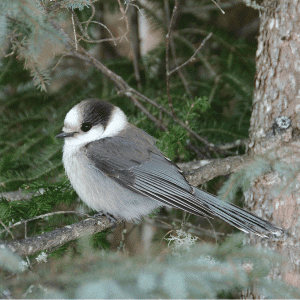
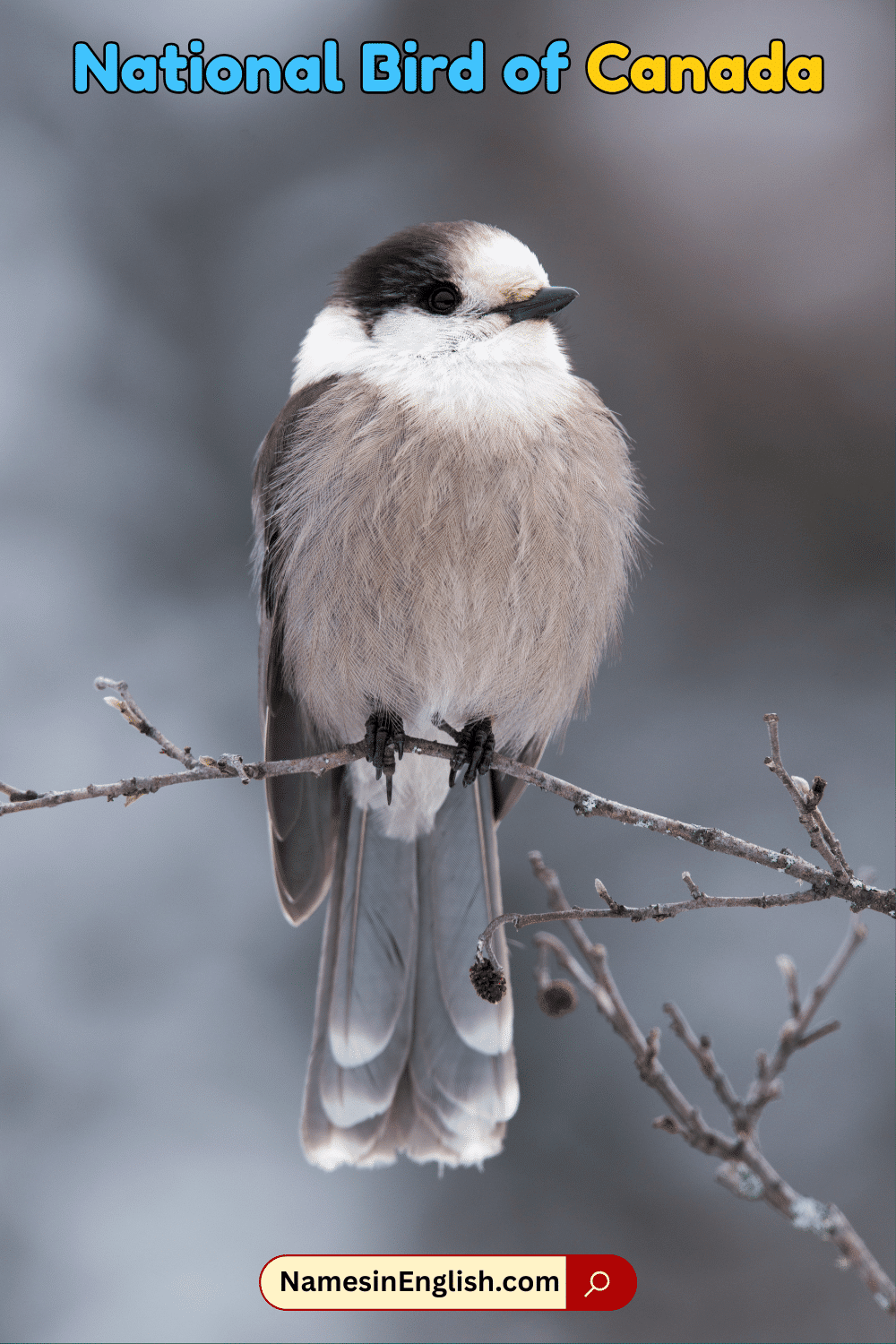
The Grey Jay (Perisoreus canadensis) is national bird of Canada. It is a medium-sized songbird belonging to the crow family, known as Corvidae. Despite being related to crows and ravens, it has a softer appearance with fluffy gray plumage, a white face, and a gentle personality.
History of Grey Jay
Early Origins
The Canada Jay has lived in North America’s northern forests for thousands of years. It evolved to survive harsh winters and became a common resident of Canada’s boreal wilderness.
Indigenous Connections
Indigenous peoples have long known and respected the Canada Jay. In many traditions, the bird is associated with intelligence, survival, and life in the northern forests.
European Exploration Era
Early explorers, trappers, and fur traders frequently encountered the Canada Jay. Its friendly behavior around camps earned it nicknames such as the “Whiskey Jack.”
Recognition in Canadian Culture
Over time, the Canada Jay became a symbol of Canada’s wild landscapes. Its year-round presence in remote forests made it a familiar and beloved bird across the country.
Becoming Canada’s National Bird
In 2018, the Canada Jay was officially recognized as Canada’s national bird after a nationwide campaign. The choice reflected its strong connection to Canadian nature, history, and identity.
Symbolic Meaning of Grey Jay
Symbol of Resilience
The Grey Jay survives some of the coldest winters in North America. Its ability to thrive in harsh conditions symbolizes strength, endurance, and perseverance.
Symbol of Adaptability
This bird can find food and shelter throughout the year, even in challenging environments. It represents flexibility and the ability to adapt to change.
Symbol of Resourcefulness
The Grey Jay stores food months in advance for future use. This behavior symbolizes planning, preparation, and wise use of resources.
Symbol of Canadian Wilderness
Living in vast boreal forests across the country, the Grey Jay reflects Canada’s rich natural landscapes. It serves as an emblem of the nation’s wild and untamed beauty.
Symbol of Intelligence
As a member of the crow family, the Grey Jay is known for its remarkable memory and problem-solving abilities. It symbolizes wisdom, awareness, and cleverness.
Symbol of Community
Grey Jays often form strong family bonds and cooperate while raising their young. This represents teamwork, support, and social connection.
Cultural Importance in Canada
The Grey Jay holds a special place in Canadian culture and Indigenous traditions. Its presence in the country’s northern forests has made it a symbol of wilderness, resilience, and the strong connection between Canadians and nature.
Scientific Name and Classification of Grey Jay
- Common Name: Grey Jay or Canada Jay
- Scientific Name: Perisoreus canadensis
- Kingdom: Animalia
- Phylum: Chordata
- Class: Aves
- Order: Passeriformes
- Family: Corvidae
- Genus: Perisoreus
- Species: Perisoreus canadensis
How does Grey Jay Look like?
The Grey Jay has a distinctive appearance that helps it blend into forest environments.
- Length: Approximately 25–33 cm (10–13 inches)
- Wingspan: About 40–45 cm (16–18 inches)
- Weight: Around 65–70 grams
- Soft gray body feathers
- White or pale-gray face
- Dark crown and nape
- Short black bill
- Rounded wings and tail
Habitat and Distribution
The Grey Jay is found across the boreal and mountainous forests of Canada. Its range extends from Newfoundland and Labrador in the east to British Columbia and the Yukon in the west.
Baby of Grey Jay
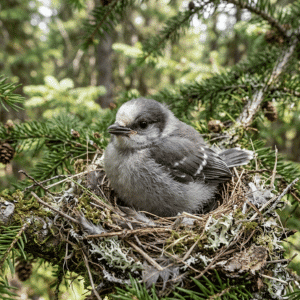
Baby Grey Jays are called chicks or nestlings. The species has an unusual breeding cycle because it nests during late winter, often when snow still covers the ground. Parents rely on stored food reserves to raise their young during this challenging season.
What Does the Grey Jay Eat?
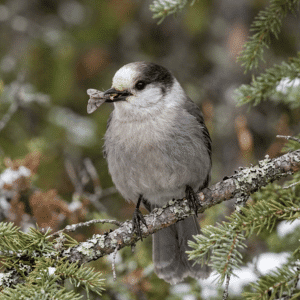
The Grey Jay is an omnivore with a highly varied diet. Common Foods are Insects, Spiders, Berries, Seeds, Nuts, Mushrooms, Small animals, Bird eggs, and Carrion.
Behaviour and Intelligence of Grey Jay
The Canada Jay is a highly intelligent bird known for its excellent memory and problem-solving abilities. It can remember food storage locations, adapt easily to changing environments, and often shows curiosity around humans. The bird also displays cooperative family behavior, highlighting its social and resourceful nature.
Environmental Importance in Canada
The Canada Jay contributes to healthy forest ecosystems by dispersing seeds and helping control insect populations. Its presence is often considered an indicator of a healthy and balanced forest environment.
Educational Value of Grey Jay
The Canada Jay is frequently used in wildlife and conservation education programs. It helps students and nature enthusiasts learn about biodiversity, animal adaptation, and the importance of protecting natural habitats.
Tourism Value of Grey Jay in Canada
The Canada Jay attracts birdwatchers, photographers, and nature lovers from around the world. Its friendly behavior and year-round presence make it a popular species to observe in Canada’s parks and forests.
Interesting Facts About the Grey Jay
- The Grey Jay can survive temperatures far below freezing.
- It stores food months before winter arrives.
- It begins nesting earlier than most North American birds.
- It belongs to the same family as crows and ravens.
- It can remember thousands of food storage locations.
- It remains in Canada year-round instead of migrating south.
- It is known for its friendly behavior toward people.
Name of National Bird of Canada
Learn More Helpful Articles