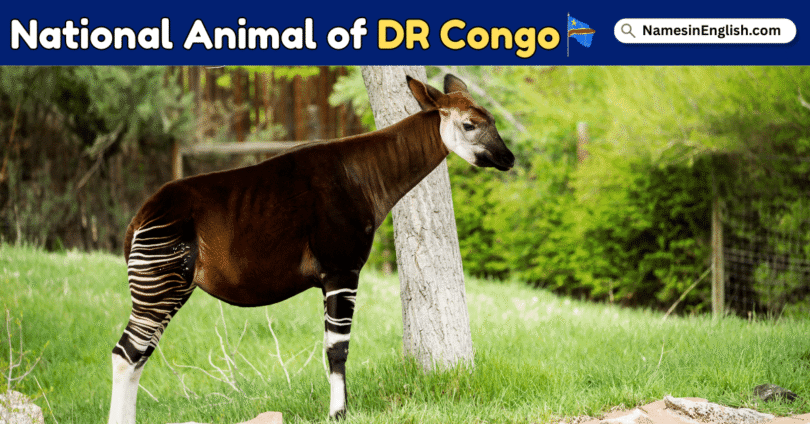

The National Animal of DR Congo is the remarkable Okapi, a rare and fascinating mammal found only in the dense rainforests of the Democratic Republic of the Congo. Known for its unique zebra-like stripes and giraffe-like features, the okapi is an important symbol of the country’s rich wildlife and natural heritage. Learning about the National Animal of DR Congo helps us understand the importance of biodiversity, conservation, and the role of native species in maintaining healthy ecosystems. In this article, you’ll learn the okapi’s history, physical characteristics, habitat, diet, cultural significance, environmental importance, and some interesting facts that make this extraordinary animal one of Africa’s most treasured wildlife species.
What Is the Okapi?
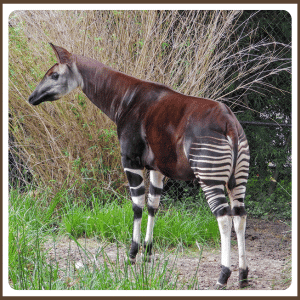
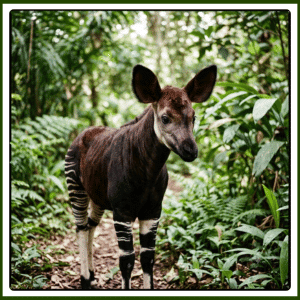
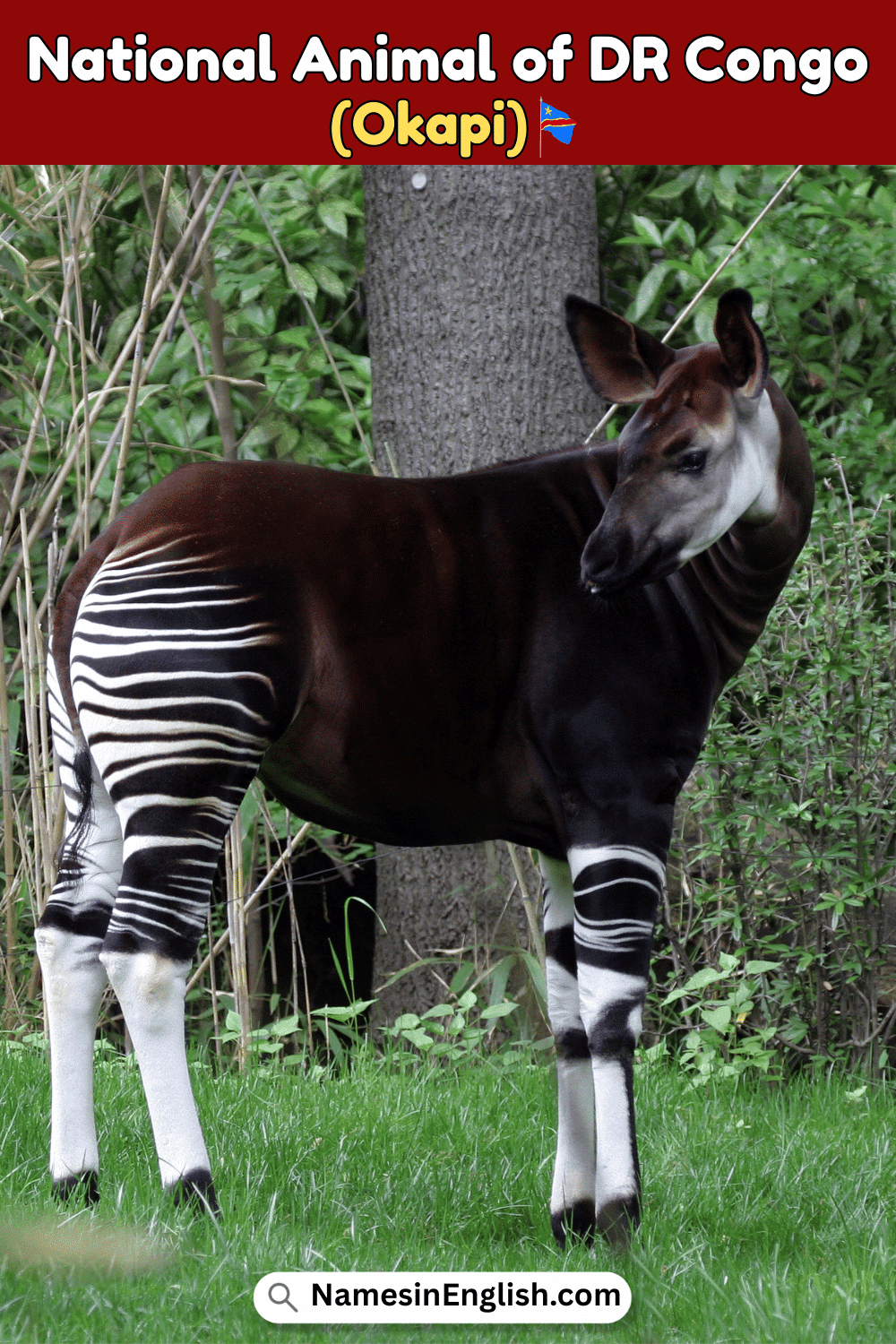
The okapi (Okapia johnstoni) is a large herbivorous mammal native to the tropical forests of central Africa. Although its striped legs resemble those of a zebra, the okapi is actually the closest living relative of the giraffe. It is known for its reddish-brown coat, long neck, large ears, and distinctive white stripes on its hindquarters and legs.
Historical Background of the Okapi
Discovery of the Okapi
The okapi was known to local communities in the Congo rainforest for centuries before it was officially identified by Western scientists in 1901. Its discovery attracted worldwide attention because of its unusual appearance and close relationship to the giraffe.
Connection to DR Congo
Since the okapi is found naturally only in the Democratic Republic of the Congo, it has become an important part of the country’s natural history. The animal represents the unique wildlife that makes the Congo rainforest one of the world’s most valuable ecosystems.
Symbolic Meaning in DR Congo
Symbol of National Heritage
The okapi symbolizes the rich biodiversity and natural heritage of DR Congo. Its rarity and uniqueness reflect the country’s exceptional wildlife and ecological importance.
Symbol of Conservation
The okapi also represents the need to protect forests and endangered species. It serves as a reminder of the importance of conserving the Congo rainforest for future generations.
Cultural Importance in DR Congo
The okapi is a powerful national symbol of the Democratic Republic of the Congo and represents the country’s unique wildlife heritage. It reflects the beauty and richness of the Congo rainforest. The animal is often featured in conservation programs and educational campaigns across the nation.
Taxonomy of the Okapi
- Common Name: Okapi
- Scientific Name: Okapia johnstoni
- Kingdom: Animalia
- Phylum: Chordata
- Class: Mammalia
- Order: Artiodactyla
- Family: Giraffidae
- Genus: Okapia
- Species: O. johnstoni
Physical Appearance
The okapi has a striking appearance that makes it easy to recognize.
Key Features
- Reddish-brown body
- White horizontal stripes on legs
- Long neck and large ears
- Dark eyes adapted to forest life
- Long blue tongue used for feeding
Adult okapis typically stand about 1.5 meters (5 feet) tall at the shoulder and can weigh between 200 and 350 kilograms.
Habitat and Distribution
The okapi is found exclusively in the tropical rainforests of northeastern DR Congo. It prefers dense vegetation where it can hide from predators and find abundant plant food. Its primary habitat includes protected forest areas such as the famous Ituri Rainforest, one of Africa’s most important ecosystems.
What Does the Okapi Eat?
The okapi is a herbivore that feeds on a wide variety of forest plants. It mainly eats Leaves, Buds, Fruits, Ferns, Twigs, Mushrooms, and Grasses. Its long, flexible tongue helps it pull leaves from branches and reach vegetation in difficult places.
Baby Okapi
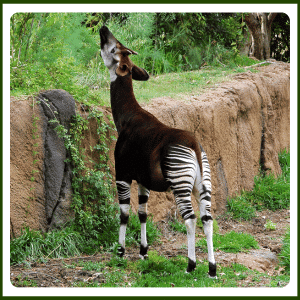
A baby okapi is called a calf. Female okapis usually give birth to a single calf after a pregnancy lasting around 14 to 15 months. Young calves spend much of their early life hidden in vegetation, helping them avoid predators. They remain dependent on their mothers for protection and nourishment during their first months.
Conservation Status
The okapi faces several threats, including habitat loss, illegal mining, deforestation, and poaching. Conservation organizations and the government of DR Congo work together to protect the species through wildlife reserves, anti-poaching programs, and habitat preservation efforts.
Interesting Facts About the Okapi
- The okapi is the only living relative of the giraffe besides the giraffe itself.
- It was unknown to Western science until 1901.
- Its tongue can be up to 35 centimeters (14 inches) long.
- The stripes on each okapi are unique, similar to human fingerprints.
- It lives only in the Democratic Republic of the Congo.
- Its large ears help it detect predators in dense forests.
Name of National Animal of DR Congo
Learn More Helpful Articles