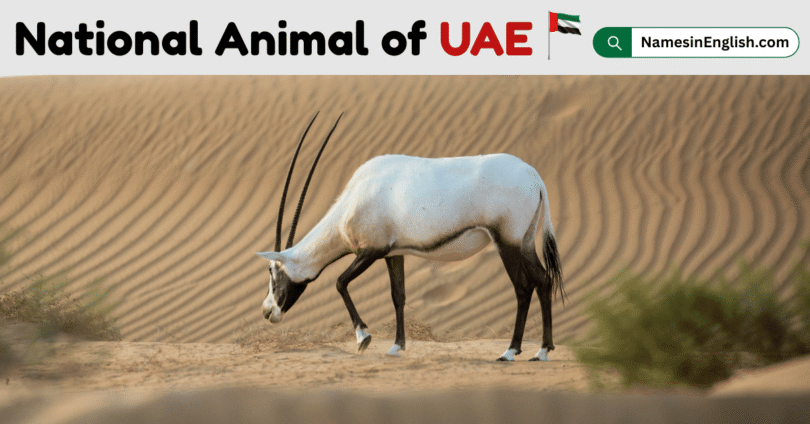

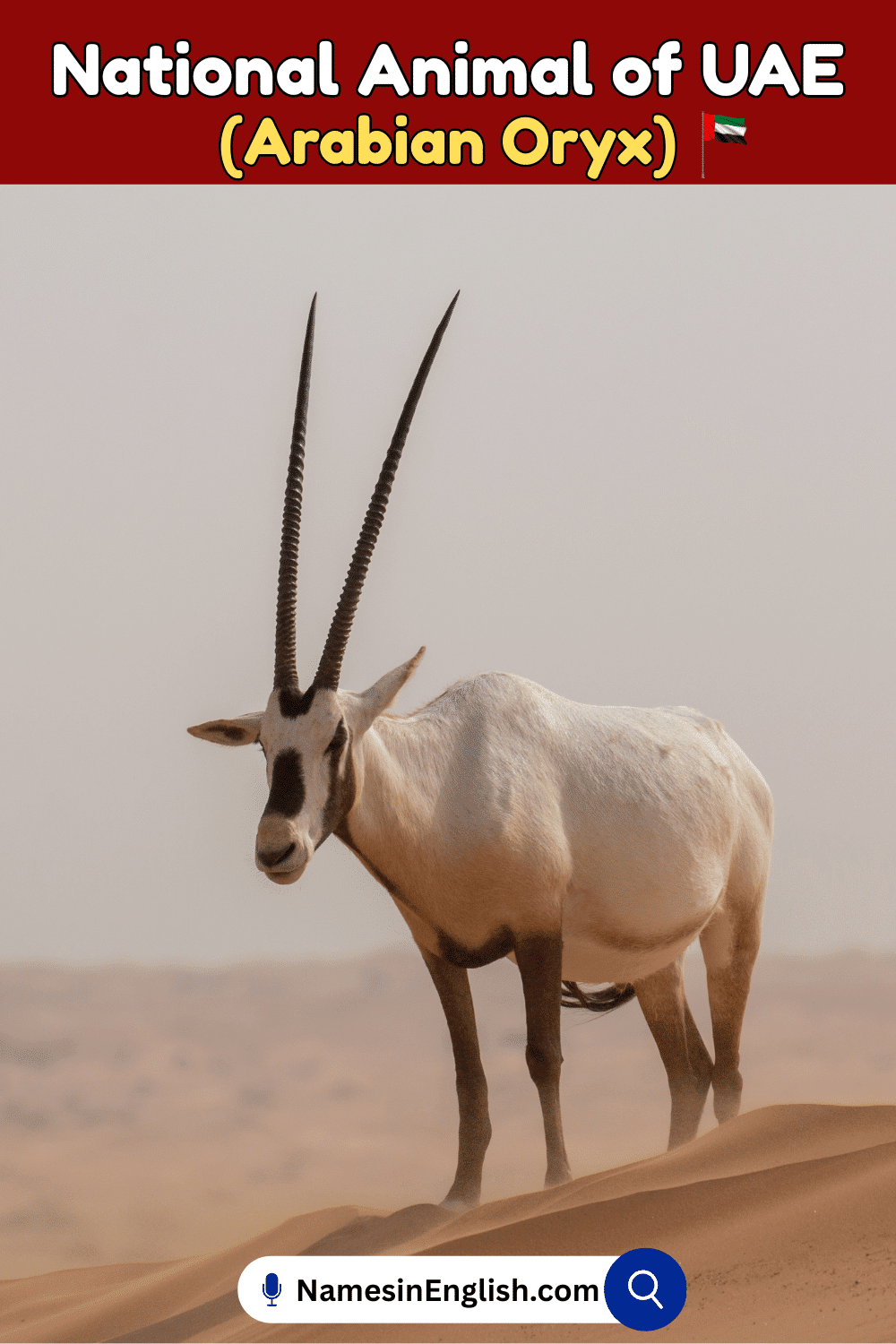
The National Animal of UAE is the Arabian Oryx, a remarkable desert antelope known for its striking white coat, long straight horns, and incredible ability to survive in one of the world’s harshest environments. More than just a wildlife species, the National Animal of UAE represents strength, resilience, heritage, and the deep connection between the Emirati people and the Arabian Desert. In this article, you’ll learn about the Arabian Oryx’s history, symbolic meaning, scientific classification, habitat, diet, cultural significance, conservation efforts, and fascinating facts that make it one of the most admired animals in the United Arab Emirates.
What Is the National Animal of UAE?
The Arabian Oryx (Oryx leucoryx) is a medium-sized antelope native to the deserts of the Arabian Peninsula. It is perfectly adapted to life in hot and dry environments, where temperatures can be extremely high and water sources are scarce.
Historical Background of Arabian Oryx
Early Presence in Arabia
The Arabian Oryx has lived in the deserts of the Arabian Peninsula for thousands of years. It was an important part of the region’s natural wildlife and heritage.
Population Decline
During the 20th century, excessive hunting and habitat loss caused the Arabian Oryx population to decrease rapidly. Its numbers became critically low across the region.
Extinction in the Wild
By 1972, the Arabian Oryx had become extinct in the wild. The species survived only in zoos and protected breeding programs.
Conservation Efforts
The UAE and other Gulf countries launched conservation projects to protect and breed the Arabian Oryx. These efforts helped increase its population and prevent extinction.
Successful Reintroduction
After years of conservation work, Arabian Oryx were reintroduced into protected desert areas. Today, they can once again be found in the wild.
National Symbol of the UAE
Because of its resilience and importance to desert heritage, the Arabian Oryx was adopted as the national animal of the UAE. It remains a symbol of strength, survival, and conservation.
Symbolic Meaning of Arabian Oryx
Strength and Resilience
The Arabian Oryx survives in some of the world’s harshest desert environments. It symbolizes strength, endurance, and the ability to overcome challenges.
Desert Heritage
As a native species of the Arabian Peninsula, the Arabian Oryx represents the UAE’s rich desert heritage and deep connection to nature.
Beauty and Grace
With its elegant white coat and long straight horns, the Arabian Oryx is admired for its beauty. It symbolizes grace, dignity, and nobility.
Survival and Adaptation
The animal’s ability to thrive with limited water reflects adaptability and survival. It serves as a reminder of the importance of perseverance.
National Pride
As the national animal of the UAE, the Arabian Oryx represents unity, cultural identity, and pride in the nation’s natural treasures.
Physical Appearance of Arabian Oryx
The Arabian Oryx is easy to recognize because of its unique features:
Size and Weight
- Height: About 80–100 cm at the shoulder
- Weight: Around 65–90 kg
- Lifespan: Up to 20 years or more in protected environments
Distinctive Features
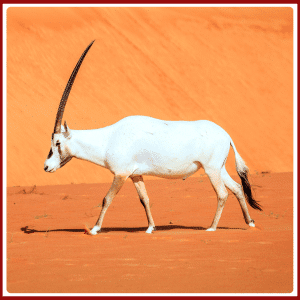
- White body with black facial markings
- Long, straight horns that can reach up to 75 cm
- Strong hooves adapted for desert travel
- Thick coat that helps regulate body temperature
Both males and females possess horns, making them look very similar.
Scientific Name and Classification
- Common Name: Arabian Oryx
- Scientific Name: Oryx leucoryx
- Kingdom: Animalia
- Phylum: Chordata
- Class: Mammalia
- Order: Artiodactyla
- Family: Bovidae
- Genus: Oryx
- Species: Oryx leucoryx
Habitat and Distribution
The Arabian Oryx lives in desert plains, sand dunes, semi-arid grasslands, and other dry regions of the Arabian Peninsula. In the UAE, it is protected in wildlife reserves that provide safe habitats for the species. Conservation efforts have helped restore its population and preserve its natural environment.
What Does the Arabian Oryx Eat?
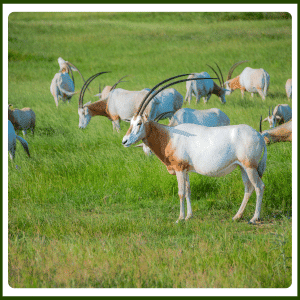
The Arabian Oryx is a herbivore, which means it feeds only on plants found in desert environments. Its diet mainly consists of desert grasses, herbs, shrubs, leaves, roots, and other vegetation. It is specially adapted to survive in dry conditions and can go for long periods without drinking water.
What Is the Baby of an Arabian Oryx Called?
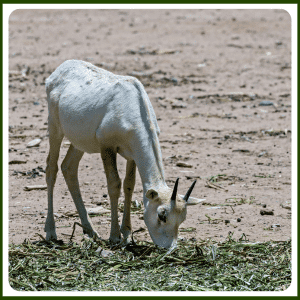
A baby Arabian Oryx is called a calf. Female oryx usually give birth to a single calf after a pregnancy period of about eight to nine months. Young calves stay close to their mothers for protection and nourishment during their early months of life.
Educational Importance of Arabian Oryx
The Arabian Oryx helps students and researchers learn about desert ecosystems, wildlife conservation, and animal adaptation. Its recovery from extinction provides a valuable real-world example of successful conservation efforts. It also raises awareness about protecting endangered species and natural habitats.
Environmental Importance of Arabian Oryx
The Arabian Oryx plays an important role in maintaining the balance of desert ecosystems. By feeding on grasses and shrubs, it helps support healthy vegetation growth and biodiversity. Its presence is also an indicator of a well-protected natural environment.
Tourism Value in UAE
The Arabian Oryx is a major attraction in the UAE’s wildlife reserves and desert parks. Visitors enjoy observing this iconic animal in its natural habitat while learning about local wildlife. Its presence supports eco-tourism and promotes appreciation for the country’s natural heritage.
Conservation Status of Arabian Oryx
The Arabian Oryx was once extinct in the wild due to excessive hunting and habitat loss. Thanks to successful breeding and protection programs, its population has recovered significantly. Today, it is considered one of the world’s greatest wildlife conservation success stories.
Interesting Facts About the Arabian Oryx
- The Arabian Oryx is the national animal of the UAE.
- It is one of the smallest species of oryx in the world.
- Its white coat helps reflect intense desert heat.
- Both males and females have long straight horns.
- It can survive for extended periods with very little water.
- The species was once extinct in the wild.
- Conservation efforts successfully brought it back from extinction.
- It is considered a symbol of endurance and resilience.
Name of National Animal of UAE
Learn More Helpful Articles