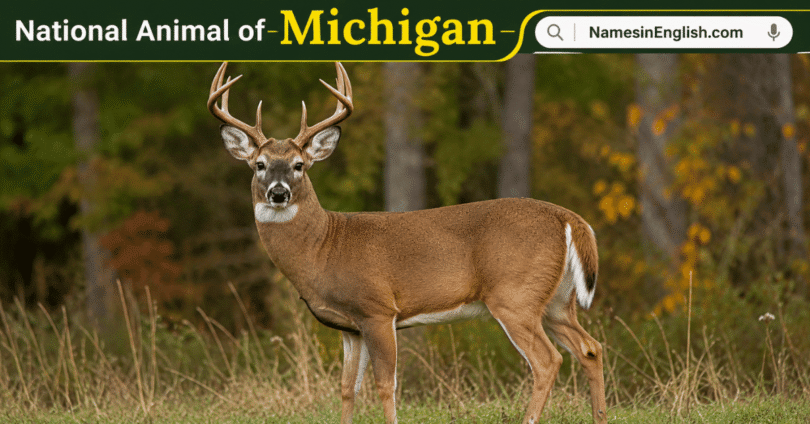

Michigan is home to diverse wildlife found across its forests, wetlands, lakes, and grasslands, making animals an important part of the state’s natural environment. The Michigan state game mammal is the white-tailed deer, a well-known species recognized by its brown coat and distinctive white underside of the tail. Learning about this animal is a useful way to build English vocabulary while exploring Michigan’s wildlife and natural heritage. In this article, you will learn the name of Michigan’s state animal with a clear picture, helping kids, students, teachers, nature lovers, and English learners understand its appearance, habitat, behavior, and importance.
What Is Michigan’s State Animal?
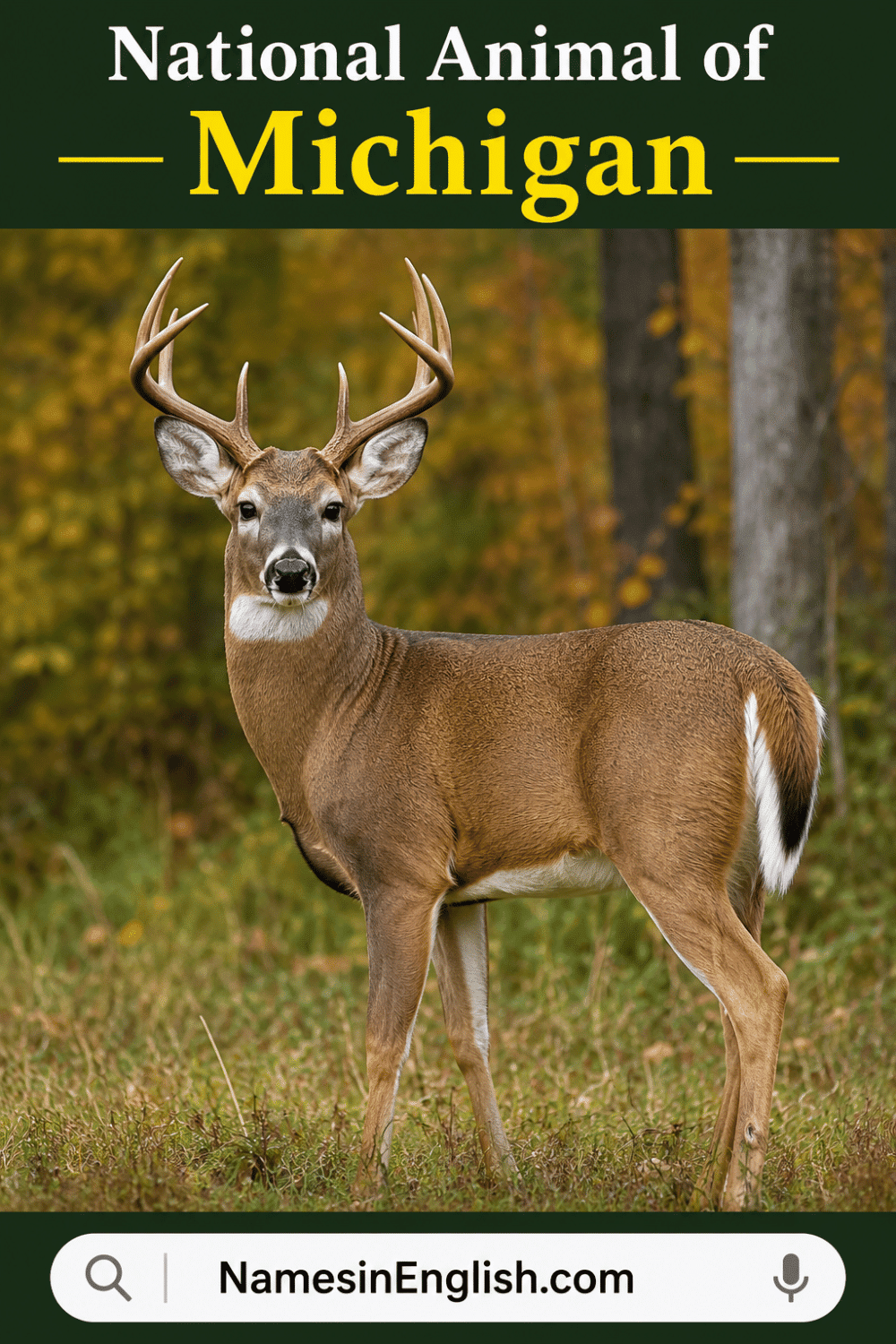
Michigan’s official state animal is the white-tailed deer (Odocoileus virginianus), which is formally designated as the state’s game mammal. Michigan adopted the white-tailed deer as its state game mammal in 1997 through Public Act 15 of 1997. Unlike some state symbols that represent a rare or unusual species, the white-tailed deer represents an animal that is deeply connected with Michigan’s everyday landscape.
History of White-Tailed Deer
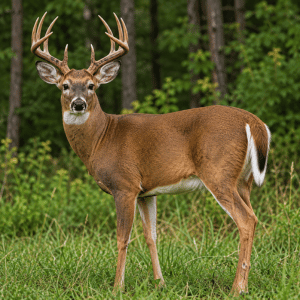
White-tailed deer are native to North America and have lived in Michigan for thousands of years. Over generations, they became an important part of Michigan’s forests, wetlands, farms, and natural landscapes. Today, they remain one of the state’s most widespread and recognizable wild animals.
Why Is the White-Tailed Deer Michigan’s State Animal?
Michigan officially designated the white-tailed deer as its state game mammal in 1997. A group of fourth-grade students from Zeeland helped campaign for the deer to receive official recognition. Its widespread presence and importance to Michigan’s wildlife and natural resources made it a fitting state symbol.
Symbolic Meaning of White-Tailed Deer
The white-tailed deer symbolizes Michigan’s rich wildlife, forests, and strong connection with nature. Its adaptability and widespread presence reflect the diversity of the state’s natural landscapes. It also represents Michigan’s outdoor traditions, wildlife heritage, and appreciation for conservation.
Scientific Classification of White Tailed Dear
- Scientific Name: Odocoileus virginianus
- Kingdom: Animalia
- Phylum: Chordata
- Class: Mammalia
- Order: Artiodactyla
- Family: Cervidae
- Genus: Odocoileus
- Species: Odocoileus virginianus
What Does the White-Tailed Deer Look Like?
The white-tailed deer has a slender body, long legs, large ears, and a reddish-brown or grayish coat. Its most recognizable feature is the white underside of its tail, which becomes visible when the deer feels threatened. Adult males called bucks usually grow antlers, while females called does generally do not.
Where Do White-Tailed Deer Live in Michigan?
White-tailed deer are found throughout Michigan, including the Upper and Lower Peninsulas. They live in forests, fields, wetlands, woodland edges, agricultural areas, and rural landscapes. Their ability to adapt to different habitats allows them to thrive across much of the state.
What Does the White-tailed deer Eat?
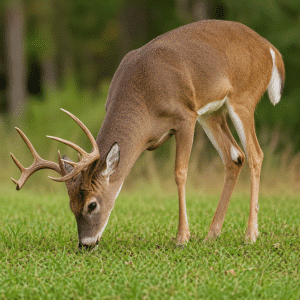
White-tailed deer are herbivores that eat a variety of plants and vegetation. Their diet includes grasses, leaves, herbs, fruits, shrubs, buds, and young shoots depending on the season. This flexible diet helps them find suitable food throughout Michigan’s changing seasons.
Baby White-Tailed Deer
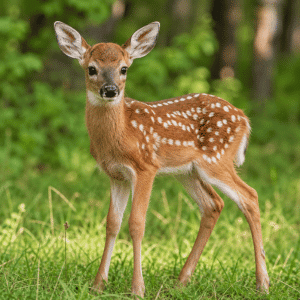
A baby white-tailed deer is called a fawn and is usually born with distinctive white spots on its reddish-brown coat. These spots provide natural camouflage, helping the young deer blend into surrounding vegetation. Fawns depend on their mothers for nourishment, protection, and care during their early development.
How Fast Can a White-Tailed Deer Run?
White-tailed deer are fast and agile animals that can reach speeds of about 35 miles per hour. Their powerful legs allow them to quickly escape predators, vehicles, and other potential dangers. They can also make sudden turns and jumps while moving through forests and open areas.
Life Span of White-Tailed Deer
White-tailed deer can live for several years in the wild, although their lifespan depends on many environmental factors. Some individuals may survive for more than a decade when they have adequate food, shelter, and suitable habitat. Disease, predators, hunting, harsh weather, and vehicle collisions can shorten their lives.
Ecological Importance
White-tailed deer play an important role in Michigan’s ecosystems as herbivores that feed on many types of vegetation. Their feeding habits can influence plant growth and vegetation patterns while their presence supports other parts of the food web. They also provide food for predators and scavengers, making them an important part of the ecosystem.
Economic Importance
White-tailed deer are an important natural and economic resource in Michigan. Hunting, wildlife watching, outdoor recreation, tourism, and related activities contribute to local communities and businesses. Responsible deer management also helps maintain healthy populations and protect Michigan’s natural resources.
Interesting Facts About white-tailed deer
- The white-tailed deer is Michigan’s official state game mammal.
- Its scientific name is Odocoileus virginianus.
- Michigan designated it as the state game mammal in 1997.
- White-tailed deer are found in every Michigan county.
- A baby white-tailed deer is called a fawn.
- Adult males are called bucks, while adult females are called does.
- Bucks typically grow and shed antlers each year.
- The species can reach running speeds of about 35 miles per hour.
- The white underside of its tail gives the species its common name and can become highly visible when the deer is alarmed.
- Michigan’s state government recognizes the deer as an important natural and economic resource.
Name of National Animal of Michigan
Learn More Helpful Articles