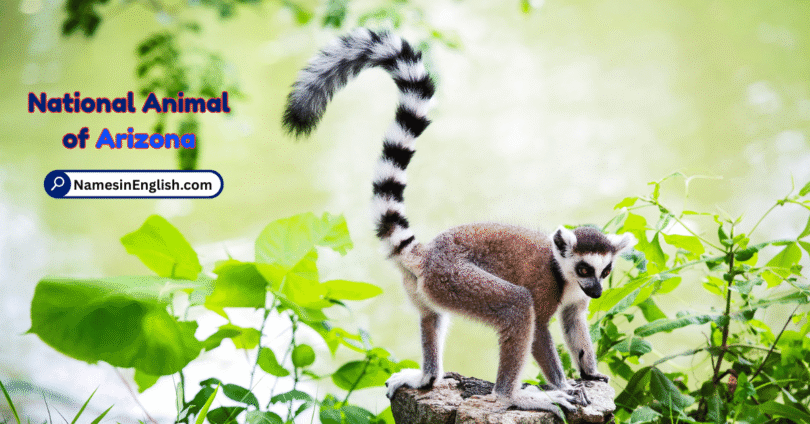

The Arizona State Animal is the ringtail, a small and fascinating mammal known for its long, bushy tail with distinctive black-and-white rings. Officially recognized as Arizona’s state mammal in 1986, the ringtail reflects the state’s unique desert and canyon wildlife. In this article, you’ll learn about the Arizona State Animal, including its name, picture, scientific classification, appearance, habitat, diet, behavior, history, and why this unusual animal is an important symbol of Arizona.
What Is the Arizona State Animal?
The ringtail (Bassariscus astutus) is the official state mammal of Arizona. It is a small, agile animal that is particularly well adapted to rocky landscapes, including canyons, cliffs, and areas near water. Arizona law identifies the ringtail as the state mammal, while also designating the Arizona ridge-nosed rattlesnake, Apache trout, and Arizona tree frog as the state reptile, fish, and amphibian, respectively.
History of the Ringtail in Arizona
The ringtail is a native mammal of Arizona and has long lived among the state’s deserts, rocky canyons, mountains, and riparian areas. Its association with people also goes back to mining communities, where it was sometimes valued for catching rodents around mines and settlements. Today, the ringtail remains an important part of Arizona’s natural heritage and wildlife.
When Was the Ringtail Declared as Arizona’s State Animal?
The ringtail was officially designated Arizona’s state mammal in 1986. Its selection recognized a distinctive native animal that is well adapted to Arizona’s rugged landscapes and natural conditions. Since then, the ringtail has served as an official symbol of the state’s unique wildlife.
Symbolic Meaning of Ringtail
The ringtail represents adaptability, agility, and resilience in Arizona’s challenging environment. Its ability to climb steep cliffs and survive in dry, rocky habitats reflects the strength and adaptability of native wildlife. As a state symbol, it also represents Arizona’s rich natural diversity.
How Does a Ringtail Look?
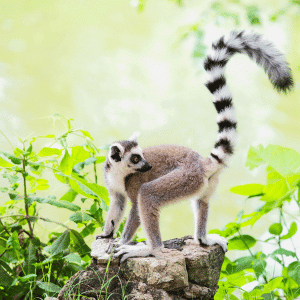
The ringtail has a slender body, large rounded ears, short legs, and a pointed face that can resemble a fox. Its most recognizable feature is its long, bushy tail covered with alternating dark and light rings. An adult ringtail usually weighs about 2 to 2.5 pounds and has a body around 14 to 16 inches long.
Where Does the Arizona Ringtail Live?
Ringtails live across much of Arizona, particularly in rocky canyons, cliffs, mountains, and areas near water. They often shelter in caves, rock crevices, hollow trees, and abandoned mine tunnels. These habitats provide protection from predators while giving the animals access to food and water.
What Does the Ringtail Eat?
The ringtail is an omnivore, so it eats both plant and animal foods depending on what is available. Its diet can include insects, small mammals, reptiles, birds, eggs, fruit, and carrion. This flexible diet helps the ringtail survive in Arizona’s varied environments.

Is the Ringtail Nocturnal?
Yes, the ringtail is primarily nocturnal, which means it is most active after sunset and during the night. During the day, it usually rests in protected places such as caves, crevices, hollow trees, or mine tunnels. Its large eyes and strong senses help it navigate and find food in low-light conditions.
How Does the Ringtail Climb So Well?
The ringtail is an excellent climber and can move across steep rocks, cliffs, and tree trunks with impressive agility. Its flexible hind feet can rotate significantly, helping it maintain control while moving over difficult surfaces. This climbing ability helps the animal find food, escape predators, and reach safe shelter.
Baby Ringtail
Female ringtails generally give birth to two to four babies, usually during the spring breeding season. Newborn ringtails are small and helpless, with their eyes and ears closed during their early development. As they grow, they develop their adult coloration and gradually become capable of moving and searching for food independently.
Life Span of Ringtail
Ringtails generally live for several years in the wild, although their exact lifespan can vary depending on environmental conditions and threats. A wild ringtail may live around six to nine years, while some individuals may survive longer. Food availability, predators, disease, and habitat quality can all influence their survival.
Why Was the Ringtail Called the “Miner’s Cat”?
The ringtail became known as the “miner’s cat” because it was commonly associated with miners and mining settlements in the American Southwest. These animals sometimes lived around mines and buildings, where they could help control rodents by hunting them. Despite its name, the ringtail is not a cat but belongs to the raccoon family.
Environmental Importance
The ringtail contributes to Arizona’s ecosystems by feeding on insects, small mammals, reptiles, birds, fruit, and other available foods. As an omnivore and predator, it plays a role in natural food webs and helps maintain ecological relationships. Protecting ringtail habitat also helps conserve many other species that share the same environment.
Educational Value
The ringtail is a useful example for understanding how animals adapt to challenging environments such as deserts, mountains, and rocky canyons. Its nocturnal behavior, climbing ability, physical features, and flexible diet demonstrate several important wildlife adaptations. Learning about this animal can also encourage greater interest in Arizona’s native species and conservation.
Tourism Value
The ringtail adds to Arizona’s appeal for wildlife enthusiasts, photographers, hikers, and nature lovers interested in discovering native species. Because it is secretive and mostly active at night, spotting one in the wild can be a memorable experience for visitors. Its presence also adds to the natural character and biodiversity of Arizona’s scenic landscapes.
Interesting Facts About the Ringtail
- The ringtail is Arizona’s official state mammal.
- It was designated the state mammal in 1986.
- Its scientific name is Bassariscus astutus.
- It belongs to the raccoon family, not the cat family.
- It is also called the ringtail cat, miner’s cat, and cacomistle.
- It is primarily nocturnal and solitary.
- Its long tail has distinctive black-and-white rings.
- Ringtails are excellent climbers and can navigate steep rocky surfaces.
- They are omnivores with a varied diet.
- Arizona’s ringtail is featured on the state’s driver’s licenses.
Learn More Helpful Articles