
Green flowers may not be as common as red, pink, or yellow blooms, but their unique color makes them some of the most eye-catching plants in any garden or floral arrangement. Green flowers often symbolize growth, renewal, harmony, and good luck, making them a popular choice for gardens, weddings, and special occasions. In this article, you’ll learn 26 Green Flowers with their names, pictures, meanings, and interesting facts. Whether you’re a gardening enthusiast, a flower lover, or simply curious about unusual blooms, this guide will help you explore some of the most beautiful green flowers and learn how to recognize and appreciate them.
Green Flowers Meaning and Symbolism
Green flowers are widely associated with renewal, balance, and calm energy. They often symbolize growth because green is the color of new leaves and fresh beginnings. Many cultures view green blooms as a sign of hope, emotional healing, and positive transitions. Gardeners also choose them when they want peaceful corners in their landscape.
Are Green Flowers Real?
Many green flowers occur naturally, especially hellebores, orchids, and certain zinnias. These species have evolved pigments that lean toward lime, olive, or soft jade.
Some popular types were created through hybrid breeding to achieve brighter or darker tones. These hybrids often have stronger petals and longer vase life.
Dark green flowers usually appear more dramatic and rich, while light green blooms bring a fresh and airy feel. Both types are common in floral decor.
26 Green Flowers List
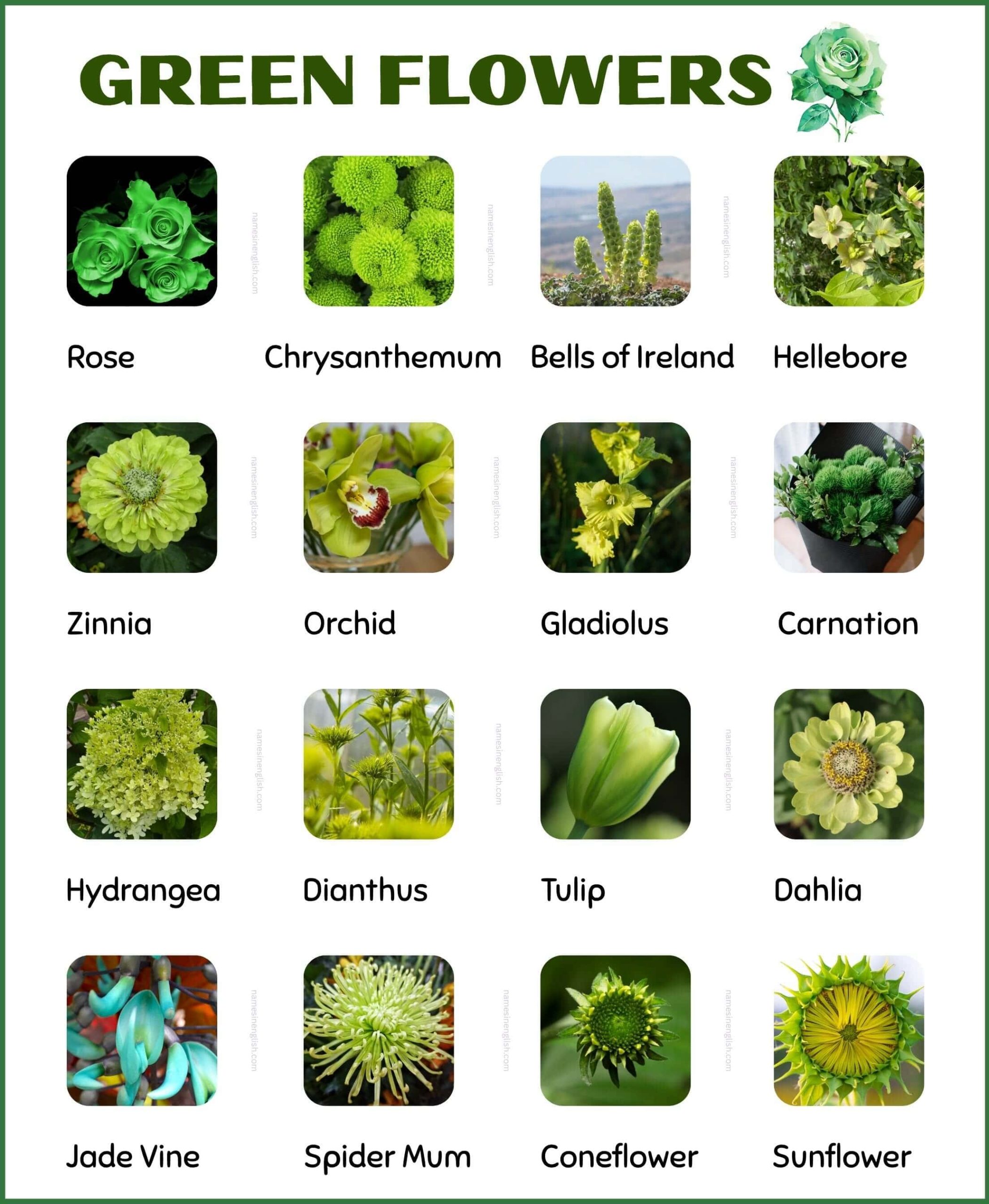
Here is a quick list of all 26 green flowers covered in this guide:
- Green Rose
- Green Chrysanthemum
- Bells of Ireland
- Green Hellebore
- Green Zinnia
- Green Orchid
- Green Gladiolus
- Green Carnation
- Green Hydrangea
- Green Dianthus Trick
- Lady’s Mantle
- Green Tulip
- Green Dahlia
- Jade Vine Flower
- Spider Mum Green
- Green Cymbidium Orchid
- Green Calla Lily
- Green Coneflower
- Green Amaranth
- Green Lisianthus
- Green Marigold
- Green Daylily
- Green Sunflower
- Green Viburnum
- Green Foxglove
- Green Nicotiana
26 Green Flowers Names With Pictures
Below are 26 green flowers with their information, pictures, meanings, and growing details.
1. Green Rose (Rosa chinensis viridiflora)
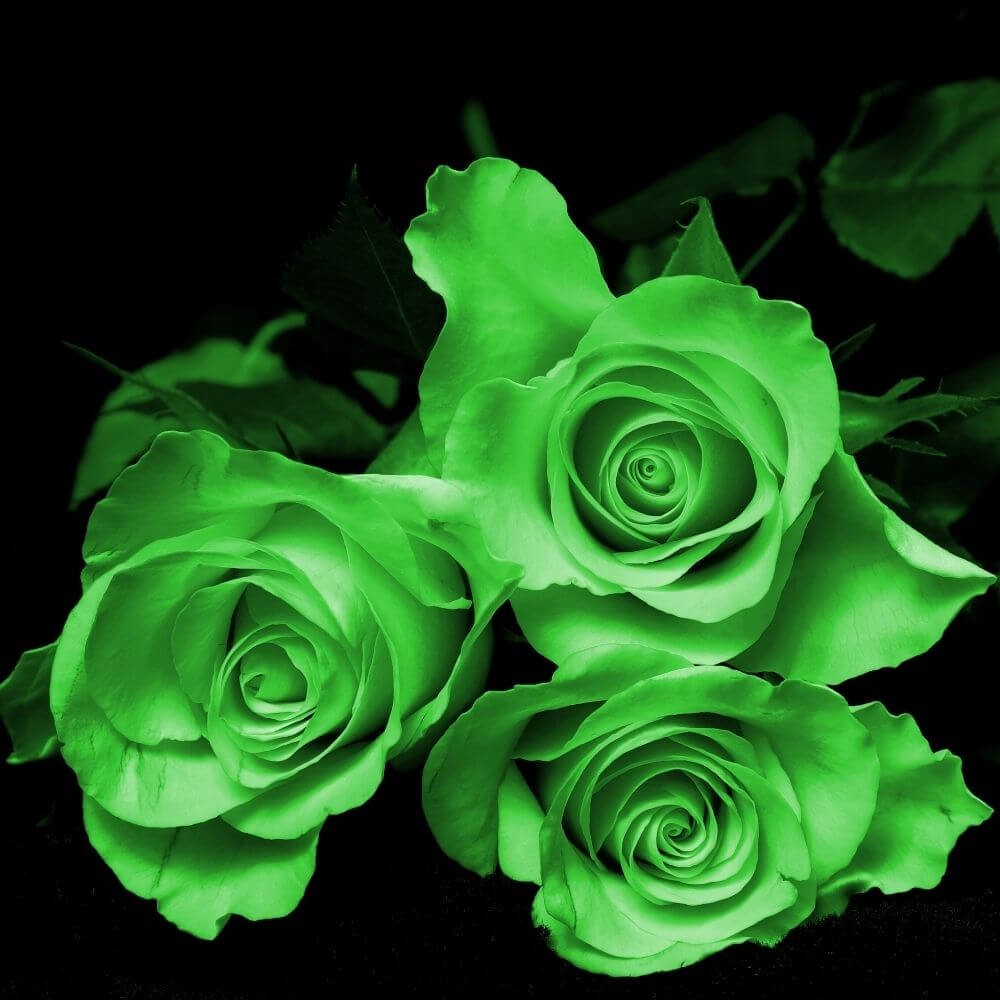
This rare rose variety dates back to the 18th century in China and is widely known among rosarians for having sepals that completely replace the typical petals. It possesses a spicy, peppery scent rather than a floral one and blooms continuously because the “flowers” are actually modified leaves that last for weeks. Garden designers often use it as a conversation piece or for adding permanent structure to vintage borders.
- USDA Zone: 5 to 9
- Bloom Time: Late spring to fall
- Water Needs: Moderate
- Sun Requirements: Full sun
- Soil Type: Rich, well-drained
- Best Use: Vintage or rustic bouquets
2. Green Chrysanthemum (Chrysanthemum morifolium)
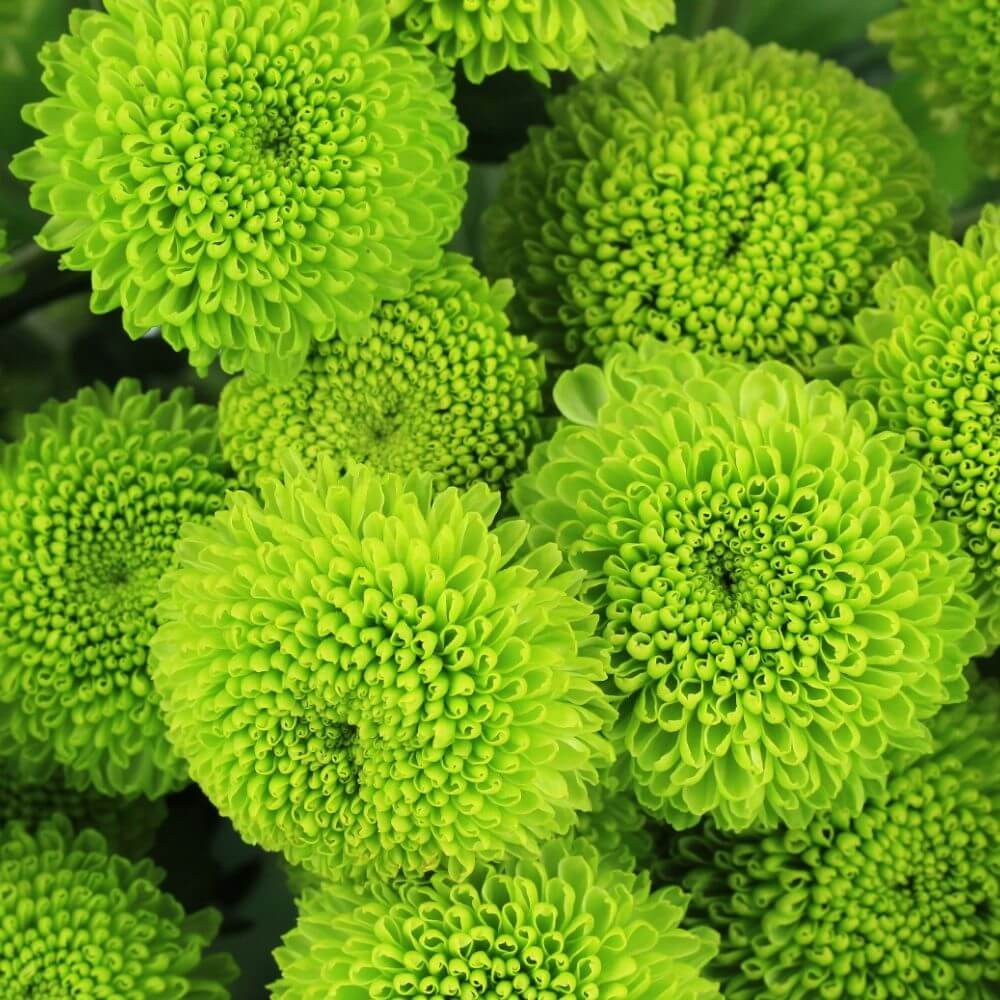
Cultivated in China for over a thousand years before reaching the West, these flowers were originally revered as symbols of longevity and vitality. The modern green pompon varieties were selectively bred to enhance the chlorophyll in the petals, creating a dense, vibrant lime sphere. They are a staple in the floral industry because they are exceptionally hardy and can survive in a vase for up to two weeks.
- USDA Zone: 5 to 9
- Bloom Time: Fall
- Water Needs: Regular moisture
- Sun Requirements: Full sun
- Soil Type: Fertile loam
- Best Use: Seasonal centerpieces
3. Bells of Ireland (Moluccella laevis)
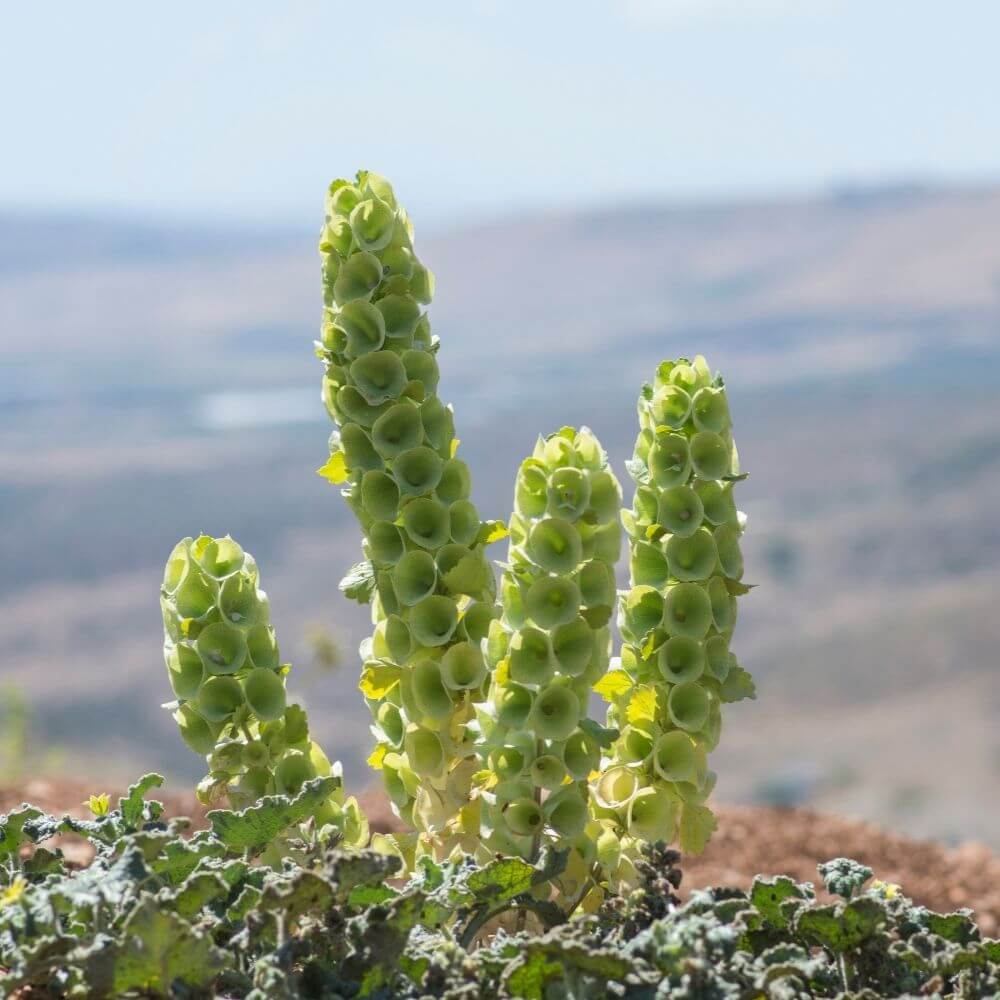
Despite the name suggesting an Irish origin, this plant is actually native to Turkey, Syria, and the Caucasus, where it grows in dry, rocky soil. The “flowers” are actually cup-shaped green calyces (leaves) that surround tiny, insignificant white blooms, which allows them to hold their color perfectly when dried. Florists prize these tall, hollow stems for adding architectural height and a distinct, crisp fragrance to arrangements.
- USDA Zone: 2 to 11
- Bloom Time: Summer
- Water Needs: Moderate
- Sun Requirements: Full sun to partial shade
- Soil Type: Light, well-drained
- Best Use: Tall bouquet accents
4. Green Hellebore (Helleborus viridis)
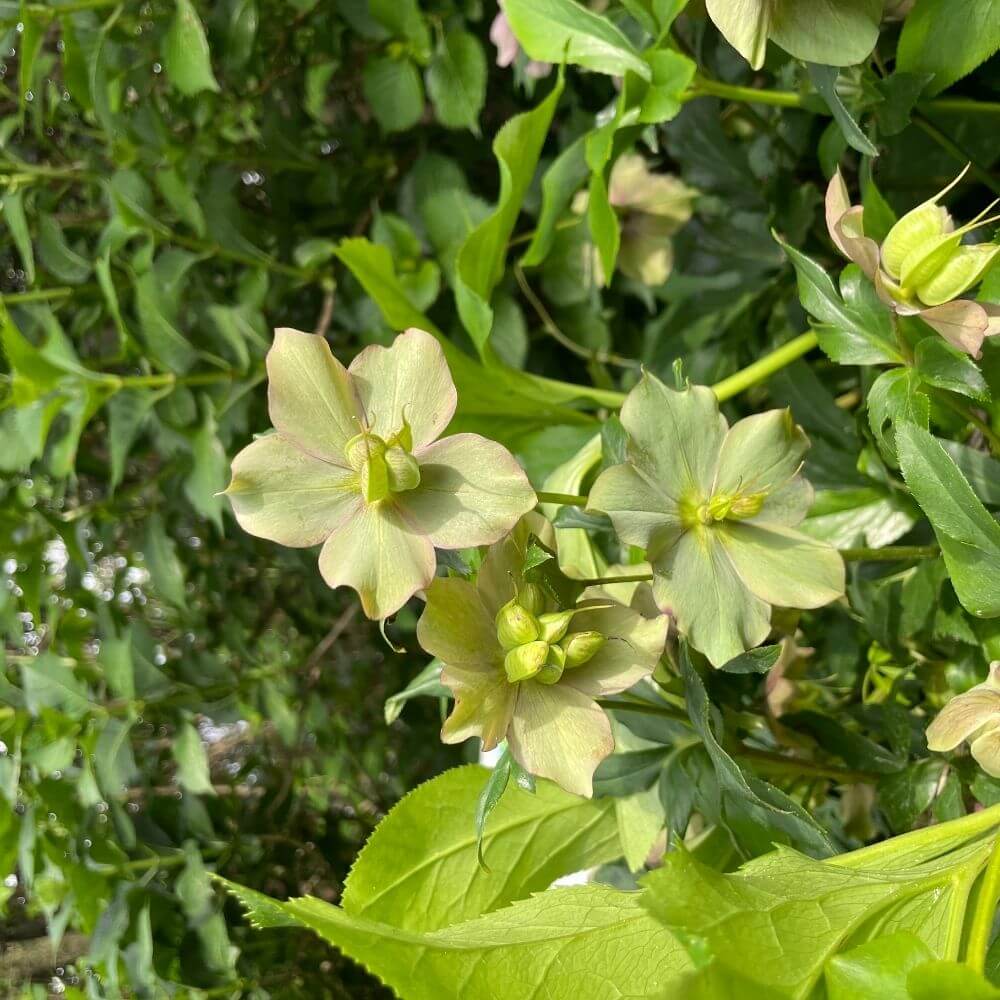
Native to Central and Western Europe, this woodland perennial is one of the earliest indicators of spring, often pushing through frozen ground to bloom. It differs from other hellebores by having smaller, intense green flowers that hang downward to protect their pollen from rain and snow. It naturalizes easily in deciduous forests, thriving in the dappled light created before trees leaf out in the spring.
- USDA Zone: 4 to 9
- Bloom Time: Late winter
- Water Needs: Low to moderate
- Sun Requirements: Partial shade
- Soil Type: Moist humus soil
- Best Use: Shade garden borders
5. Green Zinnia (Zinnia elegans ‘Envy’)
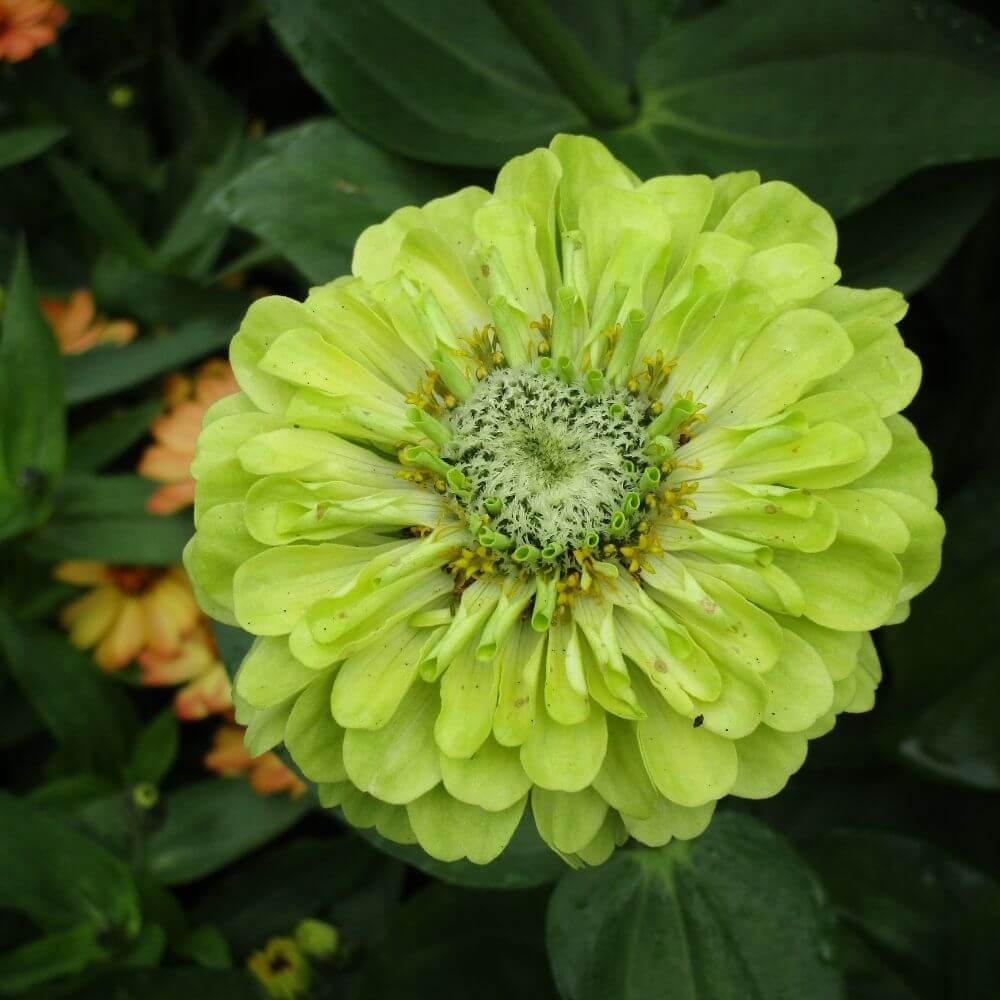
Introduced to the market in the 1960s, this heirloom variety was a breakthrough in breeding, offering a semi-double chartreuse bloom that was previously unseen in zinnias. Native to the scrublands of Mexico, the parent species is incredibly heat-tolerant and provides essential nectar for migrating Monarch butterflies. Gardeners love this specific cultivar because the green color intensifies when planted in partial shade, unlike most zinnias.
- USDA Zone: 3 to 10
- Bloom Time: Summer to fall
- Water Needs: Moderate
- Sun Requirements: Full sun
- Soil Type: Loose, well-drained
- Best Use: Pollinator gardens
6. Green Orchid (Dendrobium antennatum)
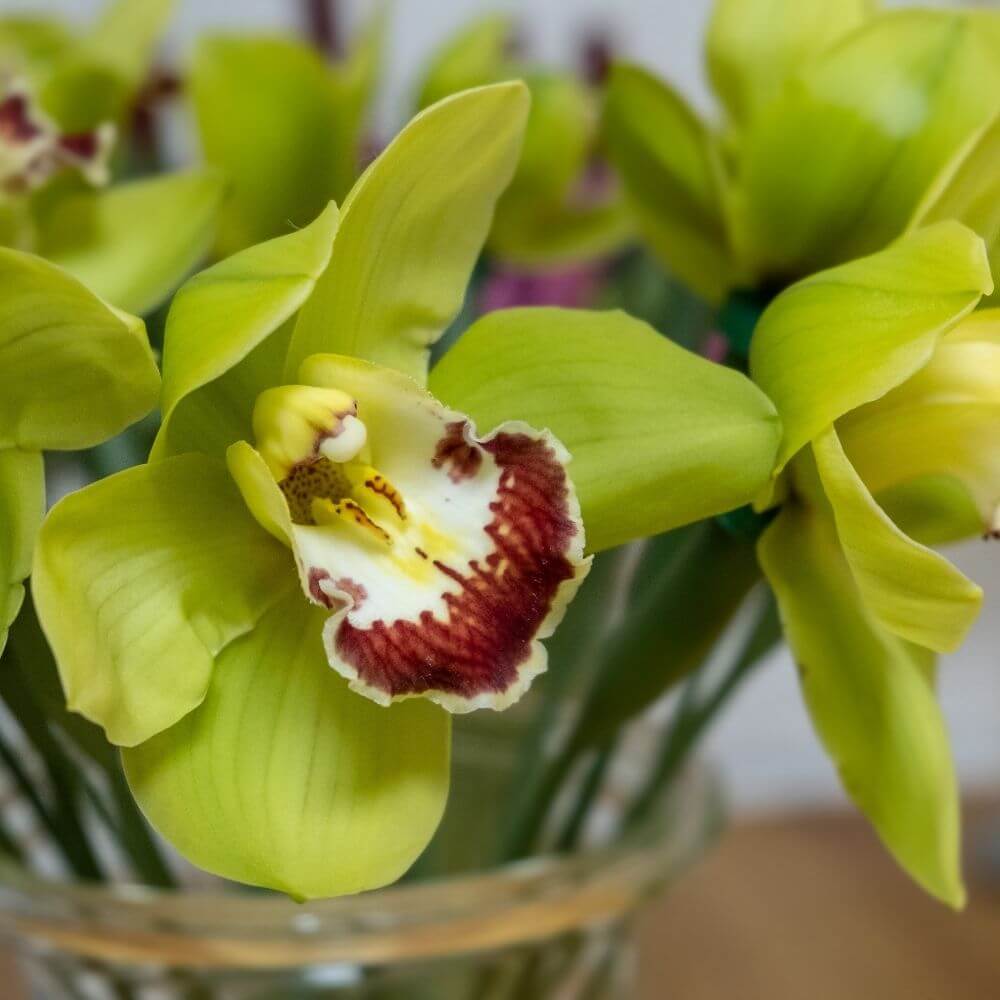
Native to the coastal rainforests of New Guinea and the Solomon Islands, this epiphyte is nicknamed the “Antelope Orchid” due to its twisted, upright petals. It grows naturally on mangroves and trees near the ocean, meaning it tolerates higher temperatures and light levels than many other orchids. Collectors prize it for its vigorous growth habit and flowers that can last on the stem for several months.
- USDA Zone: 10 to 12
- Bloom Time: Throughout warm months
- Water Needs: Moderate humidity
- Sun Requirements: Bright indirect light
- Soil Type: Orchid bark mix
- Best Use: Indoor decorative pots
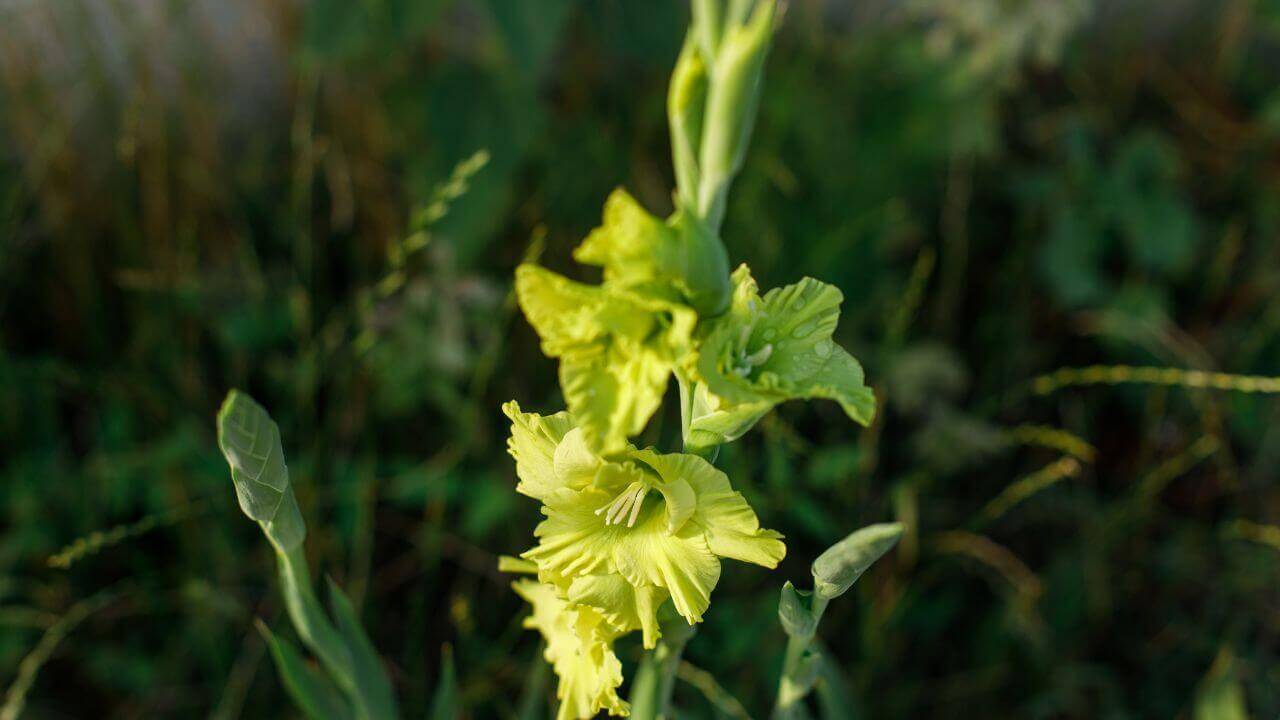
7. Green Gladiolus (Gladiolus hortulanus)
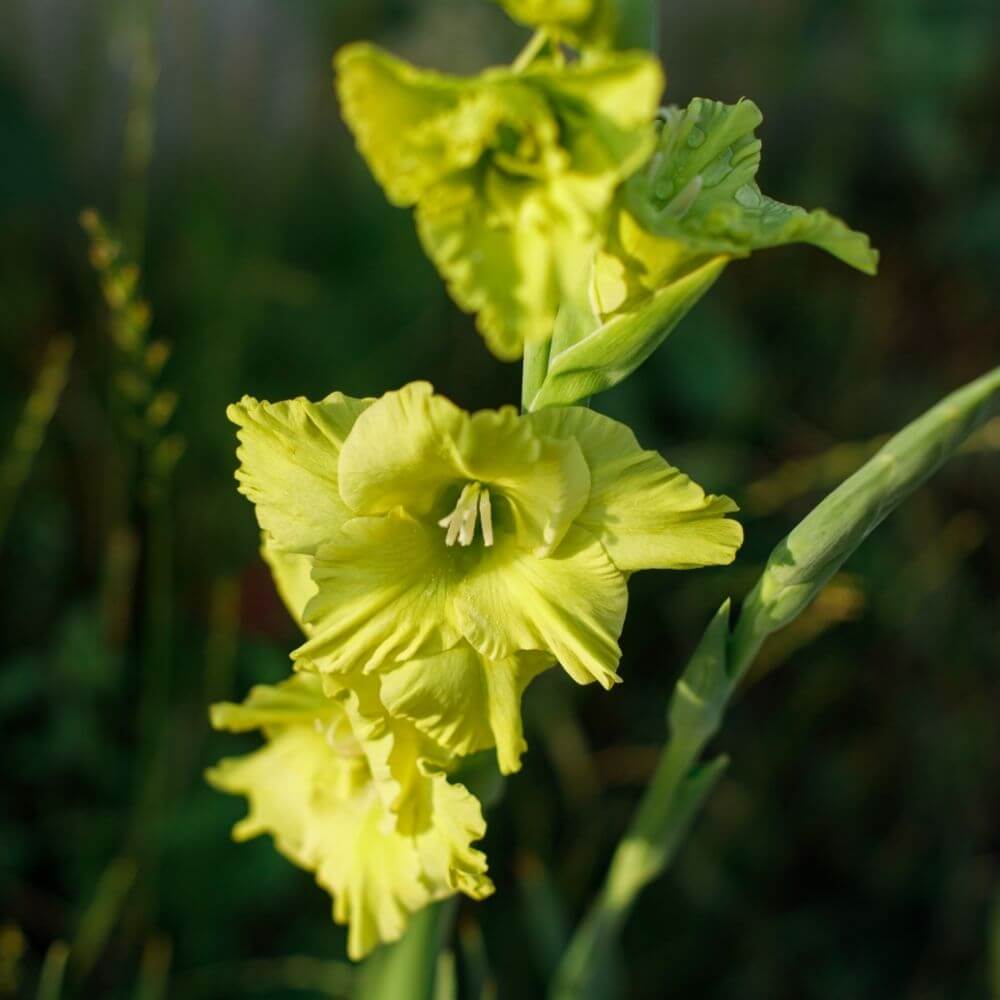
Originating from species found in South Africa, the modern green gladiolus produces dramatic, tall spikes that open from the bottom up. These “sword lilies” were hybridized to achieve the rare chartreuse color, which provides a cool contrast to the hot colors usually found in summer gardens. They are heavily reliant on corm storage in colder climates but offer an unmatched vertical element in landscape design.
- USDA Zone: 7 to 10
- Bloom Time: Summer
- Water Needs: Regular
- Sun Requirements: Full sun
- Soil Type: Loose sandy soil
- Best Use: Tall arrangements
8. Green Carnation (Dianthus caryophyllus)
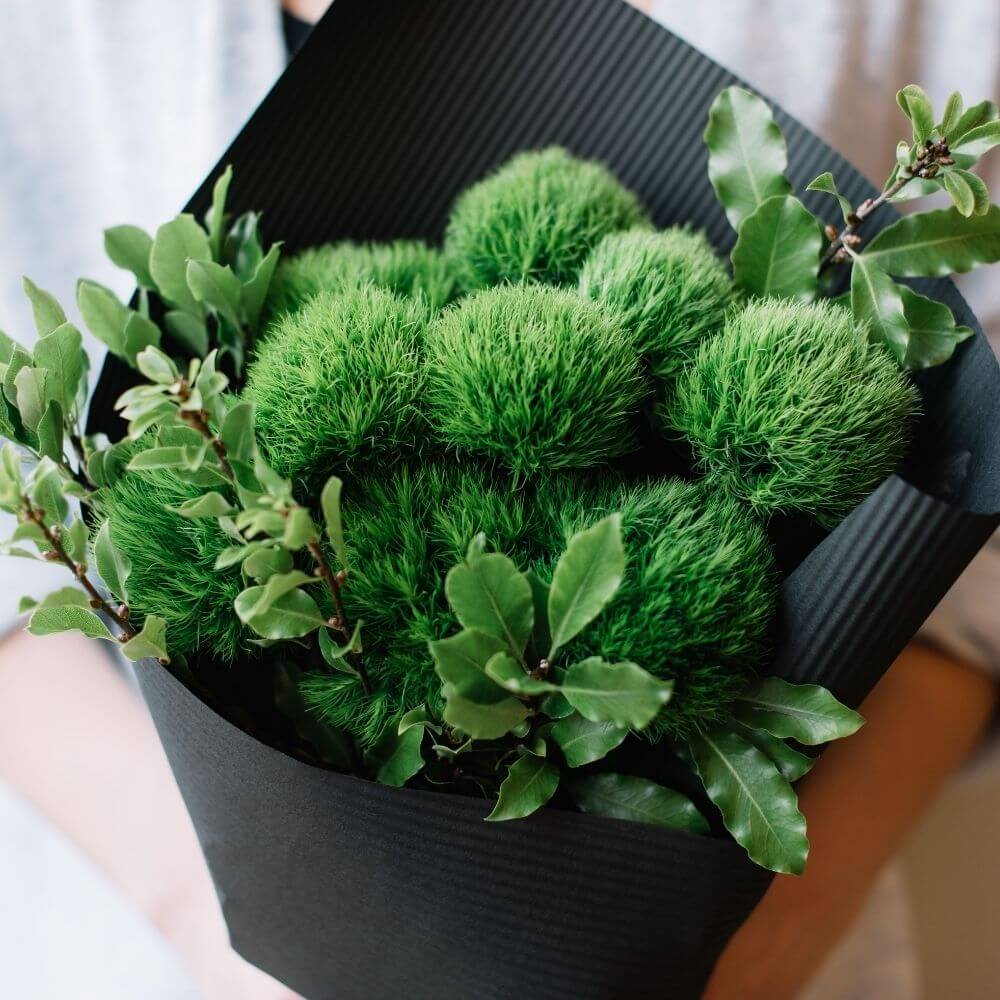
While historically dyed green for St. Patrick’s Day, modern breeding has produced natural green carnations that stem from the Mediterranean region’s wild species. These flowers are botanically significant for their ruffled petal edges and a spicy, clove-like fragrance that has been valued since Greek and Roman times. They are among the most durable cut flowers available, often symbolizing fascination and distinction in the language of flowers.
- USDA Zone: 6 to 9
- Bloom Time: Spring and summer
- Water Needs: Low to medium
- Sun Requirements: Full sun
- Soil Type: Neutral, well-drained
- Best Use: Boutonnieres and corsages
9. Green Hydrangea (Hydrangea paniculata ‘Limelight’)
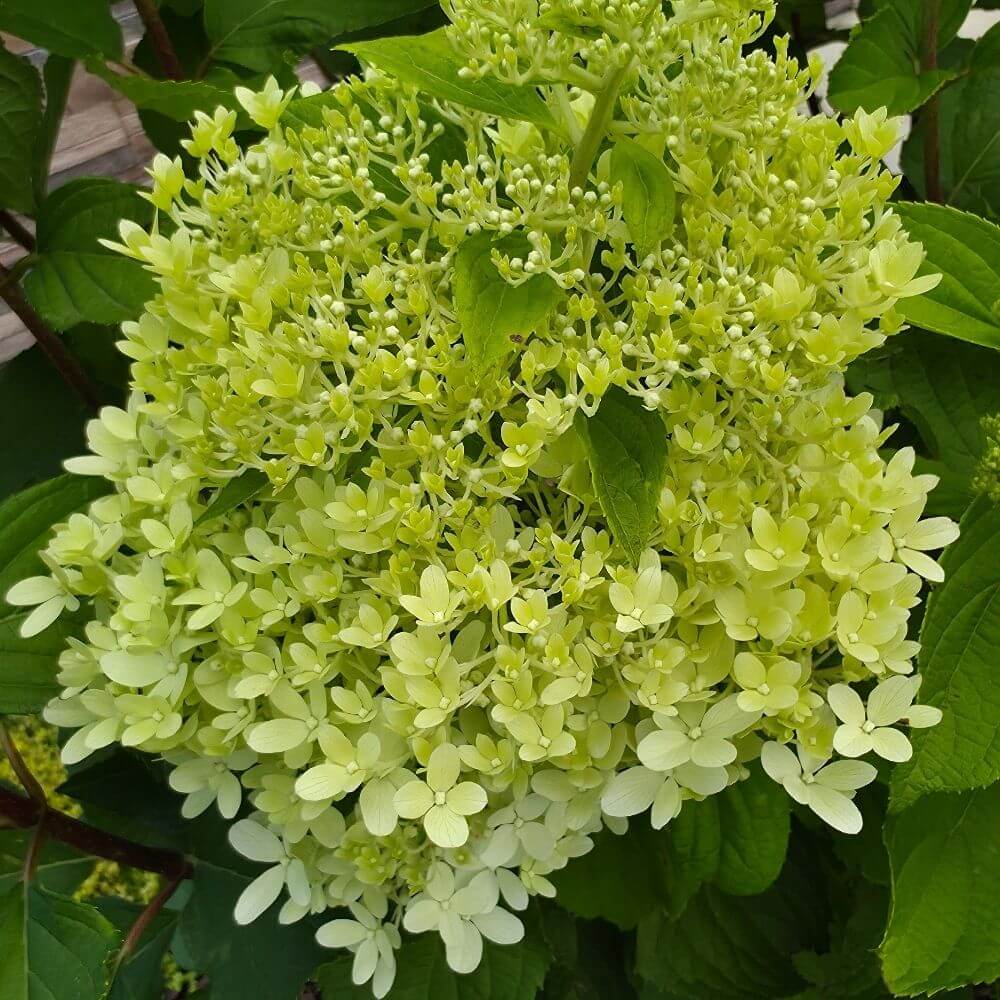
Developed in the Netherlands, this variety revolutionized landscaping with its massive, cone-shaped blooms that start as a vivid lime green. Unlike sensitive traditional hydrangeas, this panicle type is incredibly hardy and thrives across North America, even in hotter climates. It is famous for its color transformation, shifting from fresh green to creamy white and finally pink as autumn arrives.
- USDA Zone: 3 to 8
- Bloom Time: Summer to Late Fall
- Water Needs: Moderate
- Sun Requirements: Full sun to partial shade
- Soil Type: Fertile, well-drained soil
- Best Use: Hedges and foundation planting
10. Green Dianthus Trick (Dianthus barbatus ‘Green Trick’)
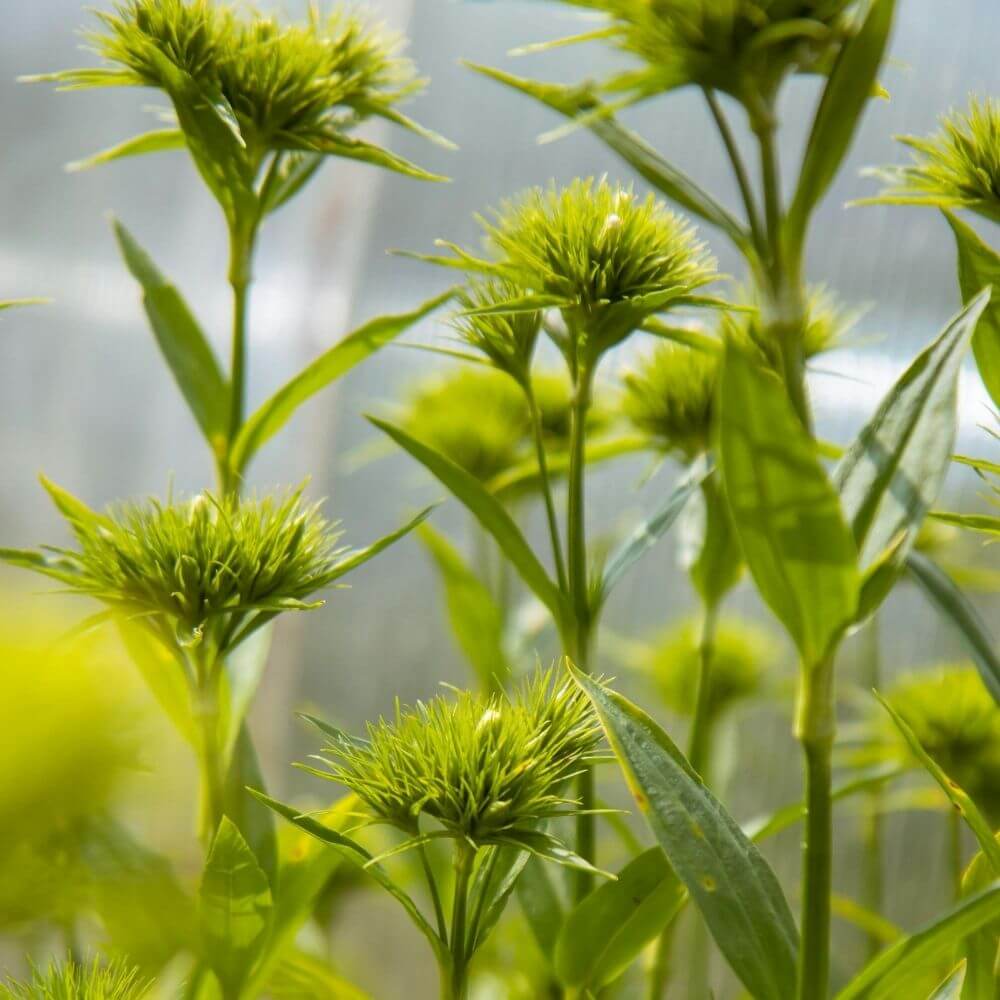
This unique variety is a member of the Sweet William family but was bred to be sterile, meaning it produces no seeds and focuses all energy on the fluffy green head. It was discovered as a sport (mutation) and quickly became a global hit for its grassy, moss-ball appearance that adds modern texture to designs. Because it lacks traditional petals, it is incredibly long-lasting in water, often enduring for weeks.
- USDA Zone: 3 to 9
- Bloom Time: Summer
- Water Needs: Medium
- Sun Requirements: Full sun
- Soil Type: Well-drained loam
- Best Use: Modern floral design
11. Lady’s Mantle (Alchemilla mollis)
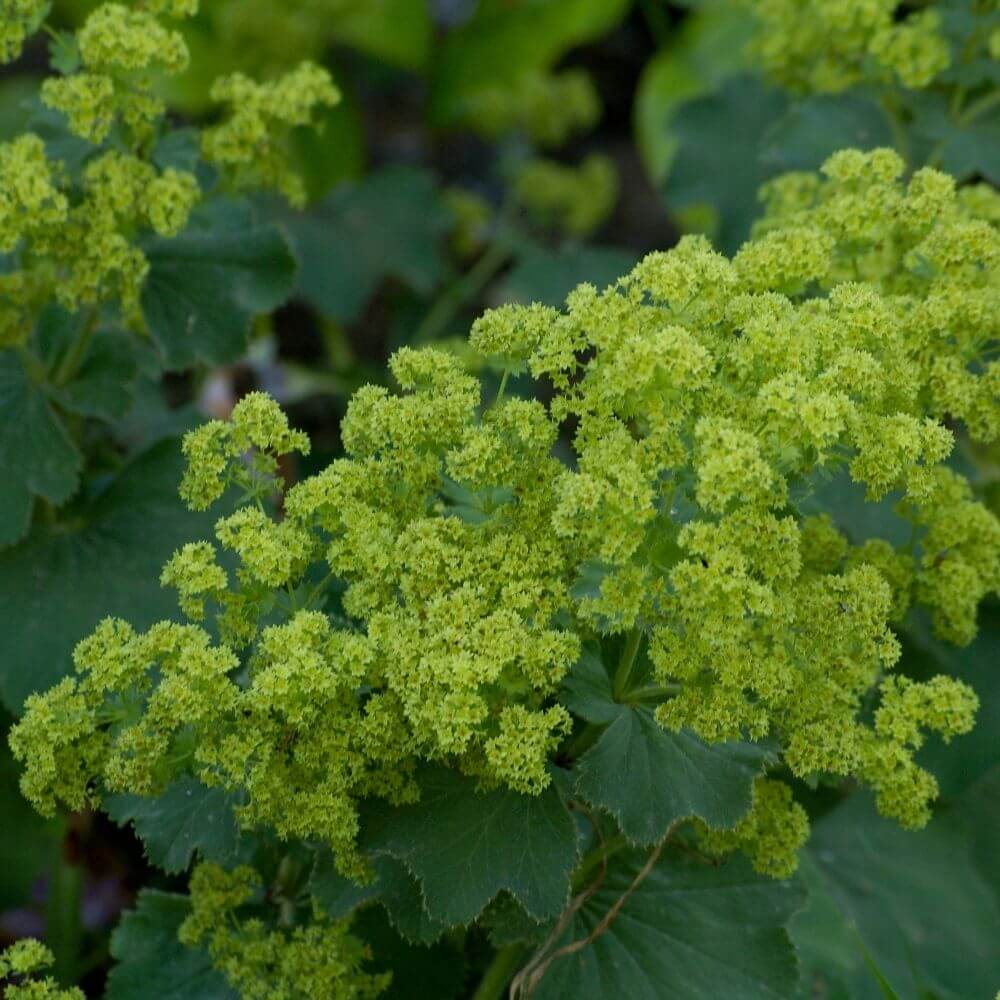
Native to Southern Europe and the Carpathians, this plant was famous in the Middle Ages because alchemists believed the dew collected on its leaves held magical purification powers. The leaves are hydrophobic, causing water to bead up like mercury, while the chartreuse flowers appear in frothy, cloud-like sprays. It is a tough, low-growing perennial that works as excellent ground cover and softens the edges of stone paths.
- USDA Zone: 3 to 8
- Bloom Time: Late spring
- Water Needs: Moderate
- Sun Requirements: Sun or shade
- Soil Type: Moist soil
- Best Use: Cottage gardens
12. Green Tulip (Tulipa ‘Greenland’)
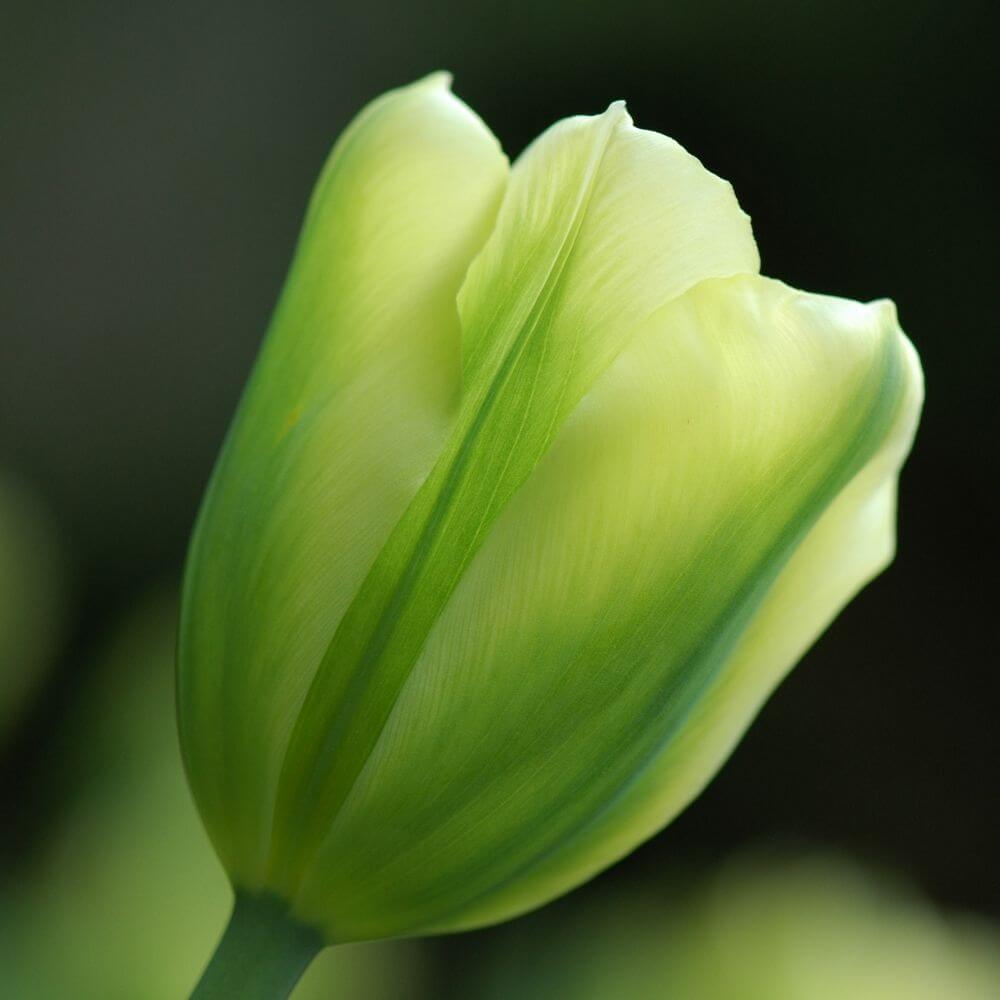
This stunning bulb belongs to the Viridiflora group of tulips, which are characterized by a distinct green streak that runs through the center of the petals. Introduced in 1955, it is a late-blooming variety that combines soft porcelain pink with green, making it exceptionally long-lasting compared to standard tulips. It is a favorite in Dutch flower markets because the green thickened stripe acts as a structural support, keeping the flower upright.
- USDA Zone: 3 to 8
- Bloom Time: Spring
- Water Needs: Moderate
- Sun Requirements: Full sun
- Soil Type: Well-drained sandy soil
- Best Use: Spring bouquets
13. Green Dahlia (Dahlia pinnata ‘Green Mist’)
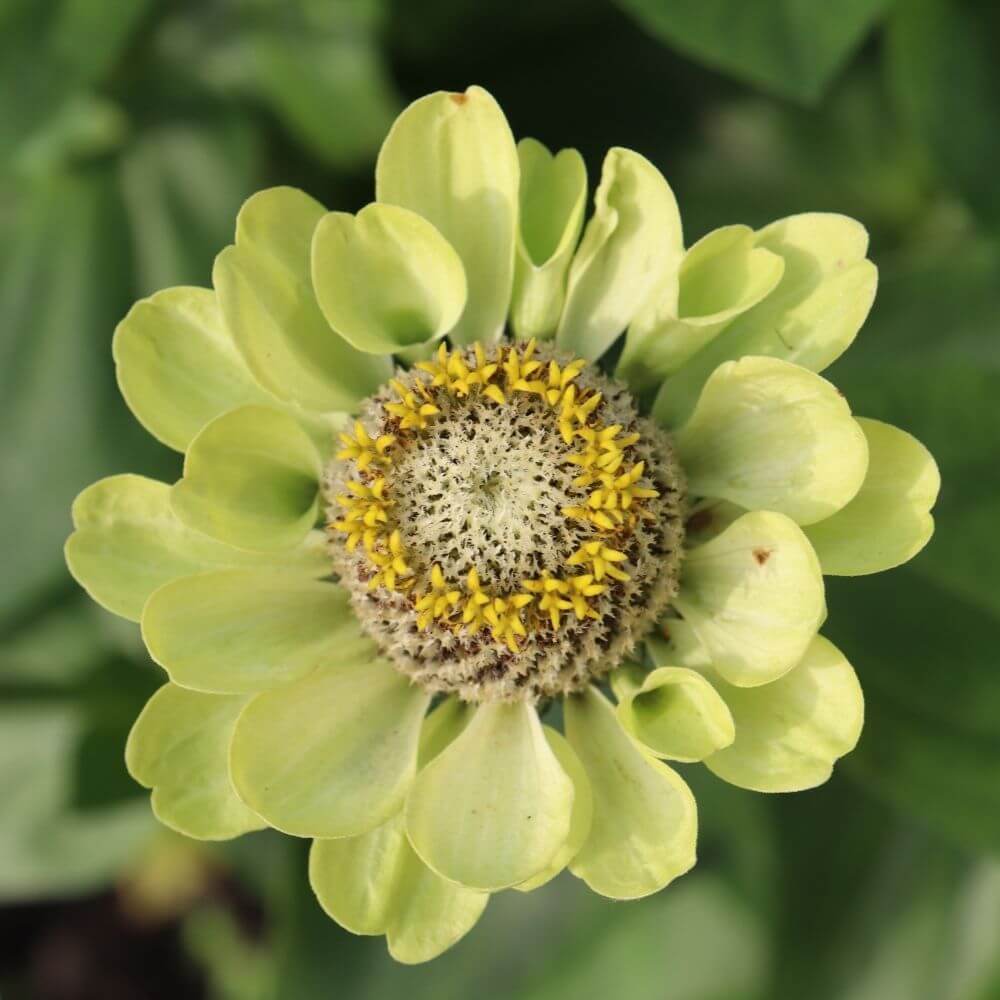
Native to the high plains of Mexico and Central America, this tuberous plant produces flowers with fringed petals that resemble a sea anemone. ‘Green Mist’ is not a solid block of color but rather white petals heavily washed with green centers, giving a glowing effect in the evening garden. It requires the tubers to be dug up and stored in winter in colder zones, but the complex blooms are worth the effort.
- USDA Zone: 8 to 11
- Bloom Time: Summer to fall
- Water Needs: High
- Sun Requirements: Full sun
- Soil Type: Rich soil
- Best Use: Cut flower arrangements
14. Jade Vine Flower (Strongylodon macrobotrys)
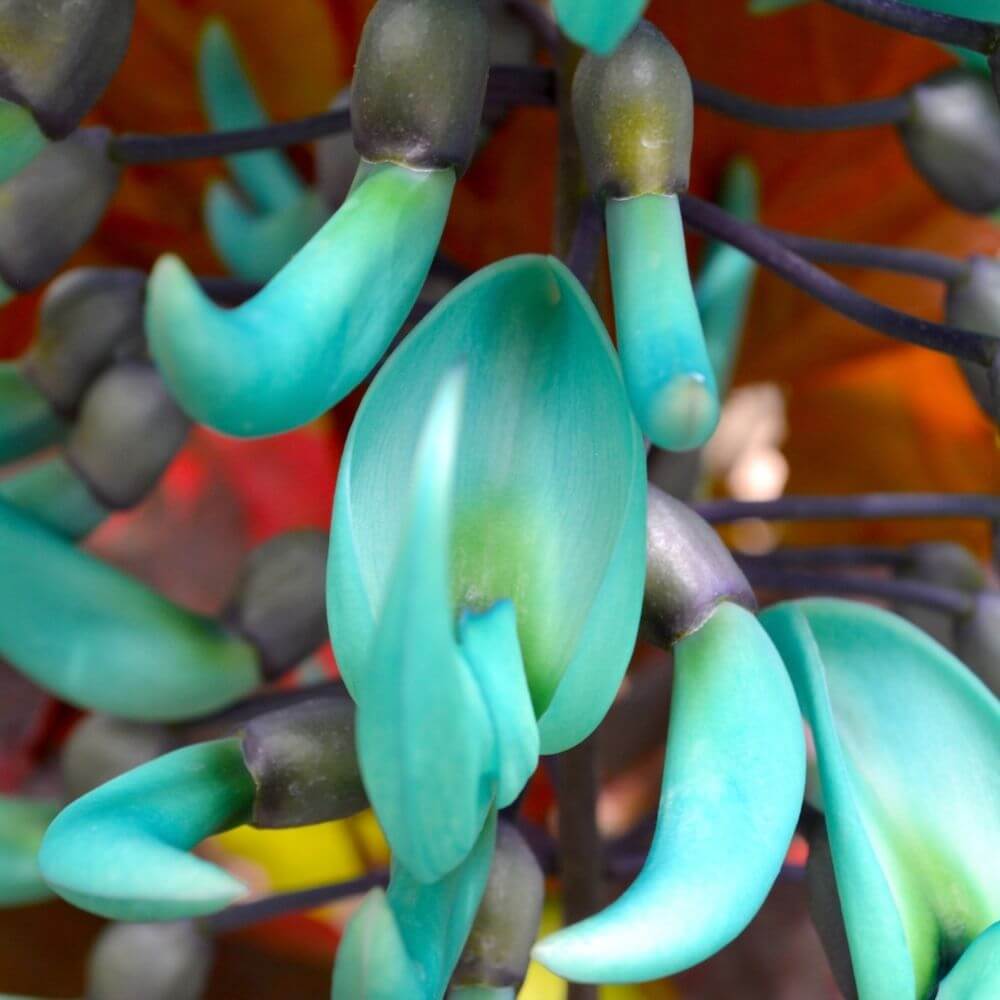
This spectacular vine is native to the tropical rainforests of the Philippines, where it is currently considered endangered due to deforestation. The luminous, turquoise-green flowers hang in trusses that can reach up to 3 feet long and are specially shaped to be pollinated by bats hanging upside down. It is notoriously difficult to grow outside of the tropics but is a crown jewel in botanical conservatories worldwide.
- USDA Zone: 10 to 12
- Bloom Time: Spring
- Water Needs: High
- Sun Requirements: Partial shade
- Soil Type: Moist tropical soil
- Best Use: Tropical landscapes
15. Spider Mum Green (Chrysanthemum morifolium ‘Anastasia Green’)
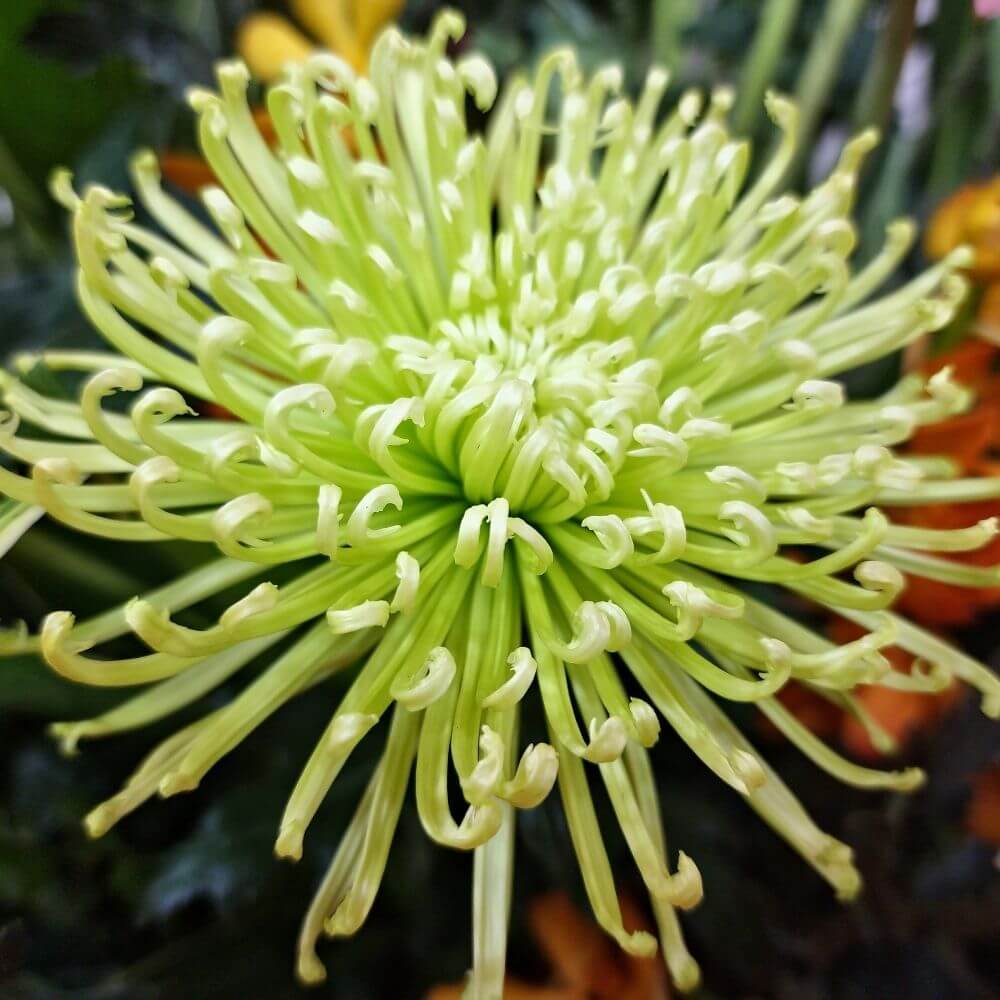
Part of the “Fuji” class of chrysanthemums, this flower features long, tubular petals that hook at the ends, creating a dynamic, firework-like explosion. Originally from East Asia, these mums are photoperiodic, meaning they rely on shorter days to trigger blooming, which makes them the star of autumn gardens. The ‘Anastasia’ variety is particularly valued for its electric lime color that does not fade easily.
- USDA Zone: 5 to 9
- Bloom Time: Fall
- Water Needs: Regular
- Sun Requirements: Full sun
- Soil Type: Fertile soil
- Best Use: Layered floral mixes
16. Green Cymbidium Orchid (Cymbidium spp.)
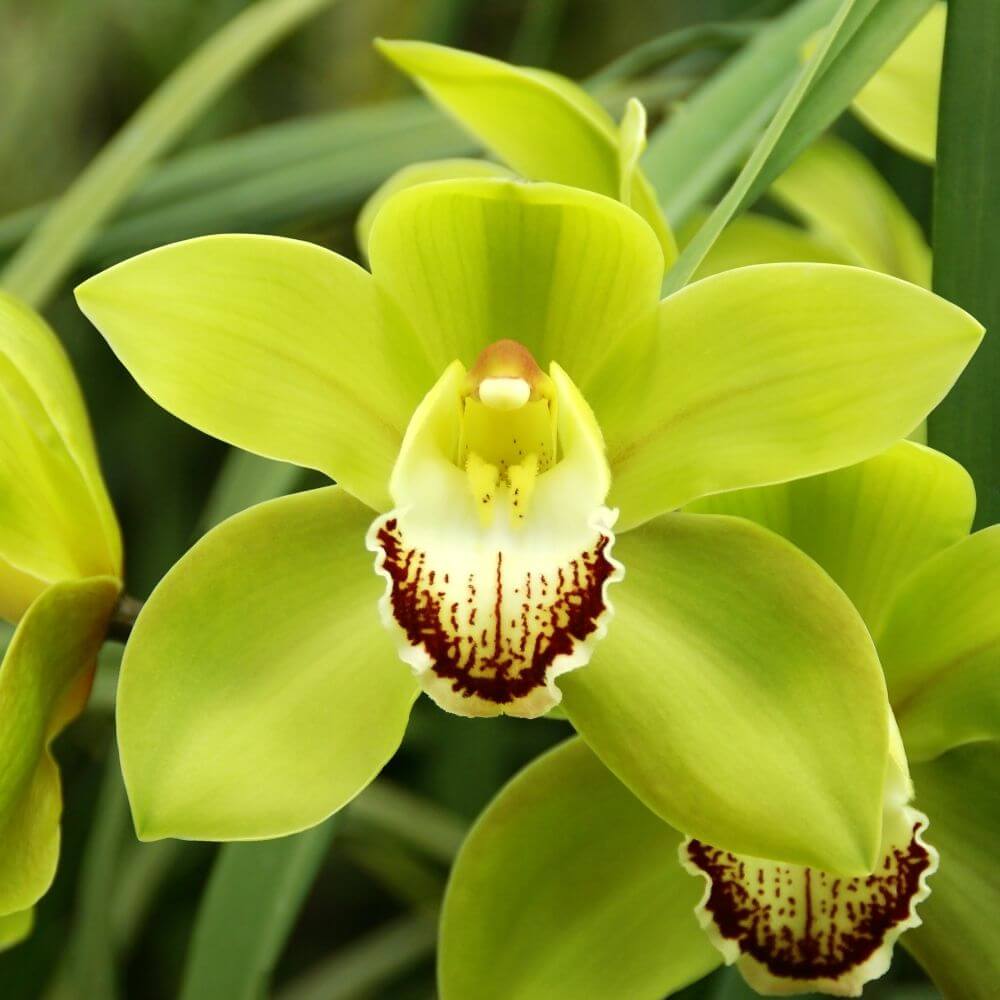
These cool-climate orchids grow wild in the high altitudes of the Himalayas, China, and Japan, allowing them to tolerate lower temperatures than tropical varieties. They are famous for their waxy, thick petals which make them one of the most durable cut flowers in existence, often lasting a month in water. The green varieties are particularly sought after for weddings because they symbolize natural beauty and distinctiveness.
- USDA Zone: 9 to 12
- Bloom Time: Winter to spring
- Water Needs: Medium
- Sun Requirements: Indirect light
- Soil Type: Orchid bark blend
- Best Use: Wedding bouquets
17. Green Calla Lily (Zantedeschia ‘Green Goddess’)
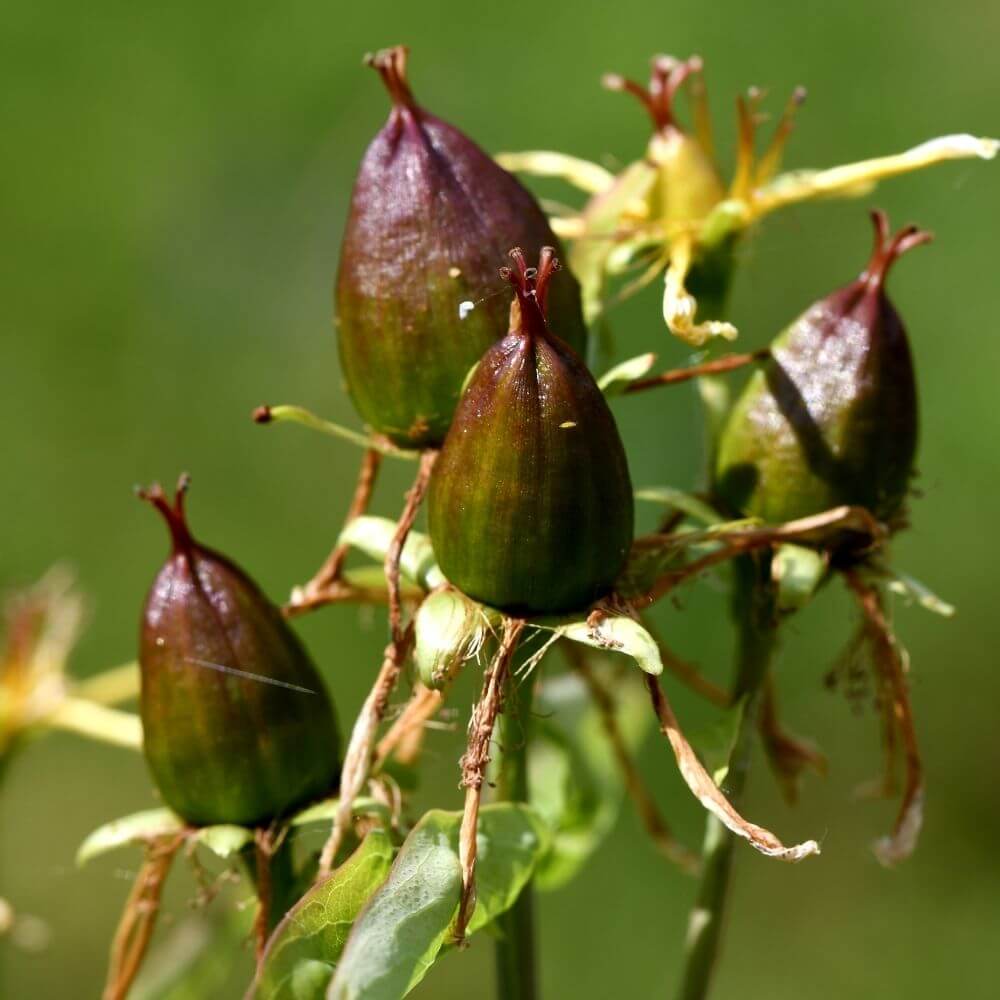
Native to South Africa, this robust variety is unique because the green coloring extends from the stem up into the large, flared spathe (the flower part). Unlike standard white Callas, ‘Green Goddess’ is a vigorous grower that can form large clumps and thrives in boggy conditions near ponds. The “flower” is actually a modified leaf, which explains why it feels thicker and lasts longer than delicate petals.
- USDA Zone: 8 to 10
- Bloom Time: Summer
- Water Needs: High
- Sun Requirements: Full sun to partial shade
- Soil Type: Moist organic soil
- Best Use: Elegant bouquets
18. Green Coneflower (Echinacea purpurea ‘Green Jewel’)
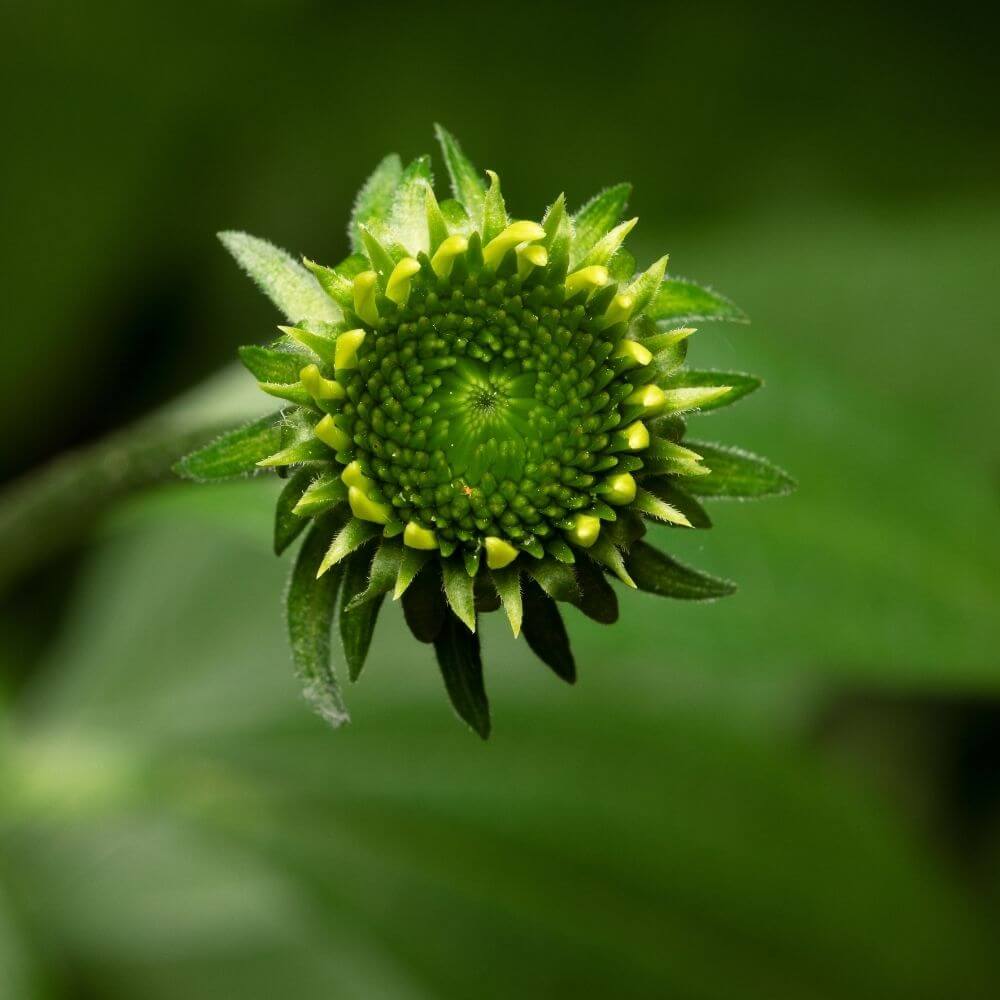
This is a native North American perennial that was discovered in the wild and selectively bred to retain its light green petals and dark green center cone. Unlike other Echinacea hybrids that can be finicky, this variety possesses a sweet fragrance and retains the sturdy, drought-tolerant roots of its ancestors. It is a magnet for goldfinches, who love to eat the seeds from the dried cones in the winter.
- USDA Zone: 4 to 9
- Bloom Time: Summer
- Water Needs: Low
- Sun Requirements: Full sun
- Soil Type: Dry to medium soil
- Best Use: Wildlife gardens
19. Green Amaranth (Amaranthus caudatus ‘Viridis’)
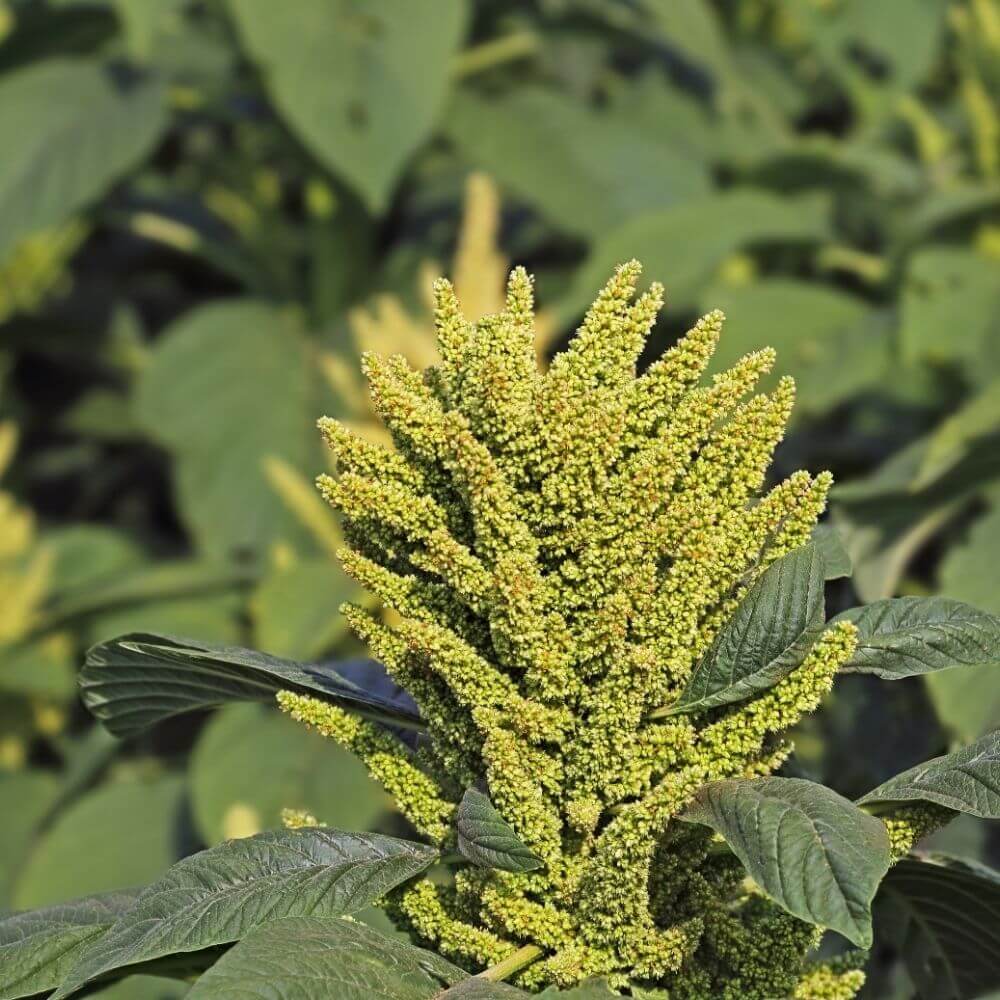
This ancient grain was a staple food source for the Inca and Aztec civilizations before it became a beloved ornamental plant in Victorian gardens. The ‘Viridiflora’ variety produces spectacular, rope-like tassels of green flowers that cascade down to the ground, earning it the nickname “Love-Lies-Bleeding.” It is incredibly fast-growing and heat-loving, often self-sowing to return in the garden year after year.
- USDA Zone: 3 to 10
- Bloom Time: Summer to fall
- Water Needs: Moderate
- Sun Requirements: Full sun
- Soil Type: Light fertile soil
- Best Use: Hanging floral designs
20. Green Lisianthus (Eustoma grandiflorum ‘Mariachi Lime’)
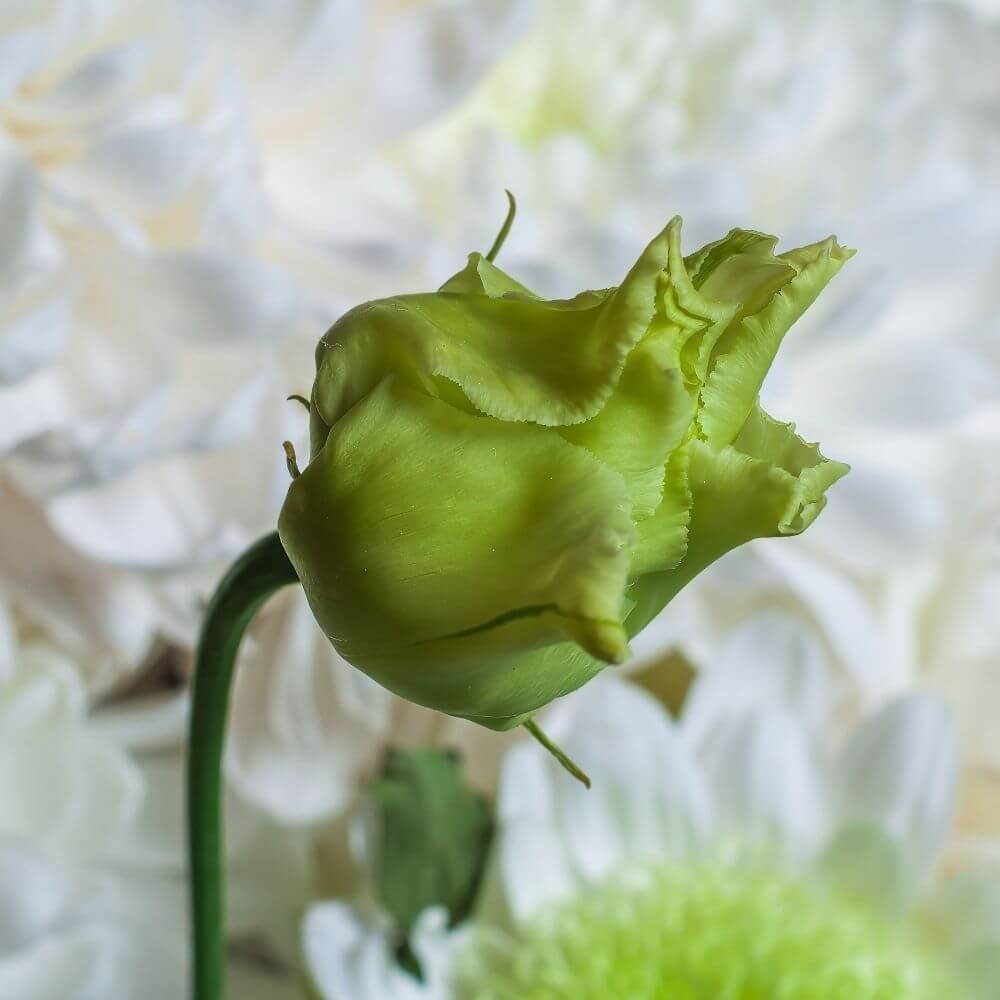
Native to the prairies of Texas and Mexico, this flower is often called the “Texas Bluebell,” though this specific lime cultivar is a modern Japanese development. It is notoriously slow to grow from seed due to a sensitive taproot, but the result is a multi-layered bloom that rivals the rose in beauty. The petals have a slight sheen and thick texture, making them a top choice for high-end bridal work.
- USDA Zone: 8 to 11
- Bloom Time: Summer
- Water Needs: Medium
- Sun Requirements: Full sun
- Soil Type: Well-drained soil
- Best Use: Wedding bouquets
21. Green Marigold (Tagetes erecta ‘Green Star’)
While marigolds are native to the Americas, this unique cream-and-lime variety is the result of decades of careful selection to remove the orange pigment. It retains the strong, pungent scent of traditional marigolds, which serves as a natural deterrent for garden pests like nematodes and rabbits. The large, pom-pom heads are densely packed with petals and stand on sturdy stems, making them excellent for cutting.
- USDA Zone: 2 to 11
- Bloom Time: Summer
- Water Needs: Low to medium
- Sun Requirements: Full sun
- Soil Type: Sandy loam
- Best Use: Summer beds
22. Green Daylily (Hemerocallis ‘Green Flutter’)
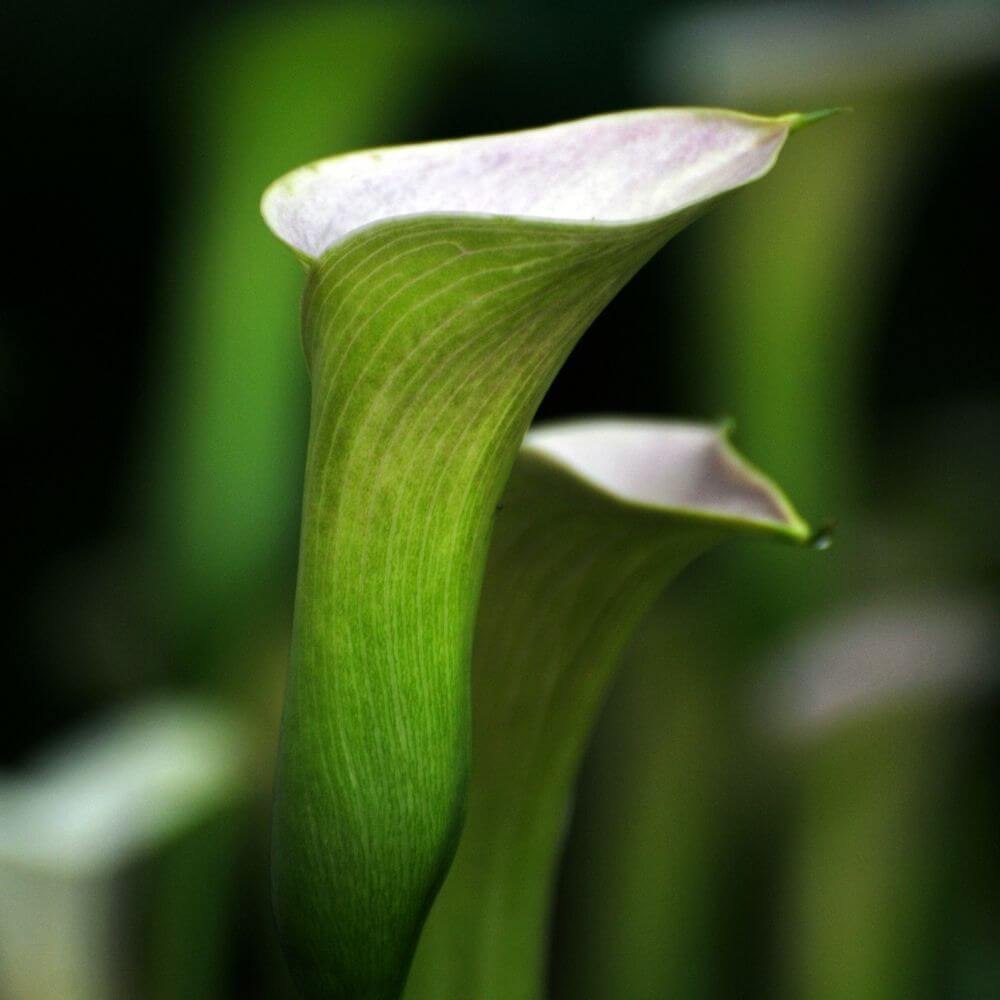
Native to Asia, daylilies are named for the fact that each individual bloom lasts only for one day, though the plant produces buds continuously for weeks. ‘Green Flutter’ is a diplomatic diploid variety, known for its ruffled throat and distinct green wash that glows in the sunlight. It is one of the most adaptable perennials available, capable of surviving road salt, uneven watering, and poor soil conditions.
- USDA Zone: 3 to 9
- Bloom Time: Summer
- Water Needs: Moderate
- Sun Requirements: Full sun
- Soil Type: Average soil
- Best Use: Perennial borders
23. Green Sunflower (Helianthus annuus ‘Sunfill Green’)
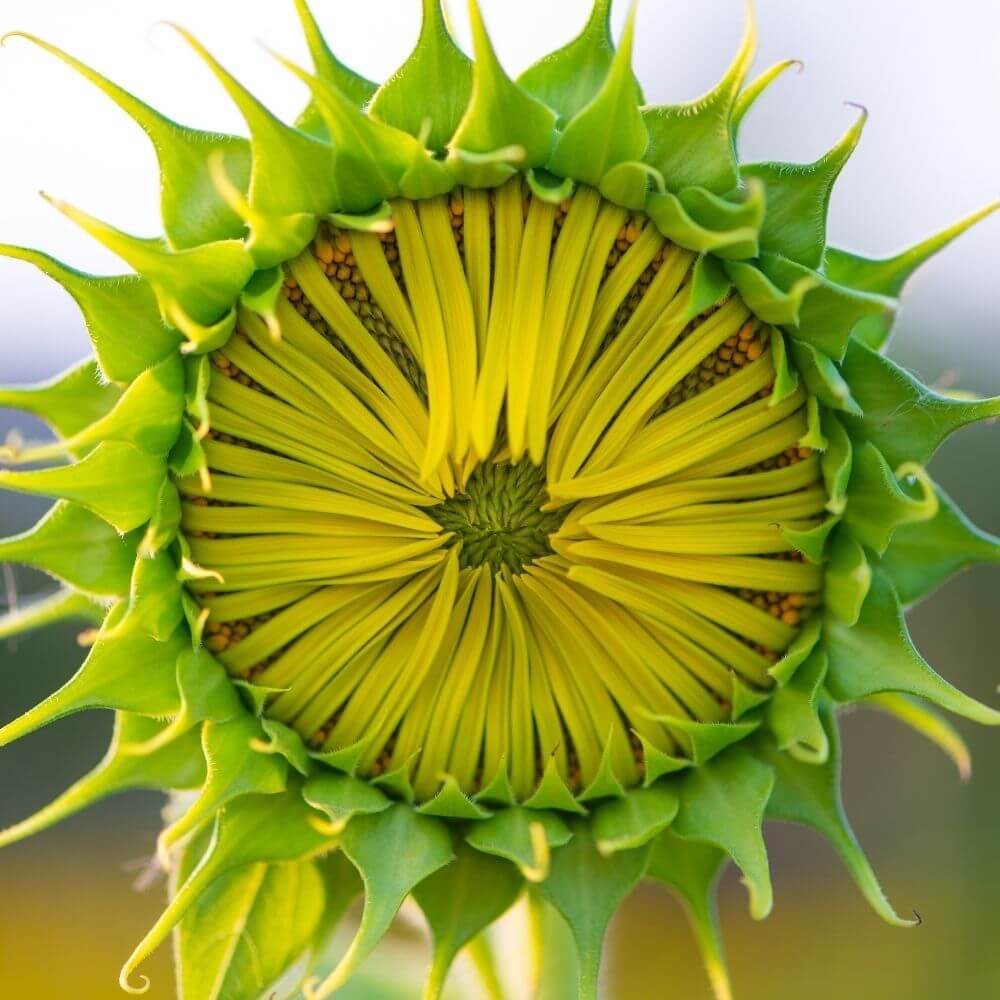
Bred specifically for the American cut flower market, this unique variety skips the traditional yellow petals entirely to create a geometric, artichoke-like look. It features layers of spiky green calyxes that cover the face of the flower, offering a rapid-growing option for texture lovers. Florists value it highly because it provides the classic sturdy sunflower stem with a completely monochromatic, modern aesthetic.
- USDA Zone: 4 to 9
- Bloom Time: Summer
- Water Needs: Moderate
- Sun Requirements: Full sun
- Soil Type: Loose, well-drained loam
- Best Use: Modern, texture-heavy bouquets
24. Green Viburnum (Viburnum opulus ‘Roseum’)
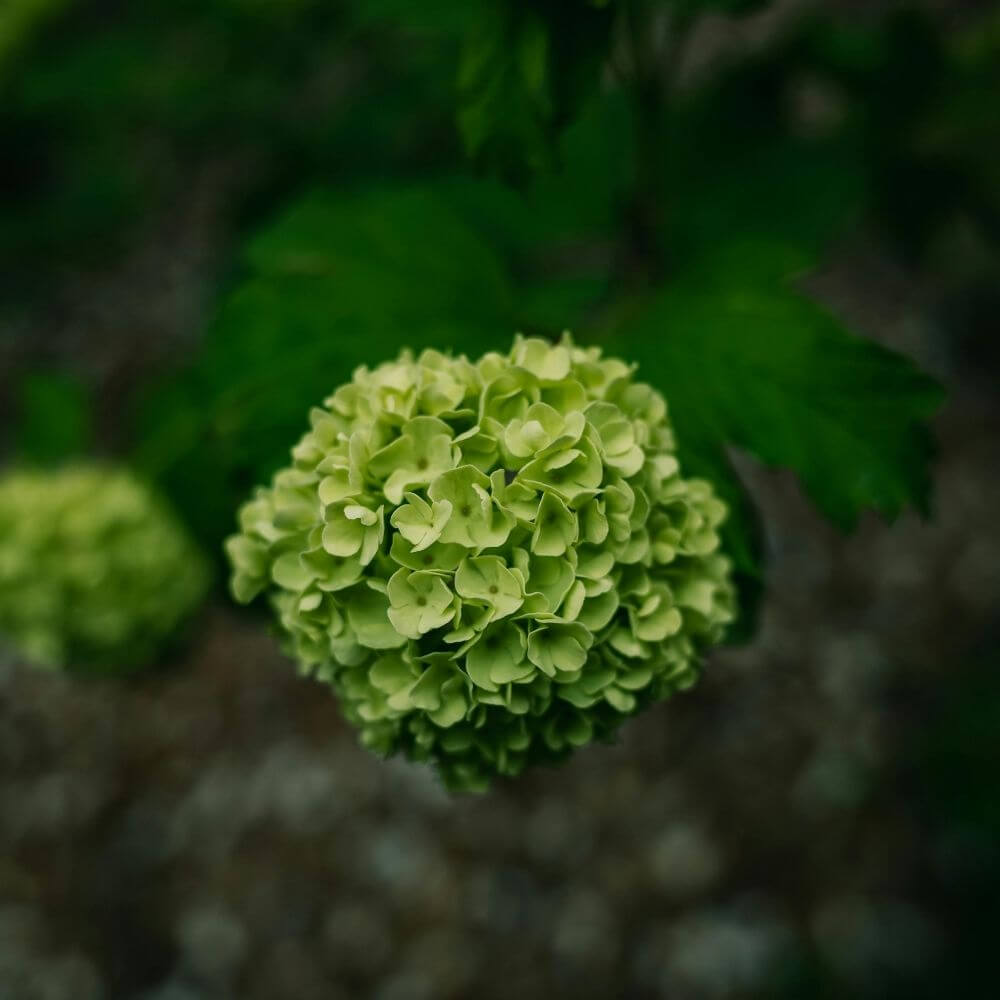
Often called the “European Snowball Bush,” this deciduous shrub produces baseball-sized clusters of flowers that start a vibrant apple green before turning white. The flowers are sterile, meaning they produce no berries, so the plant puts all its energy into a massive floral display in late spring. It is a heritage plant often found in old farmhouse gardens and is prized for its maple-like leaves that turn purple in fall.
- USDA Zone: 3 to 8
- Bloom Time: Spring
- Water Needs: Medium
- Sun Requirements: Full sun to part shade
- Soil Type: Moist soil
- Best Use: Spring bouquets
25. Green Foxglove (Digitalis viridiflora)
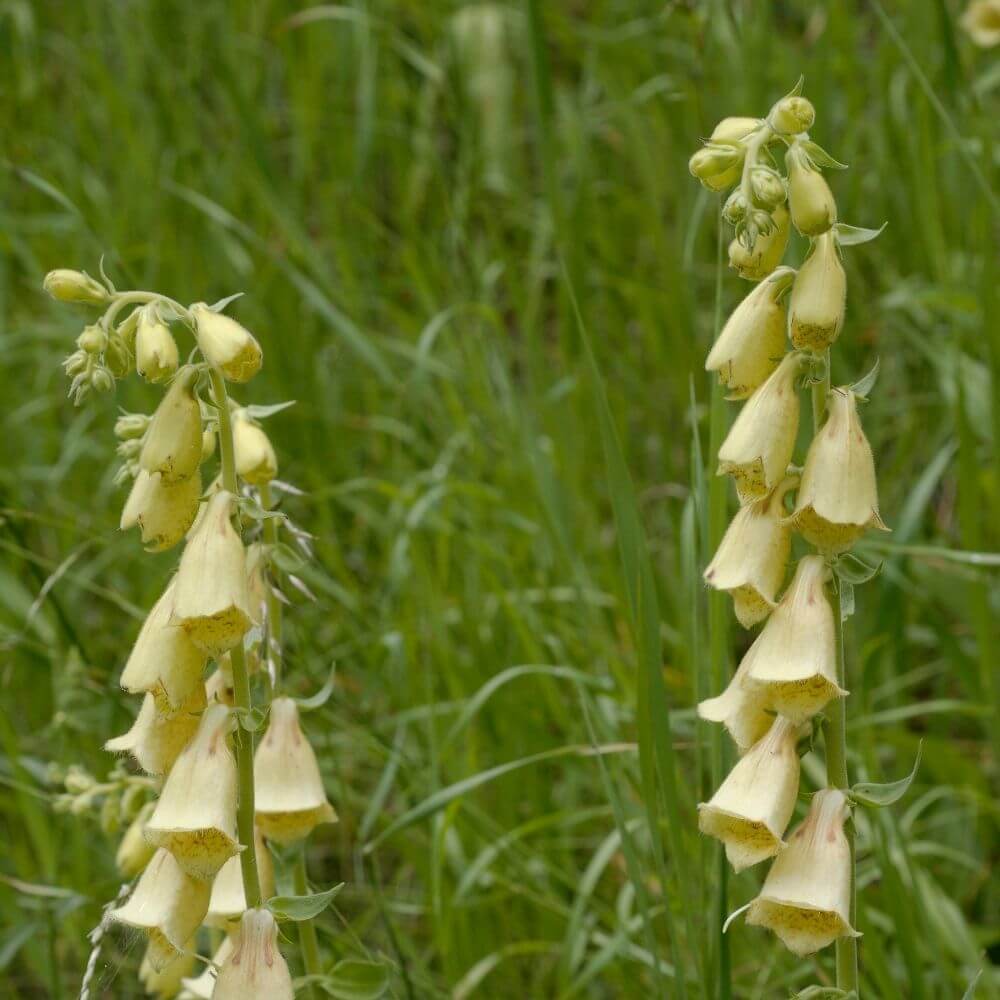
Native to the Balkan peninsula and found throughout European woodlands, this species is a true botanical treasure that grows naturally in the wild. It produces tall, slender spikes of greenish-yellow tubular flowers that are perfectly adapted to attract bumblebees in shaded forests. Unlike colorful garden hybrids, this perennial retains a subtle, wild elegance that makes it perfect for naturalizing under trees.
- USDA Zone: 4 to 8
- Bloom Time: Early Summer
- Water Needs: Moderate
- Sun Requirements: Partial shade to deep shade
- Soil Type: Humus-rich, moist soil
- Best Use: Woodland or shade gardens
26. Green Nicotiana (Nicotiana langsdorffii)
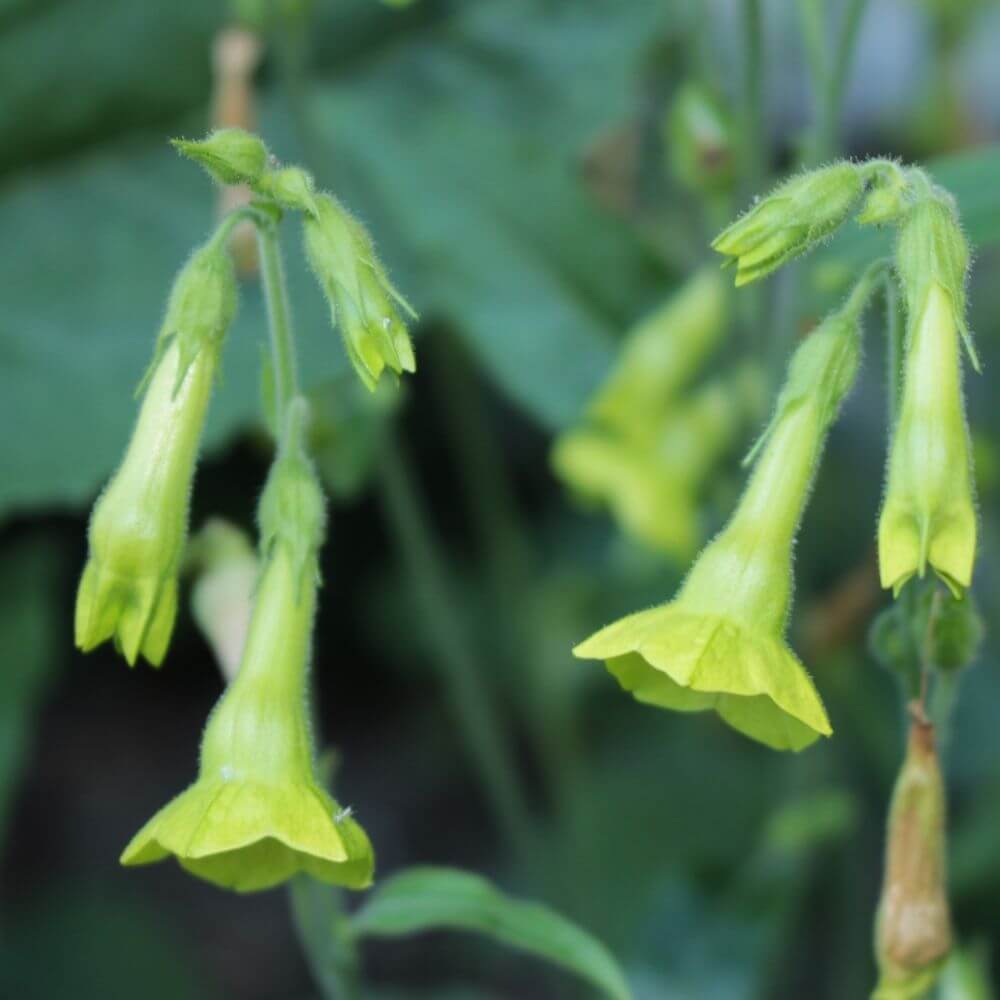
Originally hailing from Brazil and Chile, this heirloom annual has been a favorite in cottage gardens since the early 19th century. It features nodding, bell-shaped blooms in a striking apple-green chartreuse that dangle elegantly from slender, wiry stems. The flowers are incredibly rich in nectar, making them a magnet for hummingbirds and a lively, moving element in any garden border.
- USDA Zone: 10 to 11 (Grown as an Annual elsewhere)
- Bloom Time: Summer to Frost
- Water Needs: Regular
- Sun Requirements: Full sun to partial shade
- Soil Type: Moist, rich soil
- Best Use: Cottage borders and hummingbird gardens
Green Flowers for Weddings and Bouquets
Green flowers give bouquets a natural softness that blends with almost any color scheme. Bridal bouquets often include hydrangeas, lisianthus, calla lilies, and green trick dianthus. Garden roses and green orchids add elegance, while Bells of Ireland create height.
Low Maintenance vs High Maintenance Green Blooms
Some flowers like zinnias, marigolds, and daylilies need very little care once established. Others like orchids, calla lilies, and hydrangeas require more attention, especially with water and humidity. Choosing between them depends on how much time you want to spend on upkeep.
Key Takeaways
- Green flowers bring freshness, balance, and texture to gardens and bouquets
- Both natural and hybrid varieties exist
- Dark and light green blooms work beautifully in wedding themes
- Many options are easy to grow, even for beginners
- Florists use green flowers to create modern, layered designs
Final Thoughts
Green flowers offer a peaceful look that fits almost any garden or celebration. They work beautifully in bouquets, landscape designs, and seasonal displays. If you want to experiment with new textures and shades, start by planting or arranging one or two from this list and build from there.
Related Reads