
If you love gardening or want to support nature in a simple way, planting flowers that attract bees is one of the best things you can do. Bees play a vital role in pollinating fruits, vegetables, and flowers, which means they directly help in growing the food we eat every day. But with declining bee populations, creating a bee-friendly space has become more important than ever. In this article, you’ll learn 30 flowers that attract bees, along with their names, key features and pictures, so you can easily choose the right ones for your garden, balcony, or backyard.
What Are Pollinators?
Pollinators are living organisms that help plants reproduce by moving pollen from one flower to another. This simple process allows plants to form seeds, fruits, and new plants. Without pollinators, many crops and wild plants would struggle to survive. The most common pollinators are: Bees, Butterflies, Moths, Beetles, Birds like hummingbirds.
Why Bees Matter the Most
Among all pollinators, bees are the most effective and reliable. Their bodies are specially designed to collect and spread pollen efficiently.
1. Excellent Pollination Ability
Bees have hairy bodies that trap pollen easily. As they move from flower to flower, they spread pollen quickly and accurately.
2. Support Food Production
A large portion of fruits, vegetables, and nuts depend on bees for pollination. Crops like apples, almonds, and berries grow better because of bees.
3. Increase Plant Growth
Bees help plants produce more seeds and healthier fruits, which improves overall plant quality.
4. Maintain Biodiversity
By helping different plants reproduce, bees support a wide variety of plant and animal life in ecosystems.
Why Flowers That Attract Bees Matter?
Flowers that attract bees are important for both home gardens and agriculture. Bees are drawn to flowers rich in nectar and pollen. These flowers help increase crop yield, improve biodiversity, and support the environment. Planting bee-friendly flowers is a simple way to protect pollinators and keep gardens lively.
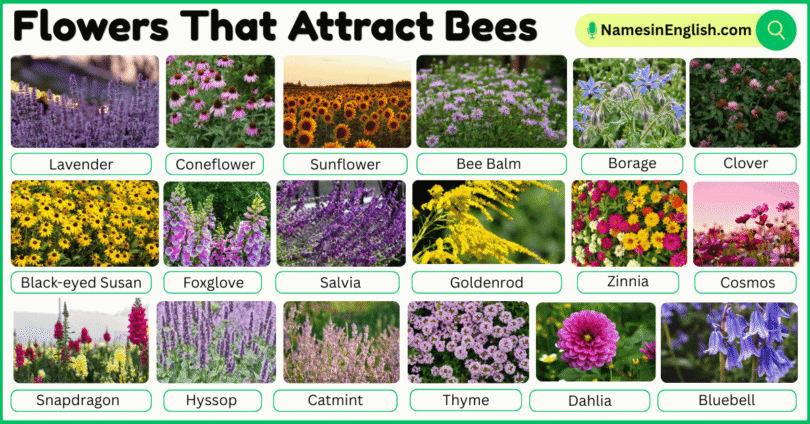
Top 30 Flowers That Attract Bees with Names
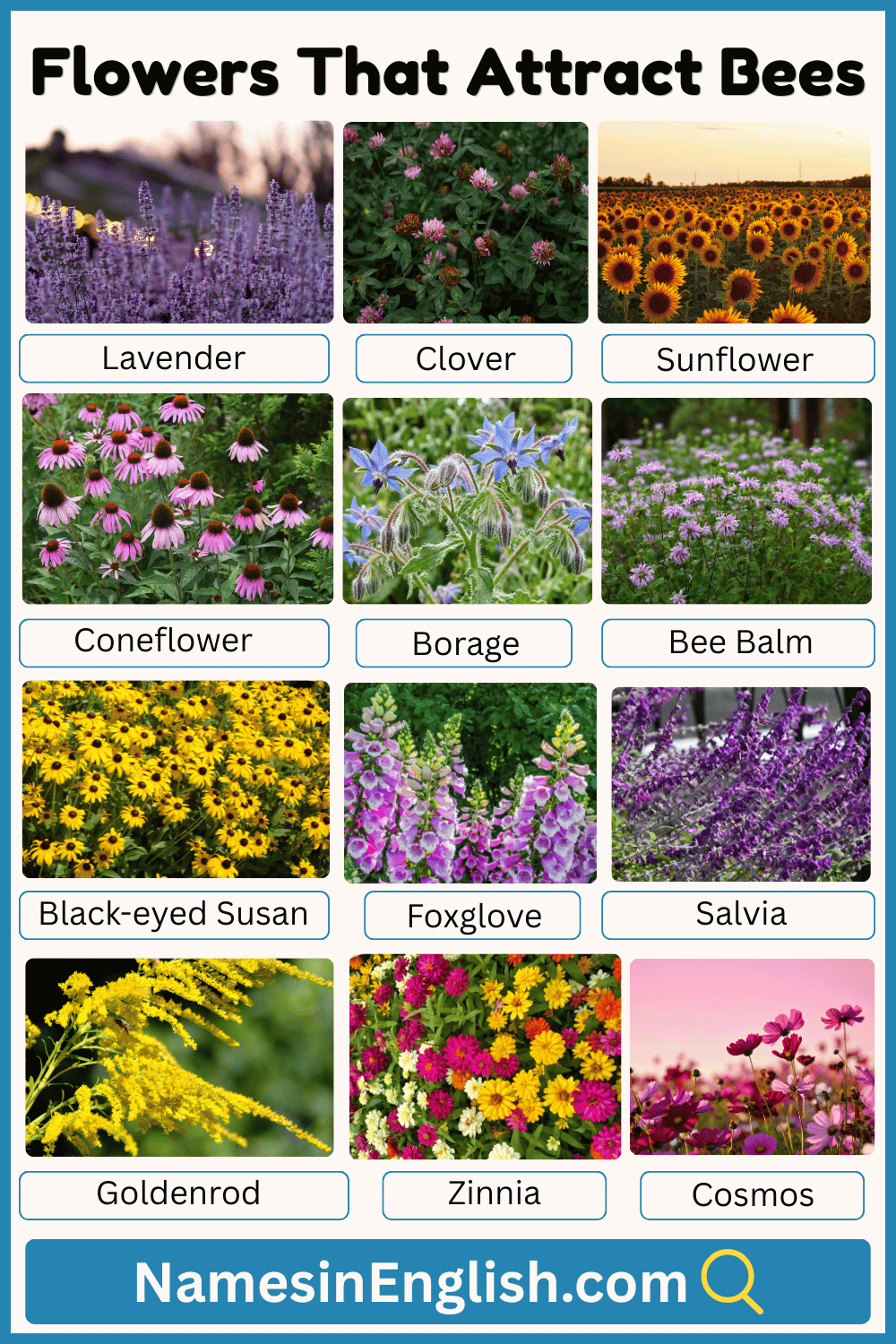
| Lavender | Sunflower | Coneflower | Bee Balm | Black-eyes Susan |
| Borage | Clover | Foxglove | Salvia | Zinnia |
| Cosmos | Aster | Goldenrod | Marigold | Geranium |
Bees Friendly Flowers with Names and Pictures
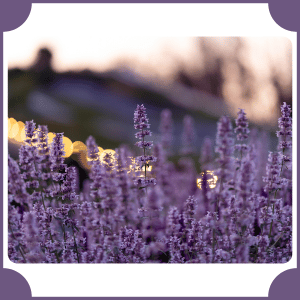
- Lavender
Lavender is a small flowering plant known for its soft purple blooms and strong, calming fragrance. It grows mainly in warm regions and is widely used in gardens, perfumes, and oils. Bees are naturally attracted to its rich nectar.

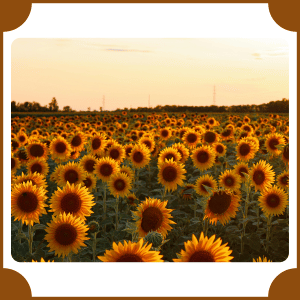
- Sunflower
Sunflower is a tall plant with a large yellow flower that faces the sun. It is commonly found in open fields and gardens. Its center is full of seeds and pollen, making it very attractive and useful for bees.

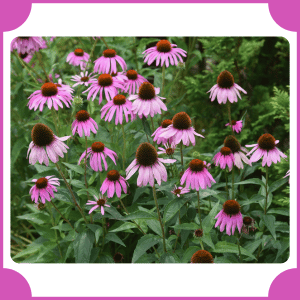
- Coneflower
Coneflower is a bright, daisy-like flower with a raised center and colorful petals. It is native to North America and grows well in sunny areas. Its open shape and nectar make it easy for bees to collect food.

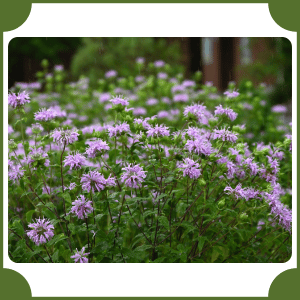
- Bee Balm
Bee Balm is a colorful flowering plant known for its red, pink, or purple blooms. It grows in gardens and wild areas and is especially loved by bees. Its rich nectar and unique shape make it a strong pollinator plant.

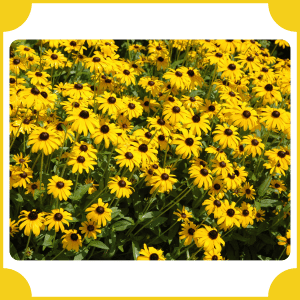
- Black-eyed Susan
Black-eyed Susan is a yellow wildflower with a dark brown center. It grows easily in fields and gardens and blooms in warm seasons. Its simple, open structure allows bees to land and collect pollen without difficulty.

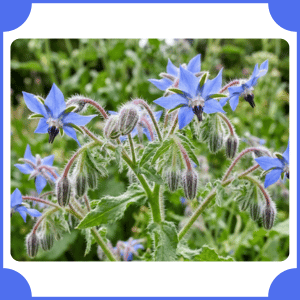
- Borage
Borage is a herb plant with small, star-shaped blue flowers. It grows in many regions and blooms for a long time. Its flowers produce a lot of nectar, which makes it one of the most attractive plants for bees.

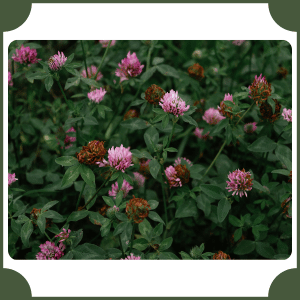
- Clover
Clover is a small plant with tiny white, pink, or red flowers. It spreads easily across fields and lawns. Known for its high nectar content, it is an important food source for bees and supports natural pollination.

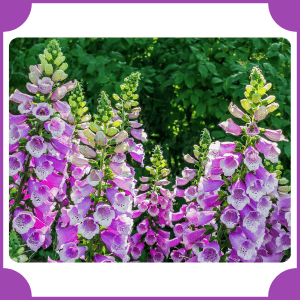
- Foxglove
Foxglove is a tall plant with tube-shaped flowers that hang downwards. It grows mainly in cooler regions and forests. Its deep flowers hold nectar inside, attracting bees that can reach inside to collect food.

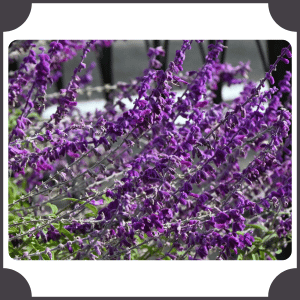
- Salvia
Salvia is a flowering plant with long spikes of colorful blooms. It grows in many climates and is popular in gardens. Its flowers produce steady nectar, making it a reliable and long-lasting source of food for bees.

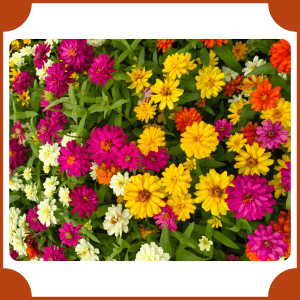
- Zinnia
Zinnia is a bright and colorful garden flower that comes in many shades. It grows easily in warm climates and blooms for a long time. Its open petals and central disk provide easy access to nectar for bees.

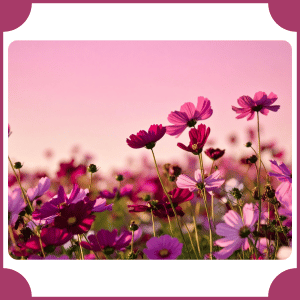
- Cosmos
Cosmos is a light, airy flower with thin petals and a simple center. It grows quickly and blooms in open, sunny areas. Its flat shape allows bees to land easily and gather nectar without any difficulty.

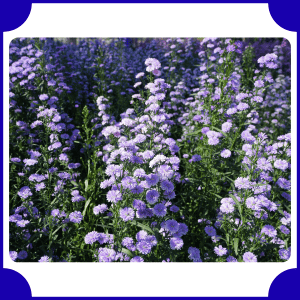
- Aster
Aster is a small flower with many thin petals around a central disk. It blooms mainly in late seasons and grows in gardens and wild areas. It provides an important nectar source for bees when other flowers fade.

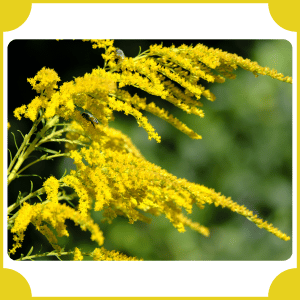
- Goldenrod
Goldenrod is a bright yellow flowering plant found in fields and along roadsides. It blooms late in the year and produces a large amount of nectar. Bees depend on it as a key food source before colder seasons begin.

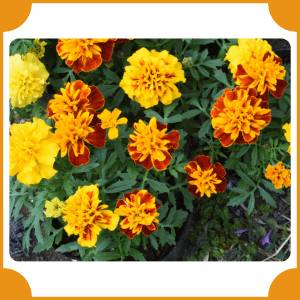
- Marigold
Marigold is a popular garden flower with bright orange and yellow blooms. It grows easily in warm climates and has a strong scent. Its rich color and pollen attract bees, making it useful for pollination in gardens.

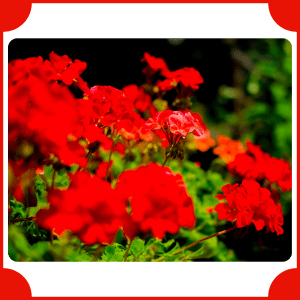
- Geranium
Geranium is a flowering plant with soft, colorful blooms and green leaves. It is commonly grown in pots and gardens. Its steady flowering pattern provides a regular source of nectar, which helps attract bees over time.

Bees Friendly Flowers with Names and Pictures
Common Flowers That Attract Bees with Names
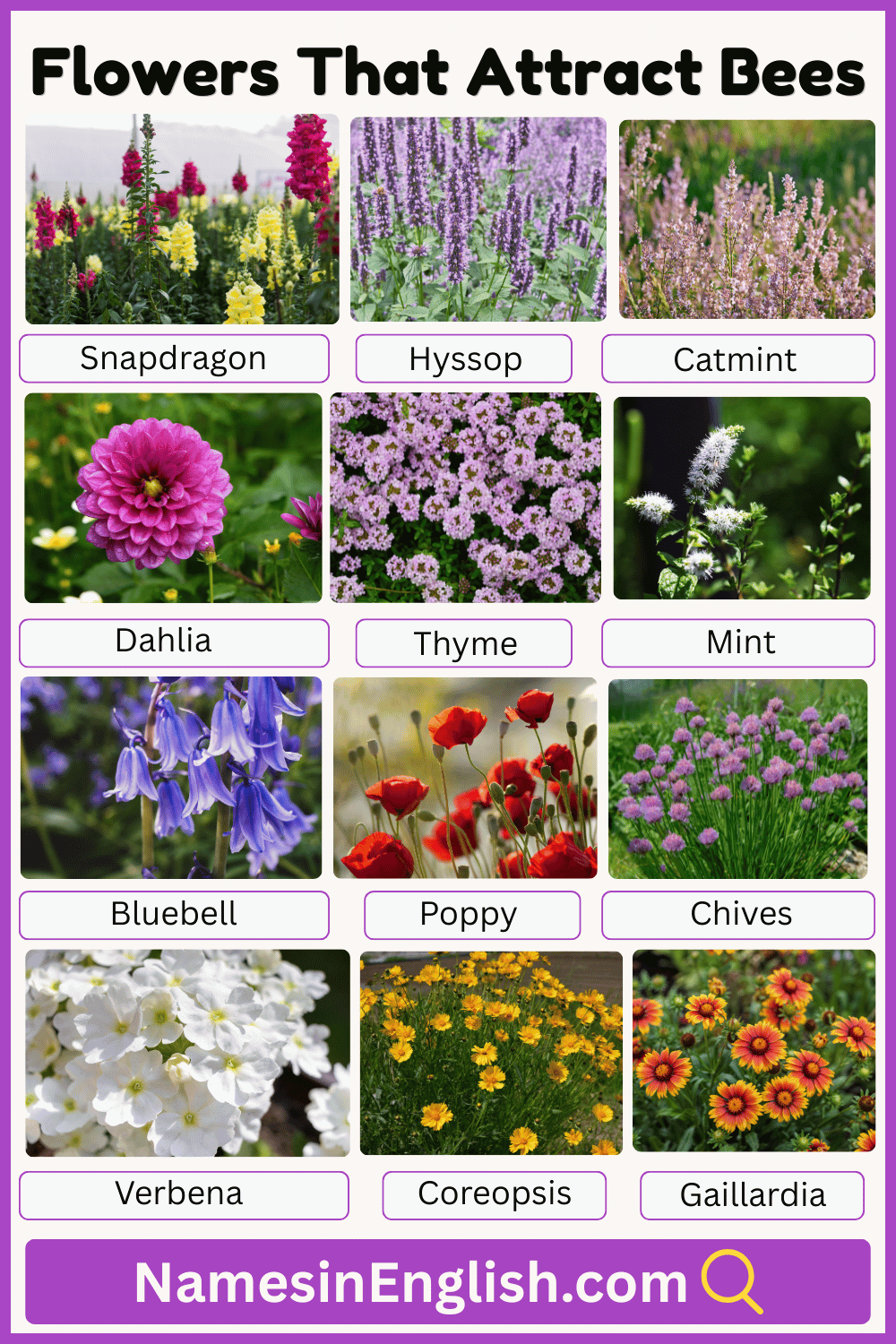
| Snapdragon | Hyssop | Catmint | Thyme | Mint |
| Dahlia | Crocus | Poppy | Bluebell | Chives |
| Verbena | Coreopsis | Gaillardia | Lupine | Yarrow |
Best Flowers That Attract Bees with their Names and Pictures
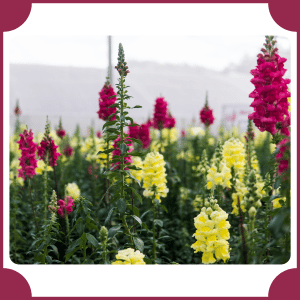
- Snapdragon
Snapdragon is a unique flower that looks like a small mouth when pressed. It grows in cool climates and gardens. Its shape encourages bees to push inside, helping them collect nectar while supporting pollination.

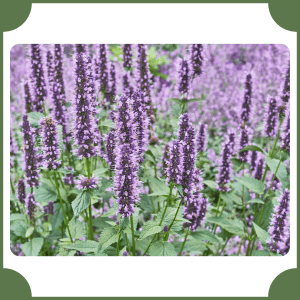
- Hyssop
Hyssop is a herb plant with small purple or blue flowers. It grows in dry, sunny areas and has a pleasant scent. Its flowers produce nectar for a long time, making it a reliable and attractive plant for bees.

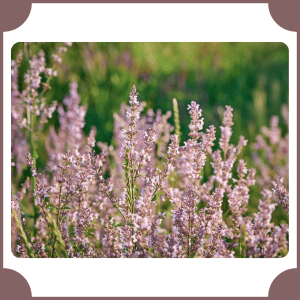
- Catmint
Catmint is a low-growing plant with soft purple flowers and grey-green leaves. It spreads easily and blooms for a long season. Its gentle scent and steady nectar supply make it very appealing to bees.

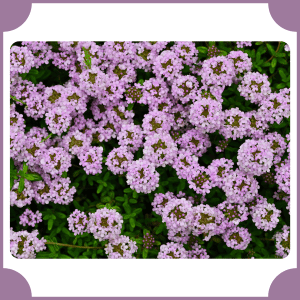
- Thyme
Thyme is a small herb with tiny pink or purple flowers. It grows close to the ground and is common in warm regions. Its flowers produce nectar that attracts bees while also being useful for cooking and gardening.

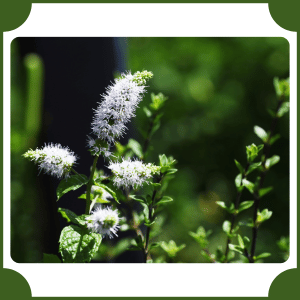
- Mint
Mint is a fast-growing herb with green leaves and small flowers. It spreads quickly and grows in many climates. Its strong scent and nectar-rich flowers naturally attract bees and support pollination in gardens.

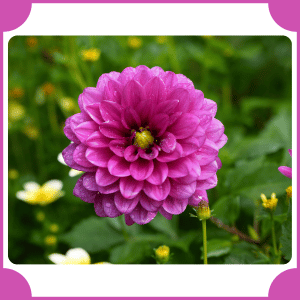
- Dahlia
Dahlia is a large and colorful flower with many layered petals. It grows in gardens and blooms in warm seasons. Some varieties offer open centers, allowing bees to access pollen and nectar easily.

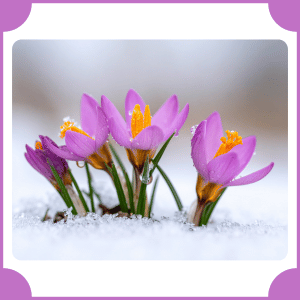
- Crocus
Crocus is a small flower that blooms early in spring. It has cup-shaped petals and bright colors. It appears when few other flowers are available, providing an important early source of nectar for bees.

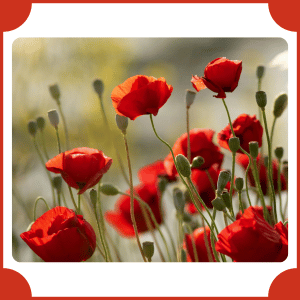
- Poppy
Poppy is a delicate flower with thin petals and bright colors like red and orange. It grows in fields and gardens. Its open structure makes pollen easy to reach, attracting bees during its blooming period.

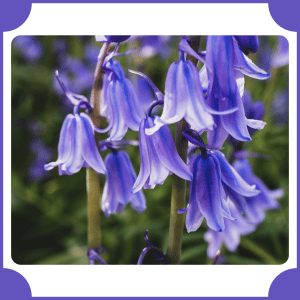
- Bluebell
Bluebell is a small plant with bell-shaped blue or purple flowers. It grows in forests and shaded areas. Its hanging blooms contain nectar, which attracts bees that can reach inside the flower.

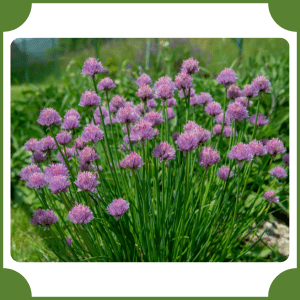
- Chives
Chives are a herb plant with thin green leaves and round purple flower heads. They grow in gardens and are used in cooking. Their flowers are rich in nectar and attract bees during their blooming time.

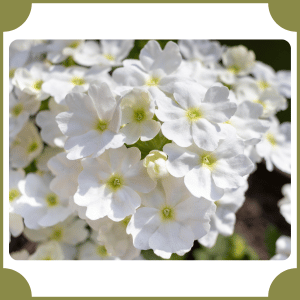
- Verbena
Verbena is a flowering plant with clusters of small, colorful blooms. It grows in warm climates and flowers for a long time. Its steady nectar supply makes it highly attractive and useful for bees.

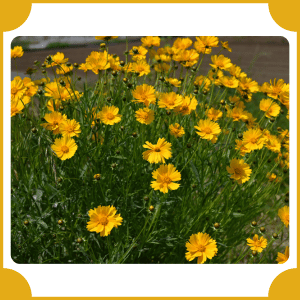
- Coreopsis
Coreopsis is a bright yellow flower with a simple, daisy-like shape. It grows well in sunny areas and blooms for long periods. Its open design makes it easy for bees to land and collect nectar.

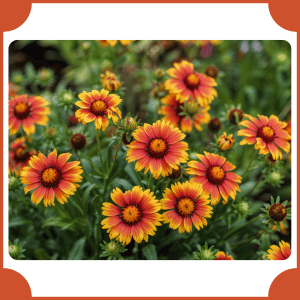
- Gaillardia
Gaillardia, also known as blanket flower, has bright red and yellow petals. It grows in hot and dry regions and blooms for a long time. Its rich pollen and nectar attract bees easily.

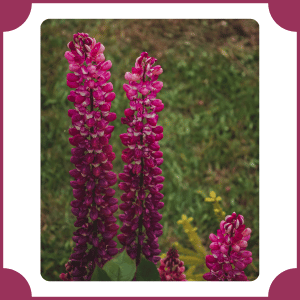
- Lupine
Lupine is a tall plant with spikes of colorful flowers. It grows in open fields and gardens. Its unique flower structure holds nectar, attracting bees that help in pollination while feeding.

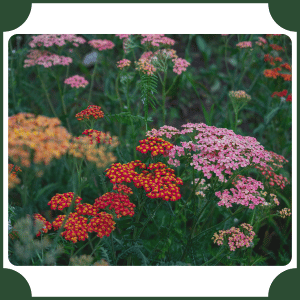
- Yarrow
Yarrow is a hardy plant with flat clusters of small white or yellow flowers. It grows in many regions and blooms for a long time. Its flat surface allows bees to land easily and gather nectar.

Best Flowers That Attract Bees with their Names and Pictures
Key Features of Flowers That Attract Bees
1. Bright Colors
Bees are naturally drawn to yellow, blue, and purple flowers. These colors help them easily locate nectar. These shades are more visible to bees compared to other colors, helping them find flowers faster.
2. Strong Fragrance
Many flowers like lavender and mint release scents that guide bees directly to them. A strong natural smell helps bees detect flowers even from a distance.
3. Simple Flower Shape
Open and flat flowers allow bees to land easily and collect nectar without difficulty. Simple shapes also reduce effort, making it easier for bees to gather food quickly.
4. Long Blooming Period
Flowers that bloom for longer periods provide a steady food source for bees. This ensures bees can find nectar regularly without searching for new plants often.
Flowers That Attract Bees in Different Seasons
Spring
Spring is the season when many early flowers start blooming after winter. Flowers like lavender, crocus, bluebell, and chives appear during this time. These flowers are soft in color, fresh in fragrance, and rich in nectar. They help bees recover energy and begin their pollination work after the cold season ends.
Summer
Summer brings the highest variety of blooming flowers. Sunflower, zinnia, cosmos, and bee balm grow strongly in this warm season. These flowers are bright, open, and full of nectar. They attract a large number of bees and support continuous pollination in gardens, farms, and natural areas during hot weather.
Fall
Fall is the final blooming season before winter begins. Flowers like aster, goldenrod, salvia, and yarrow bloom during this time. They provide the last major source of nectar for bees. These flowers help bees store energy and prepare for colder months when fewer flowers are available.
Flowers That Do NOT Attract Bees
Some flowers do not attract bees because they produce very little nectar or pollen. These flowers are often bred for looks, not for pollination. Plants like begonias, hydrangeas, and double-flowered roses have dense petals that block access to nectar, making them less useful for bees. Some modern hybrid flowers also lack scent, which makes it harder for bees to find them. In addition, brightly decorative flowers grown mainly for landscaping may not provide enough food for pollinators. As a result, bees usually avoid these flowers and prefer more natural, nectar-rich plants.