
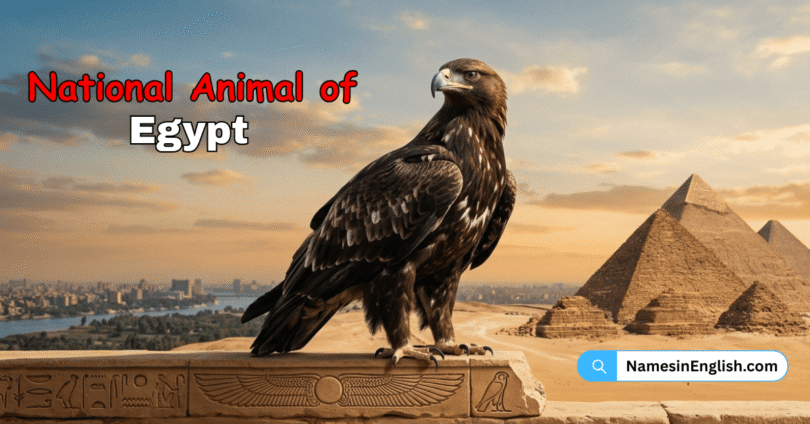

National animals are important symbols that represent a country’s heritage, culture, and natural history. They often reflect qualities that people admire and associate with their nation, such as strength, courage, beauty, or resilience. Egypt, a country known for its ancient civilization and rich traditions, also has a national animal that holds cultural and historical significance. Learning about national symbols helps us better understand different countries and their identities. In this article, you will learn the national animal of Egypt along with its name and picture, making it easy to learn about its characteristics, importance, and connection to Egyptian culture.
What Is the National Animal of Egypt?
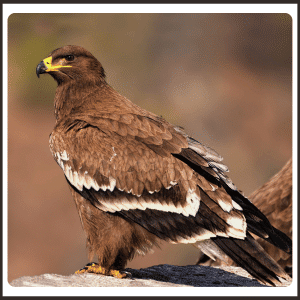
The national animal of Egypt is the Steppe Eagle (scientific name: Aquila nipalensis). It is a large migratory eagle known for its impressive wingspan, powerful build, and excellent hunting skills.
History of Steppe Eagle in Egypt
Ancient Egyptian Eagle Symbolism
Although the Steppe Eagle itself was not specifically identified in ancient times, eagles and other birds of prey were respected symbols of power and protection. They often appeared in Egyptian art and royal imagery.
Connection to Egypt’s Migration Routes
For centuries, Steppe Eagles have traveled through Egypt during their seasonal migrations between Eurasia and Africa. Egypt’s deserts and open landscapes provide an important passage along this journey.
Influence on National Identity
The eagle became closely associated with strength, courage, and leadership in Egyptian culture. These qualities helped establish the bird as a powerful national symbol.
The Eagle in Modern Egypt
In modern times, the eagle has remained an important emblem representing independence and national pride. Its image reflects the resilience and determination of the Egyptian people.
Conservation and Recognition
As awareness of wildlife conservation has grown, the Steppe Eagle has gained greater recognition for its ecological importance. Efforts to protect migratory birds help preserve this iconic species for future generations.
Present-Day Significance
Today, the Steppe Eagle continues to symbolize power, freedom, and endurance in Egypt. It also serves as a reminder of the country’s rich natural heritage and connection to migratory wildlife.
Symbolic Meaning of the Steppe Eagle in Egypt
Symbol of Strength
The Steppe Eagle is admired for its power and commanding presence. It represents the strength and resilience of the Egyptian nation.
Representation of Freedom
With its ability to soar high above vast landscapes, the eagle symbolizes freedom and independence. It reflects Egypt’s spirit of sovereignty and self-determination.
Emblem of Courage
The Steppe Eagle is known for its fearless nature and hunting skills. These qualities make it a symbol of bravery and determination.
Sign of Leadership
Eagles have long been associated with authority and leadership. The Steppe Eagle reflects the qualities of vision, confidence, and guidance.
Symbol of Endurance
As a migratory bird that travels great distances, the Steppe Eagle represents endurance and perseverance. It reflects the ability to overcome challenges and adapt to changing conditions.
Cultural Importance in Egypt
The Steppe Eagle symbolizes strength, courage, and national pride in Egypt. Eagles have long been associated with leadership and authority in the region. Its image reflects the resilience and independence of the Egyptian people.
Scientific Name and Classification
- Scientific Name: Aquila nipalensis
- Kingdom: Animalia
- Phylum: Chordata
- Class: Aves
- Order: Accipitriformes
- Family: Accipitridae
- Genus: Aquila
- Species: Aquila nipalensis
Physical Characteristics of the Steppe Eagle
The Steppe Eagle is one of the larger eagle species in the world.
Key Features
- Length: 60–89 cm (24–35 inches)
- Wingspan: Up to 2.2 meters (7.2 feet)
- Weight: 2–5 kg (4.4–11 pounds)
- Color: Dark brown with lighter patches on the wings
- Beak: Strong and hooked for tearing prey
- Eyes: Sharp eyesight for spotting food from great distances
Its broad wings allow it to soar effortlessly for long periods while searching for prey.
What Does the Steppe Eagle Eat?
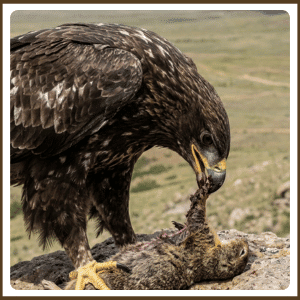
The Steppe Eagle is a carnivorous bird of prey. Common Foods are Small mammals, Rodents, Rabbits, Reptiles, Birds, Insects and Carrion (dead animals). Unlike some eagle species that rely mainly on hunting, the Steppe Eagle is also an efficient scavenger, helping clean the environment by consuming animal remains.
Where the Steppe Eagle Lives?
The Steppe Eagle mainly lives in open grasslands, steppes, semi-deserts, and dry plains across Central Asia. During its migration, it passes through Egypt and can be seen in desert regions and other open habitats where it rests and searches for food.
Life Cycle and Baby Steppe Eagle
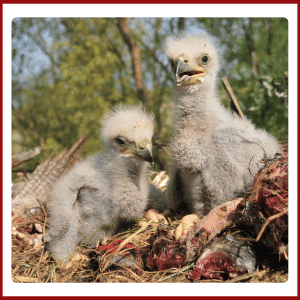
The life cycle of the Steppe Eagle begins when the female lays one to three eggs, which hatch after about six weeks with the care and protection of both parents. A baby Steppe Eagle is called an eaglet and is covered with soft white down, relying completely on its parents for food and warmth. As it grows, it develops feathers, becomes stronger, and learns important survival skills. Once fully developed, the young eagle leaves the nest, flies independently, and later reproduces to continue the life cycle.
Environmental Importance
The Steppe Eagle helps maintain ecological balance by controlling populations of small animals and rodents. It also acts as a scavenger, cleaning up animal remains in the environment. This role supports healthier ecosystems and biodiversity.
Educational Value
The Steppe Eagle is an important species for studying bird migration and wildlife conservation. It helps students understand food chains, ecosystems, and animal behavior. Researchers also use it to learn about migratory bird patterns.
Tourism Value
Birdwatchers and nature enthusiasts are attracted to areas where Steppe Eagles can be observed during migration. The species adds value to wildlife tourism and eco-tourism activities. Its presence highlights Egypt’s rich natural heritage.
Conservation Status of the Steppe Eagle
The Steppe Eagle faces threats from habitat loss, power lines, and illegal hunting. Conservation efforts focus on protecting migratory routes and reducing human-related dangers. These measures are important for ensuring the species survives in the future.
Interesting Facts About the Steppe Eagle
- The Steppe Eagle can travel thousands of kilometers during migration.
- It has exceptionally sharp eyesight.
- Its wingspan can exceed 2 meters.
- It can soar for hours using rising warm air currents.
- It is both a skilled hunter and an effective scavenger.
- It is one of the most recognizable migratory eagles passing through Egypt.
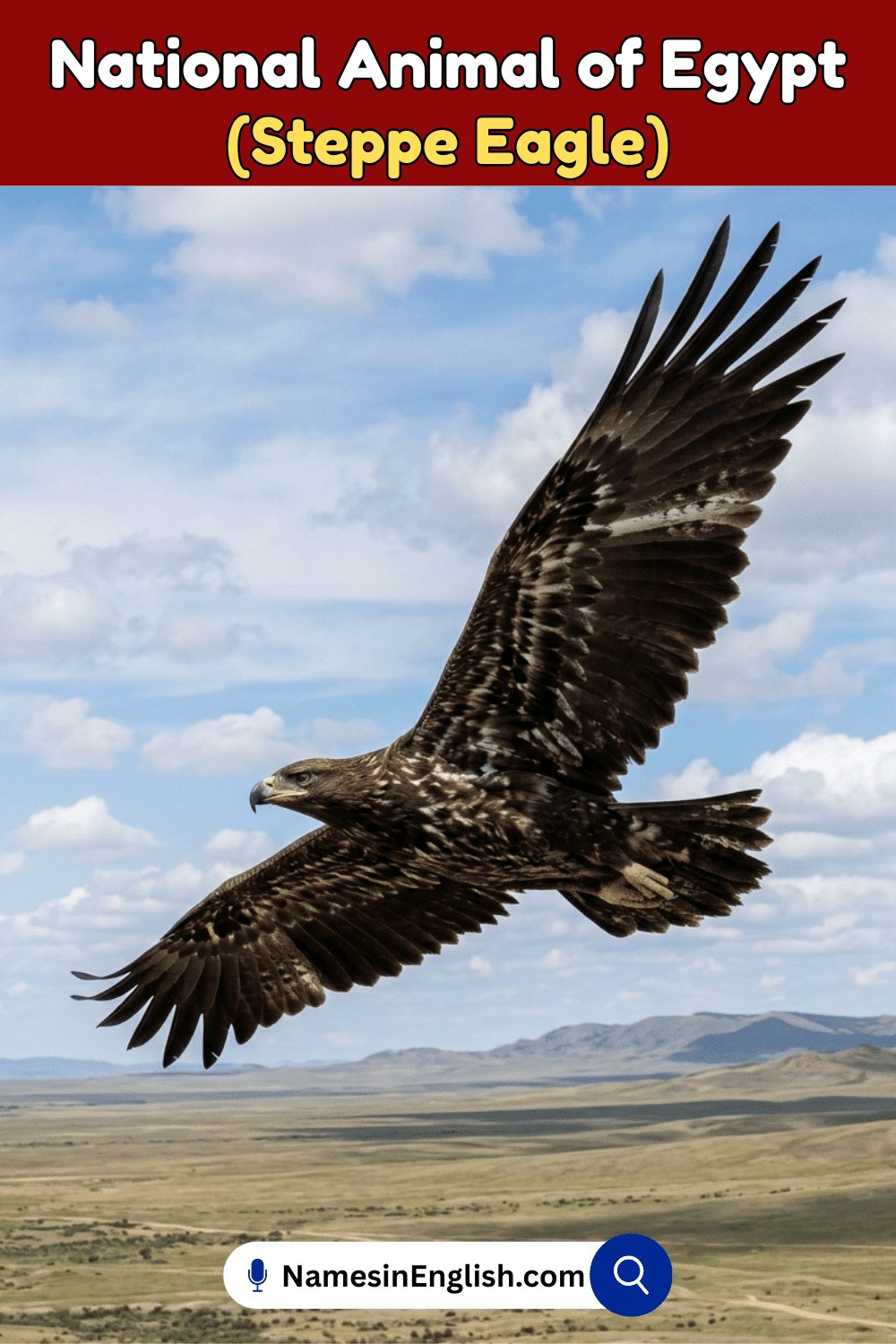
Name of National Animal of Egypt
Learn More Helpful Articles