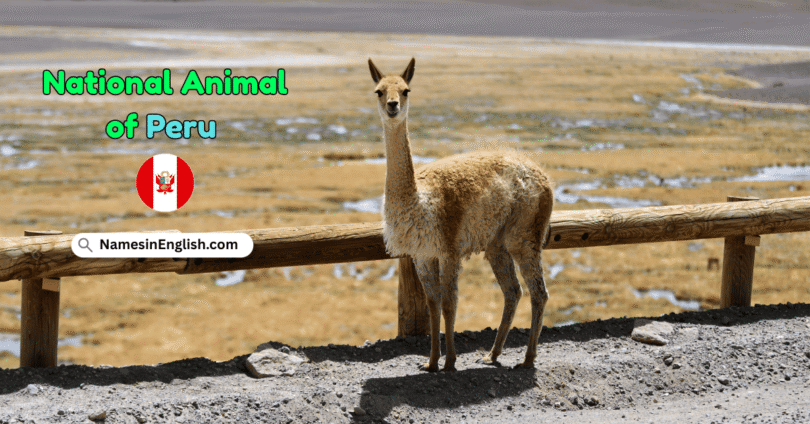

The National Animal of Peru is the Vicuña, a graceful wild camelid famous for its incredibly soft wool and strong connection to Peruvian history. This remarkable animal is more than just a national symbol it represents Peru’s natural heritage, cultural identity, and successful conservation efforts. In this article, you will learn about the Vicuña’s English name, appearance, habitat, diet, lifespan, symbolic meaning, and why it holds such an important place in Peru’s history and culture.
What Is the National Animal of Peru?
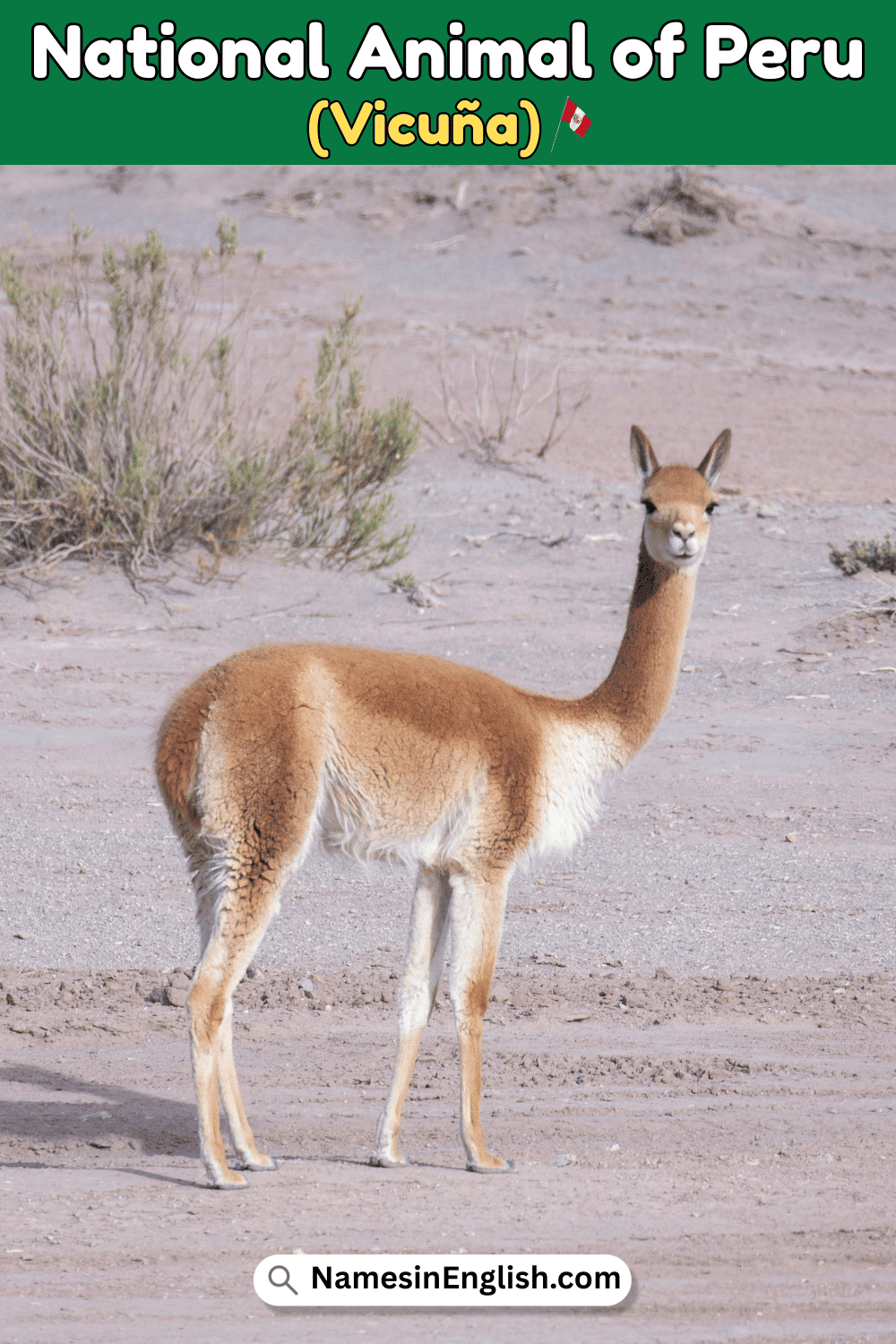
The Vicuña is the official national animal of Peru. It is a small camelid native to the high Andes Mountains of South America. The animal is famous for producing one of the finest and most expensive natural fibers in the world.
Historical Background of Vicuña
Inca Civilization
The vicuña was highly respected by the ancient Incas and considered a sacred animal. Its fine wool was reserved mainly for royalty and nobles.
National Recognition
Because of its cultural and historical importance, the vicuña was chosen as Peru’s national animal. It also appears on the country’s coat of arms.
Symbolic Meaning in Peru
National Pride
The vicuña symbolizes Peru’s rich natural heritage and unique wildlife. It reflects the country’s identity and pride.
Conservation and Resilience
The animal represents successful conservation efforts and the importance of protecting nature. Its recovery from near extinction is a symbol of resilience and hope.
Scientific Name and Classification
- Common Name: Vicuña
- Scientific Name: Vicugna vicugna
- Kingdom: Animalia
- Phylum: Chordata
- Class: Mammalia
- Order: Artiodactyla
- Family: Camelidae
- Genus: Vicugna
- Species: Vicugna vicugna
Physical Characteristics of vicuña
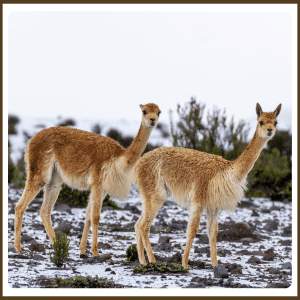
The vicuña is known for its elegant appearance and lightweight build.
Key Features
- Height: Around 80–100 cm at the shoulder
- Weight: Approximately 35–65 kg
- Coat Color: Light brown with white markings
- Long neck and slender legs
- Large eyes and soft wool
Its wool helps protect it from freezing temperatures in the Andes Mountains.
Habitat and Distribution
Vicuñas live in the high-altitude regions of the Andes, mainly in Peru but also in neighboring countries such as Bolivia, Chile, Argentina, and Ecuador. They typically inhabit Mountain grasslands, Open plains, High-altitude plateaus, and Dry Andean regions. Most vicuñas live at elevations between 3,200 and 4,800 meters above sea level.
What Does the Vicuña Eat?
The vicuña is a herbivore and feeds mainly on vegetation found in the Andean highlands. It mainly eats Mountain grasses, Small shrubs, Herbs, Leaves, and Other native plants. Its specialized digestive system allows it to obtain nutrients from tough vegetation growing in harsh environments.
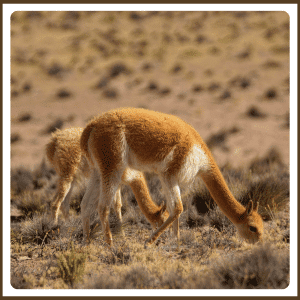
Baby Vicuña
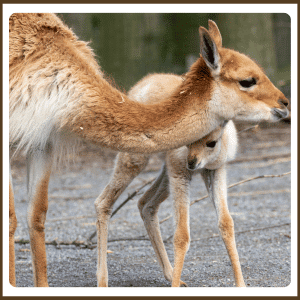
A baby vicuña is called a cria. Female vicuñas usually give birth to one cria after a gestation period of about 11 months. Newborn crias can stand and walk within a few hours of birth, helping them survive in the challenging mountain environment.
Life Span
A vicuña typically lives between 15 and 20 years in the wild. With proper protection and favorable conditions, some individuals may live even longer. Their lifespan depends on factors such as habitat quality, food availability, and predators.
Environmental Importance
The vicuña helps maintain the balance of high-altitude grassland ecosystems by grazing on native vegetation. It contributes to biodiversity and supports healthy habitats for other species. Its conservation helps protect the fragile Andean environment.
Educational Importance
The vicuña teaches people about Peru’s wildlife, biodiversity, and conservation history. It is often featured in schools, museums, and educational programs. Learning about the species helps raise awareness about environmental protection.
Economic Importance
The vicuña is economically valuable because of its exceptionally fine and expensive wool. Sustainable wool harvesting provides income for local communities in the Andes. It also contributes to Peru’s textile industry and rural development.
Tourism Relevance
The vicuña attracts tourists who visit Peru’s Andean regions to observe wildlife in its natural habitat. Its presence enhances eco-tourism and nature-based travel experiences. Wildlife tourism also supports local communities and conservation efforts.
Conservation Status
The vicuña is currently listed as a species of Least Concern due to successful conservation efforts. Its population has recovered significantly after years of overhunting and habitat pressure. Continued protection helps ensure its long-term survival in the Andes.
Interesting Facts About the Vicuña
- The vicuña is the smallest member of the camel family in South America.
- Its wool is among the most expensive natural fibers in the world.
- Ancient Incas considered the animal sacred.
- Vicuñas can survive at very high altitudes.
- The animal appears on Peru’s national coat of arms.
- Conservation programs have helped save it from near extinction.
Name of National Animal of Peru
Learn More Helpful Articles