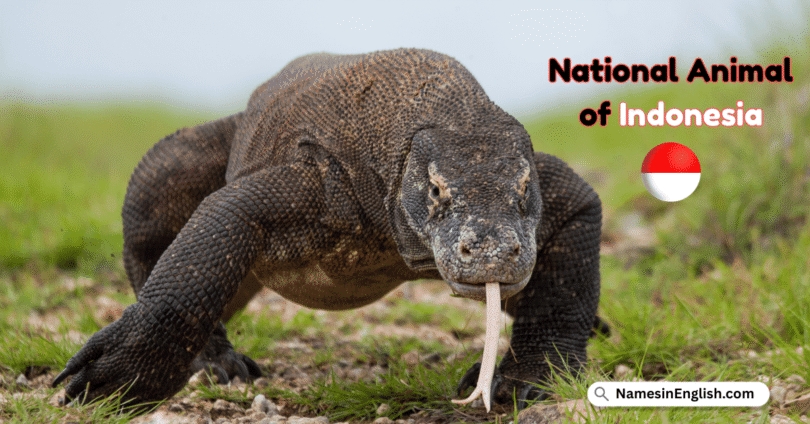

Indonesia is home to some of the world’s most unique wildlife, and the National Animal of Indonesia is the remarkable Komodo Dragon. Known as the largest living lizard on Earth, this rare reptile is found naturally only on a few Indonesian islands, making it a powerful symbol of the country’s rich biodiversity and natural heritage. Learning about the National Animal of Indonesia helps us understand the importance of wildlife conservation and Indonesia’s unique ecosystem. In this article, you’ll learn the Komodo Dragon’s history, characteristics, habitat, symbolic meaning, cultural significance, and fascinating facts.
What Is the National Animal of Indonesia?
The Komodo Dragon (Varanus komodoensis) is officially recognized as the national animal of Indonesia. It is the largest living species of lizard on Earth and is native to several Indonesian islands, including Komodo, Rinca, Flores, and Gili Motang.
Historical Background of Komodo Dragon
Ancient Presence
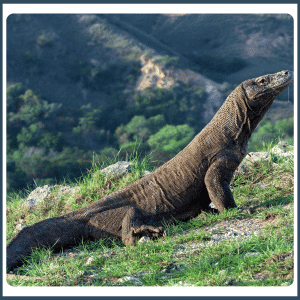
The Komodo Dragon has inhabited the Indonesian islands for millions of years, making it one of the world’s most ancient reptile species.
Discovery by the Modern World
Although local communities knew about the animal for centuries, it gained international attention in 1910 when scientists began studying it.
National Recognition
Due to its rarity and exclusive presence in Indonesia, the Komodo Dragon was adopted as a national symbol representing the country’s unique wildlife.
Conservation History
The establishment of Komodo National Park helped protect the species and brought global recognition to Indonesia’s conservation efforts.
Symbolic Meaning of Komodo Dragon
Strength and Power
The Komodo Dragon represents physical strength, courage, and dominance in the natural world.
Uniqueness
Because it exists naturally only in Indonesia, it symbolizes the nation’s distinct identity and biodiversity.
Survival and Resilience
Its ability to thrive in harsh environments reflects endurance, adaptability, and resilience.
Conservation Awareness
The Komodo Dragon also symbolizes the importance of protecting endangered species and preserving natural ecosystems.
Scientific Name and Classification
- Common Name: Komodo Dragon
- Scientific Name: Varanus komodoensis
- Class: Reptilia
- Order: Squamata
- Family: Varanidae
- Genus: Varanus
- Species: Varanus komodoensis
Physical Characteristics of Komodo Dragon
The Komodo Dragon is an impressive reptile with a powerful body and fearsome appearance.
Key Features
- Length up to 3 meters (10 feet)
- Weight up to 90 kilograms (200 pounds) or more
- Strong muscular tail
- Sharp claws
- Serrated teeth
- Tough, scaly skin
- Excellent sense of smell
Despite their large size, Komodo Dragons can move surprisingly fast and are skilled hunters.
Natural Habitat
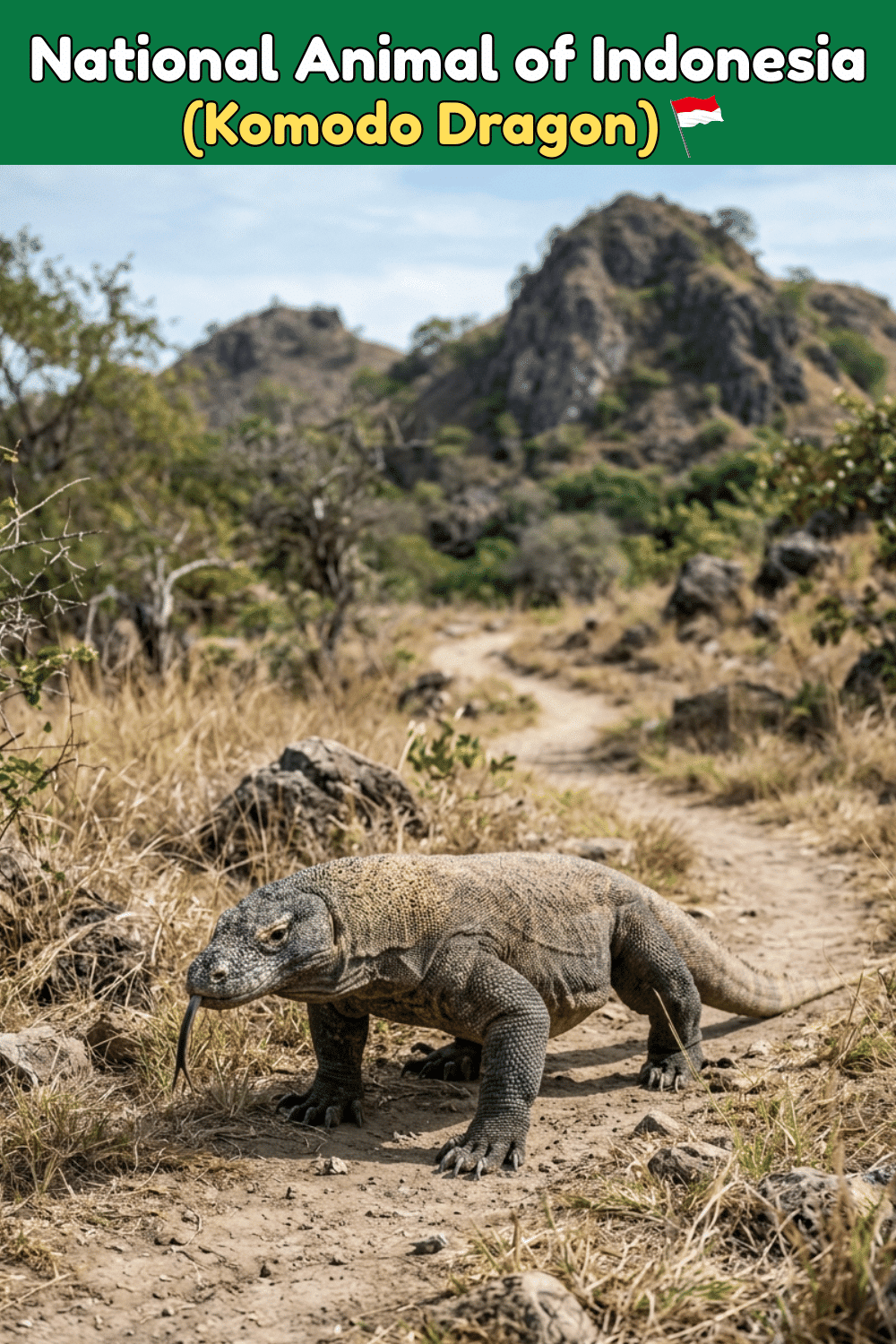
Komodo Dragons inhabit dry tropical forests, savannas, and grasslands on a handful of Indonesian islands. Their habitat includes Komodo Island, Rinca Island, Flores Island, Gili Motang Island, and Nearby smaller islands. These regions provide the warm climate and prey animals necessary for their survival.
What Does the Komodo Dragon Eat?
The Komodo Dragon is a carnivore and an apex predator. Common Foods are Deer, Wild boar, Goats, Birds, Small mammals, and Carrion (dead animals). Komodo Dragons use their powerful jaws and venomous bite to weaken prey. They can consume large amounts of food in a single meal.

Baby Komodo Dragon
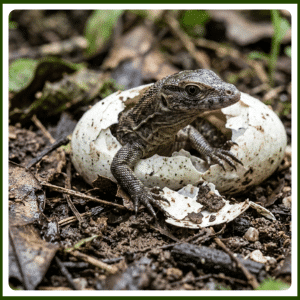
A baby Komodo Dragon is called a hatchling. Female Komodo Dragons lay eggs in nests, and hatchlings emerge after several months. Young dragons spend much of their early life in trees to avoid predators, including adult Komodo Dragons.
Life Span of Komodo Dragon
The Komodo Dragon has an average lifespan of about 30 years in the wild. Some individuals may live even longer under protected conditions. Their long lifespan helps them remain important predators in their ecosystem for many years.
Environmental Importance
The Komodo Dragon plays a vital role in maintaining ecological balance by controlling populations of prey animals. As an apex predator, it helps keep ecosystems healthy and stable. Protecting this species also helps preserve Indonesia’s unique island habitats.
Educational Importance
The Komodo Dragon is an important subject for studying wildlife, evolution, and conservation. It helps students and researchers learn about rare species and ecosystem management. Its unique characteristics make it a valuable educational symbol of Indonesia’s biodiversity.
Tourism Importance
The Komodo Dragon is one of Indonesia’s biggest wildlife attractions. o Thousands of visitors travel each year to Komodo National Park to observe these incredible reptiles in their natural environment. Wildlife tourism generates income for local communities and supports conservation efforts.
Conservation Status
The Komodo Dragon is classified as an endangered species and is protected by Indonesian law. Its population faces threats from habitat loss, climate change, and human activities. Conservation programs and protected areas such as Komodo National Park help ensure its long-term survival.
Interesting Facts About the Komodo Dragon
- The Komodo Dragon is the largest living lizard in the world.
- It can detect prey from several kilometers away using its tongue.
- It is found naturally only in Indonesia.
- Adult dragons can run at speeds of up to 20 km/h for short distances.
- The species has existed for millions of years.
- Komodo National Park is a UNESCO World Heritage Site.
- Komodo Dragons are excellent swimmers.
Name of National Animal of Indonesia
Learn More Helpful Articles