
National Flower of Haiti
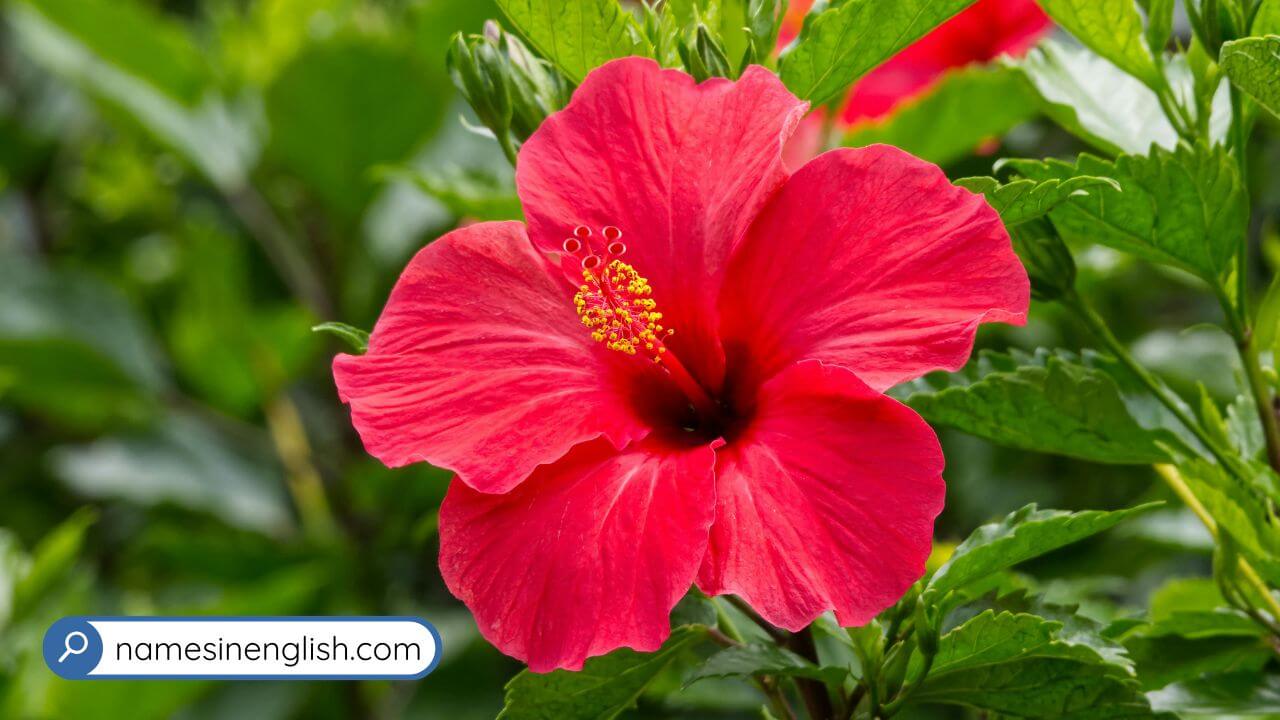
Haiti does not have a legally declared national flower in publicly accessible constitutional or state documents. The hibiscus, commonly known in Haitian Creole as Rose Kayenn, is widely associated with the country and embraced as a cultural floral symbol, but there is no confirmed government decree officially establishing it as such. That is the most accurate and responsible way to state it.
How the Hibiscus Became Associated With Haiti
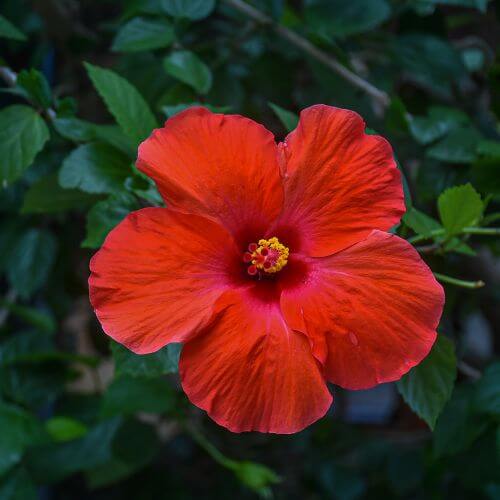
The hibiscus did not earn its connection to Haiti through legislation. It gained recognition through culture, repetition, and visual identity. In tropical climates like Haiti’s, hibiscus plants flourish. Their bold red petals and dramatic shape naturally align with the country’s vibrant artistic traditions. Haitian art is known for its expressive color palette, strong symbolism, and celebration of everyday life. Walk through galleries featuring Haitian paintings and you will often find tropical flora woven into scenes of markets, countryside landscapes, and community life. The hibiscus fits effortlessly into that visual vocabulary. Over time, what begins as artistic representation can evolve into symbolic identity. When a flower repeatedly appears in connection with a nation’s imagery, people begin to view it as representative of that country. This organic adoption is how many cultural symbols are born.
Haiti’s Official National Symbols
To understand why you won’t find a national flower in official records, it helps to look at what the Haitian government actually prioritizes. According to the 1987 Constitution and historical archives, Haiti focuses its national identity on three specific pillars:
- The National Flag: A blue horizontal band over a red one. Its history is deeply rooted in the revolution, famously created when Jean-Jacques Dessalines removed the white stripe from the French flag to symbolize the alliance of Black and mulatto citizens fighting for freedom.
- The Coat of Arms: Positioned in the center of the flag on a white square, it features a Palmette (palm tree) topped with a liberty cap, surrounded by trophies of war.
- The National Motto: “L’Union Fait La Force” (Unity Makes Strength), which has been a guiding principle since the early 19th century.
While the Hibiscus is a beloved cultural icon often used in tourism, it is not legally codified. Official summaries and government records. Including the historical timeline provided by the Embassy, list the flag, the palm tree, and the motto in detail, but they do not include a national flower. If a floral emblem had been formally adopted by law, it would appear alongside these constitutional symbols. Its absence suggests that while the Hibiscus is a national favorite, it lacks a formal legal designation.
You can review Haiti’s officially documented national symbols and their history here: Embassy of the Republic of Haiti – Flag and Coat of Arms
Rose Kayenn
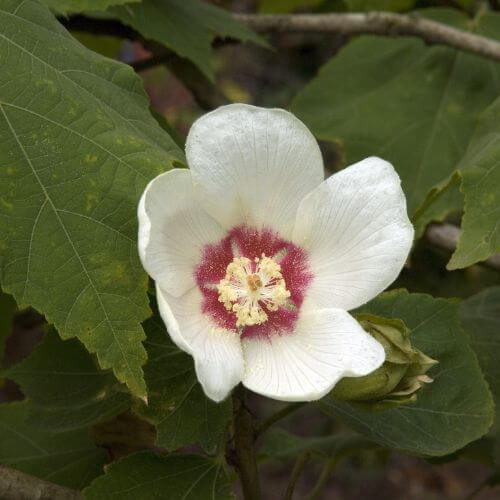
The hibiscus most commonly associated with Haiti is Hibiscus rosa-sinensis. In Haitian Creole, it is often called Rose Kayenn. The name itself adds cultural depth. Language is one of the strongest carriers of identity. When a flower is integrated into everyday speech and naming traditions, it signals familiarity and emotional resonance. Rose Kayenn is not just a botanical term. It carries local recognition. In markets and gardens, the flower is common. In decorative motifs, it feels natural. That linguistic integration strengthens its symbolic status within Haitian society. Still, cultural familiarity does not automatically translate into legal recognition.
How an Asian Plant Became Part of Haitian Identity
One important fact that often surprises readers is that Hibiscus rosa-sinensis is not native to Haiti. Royal Botanic Gardens, Kew confirm that the species originated in East Asia before spreading throughout tropical regions worldwide. Its widespread cultivation across the Caribbean has made it a regional symbol of tropical life rather than a uniquely Haitian plant. This does not weaken its cultural meaning in Haiti, but it does clarify that its national association is symbolic rather than ecological or endemic. Many countries select native species as national flowers to reflect biodiversity. Haiti’s case appears rooted in aesthetic and cultural adoption instead.
Many People Assume Hibiscus Haiti’s Official Flower
The assumption that the hibiscus is Haiti’s official national flower likely stems from three overlapping factors.
First, visual repetition creates familiarity. When a symbol consistently appears in connection with a country, it becomes accepted through association. Second, tourism imagery across the Caribbean frequently uses hibiscus flowers as shorthand for tropical beauty. Travelers may see hibiscus imagery linked to Haiti and naturally assume official status. Third, simplified country symbol lists often present information without clarifying legal distinctions. Over time, repetition solidifies belief. These dynamics are not unique to Haiti. Similar confusion exists for several countries where cultural symbols are mistaken for official emblems.
The Role of the Haitian Diaspora in Preserving the Symbol
In diaspora communities, symbols often carry even greater weight than in the homeland itself. Haitians living in the United States, Canada, and France frequently use visual elements to maintain cultural continuity. Floral imagery, especially tropical flowers, plays a strong role in these expressions. At Haitian cultural festivals abroad, decorative themes often reflect Caribbean aesthetics. The hibiscus fits seamlessly into that environment. It evokes warmth, island memory, and shared heritage. For second-generation Haitian-Americans, symbols like the hibiscus can become visual bridges to ancestral identity. This diaspora reinforcement strengthens the flower’s cultural standing even further.
Does a National Symbol Need Legal Approval?
Here is an important question that rarely gets discussed. Does a symbol require a law to carry national meaning?
Legal recognition offers clarity. Cultural recognition offers emotional depth. Sometimes the two align perfectly. Sometimes they do not. In Haiti’s case, the hibiscus has clearly earned emotional recognition. It appears in art, celebration, and diaspora memory. It symbolizes tropical vitality and aesthetic beauty. Its presence feels authentic to many Haitians. The absence of legal codification does not erase that cultural power. It simply means we should describe it accurately.
Refer to Haiti’s National Flower Correctly
If you are writing an academic paper, travel guide, or cultural article, the most precise way to phrase it would be:
The hibiscus is widely recognized as Haiti’s cultural national flower, though it has not been formally declared by law.
That sentence protects accuracy while honoring tradition.
Precision builds trust, especially when discussing national identity.
FAQs of National Flower of Haiti
What is the national flower of Haiti?
The national flower of Haiti is the Hibiscus. Specifically, the red Hibiscus (Hibiscus rosa-sinensis), known locally as 'Choeblack' or 'Rose Cayenne,' is the most recognized variety representing the nation.
What is Haiti's national symbol?
Haiti's primary national symbol is its Coat of Arms, which features a palmette (palm tree) topped by a liberty cap, flanked by trophies of arms and the motto 'L'Union Fait La Force' (Unity Makes Strength). The Hibiscus is the floral emblem that complements these symbols.
What is the official flower of Haiti called in Kreyòl?
In Haitian Kreyòl, the national flower is commonly called 'Choublak.' It is widely celebrated for its vibrant colors and its ability to thrive in the island's tropical climate.
Does the Hibiscus flower appear on the Haitian flag?
While the flower itself is not the central icon, it is often featured in the background of the Coat of Arms located in the center of the flag. It serves as a botanical representation of the lush Haitian landscape and national pride.
How is the 'Choublak' flower used in Haitian tradition beyond decoration?
In Haiti, the Hibiscus is used for more than its beauty. Traditionally, the leaves and petals are used in local remedies for hair care and as a natural dye. It is also a popular ingredient in herbal teas (tisanes) believed to have soothing properties.
Final Thoughts on National Flower of Haiti
So, is the hibiscus the National Flower of Haiti? Not officially by law. But culturally, it holds strong symbolic meaning and is widely embraced as Haiti’s floral emblem. That distinction allows us to appreciate Haitian identity more thoughtfully. National symbols are shaped by history, culture, and collective memory, not just by legislation. In Haiti’s case, the hibiscus lives in art, language, and community expression. It reflects how people see themselves, not just what governments record.
If you found this breakdown helpful, you’ll probably enjoy exploring how other countries define their floral symbols. Some nations have strict constitutional declarations. Others rely on tradition. And a few have none at all.
Take a moment to explore more national flowers from around the world and discover which ones are officially declared, which are cultural icons, and which are simply long-standing myths. The stories behind them are often far more fascinating than the simple lists suggest.