
The Illinois State Animal is an important symbol that represents the state’s wildlife, natural heritage, and connection with nature. Learning about official state animals is an interesting way to explore local wildlife while building useful English vocabulary. Illinois is home to many animal species, and its state symbols help people understand the natural identity of the region. In this article, you will learn the Illinois State Animal with its name and picture, along with simple and useful information about it. This visual guide is ideal for students, teachers, children, wildlife lovers, and English learners who want to learn in an easy and enjoyable way.
What Is the Illinois State Animal?
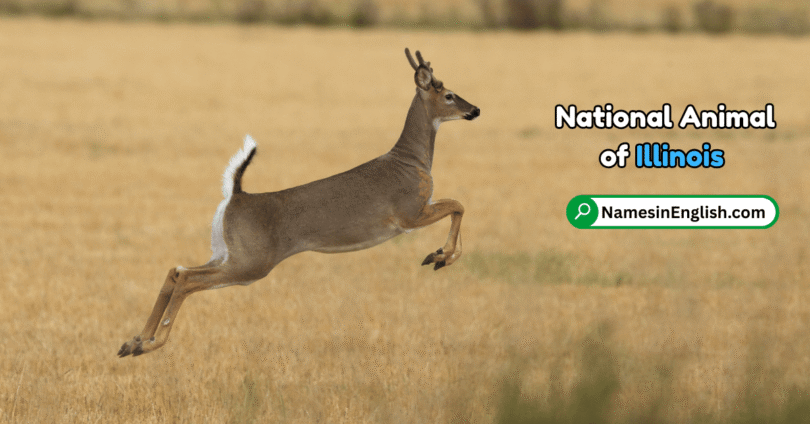
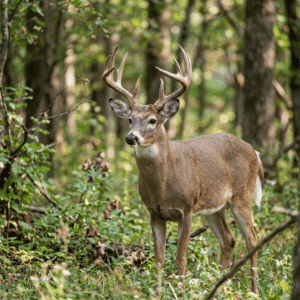
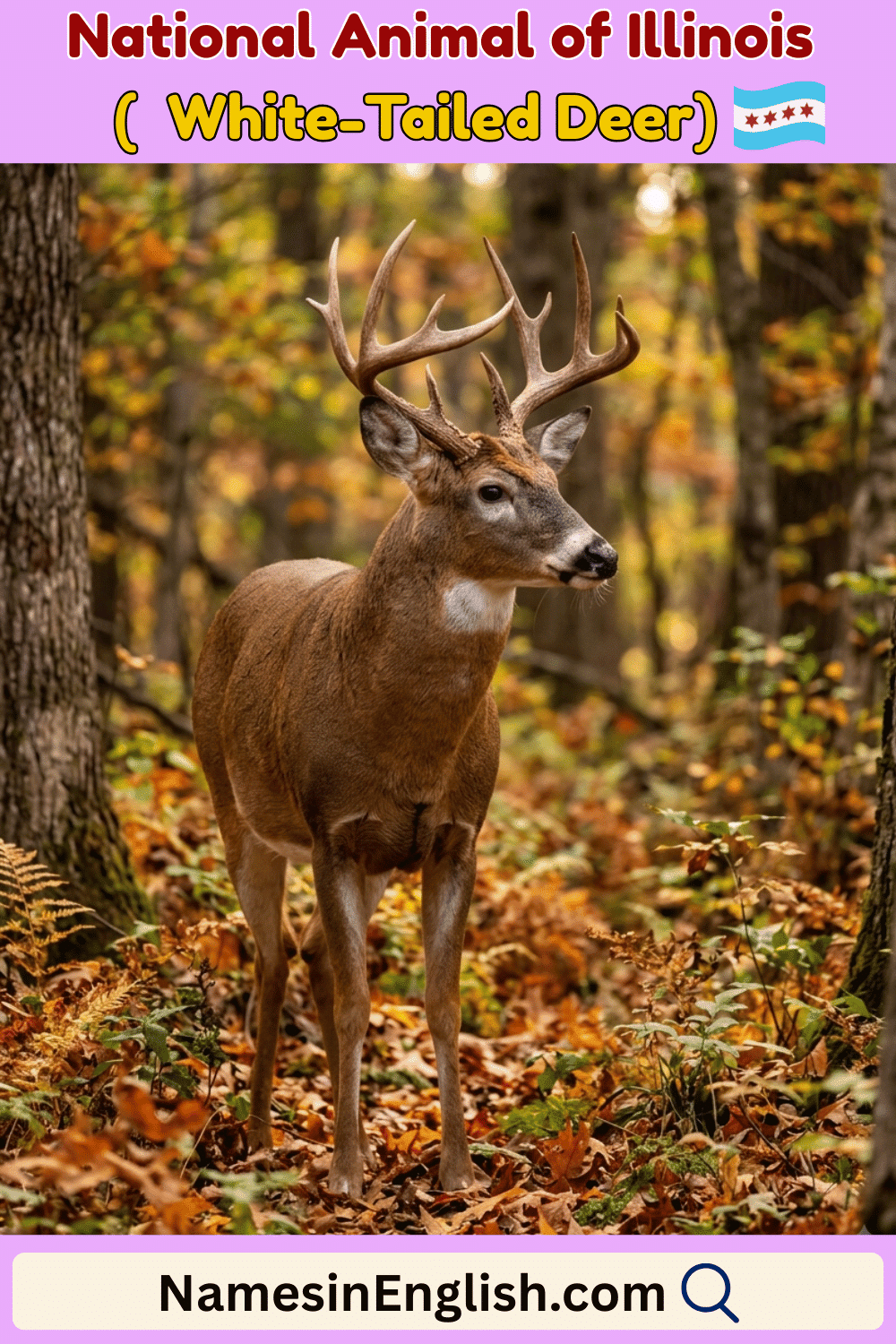
The official Illinois State Animal is the white-tailed deer, scientifically known as Odocoileus virginianus. It is one of the most widely recognized deer species in North America and is native to the region. The species gets its common name from the bright white underside of its tail. When a deer senses danger, it can raise its tail, exposing the white area as a warning signal. White-tailed deer have also adapted well to different habitats, which helps explain why they remain widespread throughout Illinois.
History of White-Tailed Deer
The white-tailed deer has a long history in Illinois and was once an important source of food, clothing, and materials for Native Americans and early settlers. During the 1800s, heavy hunting caused deer populations to decline significantly across the state. Later, wildlife conservation and management efforts helped the species recover, and white-tailed deer are now found throughout Illinois.
When Was the White-Tailed Deer Chosen as Illinois State Animal?
The white-tailed deer was chosen as the Illinois State Animal in 1980 through a vote by Illinois schoolchildren. It was selected from several animal candidates, including the raccoon, fox squirrel, opossum, red fox, and thirteen-lined ground squirrel. The choice officially became state law on January 1, 1982.
Why Was the White-Tailed Deer Chosen?
The white-tailed deer was chosen because of its strong connection with Illinois’ history, wildlife, and natural environment. The species had long been an important part of life in the state and had also made a notable recovery after its population declined. Its widespread presence across Illinois made it a recognizable symbol of the state’s natural heritage.
Physical Characteristics of White-Tailed Deer
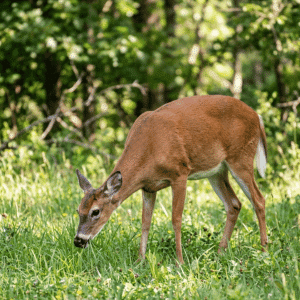
White-tailed deer have a reddish-brown coat during warmer months that usually becomes gray-brown in winter, with white markings underneath the body and tail. Their most recognizable feature is the white underside of the tail, which they raise when they are startled or threatened. Male deer, called bucks, grow and shed a new set of antlers each year, while young fawns are usually covered with white spots.
What Does the White-tailed deer Eat?
White-tailed deer are herbivores that eat a wide variety of plants depending on the season and their habitat. Their diet can include leaves, grasses, fruits, acorns, grains, twigs, buds, and other vegetation. They are also ruminants, which means they can bring partially digested food back up and chew it again to help break down tough plant material.
Baby White-Tailed Deer
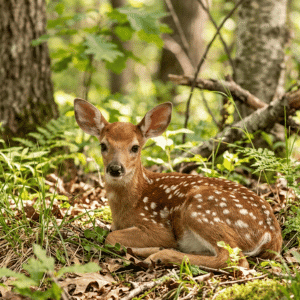
A baby white-tailed deer is called a fawn, and most are born during late spring or early summer. Fawns have reddish-brown coats with white spots that provide natural camouflage and help them remain hidden from predators. A doe commonly gives birth to one or more fawns, which stay close to protected areas during their early development.
When Are White-Tailed Deer Most Active?
White-tailed deer are generally most active around dawn and dusk, although they may also move and feed during nighttime hours. They often travel between wooded areas, fields, farms, and other habitats while searching for food and shelter. Their flexible activity patterns help them adapt to both natural landscapes and areas affected by human development.
Life Span of White-Tailed Deer
The life span of a white-tailed deer can vary depending on food, habitat, disease, predators, weather, and human activity. In Illinois, studies have found that deer in hunted populations often have shorter average lives, with females generally living longer than males. Some white-tailed deer can survive for many years under favorable conditions, although reaching an advanced age in the wild is uncommon.
Environmental Importance of White-Tailed Deer
White-tailed deer play an important role in Illinois ecosystems because they feed on a wide range of plants and interact with many other species. Their feeding behavior can influence vegetation and affect the availability of plants for other wildlife. Deer are also an important part of the food web, connecting plant communities with predators and scavengers.
Tourism Value of White-Tailed Deer
White-tailed deer add to Illinois’ outdoor recreation and wildlife-viewing opportunities because they can be seen in forests, fields, nature preserves, and other natural areas. Wildlife photographers, hikers, hunters, and nature enthusiasts often enjoy observing deer in their natural surroundings. Their widespread presence makes them one of the most recognizable native animals visitors may encounter while exploring Illinois.
Educational Value of White-Tailed Deer
The white-tailed deer is a useful subject for teaching students about wildlife, animal behavior, habitats, food chains, and conservation. Its history in Illinois also demonstrates how uncontrolled hunting can reduce wildlife populations and how conservation programs can support their recovery. The fact that Illinois schoolchildren helped select the deer as the state animal also gives it an interesting connection to civic participation and environmental education.
Name of National Animal of Illinois
Interesting Facts About the White-Tailed Deer
- The white-tailed deer is officially recognized as Illinois’ state animal.
- Its scientific name is Odocoileus virginianus.
- Illinois schoolchildren selected it in 1980.
- It became official under state law in 1982.
- A baby white-tailed deer is called a fawn.
- A male is called a buck, while a female is called a doe.
- Bucks grow and shed their antlers every year.
- The species is found in every Illinois county.
- Its white tail can be raised as a warning signal when danger is nearby.
Learn More Helpful Articles