
Animals

Texas State Animal with Name and Picture

Texas State Animal with Name and Picture
Written by Operra Jerry
The Texas State Animal is a special symbol that reflects the state’s rich wildlife and natural beauty. It represents the unique animals that are an important part of Texas history and environment. Learning about the Texas state animal is a great way to improve your English vocabulary while discovering interesting facts about nature. In this article, you will learn the Texas state animal with its name and picture, making it easy to identify and remember. This guide is perfect for students, teachers, children, and wildlife enthusiasts who want to learn about Texas in a simple, enjoyable, and educational way.

What Is the Texas State Animal?

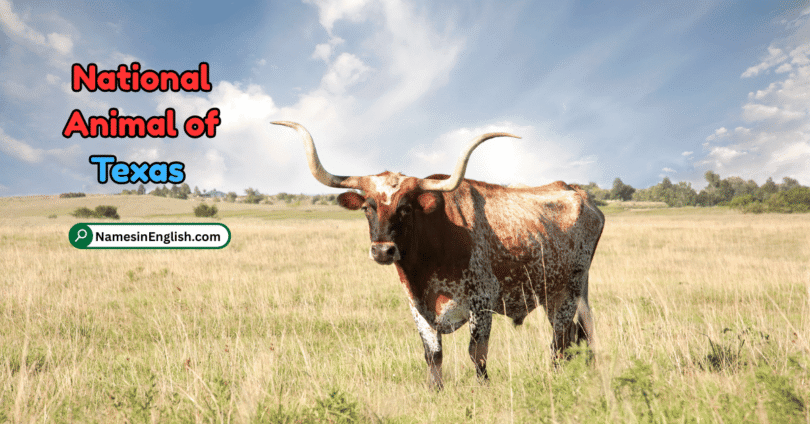
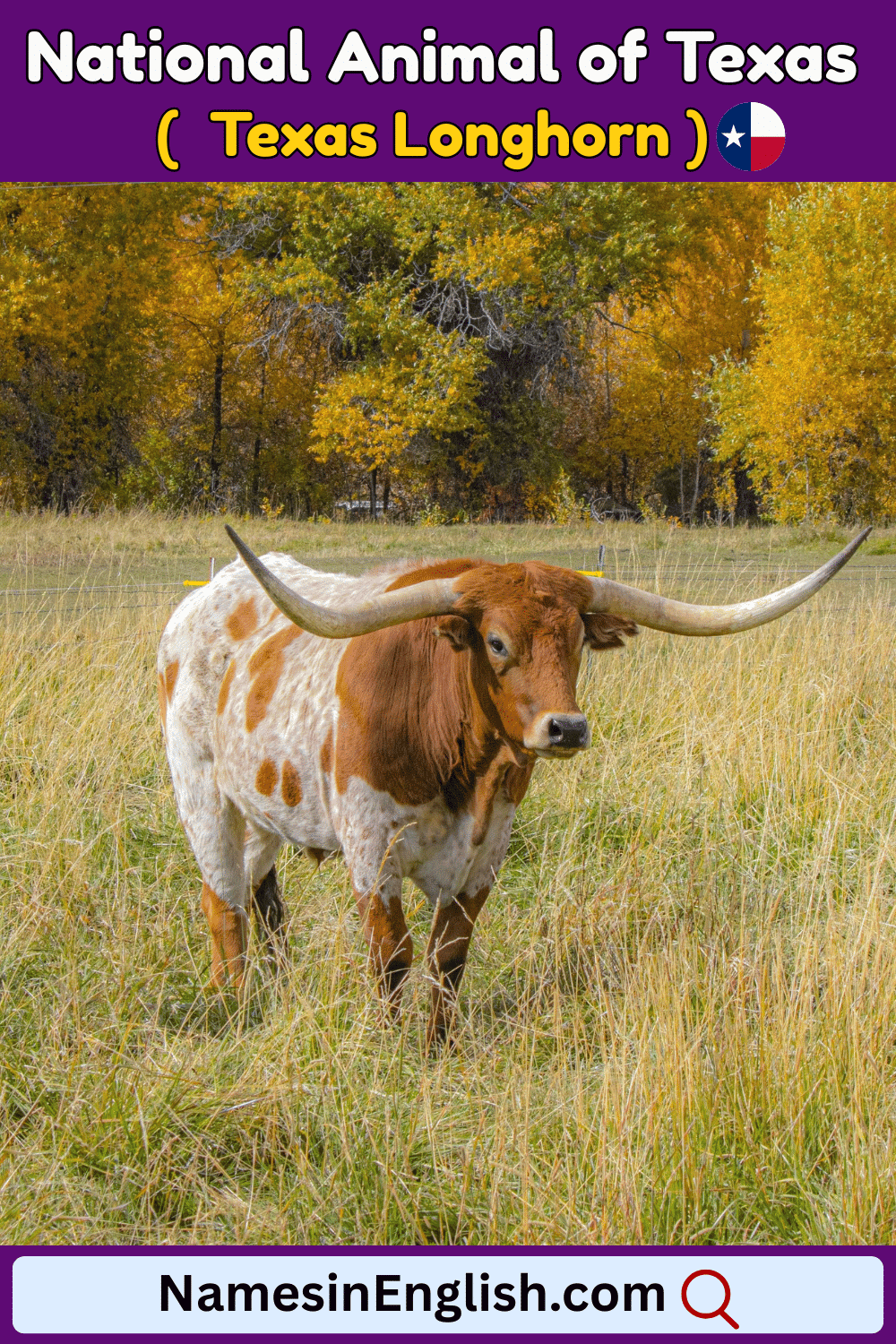
The Texas Longhorn (Bos taurus) is the official large state mammal of Texas. It is a breed of cattle known for its exceptionally long horns, which can stretch over 7 feet (2.1 meters) from tip to tip. Descended from cattle brought to North America by Spanish explorers in the 1500s, the Texas Longhorn adapted to the harsh climate of the American Southwest. Its toughness and ability to survive with limited food and water made it one of the most successful cattle breeds in American history.
What Is the Texas State Animal

History of the Texas Longhorn

The Texas Longhorn traces its origins to cattle brought to North America by Spanish explorers in the early 1500s. Over centuries, these animals adapted naturally to the harsh climate, limited food, and rugged landscapes of Texas. After the Civil War, Longhorns became the driving force behind the famous cattle drives, helping establish Texas as a center of the American ranching industry.

Why Was the Texas Longhorn Chosen?

The Texas Longhorn was chosen as the official large state mammal because it represents the history, strength, and pioneering spirit of Texas. Its role in the state’s cattle industry and economic growth made it a natural symbol of Texas heritage. The breed continues to remind people of the state’s ranching traditions and resilient character.

Symbolic Meaning

The Texas Longhorn symbolizes independence, endurance, courage, and resilience. Its ability to survive challenging environments reflects the determination and hardworking spirit often associated with Texans. Today, the Longhorn is widely recognized as an enduring emblem of the Lone Star State.

Scientific Name and Classification

  • Scientific Name: Bos taurus
  • Kingdom: Animalia
  • Phylum: Chordata
  • Class: Mammalia
  • Order: Artiodactyla
  • Family: Bovidae
  • Genus: Bos
  • Species: Bos taurus

Physical Characteristics of Longhorn 

The Texas Longhorn is best known for its exceptionally long horns, which can span more than 7 feet from tip to tip. It has a muscular body, strong legs, and comes in a wide variety of coat colors and patterns. These distinctive features make the breed one of the most recognizable types of cattle in the world.

Habitat

Texas Longhorns are commonly found on ranches, grasslands, and open prairies throughout Texas and other parts of the United States. They thrive in hot, dry climates where many other cattle breeds struggle to survive. Their adaptability allows them to live in a variety of grazing environments with minimal care.

What Does the Texas Longhorn Eat?

The Texas Longhorn is a herbivore that feeds mainly on grasses, shrubs, weeds, hay, and other natural vegetation. Its efficient digestive system allows it to make use of lower-quality forage when necessary. This ability helps the breed survive in areas where food resources may be limited.

Baby Texas Longhorn

A baby Texas Longhorn is called a calf. Calves are born with small horn buds that gradually develop into the breed’s signature long horns as they mature. They stay close to their mothers during their early months, relying on milk before slowly transitioning to grazing.
Baby Texas Longhorn

Behavior and Adaptations

Texas Longhorns are known for their calm temperament, intelligence, and excellent survival instincts. They can travel long distances in search of food and water and are highly resistant to heat, drought, and many common cattle diseases. These adaptations have helped the breed thrive in the challenging environments of the American Southwest.

Economic Importance

The Texas Longhorn continues to contribute to the economy through cattle ranching, breeding programs, tourism, and agricultural exhibitions. Its unique appearance attracts visitors to ranches, fairs, and livestock shows across Texas. The breed also holds value for conservation breeding and premium specialty beef production.

Environmental Importance

Texas Longhorns play a positive role in maintaining healthy grassland ecosystems through controlled grazing. Their feeding habits help manage vegetation growth and support balanced pasture conditions. Because they require fewer resources than many commercial cattle breeds, they can also contribute to more sustainable ranching practices.

Conservation Status of Longhorn 

The Texas Longhorn is not considered endangered and is classified as a domesticated cattle breed. Although its numbers declined in the late 1800s due to crossbreeding, dedicated breeders and conservation organizations successfully preserved the breed. Today, Texas Longhorn populations are stable and continue to be protected as an important part of America’s agricultural and cultural heritage.

Interesting Facts About the Longhorn

  • The Texas Longhorn descended from cattle brought by Spanish explorers over 500 years ago.
  • Some Longhorns have horn spreads exceeding 7 feet.
  • The breed can survive harsh weather better than many modern cattle breeds.
  • Texas Longhorns come in hundreds of unique color combinations.
  • They played a major role in the famous cattle drives of the American West.
  • The Longhorn remains one of the strongest symbols of Texas ranching history.
Name of National Animal of Texas

Name of National Animal of Texas


Learn More Helpful Articles

About the author

Operra Jerry

Leave a Comment