
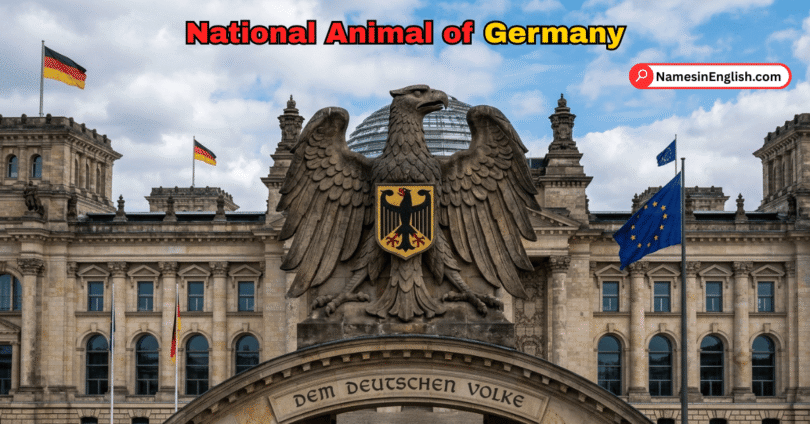

What Is the National Animal of Germany?
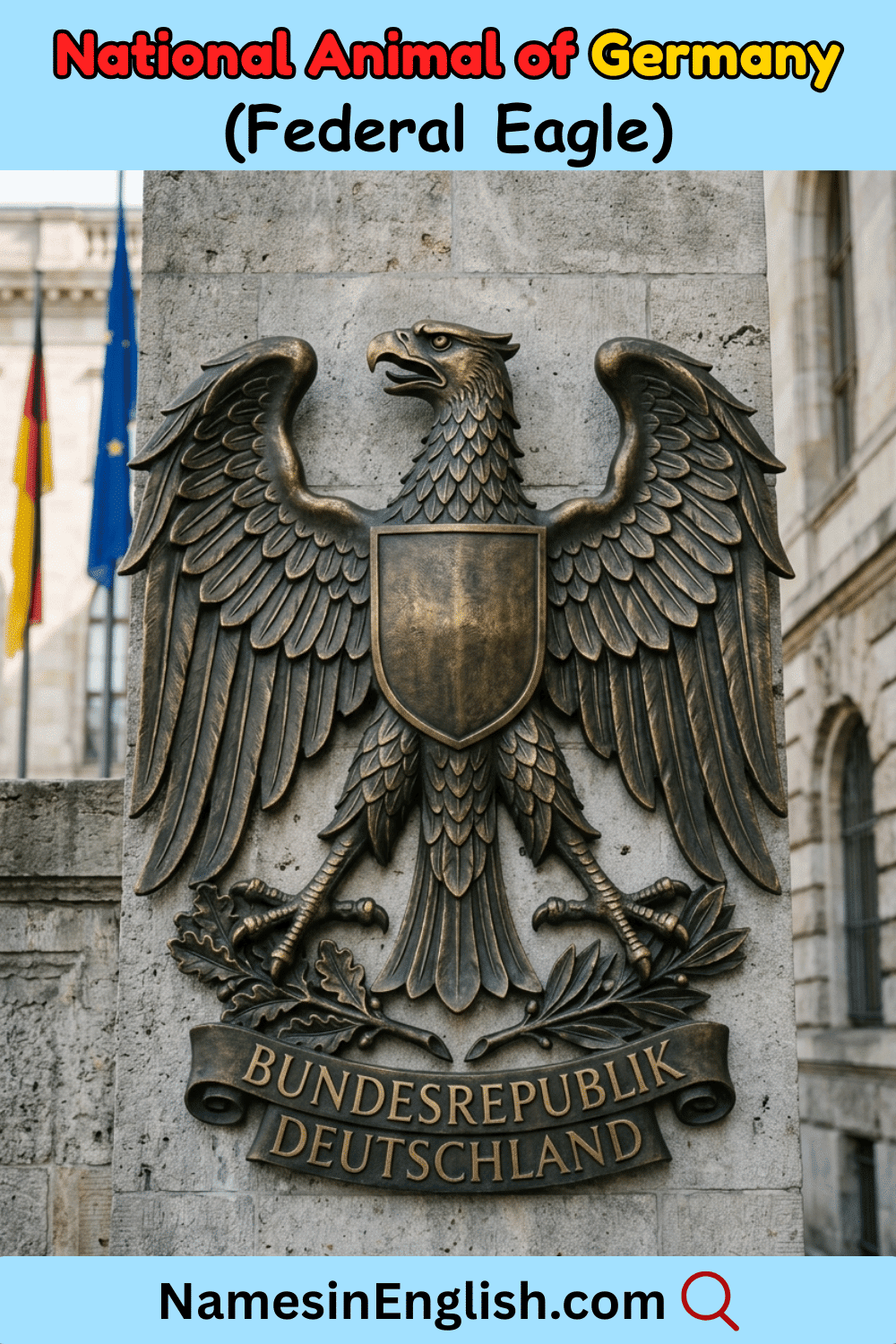
The Federal Eagle (Bundesadler) is the official national animal and national emblem of Germany. Although it is a symbolic heraldic eagle rather than a specific wild species, it is inspired by the Golden Eagle (Aquila chrysaetos), one of Europe’s most majestic birds of prey. The eagle has represented German states and empires for more than a thousand years.
History of Germany’s National Animal
The eagle has been a symbol of German authority and leadership for more than 1,000 years, dating back to the Holy Roman Empire. It was inspired by the Roman imperial eagle and remained an important emblem through different periods of German history. Today, the Federal Eagle (Bundesadler) represents the modern Federal Republic of Germany and its democratic values.
Why Was the Eagle Chosen?
The eagle was chosen because it symbolizes strength, courage, freedom, and national unity. For centuries, it has represented leadership and sovereignty across German states and empires. Its long historical connection made it the perfect national symbol for Germany.
Symbolic Meaning of the Federal Eagle
The Federal Eagle represents Germany’s independence, justice, and democratic principles. It also reflects strength, vigilance, and the unity of the German people. As the national emblem, it reminds citizens of the country’s constitutional values and stability.
Appearance of the Federal Eagle
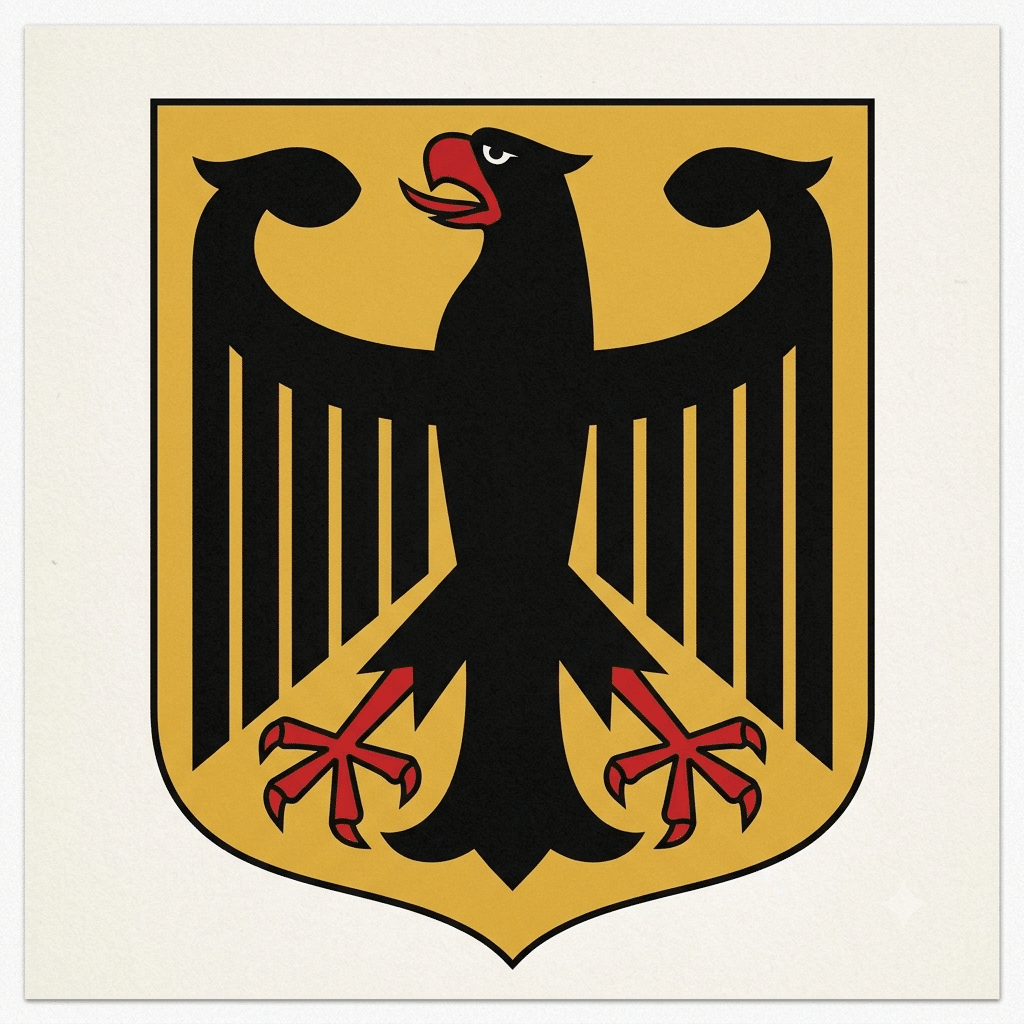
The Federal Eagle is shown as a black eagle with a red beak and red claws on a golden-yellow shield. Its wings are spread wide, symbolizing confidence, power, and protection. The modern design is simple yet instantly recognizable on official government symbols.
Where Can You See Germany’s National Animal?
The Federal Eagle appears on German passports, official documents, and the national coat of arms. It is displayed on government buildings, courtrooms, embassies, and the Bundestag (Federal Parliament). Visitors can also see it on some German coins and military insignia.
Habitat of the Golden Eagle
The Federal Eagle is a symbolic emblem, but it is inspired by the Golden Eagle, which lives in mountainous regions of southern Germany. Golden Eagles prefer rocky cliffs, forests, and open alpine landscapes. These remote habitats provide ideal nesting sites and hunting grounds.
What Does The Federal Eagle Eat?
The Golden Eagle is a carnivorous bird that feeds mainly on rabbits, hares, birds, and other small mammals. It also hunts reptiles and occasionally catches fish or larger prey. Its sharp eyesight and powerful talons make it one of nature’s most skilled predators.
What Is the Baby of a Golden Eagle Called?
A baby Golden Eagle is called an eaglet. Eaglets remain in the nest for several weeks while their parents feed and protect them. They learn to fly before becoming independent young eagles.
Conservation Status
The Golden Eagle is classified as Least Concern (LC) by the International Union for Conservation of Nature (IUCN). Although global populations are stable, habitat loss and human disturbances remain local threats. Conservation programs help protect nesting areas and support healthy eagle populations across Europe.
Educational Importance
Germany’s national animal helps students learn about the country’s history, national symbols, and cultural identity. It is commonly studied in geography, history, and civics lessons. The Federal Eagle also teaches the importance of democracy and national heritage.
Environmental Importance
As an apex predator, the Golden Eagle helps maintain balanced ecosystems by controlling populations of small animals. Its presence indicates a healthy and well-preserved natural environment. Protecting the species also supports biodiversity and wildlife conservation.
Tourism Importance
The Federal Eagle is an iconic symbol that attracts visitors interested in Germany’s history and government institutions. Tourists can see it at famous landmarks such as the Reichstag Building and on many historic monuments. It also adds cultural significance to museums, official sites, and national celebrations.
Interesting Facts About Federal Eagle
- The Federal Eagle has represented German states for over 1,000 years.
- It is inspired by the Golden Eagle rather than representing a specific official wildlife species.
- The eagle appears on every German passport.
- Germany’s national coat of arms features a black eagle with a red beak and red claws.
- The symbol reflects democracy, freedom, and national unity.
- The eagle has roots dating back to the ancient Roman Empire.
- It is one of the oldest continuously used national symbols in Europe.
Name of National Animal of Germany
Learn More Helpful Articles