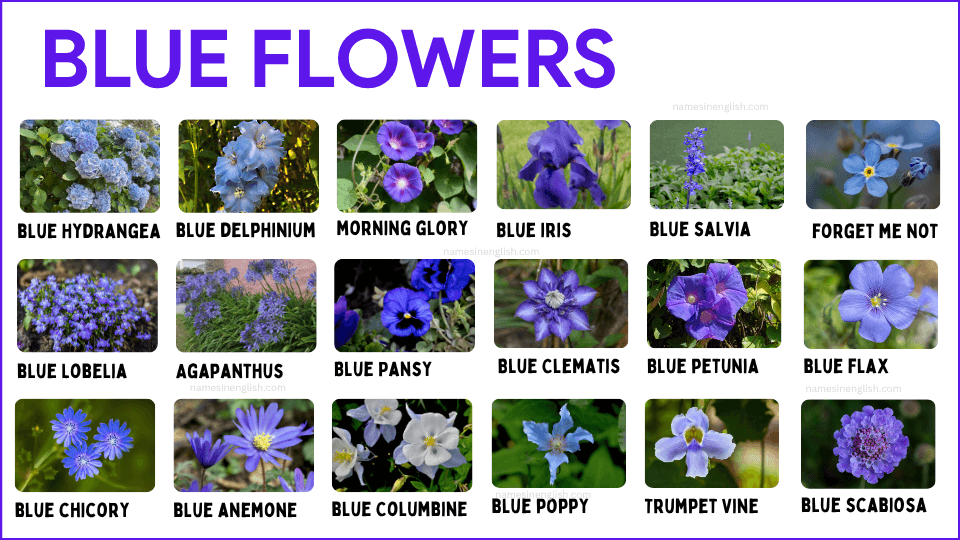

Blue flowers are some of the most beautiful and eye-catching flowers found in gardens and nature. Their unique shades of blue add a calm, fresh, and elegant touch to any landscape, making them a favorite choice for gardeners, florists, and flower lovers. In this article of 100 Types of Blue Flowers with Pictures, you’ll learn a wide variety of stunning blue blooms, learn their names, identify them through clear pictures, and explore their unique features. Whether you’re looking for flowers for your garden, school project, or simply want to expand your plant knowledge, this article will help you find the perfect blue flowers with ease.
100 Types of Blue Flowers
1. Hydrangea (Hydrangea macrophylla)
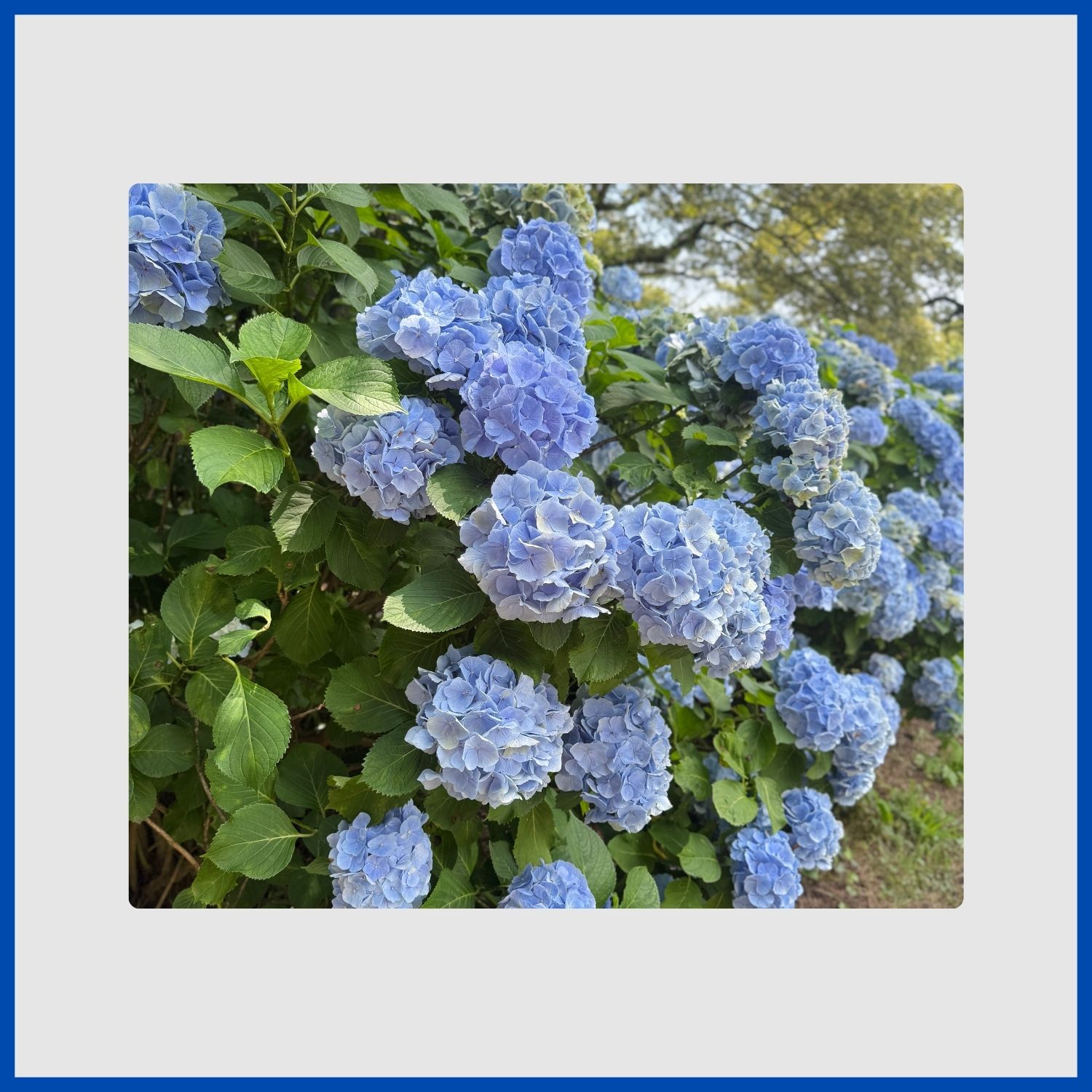
Hydrangeas are beloved for their large, showy flower clusters that can be manipulated to achieve stunning blue hues by adjusting soil pH. These deciduous shrubs create dramatic focal points in landscapes and offer months of continuous blooms from summer through fall.
- USDA Hardiness Zone: 5-9
- Bloom Time: Summer to fall
- Water Needs: Moderate to high
- Soil Type: Rich, well-drained, acidic
- Sun Requirement: Morning sun, afternoon shade
- Height: 3-6 feet
2. Delphinium (Delphinium elatum)
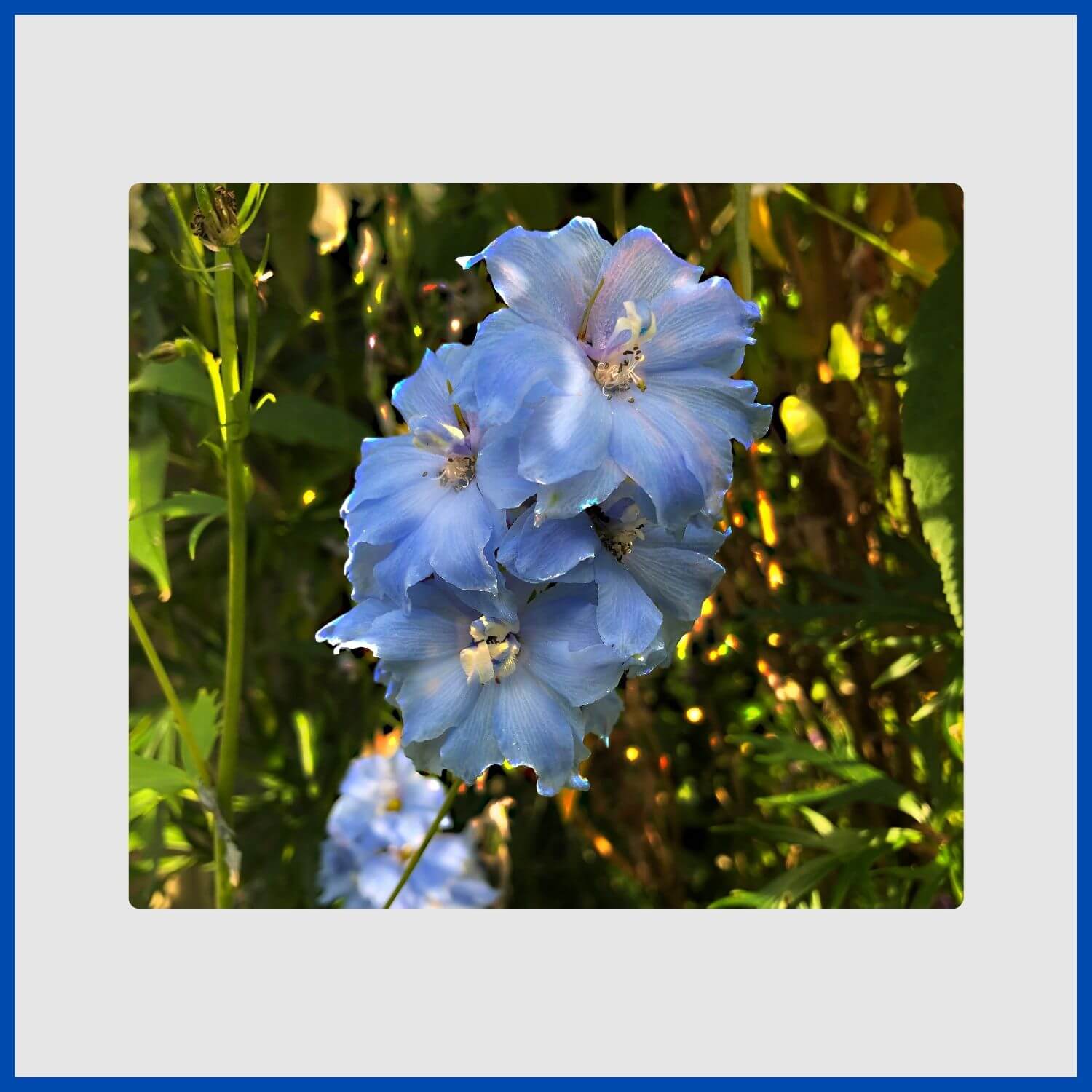
Delphiniums produce majestic flower spikes that tower above garden beds with their intense blue coloring. These cottage garden classics attract hummingbirds and butterflies while providing excellent vertical interest in border plantings.
- USDA Hardiness Zone: 3-7
- Bloom Time: Early to midsummer
- Water Needs: Moderate
- Soil Type: Rich, well-drained, slightly alkaline
- Sun Requirement: Full sun to partial shade
- Height: 4-6 feet
3. Morning Glory (Ipomoea tricolor)
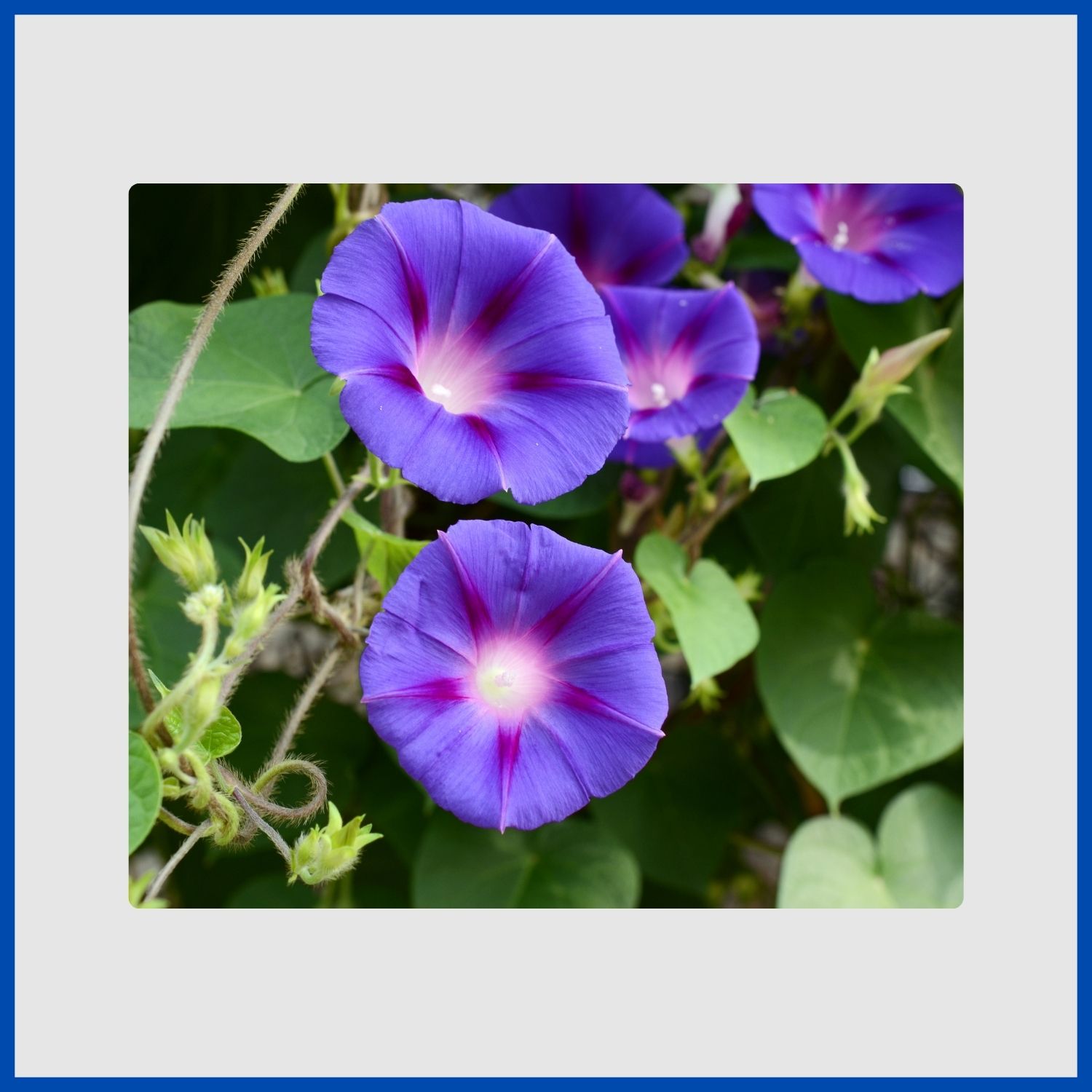
Morning glories unfurl their trumpet-shaped blue flowers each dawn, creating a spectacular daily display. These vigorous climbing vines quickly cover fences, trellises, and arbors with their heart-shaped leaves and prolific blooms.
- USDA Hardiness Zone: 3-10 (annual)
- Bloom Time: Summer to fall
- Water Needs: Moderate
- Soil Type: Well-drained, average
- Sun Requirement: Full sun
- Height: 6-10 feet (vine)
4. Forget-Me-Not (Myosotis sylvatica)
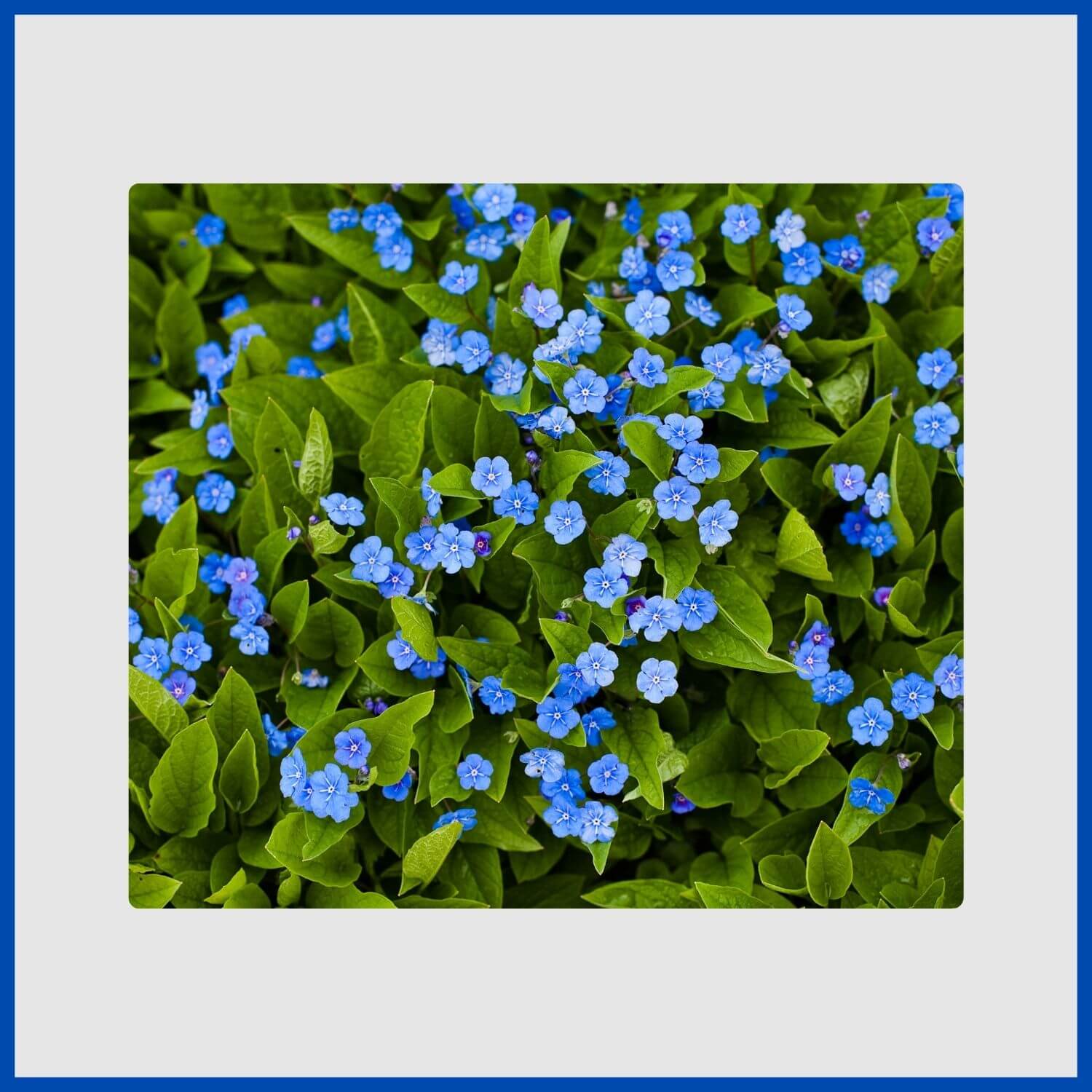
Forget-me-nots carpet garden floors with delicate sky-blue flowers and charming yellow centers. These self-seeding biennials naturalize effortlessly in woodland settings and create romantic ground covers beneath spring bulbs.
- USDA Hardiness Zone: 3-8
- Bloom Time: Spring to early summer
- Water Needs: Moderate
- Soil Type: Moist, well-drained
- Sun Requirement: Partial shade
- Height: 6-12 inches
5. Cornflower (Centaurea cyanus)
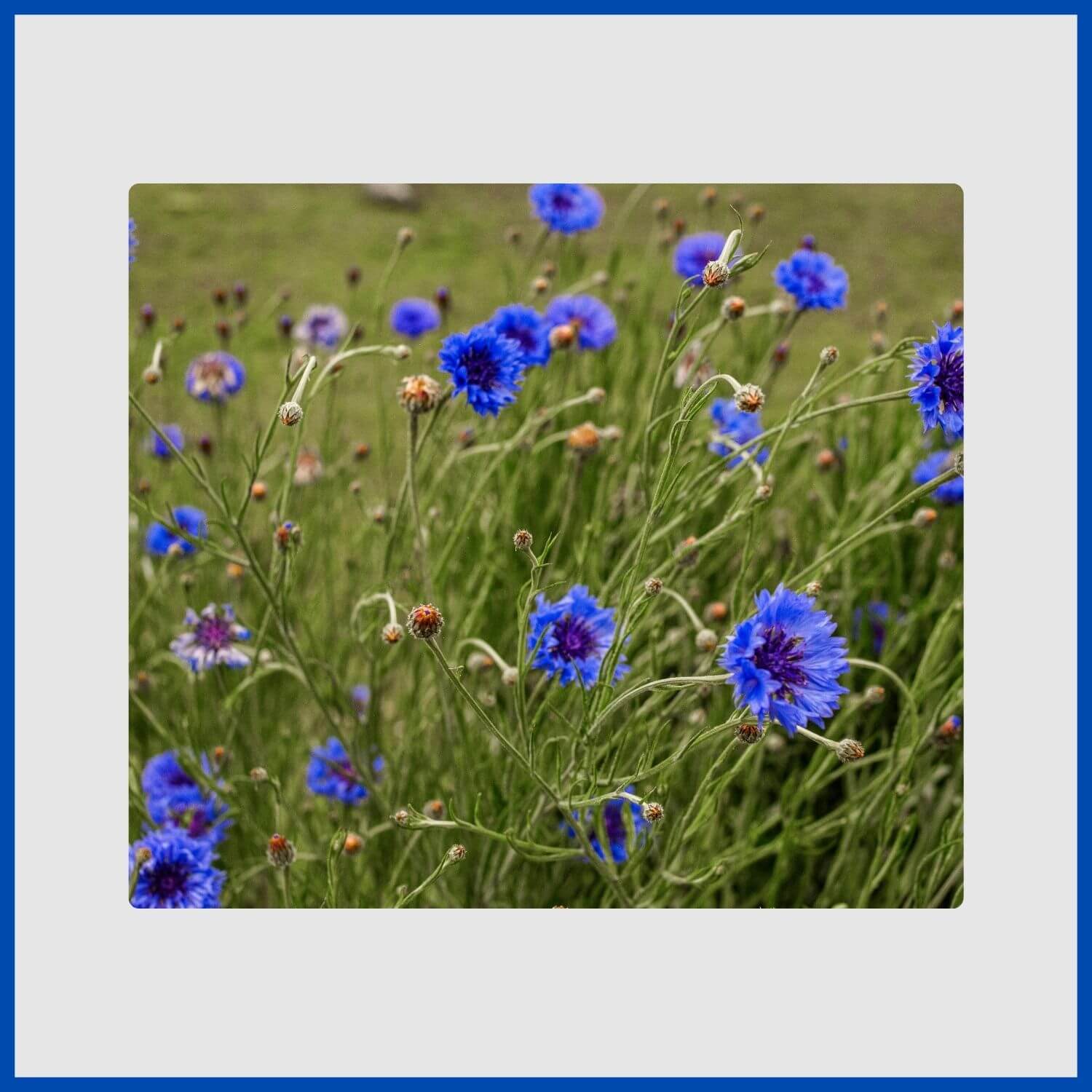
Cornflowers display brilliant true-blue petals with distinctive fringed edges that sway gracefully in breezes. These easy-care annuals attract beneficial pollinators while providing excellent cut flowers for fresh and dried arrangements.
- USDA Hardiness Zone: 2-11 (annual)
- Bloom Time: Late spring to summer
- Water Needs: Low to moderate
- Soil Type: Well-drained, average to poor
- Sun Requirement: Full sun
- Height: 1-3 feet
6. Blue Iris (Iris germanica)
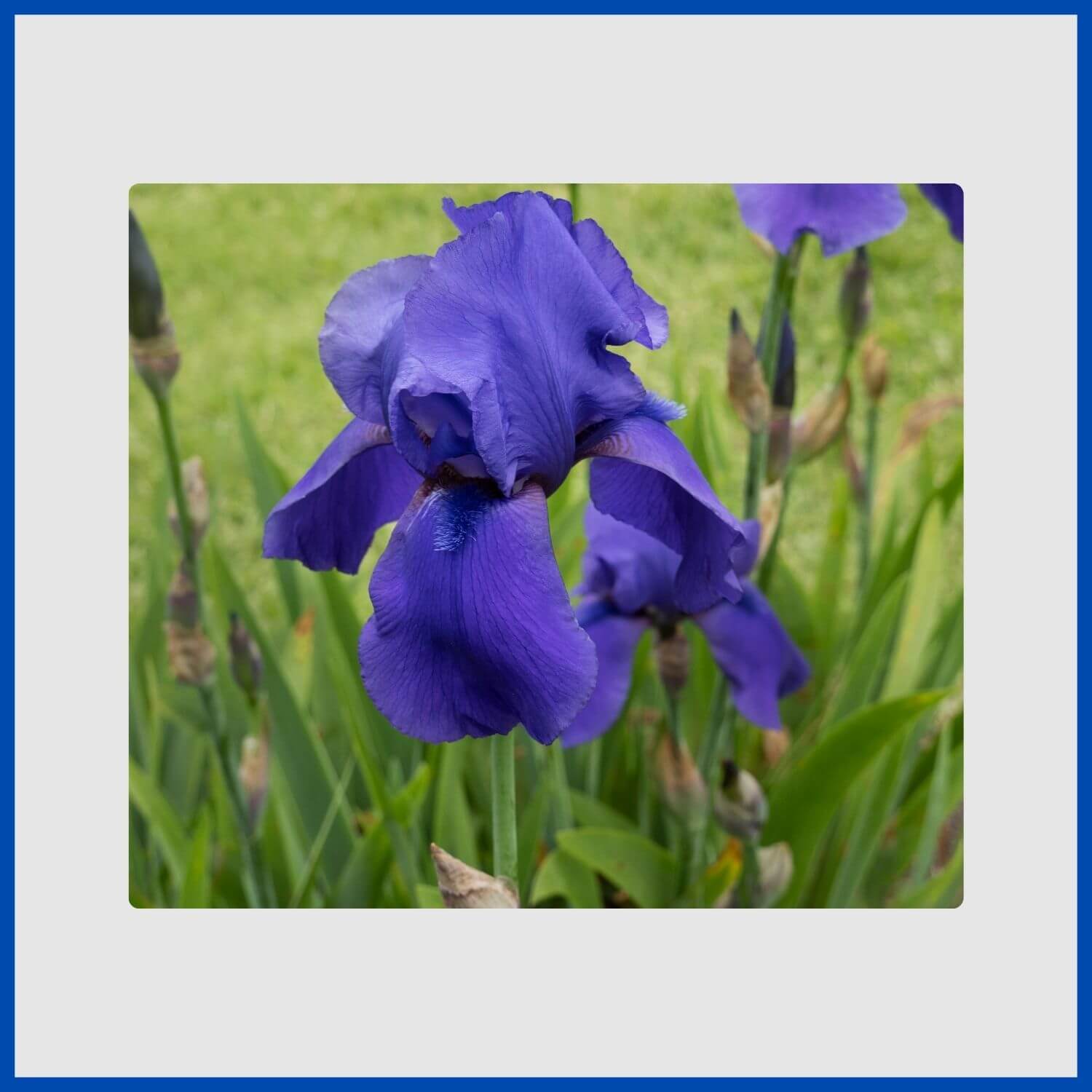
Blue irises showcase elegant, ruffled petals with intricate veining and sweet fragrance. These rhizomatous perennials offer striking architectural form and multiply readily to create impressive drifts of color in spring gardens.
- USDA Hardiness Zone: 3-9
- Bloom Time: Late spring to early summer
- Water Needs: Moderate
- Soil Type: Well-drained, slightly acidic to neutral
- Sun Requirement: Full sun
- Height: 2-3 feet
7. Blue Salvia (Salvia farinacea)
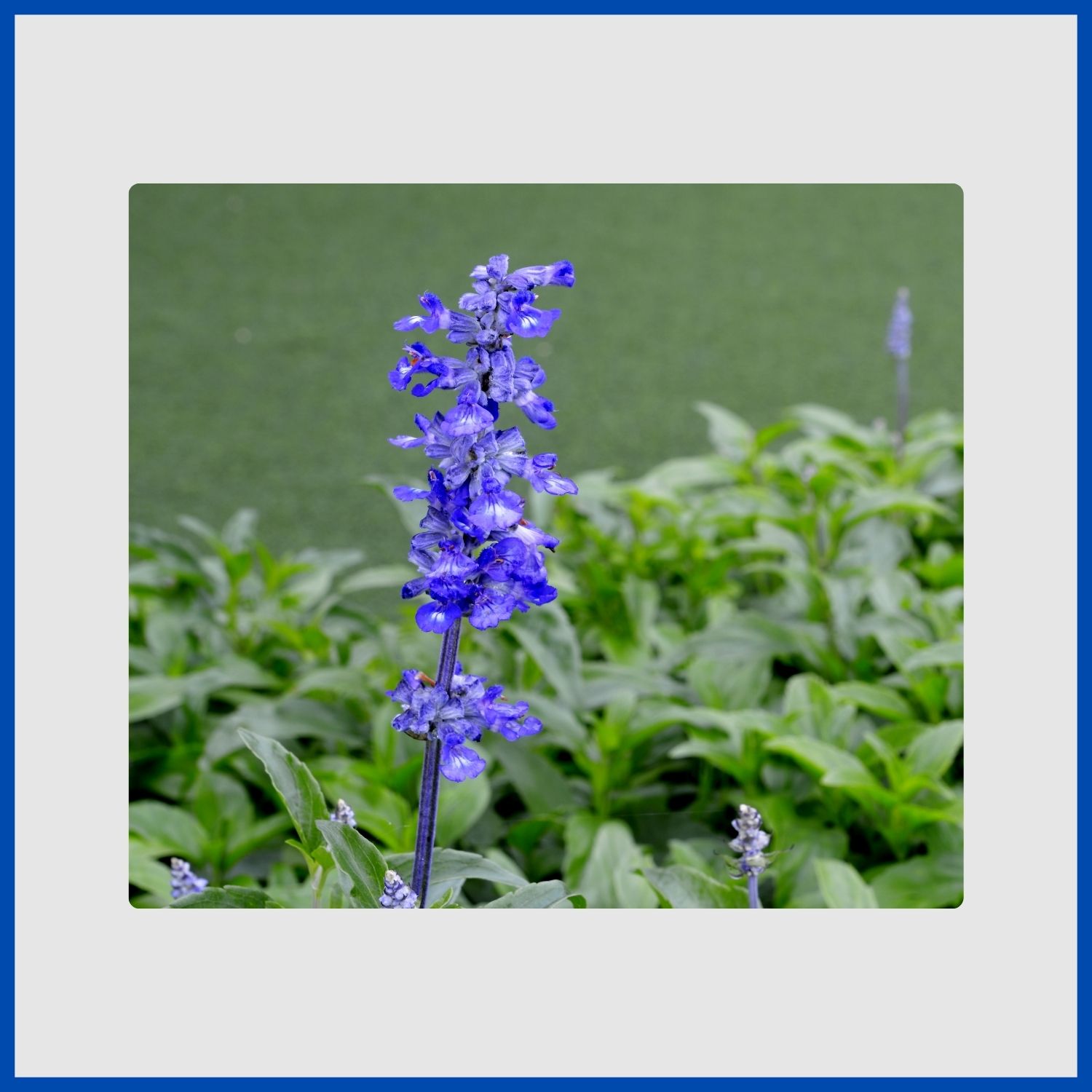
Blue salvia produces dense spikes of violet-blue flowers that bloom continuously throughout the growing season. These heat-tolerant perennials resist deer and rabbits while attracting hummingbirds and butterflies to the garden.
- USDA Hardiness Zone: 8-10 (Treated as annual elsewhere)
- Bloom Time: Summer to frost
- Water Needs: Low to moderate
- Soil Type: Well-drained, sandy
- Sun Requirement: Full sun
- Height: 2-3 feet
8. Bluebell (Hyacinthoides non-scripta)
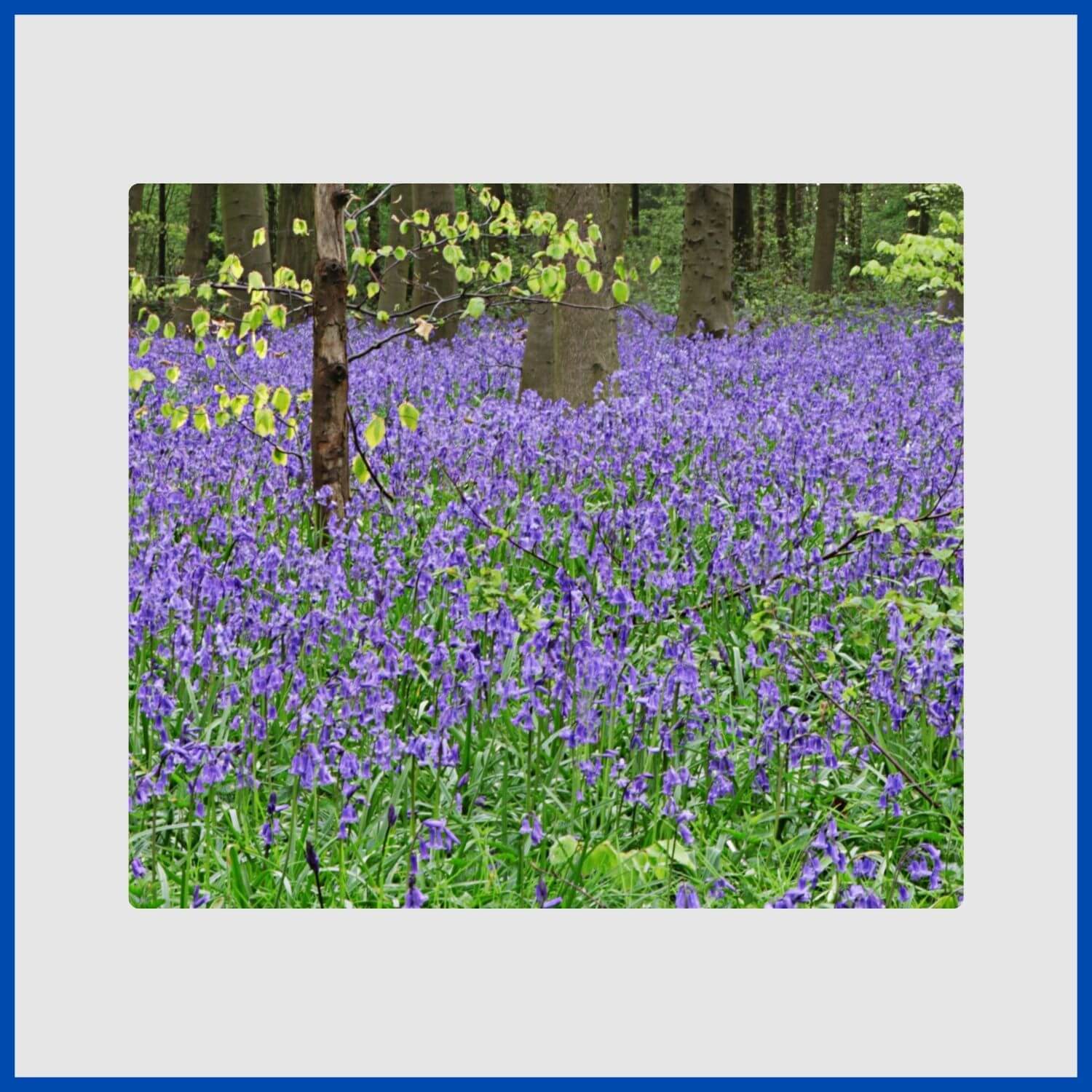
Bluebells create magical carpets of nodding, bell-shaped flowers in spring woodlands. These bulbous perennials naturalize beautifully under deciduous trees, filling shaded areas with their sweet fragrance and enchanting blue color.
- USDA Hardiness Zone: 4-9
- Bloom Time: Mid to late spring
- Water Needs: Moderate
- Soil Type: Moist, humus-rich
- Sun Requirement: Partial to full shade
- Height: 12-16 inches
9. Blue Lobelia (Lobelia erinus)
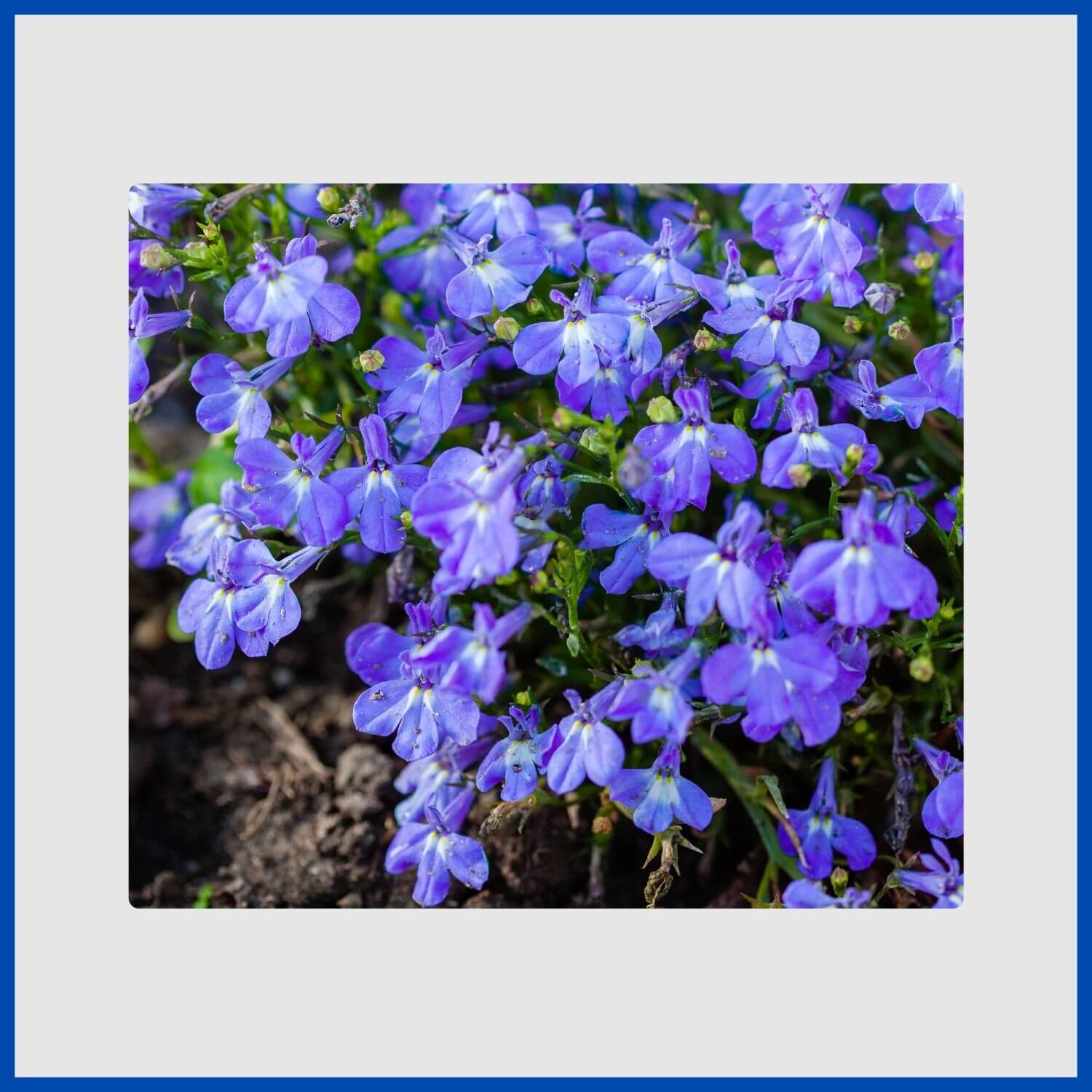
Blue lobelia produces masses of tiny, delicate flowers that cascade beautifully from containers and hanging baskets. These compact annuals bloom prolifically in cooler weather, creating stunning color displays along garden edges.
- USDA Hardiness Zone: 10-11 (annual elsewhere)
- Bloom Time: Spring to fall
- Water Needs: Moderate to high
- Soil Type: Rich, moist, well-drained
- Sun Requirement: Partial shade to full sun
- Height: 4-9 inches
10. Blue Agapanthus (Agapanthus praecox)
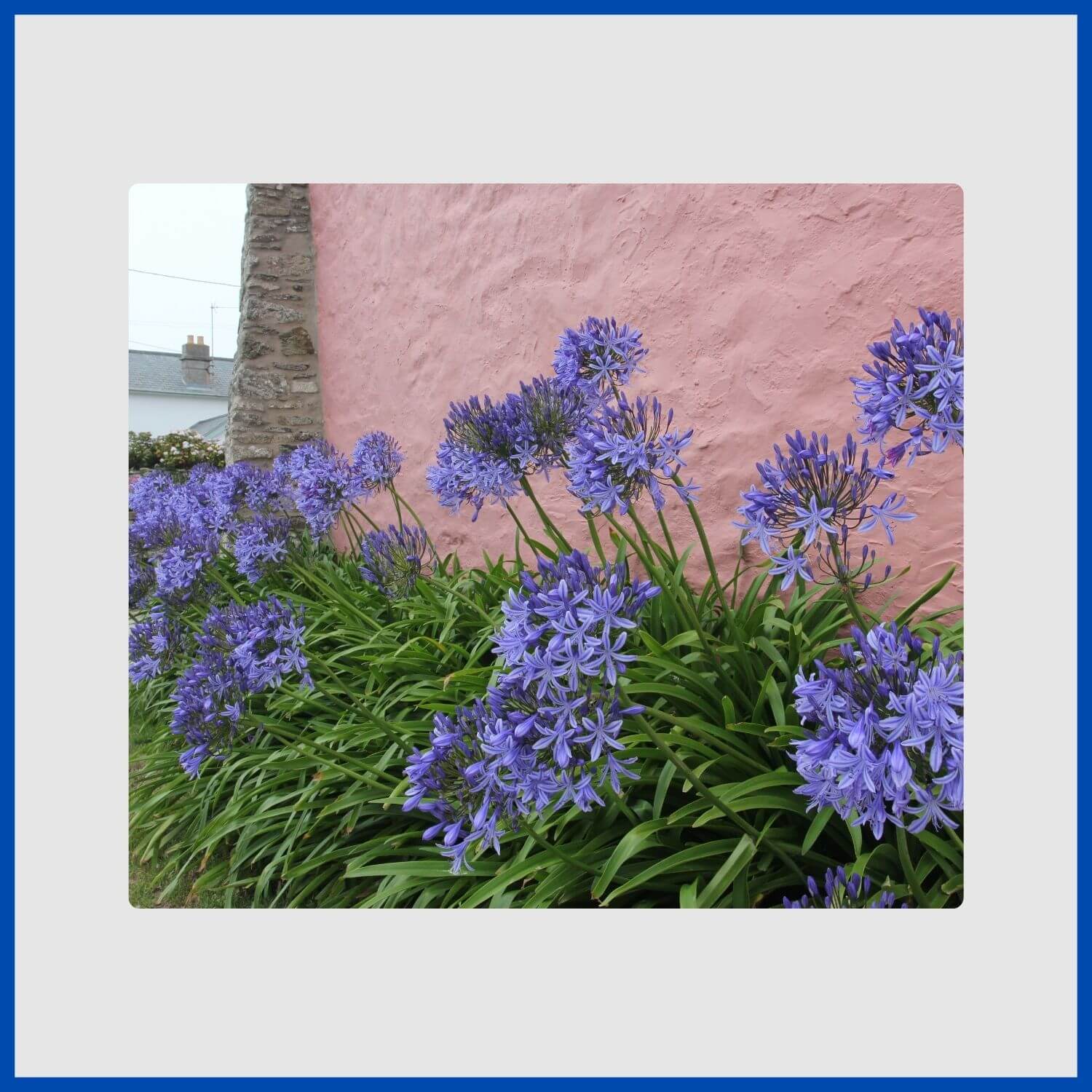
Agapanthus produces spectacular globe-shaped clusters of tubular blue flowers atop sturdy stems. These evergreen perennials create dramatic statements in containers and borders while tolerating coastal conditions and drought once established.
- USDA Hardiness Zone: 8-11
- Bloom Time: Summer
- Water Needs: Moderate
- Soil Type: Well-drained, fertile
- Sun Requirement: Full sun to partial shade
- Height: 2-4 feet
11. Blue Pansy (Viola × wittrockiana)
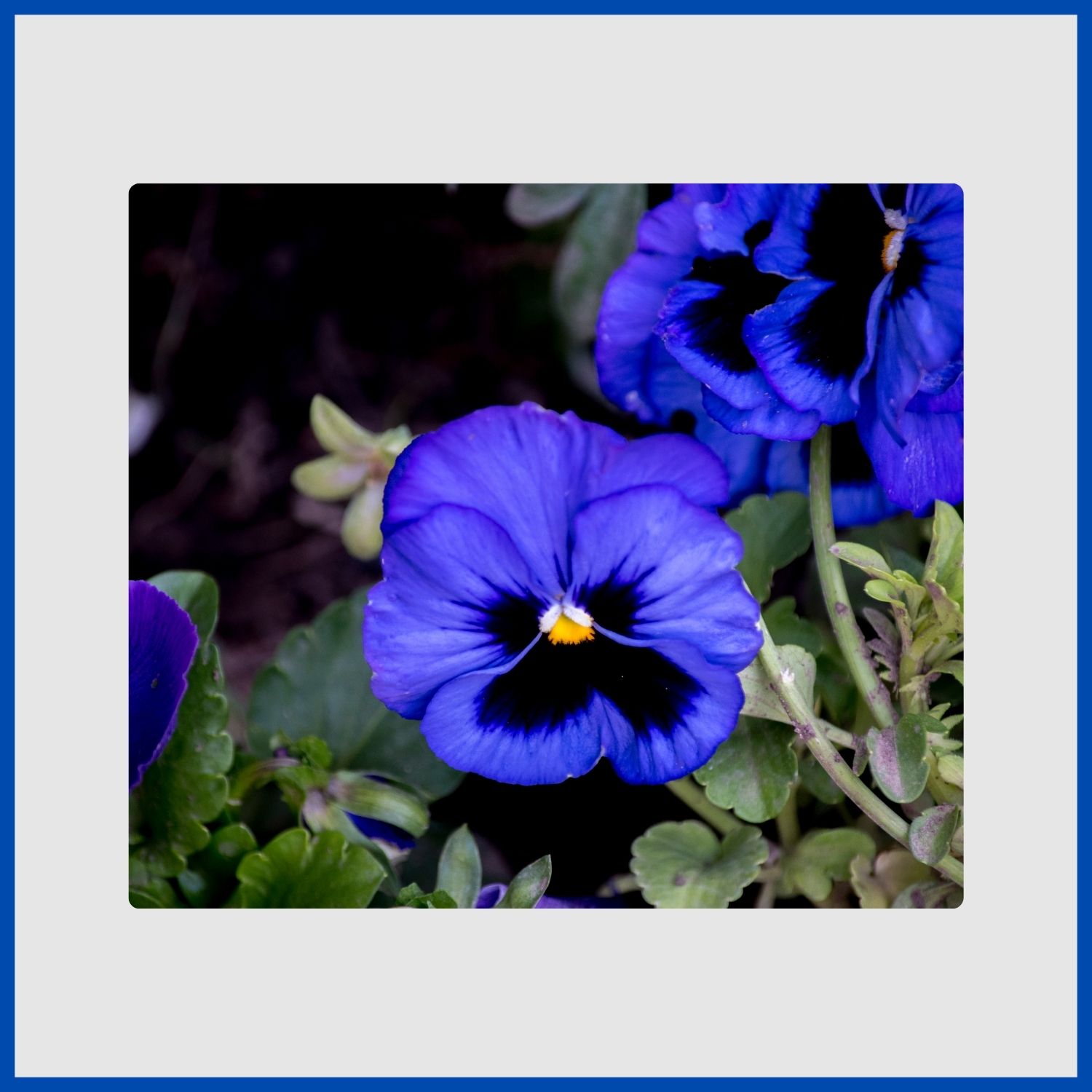
Blue pansies charm with their velvety petals and distinctive “faces” that brighten cool-season gardens. These versatile annuals thrive in containers, borders, and mass plantings, offering reliable color during spring and fall.
- USDA Hardiness Zone: 7-10 (annual elsewhere)
- Bloom Time: Spring and fall
- Water Needs: Moderate
- Soil Type: Rich, moist, well-drained
- Sun Requirement: Full sun to partial shade
- Height: 6-9 inches
12. Bluebonnet (Lupinus texensis)
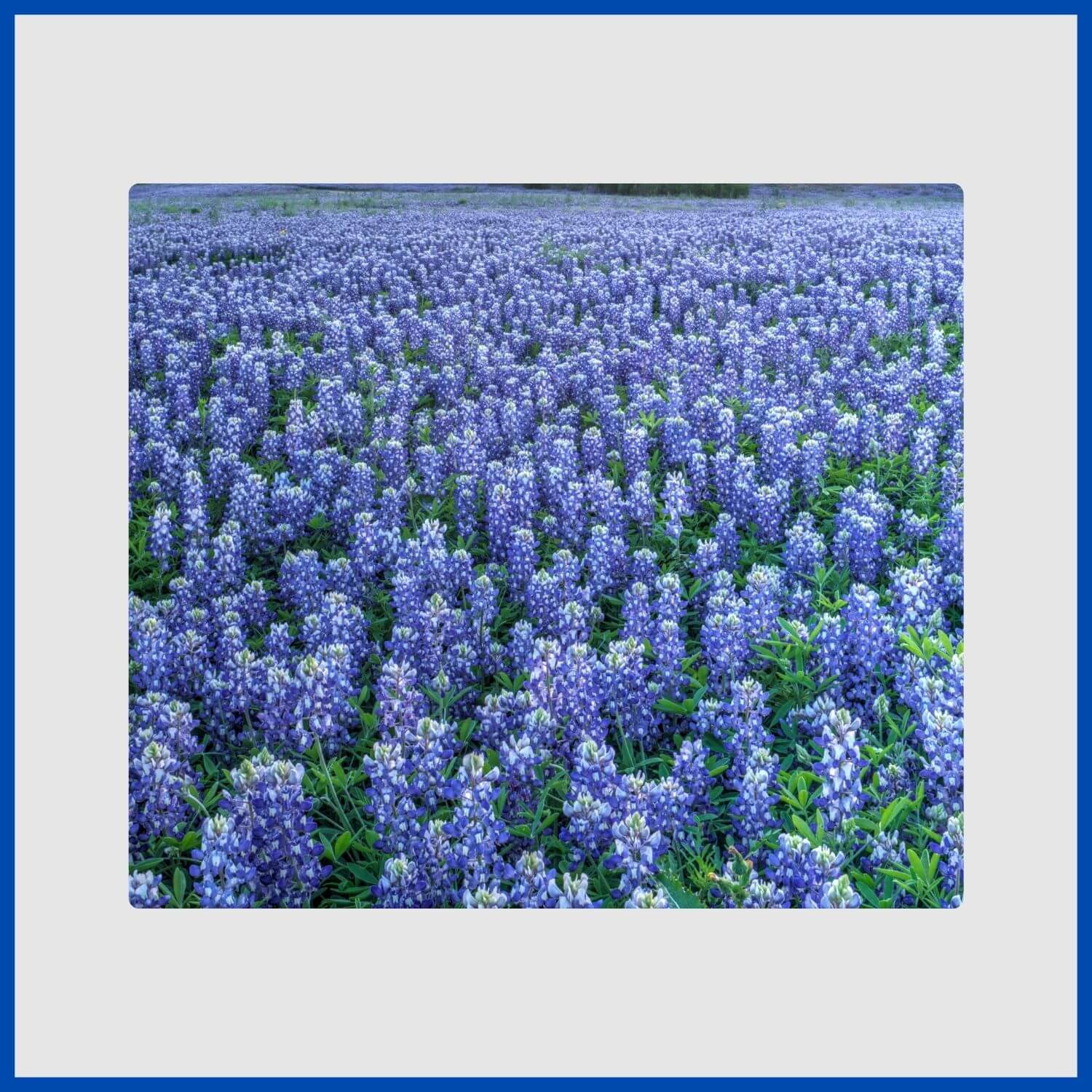
Bluebonnets blanket fields with their distinctive blue and white flower spikes, serving as Texas’s beloved state flower. These annual wildflowers thrive in poor soils and hot climates, creating spectacular natural displays in spring.
- USDA Hardiness Zone: 4-9 (annual)
- Bloom Time: Spring
- Water Needs: Low
- Soil Type: Well-drained, sandy to clay
- Sun Requirement: Full sun
- Height: 12-16 inches
13. Balloon Flower (Platycodon grandiflorus)
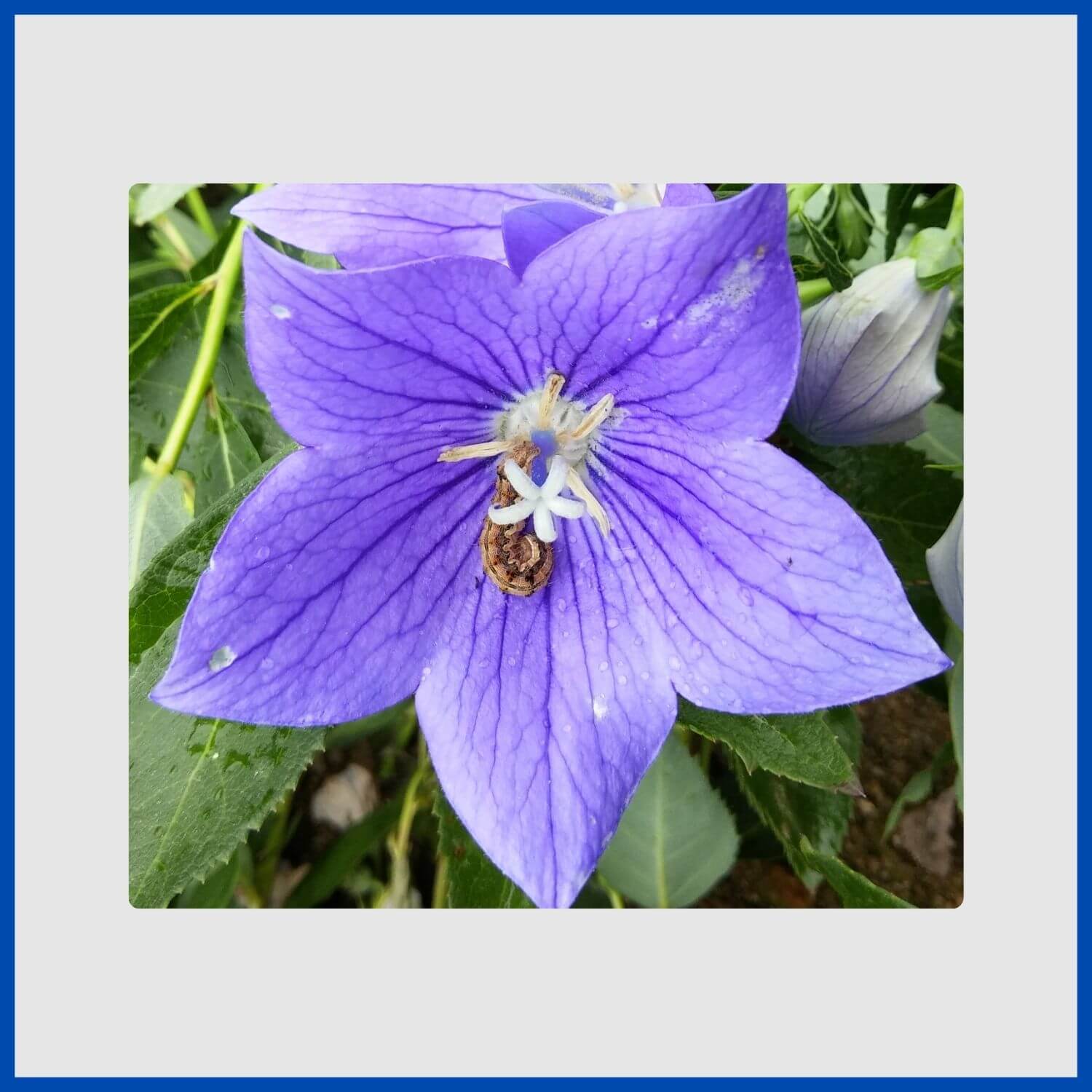
Balloon flowers form inflated buds that pop open into star-shaped blue blooms with remarkable charm. These long-lived perennials require minimal maintenance once established and provide consistent color throughout summer months.
- USDA Hardiness Zone: 3-8
- Bloom Time: Summer
- Water Needs: Moderate
- Soil Type: Well-drained, loamy
- Sun Requirement: Full sun to partial shade
- Height: 1-2.5 feet
14. Blue Clematis (Clematis spp.)
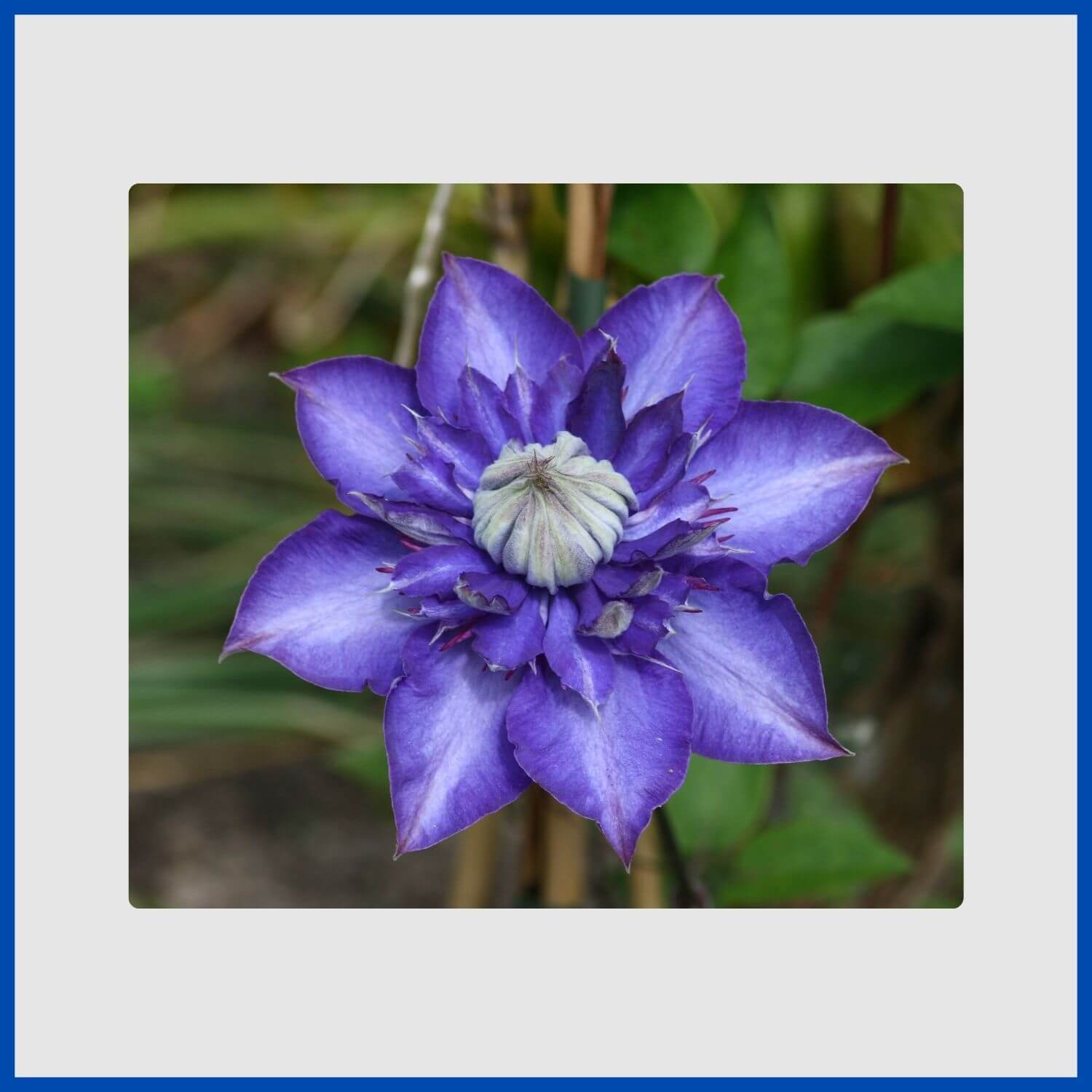
Blue clematis vines produce large, showy flowers that transform vertical spaces into stunning displays. These climbing perennials offer hundreds of varieties with varying bloom times, allowing for continuous color throughout the growing season.
- USDA Hardiness Zone: 4-9
- Bloom Time: Spring to fall (variety dependent)
- Water Needs: Moderate
- Soil Type: Rich, well-drained, neutral to alkaline
- Sun Requirement: Full sun (with shaded roots)
- Height: 6-20 feet (vine)
15. Blue Petunia (Petunia × hybrida)
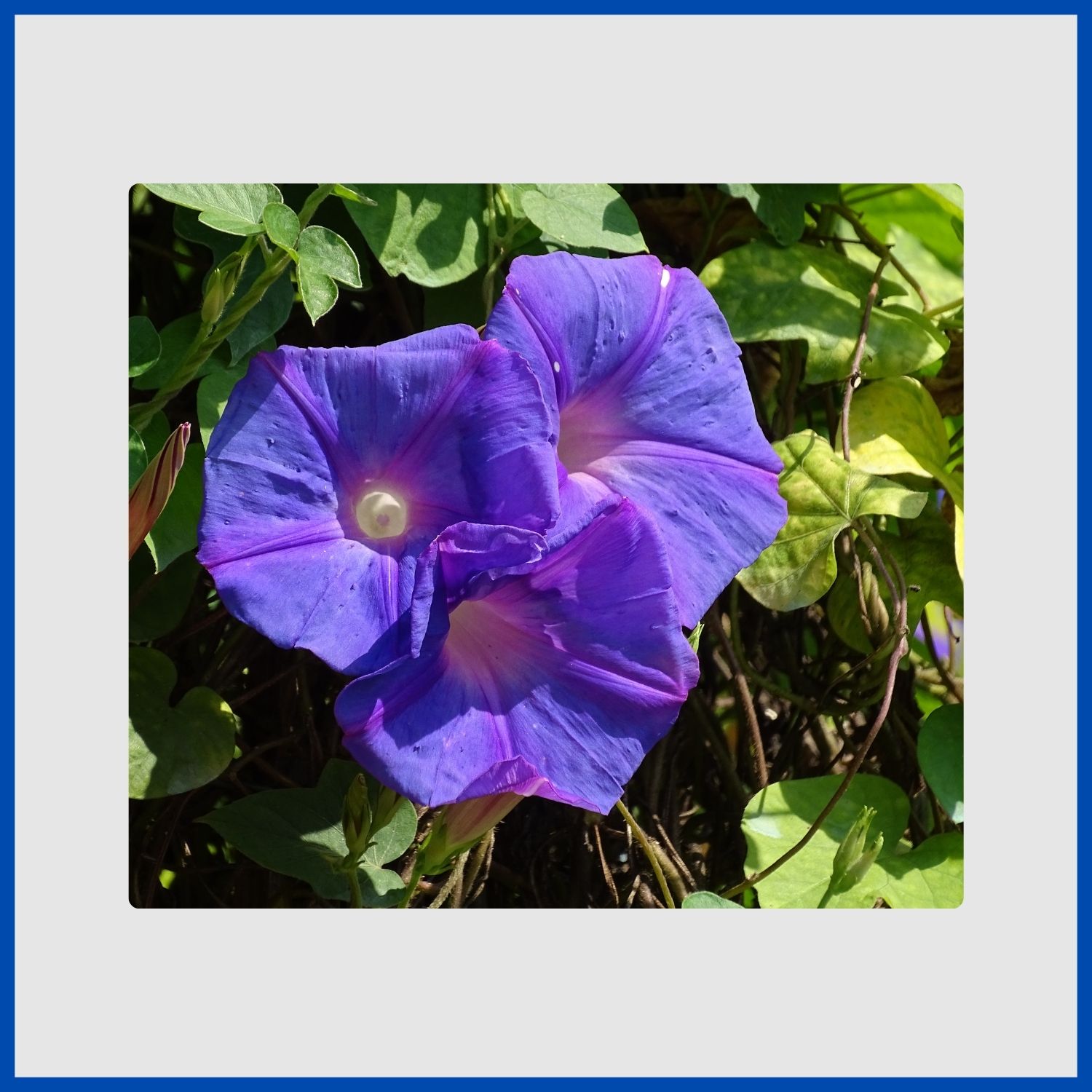
Blue petunias deliver vibrant, trumpet-shaped blooms that cascade beautifully from hanging baskets and containers. These popular annuals bloom continuously when deadheaded regularly and tolerate heat while attracting butterflies and hummingbirds.
- USDA Hardiness Zone: 9-11 (annual elsewhere)
- Bloom Time: Spring to frost
- Water Needs: Moderate
- Soil Type: Well-drained, fertile
- Sun Requirement: Full sun
- Height: 6-18 inches
16. Blue Star Creeper (Isotoma fluviatilis)
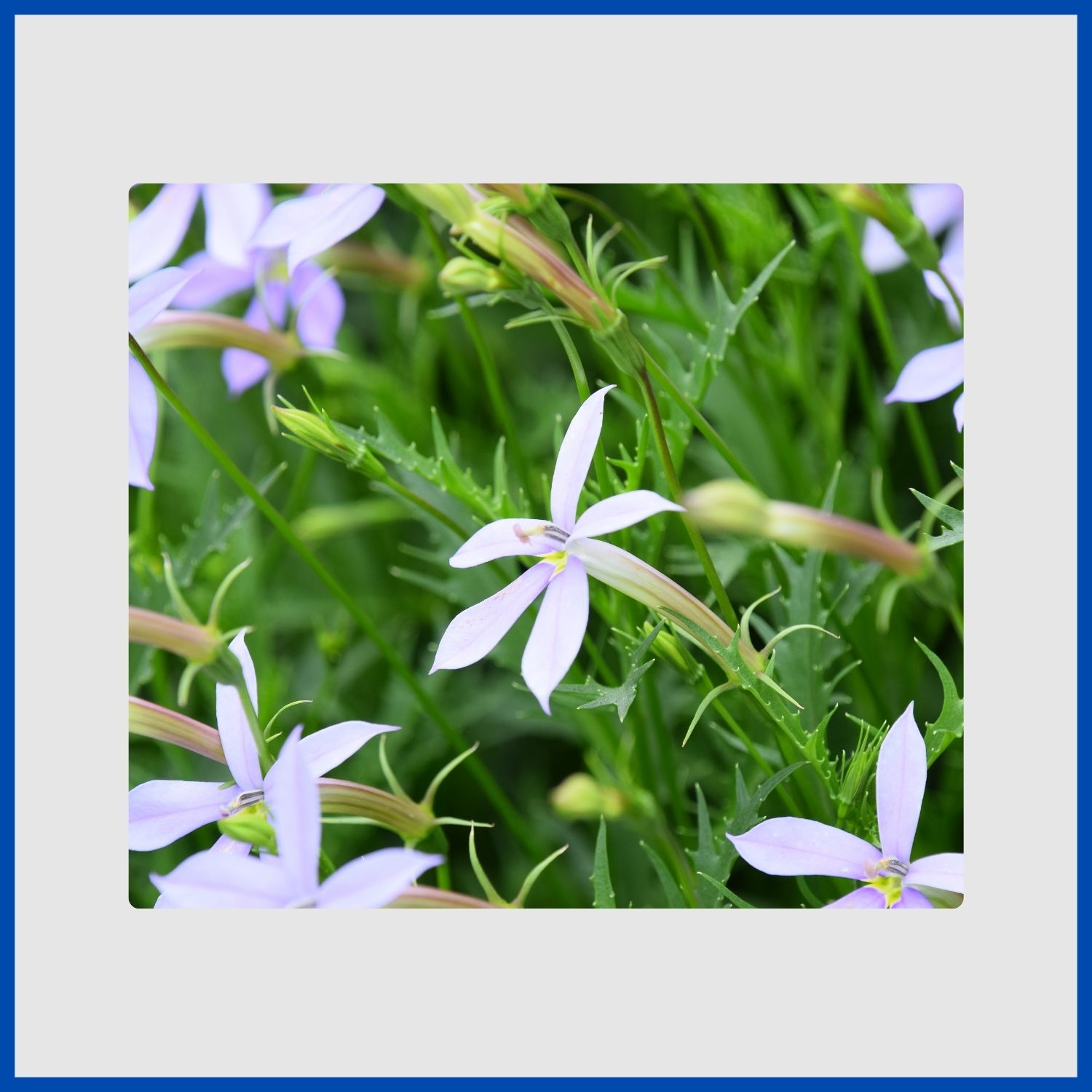
Blue star creeper forms dense, low-growing mats studded with tiny star-shaped blue flowers. This evergreen perennial serves as an excellent lawn alternative and tolerates light foot traffic while filling gaps between stepping stones.
- USDA Hardiness Zone: 5-9
- Bloom Time: Spring to summer
- Water Needs: Moderate to high
- Soil Type: Moist, well-drained
- Sun Requirement: Full sun to partial shade
- Height: 1-2 inches
17. Blue Flax (Linum perenne)
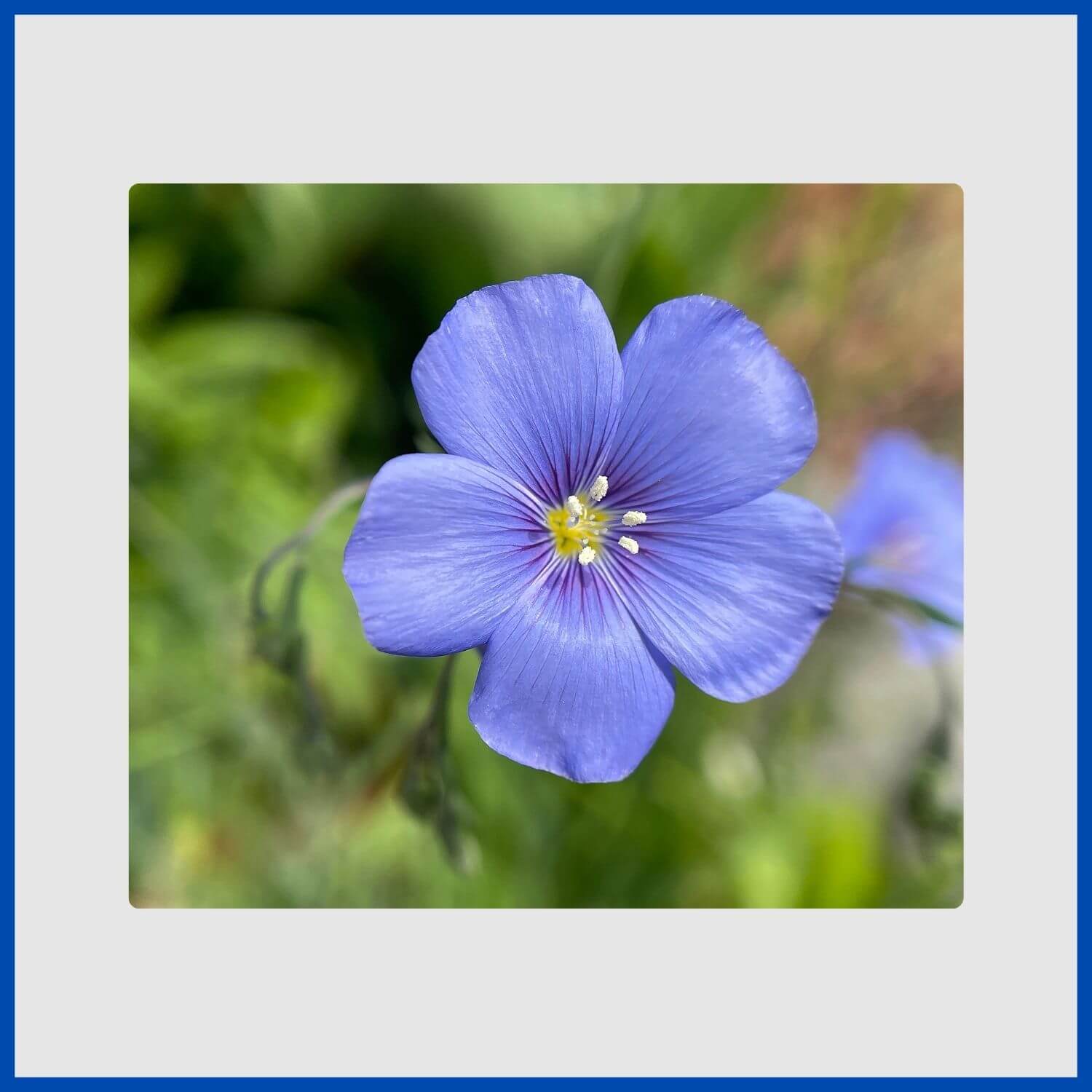
Blue flax produces delicate, sky-blue flowers on slender stems that dance gracefully in breezes. These drought-tolerant perennials self-seed readily and create airy, naturalistic displays in xeriscapes and cottage gardens.
- USDA Hardiness Zone: 5-9
- Bloom Time: Late spring to summer
- Water Needs: Low to moderate
- Soil Type: Well-drained, sandy to average
- Sun Requirement: Full sun
- Height: 12-24 inches
18. Blue Larkspur (Consolida ajacis)
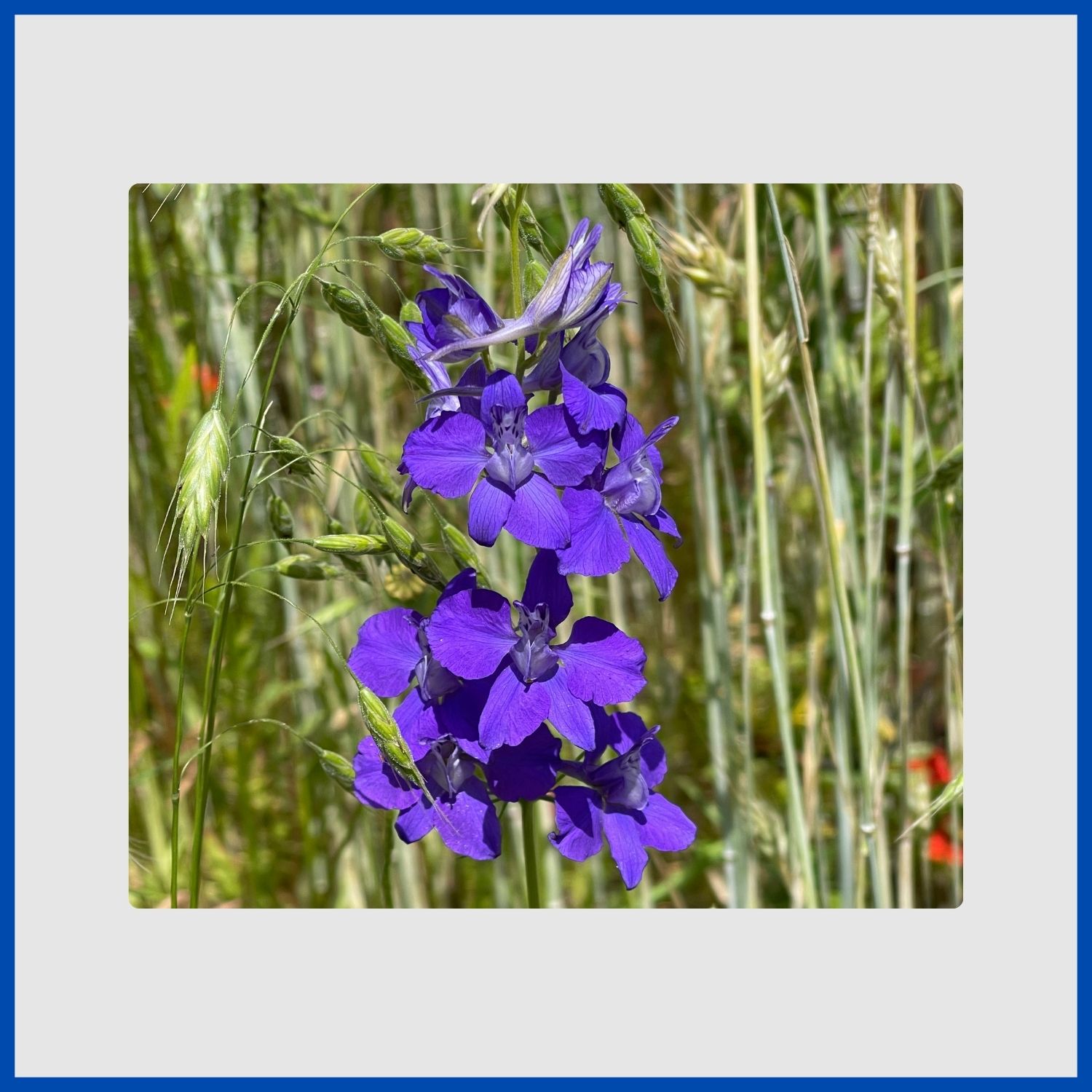
Blue larkspur creates vertical accents with its tall spikes of spurred flowers in various shades of blue. These cottage garden annuals excel in cut flower arrangements and attract beneficial pollinators while preferring cooler growing conditions.
- USDA Hardiness Zone: 2-11 (annual)
- Bloom Time: Late spring to summer
- Water Needs: Moderate
- Soil Type: Rich, well-drained
- Sun Requirement: Full sun
- Height: 2-4 feet
19. Chicory (Cichorium intybus)
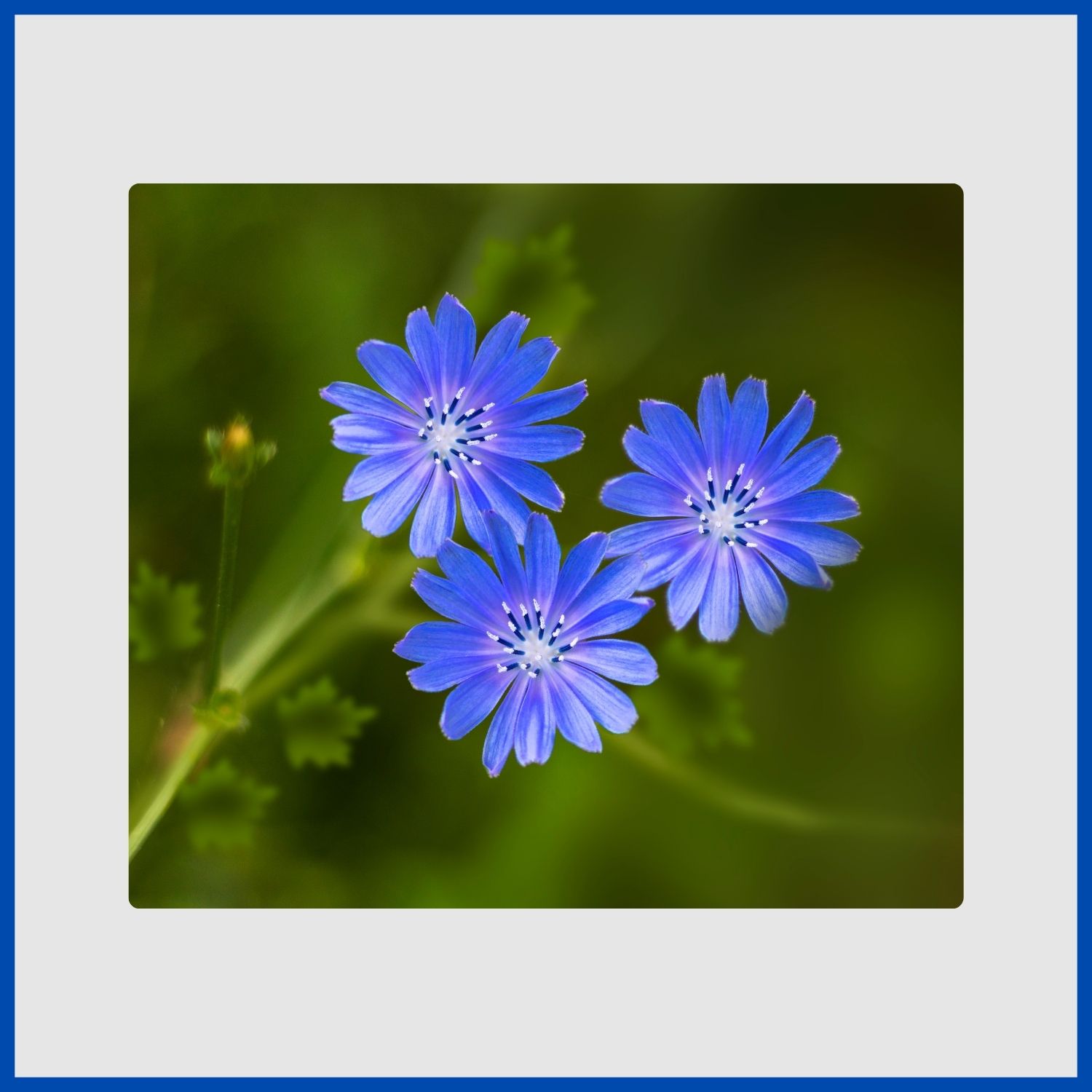
Chicory produces charming sky-blue daisy-like flowers that open each morning and close by afternoon. This drought-tolerant perennial naturalizes along roadsides and in meadows while offering edible roots and leaves with culinary uses.
- USDA Hardiness Zone: 3-9
- Bloom Time: Summer to fall
- Water Needs: Low
- Soil Type: Well-drained, average to poor
- Sun Requirement: Full sun
- Height: 2-5 feet
20. Blue Anemone (Anemone blanda)
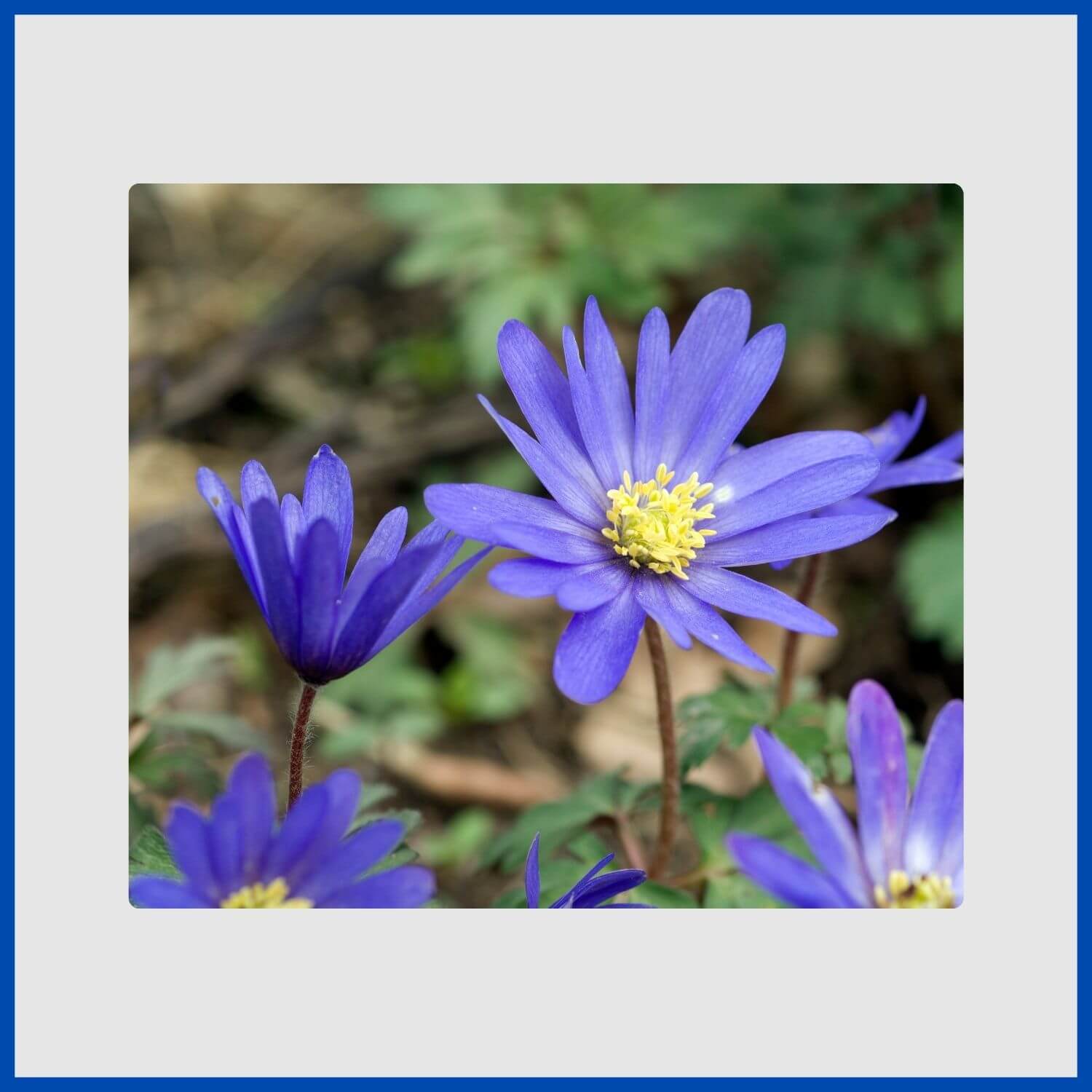
Blue anemones carpet early spring gardens with daisy-like flowers in brilliant azure shades. These low-growing perennials naturalize easily from tubers and thrive in woodland settings beneath deciduous trees.
- USDA Hardiness Zone: 4-8
- Bloom Time: Early spring
- Water Needs: Moderate
- Soil Type: Well-drained, humus-rich
- Sun Requirement: Full sun to partial shade
- Height: 4-6 inches
21. Blue Veronica (Veronica spicata)
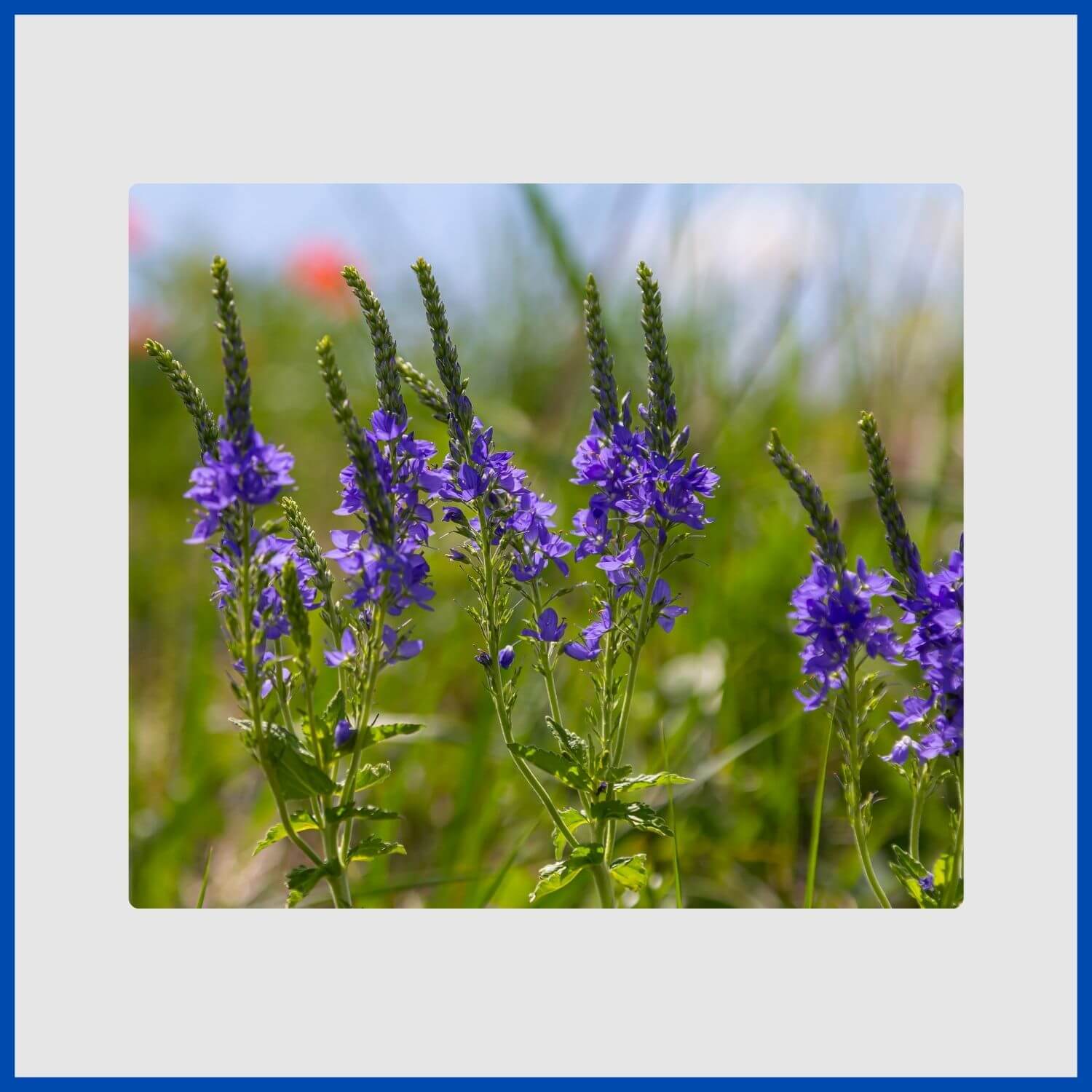
Blue veronica sends up elegant spikes of tiny flowers that attract butterflies and bees throughout summer. These low-maintenance perennials resist deer and rabbits while providing excellent vertical interest in borders and rock gardens.
- USDA Hardiness Zone: 3-8
- Bloom Time: Summer
- Water Needs: Moderate
- Soil Type: Well-drained, average
- Sun Requirement: Full sun to partial shade
- Height: 1-2 feet
22. Blue Columbine (Aquilegia caerulea)
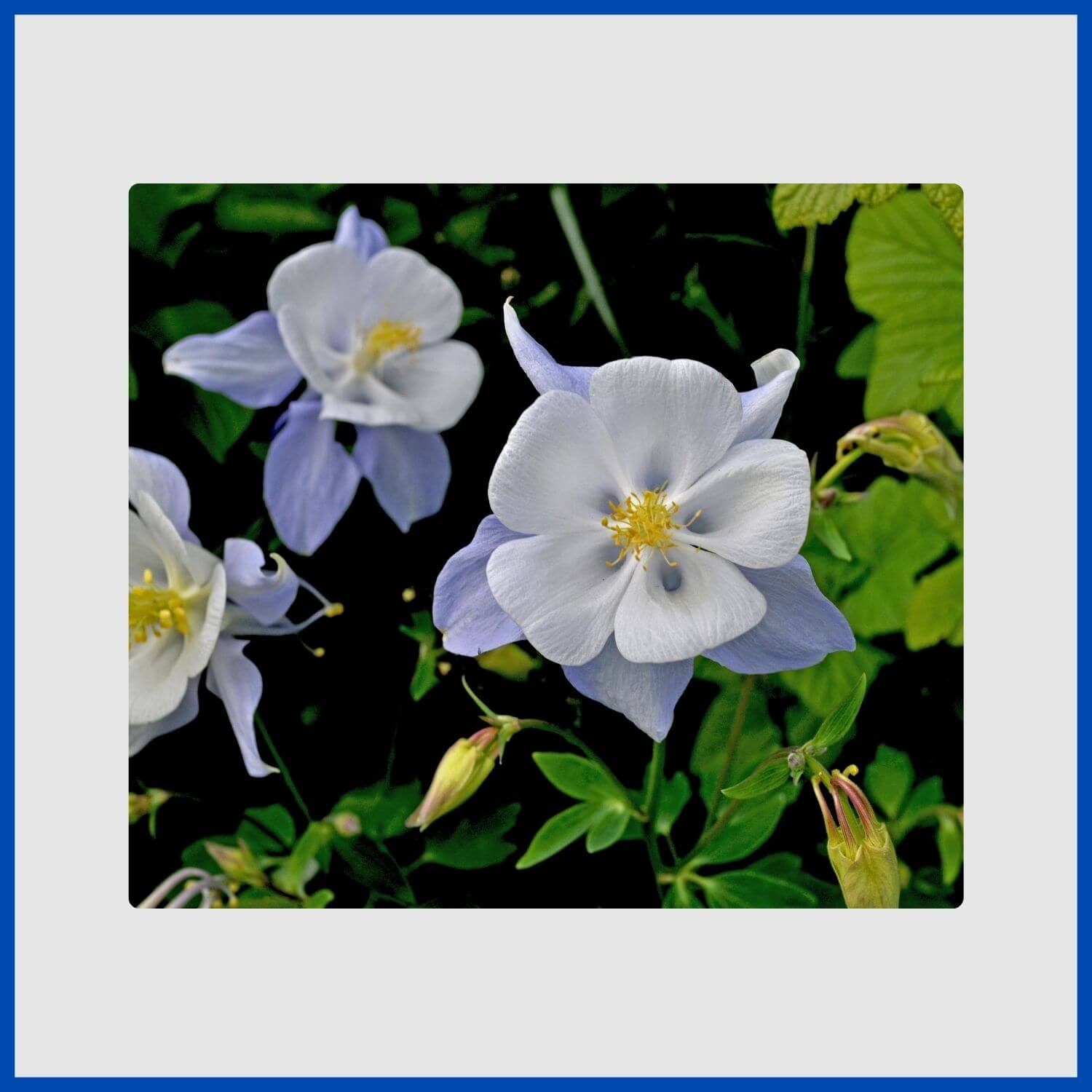
Blue columbine displays unique spurred flowers that nod gracefully above delicate fernlike foliage. Colorado’s state flower thrives in partial shade and attracts hummingbirds while self-seeding to create naturalistic drifts.
- USDA Hardiness Zone: 3-8
- Bloom Time: Late spring to early summer
- Water Needs: Moderate
- Soil Type: Well-drained, rich
- Sun Requirement: Partial shade to full sun
- Height: 1-3 feet
23. Blue Lace Flower (Trachymene coerulea)
Blue lace flower produces delicate, umbrella-shaped clusters of tiny lavender-blue blooms. This Australian native annual creates airy, romantic displays in gardens and provides exceptional cut flowers with long vase life.
- USDA Hardiness Zone: 2-11 (annual)
- Bloom Time: Summer
- Water Needs: Moderate
- Soil Type: Well-drained, fertile
- Sun Requirement: Full sun to partial shade
- Height: 2-3 feet
24. Blue Phlox (Phlox divaricata)
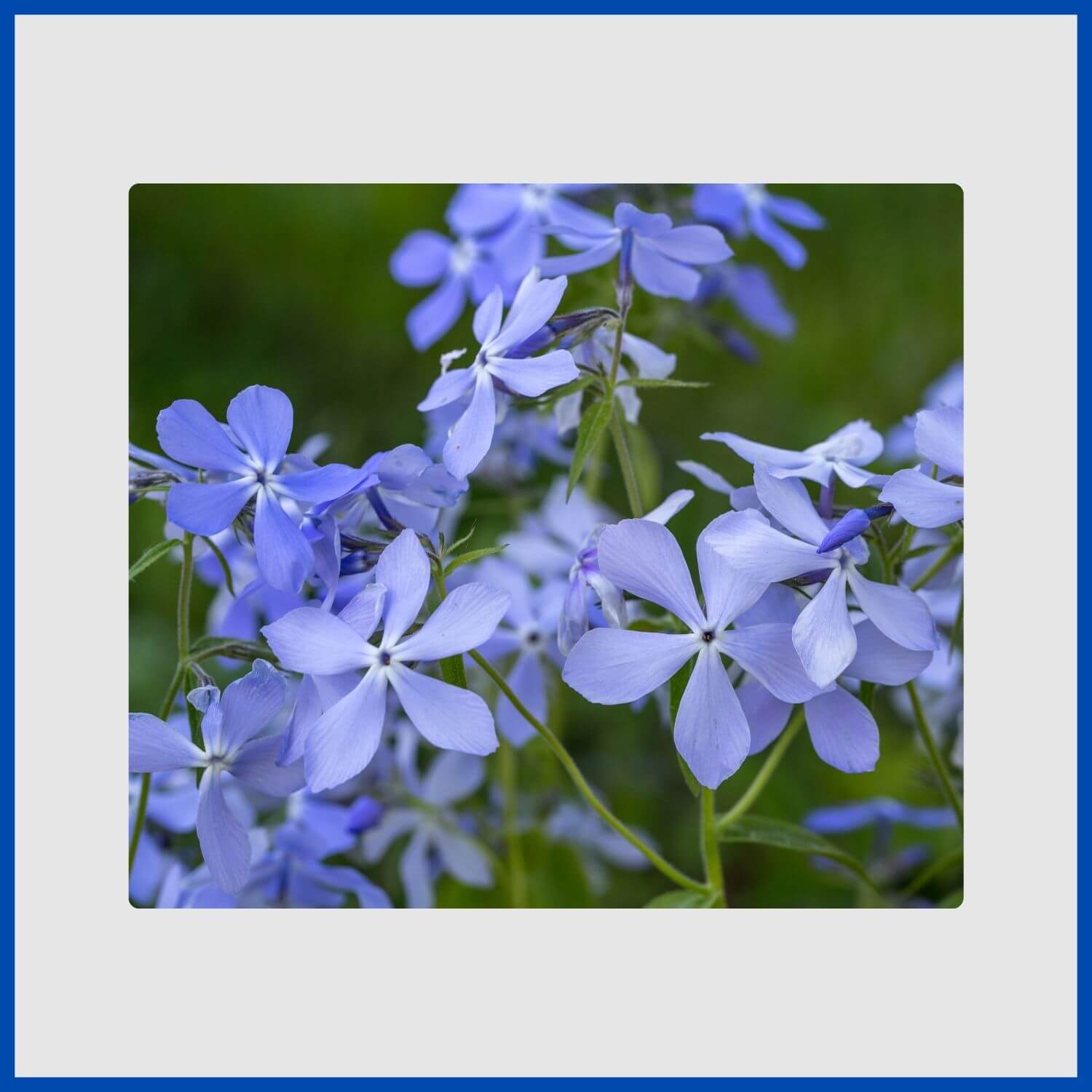
Blue phlox carpets spring woodlands with fragrant, five-petaled flowers in soft blue shades. This woodland native spreads slowly to form attractive ground covers and combines beautifully with spring bulbs and ferns.
- USDA Hardiness Zone: 3-8
- Bloom Time: Mid to late spring
- Water Needs: Moderate
- Soil Type: Moist, humus-rich
- Sun Requirement: Partial to full shade
- Height: 10-15 inches
25. Blue Poppy (Meconopsis betonicifolia)
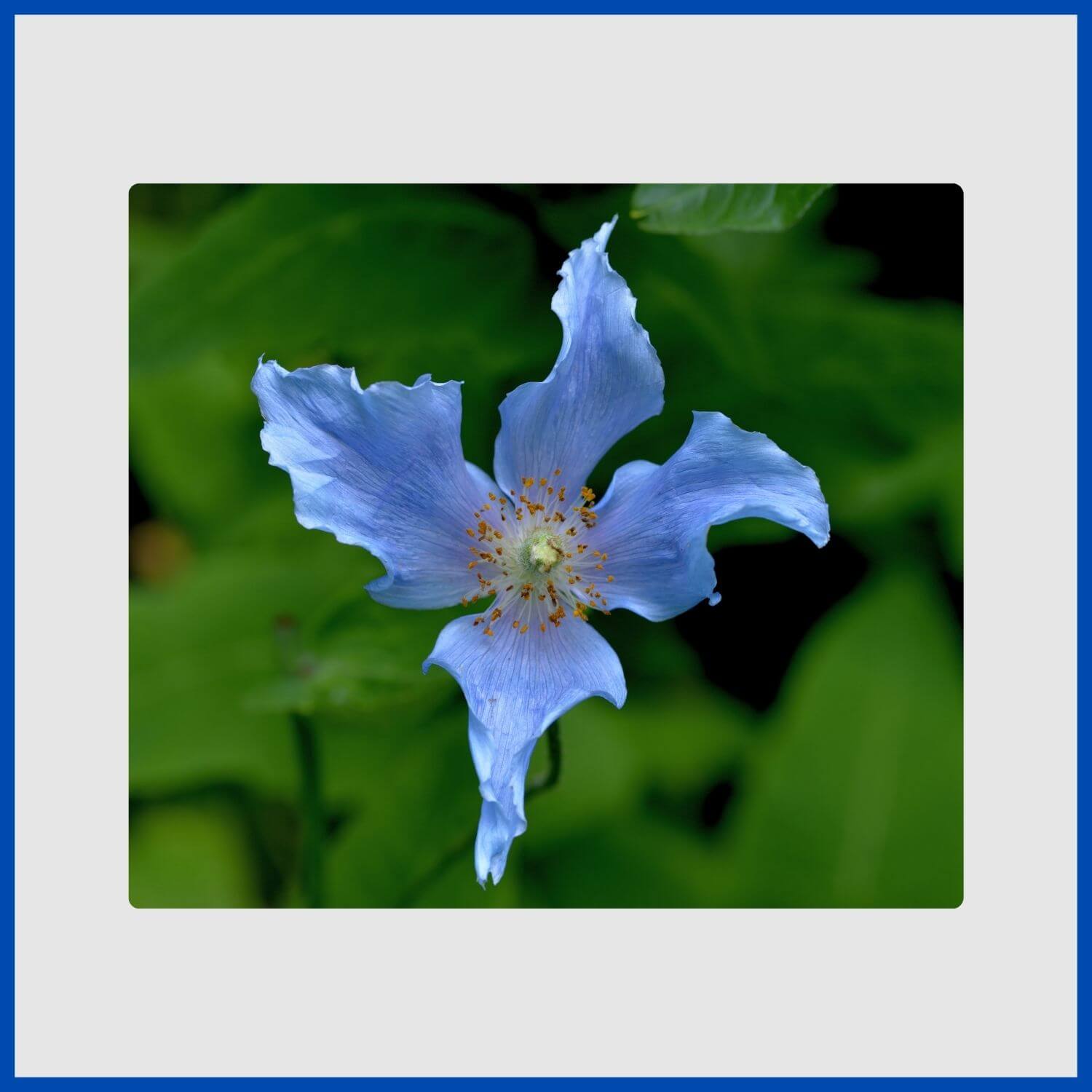
Blue poppies showcase impossibly blue flowers that captivate with their papery petals and golden stamens. These challenging perennials thrive in cool, moist climates and acidic soils, creating showstopping displays when conditions are ideal.
- USDA Hardiness Zone: 6-8 (Requires cool, moist conditions)
- Bloom Time: Late spring to early summer
- Water Needs: High
- Soil Type: Acidic, moist, humus-rich
- Sun Requirement: Partial shade
- Height: 3-4 feet
26. Blue False Indigo (Baptisia australis)
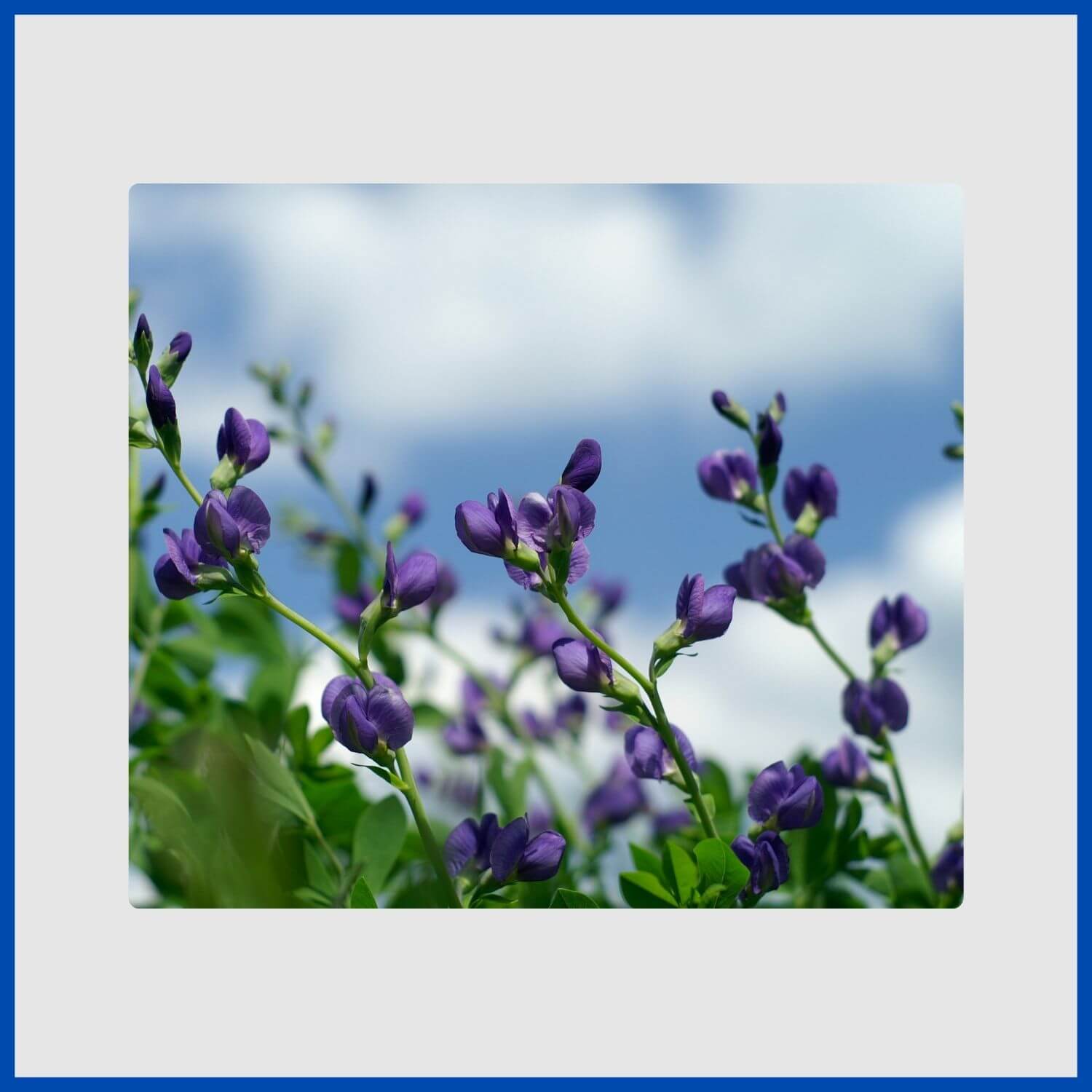
Blue false indigo produces sturdy spikes of pea-like flowers above attractive blue-green foliage. This native perennial develops deep taproots for excellent drought tolerance and decorative black seedpods that extend seasonal interest.
- USDA Hardiness Zone: 3-9
- Bloom Time: Late spring to early summer
- Water Needs: Low to moderate
- Soil Type: Well-drained, average
- Sun Requirement: Full sun to partial shade
- Height: 3-4 feet
27. Blue Trumpet Vine (Thunbergia grandiflora)
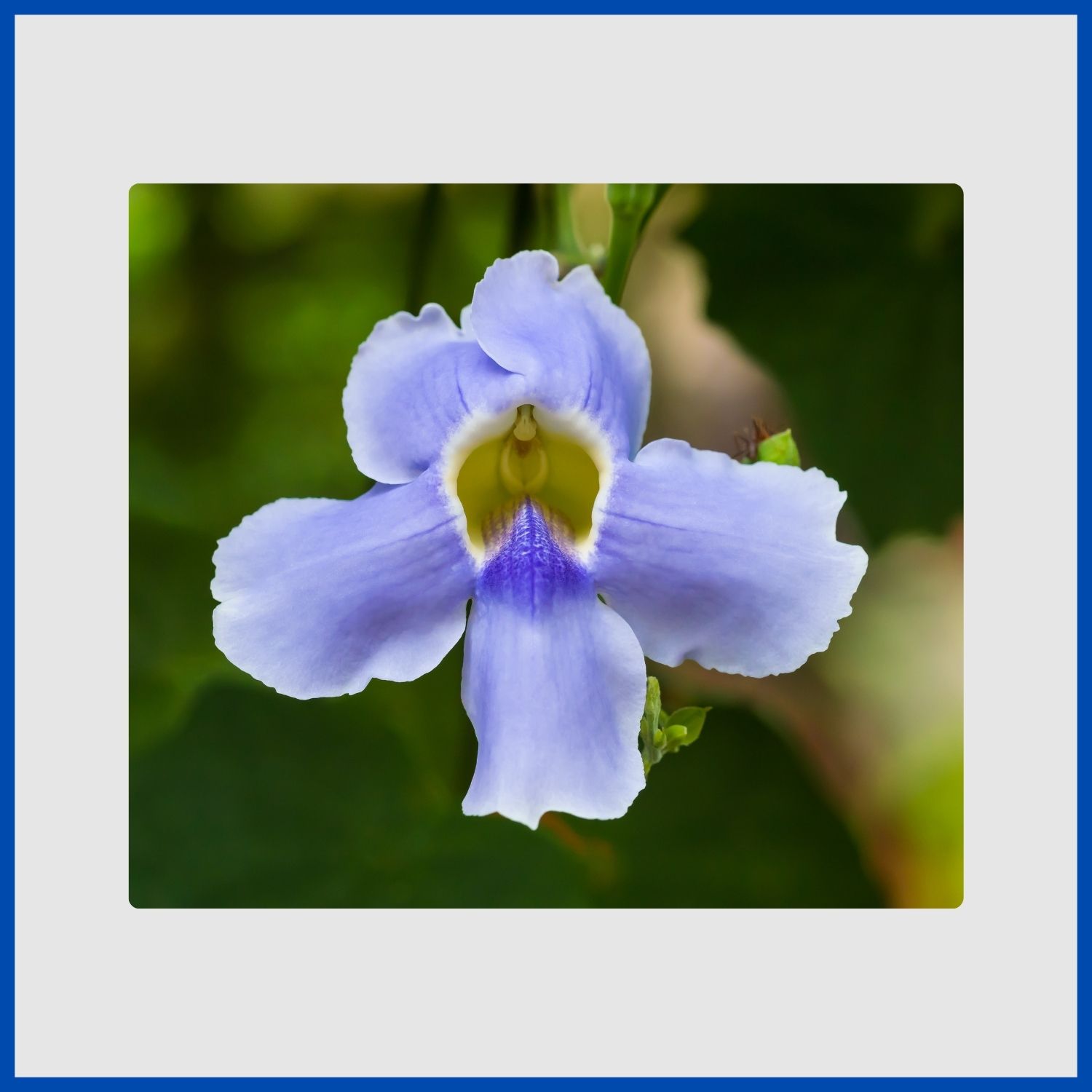
Blue trumpet vine creates stunning displays with large, flaring blue flowers throughout warm months. This vigorous tropical climber quickly covers structures and provides dense screening while attracting butterflies and hummingbirds.
- USDA Hardiness Zone: 8-11
- Bloom Time: Summer to fall
- Water Needs: Moderate to high
- Soil Type: Rich, well-drained
- Sun Requirement: Full sun to partial shade
- Height: 15-30 feet (vine)
28. Blue Scabiosa (Scabiosa columbaria)
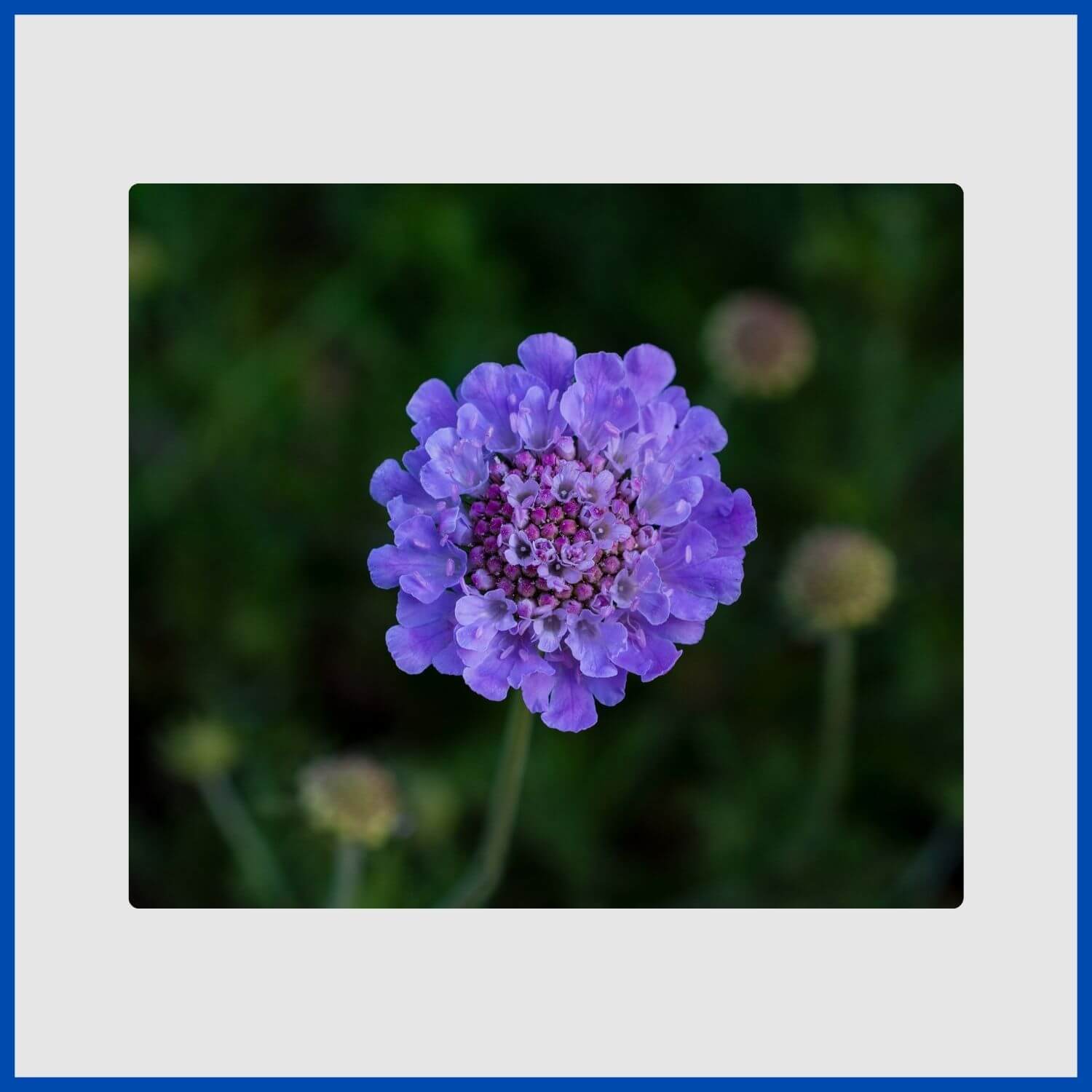
Blue scabiosa produces pincushion-like flowers on wiry stems that wave gracefully above mounds of foliage. These long-blooming perennials excel in cottage gardens and cutting beds while attracting butterflies and beneficial insects.
- USDA Hardiness Zone: 3-7
- Bloom Time: Summer to fall
- Water Needs: Moderate
- Soil Type: Well-drained, neutral to alkaline
- Sun Requirement: Full sun
- Height: 12-18 inches
29. Blue Leadwort (Ceratostigma plumbaginoides)
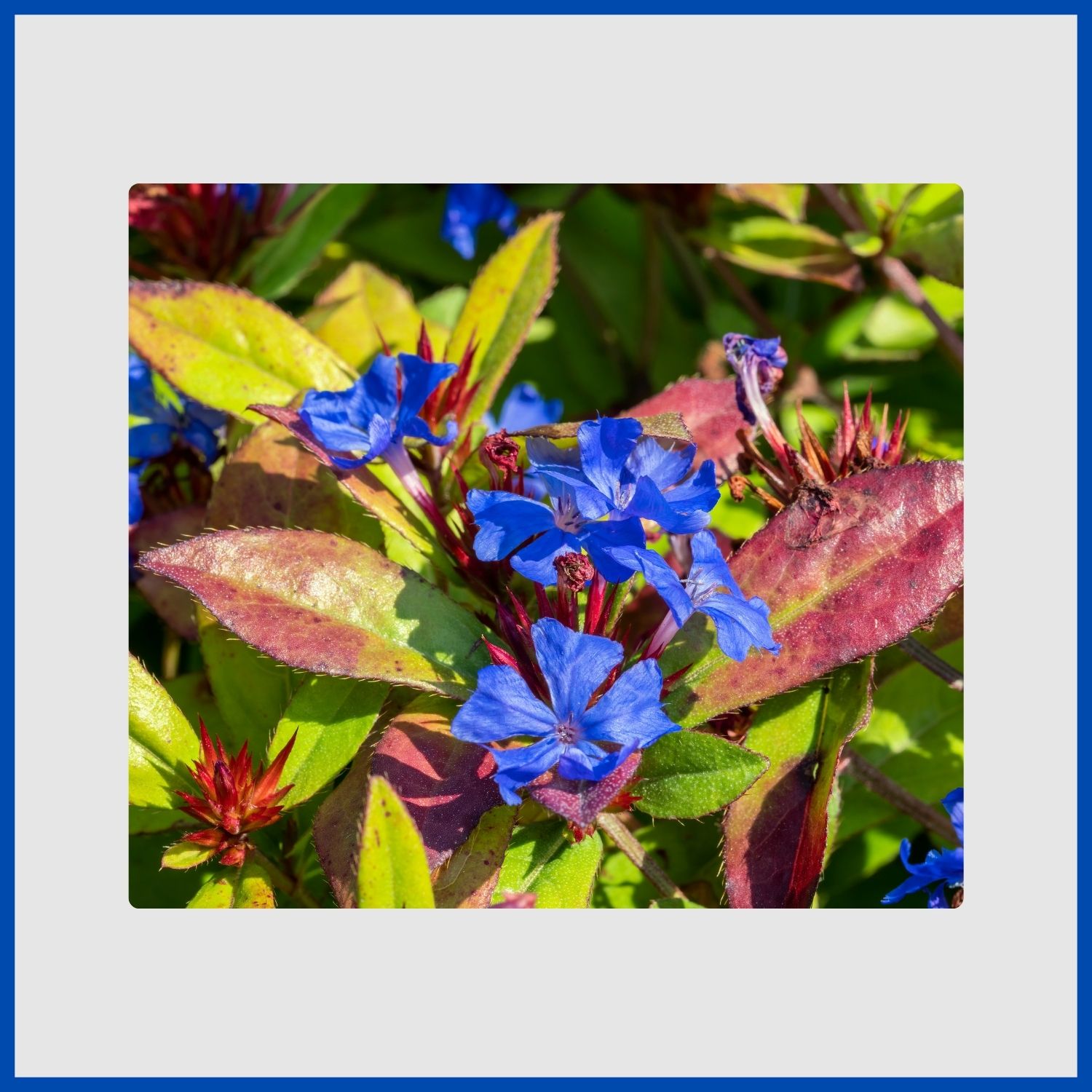
Blue leadwort spreads to form attractive ground covers with brilliant blue flowers and bronze-red fall foliage. This versatile perennial tolerates heat, drought, and poor soils while remaining deer-resistant and low-maintenance.
- USDA Hardiness Zone: 5-9
- Bloom Time: Late summer to fall
- Water Needs: Low to moderate
- Soil Type: Well-drained, average
- Sun Requirement: Full sun to partial shade
- Height: 6-12 inches
30. Blue Aster (Symphyotrichum spp.)
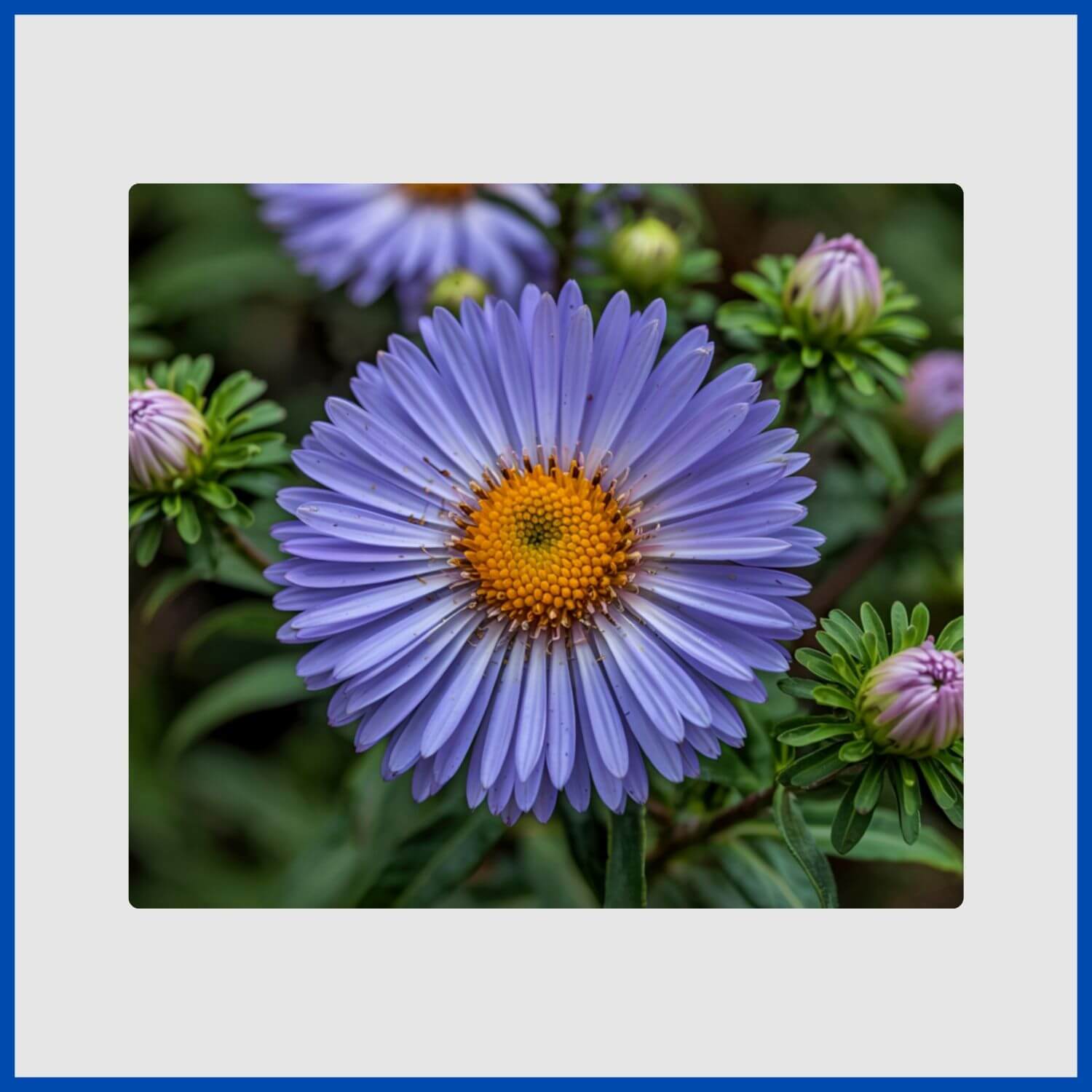
Blue asters provide essential late-season color with masses of daisy-like flowers that feed migrating butterflies. These native perennials resist deer and tolerate various soil conditions while naturalizing beautifully in meadow and prairie plantings.
- USDA Hardiness Zone: 3-8
- Bloom Time: Late summer to fall
- Water Needs: Moderate
- Soil Type: Well-drained, average
- Sun Requirement: Full sun to partial shade
- Height: 1-5 feet
31. Blue Passion Flower (Passiflora caerulea)
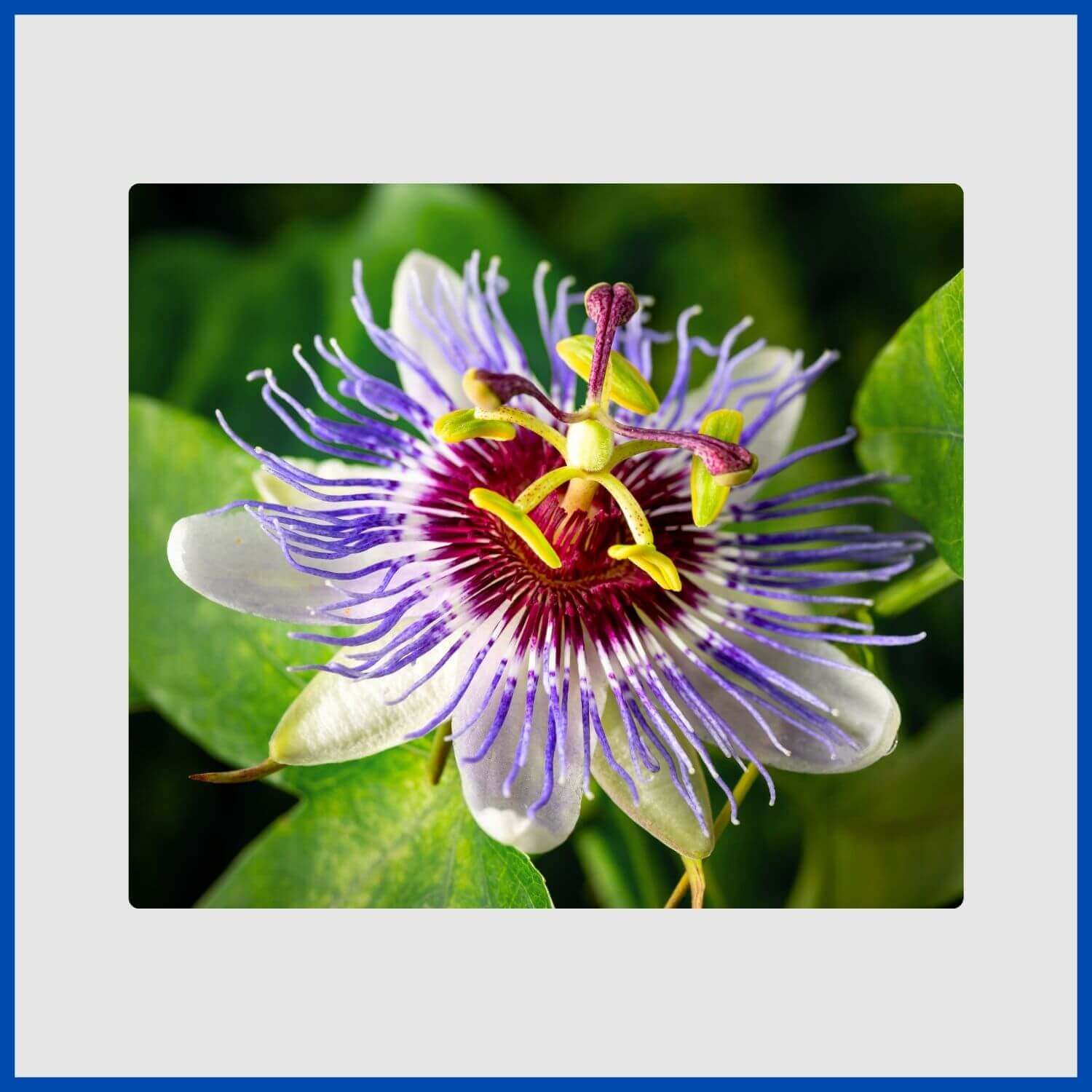
Blue passion flowers display intricate, otherworldly blooms with complex structures that captivate observers. These vigorous vines produce edible fruits in warm climates and attract butterflies while providing dramatic vertical interest.
- USDA Hardiness Zone: 7-11
- Bloom Time: Summer to fall
- Water Needs: Moderate
- Soil Type: Well-drained, fertile
- Sun Requirement: Full sun
- Height: 10-30 feet (vine)
32. Blue Periwinkle (Vinca minor)
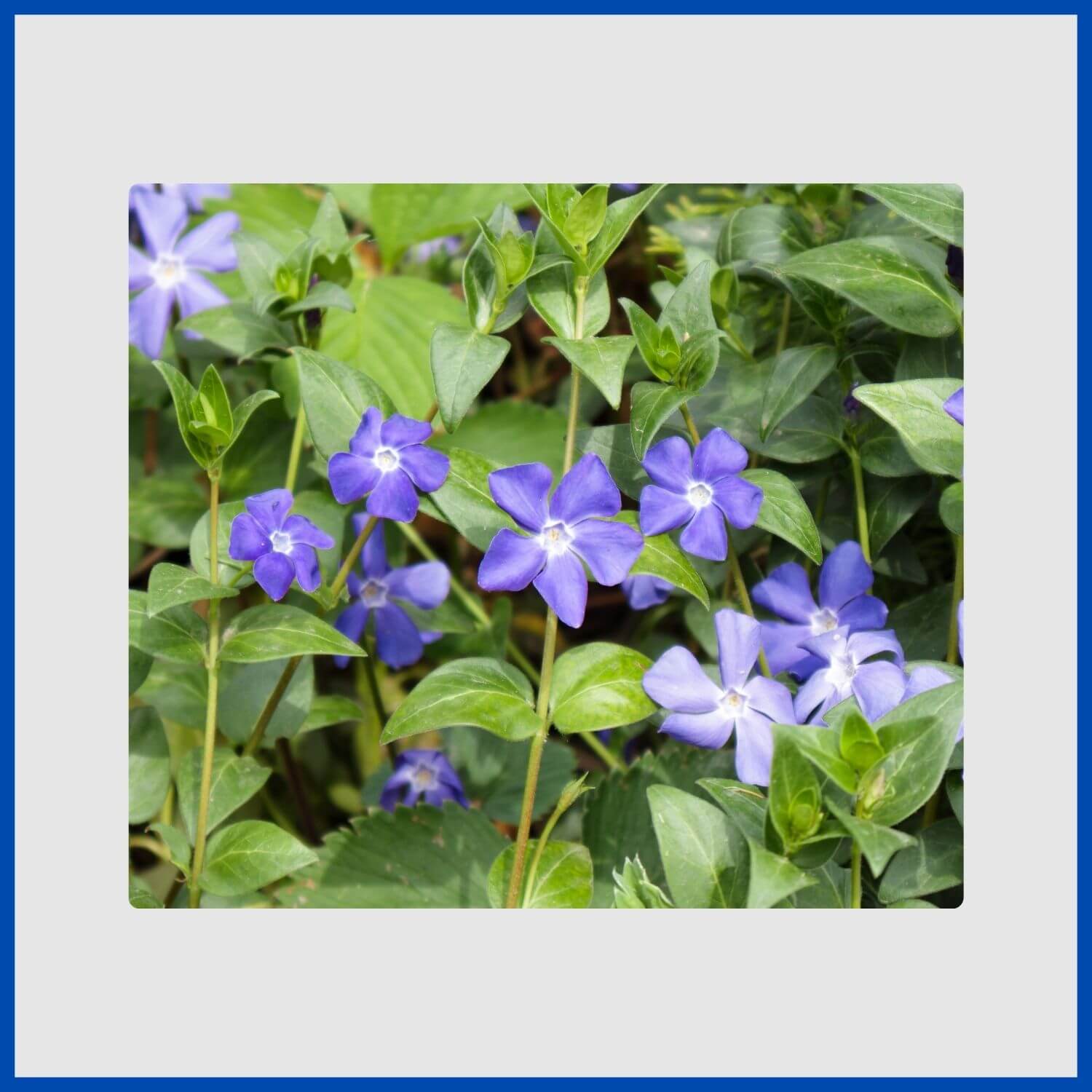
Blue periwinkle forms evergreen ground covers with glossy leaves and cheerful blue flowers. This shade-tolerant perennial controls erosion on slopes and spreads reliably to fill difficult areas where other plants struggle.
- USDA Hardiness Zone: 4-9
- Bloom Time: Spring with sporadic rebloom
- Water Needs: Low to moderate
- Soil Type: Well-drained, average
- Sun Requirement: Partial to full shade
- Height: 4-6 inches
33. Blue Sage (Salvia azurea)
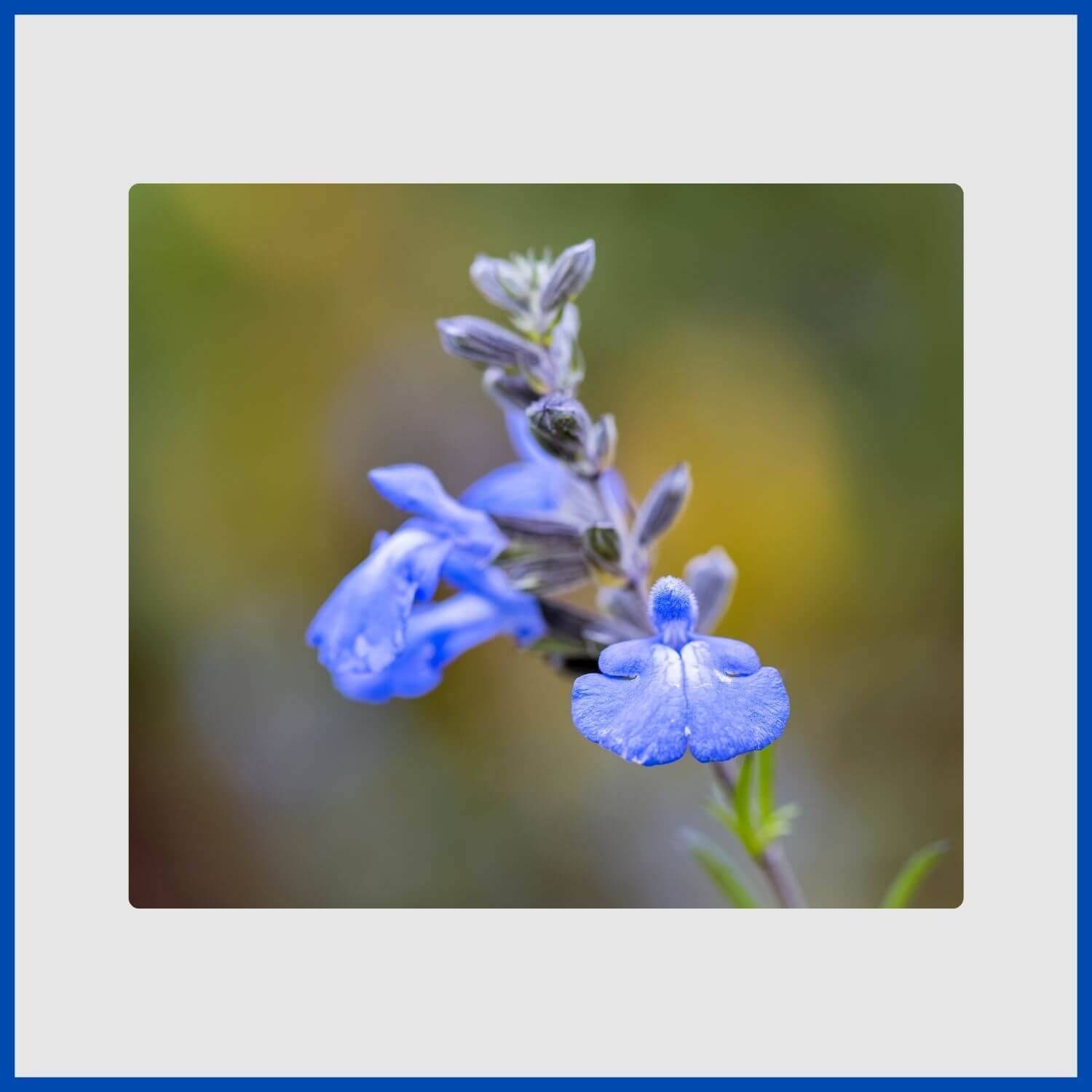
Blue sage produces airy spikes of clear blue flowers that attract hummingbirds and butterflies throughout fall. This native perennial tolerates heat, drought, and poor soils while providing vertical accents in naturalistic prairie gardens.
- USDA Hardiness Zone: 5-9
- Bloom Time: Late summer to fall
- Water Needs: Low
- Soil Type: Well-drained, sandy to loamy
- Sun Requirement: Full sun
- Height: 3-5 feet
34. Blue Globe Thistle (Echinops ritro)
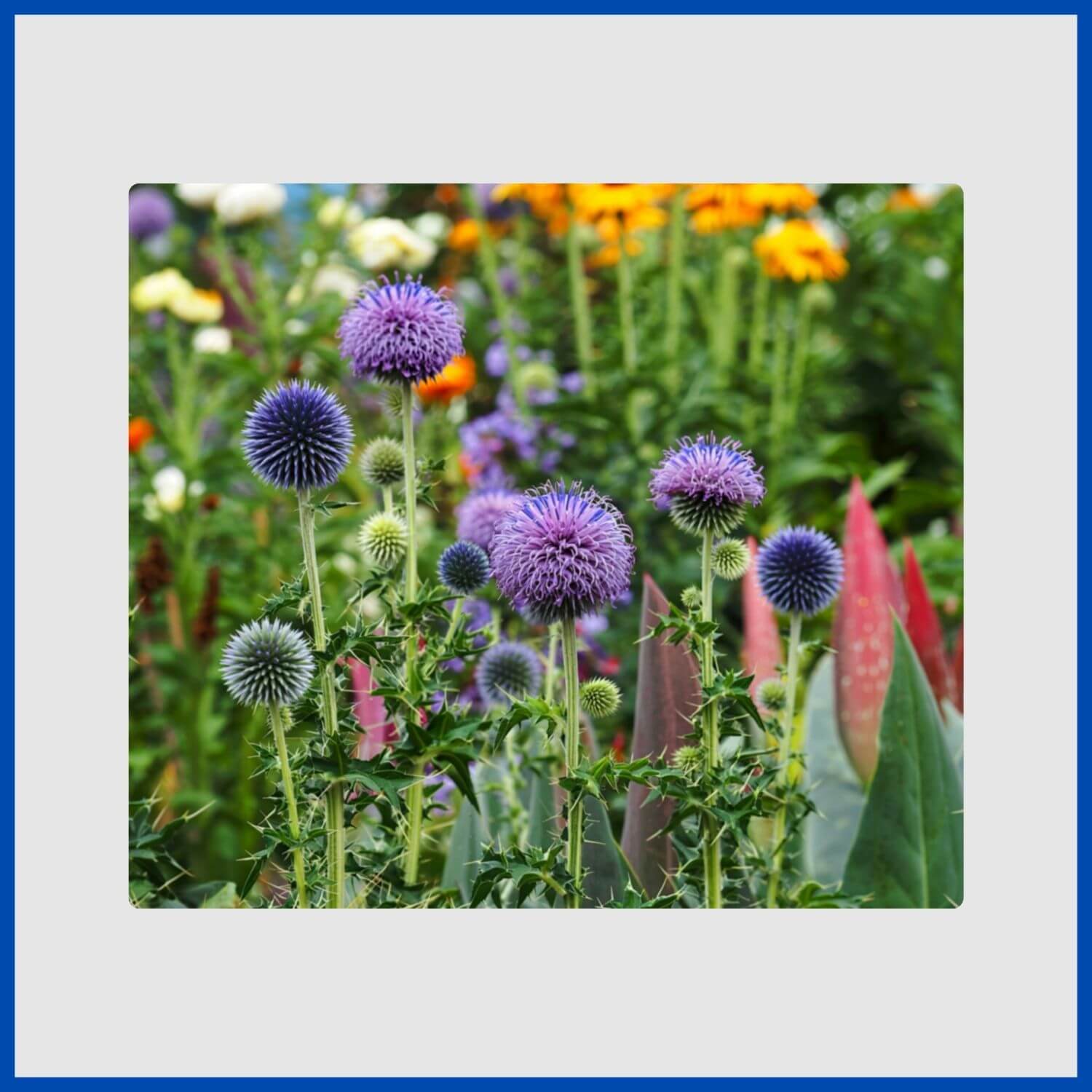
Blue globe thistle creates architectural interest with perfectly spherical, steel-blue flower heads on sturdy stems. These drought-tolerant perennials attract bees and butterflies while offering excellent dried flowers and resistance to deer and rabbits.
- USDA Hardiness Zone: 3-9
- Bloom Time: Summer
- Water Needs: Low to moderate
- Soil Type: Well-drained, average to poor
- Sun Requirement: Full sun
- Height: 2-4 feet
35. Blue Hibiscus (Hibiscus syriacus ‘Blue’)
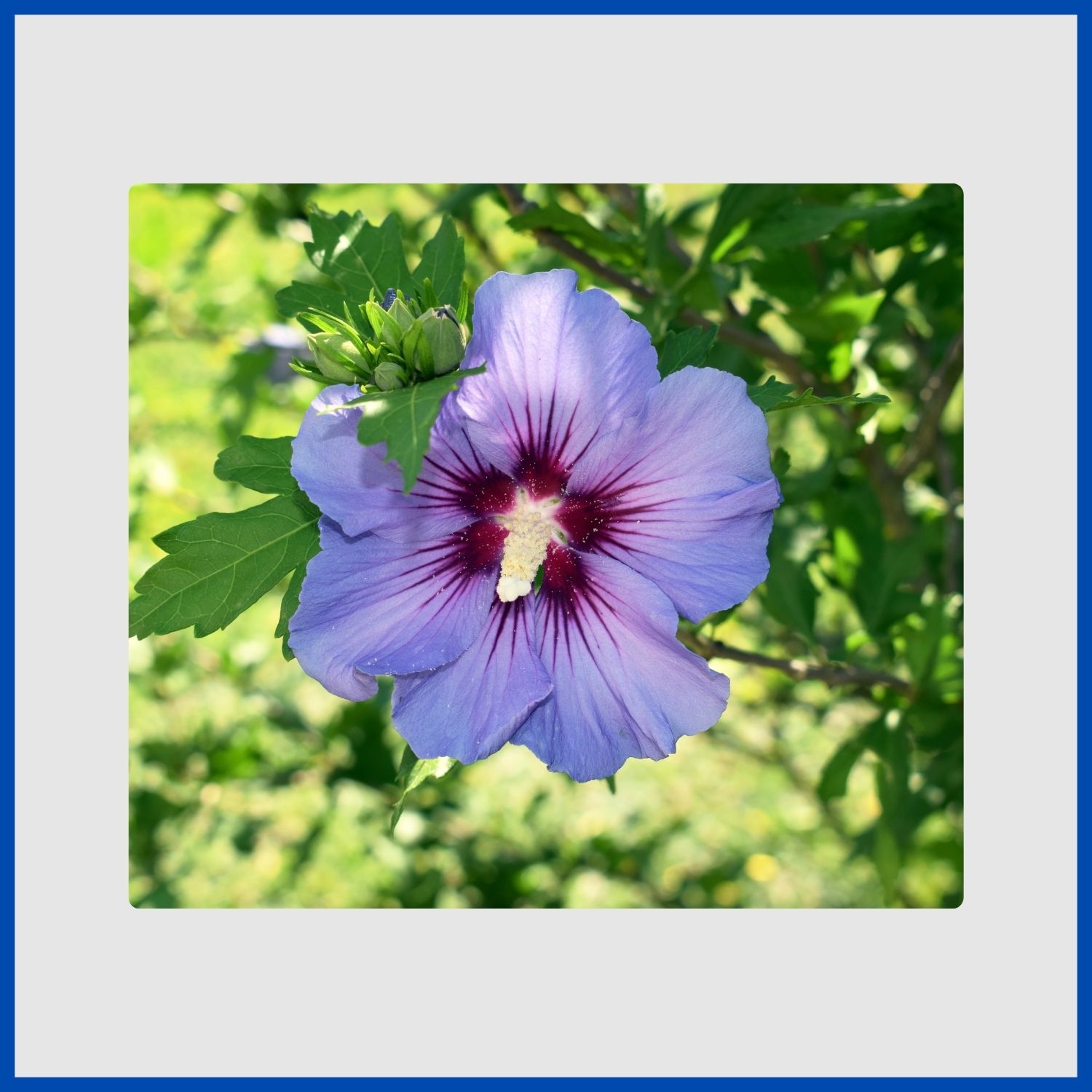
Blue hibiscus produces large, tropical-looking flowers that transform summer gardens into exotic retreats. These deciduous shrubs tolerate heat and humidity while providing reliable color and attracting hummingbirds and butterflies.
- USDA Hardiness Zone: 5-9
- Bloom Time: Summer to fall
- Water Needs: Moderate
- Soil Type: Well-drained, fertile
- Sun Requirement: Full sun
- Height: 8-12 feet
36. Blue Bugloss (Anchusa azurea)
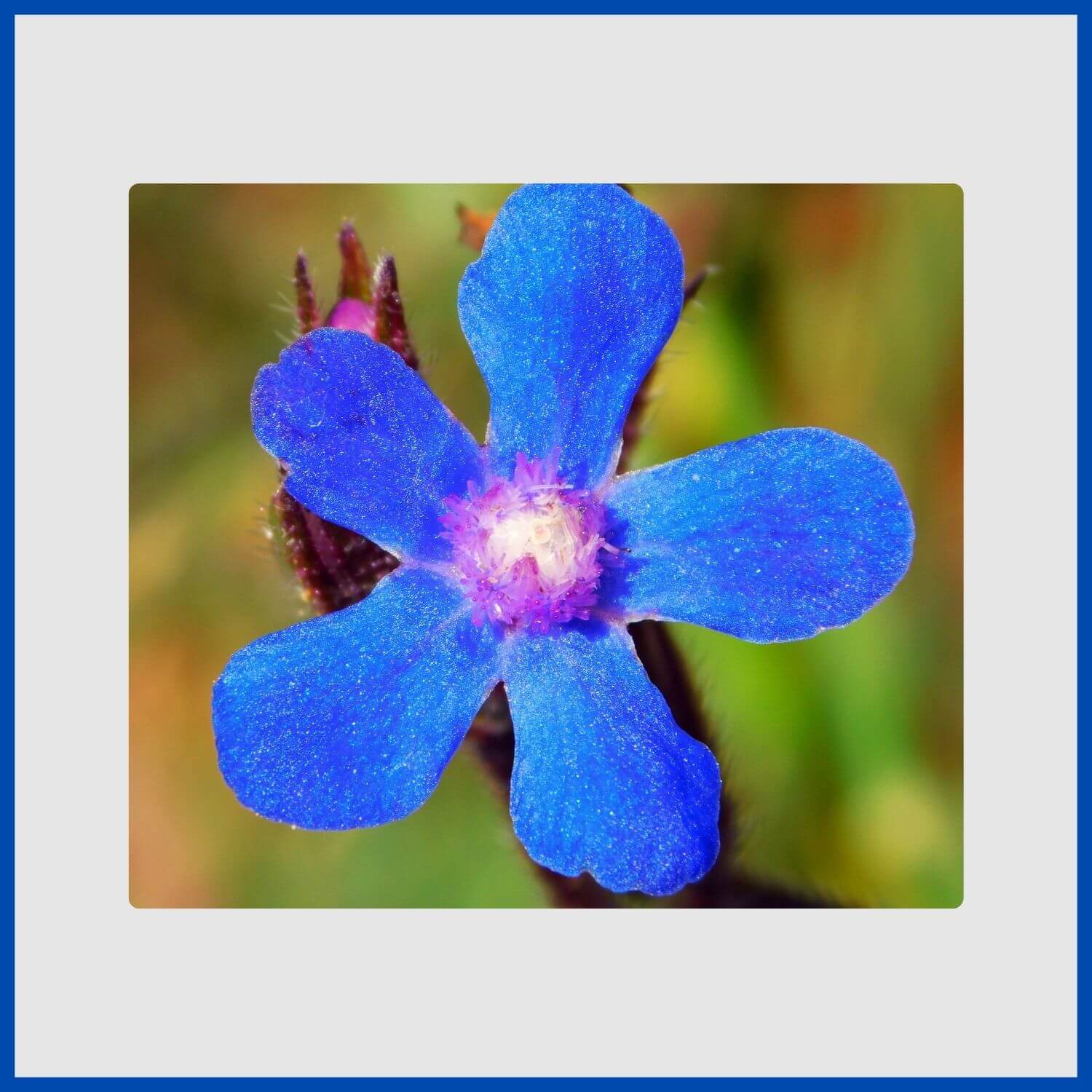
Blue bugloss displays intense gentian-blue flowers that rival any true blue bloom in the garden. This cottage garden perennial self-seeds readily and creates bold color statements while attracting bees and beneficial pollinators.
- USDA Hardiness Zone: 3-8
- Bloom Time: Late spring to summer
- Water Needs: Moderate
- Soil Type: Well-drained, average
- Sun Requirement: Full sun
- Height: 3-5 feet
37. Blue Gilia (Gilia capitata)
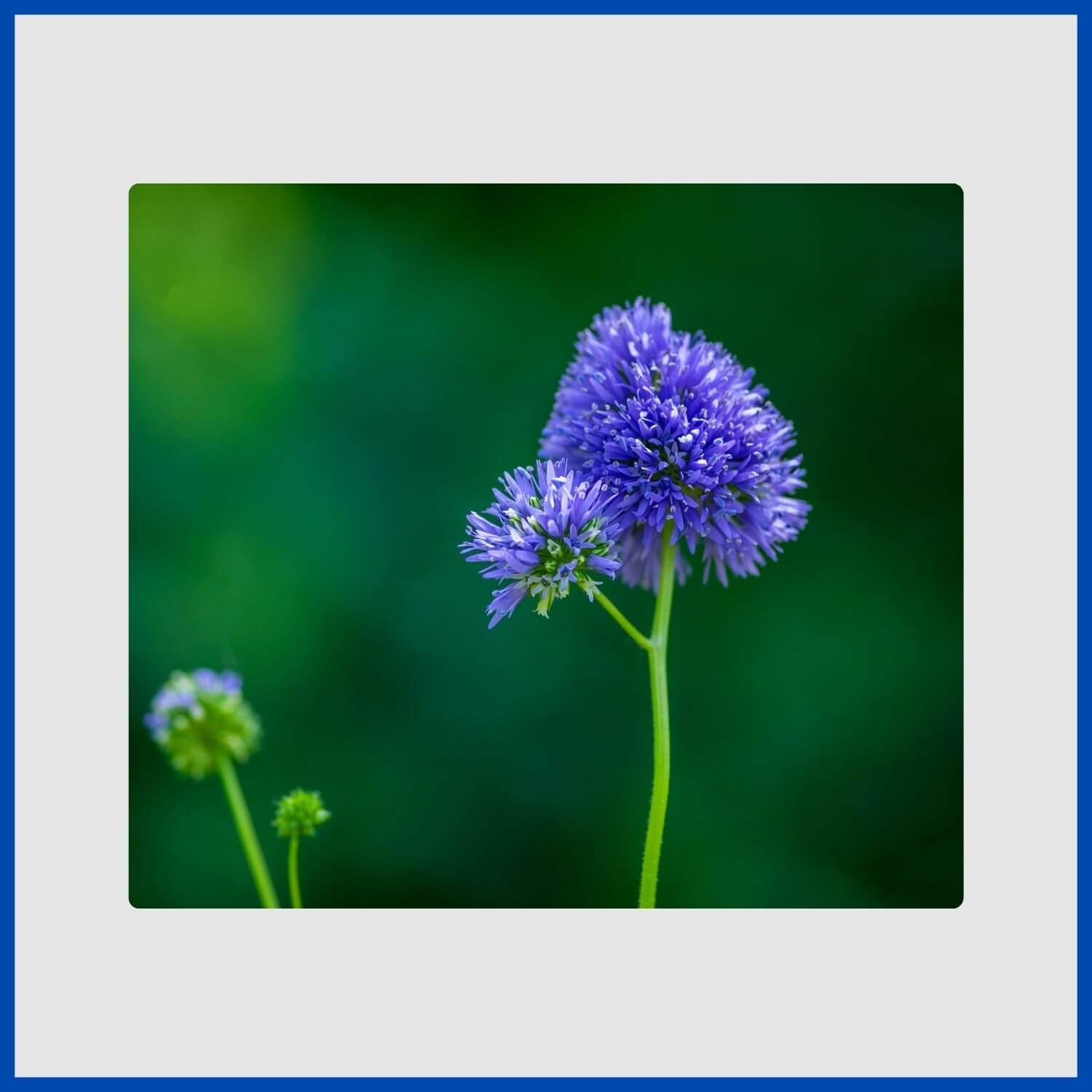
Blue gilia produces delicate pincushion flowers in soft blue shades atop slender stems. This California native annual naturalizes easily in wildflower meadows and provides essential nectar for native bees and butterflies.
- USDA Hardiness Zone: 2-10 (annual)
- Bloom Time: Spring to summer
- Water Needs: Low to moderate
- Soil Type: Well-drained, sandy
- Sun Requirement: Full sun
- Height: 1-2 feet
38. Blue Muscari (Muscari armeniacum)
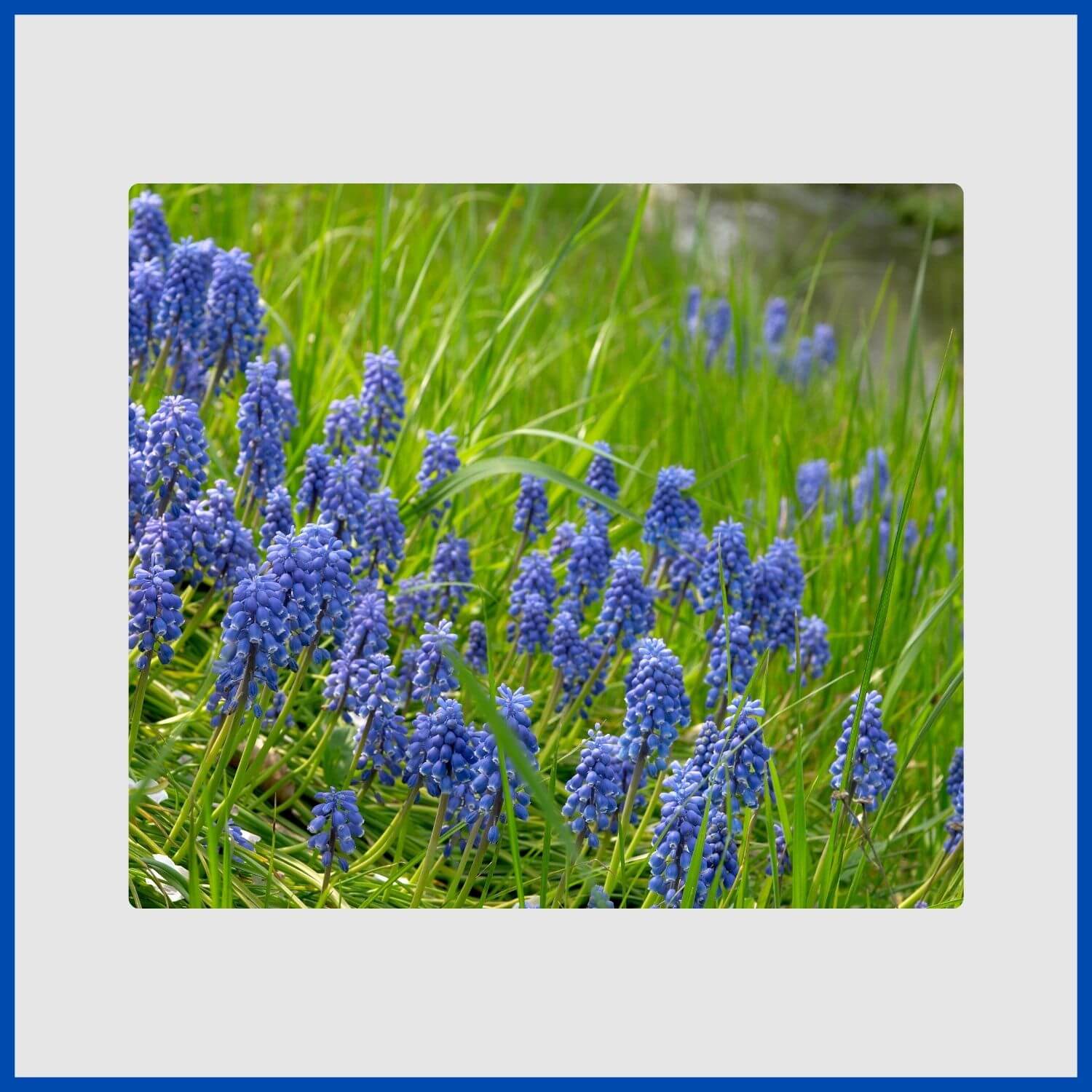
Blue muscari produces dense spikes of grape-like flowers that naturalize beautifully under trees and shrubs. These hardy spring bulbs require minimal care once established and multiply freely to create impressive drifts of vibrant blue.
- USDA Hardiness Zone: 4-8
- Bloom Time: Early to mid-spring
- Water Needs: Moderate
- Soil Type: Well-drained, average
- Sun Requirement: Full sun to partial shade
- Height: 6-8 inches
39. Blue Sea Holly (Eryngium planum)
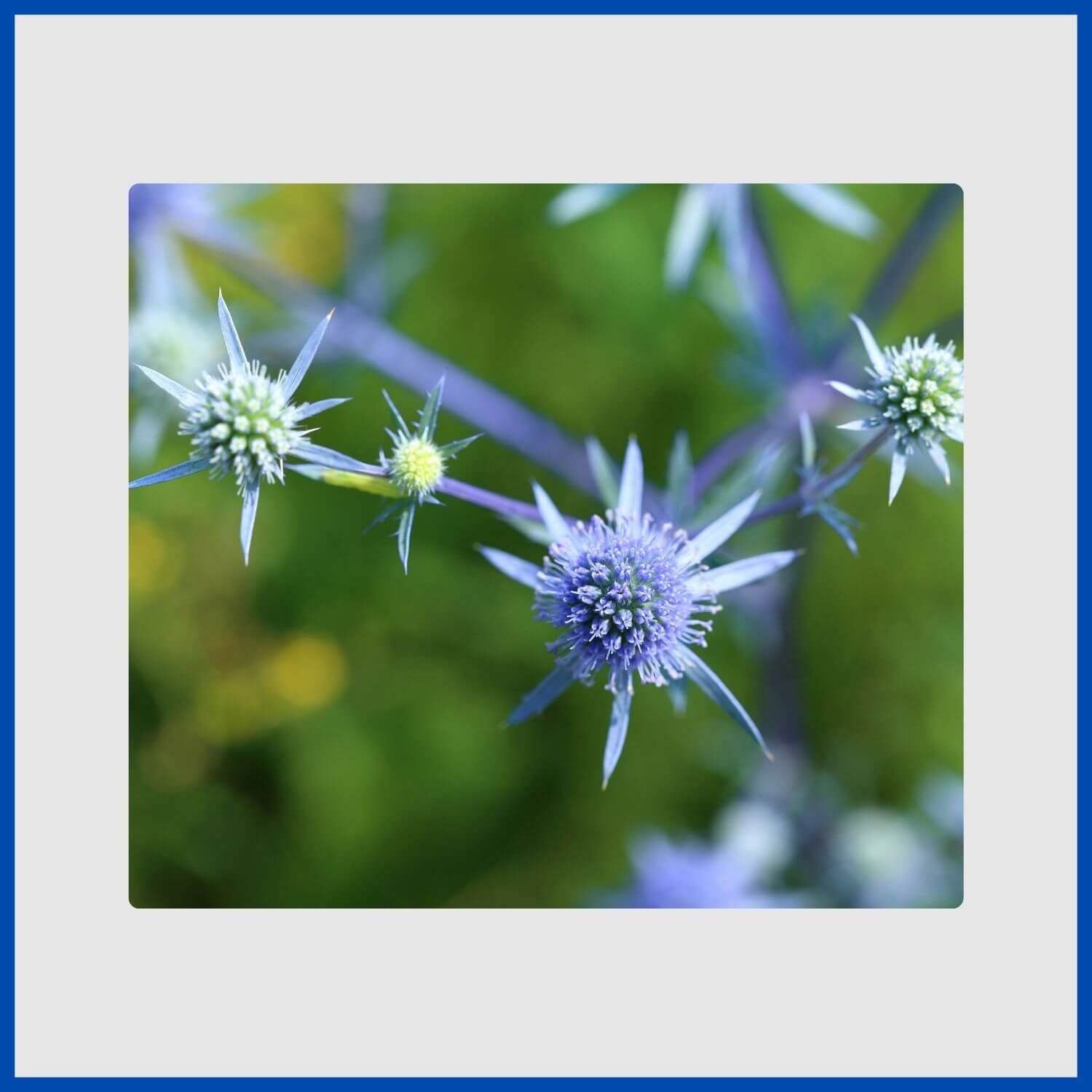
Blue sea holly displays striking metallic-blue flowers with spiky bracts that shimmer in sunlight. These architectural perennials tolerate drought and poor soils while providing unique texture and exceptional dried flowers for arrangements.
- USDA Hardiness Zone: 4-9
- Bloom Time: Summer
- Water Needs: Low
- Soil Type: Well-drained, sandy to average
- Sun Requirement: Full sun
- Height: 2-3 feet
40. Blue Ceratostigma (Ceratostigma willmottianum)
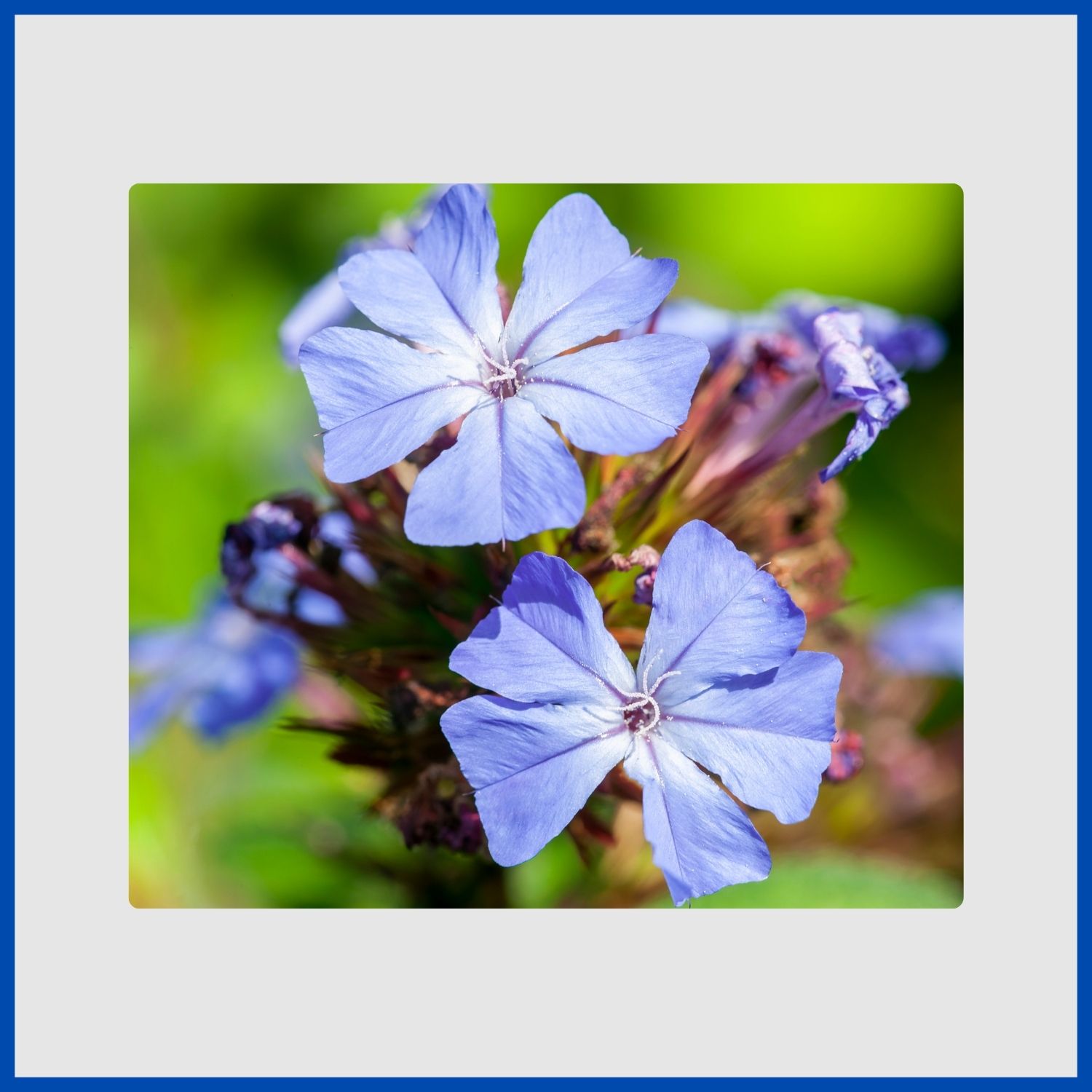
Blue ceratostigma is a compact, deciduous subshrub that provides a burst of brilliant, true-blue flowers late in the season when many other plants are fading. Its foliage turns a striking bronze-red in the fall, offering dual seasonal interest and excellent groundcover. This tough plant is known for its tolerance to heat and drought once established.
- USDA Hardiness Zone: 6-9
- Bloom Time: Late summer to fall
- Water Needs: Low to moderate
- Soil Type: Well-drained, average
- Sun Requirement: Full sun to partial shade
- Height: 2-3 feet
41. Blue Spiderwort (Tradescantia virginiana)
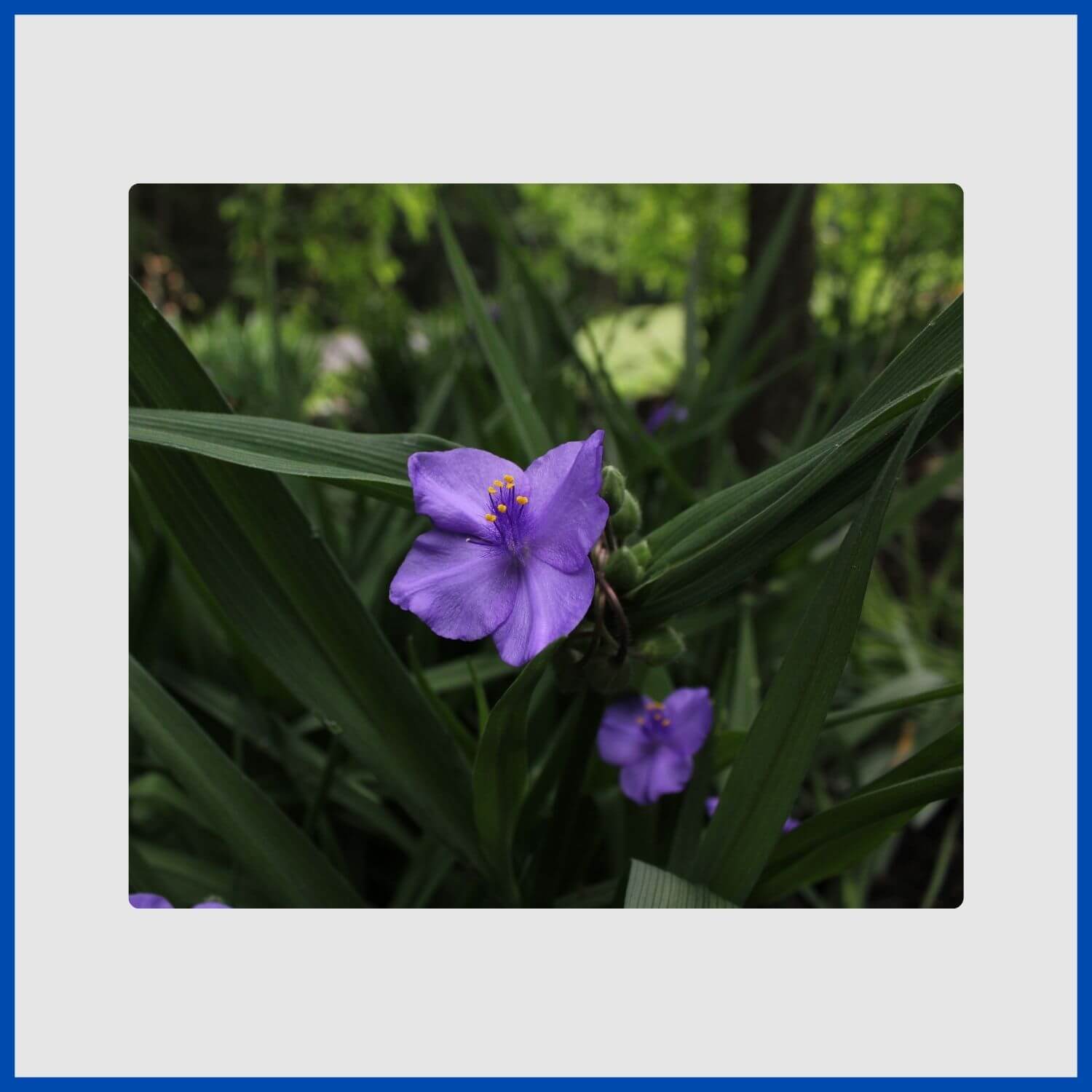
Blue spiderwort produces three-petaled flowers that open each morning above grass-like foliage. This native perennial thrives in moist areas and tolerates various soil conditions while providing continuous blooms throughout summer.
- USDA Hardiness Zone: 4-9
- Bloom Time: Late spring to summer
- Water Needs: Moderate to high
- Soil Type: Moist, well-drained
- Sun Requirement: Partial shade to full sun
- Height: 1-2 feet
42. Blue Browallia (Browallia speciosa)
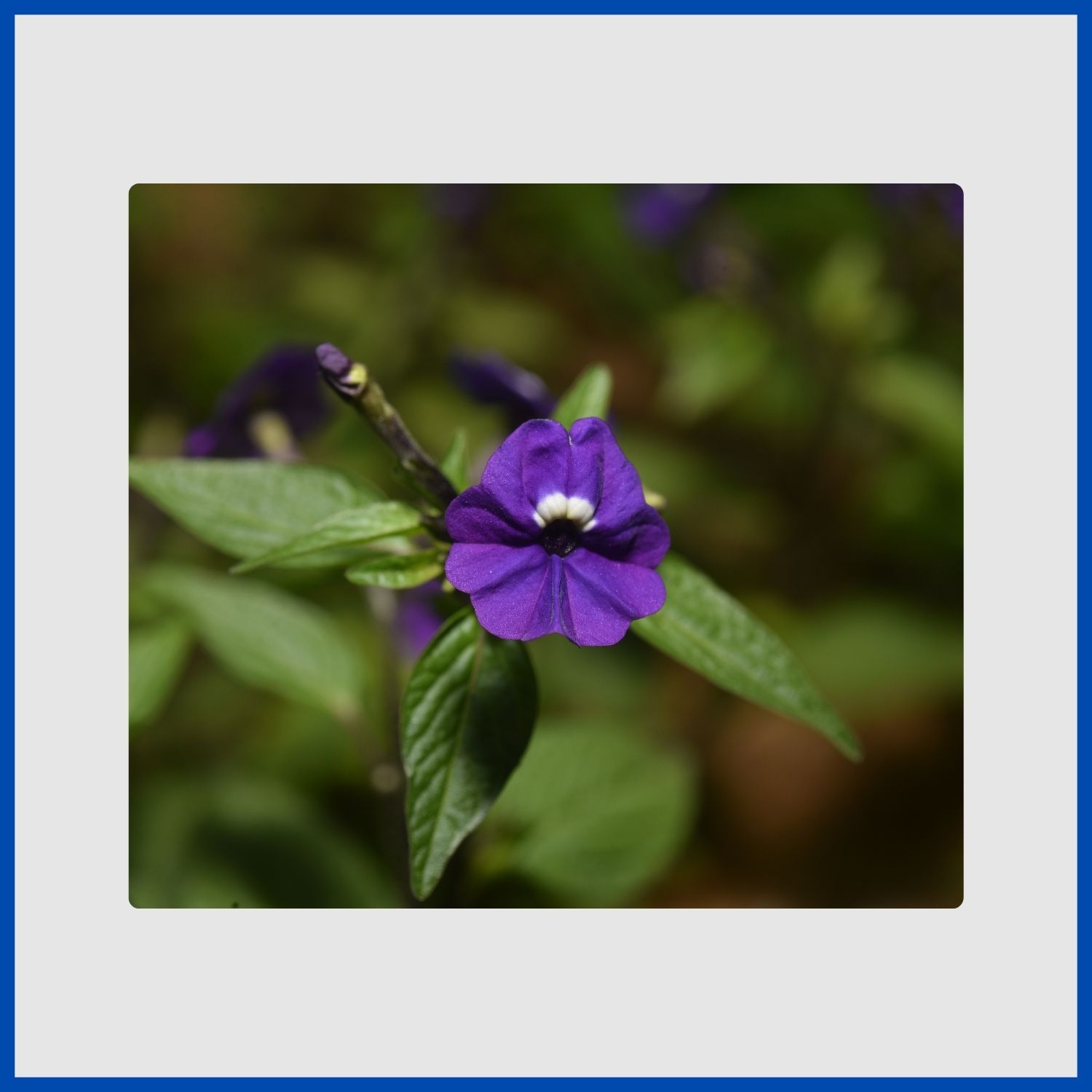
Blue browallia creates cascading displays of tubular flowers perfect for shaded containers and hanging baskets. This tender perennial blooms prolifically in cool conditions and thrives where other annuals struggle to flower.
- USDA Hardiness Zone: 10-11 (annual elsewhere)
- Bloom Time: Spring to fall
- Water Needs: Moderate
- Soil Type: Rich, well-drained
- Sun Requirement: Partial to full shade
- Height: 12-18 inches
43. Blue Gentian (Gentiana spp.)
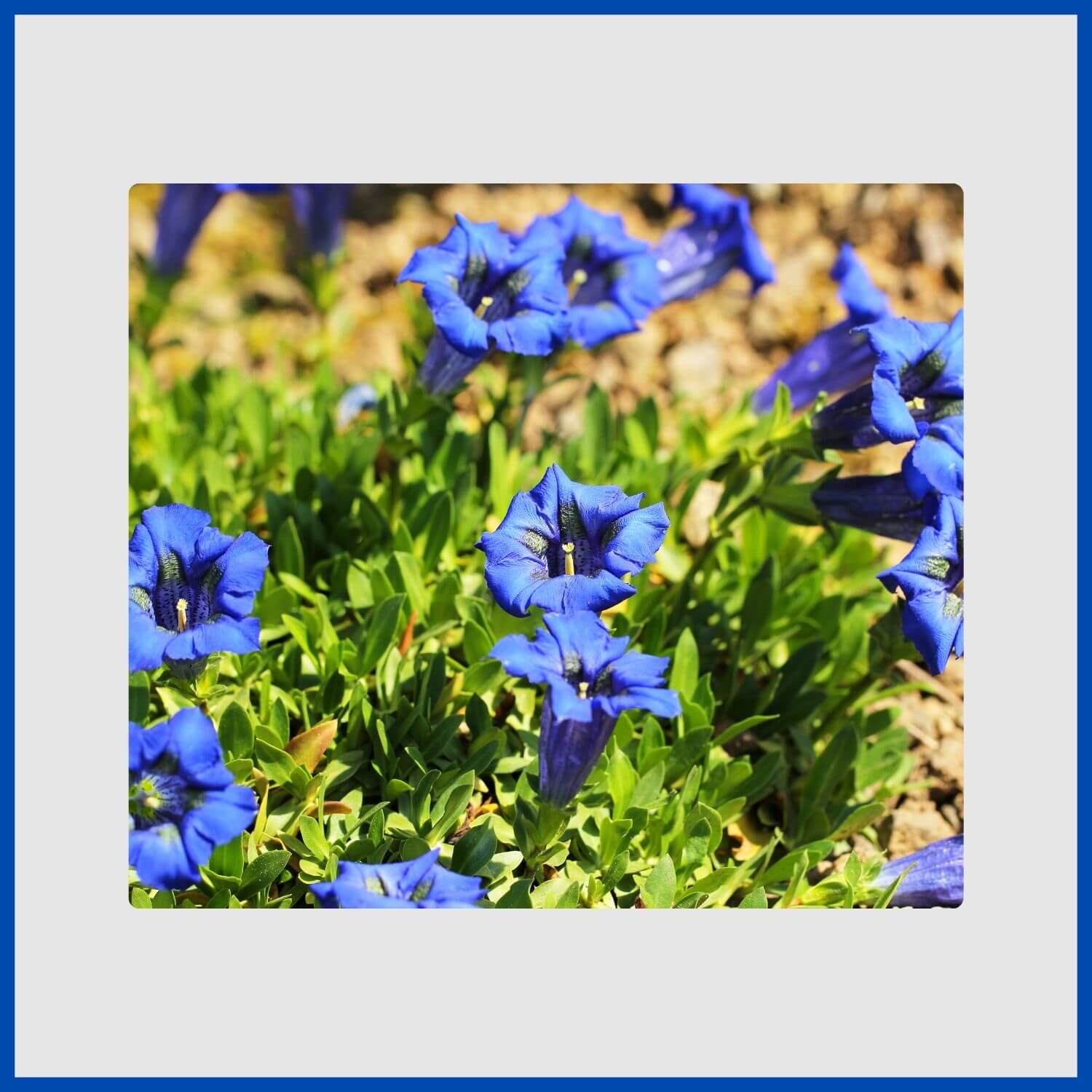
Blue gentians produce intensely colored trumpet-shaped flowers that symbolize alpine beauty. These challenging perennials require specific growing conditions with cool temperatures and excellent drainage to produce their legendary deep blue blooms.
- USDA Hardiness Zone: 3-7
- Bloom Time: Late summer to fall
- Water Needs: Moderate
- Soil Type: Well-drained, acidic, humus-rich
- Sun Requirement: Full sun to partial shade
- Height: 6-24 inches
44. Blue Caryopteris (Caryopteris × clandonensis)
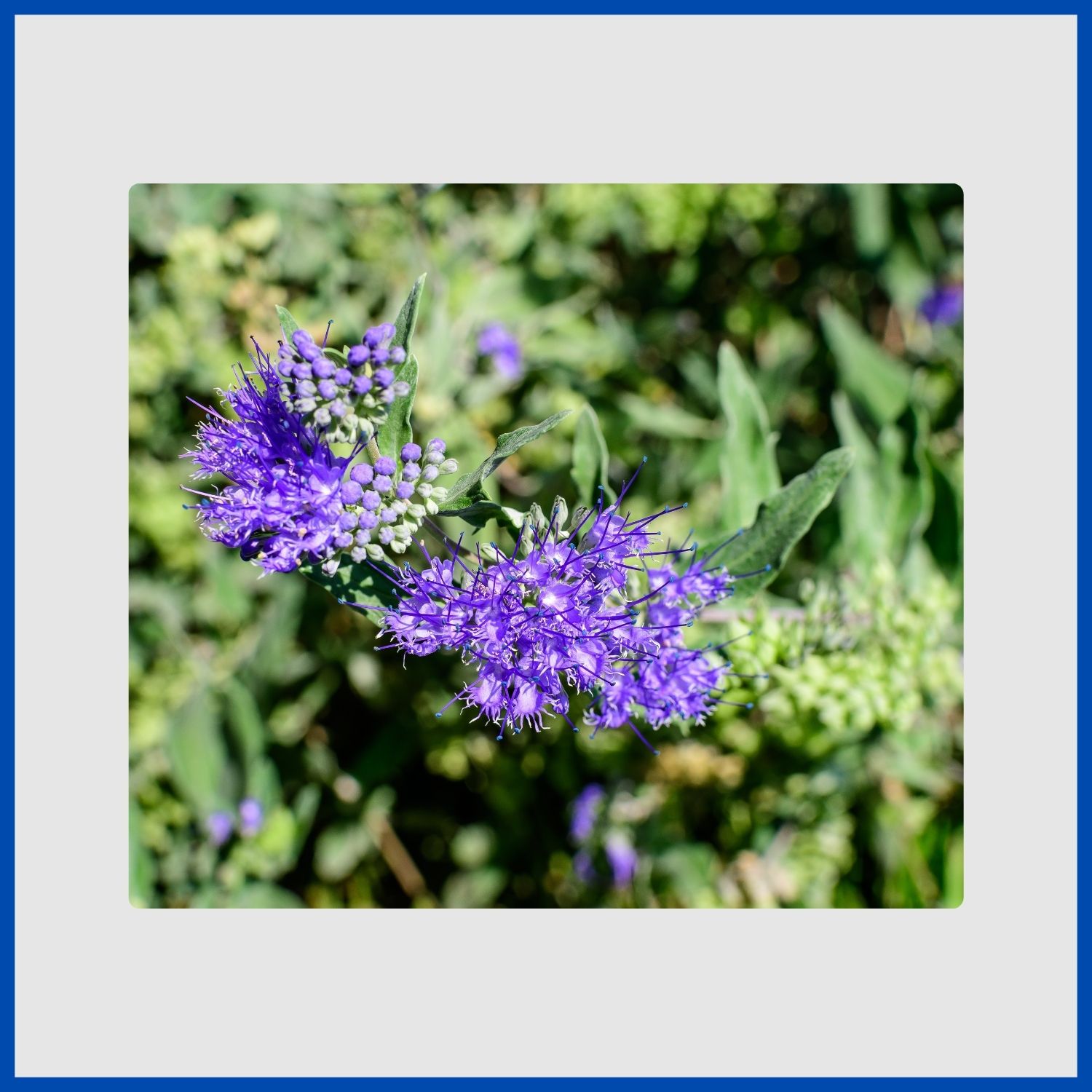
Blue caryopteris produces fuzzy clusters of blue flowers that attract butterflies and bees in late summer. This compact shrub tolerates heat and drought while providing aromatic foliage and reliable blooms when other plants fade.
- USDA Hardiness Zone: 5-9
- Bloom Time: Late summer to fall
- Water Needs: Low to moderate
- Soil Type: Well-drained, average
- Sun Requirement: Full sun
- Height: 2-3 feet
45. Blue Thunbergia (Thunbergia battiscombei)
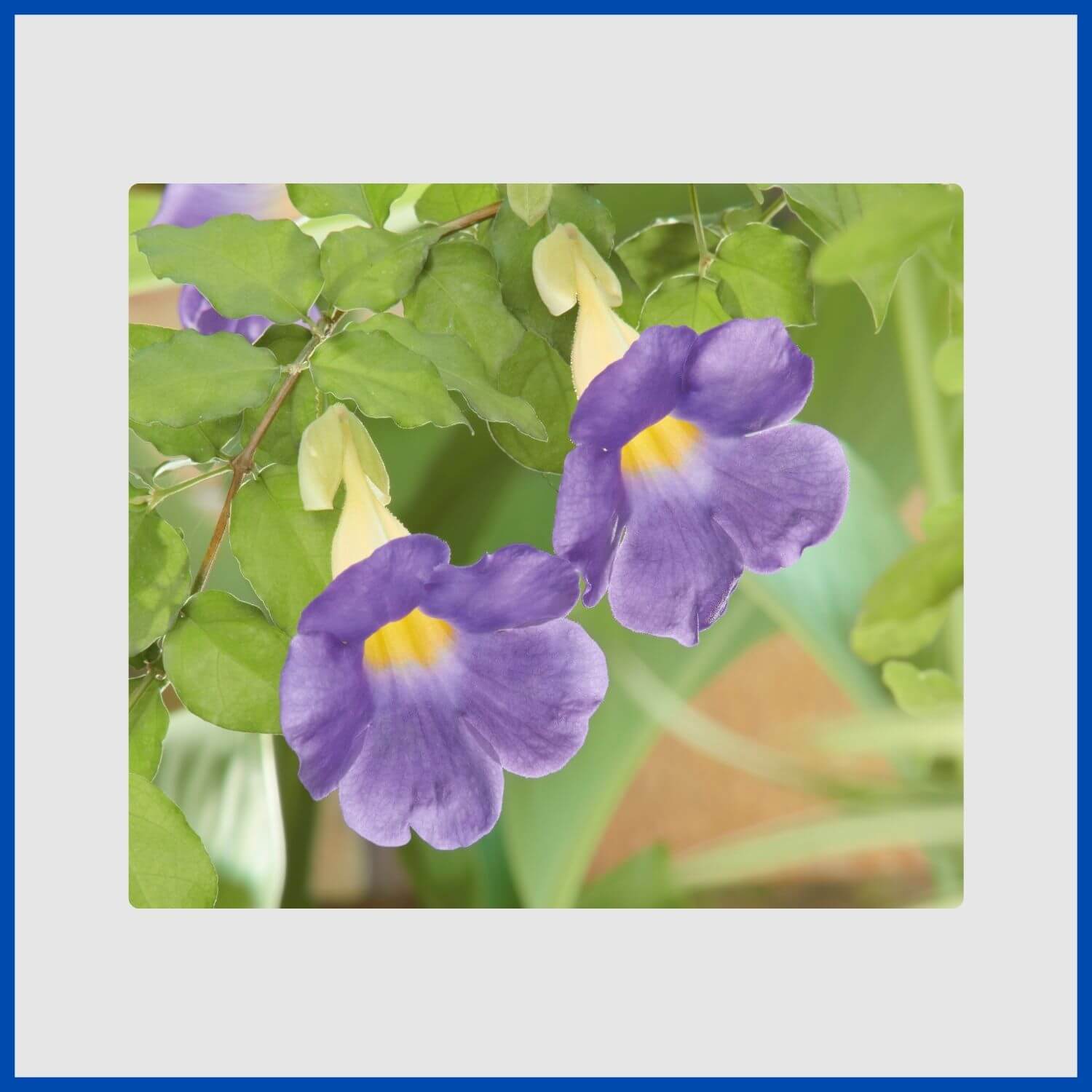
Blue thunbergia creates stunning displays with large, velvety blue flowers throughout warm weather. This tender perennial vine grows quickly to cover trellises and arbors while providing tropical appeal in temperate gardens.
- USDA Hardiness Zone: 9-11
- Bloom Time: Summer to fall
- Water Needs: Moderate to high
- Soil Type: Rich, well-drained
- Sun Requirement: Full sun to partial shade
- Height: 6-8 feet (vine)
46. Blue Plumbago (Plumbago auriculata)
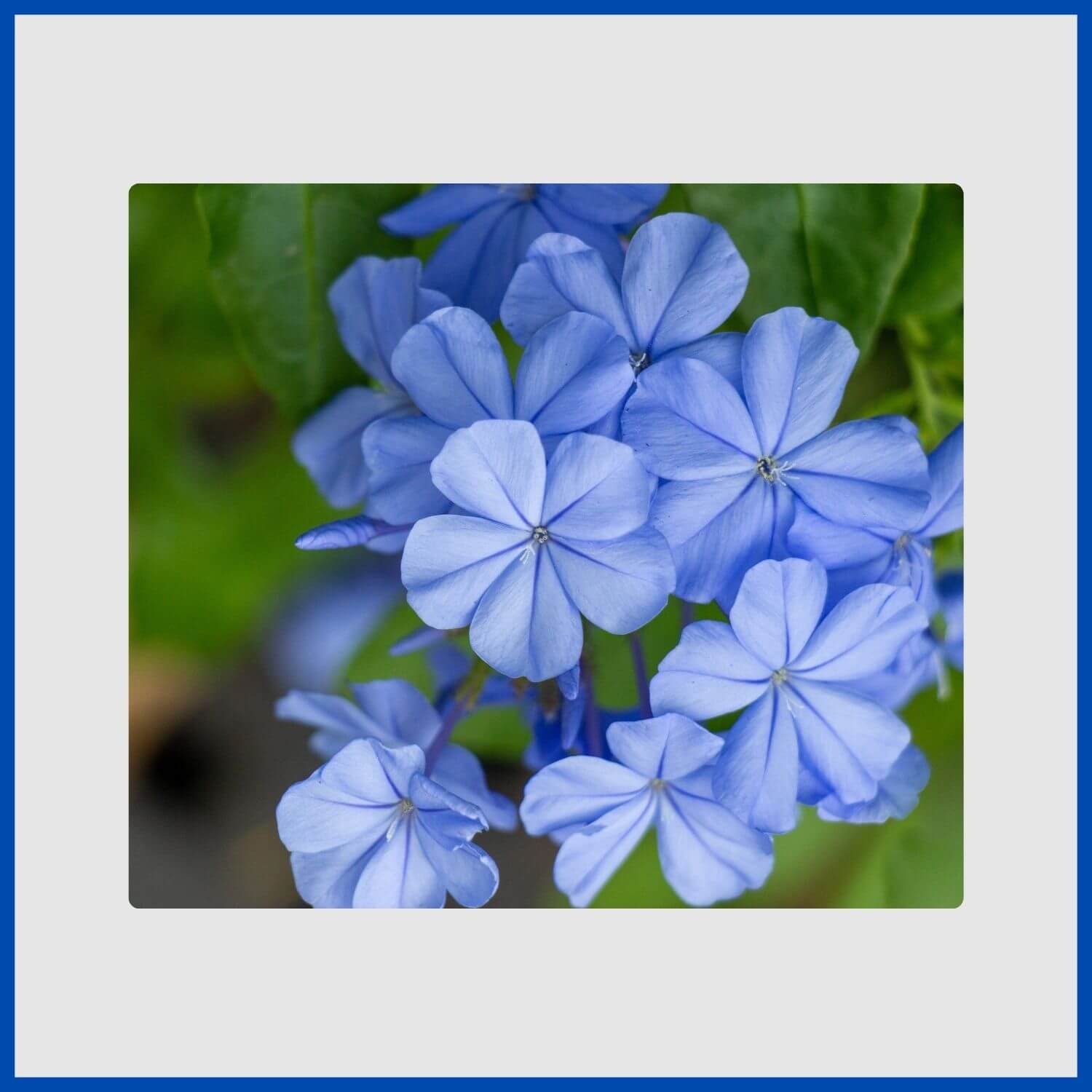
Blue plumbago produces masses of delicate sky-blue flowers that bloom continuously in warm climates. This evergreen shrub tolerates heat and salt spray while providing reliable color in containers, borders, and as ground covers.
- USDA Hardiness Zone: 8-11
- Bloom Time: Spring to fall
- Water Needs: Moderate
- Soil Type: Well-drained, average
- Sun Requirement: Full sun to partial shade
- Height: 3-6 feet
47. Blue Catmint (Nepeta × faassenii)
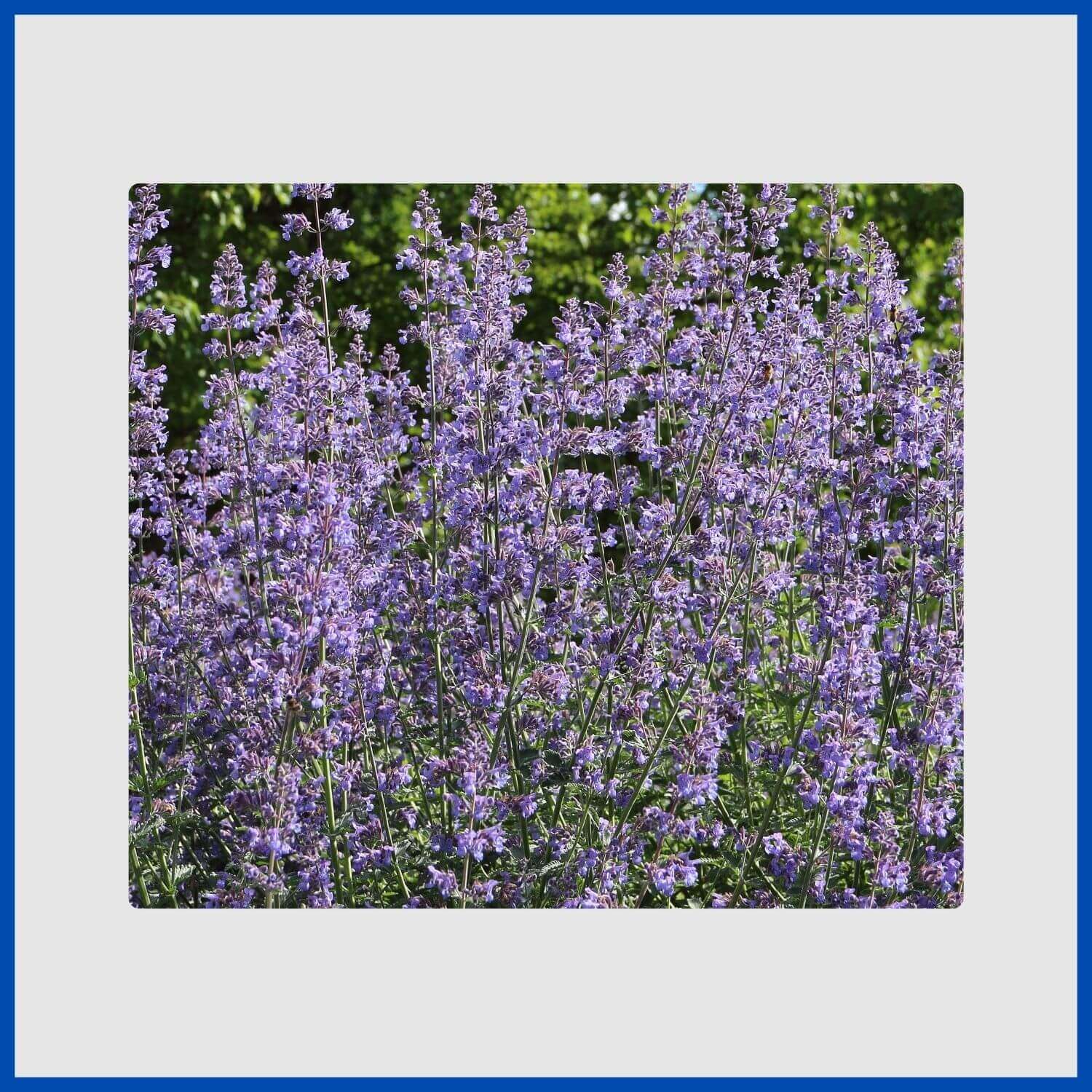
Blue catmint creates billowing mounds of aromatic foliage topped with lavender-blue flower spikes. This drought-tolerant perennial resists deer and rabbits while attracting pollinators and providing excellent edging along pathways.
- USDA Hardiness Zone: 3-8
- Bloom Time: Late spring to fall
- Water Needs: Low to moderate
- Soil Type: Well-drained, average
- Sun Requirement: Full sun
- Height: 1-2 feet
48. Blue Bellflower (Campanula carpatica)
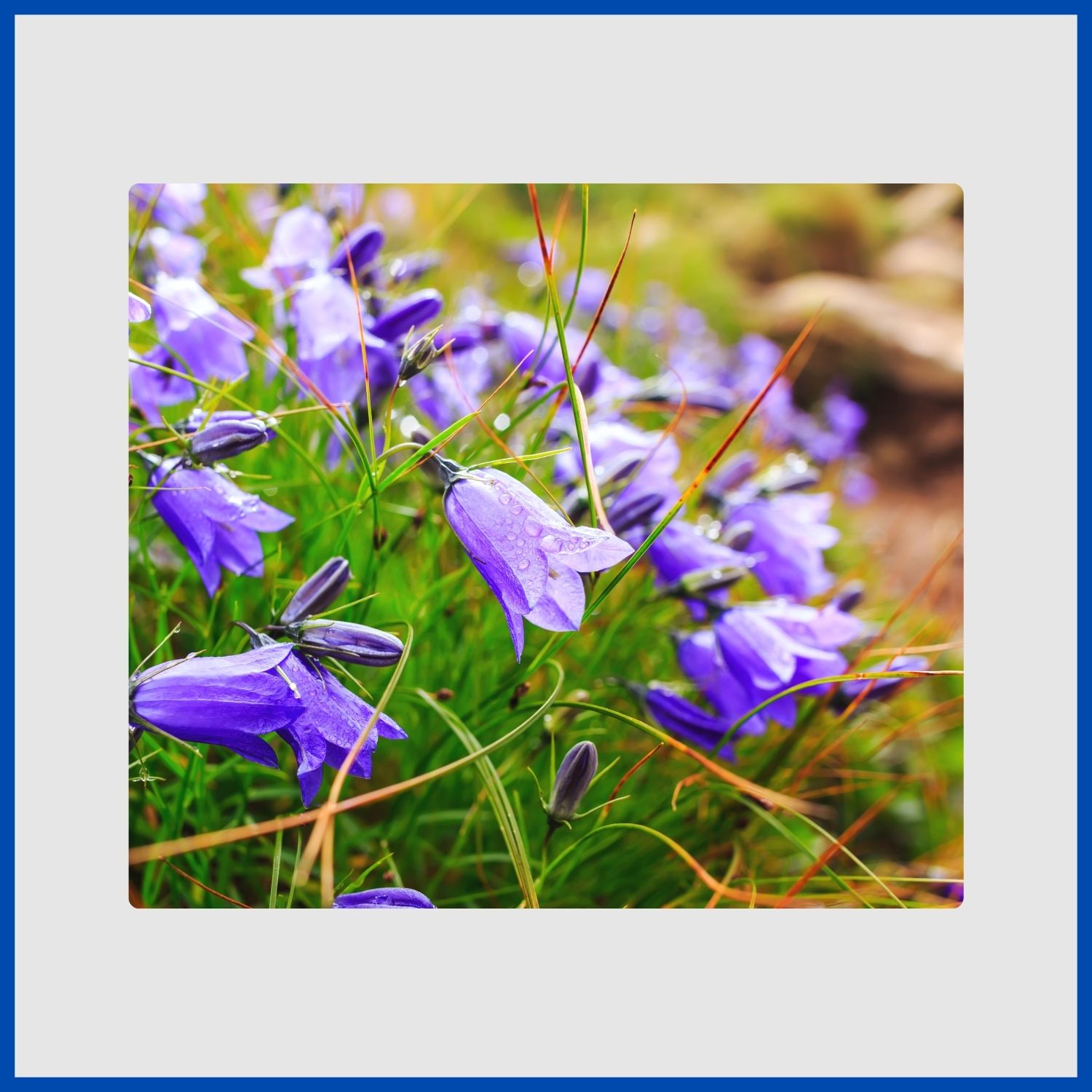
Blue bellflowers produce charming cup-shaped blooms that nod gracefully above compact foliage. These versatile perennials thrive in rock gardens and borders while providing continuous color and attracting butterflies throughout summer.
- USDA Hardiness Zone: 3-8
- Bloom Time: Summer
- Water Needs: Moderate
- Soil Type: Well-drained, average
- Sun Requirement: Full sun to partial shade
- Height: 6-12 inches
49. Blue Jacaranda (Jacaranda mimosifolia)
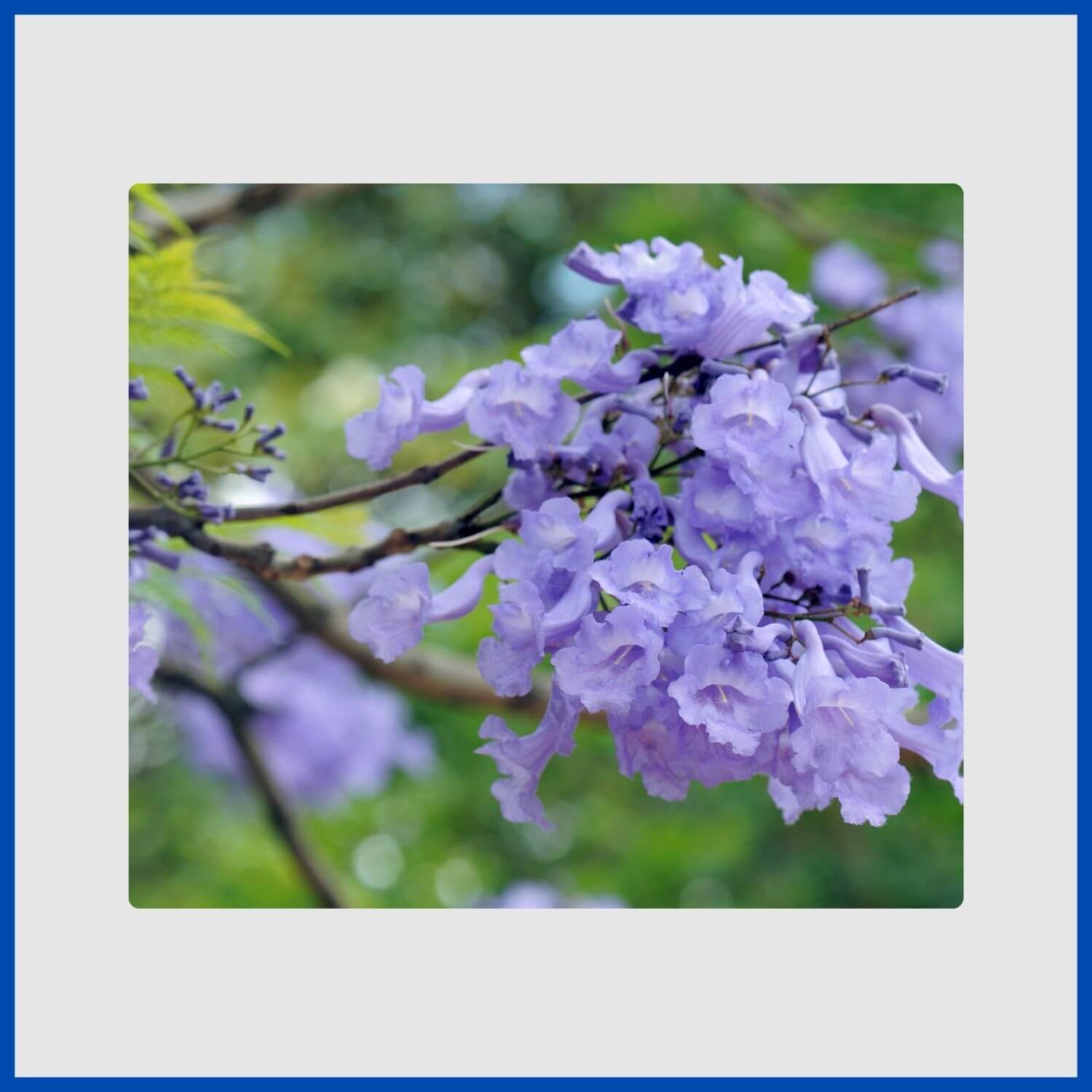
Blue jacaranda creates breathtaking canopies of tubular blue-violet flowers that transform landscapes. This tropical tree produces spectacular spring displays in frost-free climates and provides filtered shade beneath delicate fernlike foliage.
- USDA Hardiness Zone: 9-11
- Bloom Time: Spring to early summer
- Water Needs: Moderate
- Soil Type: Well-drained, sandy to loamy
- Sun Requirement: Full sun
- Height: 25-40 feet
50. Blue Evolvulus (Evolvulus glomeratus)
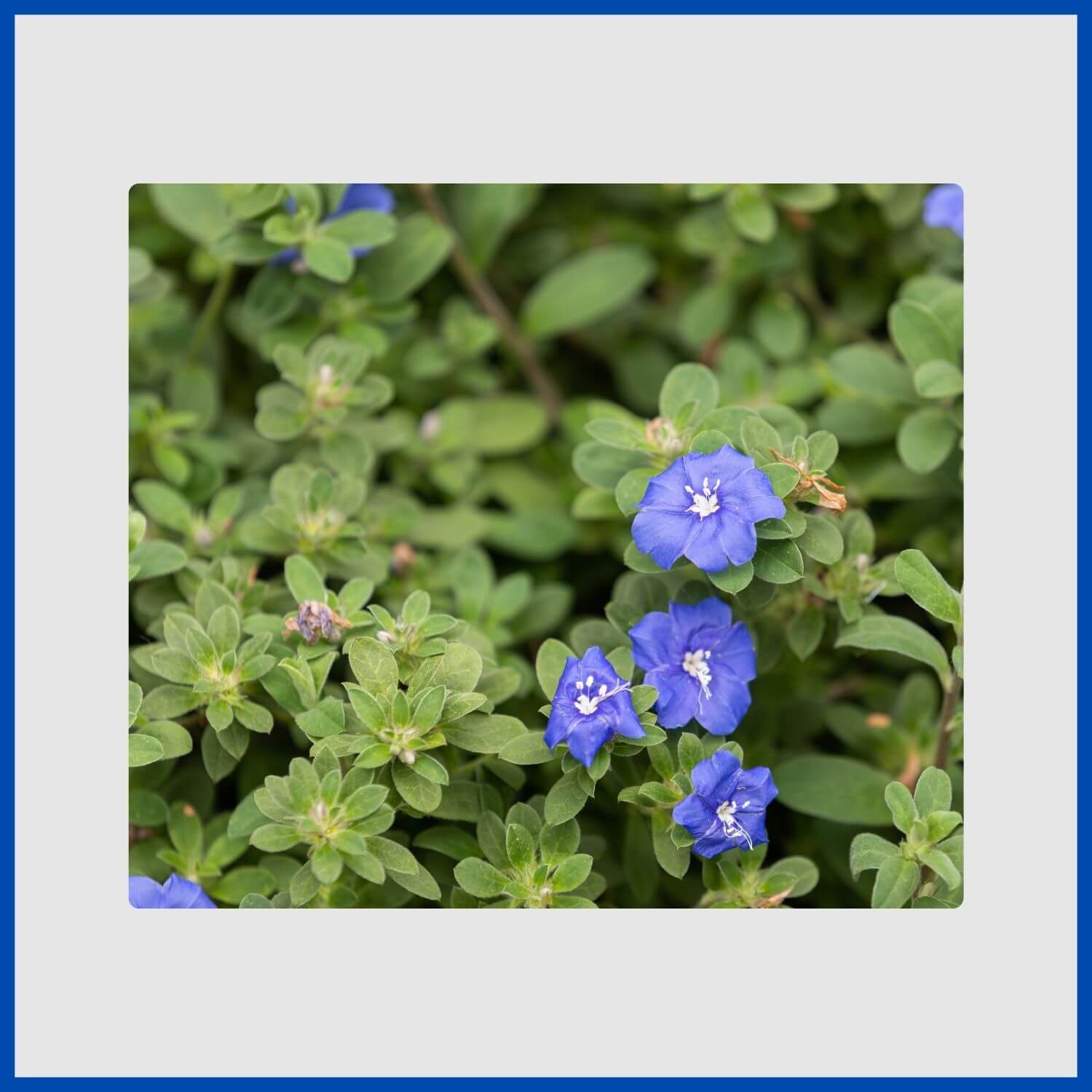
Blue evolvulus produces masses of small, brilliant blue flowers that open each morning. This tender perennial excels in containers and hanging baskets while tolerating heat and drought once established.
- USDA Hardiness Zone: 8-11 (annual elsewhere)
- Bloom Time: Spring to fall
- Water Needs: Low to moderate
- Soil Type: Well-drained, average
- Sun Requirement: Full sun
- Height: 6-12 inches
51. Blue Ageratum (Ageratum houstonianum)
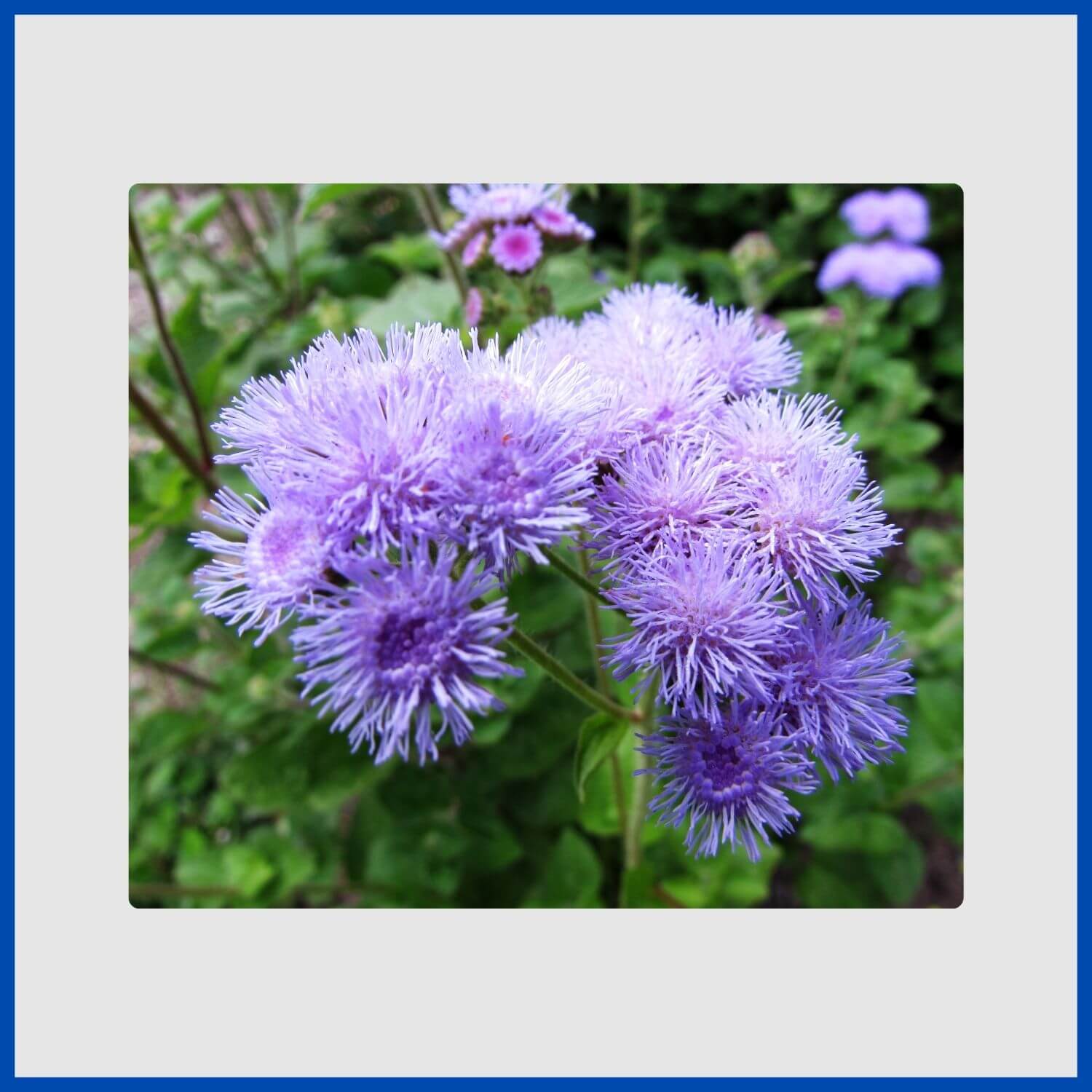
Blue ageratum produces fuzzy clusters of powder-puff flowers that bloom continuously until frost. This popular bedding annual creates dense mounds of color in borders and containers while attracting butterflies and resisting deer.
- USDA Hardiness Zone: 10-11 (annual elsewhere)
- Bloom Time: Late spring to frost
- Water Needs: Moderate
- Soil Type: Well-drained, fertile
- Sun Requirement: Full sun to partial shade
- Height: 6-24 inches
52. Blue Canterbury Bells (Campanula medium)
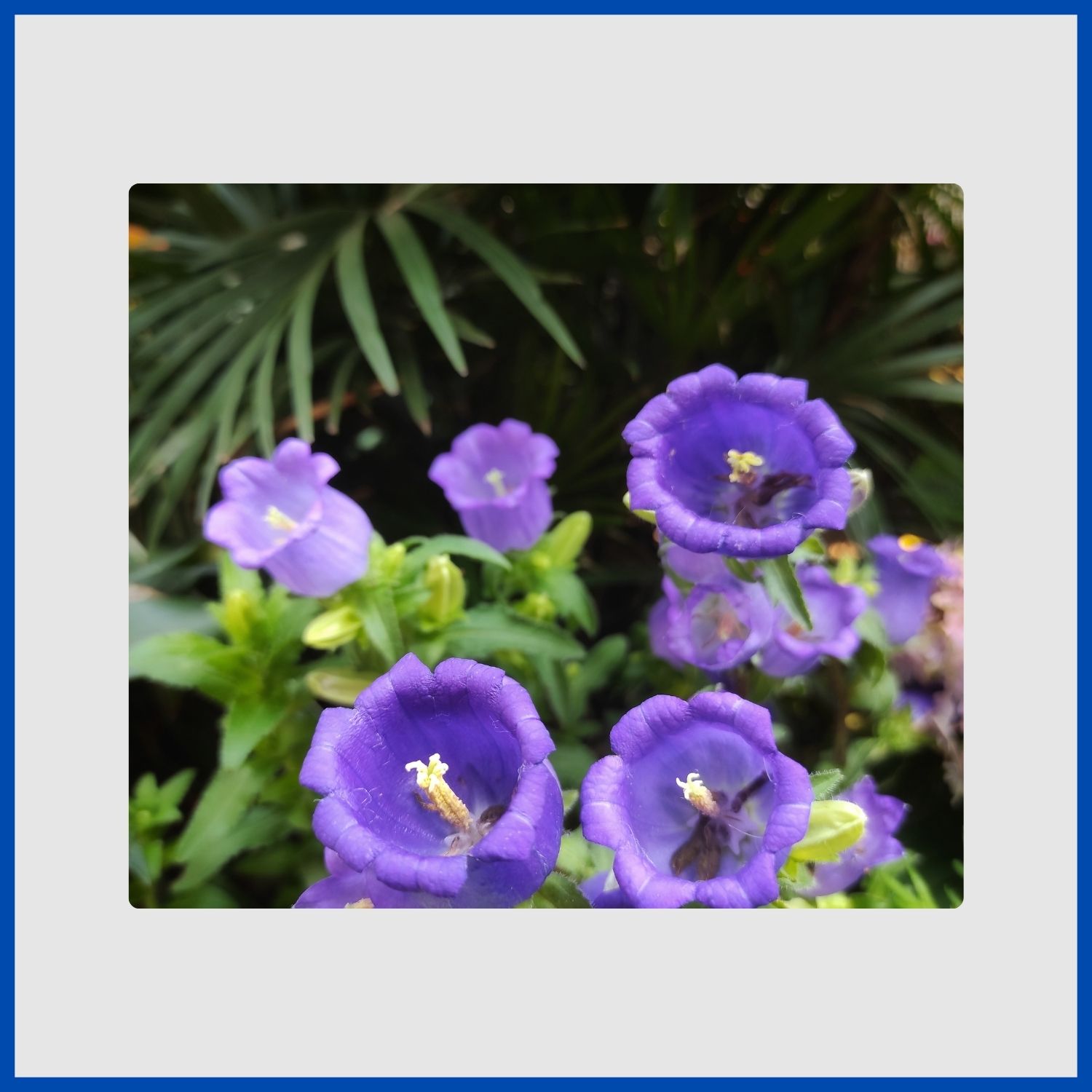
Blue Canterbury bells produce showy, bell-shaped flowers in upright clusters that create cottage garden charm. These biennials self-seed reliably and provide excellent cut flowers while attracting bees and hummingbirds.
- USDA Hardiness Zone: 4-9 (biennial)
- Bloom Time: Late spring to early summer
- Water Needs: Moderate
- Soil Type: Well-drained, rich
- Sun Requirement: Full sun to partial shade
- Height: 2-3 feet
53. Blue Love-in-a-Mist (Nigella damascena)
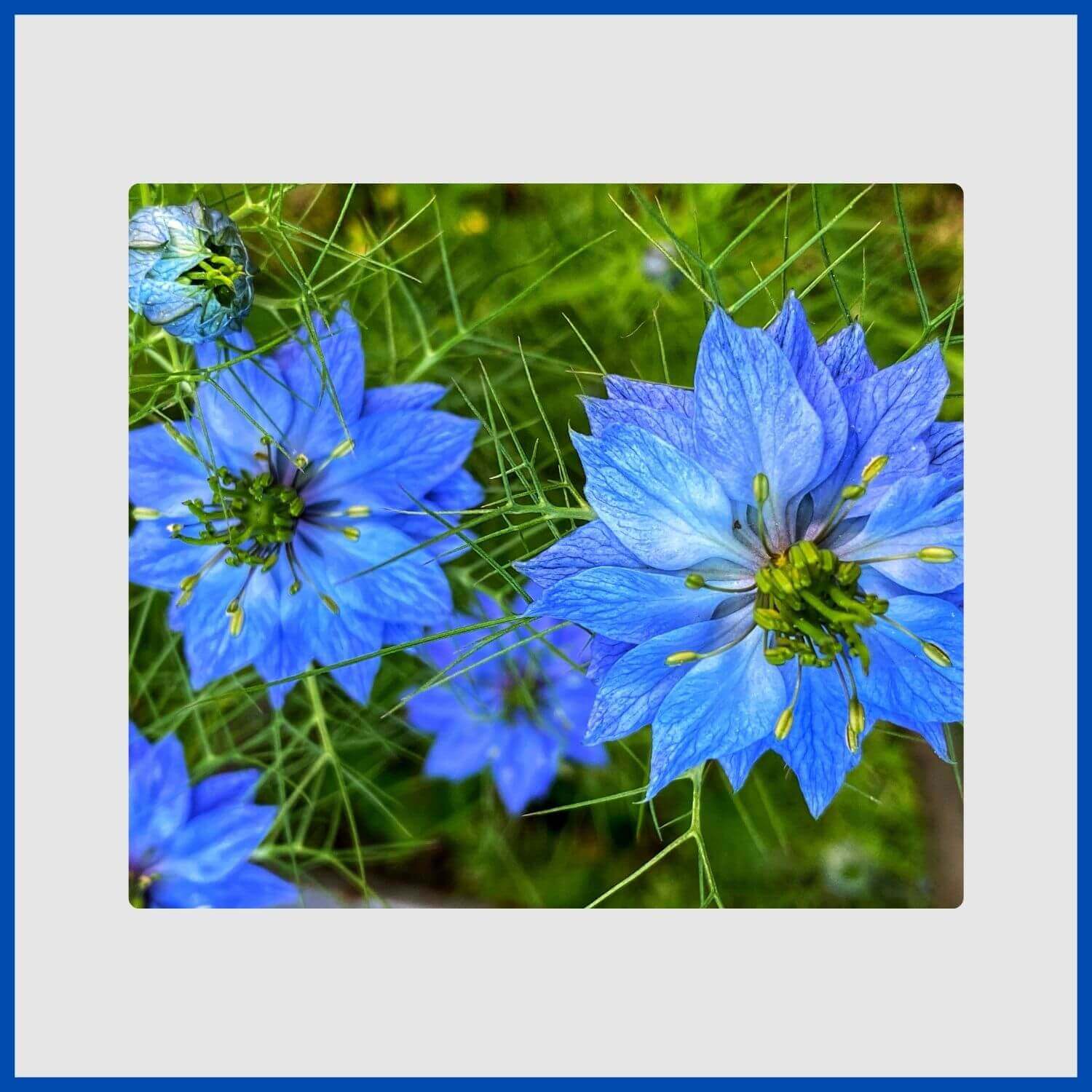
Blue love-in-a-mist produces delicate flowers surrounded by feathery bracts that create ethereal beauty. This easy-care annual self-seeds readily and develops decorative seedpods that extend interest and provide dried arrangements.
- USDA Hardiness Zone: 2-11 (annual)
- Bloom Time: Late spring to summer
- Water Needs: Moderate
- Soil Type: Well-drained, average
- Sun Requirement: Full sun to partial shade
- Height: 1-2 feet
54. Blue Duranta (Duranta erecta)
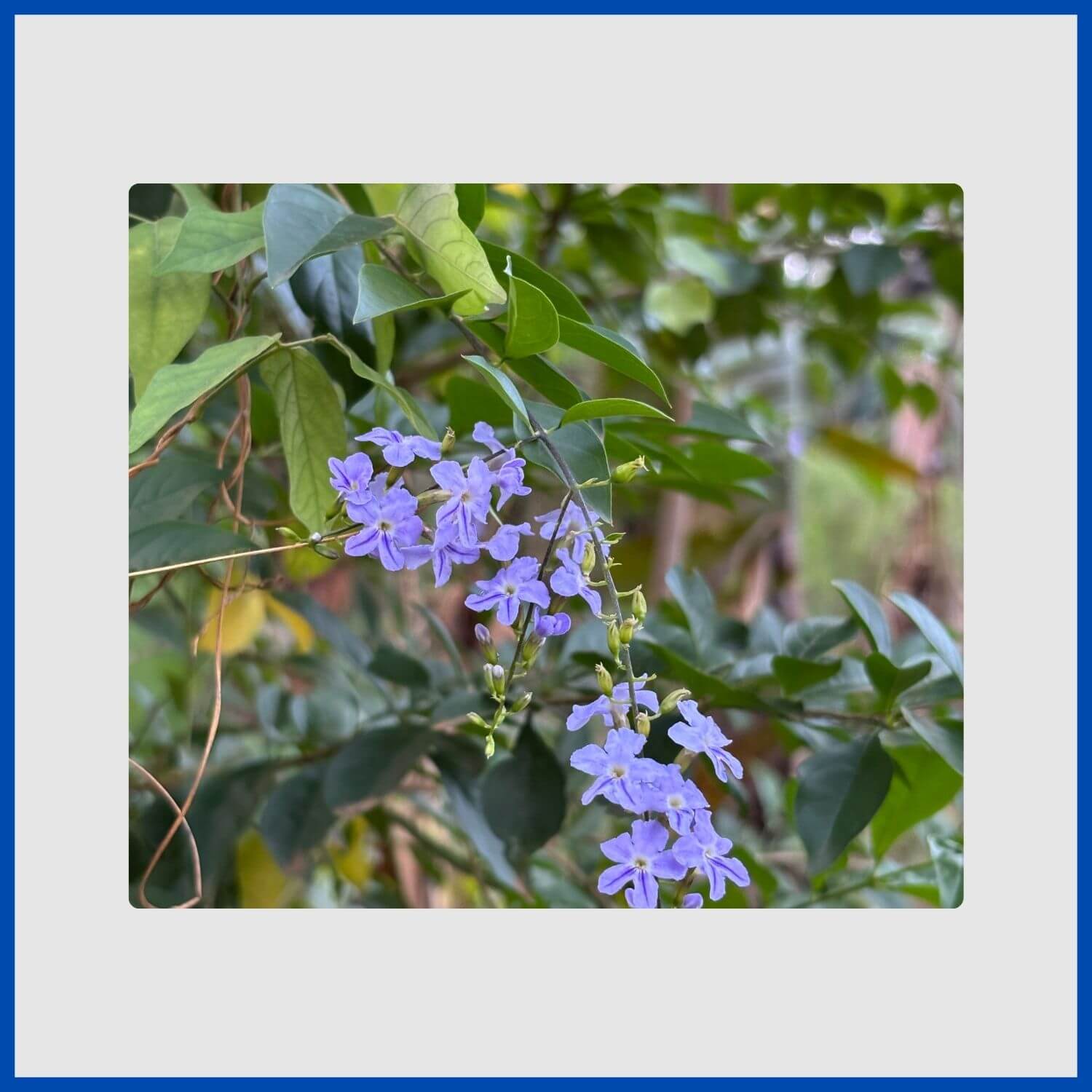
Blue duranta creates cascading clusters of violet-blue flowers followed by golden berries. This tropical shrub provides year-round interest in warm climates and attracts butterflies while tolerating heat, humidity, and coastal conditions.
- USDA Hardiness Zone: 9-11
- Bloom Time: Spring to fall
- Water Needs: Moderate
- Soil Type: Well-drained, fertile
- Sun Requirement: Full sun to partial shade
- Height: 6-15 feet
55. Blue Wisteria (Wisteria sinensis)
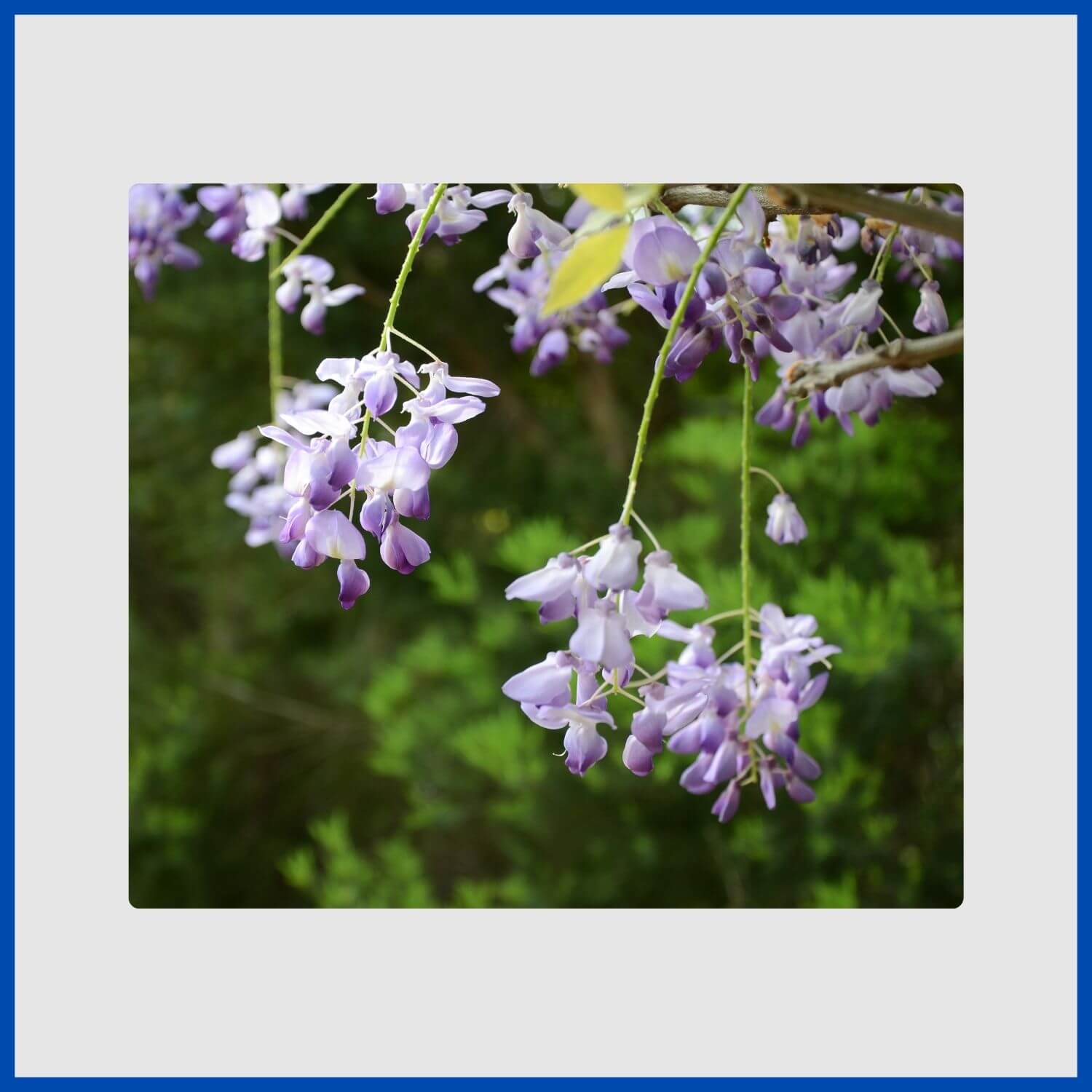
Blue wisteria produces breathtaking cascading clusters of fragrant flowers that drape from vigorous vines. This deciduous climber transforms arbors and pergolas into stunning focal points during spring while requiring sturdy support structures.
- USDA Hardiness Zone: 5-9
- Bloom Time: Spring
- Water Needs: Moderate
- Soil Type: Well-drained, fertile
- Sun Requirement: Full sun
- Height: 25-30 feet (vine)
56. Blue Viper’s Bugloss (Echium vulgare)
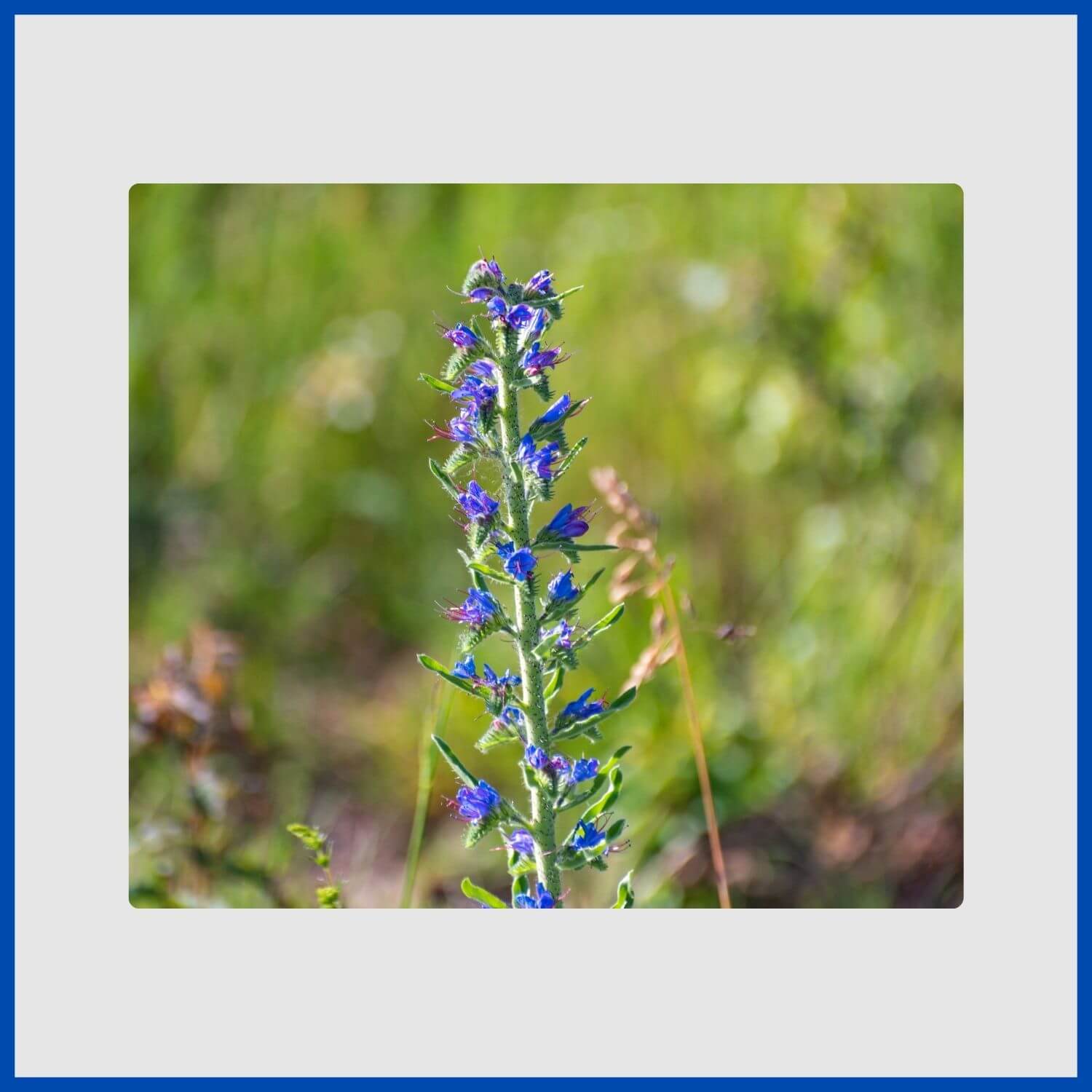
Blue viper’s bugloss displays striking spikes of tubular flowers that attract bees and butterflies abundantly. This biennial wildflower tolerates poor soils and dry conditions while providing essential nectar for native pollinators.
- USDA Hardiness Zone: 3-8 (biennial)
- Bloom Time: Summer
- Water Needs: Low
- Soil Type: Well-drained, sandy to rocky
- Sun Requirement: Full sun
- Height: 2-3 feet
57. Blue Monkshood (Aconitum napellus)
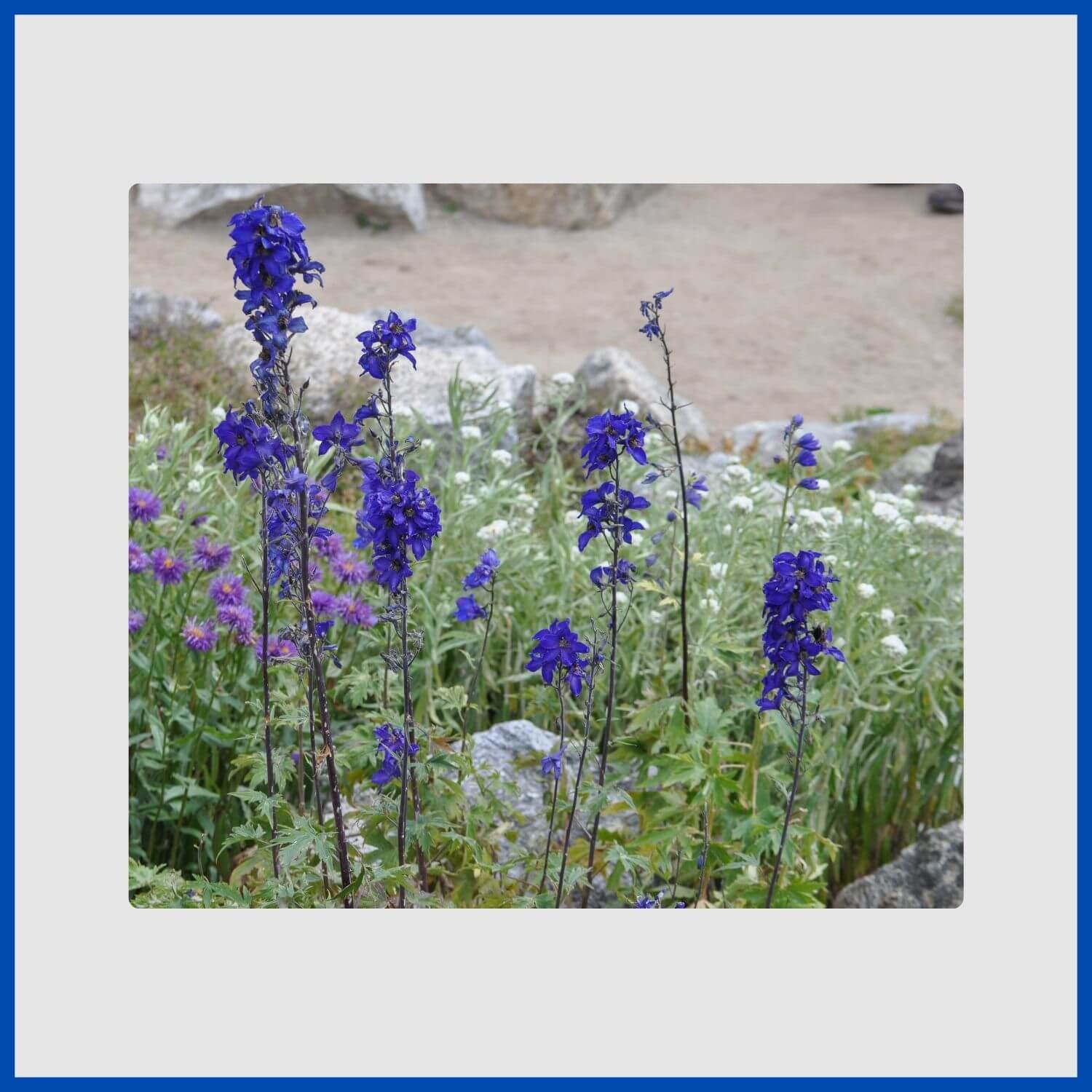
Blue monkshood produces distinctive hooded flowers atop tall spikes that add drama to shade gardens. This poisonous perennial provides late-season color and thrives in cool, moist conditions where other plants struggle.
- USDA Hardiness Zone: 3-7
- Bloom Time: Late summer to fall
- Water Needs: Moderate to high
- Soil Type: Moist, rich, well-drained
- Sun Requirement: Partial to full shade
- Height: 3-5 feet
58. Blue Hyssop (Hyssopus officinalis)
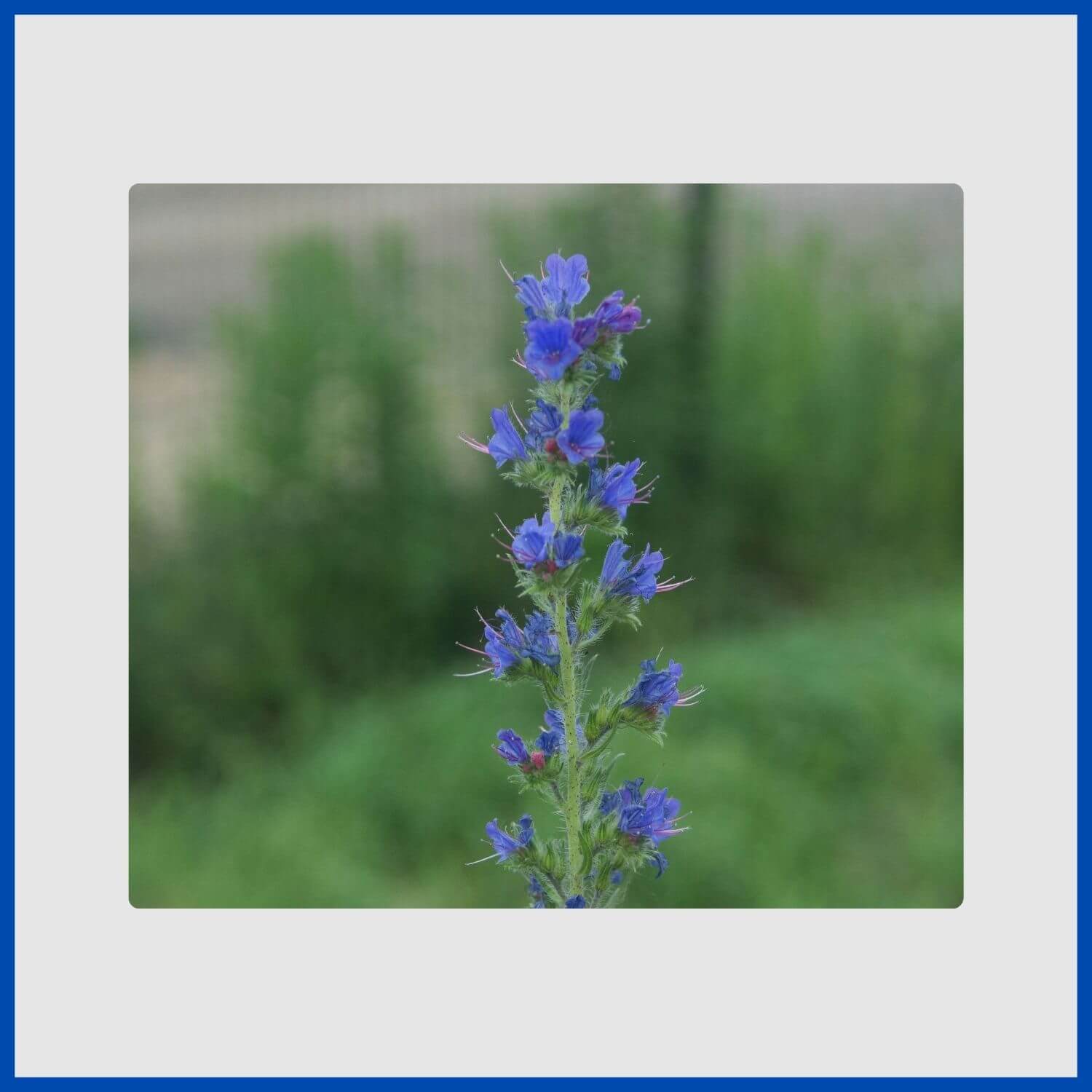
Blue hyssop creates aromatic mounds topped with spikes of tubular blue flowers. This Mediterranean herb attracts bees and butterflies while offering drought tolerance and culinary uses in traditional recipes.
- USDA Hardiness Zone: 4-9
- Bloom Time: Summer to fall
- Water Needs: Low to moderate
- Soil Type: Well-drained, average to poor
- Sun Requirement: Full sun
- Height: 1-2 feet
59. Blue Ajuga (Ajuga reptans)
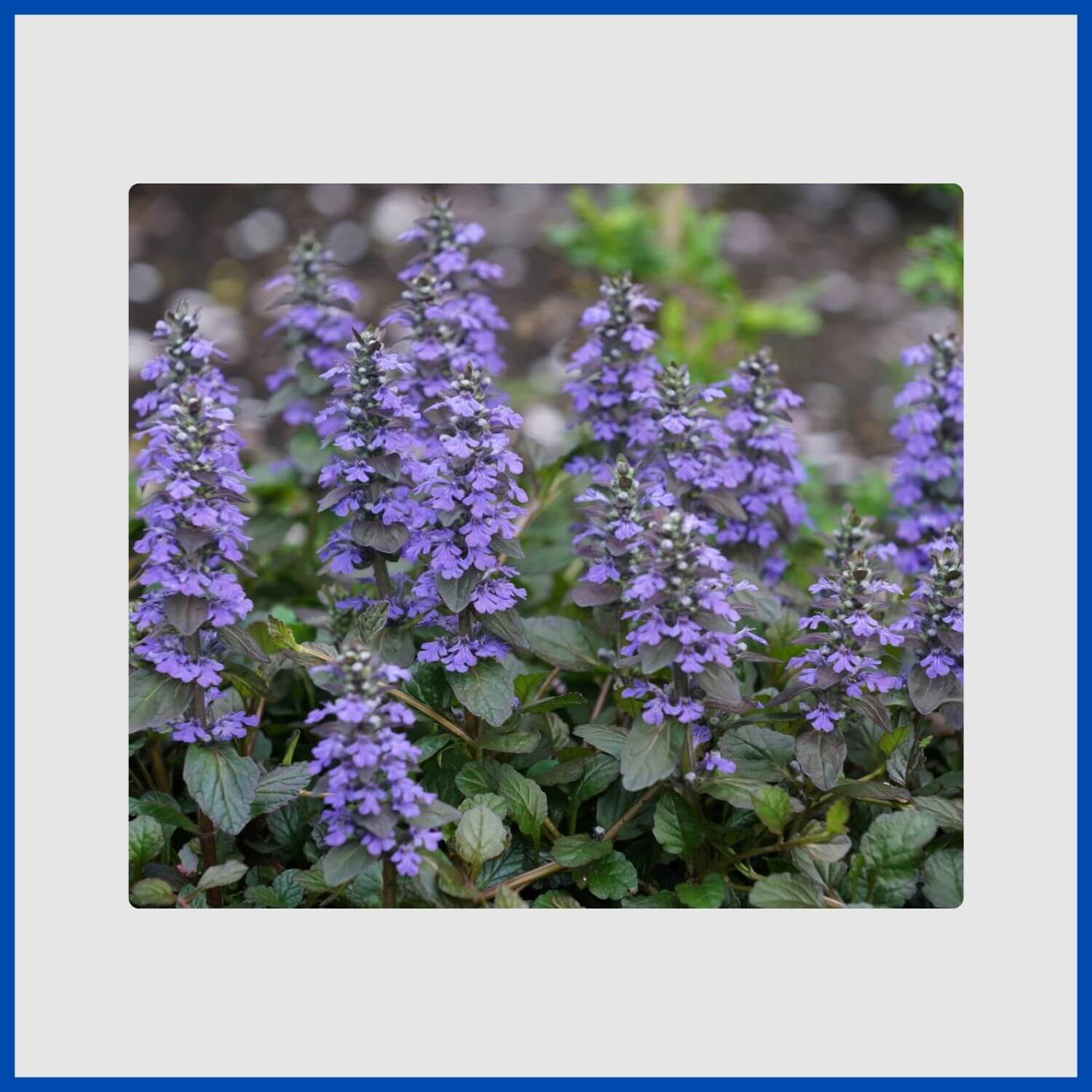
Blue ajuga forms evergreen ground covers with spikes of tubular flowers rising above glossy foliage. This spreading perennial controls erosion on slopes and fills difficult areas while tolerating foot traffic and various soil conditions.
- USDA Hardiness Zone: 3-9
- Bloom Time: Spring
- Water Needs: Moderate
- Soil Type: Well-drained, average
- Sun Requirement: Partial shade to full sun
- Height: 4-6 inches
60. Blue Tweedia (Oxypetalum caeruleum)
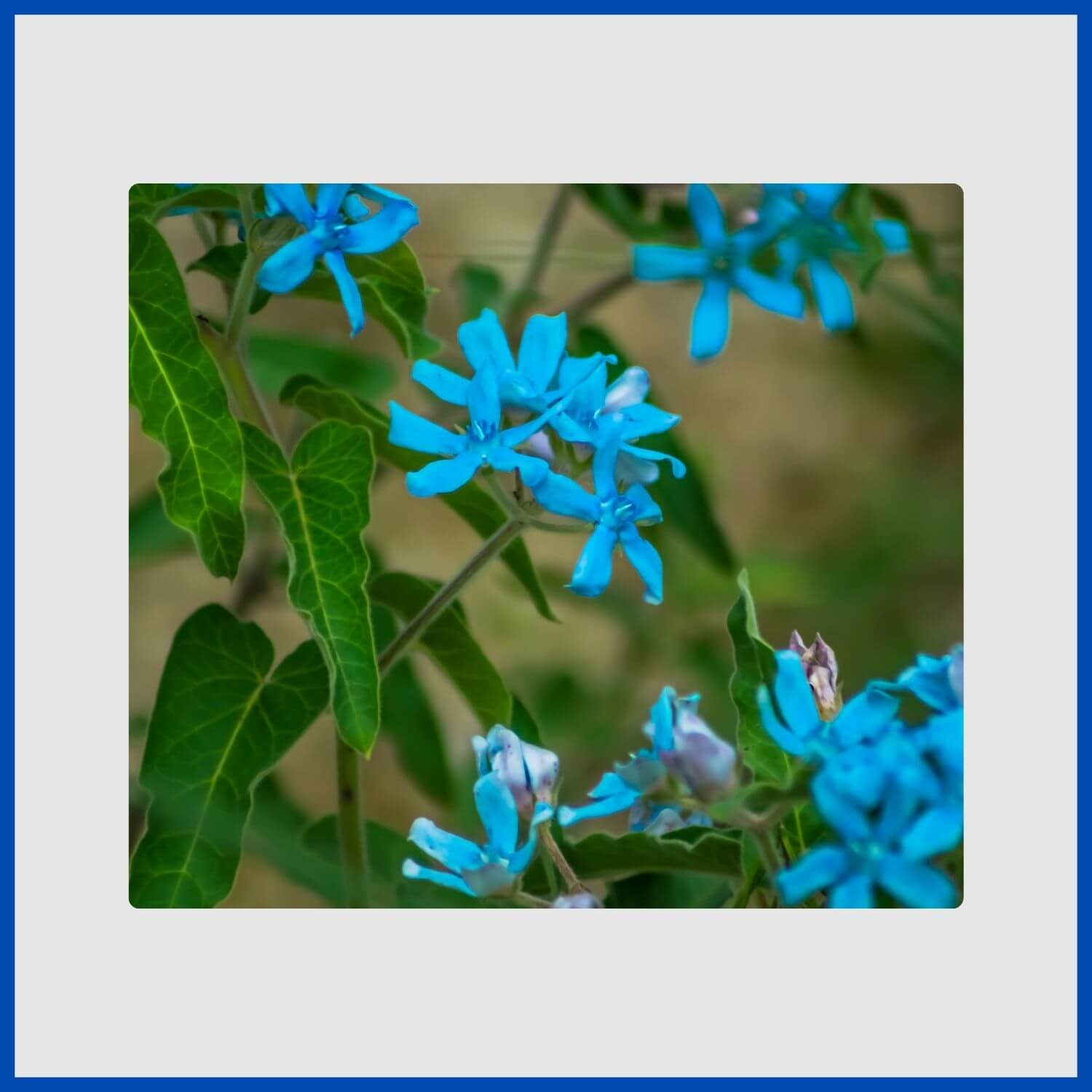
Blue tweedia produces unique star-shaped flowers in rare turquoise-blue shades. This tender perennial excels in containers and cutting gardens while attracting butterflies and providing exceptional flowers for fresh arrangements.
- USDA Hardiness Zone: 9-11 (annual elsewhere)
- Bloom Time: Summer to fall
- Water Needs: Moderate
- Soil Type: Well-drained, fertile
- Sun Requirement: Full sun
- Height: 2-3 feet
61. Blue Lithodora (Lithodora diffusa)
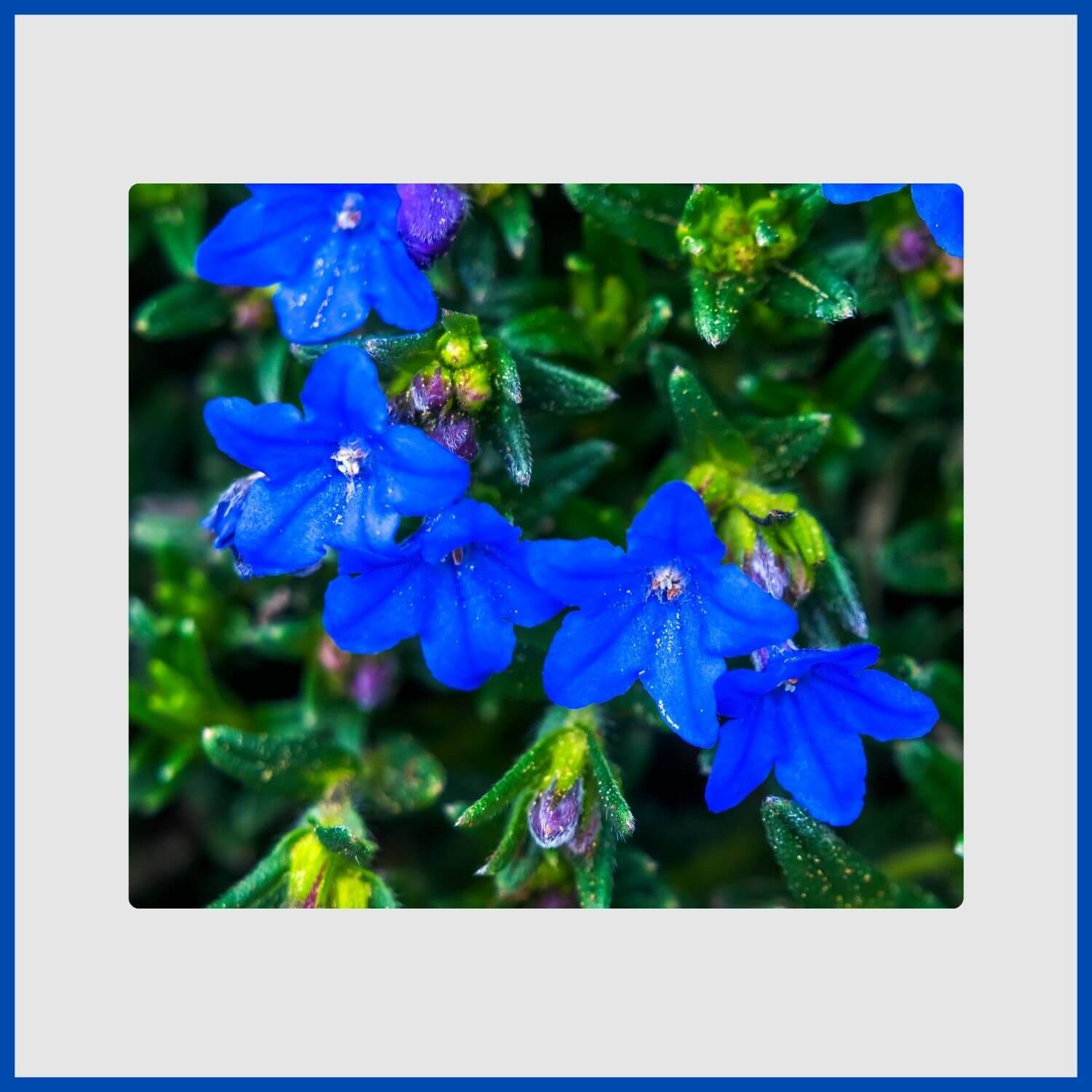
Blue lithodora creates low mats covered with brilliant gentian-blue flowers in spring. This evergreen subshrub thrives in rock gardens and requires acidic soils with excellent drainage to produce its stunning displays.
- USDA Hardiness Zone: 6-8
- Bloom Time: Late spring to early summer
- Water Needs: Moderate
- Soil Type: Well-drained, acidic
- Sun Requirement: Full sun to partial shade
- Height: 6-12 inches
62. Blue Cynoglossum (Cynoglossum amabile)
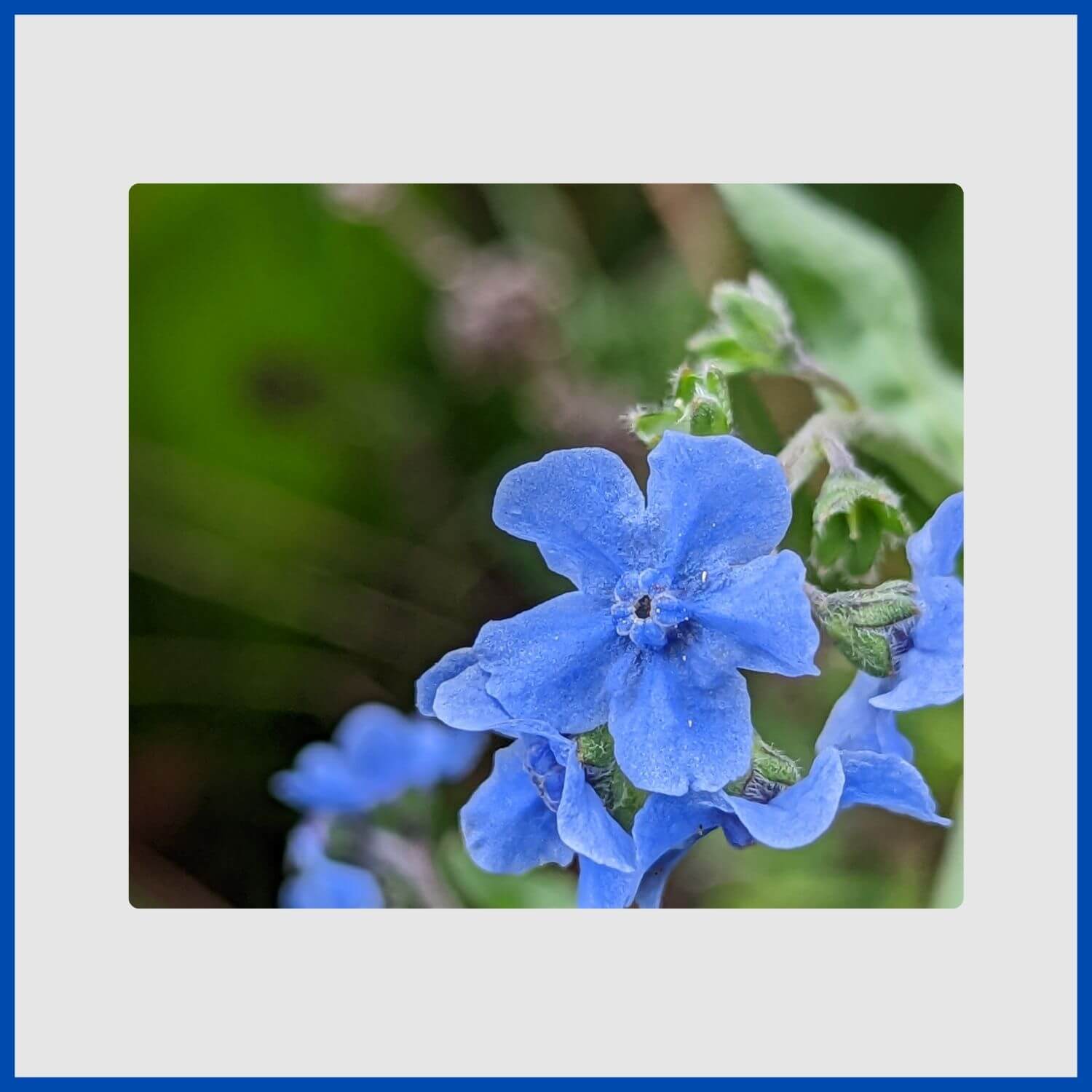
Blue cynoglossum produces sprays of forget-me-not-like flowers on branching stems. This easy-care annual self-seeds reliably and provides excellent cut flowers while thriving in cottage gardens and naturalistic plantings.
- USDA Hardiness Zone: 5-9 (annual)
- Bloom Time: Late spring to summer
- Water Needs: Moderate
- Soil Type: Well-drained, average
- Sun Requirement: Full sun to partial shade
- Height: 1-2 feet
63. Blue Plectranthus (Plectranthus neochilus)
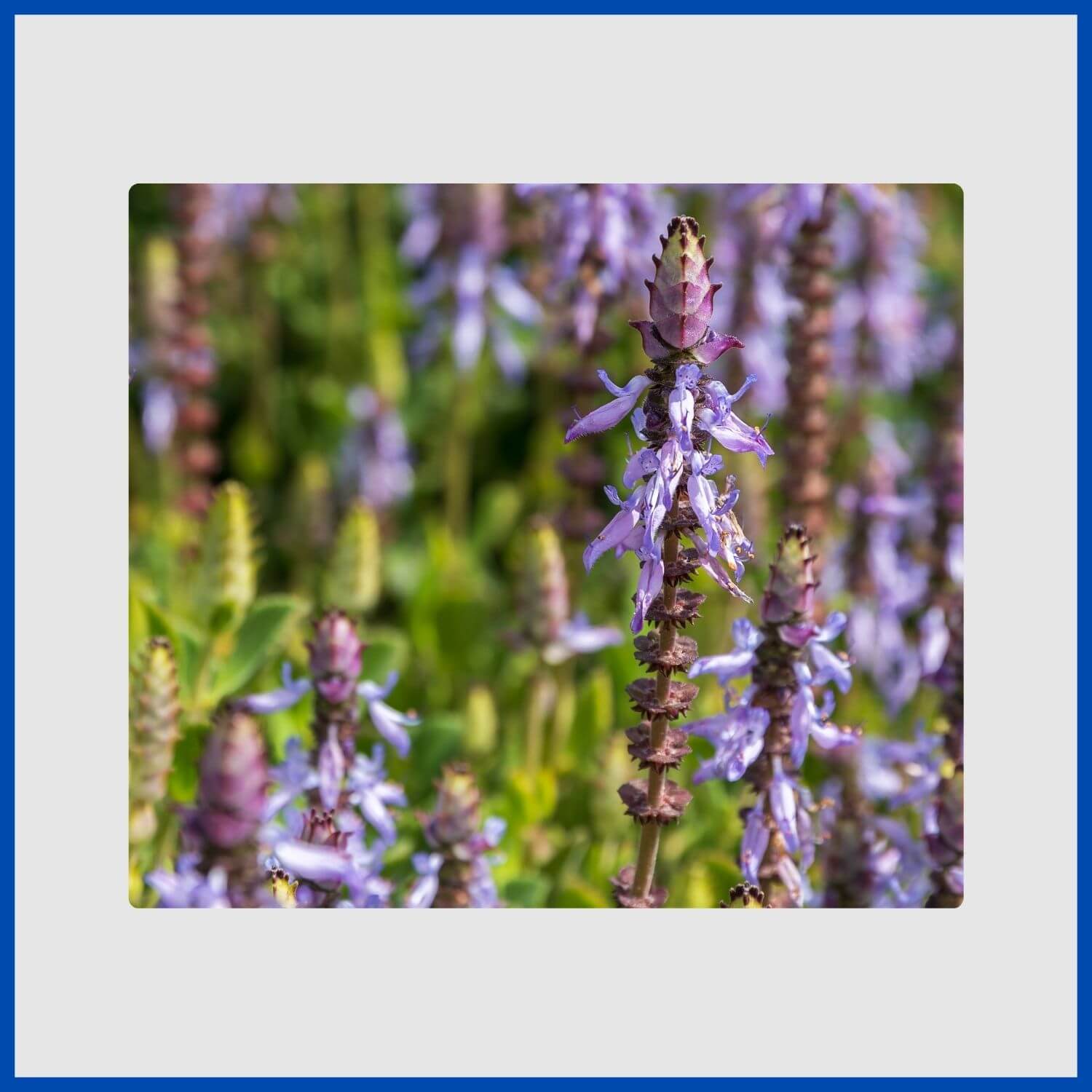
Blue plectranthus produces tubular flowers above aromatic foliage with excellent heat tolerance. This tender perennial thrives in containers and hanging baskets while attracting butterflies and hummingbirds throughout warm months.
- USDA Hardiness Zone: 10-11 (annual elsewhere)
- Bloom Time: Summer to fall
- Water Needs: Moderate
- Soil Type: Well-drained, fertile
- Sun Requirement: Partial shade to full sun
- Height: 1-2 feet
64. Blue Anchusa (Anchusa capensis)
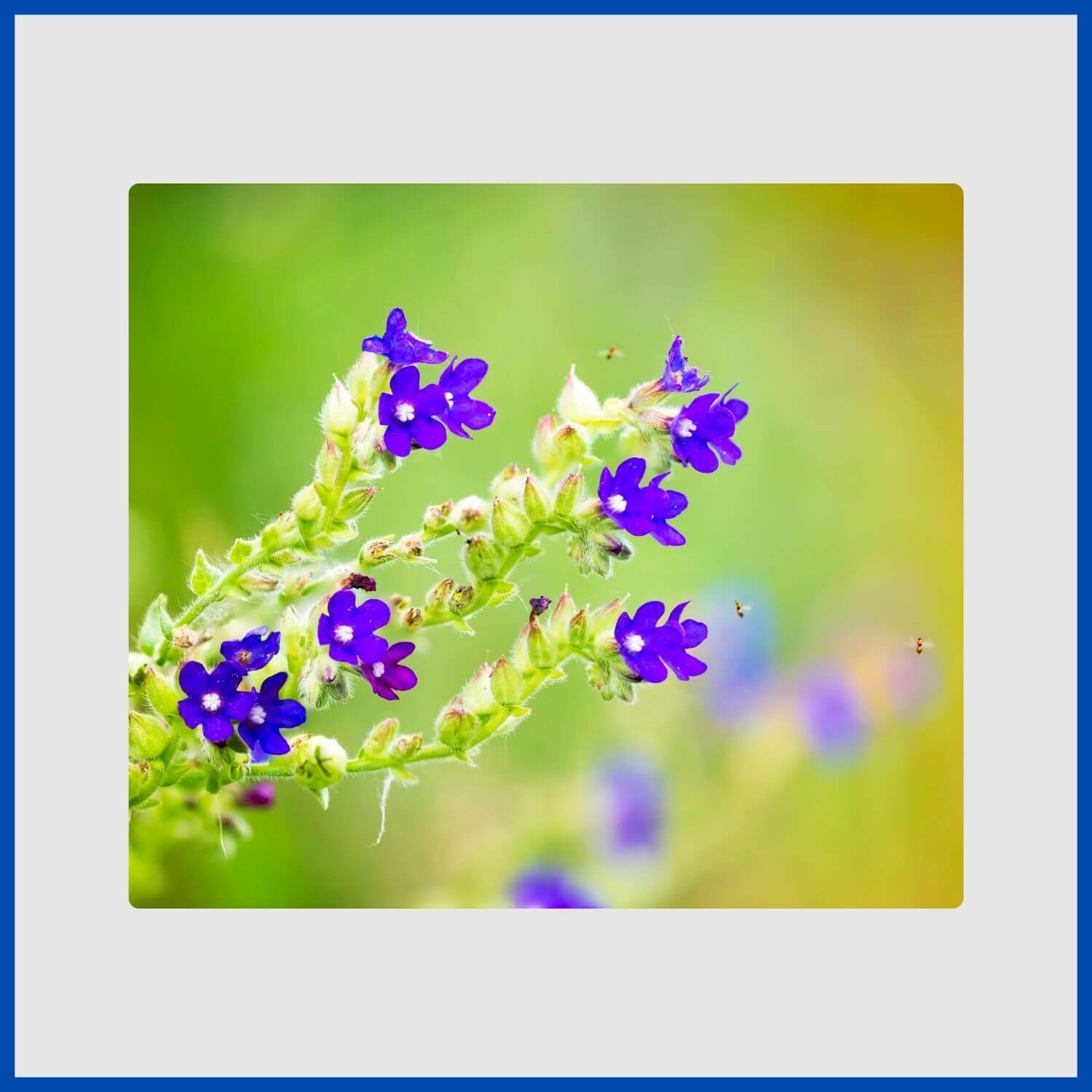
Blue anchusa displays intense blue flowers similar to forget-me-nots but larger and more vibrant. This short-lived perennial self-seeds readily and provides exceptional color in borders while attracting beneficial pollinators.
- USDA Hardiness Zone: 8-10
- Bloom Time: Spring to summer
- Water Needs: Moderate
- Soil Type: Well-drained, average
- Sun Requirement: Full sun
- Height: 1-2 feet
65. Blue Pulmonaria (Pulmonaria angustifolia)
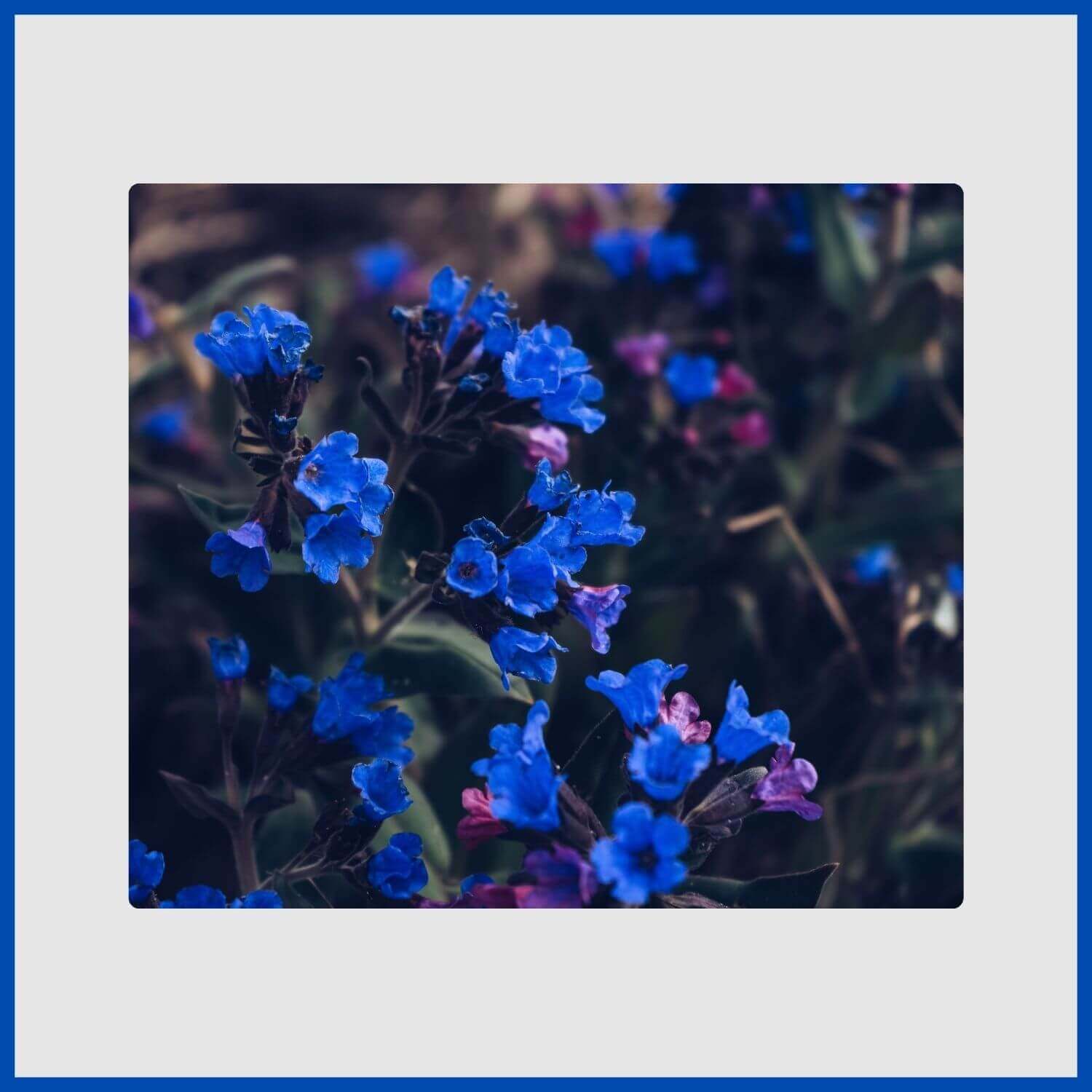
Blue pulmonaria produces clusters of tubular flowers that emerge pink and mature to blue shades. This shade-loving perennial offers attractive spotted foliage and thrives in woodland gardens with consistent moisture.
- USDA Hardiness Zone: 3-8
- Bloom Time: Early to mid-spring
- Water Needs: Moderate
- Soil Type: Moist, humus-rich
- Sun Requirement: Partial to full shade
- Height: 8-12 inches
66. Blue Glandularia (Glandularia bipinnatifida)
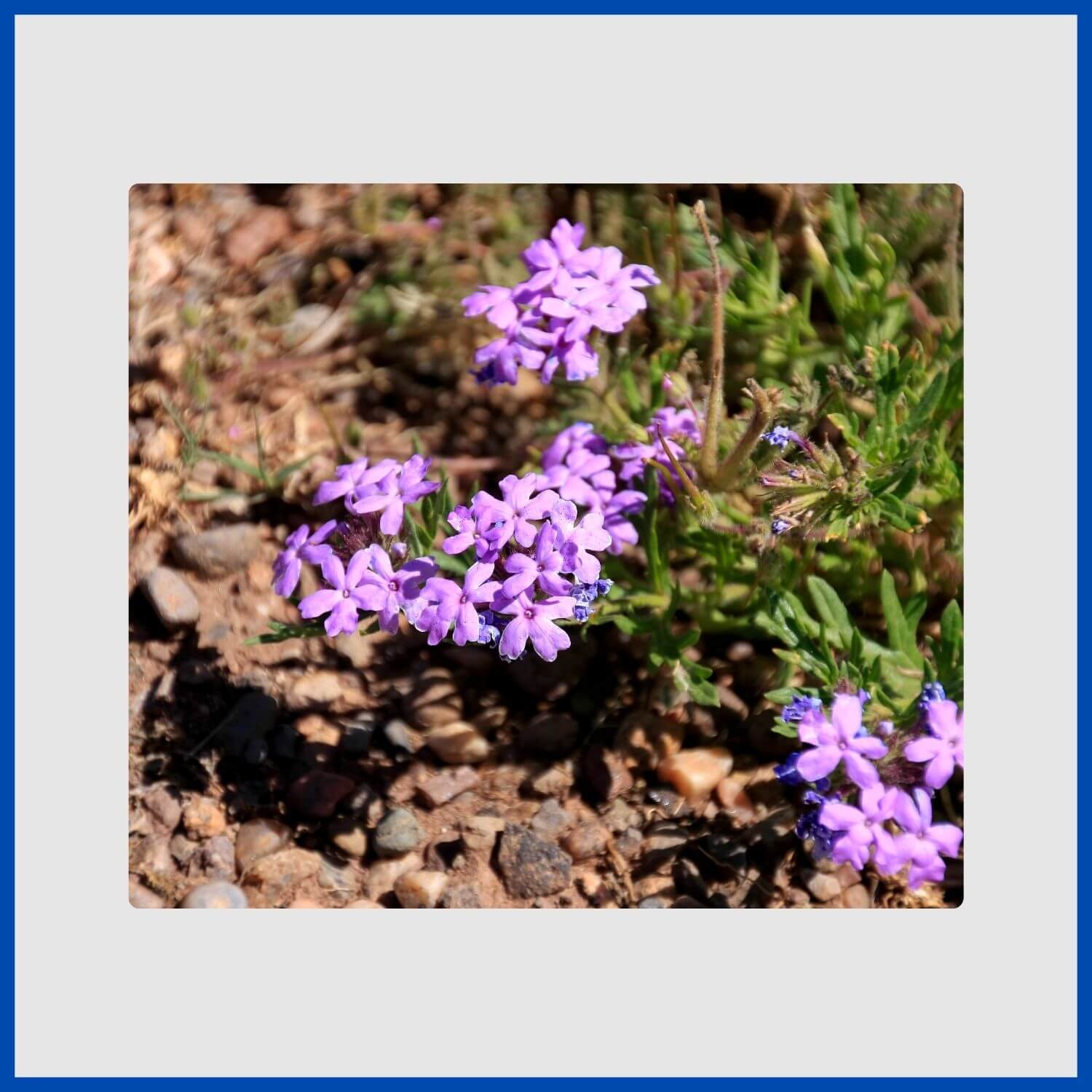
Blue glandularia creates spreading mats covered with clusters of verbena-like flowers. This native perennial tolerates heat and drought while providing ground cover and attracting butterflies in naturalistic prairie gardens.
- USDA Hardiness Zone: 6-10
- Bloom Time: Spring to fall
- Water Needs: Low to moderate
- Soil Type: Well-drained, rocky to sandy
- Sun Requirement: Full sun
- Height: 6-18 inches
67. Blue Veronica (Veronica gentianoides)
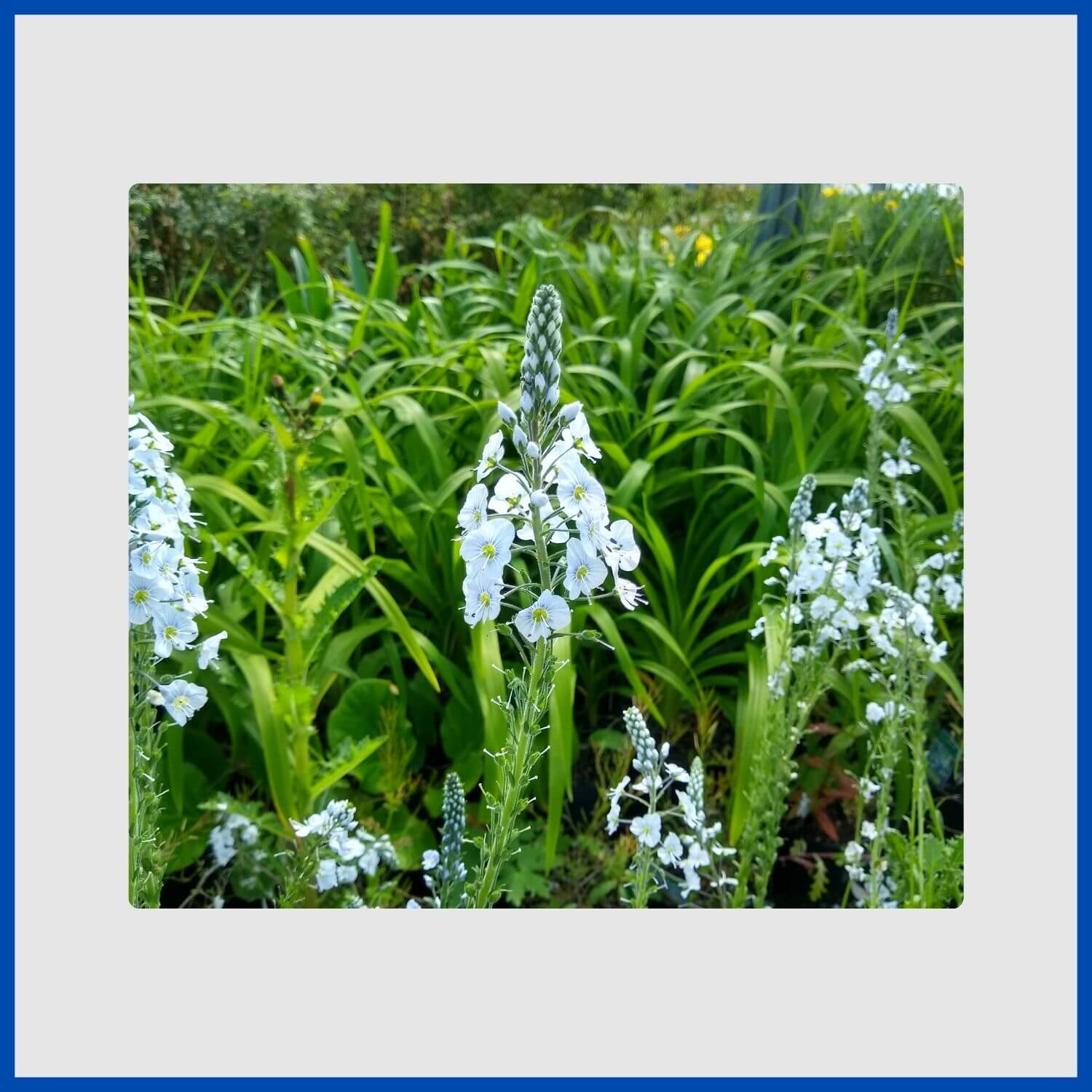
Blue veronica sends up elegant, airy spikes of tiny flowers that attract butterflies and bees throughout summer. These low-maintenance perennials resist deer and rabbits while providing excellent vertical interest in borders and rock gardens.
- USDA Hardiness Zone: 4-8
- Bloom Time: Late spring to early summer
- Water Needs: Moderate
- Soil Type: Well-drained, average
- Sun Requirement: Full sun to partial shade
- Height: 1-2 feet
68. Brunnera (Brunnera macrophylla)
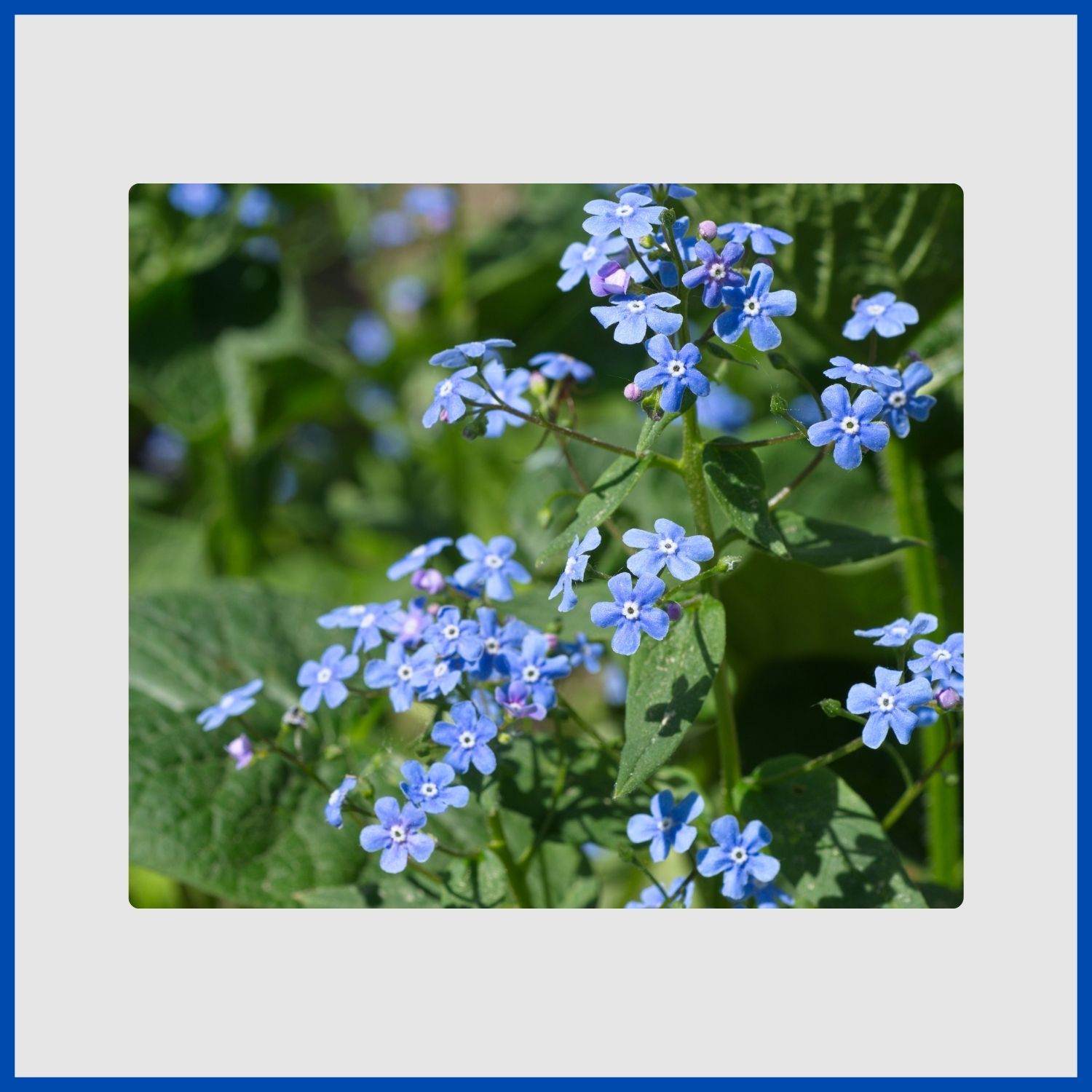
Brunnera is a shade-loving perennial that produces airy sprays of tiny, true-blue flowers in spring, resembling forget-me-nots. Its large, heart-shaped leaves, often variegated with silver, provide season-long interest.
- USDA Hardiness Zone: 3-8
- Bloom Time: Mid to late spring
- Water Needs: Moderate to high
- Soil Type: Moist, rich, well-drained
- Sun Requirement: Partial to full shade
- Height: 1-1.5 feet
69. Blue Geranium (Geranium ‘Rozanne’)
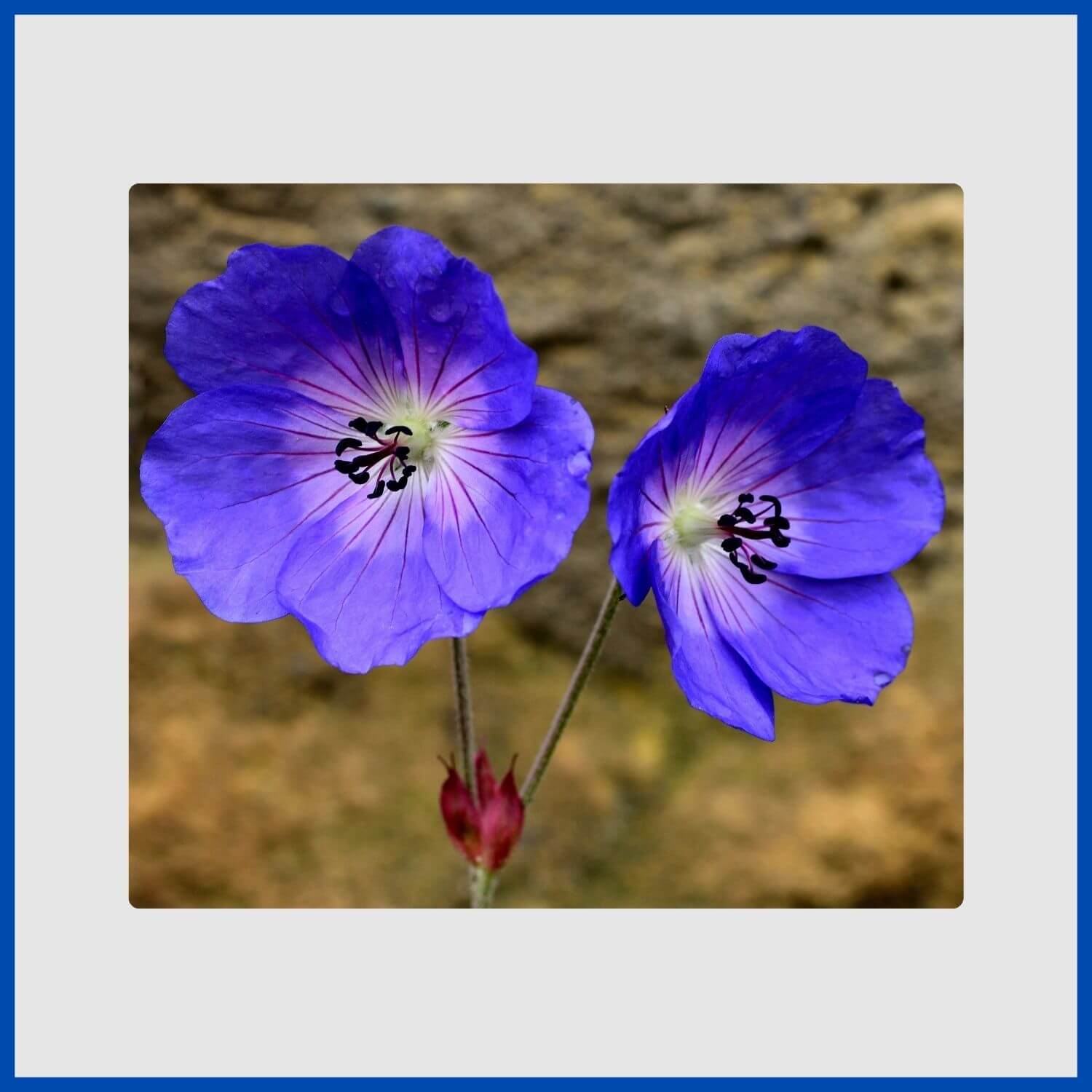
‘Rozanne’ is an award-winning hardy geranium prized for its exceptionally long bloom time, producing large, violet-blue flowers from late spring until the first hard frost. This reliable perennial forms a spreading mound that is perfect for borders or as a groundcover.
- USDA Hardiness Zone: 5-8
- Bloom Time: Late spring to fall
- Water Needs: Moderate
- Soil Type: Well-drained, average
- Sun Requirement: Full sun to partial shade
- Height: 1.5-2 feet (spreading)
70. Russian Sage (Perovskia atriplicifolia)
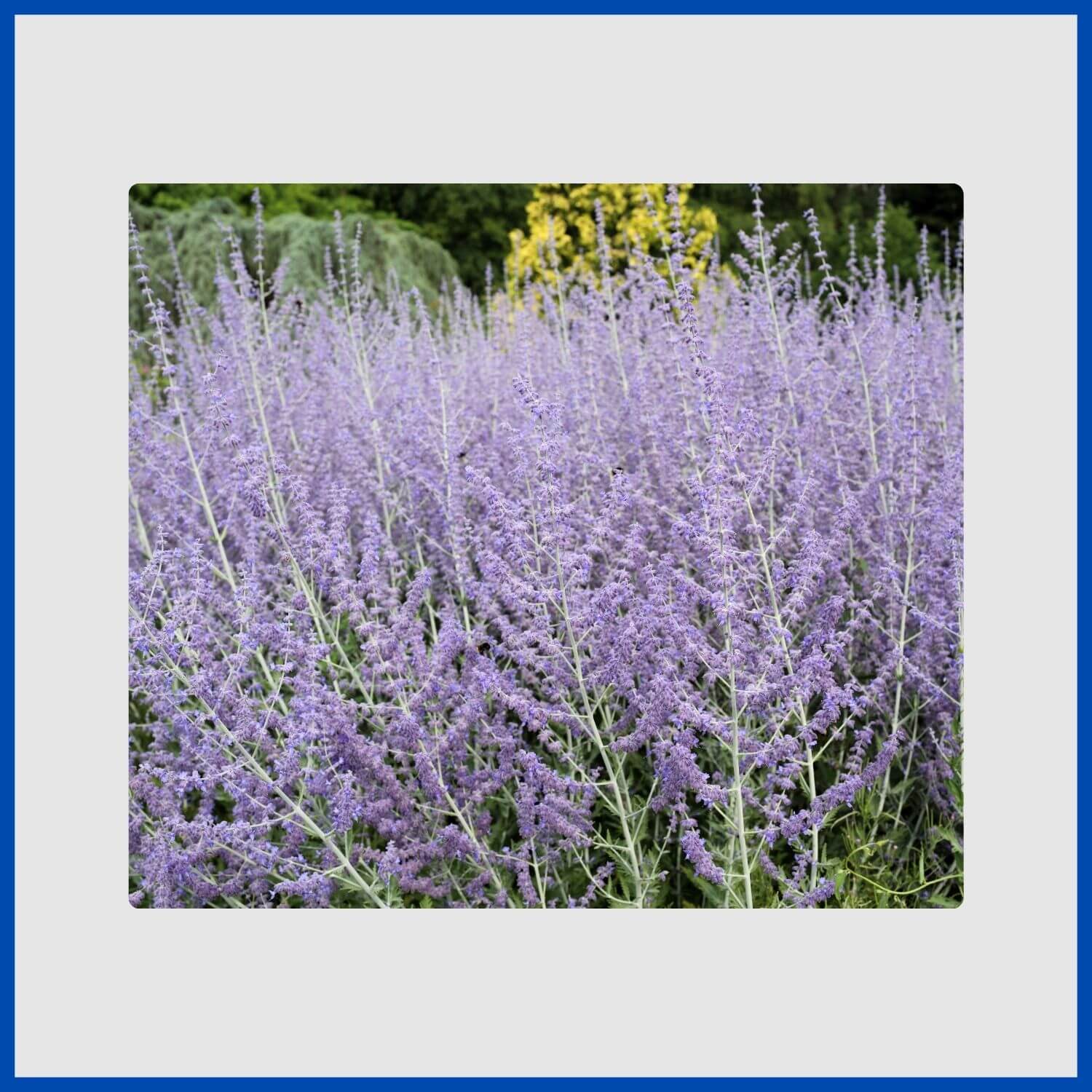
Russian sage creates an airy, cool-toned effect with its tall, silvery stems and lavender-blue flower spikes that bloom from midsummer to fall. This drought-tolerant perennial is aromatic, deer-resistant, and perfect for hot, sunny locations.
- USDA Hardiness Zone: 4-9
- Bloom Time: Summer to fall
- Water Needs: Low
- Soil Type: Well-drained, average to poor
- Sun Requirement: Full sun
- Height: 3-5 feet
71. Stoke’s Aster (Stokesia laevis)
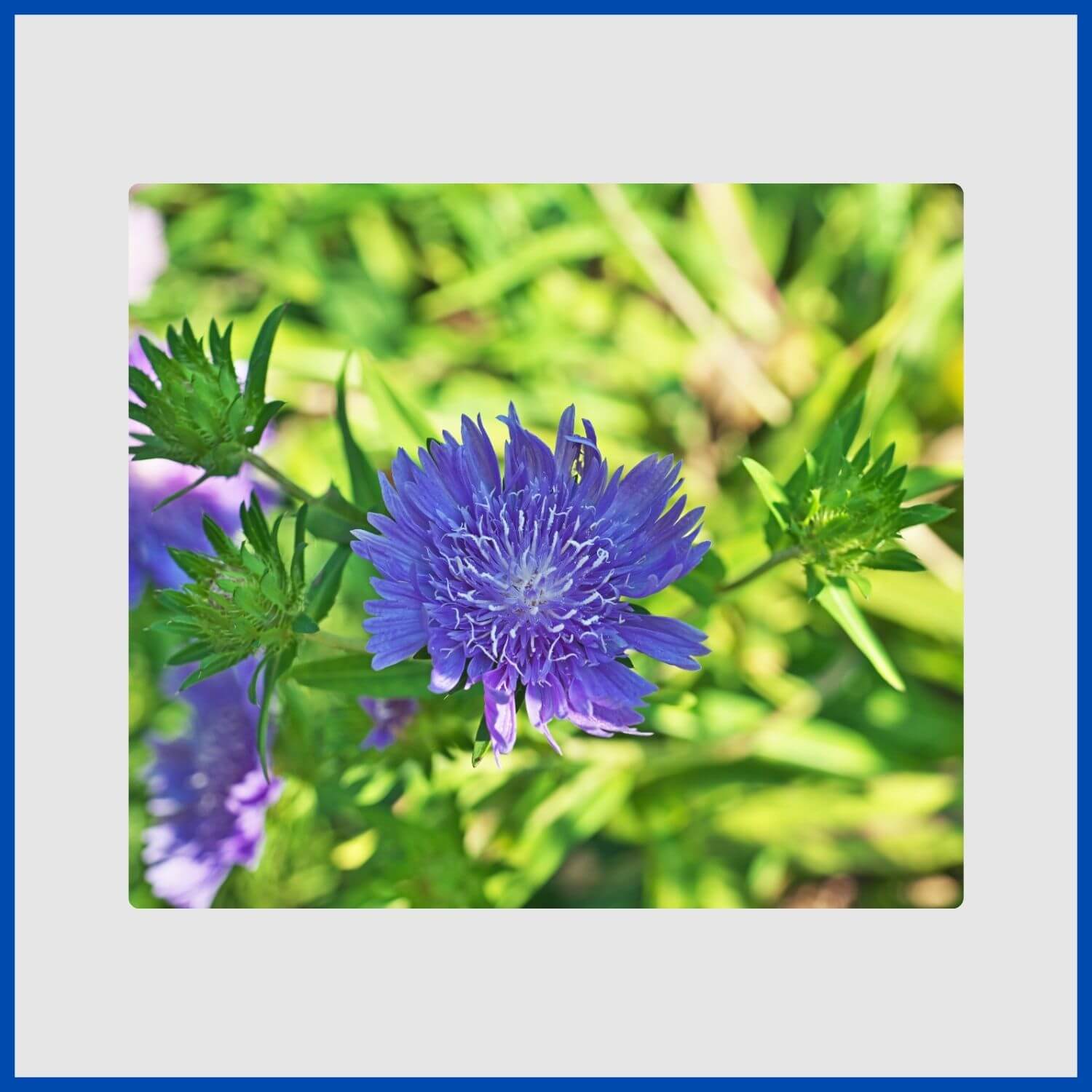
Stoke’s aster is a North American native perennial that produces large, fringed, cornflower-like flowers in shades of blue and lavender. It provides long-lasting summer blooms and is more tolerant of heat and humidity than many other blue flowers.
- USDA Hardiness Zone: 5-9
- Bloom Time: Summer to fall
- Water Needs: Moderate
- Soil Type: Well-drained, acidic to neutral
- Sun Requirement: Full sun to partial shade
- Height: 1-2 feet
72. Baby Blue Eyes (Nemophila menziesii)
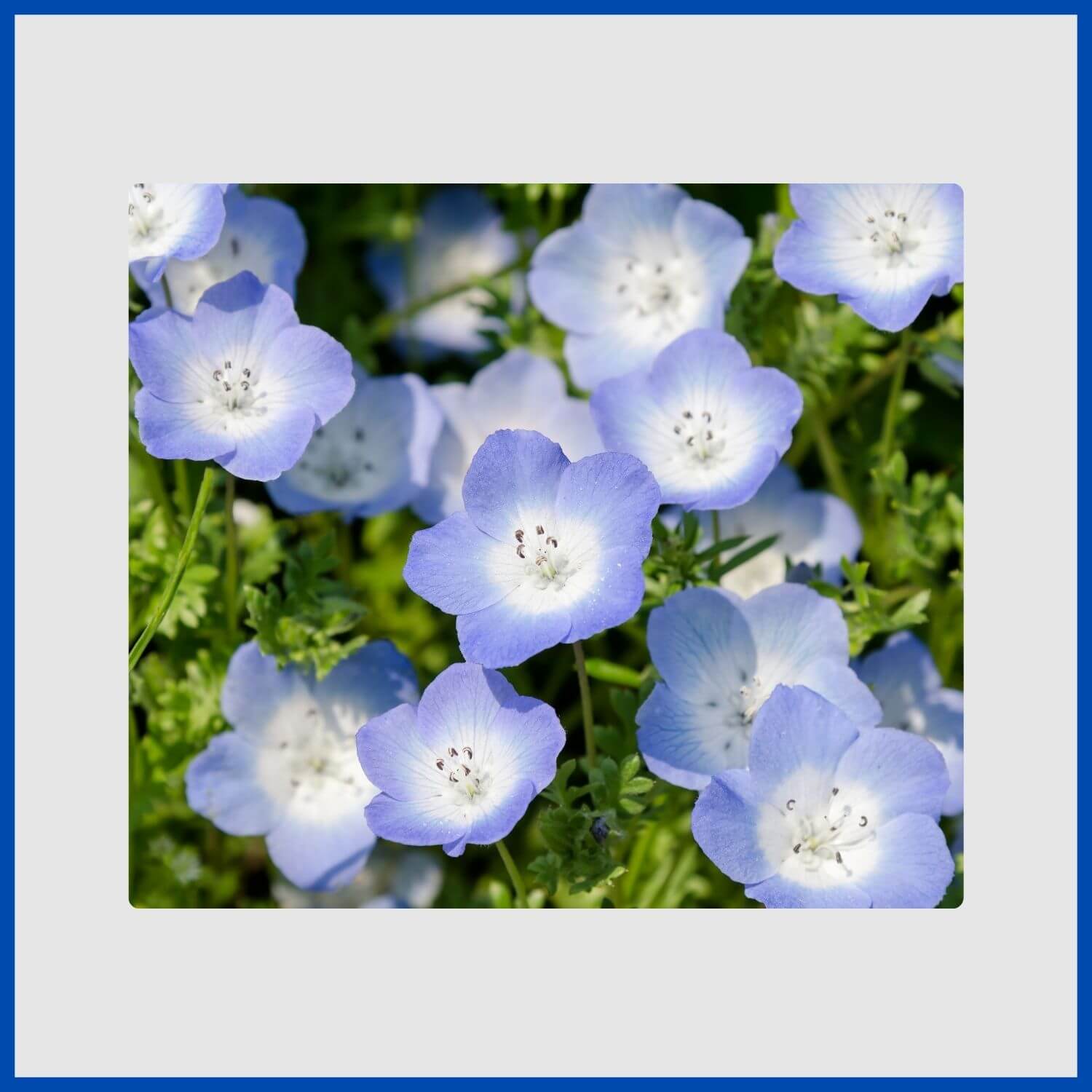
Baby blue eyes are cheerful, low-growing annuals that produce masses of cup-shaped, sky-blue flowers with white centers. They are a classic choice for wildflower meadows, borders, and containers in cool-season climates.
- USDA Hardiness Zone: 2-11 (annual)
- Bloom Time: Spring to early summer
- Water Needs: Moderate
- Soil Type: Moist, well-drained
- Sun Requirement: Full sun to partial shade
- Height: 6-12 inches
73. Glory-of-the-Snow (Chionodoxa forbesii)
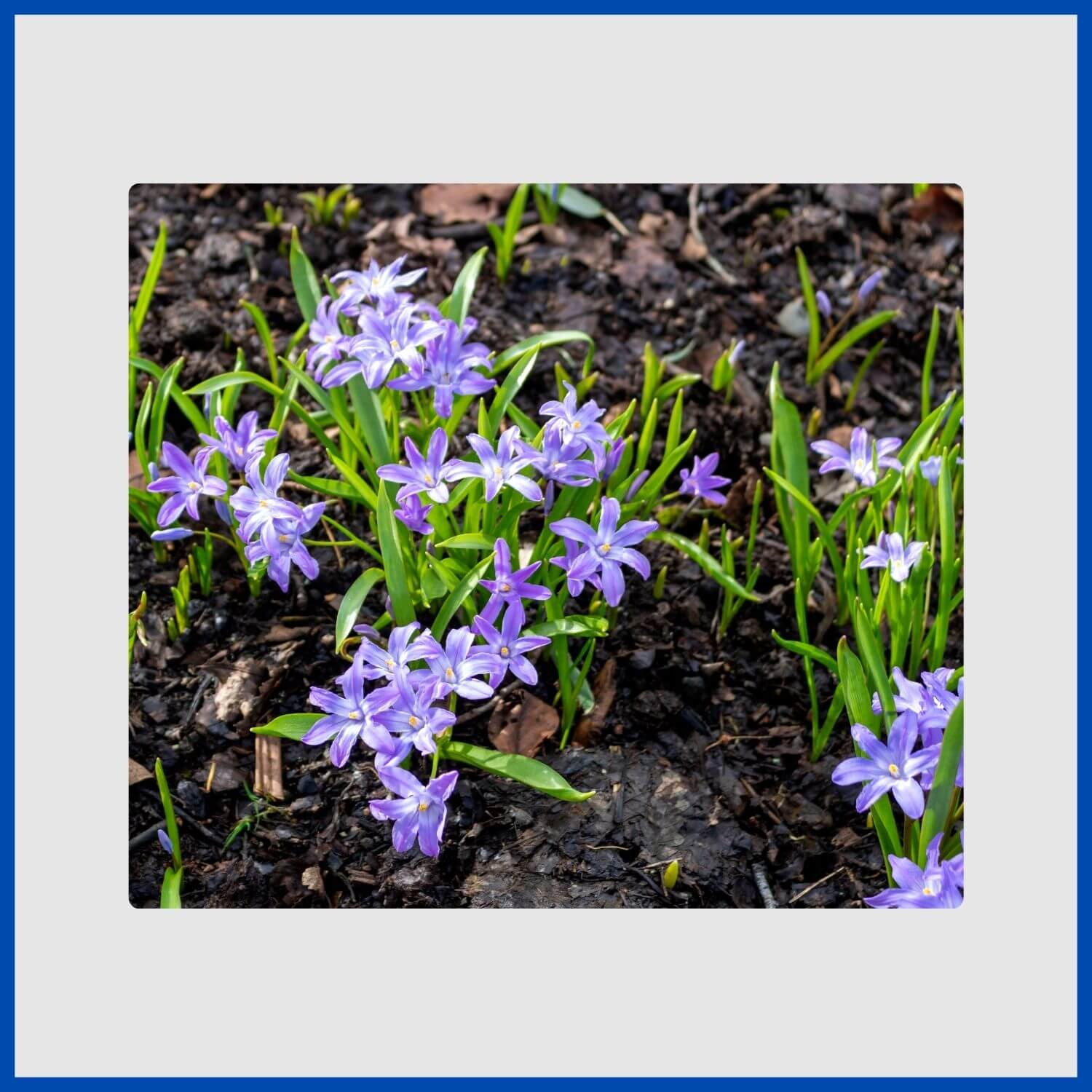
Glory-of-the-Snow is one of the earliest spring bulbs, often pushing up through melting snow to reveal starry, upward-facing blue flowers with white centers. They naturalize easily in lawns and under deciduous trees, creating a carpet of color.
- USDA Hardiness Zone: 3-8
- Bloom Time: Early spring
- Water Needs: Moderate
- Soil Type: Well-drained, average
- Sun Requirement: Full sun to partial shade
- Height: 4-6 inches
74. Siberian Squill (Scilla siberica)
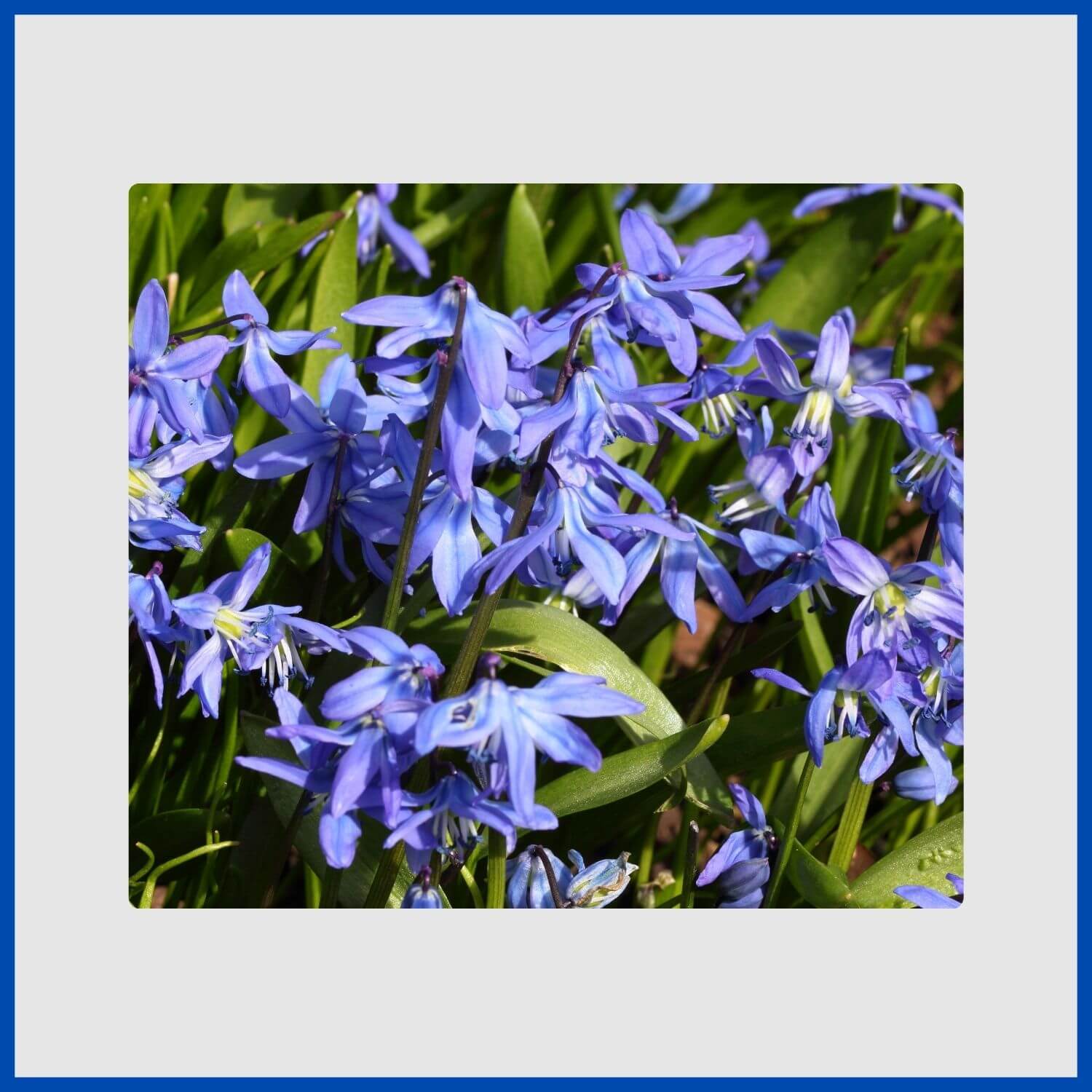
Siberian squill is a small but mighty spring bulb, known for its intense, true-blue, bell-shaped flowers that nod on slender stems. It forms a vibrant blue carpet and naturalizes aggressively, making it ideal for woodland gardens and underplantings.
- USDA Hardiness Zone: 2-8
- Bloom Time: Early spring
- Water Needs: Moderate
- Soil Type: Well-drained, average
- Sun Requirement: Full sun to partial shade
- Height: 4-8 inches
75. Hebe (Hebe spp.)
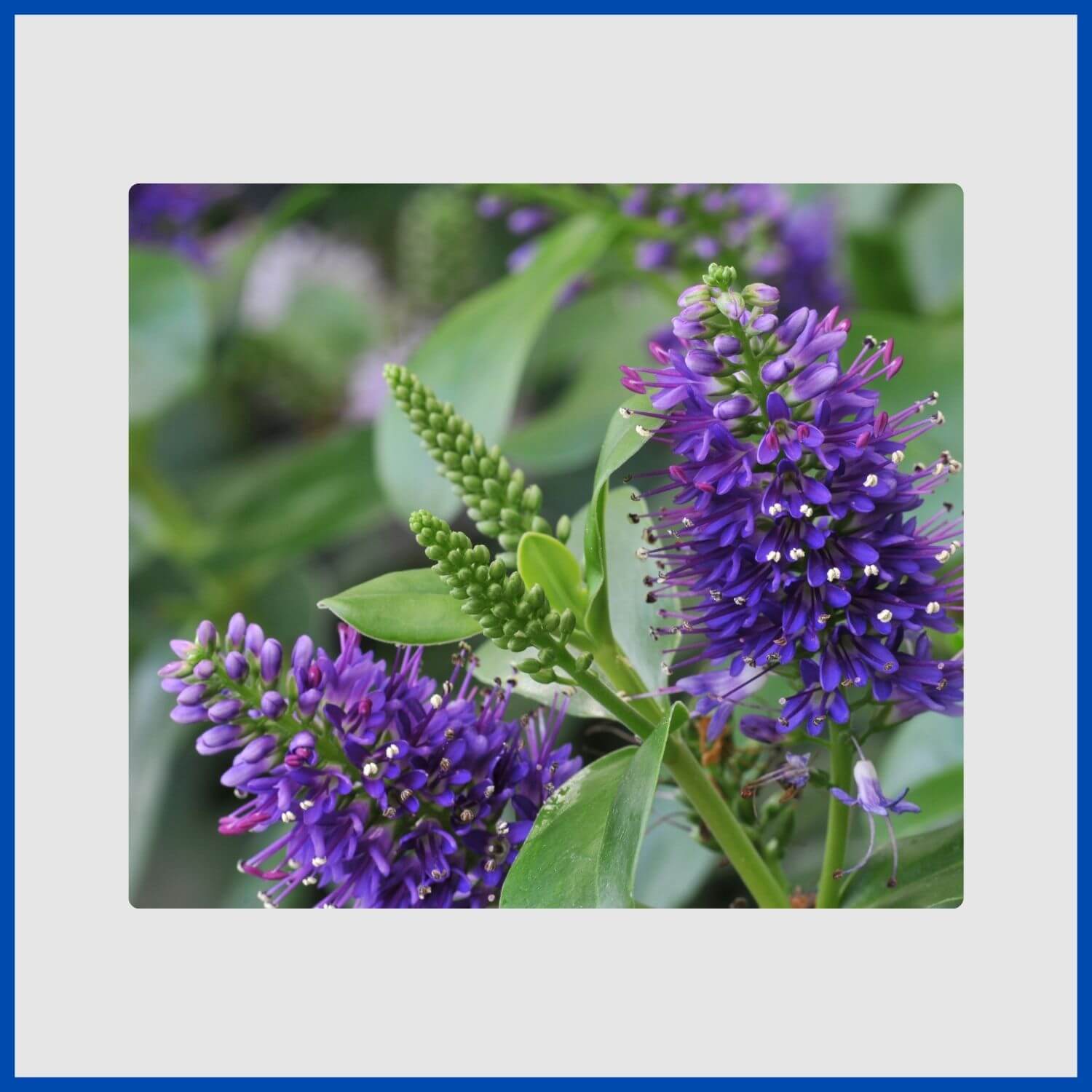
Hebe is a versatile evergreen shrub that produces bottlebrush-like spikes of flowers in shades of blue, purple, and white. Popular in coastal and mild climates, it provides year-round structure and attracts pollinators during its summer bloom.
- USDA Hardiness Zone: 8-10
- Bloom Time: Summer to fall
- Water Needs: Moderate
- Soil Type: Well-drained, fertile
- Sun Requirement: Full sun to partial shade
- Height: 2-4 feet
76. Wishbone Flower (Torenia fournieri)
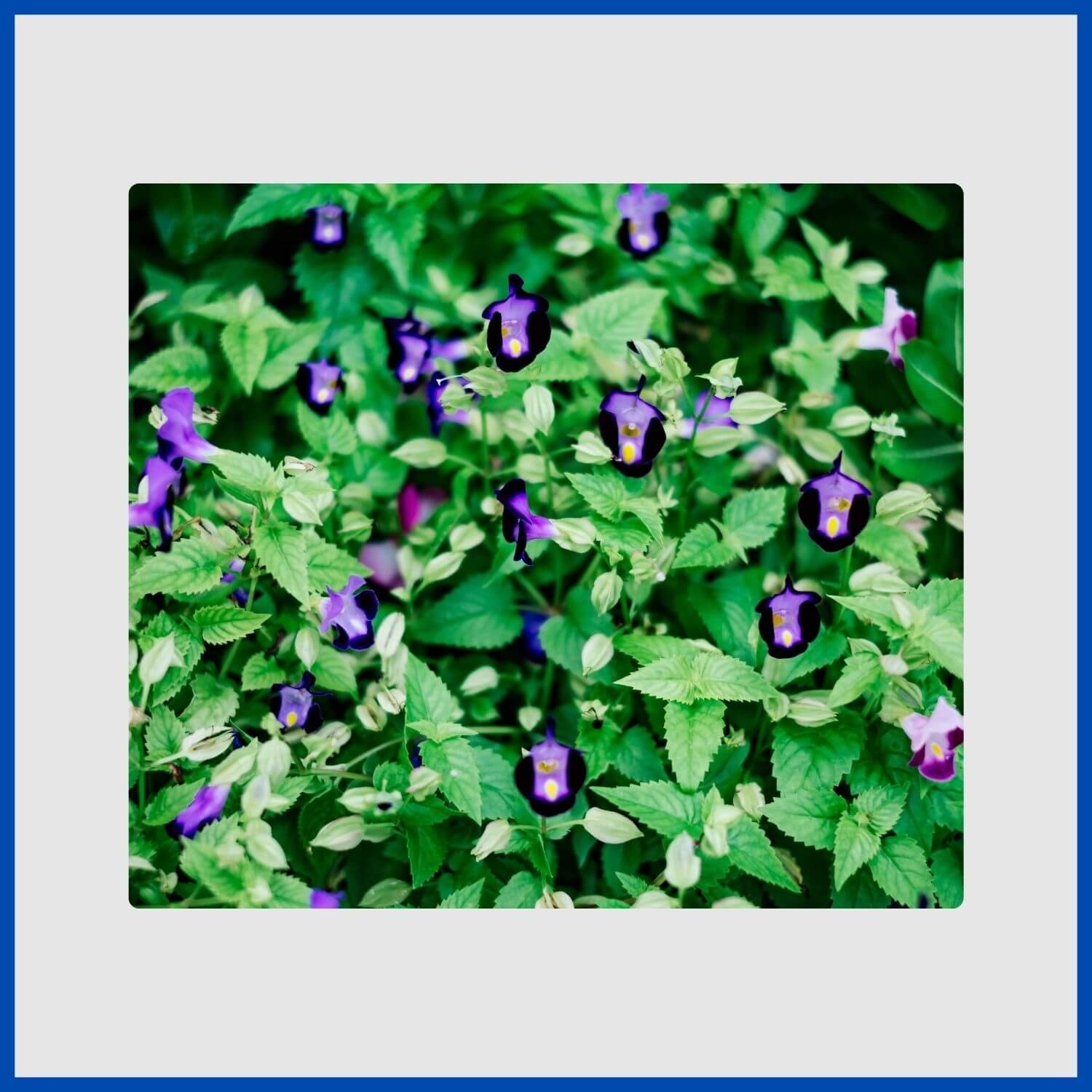
Wishbone flower is a valuable shade-tolerant annual that produces masses of snapdragon-like, tubular flowers in bright blue and violet hues, often with yellow throats. It’s a perfect “spiller” for hanging baskets, window boxes, and shaded borders.
- USDA Hardiness Zone: 10-11 (annual elsewhere)
- Bloom Time: Summer to fall
- Water Needs: Moderate to high
- Soil Type: Rich, moist, well-drained
- Sun Requirement: Partial to full shade
- Height: 8-12 inches
77. Virginia Bluebells (Mertensia virginica)
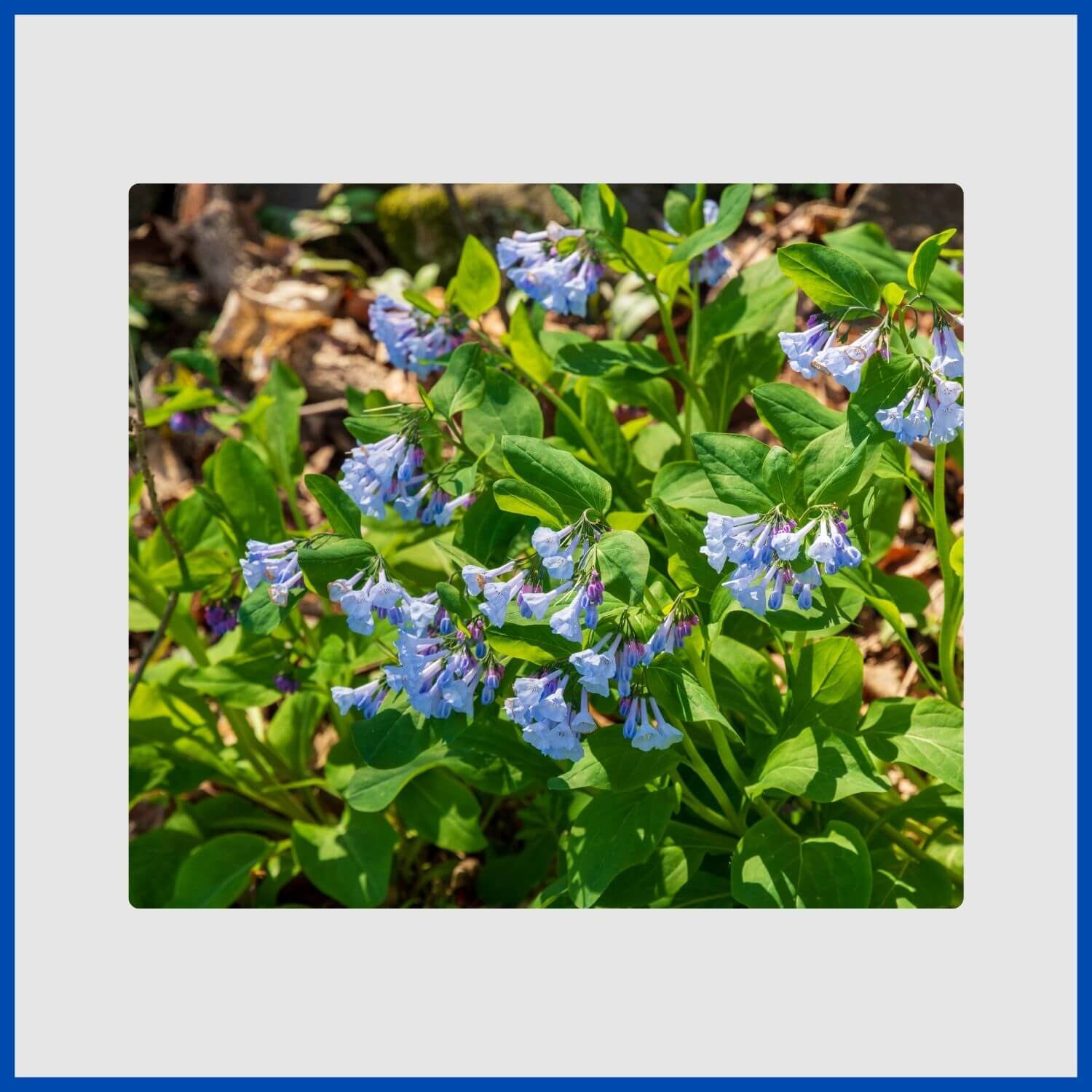
Virginia bluebells are beloved native woodland wildflowers that emerge in spring with pink buds that open to nodding, trumpet-shaped blue flowers. As a spring ephemeral, it blooms beautifully and then goes dormant by midsummer.
- USDA Hardiness Zone: 3-8
- Bloom Time: Early to mid-spring
- Water Needs: Moderate
- Soil Type: Moist, rich, well-drained
- Sun Requirement: Partial shade
- Height: 1-2 feet
78. Blue Corydalis (Corydalis flexuosa)
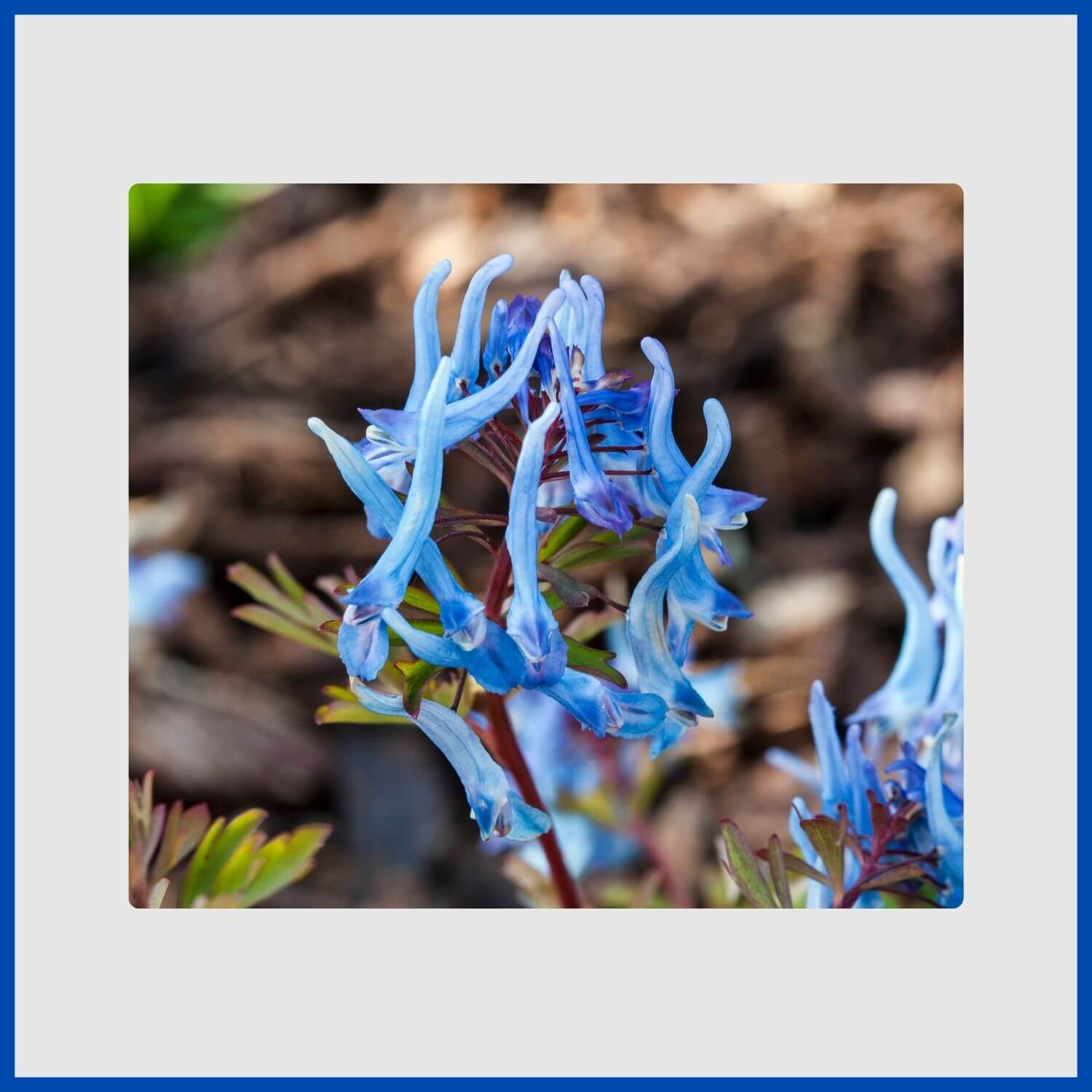
Blue corydalis is a stunning woodland perennial that produces vibrant, electric-blue, spurred flowers above fern-like foliage. It thrives in cool, moist, shaded conditions and often goes dormant in summer heat, re-emerging in fall.
- USDA Hardiness Zone: 5-8
- Bloom Time: Spring to early summer
- Water Needs: Moderate
- Soil Type: Moist, humus-rich, well-drained
- Sun Requirement: Partial to full shade
- Height: 10-15 inches
79. Jacob’s Ladder (Polemonium caeruleum)
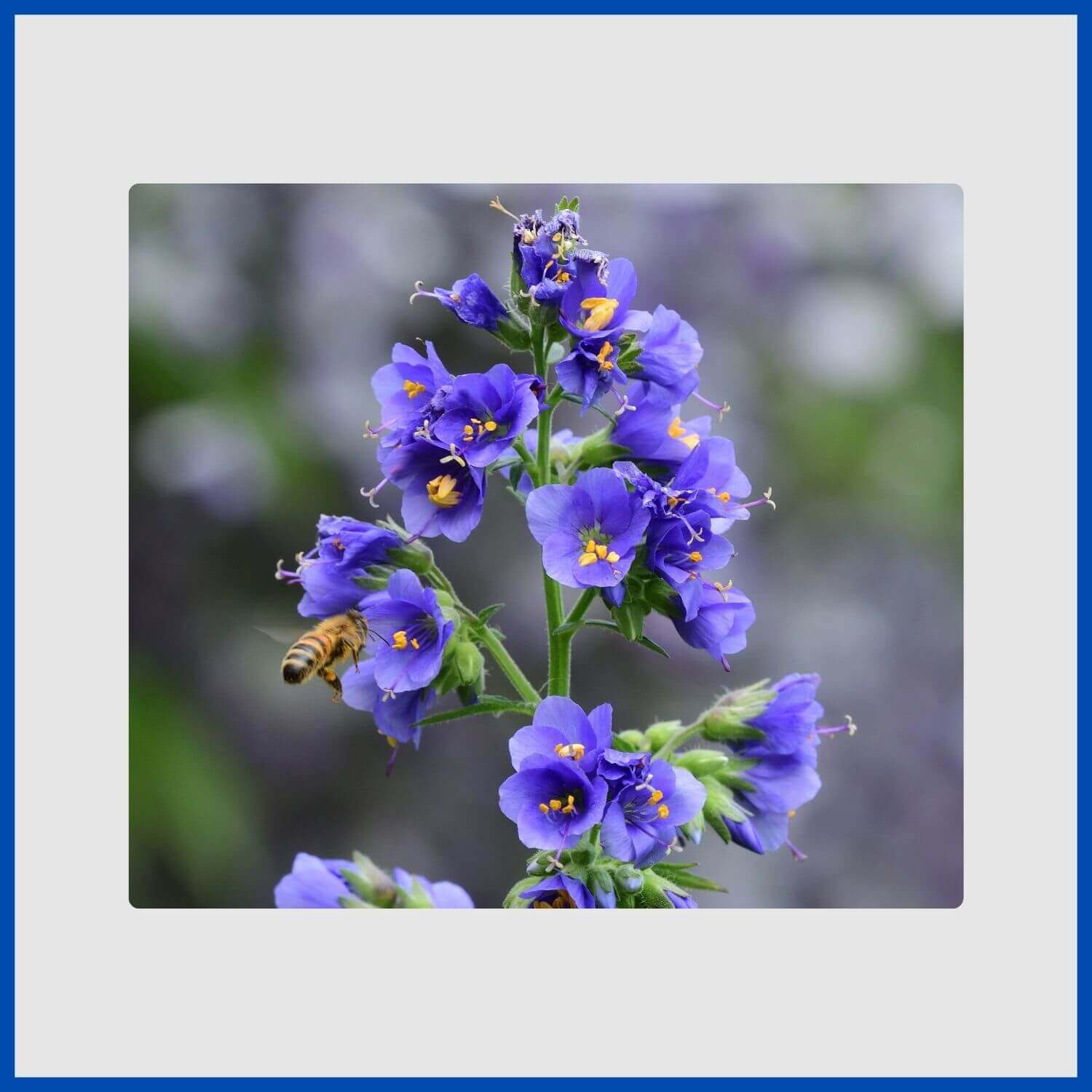
Jacob’s ladder is a charming perennial known for its unique, ladder-like (pinnate) foliage and clusters of cup-shaped, light blue flowers with prominent yellow stamens. It is a classic cottage garden plant that prefers cooler climates.
- USDA Hardiness Zone: 3-7
- Bloom Time: Late spring to early summer
- Water Needs: Moderate
- Soil Type: Moist, rich, well-drained
- Sun Requirement: Partial shade to full sun
- Height: 1-2 feet
80. Desert Bluebells (Phacelia campanularia)
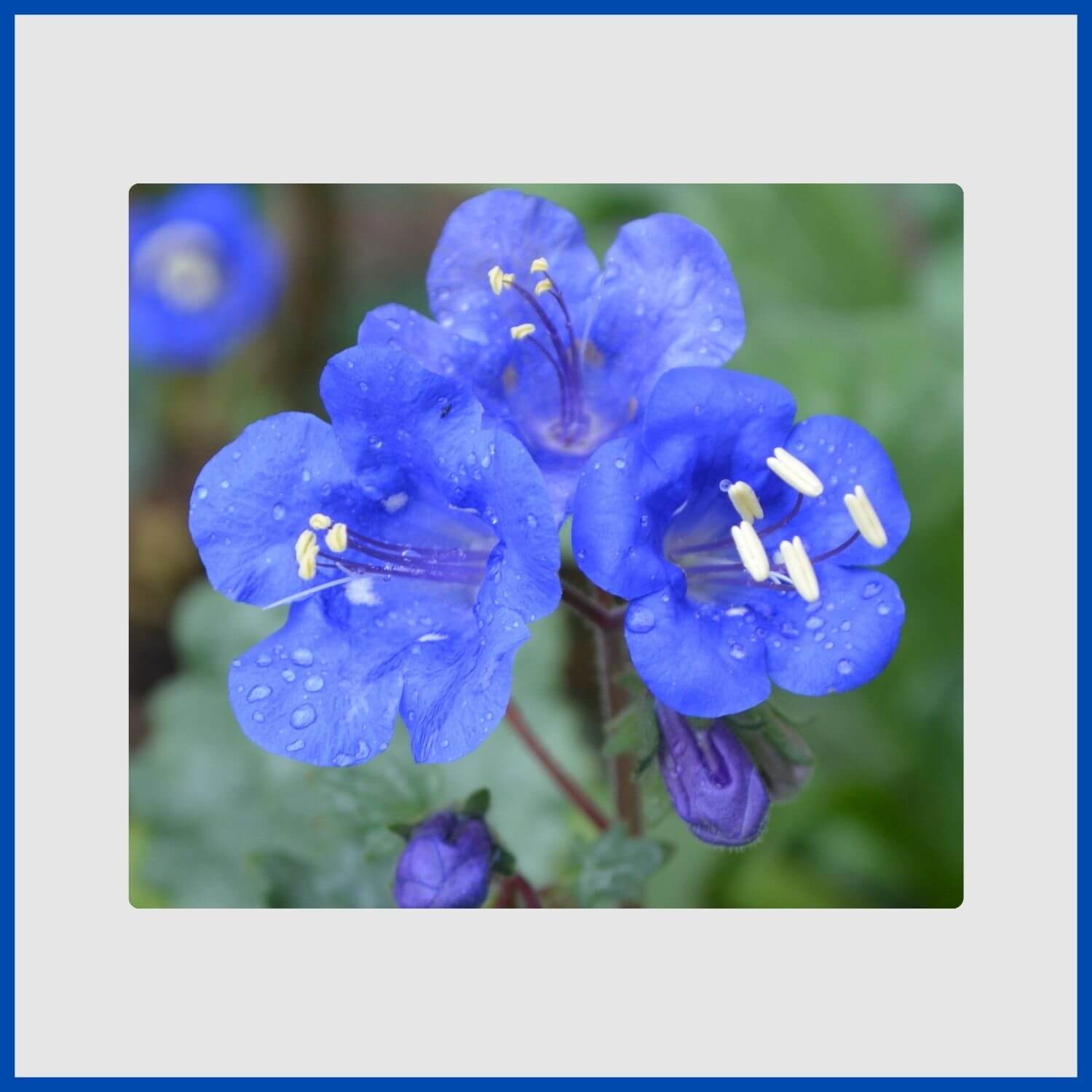
Desert bluebells are California native annuals that produce some of the most intense, cobalt-blue flowers in the plant kingdom. These bell-shaped blooms are a favorite of native bees and create stunning displays in dry, sunny gardens.
- USDA Hardiness Zone: 2-11 (annual)
- Bloom Time: Spring to early summer
- Water Needs: Low
- Soil Type: Well-drained, sandy
- Sun Requirement: Full sun
- Height: 1-2 feet
81. Butterfly Pea (Clitoria ternatea)
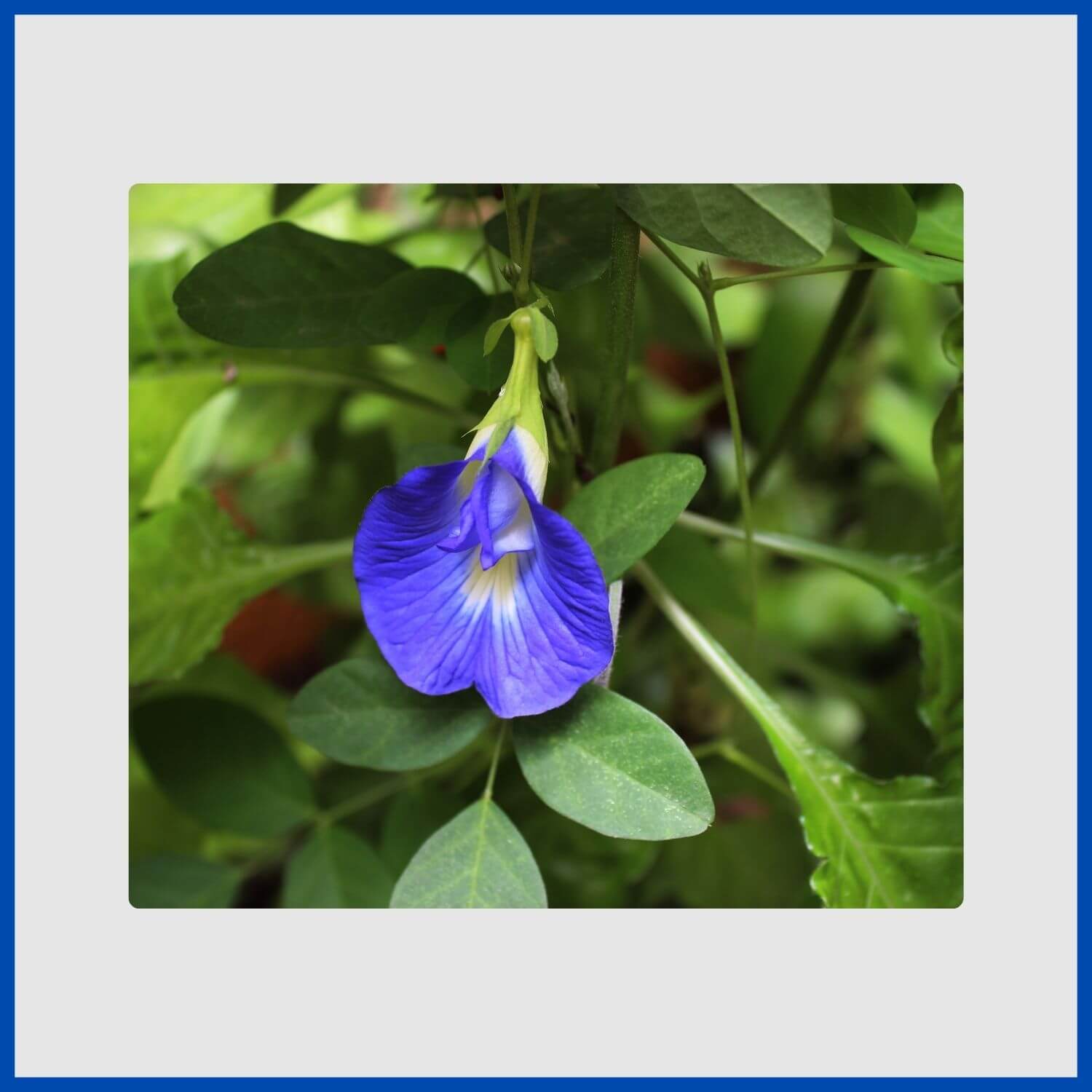
Butterfly pea is a tropical vine that produces stunning, edible flowers in a deep, vivid blue with a white or yellow center. The flowers are famously used to make blue herbal tea that changes color to purple with the addition of lemon juice.
- USDA Hardiness Zone: 10-11 (annual elsewhere)
- Bloom Time: Summer to fall
- Water Needs: Moderate
- Soil Type: Well-drained, fertile
- Sun Requirement: Full sun
- Height: 6-10 feet (vine)
82. California Lilac (Ceanothus spp.)
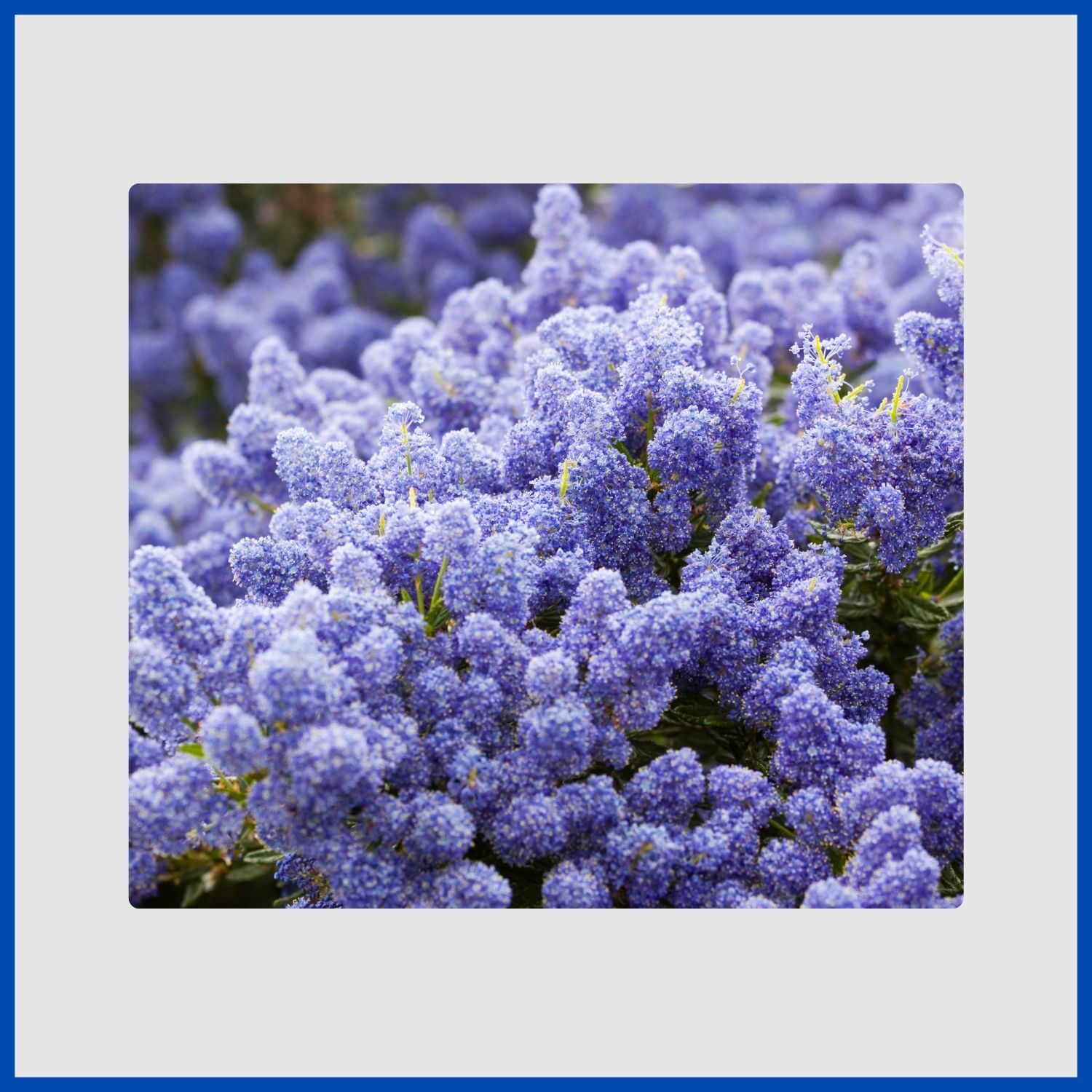
California lilac is a shrub that stops traffic in spring when it covers itself in dense clusters of powder-blue to deep-violet flowers. This drought-tolerant West Coast native is highly attractive to pollinators and thrives in dry, sunny locations.
- USDA Hardiness Zone: 7-10 (varies by species)
- Bloom Time: Spring
- Water Needs: Low
- Soil Type: Well-drained, average to poor
- Sun Requirement: Full sun
- Height: 3-12 feet (varies)
83. Queen’s Wreath (Petrea volubilis)
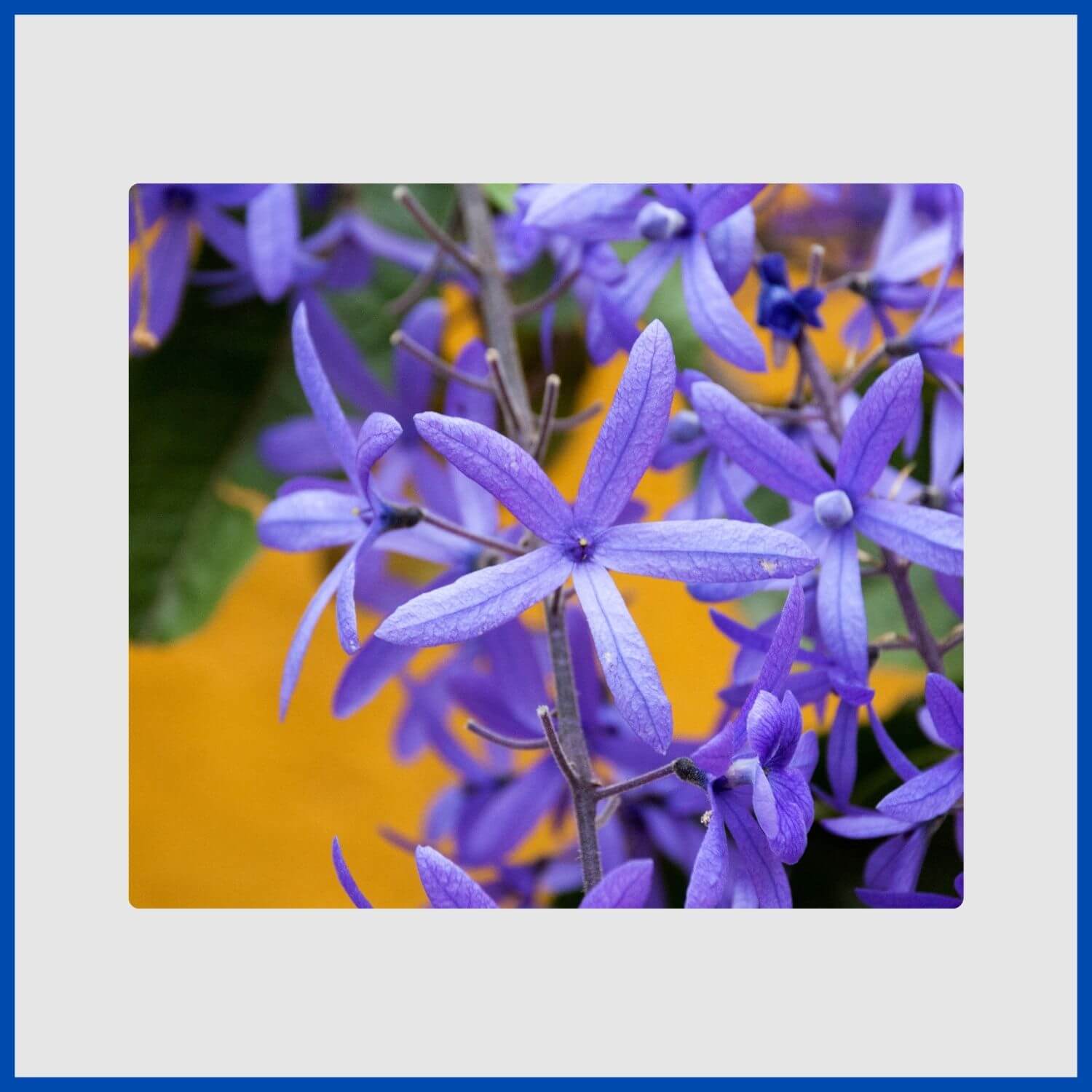
Queen’s Wreath is a spectacular tropical vine that produces long, cascading chains (racemes) of star-shaped lavender-blue flowers. Often called “sandpaper vine” for its rough leaves, it creates a breathtaking, wisteria-like effect.
- USDA Hardiness Zone: 10-11
- Bloom Time: Spring to summer
- Water Needs: Moderate
- Soil Type: Well-drained, fertile
- Sun Requirement: Full sun to partial shade
- Height: 20-40 feet (vine)
84. Starflower (Ipheion uniflorum)
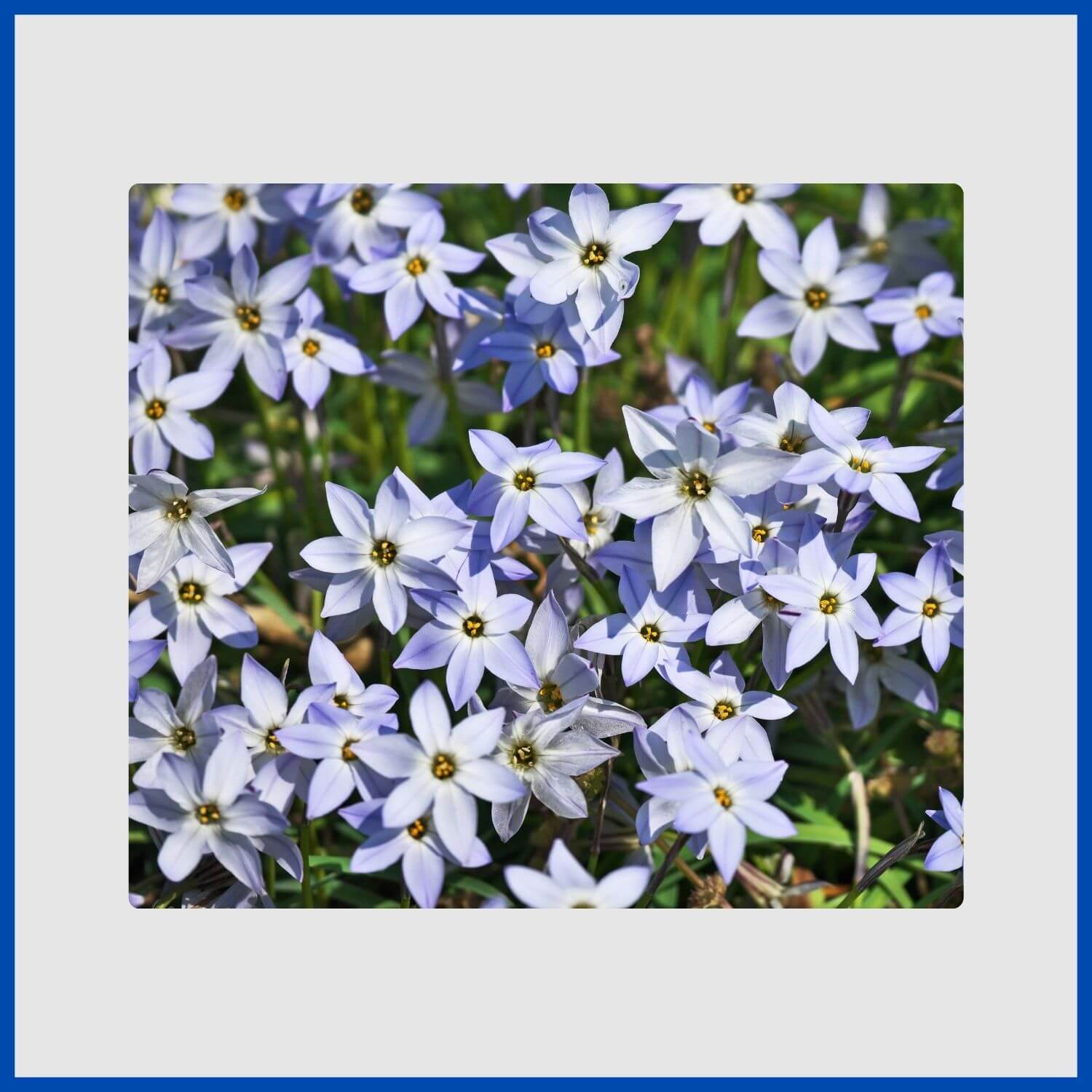
Starflower is a small, spring-blooming bulb that produces delicate, star-shaped flowers in shades of pale blue and white. It has a slight, pleasant fragrance and naturalizes easily in lawns, borders, and rock gardens.
- USDA Hardiness Zone: 5-9
- Bloom Time: Spring
- Water Needs: Moderate
- Soil Type: Well-drained, average
- Sun Requirement: Full sun to partial shade
- Height: 4-8 inches
85. Hyacinth (Hyacinthus orientalis)
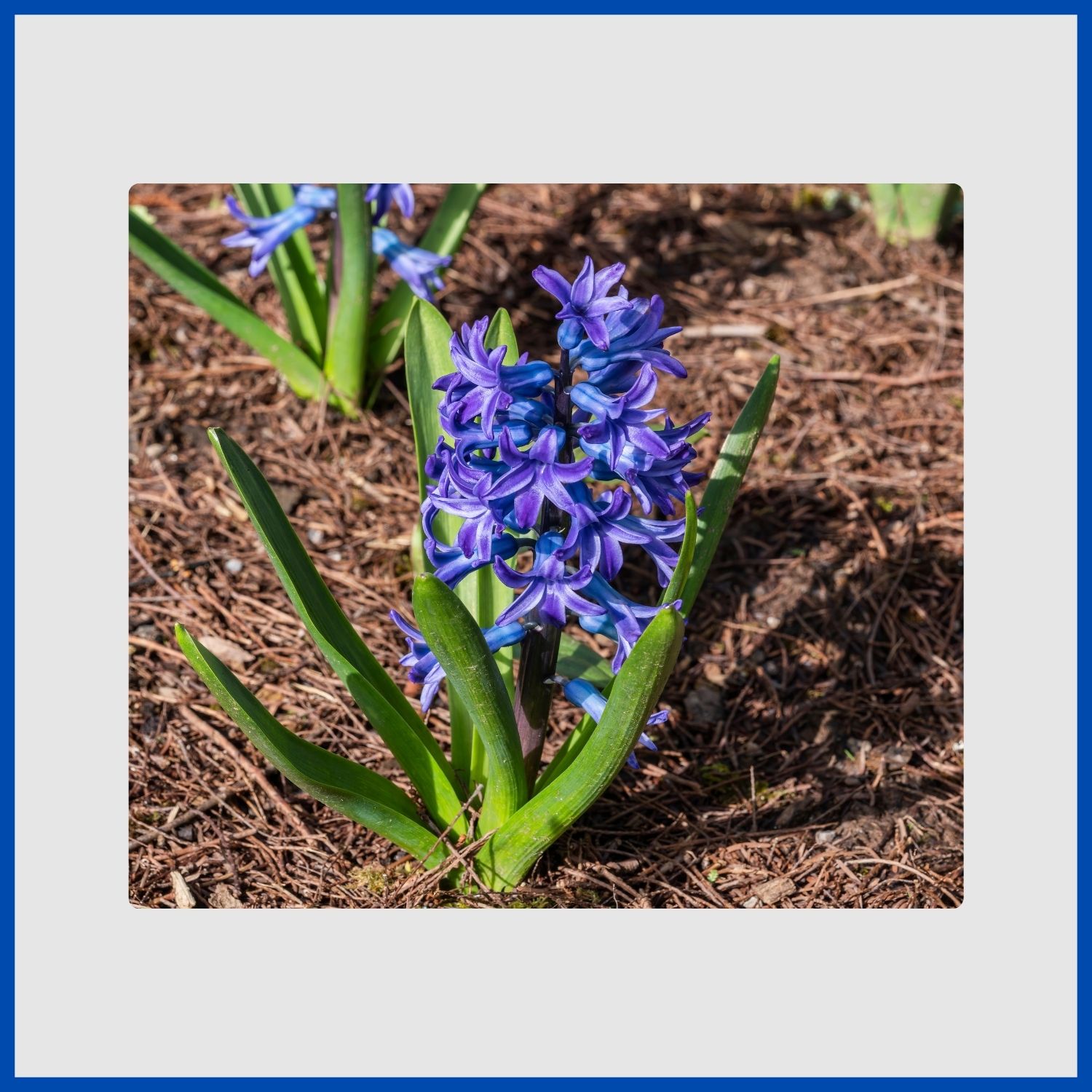
Hyacinths are classic spring bulbs beloved for their dense spikes of star-shaped flowers and powerful, sweet fragrance. Blue varieties range from pale powder blue to deep, almost-purple navy, making them a staple in spring beds.
- USDA Hardiness Zone: 4-8
- Bloom Time: Early to mid-spring
- Water Needs: Moderate
- Soil Type: Well-drained, fertile
- Sun Requirement: Full sun
- Height: 8-12 inches
86. Lisianthus (Eustoma grandiflorum)
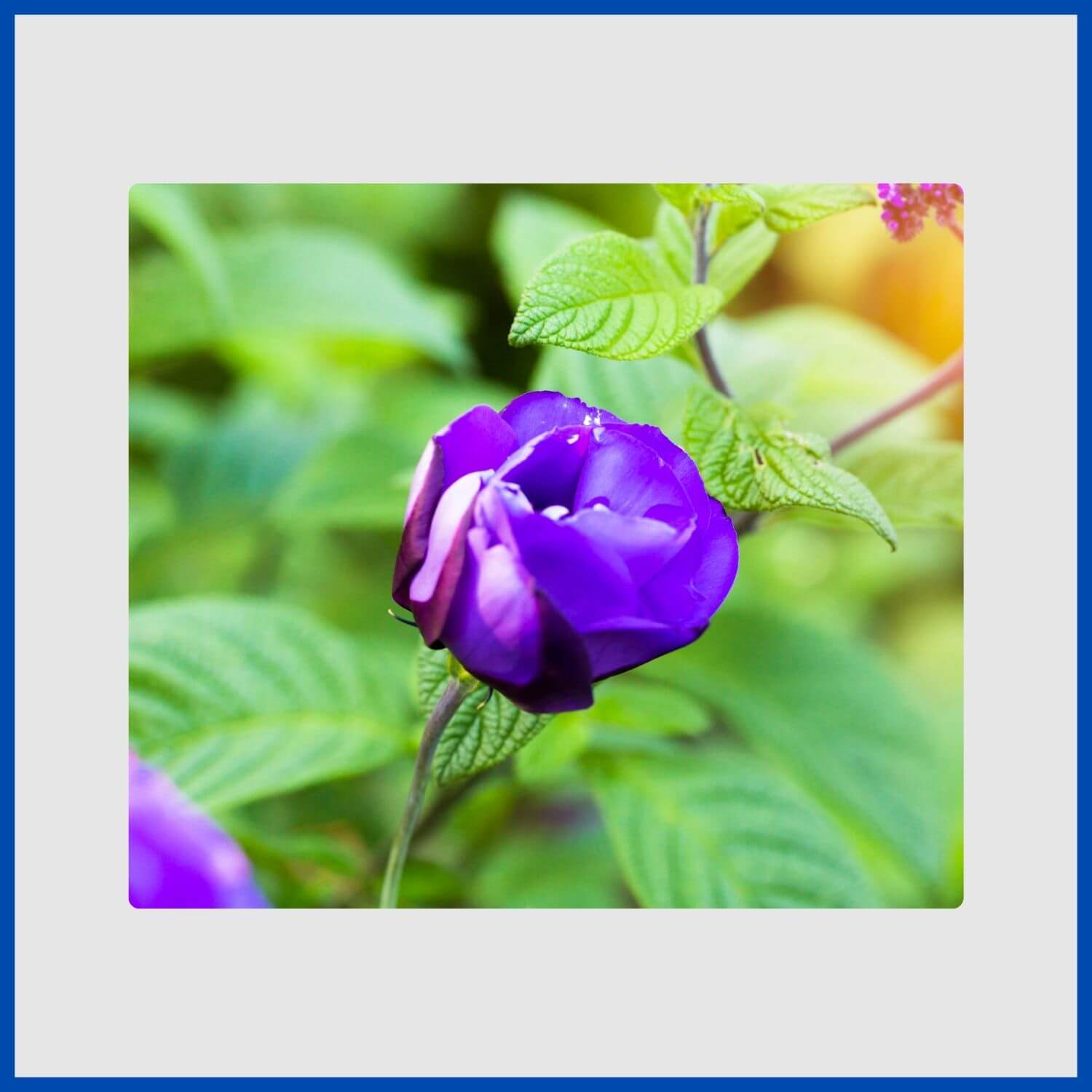
Lisianthus produces elegant, rose-like flowers with ruffled petals on tall stems, making them a favorite for cut flower arrangements. Blue and purple varieties offer sophisticated color and exceptional vase life.
- USDA Hardiness Zone: 8-10 (annual elsewhere)
- Bloom Time: Summer to fall
- Water Needs: Moderate
- Soil Type: Well-drained, neutral to alkaline
- Sun Requirement: Full sun
- Height: 1-3 feet
87. Painted Tongue (Salpiglossis sinuata)
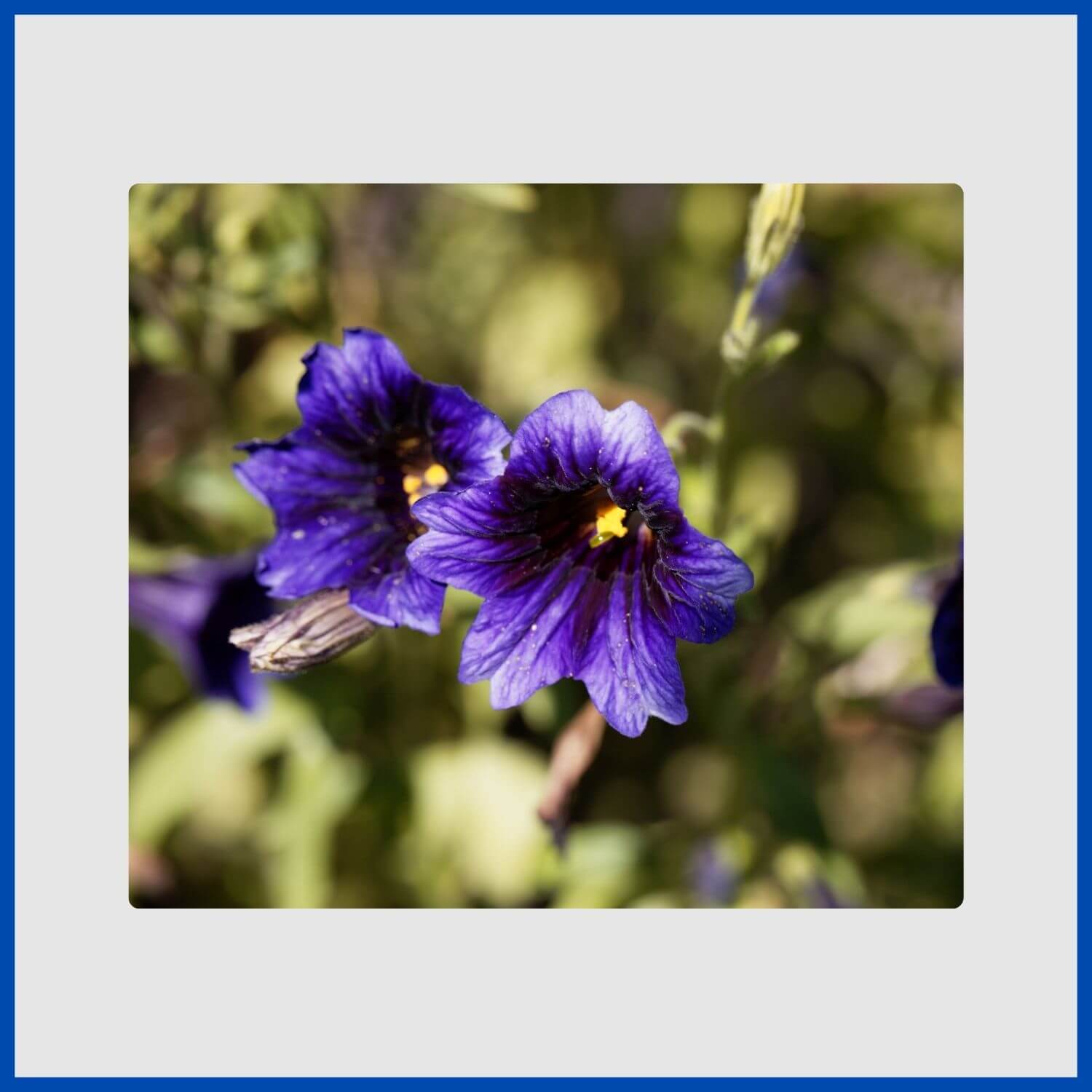
Painted tongue is a visually striking annual with velvety, trumpet-shaped flowers marked by dramatic, contrasting veins. Blue and purple varieties are particularly stunning, appearing almost hand-painted with gold or yellow throats.
- USDA Hardiness Zone: 2-11 (annual)
- Bloom Time: Summer
- Water Needs: Moderate
- Soil Type: Rich, well-drained
- Sun Requirement: Full sun
- Height: 1-2 feet
88. Nemesia (Nemesia spp.)
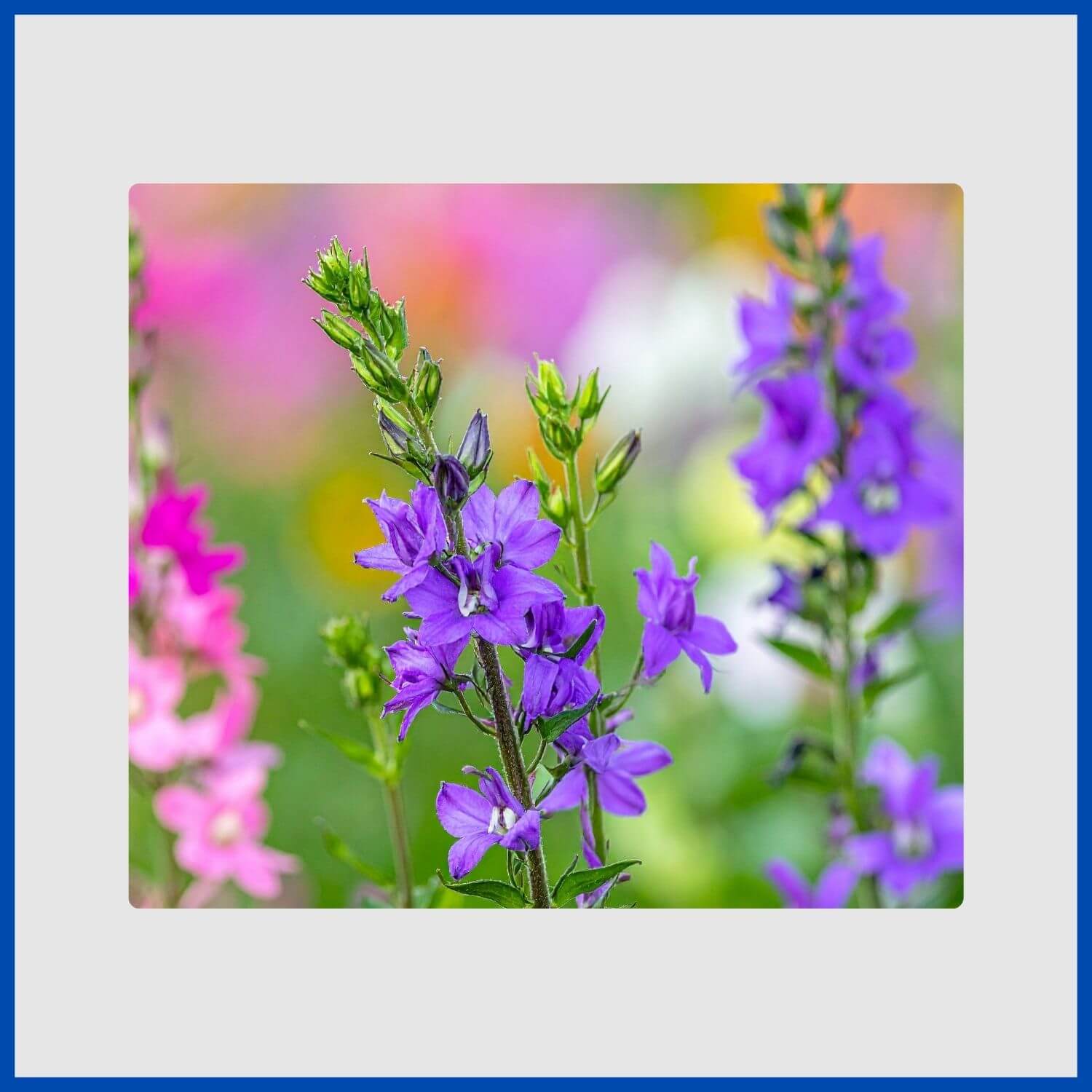
Nemesia is a charming cool-season annual that produces clouds of small, snapdragon-like flowers, with many modern cultivars offering true-blue and lavender-blue hues. It is highly fragrant and perfect for spring containers and hanging baskets.
- USDA Hardiness Zone: 9-11 (annual elsewhere)
- Bloom Time: Spring and fall
- Water Needs: Moderate
- Soil Type: Rich, moist, well-drained
- Sun Requirement: Full sun to partial shade
- Height: 8-12 inches
89. Mexican Petunia (Ruellia brittoniana)
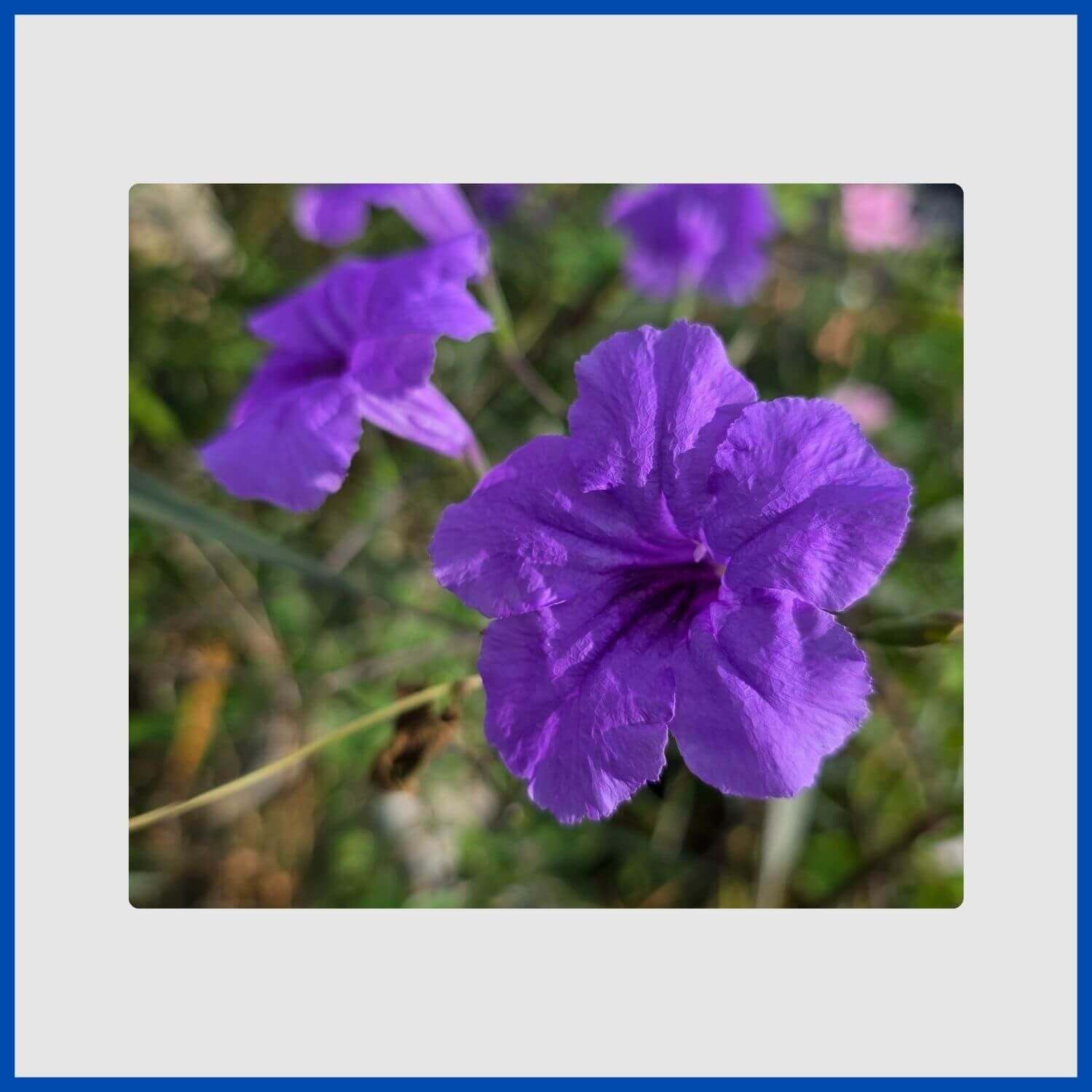
Mexican petunia is a tough, heat-loving perennial that produces a daily show of trumpet-shaped, blue-violet flowers. It thrives in difficult conditions, including heat, humidity, and poor soil, but can be invasive in warm climates.
- USDA Hardiness Zone: 8-11
- Bloom Time: Spring to fall
- Water Needs: Low to moderate
- Soil Type: Well-drained, average
- Sun Requirement: Full sun to partial shade
- Height: 3-4 feet
90. Blue Lechenaultia (Lechenaultia biloba)
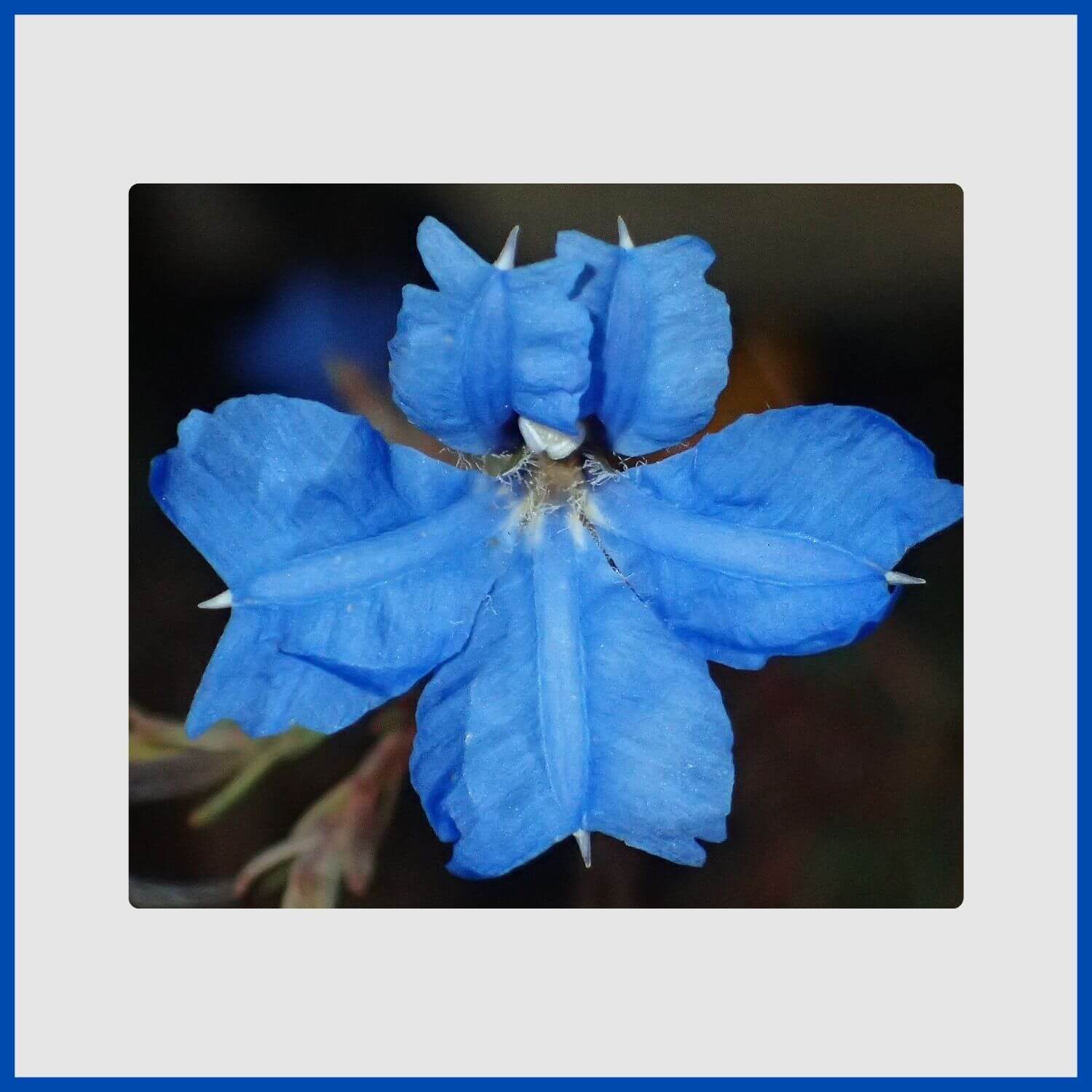
This Australian native is famous for producing some of the most intense, electric-blue flowers in the world. It is a low-growing shrub with fan-shaped petals that create an unforgettable display, but it requires sharp drainage and acidic soil.
- USDA Hardiness Zone: 9-11
- Bloom Time: Spring to summer
- Water Needs: Low
- Soil Type: Well-drained, sandy, acidic
- Sun Requirement: Full sun
- Height: 1-2 feet
91. Comfrey (Symphytum spp.)
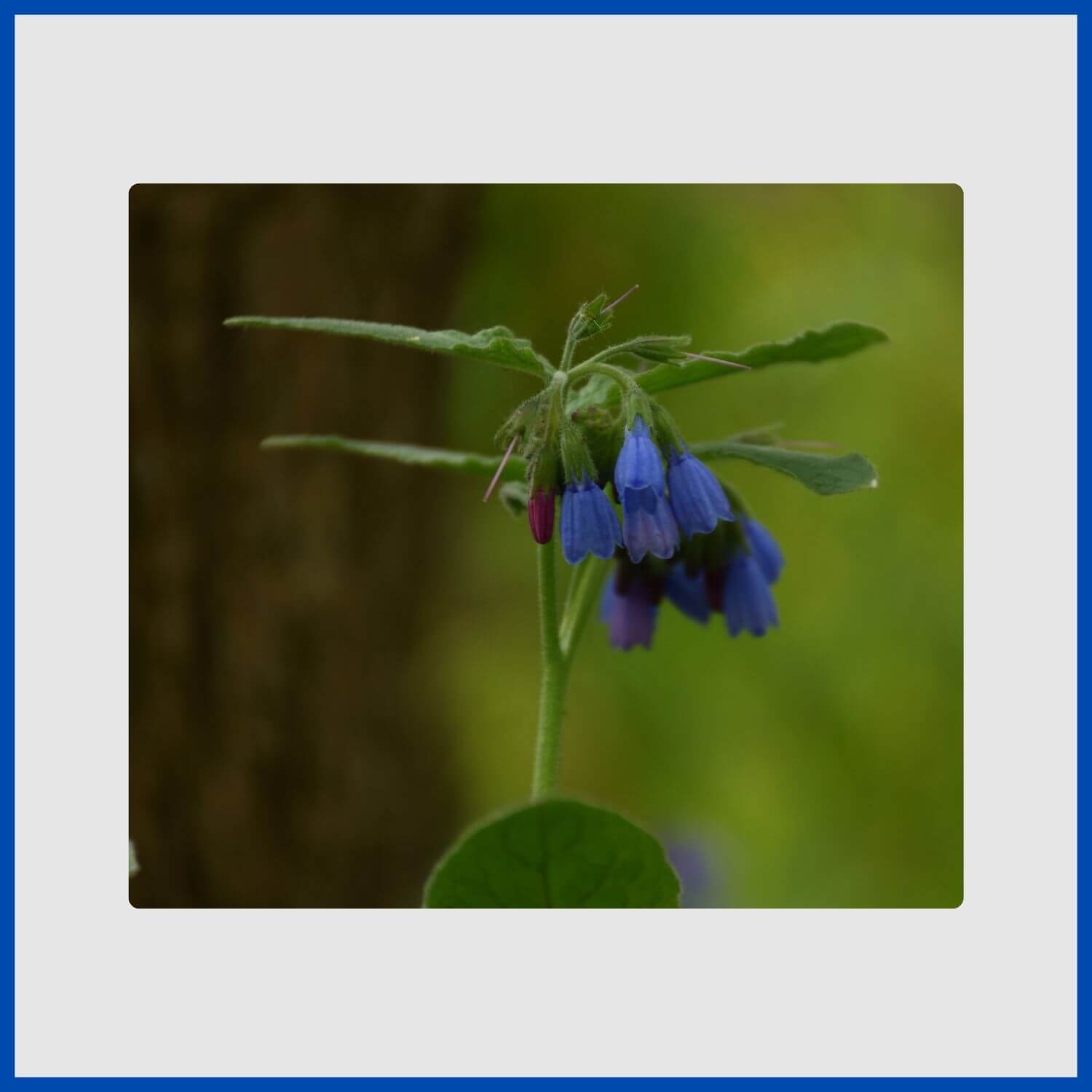
Comfrey is a fast-growing, rugged perennial known for its medicinal uses and as a dynamic accumulator in permaculture. Many varieties, like ‘Hidcote Blue’, produce charming, nodding clusters of small, bell-shaped, sky-blue flowers in late spring.
- USDA Hardiness Zone: 4-9
- Bloom Time: Late spring to early summer
- Water Needs: Moderate to high
- Soil Type: Moist, fertile, well-drained
- Sun Requirement: Full sun to partial shade
- Height: 1.5-2 feet
92. Blue Crocus (Crocus spp.)
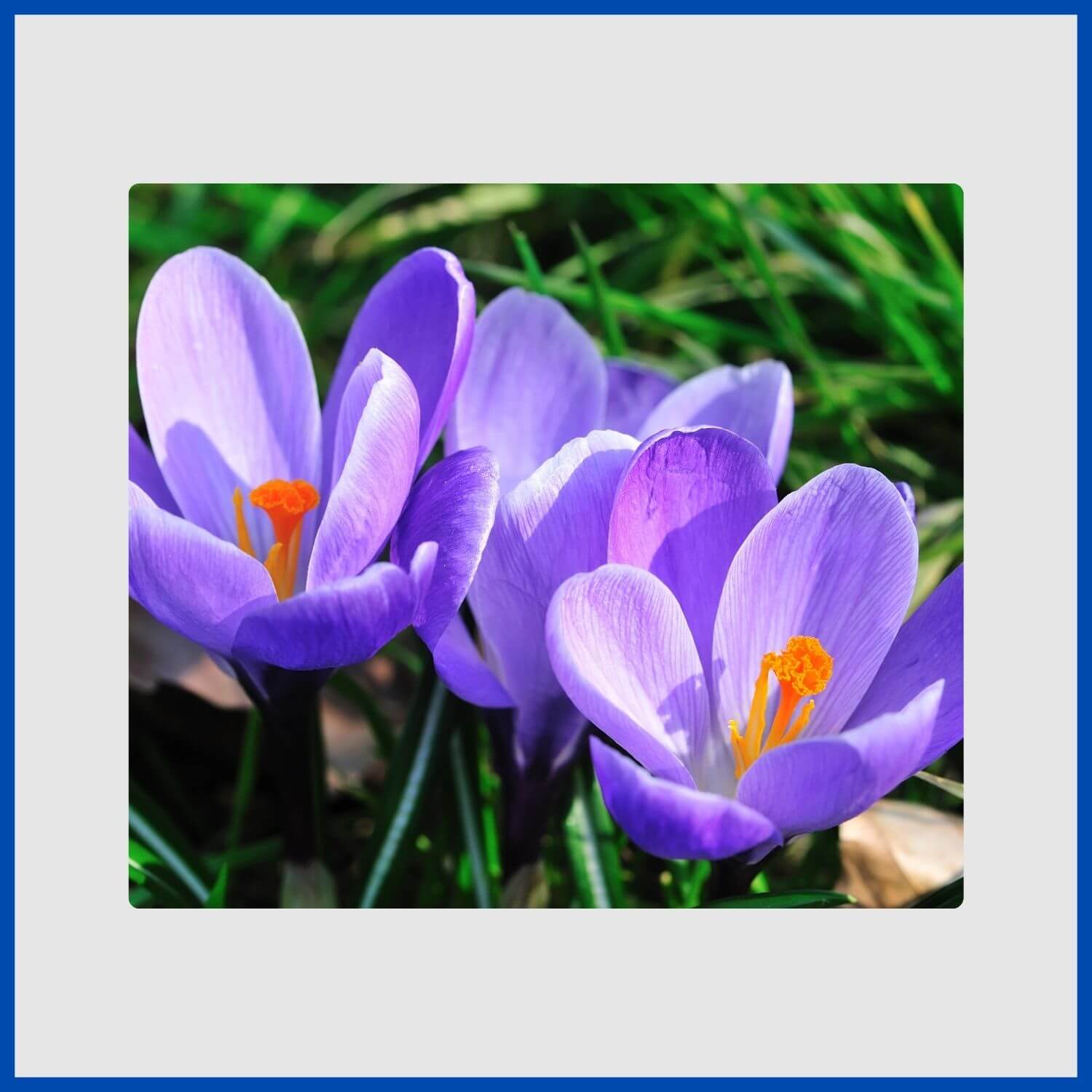
Crocus is a herald of spring, and several varieties bloom in shades of blue and purple. ‘Blue Pearl’ and ‘Blue Peter’ are popular cultivars that naturalize in lawns and gardens, providing an early food source for bees.
- USDA Hardiness Zone: 3-8
- Bloom Time: Early spring
- Water Needs: Moderate
- Soil Type: Well-drained, average
- Sun Requirement: Full sun
- Height: 4-6 inches
93. Asiatic Dayflower (Commelina communis)
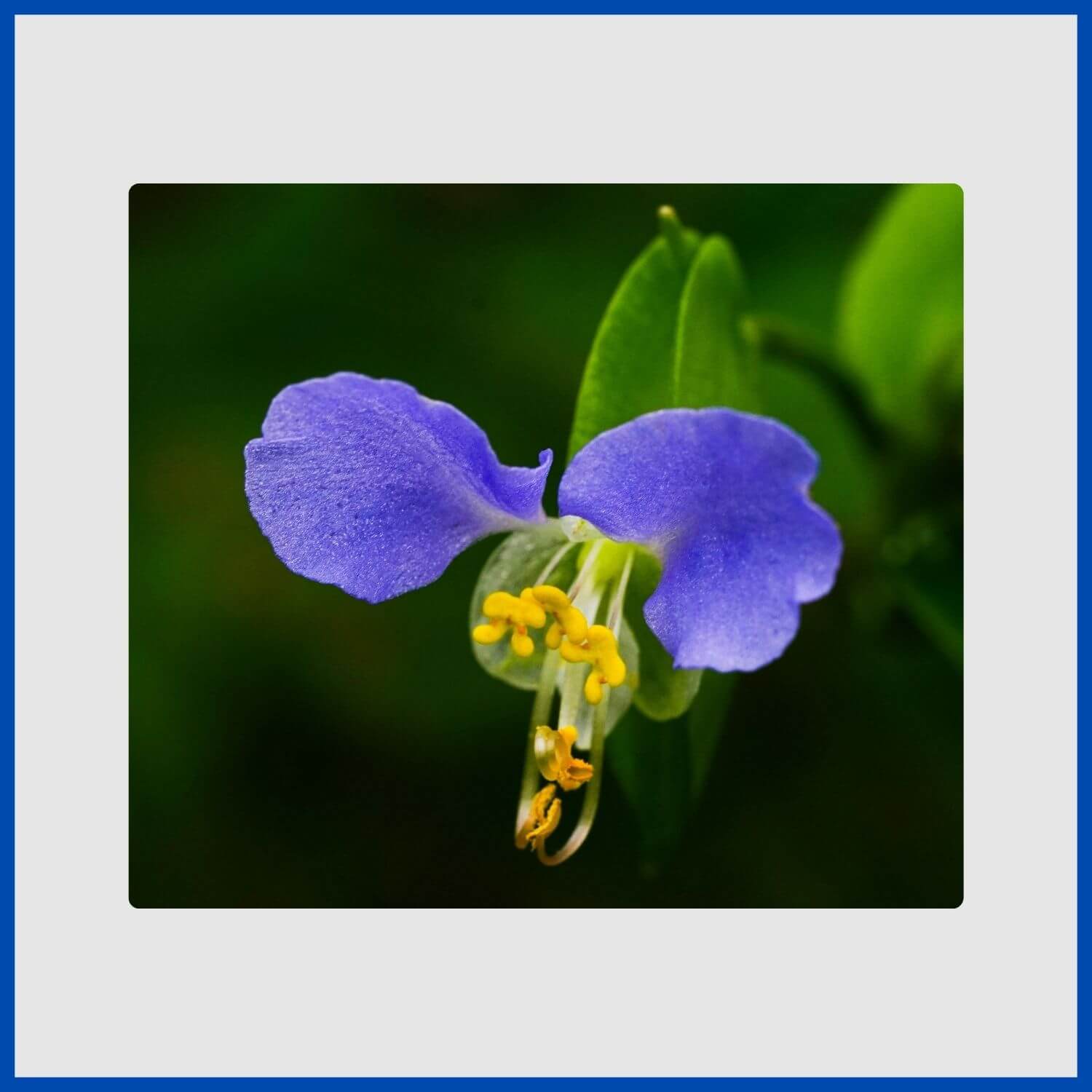
While often considered a weed, the Asiatic dayflower produces a delicate and intricate, true-blue flower with two large “Mickey Mouse” petals and one small lower petal. Each flower lasts only a single morning, but the plant blooms profusely.
- USDA Hardiness Zone: 5-10
- Bloom Time: Summer to fall
- Water Needs: Moderate to high
- Soil Type: Moist, rich
- Sun Requirement: Partial to full shade
- Height: 1-2 feet
94. Blue Flax Lily (Heliophila longifolia)
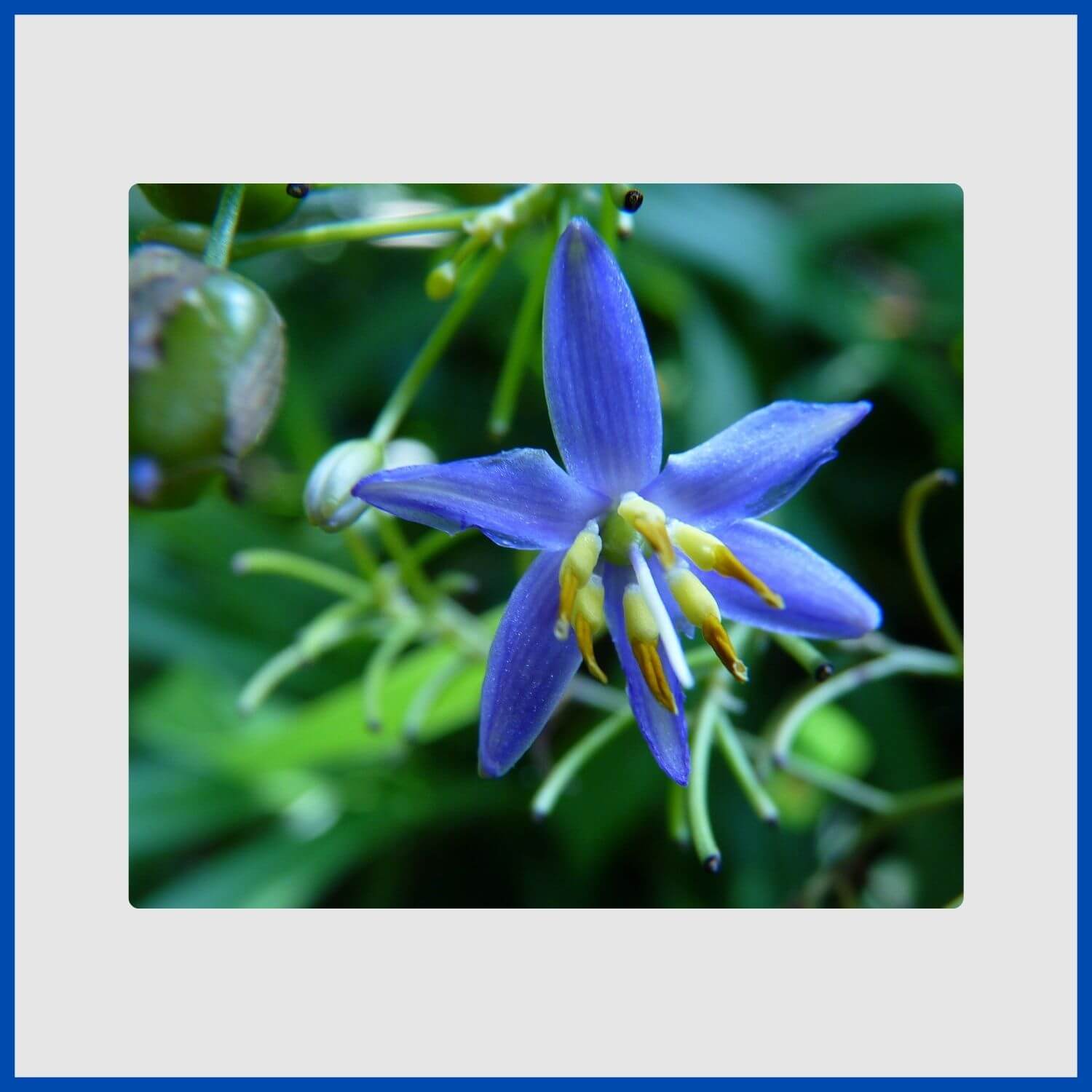
Not to be confused with Linum (Blue Flax), this South African annual is a delicate, airy plant with slender stems and masses of small, sky-blue flowers, each with a contrasting white center. It creates a beautiful, cloud-like effect in borders.
- USDA Hardiness Zone: 2-11 (annual)
- Bloom Time: Spring to early summer
- Water Needs: Moderate
- Soil Type: Well-drained, fertile
- Sun Requirement: Full sun
- Height: 12-18 inches
95. Cupid’s Dart (Catananche caerulea)
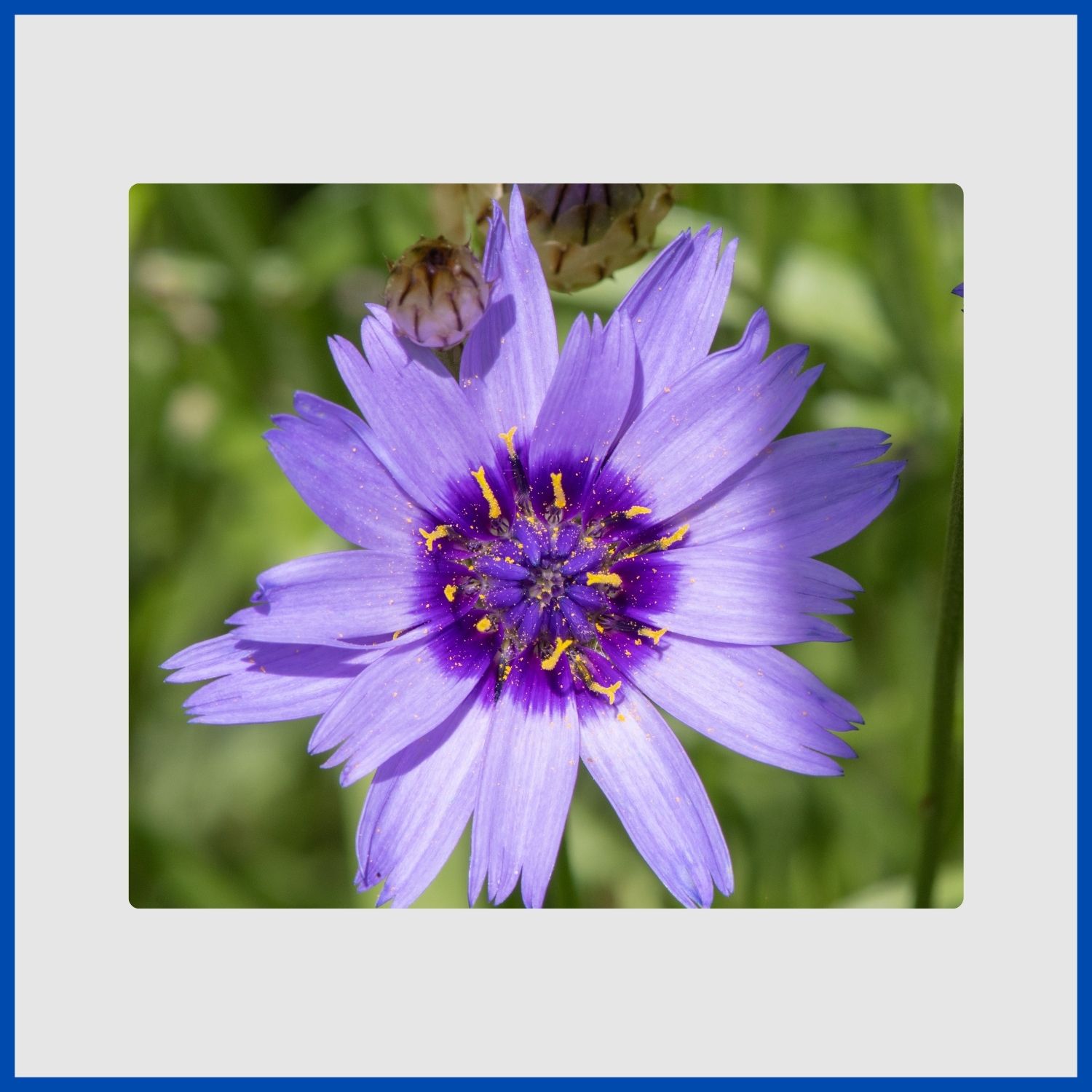
Cupid’s Dart is a short-lived perennial that produces charming, cornflower-like blue flowers with dark centers, held on wiry stems. The papery, silvery bracts on the buds remain attractive even after the flower fades, making them great for drying.
- USDA Hardiness Zone: 4-9
- Bloom Time: Summer
- Water Needs: Low to moderate
- Soil Type: Well-drained, sandy
- Sun Requirement: Full sun
- Height: 1.5-2 feet
96. Blue Verbena (Verbena spp.)
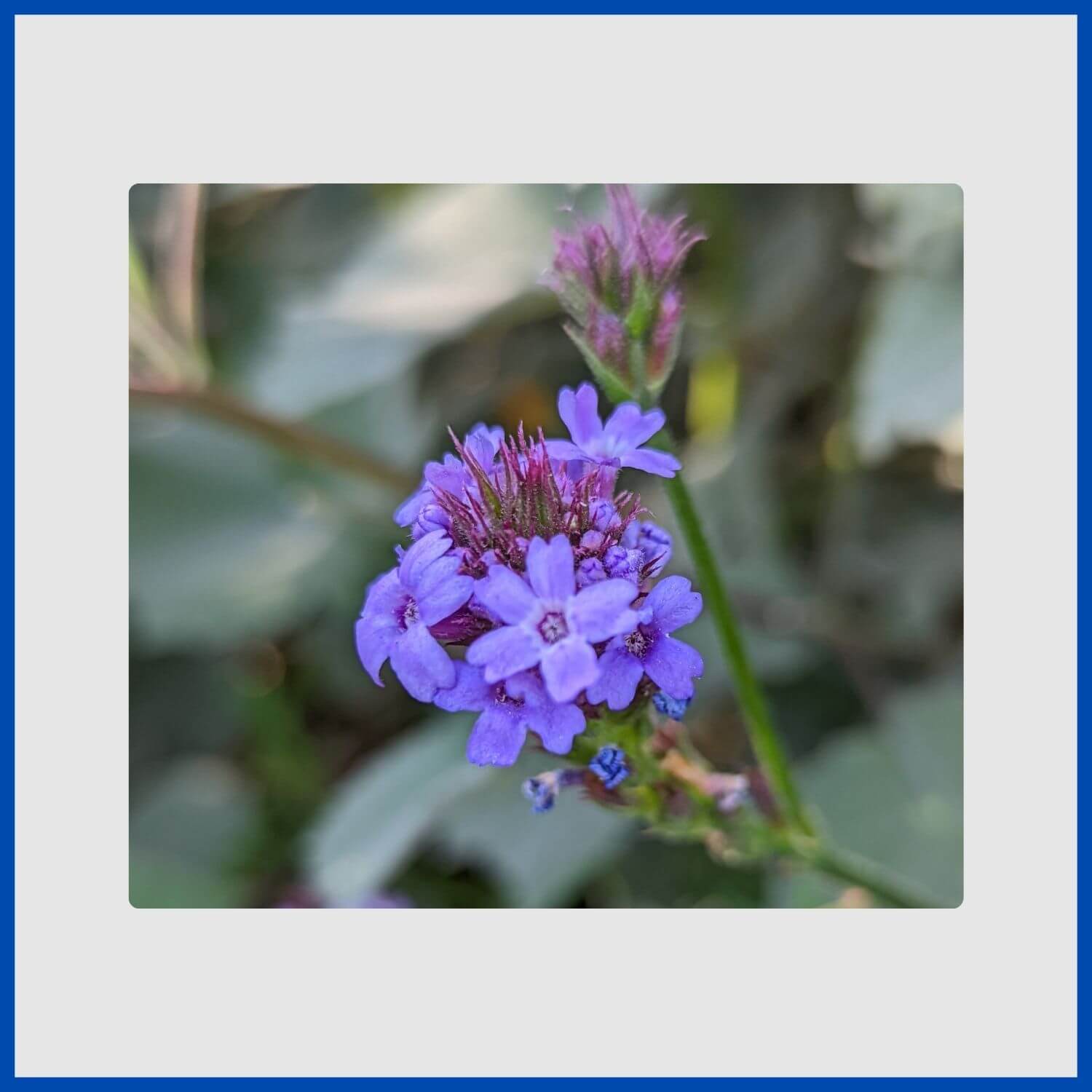
While many verbenas are purple, several cultivars offer shades of blue-violet, often with a white eye. These plants, both annual and perennial, are workhorses for hot, sunny spots, blooming nonstop and attracting butterflies.
- USDA Hardiness Zone: 7-10 (annual elsewhere)
- Bloom Time: Spring to fall
- Water Needs: Low to moderate
- Soil Type: Well-drained, average
- Sun Requirement: Full sun
- Height: 6-18 inches
97. Alpine Sea Holly (Eryngium alpinum)
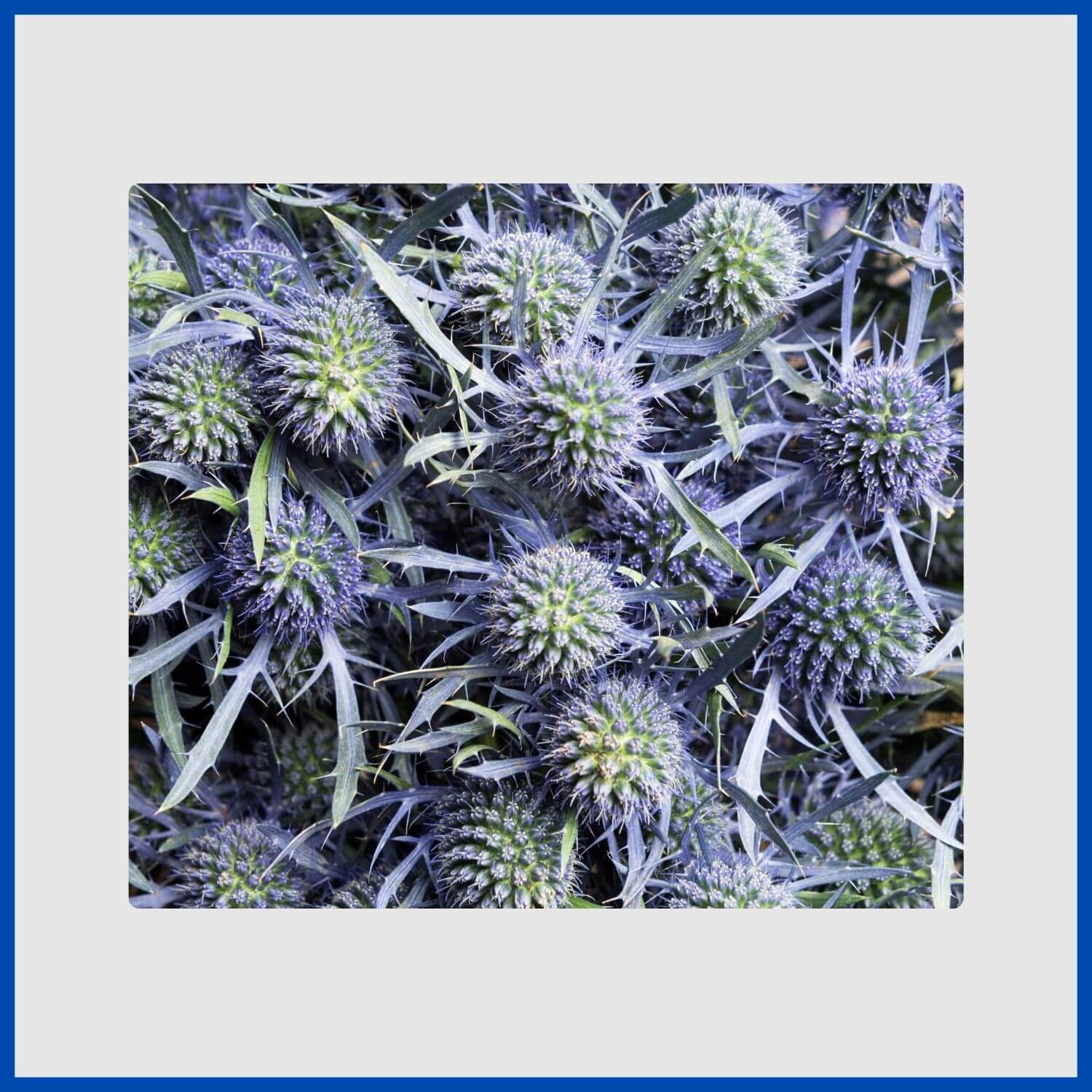
Alpine Sea Holly is an architectural perennial with spiky, metallic-blue flowers and dramatic, feathery bracts that look like a thistle. It provides stunning texture in gardens and is a favorite for cutting and drying.
- USDA Hardiness Zone: 4-9
- Bloom Time: Summer
- Water Needs: Low
- Soil Type: Well-drained, sandy to average
- Sun Requirement: Full sun
- Height: 2-3 feet
98. Bog Sage (Salvia uliginosa)
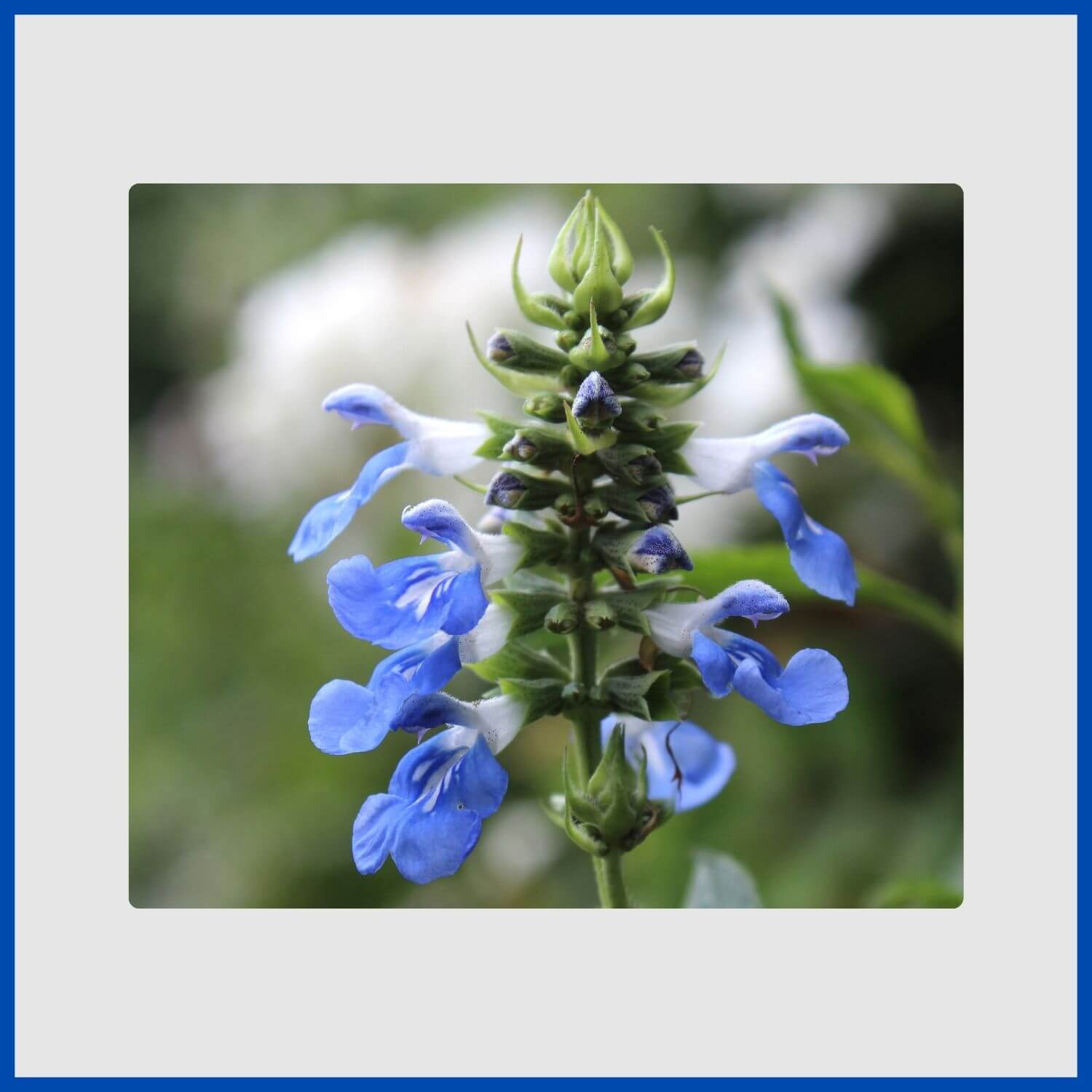
Bog sage is a tall, spreading perennial that produces airy spikes of clear, sky-blue flowers in late summer and fall. As its name suggests, it thrives in moist soil, providing a rare blue color for wetland gardens and attracting hummingbirds.
- USDA Hardiness Zone: 7-10
- Bloom Time: Late summer to fall
- Water Needs: High
- Soil Type: Moist to wet, fertile
- Sun Requirement: Full sun to partial shade
- Height: 4-6 feet
99. Blue Spur Flower (Plectranthus zuluensis)
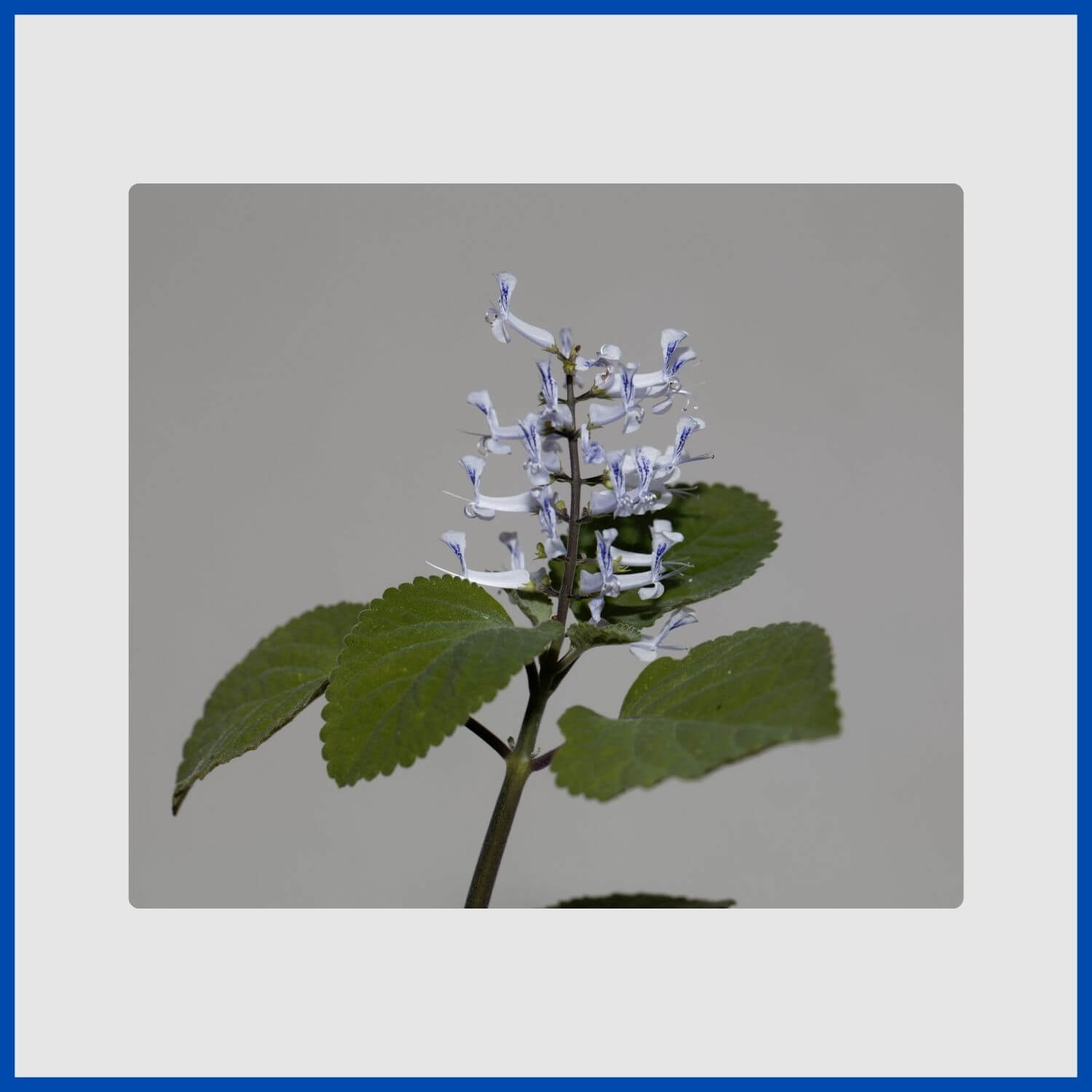
This fast-growing, shade-tolerant shrub produces lovely spikes of lipped, lavender-blue flowers multiple times a year. Its lush, aromatic foliage and tolerance for shade make it a valuable plant for filling difficult spots in mild climates.
- USDA Hardiness Zone: 9-11
- Bloom Time: Spring to fall
- Water Needs: Moderate
- Soil Type: Rich, well-drained
- Sun Requirement: Partial shade
- Height: 3-6 feet
100. Blue Pimpernel (Anagallis monelli)
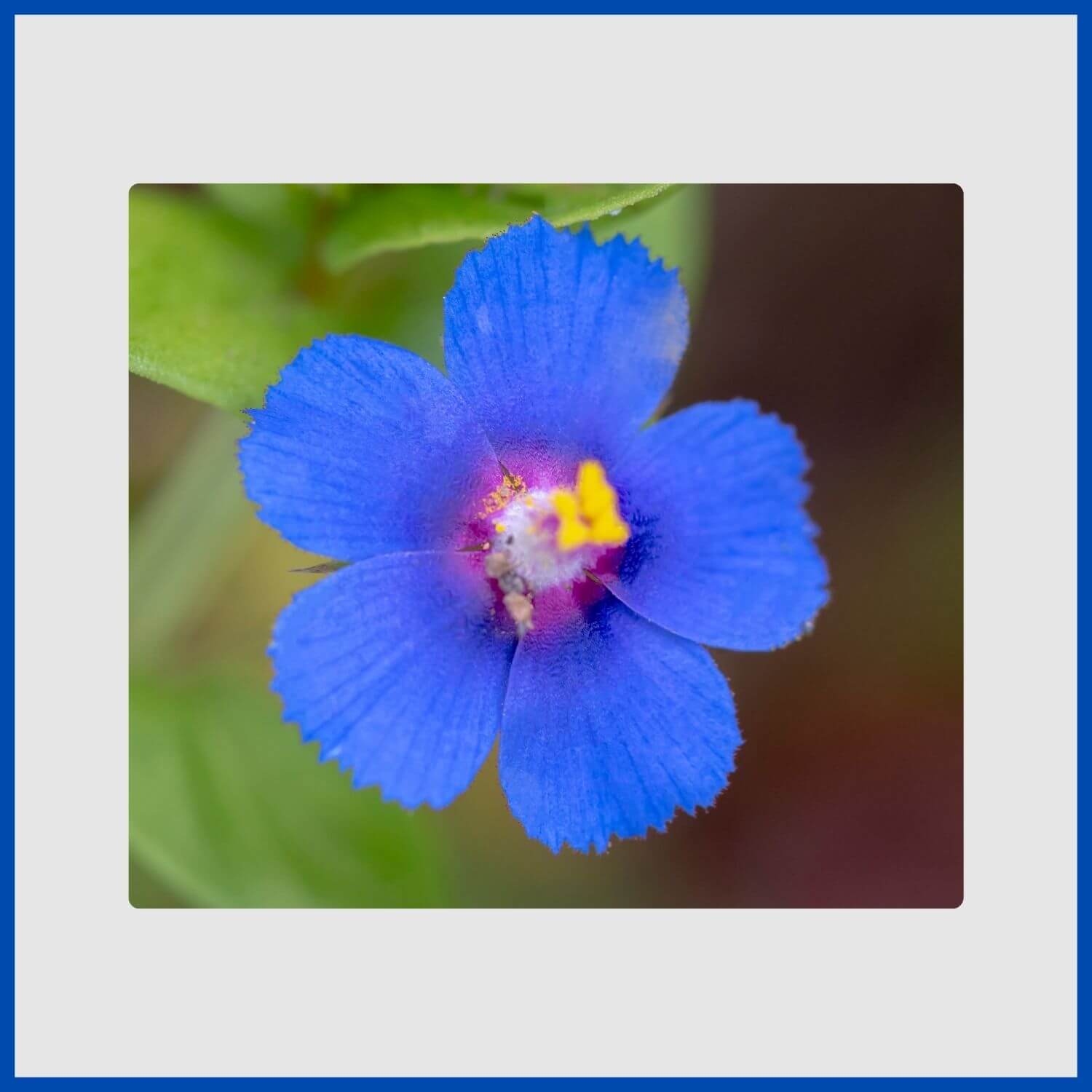
Blue pimpernel is a low-growing, spreading annual that produces some of the most intense, gentian-blue, cup-shaped flowers. It thrives in full sun and is perfect for rock gardens, container edges, and sunny borders where its vivid color can pop.
- USDA Hardiness Zone: 8-10 (annual elsewhere)
- Bloom Time: Spring to fall
- Water Needs: Low to moderate
- Soil Type: Well-drained, average
- Sun Requirement: Full sun
- Height: 6-12 inches
Frequently Asked Questions About Blue Flowers
Why are blue flowers rare?
Blue flowers are rare because producing true blue pigments requires complex genetics and specific soil chemistry. Many “blue” flowers actually lean toward purple or lavender.
How do I make hydrangeas bloom blue?
Lower soil pH below 5.5 using aluminum sulfate or sulfur. Acidic soil lets hydrangeas absorb aluminum, turning their flowers blue. This works with certain varieties like Hydrangea macrophylla.
Which blue flowers bloom longest?
Blue salvia, petunia, and lobelia bloom from late spring until frost with regular deadheading. Agapanthus and catmint also have long flowering seasons.
What blue flowers grow well in shade?
Woodland natives like blue phlox, forget-me-nots, bluebells, and blue corydalis thrive in shaded, moist environments.
Are there true blue roses?
No. Roses lack the genes for blue pigments. “Blue” roses are usually dyed or genetically modified, but true blue roses don’t exist naturally.
Which blue flowers attract pollinators?
Delphinium, salvia, catmint, asters, and sea holly attract bees, butterflies, and hummingbirds, especially tubular or daisy-shaped flowers.
Can blue flowers tolerate drought?
Yes blue flax, sea holly, Russian sage, blue fescue, and globe thistle thrive in dry conditions with deep roots and moisture-conserving foliage.
What blue flowers are best for containers?
Compact varieties like lobelia, petunia, ageratum, pansy, and browallia do well in pots. Agapanthus and dwarf hydrangeas suit larger containers.
Conclusion
Blue flowers bring unique beauty and calm to any garden, from towering delphiniums to delicate forget-me-nots. With over 100 varieties suited for different climates and soils, blue blooms create serene landscapes and attract pollinators.
Success depends on matching plants to your garden’s conditions whether acidic soil for blue hydrangeas or drought-tolerant salvias for easy care. Start small, choose plants for your zone, and expand gradually. Blue flowers offer years of stunning blooms and peaceful outdoor spaces to enjoy.
Explore More Beautiful Blooms
💐 15 Beautiful Blue and White Flowers for Bouquets and Gardens – Perfect color blends for elegant gardens and floral arrangements.
🌳 Trees with Blue Flowers: 15 Beautiful Varieties – Discover trees that bloom in mesmerizing shades of blue.
🌷 25 Spectacular Pink and Purple Flowers – Add vibrant contrast to your blue garden with these colorful blooms.