
The National Flower of China is a topic that has sparked debate for decades because, surprisingly, the country has never officially declared a single national flower. While the graceful Peony is widely regarded as the favorite, flowers like the plum blossom also hold deep cultural and historical importance. This ongoing discussion reflects China’s rich traditions, regional diversity, and national identity. In this article, you’ll learn why there is still no official winner, explore the leading contenders, learn the history behind the debate, and uncover five key reasons why choosing a single National Flower of China remains a complex and fascinating issue.
What Is the National Flower of China?
China does not have an officially declared national flower.
- No law confirms one flower
- No final government decree exists
- Several proposals were discussed, but none approved
As of today, there is no legally recognized national flower of China.
Is There an Official National Flower of China?
No.
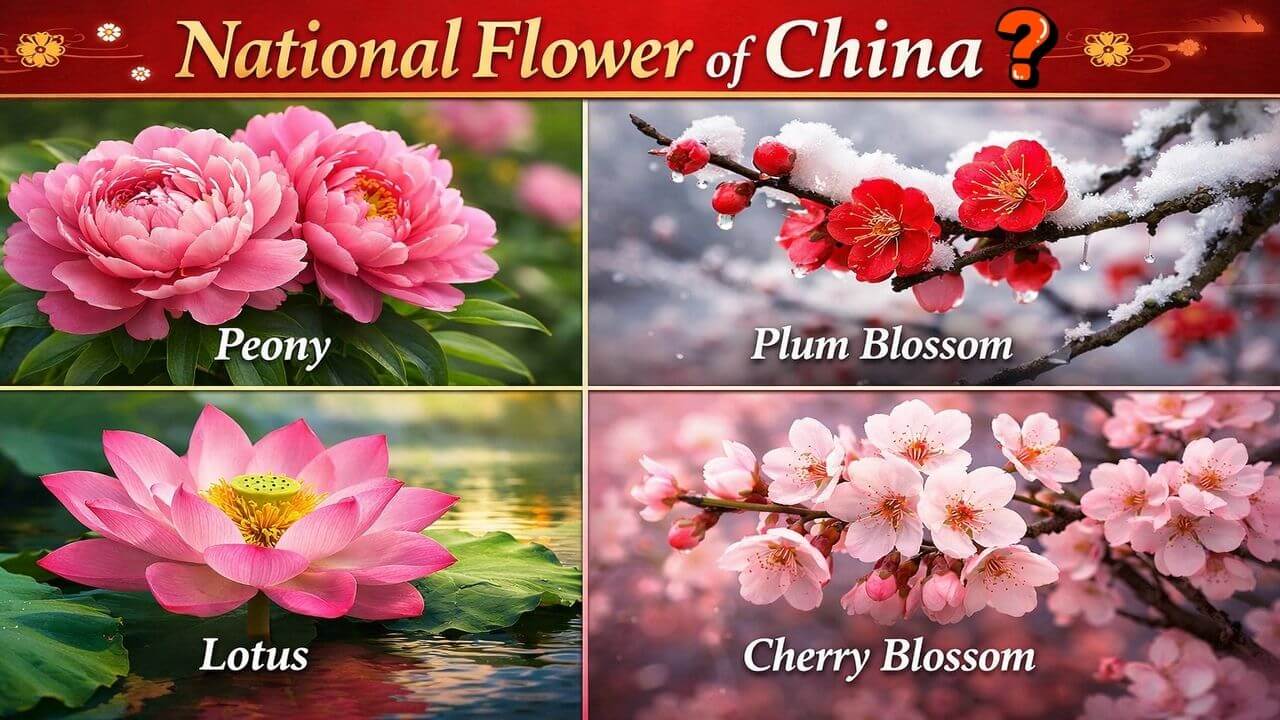
Even though peony and plum blossom are the strongest contenders, China has never finalized or legalized one national flower.
5 Reasons There is No Official National Flower of China
1. Peony’s Imperial Legacy Still Divides Opinion
The national flower of China peony argument comes from history.
For more than a thousand years, peonies symbolized:
- Wealth
- Status
- Imperial beauty
During the Tang Dynasty, peonies filled royal gardens and poetry. They were often called the “king of flowers.”
Today, Luoyang hosts one of the world’s largest peony festivals. Millions visit every year. Local tourism data shows peony-related events contribute billions of yuan to the economy.
That popularity makes peony powerful.
It also makes it controversial.
Many scholars feel peony represents aristocracy rather than ordinary people. Modern China has often avoided symbols too closely tied to imperial luxury.
Peony is admired, but politically sensitive.
2. Plum Blossom Represents Resilience, Not Popularity
The plum blossom national flower of China debate comes from values, not beauty.
Plum blossoms bloom in winter, often through snow. For centuries, they have symbolized:
- Endurance
- Humility
- Moral strength
In traditional ink painting, plum blossoms appear with bamboo, orchids, and chrysanthemums. These are known as the “Four Gentlemen,” representing ideal human virtues.
Plum blossom poetry is still taught in Chinese school textbooks today.
Yet public emotion tells a different story.
- Plum blossom isn’t widely used in festivals
- It isn’t a major tourism symbol
- It lacks mass appeal
3. China’s Regional Identity Makes One Choice Impossible
China’s size makes a single symbol difficult.
Floral identity changes by region:
- South: lotus and orchids
- North: plum blossom and peony
- Southwest: camellias and rhododendrons
Each province already has its own official flower.
National symbols only work well when people from different regions feel included. Choosing just one flower could ignore many local traditions and cause disagreement.
That risk keeps consensus out of reach.
4. Political Caution Around Cultural Symbols
In China, cultural symbols are never just decorative.
They carry ideological meaning.
Since the 1980s, several campaigns tried to select a national flower. One major vote in 1994 narrowly favored peony. Still, it was never approved.
According to Xinhua News Agency archives, officials cited:
- Insufficient consensus
- Symbolic complexity
Flowers don’t carry urgency like flags or anthems. That allows decisions to be delayed. Leaving the matter unresolved avoids controversy and maintains balance.
5. Global Misconceptions and the Cherry Blossom Confusion
Many international sources incorrectly claim that cherry blossom is the national flower of China. This misconception largely stems from visual similarity and cultural overlap with East Asia.
Cherry blossoms are strongly associated with Japan, where they are officially recognized and globally promoted. In China, cherry trees exist and are admired, but they lack deep symbolic roots in classical literature or philosophy.
This confusion is amplified by Japan’s global visibility during cherry blossom season. Reuters reports that Japan surpassed 10 million international visitors by March 2025, with spring travel heavily driven by sakura, citing Japan National Tourism Organization data. Because cherry blossoms dominate international media and travel content, many readers outside Asia wrongly assume they represent East Asian culture as a whole. This exposure often leads to the false belief that cherry blossom is the national flower of China.
Source: Reuters
👉 See full report here
National Flower of China Meaning: Why Ambiguity Matters
The national flower of China meaning goes beyond botany. In Chinese philosophy, harmony often matters more than singular dominance.
Taoist thought emphasizes balance and coexistence. Confucianism values moral symbolism over visual appeal. From this perspective, allowing peony and plum blossom to coexist without official hierarchy reflects cultural wisdom rather than indecision.
I find this approach quietly confident. Instead of forcing unity through selection, China allows meaning to emerge through shared understanding.
Why “No Winner” Is the Most Chinese Answer
Western nations often favor clear symbols, one flag, one animal, one flower. China’s civilization evolved differently.
Yin and yang coexist. Strength balances softness. Winter blossoms matter as much as spring blooms. Declaring a single national flower would simplify a culture that resists simplification.
By not choosing, China preserves symbolic flexibility. Peony can represent prosperity. Plum blossom can represent resilience. Neither cancels the other. That pluralism may actually be the most authentic national statement possible.
How China Handles National Symbols Compared to Other Countries
Japan officially recognizes cherry blossom and chrysanthemum. Germany clearly associates with cornflower. Russia widely accepts chamomile.
China stands apart by allowing symbolic plurality. According to a 2023 comparative cultural policy study published by UNESCO, China uniquely maintains multiple parallel symbols rather than enforcing singular national icons. This approach reduces cultural friction and regional resistance.
FAQs About National Flower of China
Why does China have two national flowers?
China doesn’t officially have any national flower, but the peony and plum blossom are both widely recognized for their cultural importance. This reflects China’s rich history and respect for multiple traditional symbols rather than choosing just one.
What is a traditional Chinese flower?
Traditional Chinese flowers include the peony, plum blossom, lotus, and chrysanthemum. These flowers symbolize various virtues like beauty, resilience, purity, and longevity in Chinese culture.
Which flower is known as China flower?
The peony is often called the 'China flower' due to its long history as a symbol of wealth and honor. It’s admired as the 'king of flowers' and is deeply embedded in Chinese art and tradition.
What are the 4 flowers of China?
The 'Four Gentlemen' flowers in Chinese culture are the plum blossom, orchid, bamboo, and chrysanthemum. They represent virtues like endurance, humility, strength, and perseverance.
What is a Chinese rose?
The Chinese rose, also known as the China rose or Hibiscus rosa-sinensis, is a tropical flower popular in Chinese gardens. It is valued for its bright colors and ornamental beauty.
Is lotus the national flower of China?
No, lotus is not officially the national flower of China. However, it is an important cultural symbol representing purity and spiritual enlightenment in Chinese traditions.
Is Cherry Blossom the national flower of China?
No, cherry blossom is not China’s national flower. It is more closely associated with Japan, though cherry trees do exist in China and are appreciated for their beauty.
Is Peony the national flower of China?
Peony is often regarded as China’s unofficial national flower because of its historical status and cultural significance. However, it has never been officially declared as the national flower by the government.
China’s National Flower Isn’t Missing. It’s Multiplied
China doesn’t lack a national flower. It has many, each carrying different truths. Peony speaks of history and prosperity. Plum blossom reflects endurance and ethics. Together, they explain why no single winner exists.
If you’re exploring cultural symbols or planning travel through China, understanding this nuance matters. It reveals how deeply meaning is woven into everyday symbols.
Want to explore how other countries handle national flowers differently?
Browse our related guides and compare how culture shapes symbolism across the world.