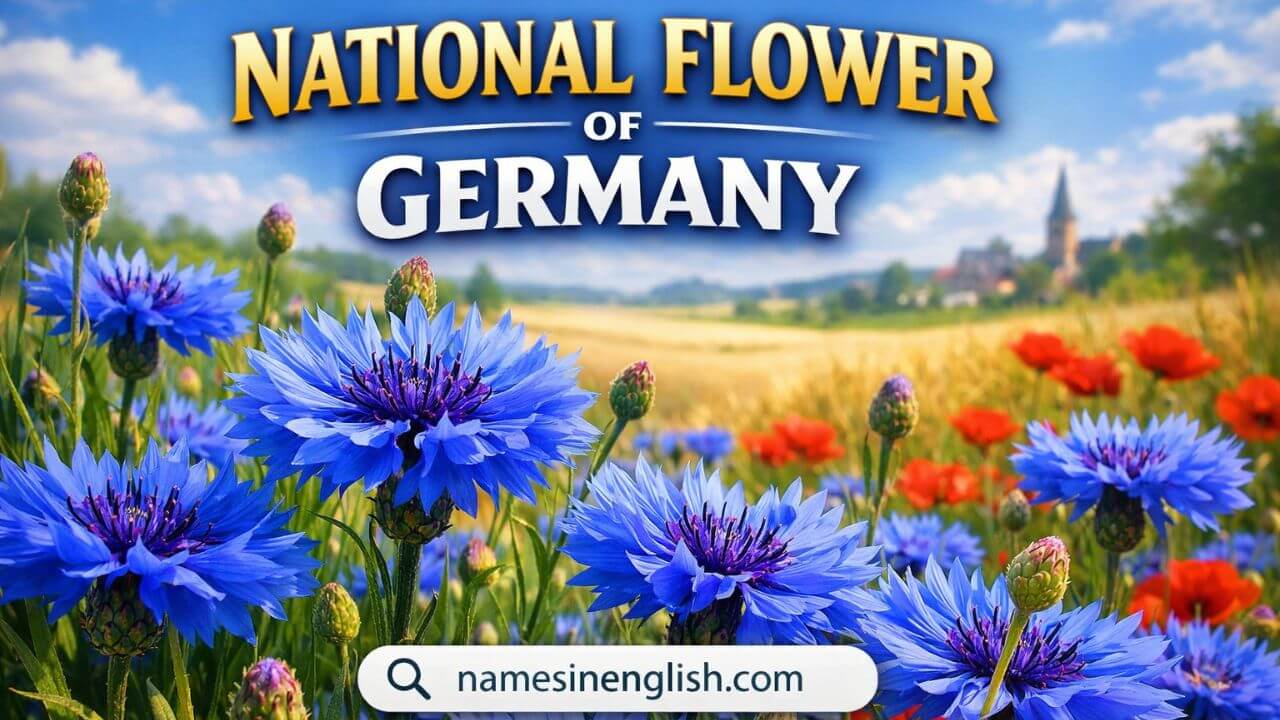

The National Flower of Germany, the charming Cornflower (Centaurea cyanus), is admired for its brilliant blue petals and deep cultural significance. More than just a beautiful wildflower, it has become a symbol of hope, loyalty, and Germany’s natural heritage. Over the years, many stories and myths have surrounded this iconic bloom, making it even more fascinating to explore. In this article, you’ll learn the history of the National Flower of Germany, uncover five popular myths and surprising facts, learn its symbolism, and find out why this delicate flower continues to hold a special place in German culture today.
What Is the National Flower of Germany?
Germany does not have an officially declared national flower by law, but the cornflower (Centaurea cyanus) is widely recognized as the de facto National Flower of Germany due to its deep historical, cultural, and symbolic association with the country.
This recognition comes from tradition, literature, and national symbolism rather than legislation.
Why the Cornflower Became Associated With Germany
The cornflower’s rise as a national symbol didn’t happen overnight. Its connection to Germany grew through a mix of rural life, monarchy, and national identity.
In the 19th century, the cornflower became closely linked with Prussia, a dominant German state at the time. Queen Louise of Prussia famously wore cornflowers, and later, Kaiser Wilhelm I adopted the flower as a symbol of unity and loyalty.
Beyond royalty, the cornflower was everywhere. It grew naturally among wheat fields, making it a familiar sight for farmers and villagers. That everyday presence helped it become a symbol of:
- Simplicity and resilience
- Connection to the land
- Quiet national pride
According to the German Federal Agency for Civic Education, many German national and state symbols develop through cultural tradition and political history rather than strict legal codification, making the cornflower a prime example of a tradition-based symbol.
source: https://www.bpb.de

5 Cornflower Myths & Facts Explained Clearly
Myth 1: Queen Louise Hid Her Children in a Cornflower Field
The Myth:
A popular legend says Queen Louise of Prussia hid her children in a field of cornflowers while fleeing Napoleon’s army in 1806, weaving wreaths to keep them quiet.
The Fact:
Queen Louise did flee from Napoleon and was deeply loved by the public. However, historians have found no contemporary evidence of this specific cornflower episode. The story appeared much later, mainly in the mid-19th century, as romantic nationalist propaganda meant to link the Prussian monarchy with the hardy wildflower of German farmland.
Myth 2: The Cornflower Was Officially Declared Germany’s National Flower
The Myth:
Many sources casually state that the cornflower is Germany’s official national flower.
The Fact:
Germany has never legally declared a national flower. The cornflower became associated with the country through tradition, literature, and symbolism. Its status as the National Flower of Germany is cultural, not legislative, which is why it appears consistently in history without ever being codified into law.
Myth 3: The Cornflower Was Chosen Randomly by the German Empire
The Myth:
Some believe the cornflower was picked arbitrarily during the German Empire.
The Fact:
Emperor Wilhelm I, the son of Queen Louise, genuinely favored the cornflower. Influenced by the popular legend surrounding his mother, he adopted it as a personal symbol. During German unification in 1871, the flower appeared widely on recruitment posters, ceramics, and public imagery, earning the nickname “Kaiserblume” or “Emperor’s Flower.”
Myth 4: Cornflower Healing Powers Are Purely German Folklore
The Myth:
The cornflower’s medicinal reputation is often attributed only to German folk tradition.
The Fact:
Its roots go back much further, into Greek mythology. According to legend, the centaur Chiron healed wounds with cornflower juice. This myth directly influenced science. The plant’s scientific name, Centaurea cyanus, references the centaur, reflecting how early botanists merged mythology with observed plant properties.
Myth 5: The Cornflower Has Always Been Politically Neutral
The Myth:
The cornflower is often described as an entirely harmless cultural symbol.
The Fact:
Its political history is complex. In 1880s Austria, supporters of pan-German nationalism wore cornflowers as identifiers. Later, in the 1930s, when the Nazi party was banned in Austria, members used the cornflower as a covert symbol in place of the swastika. Because of this, the flower still carries historical and political sensitivity in parts of Europe today.
Botanical Facts About the Cornflower You Might Not Know
The cornflower isn’t just symbolic. It’s biologically fascinating.
- Scientific name: Centaurea cyanus
- Color: Naturally blue, though pink and white varieties exist
- Blooming season: Late spring to early summer
- Ecological role: Supports pollinators like bees and butterflies
A 2024 European pollinator study found that wild cornflowers increase local bee diversity by up to 35% in restored farmland zones.
That makes the National Flower of Germany relevant not only culturally but ecologically.
Symbol Without Legal Control
Here’s something rarely discussed.
Because Germany never officially legislated a national flower, the cornflower avoided political rigidity. This allowed it to evolve naturally in meaning.
In contrast, legally defined national symbols often become frozen in time. The cornflower adapted. It moved from monarchy to literature, from nationalism to conservation, without losing relevance.
We believe this flexibility is exactly why it still resonates today.
How the Cornflower Appears in Modern German Life
You won’t see cornflowers on official seals, but they quietly persist.
Examples include:
- Environmental education posters in German schools
- Regional festivals celebrating native plants
- Botanical gardens highlighting traditional flora
- Art exhibitions focused on rural heritage
These uses keep the symbolism alive without forcing it.Cornflower vs Other German Flowers
People sometimes confuse the National Flower of Germany with:
- Oak leaves (a national tree symbol)
- Edelweiss (associated more with Alpine regions)
- Forget-me-not (used symbolically, but not nationally)
The cornflower stands apart because of its historical continuity across regions and eras.
What The National Flower of Germany Reflects
Symbols matter when they tell honest stories.
The cornflower reflects:
- A connection to land and labor
- Cultural continuity without nationalism
- Respect for nature and biodiversity
In a modern Germany focused on sustainability, this flower fits surprisingly well.
FAQs About National Flower of Germany
What is Germany's national flower?
Germany does not have an officially declared national flower by law. However, the cornflower (Centaurea cyanus) is most commonly regarded as Germany’s traditional national flower.
Is edelweiss the national flower of Germany?
No, edelweiss is not Germany’s national flower. It is mainly associated with the Alpine regions and is officially recognized as the national flower of Austria and Switzerland.
What is the most famous flower in Germany?
The cornflower is one of the most famous flowers in Germany due to its historical symbolism and strong association with German identity and folklore.
What flower is native to Germany?
Several flowers are native to Germany, including the cornflower, chamomile, and common poppy, all of which naturally grow across German landscapes.
A Quiet Symbol With Lasting Meaning
The National Flower of Germany, the cornflower, isn’t loud or flashy. That’s part of its strength. Its meaning grew from daily life, history, and shared memory rather than official decree.
If you enjoy learning how flowers shape national identity, explore more national flowers, state flowers, and seasonal floral symbols to see how nature quietly tells the story of human culture.
You’ll start noticing these symbols everywhere once you know what they mean.