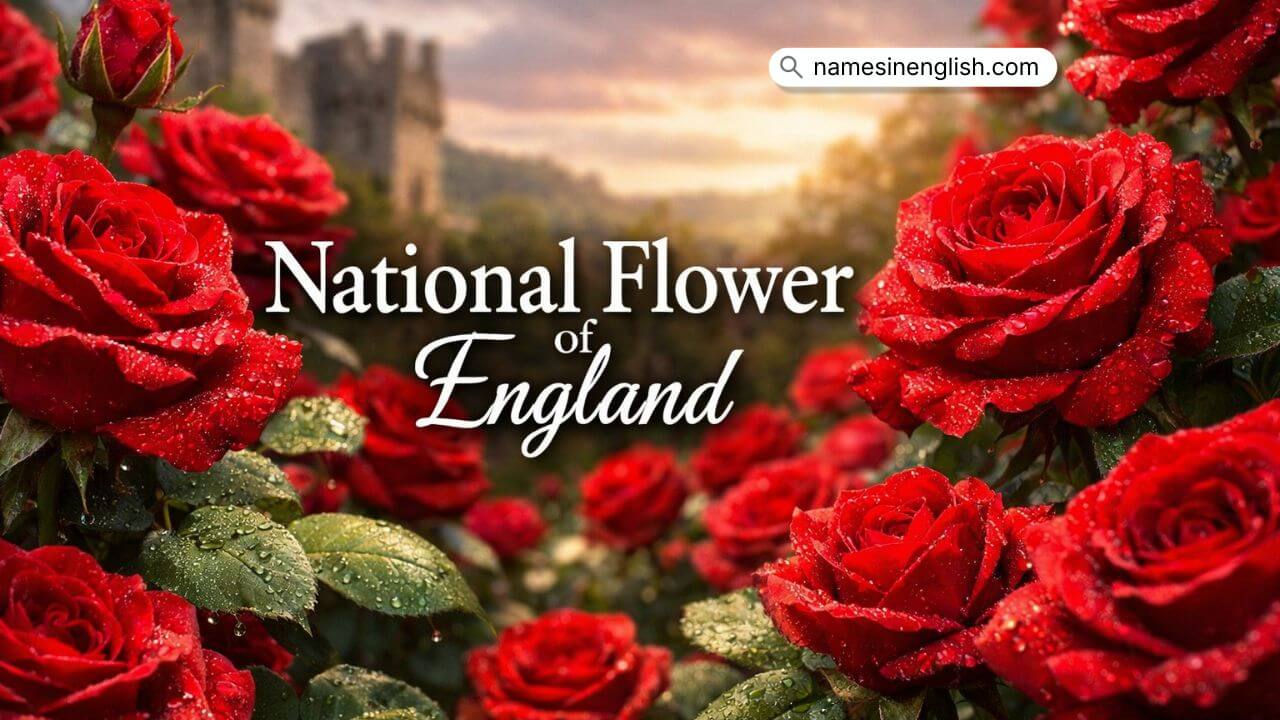
National Flower of England is more than a line in a history book. The red rose is a living symbol that still shapes English identity, from royal ceremonies to football crests and even everyday gardens. When people ask why England chose the red rose, they’re really asking a deeper question about power, memory, and how history turns conflict into culture.
If you’re a cultural traveler, a heritage tourist, or a history student looking for clear answers, you’re in the right place. Let’s unpack the story carefully, without myths or filler.
The National Flower of England Explained
The National Flower of England is the red rose, chosen because it became the emblem of the House of Lancaster during the Wars of the Roses (1455–1487). After the conflict ended, the red rose symbolized unity, royal authority, and national identity, especially under the Tudor dynasty. Today, it represents England’s heritage, resilience, and historical continuity.
How the Red Rose Became England’s National Flower

The red rose didn’t start as a national symbol. It began as a political badge.
During the 15th century, England was torn apart by a series of civil wars known as the Wars of the Roses. Two rival royal houses fought for the English throne:
- House of Lancaster, represented by the red rose
- House of York, represented by the white rose
These symbols were used on banners, clothing, seals, and even armor. Over time, they became shorthand for loyalty and power. When Henry Tudor, a Lancastrian, defeated Richard III in 1485 and became Henry VII, the red rose emerged as the dominant emblem.
This moment changed everything.
The Tudor Rose and the Politics of Unity
Henry VII made a smart political move. He married Elizabeth of York, uniting the two rival houses. To visually cement this peace, he created the Tudor Rose, combining:
- The red rose of Lancaster (outer petals)
- The white rose of York (inner petals)
While the Tudor Rose symbolized unity, the red rose remained the stronger visual identity. Over generations, it quietly took on a broader meaning. It no longer stood only for Lancaster. It came to stand for England itself.
As a historian, I find this fascinating because it shows how national symbols often come from compromise, not tradition alone.
Why a Rose, Not Another Flower?
England had many native plants to choose from. So why did the rose endure?
There are a few practical and cultural reasons:
- Roses were already deeply embedded in medieval English art and poetry
- They symbolized honor, loyalty, and sacrifice in Christian iconography
- They were easy to recognize and reproduce in heraldry
Unlike more delicate flowers, the rose carried strength alongside beauty. That balance suited a kingdom emerging from war.
This sets England apart from other UK nations, each with its own floral emblem. The English red rose stands for political survival as much as natural beauty.
Cultural Meaning of the Red Rose in English Identity
Over time, the National Flower of England moved beyond royalty and into everyday life.
You’ll see the red rose in places like:
- England’s national football and rugby teams
- British coins and official seals
- War memorials and remembrance designs
- Traditional English gardens and festivals
What’s interesting is how quietly it works. The symbol doesn’t shout. It reassures.
A Lesser-Known Truth About the Wars of the Roses
Here’s a perspective most top-ranking articles skip.
The Wars of the Roses were not constant, nationwide battles between clearly defined sides. Modern historians agree they were intermittent power struggles among elites, not mass ideological wars. Many people at the time never saw a single battle.
So why did the rose symbolism become so powerful?
Because symbols simplify chaos.
The red rose offered a clean narrative after decades of uncertainty. It allowed England to remember conflict without reliving it. In that sense, the National Flower of England is less about war and more about healing.
That’s a powerful lesson in how nations choose what to remember.
The Red Rose Today
The red rose still evolves.
Modern England uses it in contexts far removed from monarchy:
- Local councils and civic branding
- Tourism campaigns aimed at heritage travelers
- Educational materials for history students
In Yorkshire, the white rose still holds regional pride, showing how layered English identity remains. National symbols don’t erase local ones. They sit above them.
If you visit England today, you’ll notice the rose feels familiar, not ceremonial. That’s why it has lasted.
FAQs About National Flower of England
The red rose is England’s national flower.
It comes from the Wars of the Roses, where the red rose symbolized the House of Lancaster and later England itself.
It stands for love, heritage, and England’s royal history.
Because the red rose was the symbol of the House of Lancaster, representing England.
The rose is one of Britain’s most popular flowers, especially the Tudor rose for England.What is the national flower of England?
Why is England’s national flower a rose?
What does the 🌹 mean in English?
Why is England called Red Roses?
What is Britain’s favourite flower?
Final Thoughts About National Flower of England
The National Flower of England isn’t just a red rose because it looks good on a flag or badge. It survived because it helped England move forward after division. It turned rivalry into remembrance and power into identity.
If you’re traveling through England, pay attention to where the red rose appears. On gates, jerseys, coins, and gardens, it tells a story that’s older than most buildings around it.
If you enjoy exploring how symbols shape nations, consider reading more about other national flowers. Each one reveals a country’s past.