
Have you ever wondered why some flowers are named after real people? Many beautiful blooms carry the names of famous botanists, explorers, scientists, royalty, or plant collectors who helped discover, study, or popularize them. Learning about these flowers adds an interesting historical touch to gardening and helps you appreciate the stories behind their names. In this guide, you’ll learn flowers that are named after people, learn who they were named after, and explore the unique features that make each flower special. Whether you’re a gardening enthusiast, student, or simply curious about flower names, this list will introduce you to some of nature’s most fascinating blooms.
How Flowers End Up Carrying a Person’s Name
Botanical naming follows an organized system created to avoid confusion. Every plant species receives a Latin scientific name made of two parts. The first part identifies the genus. The second part identifies the species. Scientists can choose a name that describes the plant’s shape or location. They can also dedicate the name to a person who contributed to plant science.
A botanist may honor a colleague who discovered the plant in the wild. A scientist may also recognize a sponsor who funded an expedition. Sometimes the honored person never even saw the plant. What matters is the historical contribution connected to its discovery or study. This tradition began during the expansion of botanical science in the 1700s and 1800s. During that period thousands of species were discovered during global exploration. Naming a plant after someone became a respected form of scientific recognition.
How Scientific Naming Rules Allow Human Names in Plants
Botanical naming follows a formal rulebook called the International Code of Nomenclature for algae fungi and plants. The code allows scientists to create species names based on people. The rule simply requires the name to be converted into Latin grammar.For example a scientist named Wilson might become wilsonii in botanical Latin. The code also ensures that each species has only one official scientific name.
The International Association for Plant Taxonomy maintains this system. Their code defines how plant names must be published and recorded so that botanists worldwide use the same terminology.
Why Explorers Patrons and Botanists Appear Most Often in Plant Names
Most flowers named after people honor individuals who helped discover or document plants. During the eighteenth and nineteenth centuries botanical expeditions traveled across Asia Africa and the Americas. Scientists needed financial support to fund these journeys. Wealthy patrons often paid for the trips. In return they sometimes received the honor of having a species named after them. Explorers also earned recognition when they collected unknown plants in remote regions.
Botanists who classified plants often honored colleagues in their publications. Because of this tradition many flower names today reflect the network of scientists explorers and sponsors involved in botanical research.
Flowers Truly Named After People Versus Cultural Associations
Some flowers are genuinely named after people while others are only culturally connected to a historical figure. This difference often confuses casual readers. A true honorific name appears directly in the scientific Latin name of the plant. Dahlia for example permanently records the botanist Anders Dahl in its genus name. By contrast some plants become associated with famous individuals through culture or symbolism. The rose is linked with Shakespeare and Napoleon but its scientific name does not honor them. In those cases the connection is historical or cultural rather than botanical.
Understanding the scientific name reveals whether the connection is real.
How to Recognize Honorific Plant Names Ending in ii ia or iana
Latin endings help identify plants named after people. These endings follow grammatical patterns used by botanists. Names ending with ii often honor a male scientist. For example Banksia brownii honors the botanist Robert Brown. Names ending with ae usually honor a female scientist. Names ending with ia often appear in genus names that honor people such as Magnolia or Gardenia. Another pattern is iana which means “belonging to” or “connected with” a person. These endings act like clues. When gardeners learn them they can often identify flowers named after people simply by reading the scientific name.
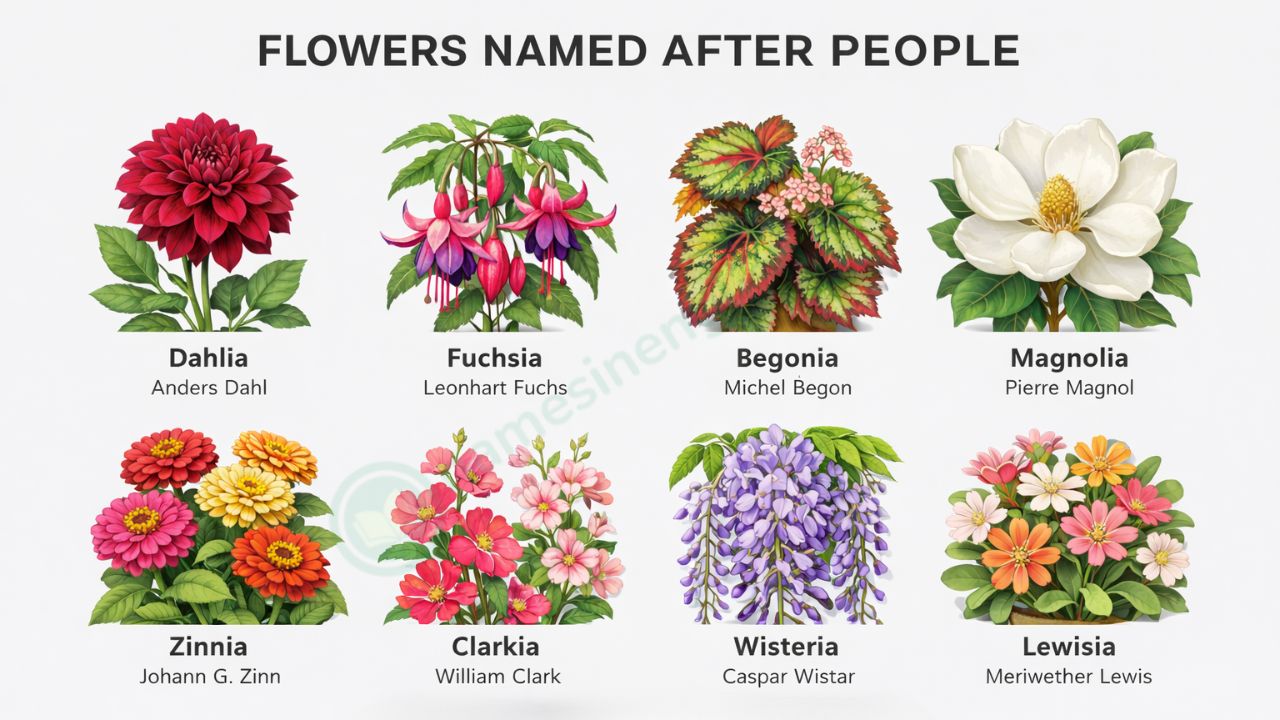
15 Flowers That Carry Real Human Names
Many familiar garden plants quietly record stories of scientific discovery. Each of the following flowers honors a specific person whose work helped shape botany.
1. Dahlia Named After Anders Dahl
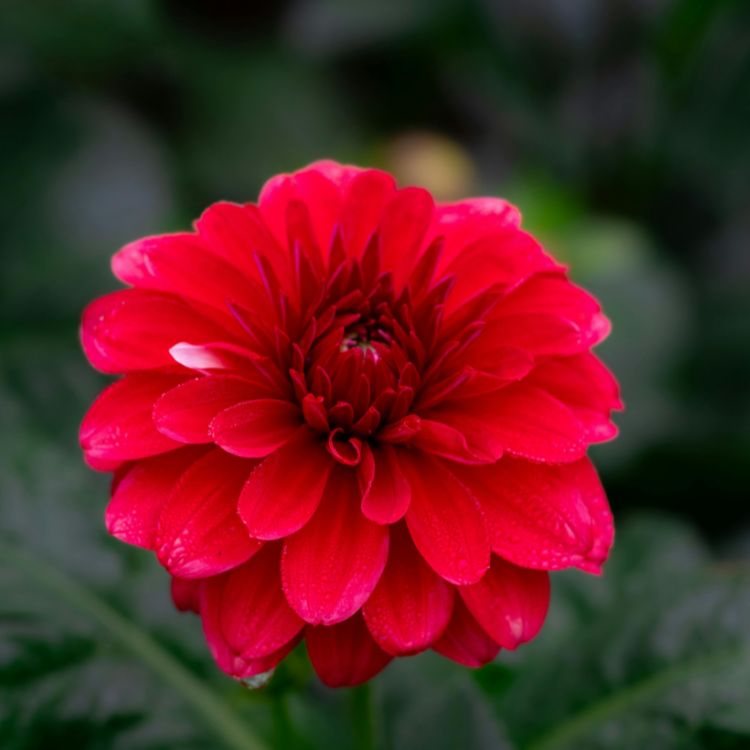
The Dahlia genus honors Anders Dahl, a Swedish botanist who studied plants under the famous scientist Carl Linnaeus. Dahl worked on plant classification during the late eighteenth century. After Dahl died in 1789 the Spanish botanist Antonio José Cavanilles named the genus Dahlia in his honor. The plant itself comes from Mexico where it grew naturally long before European botanists discovered it. Today Dahlia is one of the most widely cultivated ornamental flowers with thousands of cultivated varieties.
2. Fuchsia Named After Leonhart Fuchs
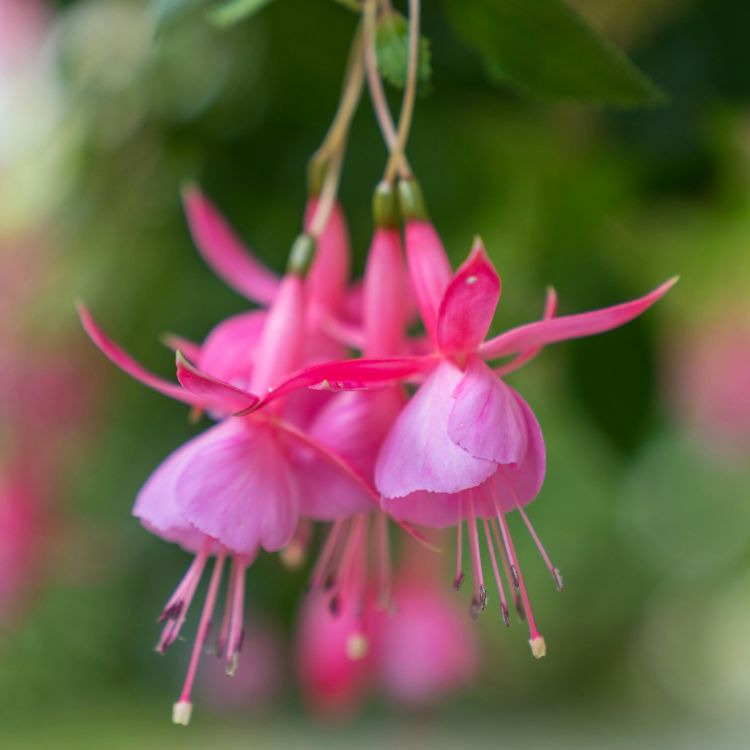
The flower Fuchsia honors Leonhart Fuchs, a German physician and herbalist from the sixteenth century. Fuchs wrote one of the earliest scientific books describing medicinal plants. Interestingly Fuchs never saw the plant that carries his name. The genus was discovered later in the Caribbean. French botanist Charles Plumier named the plant Fuchsia in 1696 to recognize Fuchs’ contribution to botanical science. This decision connected a Renaissance scholar to a tropical plant discovered centuries later.
3. Begonia Named After Michel Begon
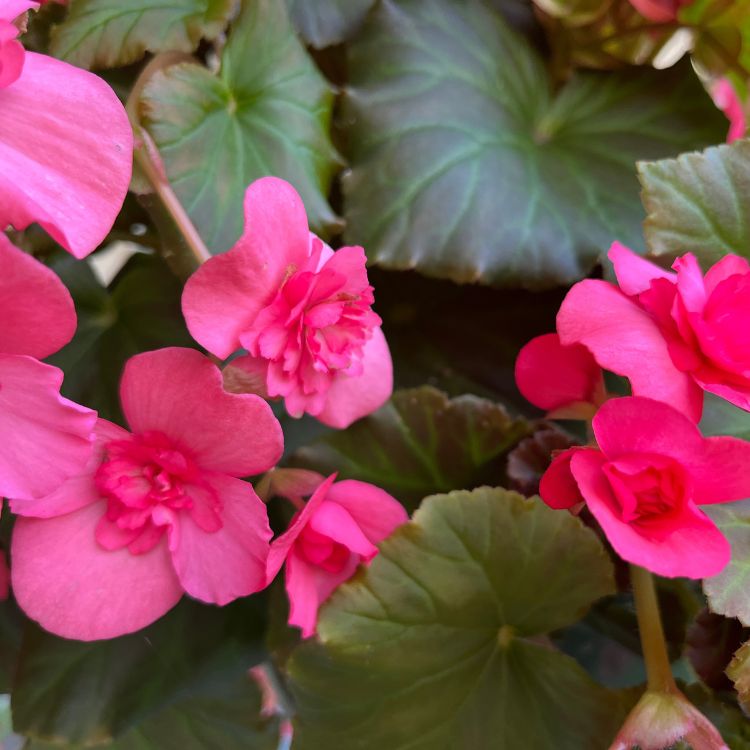
Begonia honors Michel Begon, a French government official who served as governor of the French colony of Saint Domingue in the Caribbean. Begon was not a professional botanist but he strongly supported botanical exploration. French botanist Charles Plumier named the genus Begonia after him during a Caribbean expedition. Today Begonias are one of the largest plant genera with more than 2,000 species.
4. Magnolia Named After Pierre Magnol
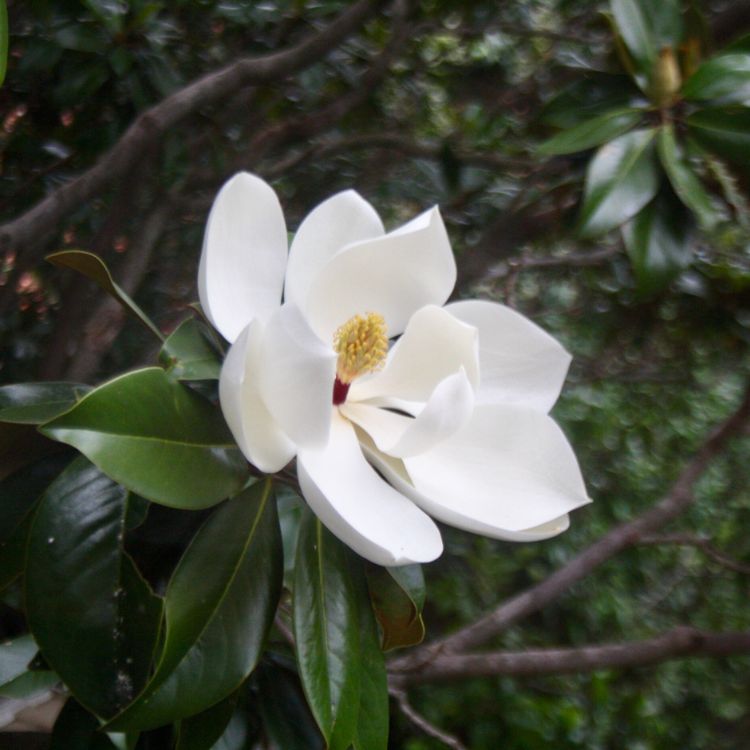
Magnolia honors Pierre Magnol, a French botanist who developed early ideas about plant families. Magnol studied plants at the University of Montpellier during the seventeenth century. His work helped scientists understand how plants could be grouped by natural relationships rather than simple appearance. French botanist Charles Plumier later named the Magnolia genus after him. The large fragrant Magnolia flowers became symbols of southern gardens in the United States.
5. Camellia Named After Georg Joseph Kamel
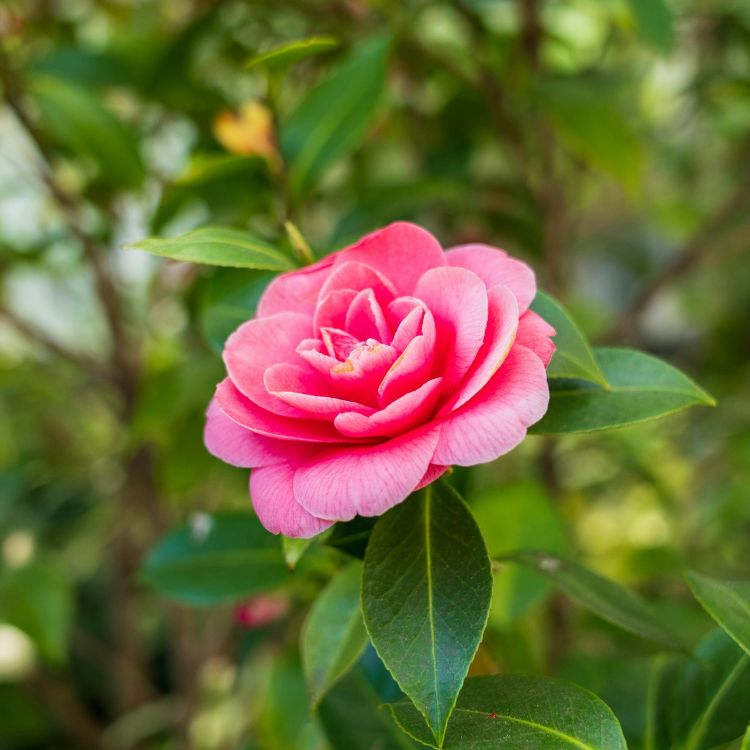
The Camellia genus honors Georg Joseph Kamel, a Jesuit missionary and botanist who worked in the Philippines during the seventeenth century. Kamel studied Asian plants and sent specimens back to Europe. However he never studied the camellia plant itself. The Swedish scientist Carl Linnaeus later named the genus Camellia in Kamel’s honor because of his important botanical work in Asia.
6. Gardenia Named After Alexander Garden
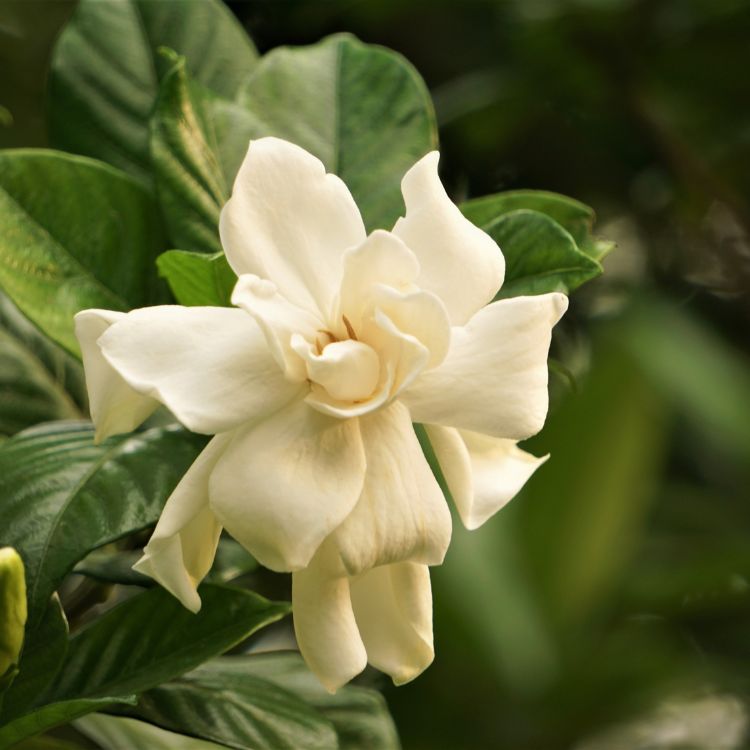
Gardenia honors Alexander Garden, a Scottish physician who worked in colonial South Carolina during the eighteenth century. Garden collected many plant specimens and sent them to European botanists for study. In recognition of his contributions the botanist Carl Linnaeus named the genus Gardenia after him. Gardenias are famous for their white fragrant flowers which are widely grown in tropical and subtropical gardens.
7. Zinnia Named After Johann Gottfried Zinn
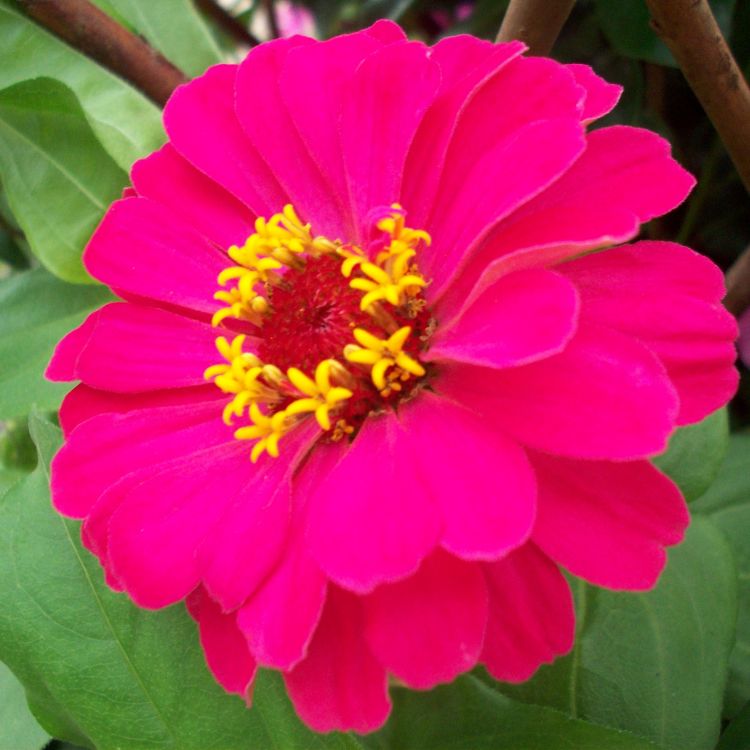
Zinnia honors Johann Gottfried Zinn, a German botanist and anatomy professor. Zinn worked at the University of Göttingen during the eighteenth century. He studied plant anatomy and wrote important scientific descriptions of plants. The botanist Carl Linnaeus named the genus Zinnia after him in recognition of his scientific work. Today Zinnias are popular garden flowers known for bright colors and easy cultivation.
8. Clarkia Named After William Clark
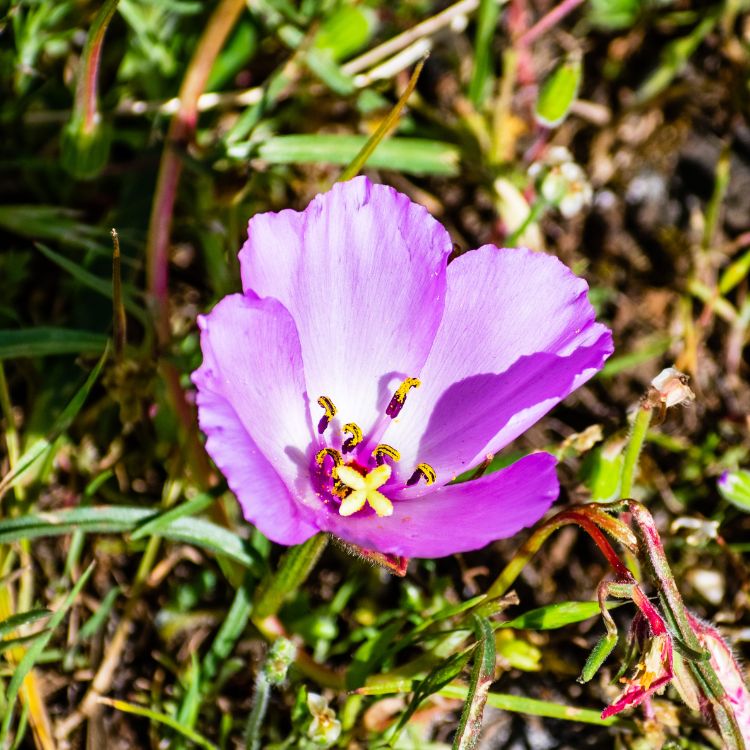
Clarkia honors William Clark, the American explorer who led the famous Lewis and Clark expedition across North America from 1804 to 1806. During the expedition the team collected many unknown plant species. Later botanists studying these specimens named the genus Clarkia after Clark. Clarkia species grow naturally in western North America and produce delicate pink and purple flowers.
9. Forsythia Named After William Forsyth
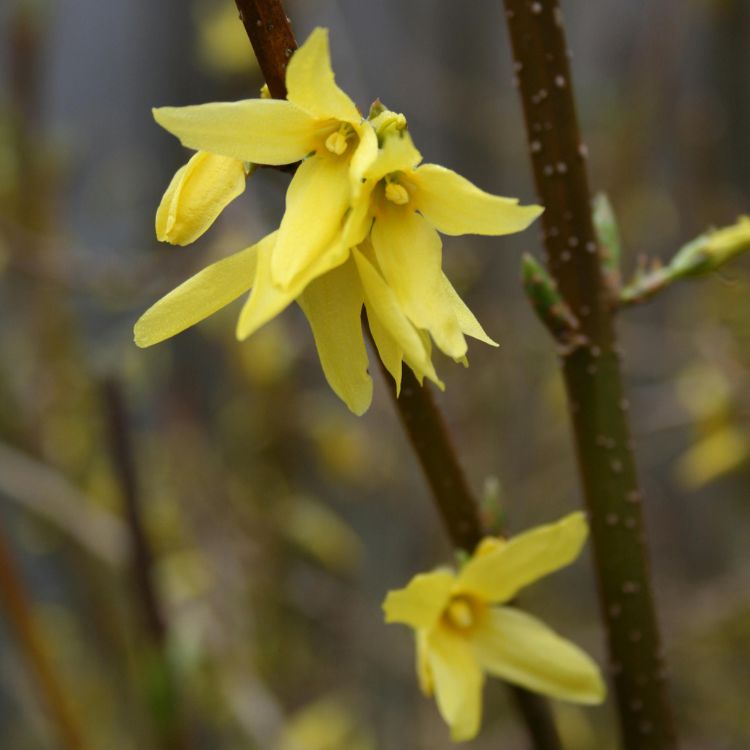
Forsythia honors William Forsyth, a Scottish botanist and royal gardener in eighteenth century Britain. Forsyth served as superintendent of the royal gardens at Kensington and St James’s Palace. He also helped found the Royal Horticultural Society. The bright yellow spring flowering shrub Forsythia carries his name in recognition of his contributions to horticulture.
10. Lobelia Named After Matthias de Lobel
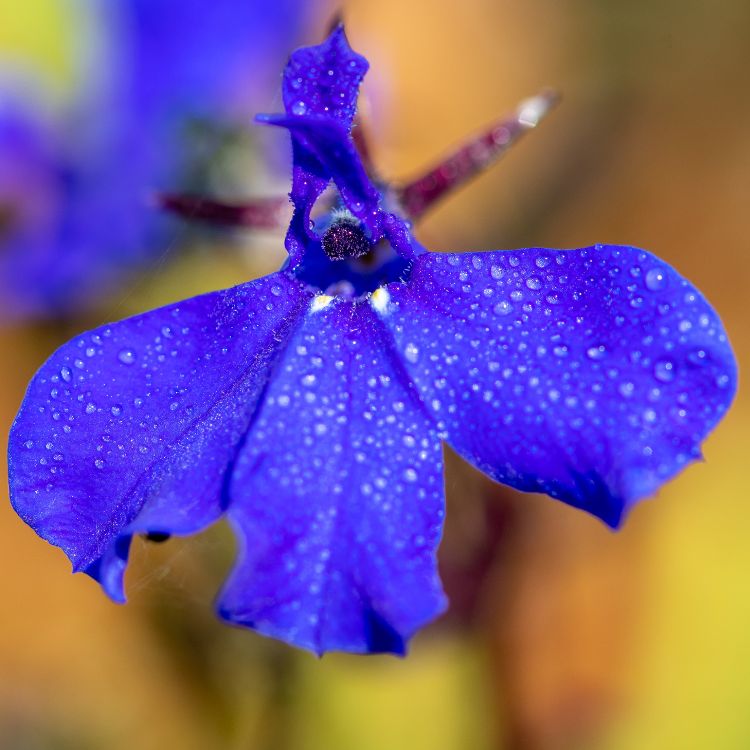
Lobelia honors Matthias de Lobel, a Flemish physician and botanist who lived during the sixteenth century. Lobel worked on early systems for classifying plants and wrote influential botanical books. His name was later Latinized to Lobelius. The genus Lobelia includes many colorful flowering plants often used in garden borders and containers.
11. Poinsettia Named After Joel Roberts Poinsett

Poinsettia honors Joel Roberts Poinsett, a United States diplomat and amateur botanist. While serving as the first U.S. ambassador to Mexico in the 1820s he encountered a bright red flowering plant. Poinsett sent specimens to American botanists who later named the plant Poinsettia in his honor. Today the plant is widely used as a Christmas decoration in many countries.
12. Wisteria Named After Caspar Wistar
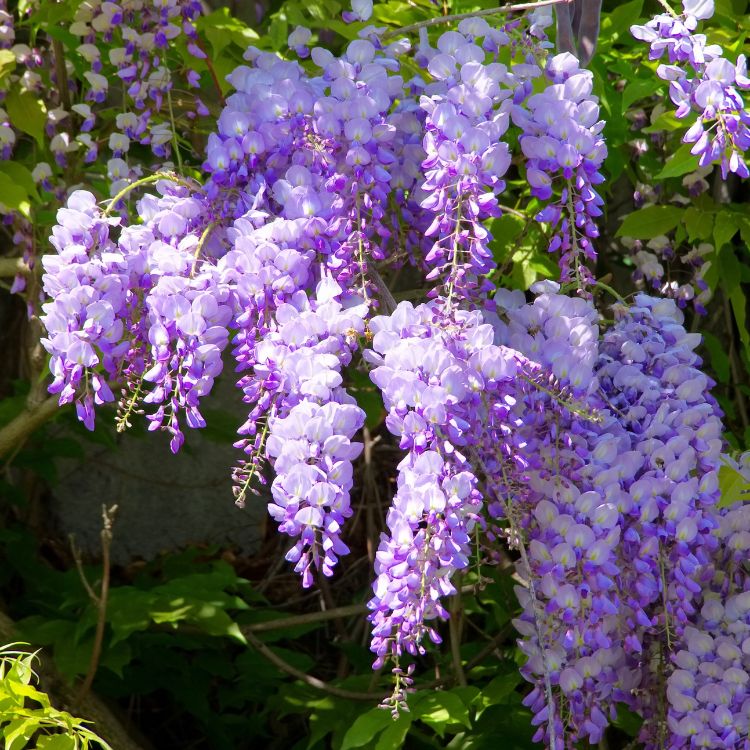
Wisteria honors Caspar Wistar, an American physician and anatomy professor from Philadelphia. Wistar supported botanical studies and natural science research in early American universities. The climbing flowering vine Wisteria was named after him in the early nineteenth century. However its spelling later became the source of a famous botanical mistake discussed later in this article.
13. Banksia Named After Joseph Banks
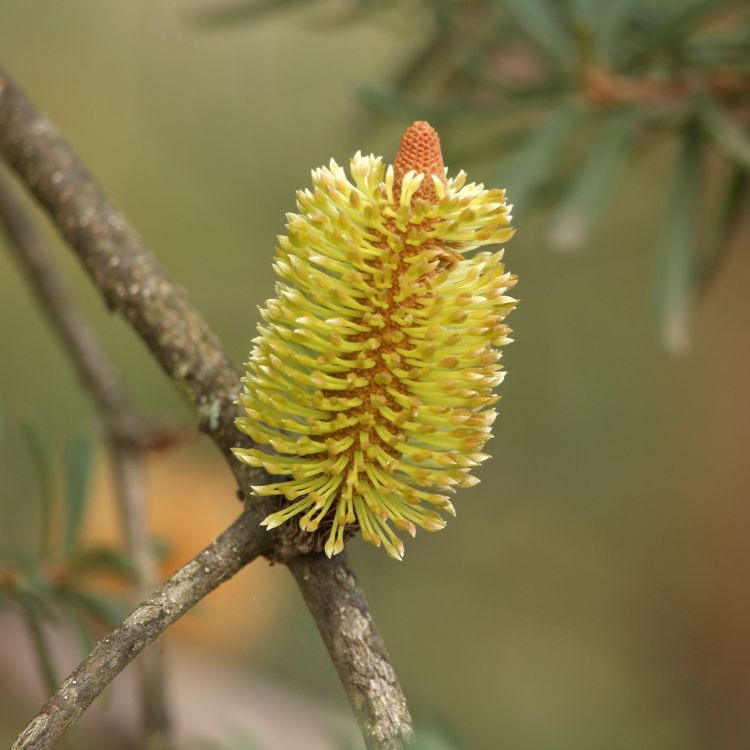
Banksia honors Joseph Banks, the English botanist who traveled with Captain James Cook during the exploration of Australia in 1770. Banks collected thousands of plant specimens during the voyage. Many of these plants were completely unknown to European science. In recognition of his work the genus Banksia was named after him. The plants produce unusual cone shaped flowers and are native to Australia.
14. Kniphofia Named After Johann Hieronymus Kniphof
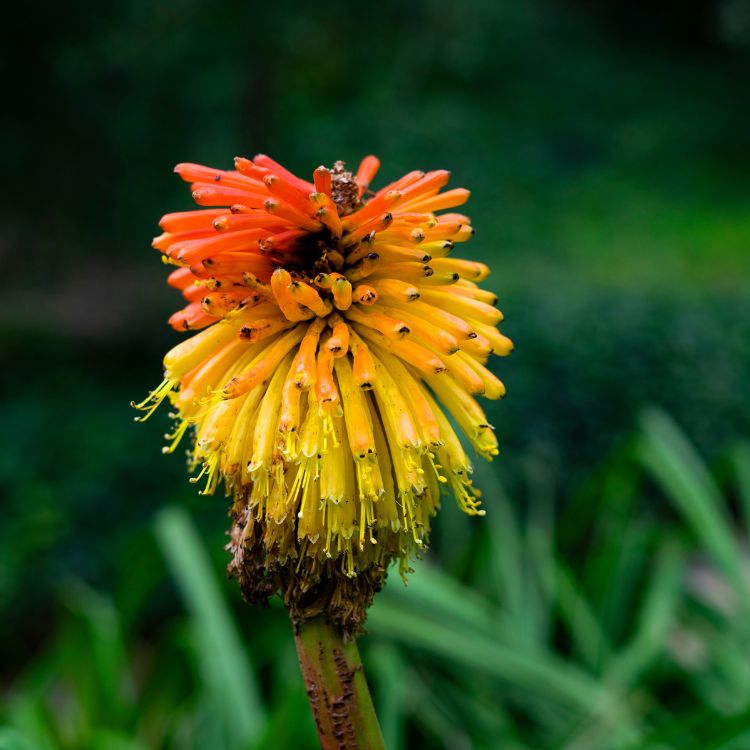
Kniphofia honors Johann Hieronymus Kniphof, a German physician and botanist from the eighteenth century. Kniphof produced one of the earliest illustrated botanical books created using printed plant impressions rather than drawings. The striking orange and red flower spikes of Kniphofia plants earned the common name red hot poker in gardens.
15. Lewisia Named After Meriwether Lewis
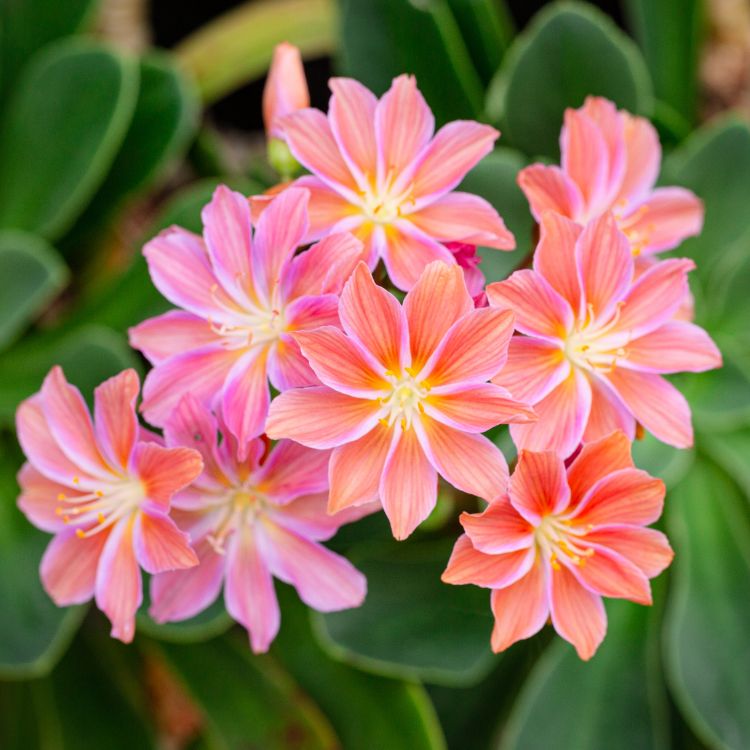
Lewisia honors Meriwether Lewis, the co leader of the Lewis and Clark expedition. Lewis collected plant samples during the journey across the American West. Botanists studying these samples later named the genus Lewisia after him. The plants grow naturally in rocky mountain regions and produce delicate pink flowers.
How Botanists Turn Human Names Into Plant Names
Botanical Latin follows strict grammatical rules. When scientists convert human names into plant names they must adjust the spelling so it fits Latin grammar. For example the surname Garden becomes Gardenia when used as a genus name. The name Banks becomes Banksia. These endings help the name function correctly in Latin scientific writing. These transformations allow plant names to remain consistent across international languages. Botanical Latin uses gender based endings when honoring individuals. Male names often receive the ending ii in species names such as wilsonii. Female names usually receive the ending ae such as smithiae. Genus names often end with ia regardless of gender because the genus itself is treated as a feminine noun in Latin grammar. These endings help botanists maintain linguistic consistency within the scientific naming system. When a name enters botanical Latin its spelling may change slightly. This happens because Latin grammar follows different pronunciation rules. For example the name Lobel became Lobelia. The name Kniphof became Kniphofia. These changes ensure the name fits Latin grammatical patterns while still honoring the original person.
Strange mistakes and Controversies in Flowers Named After People
Botanical history includes several unusual naming accidents. Once a plant name becomes officially published it is very difficult to change. As a result some mistakes became permanent.
These cases reveal how scientific naming developed during the early years of taxonomy.
The Famous Spelling Mistake That Created Wisteria Instead of Wistaria
The climbing vine Wisteria provides the most famous botanical spelling error. The plant was originally intended to honor Caspar Wistar. According to many historians the correct spelling should have been Wistaria. However the botanist who published the name wrote Wisteria instead. Because the published name became widely used it remained the official spelling despite the mistake. Today the incorrect spelling continues in scientific literature and gardening books.
Cases Where Botanists Argued About Who Deserved The Naming Credit
Scientific rivalry occasionally influenced plant naming. Two botanists might study the same plant species at nearly the same time. If both attempted to publish a name the first published version usually became the accepted one. This rule sometimes created disputes about discovery credit. Early botanical explorers often competed to publish new species quickly so their names would remain attached to the discovery.
Naming a Flower After Someone Was a Scientific Honor
During the eighteenth and nineteenth centuries plant discovery expanded rapidly. European scientists explored new continents and collected thousands of unknown species. Having a plant named after a scientist became a symbol of achievement. It signaled that the person had made an important contribution to botanical knowledge. The practice also created a permanent historical record inside scientific language.
How Botanical Exploration Created a Race to Discover And Name New Species
Exploration voyages during the Age of Discovery produced enormous collections of plant specimens. Botanists raced to describe and classify them. Publishing a scientific description first meant gaining the naming rights. Because of this competition scientists worked quickly to document plants and publish their findings. This race explains why many plants discovered during the same expedition carry the names of explorers or sponsors connected to the journey.
Many Modern Plant Discoveries no Longer Use Personal Names
Modern taxonomy sometimes favors descriptive names rather than honorific ones. Scientists often choose names that describe a plant’s habitat genetics or physical features. Advances in genetic analysis also influence naming decisions. Many modern plant names reflect evolutionary relationships instead of historical figures. However flowers named after people still remain a visible part of botanical history. Every time a gardener grows Dahlia Magnolia or Zinnia they are continuing a tradition that connects science exploration and human curiosity.
FAQs
What flowers are named after people?
Flowers like Dahlia, Fuchsia, Magnolia, Zinnia, and Gardenia were named to honor botanists and explorers.
Can you have a flower named after someone?
Yes, botanists can name a new plant species after a person as a scientific honor.
What roses are named after people?
Many cultivated roses honor people, such as Princess Diana Rose and Queen Elizabeth Rose.
Is there a flower named after Princess Diana?
Yes, a white hybrid tea rose called the Princess Diana Rose was named in her honor.
Check related guides: