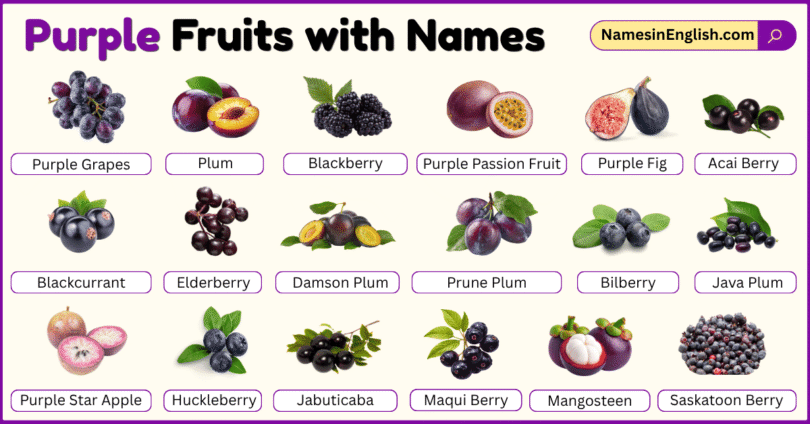

Purple fruits are colorful and nutritious foods known for their attractive shades, distinctive flavors, and variety of shapes and textures. They include grapes, plums, blackberries, figs, passion fruits, and other fruits with naturally purple or violet skin or flesh. Learning the names of purple fruits is a useful way to improve English vocabulary while becoming familiar with different fruits found around the world. In this article, you will learn purple fruit names in English with clear pictures, helping kids, students, teachers, shoppers, food lovers, and English learners easily identify, understand, remember, and use these fruit names with confidence.
What Are Purple Fruits?
Purple fruits are fruits that naturally develop purple, violet, blue-purple, or dark reddish-purple colors when they become ripe. The purple color may appear on the skin, flesh, or both parts of the fruit.
A fruit does not have to be completely purple to belong to this color group. For example, mangosteen has a dark purple outer rind but white flesh. Similarly, purple passion fruit has a purple rind with yellow-orange pulp inside.
Many fruits get their purple, blue, or reddish colors from natural plant pigments called anthocyanins. The exact shade can vary according to the fruit variety, growing conditions, and stage of ripeness.
Purple Fruits Names in English
Here is a useful list of purple fruits with their typical colors and tastes.
| No. | Purple Fruit Name | Typical Color | Taste |
|---|---|---|---|
| 1 | Purple Grapes | Purple to dark purple | Sweet |
| 2 | Plum | Red-purple to dark purple | Sweet and tart |
| 3 | Blackberry | Purple-black | Sweet and tart |
| 4 | Blackcurrant | Dark purple-black | Tart |
| 5 | Purple Fig | Purple | Sweet |
| 6 | Purple Passion Fruit | Dark purple | Sweet and tangy |
| 7 | Acai Berry | Deep purple | Earthy and slightly tart |
| 8 | Elderberry | Dark purple-black | Tart |
| 9 | Damson Plum | Blue-purple | Tart |
| 10 | Prune Plum | Dark purple | Sweet |
| 11 | Java Plum | Deep purple-black | Sweet and astringent |
| 12 | Mangosteen | Reddish-purple | Sweet and tangy |
| 13 | Purple Star Apple | Purple | Sweet |
| 14 | Jabuticaba | Dark purple | Sweet and mildly tart |
| 15 | Maqui Berry | Deep purple-black | Sweet and tart |
| 16 | Huckleberry | Blue-purple | Sweet and tart |
| 17 | Bilberry | Blue-purple | Sweet and tart |
| 18 | Chokeberry | Purple-black | Tart and astringent |
| 19 | Serviceberry | Red-purple | Sweet |
| 20 | Muscadine Grape | Purple in dark varieties | Sweet |
| 21 | Concord Grape | Blue-purple | Sweet |
| 22 | Moon Drops Grape | Dark purple | Sweet |
| 23 | Davidson’s Plum | Dark purple | Very tart |
| 24 | Purple Mulberry | Purple-black | Sweet |
| 25 | Black Raspberry | Purple-black | Sweet and tart |
| 26 | Saskatoon Berry | Purple-blue | Sweet |
| 27 | Beach Plum | Blue-purple | Sweet and tart |
| 28 | Cocoplum | Purple in some varieties | Mildly sweet |
| 29 | Purple Guava | Purple-skinned varieties | Sweet and aromatic |
| 30 | Queen Anne Plum | Purple-red | Sweet |
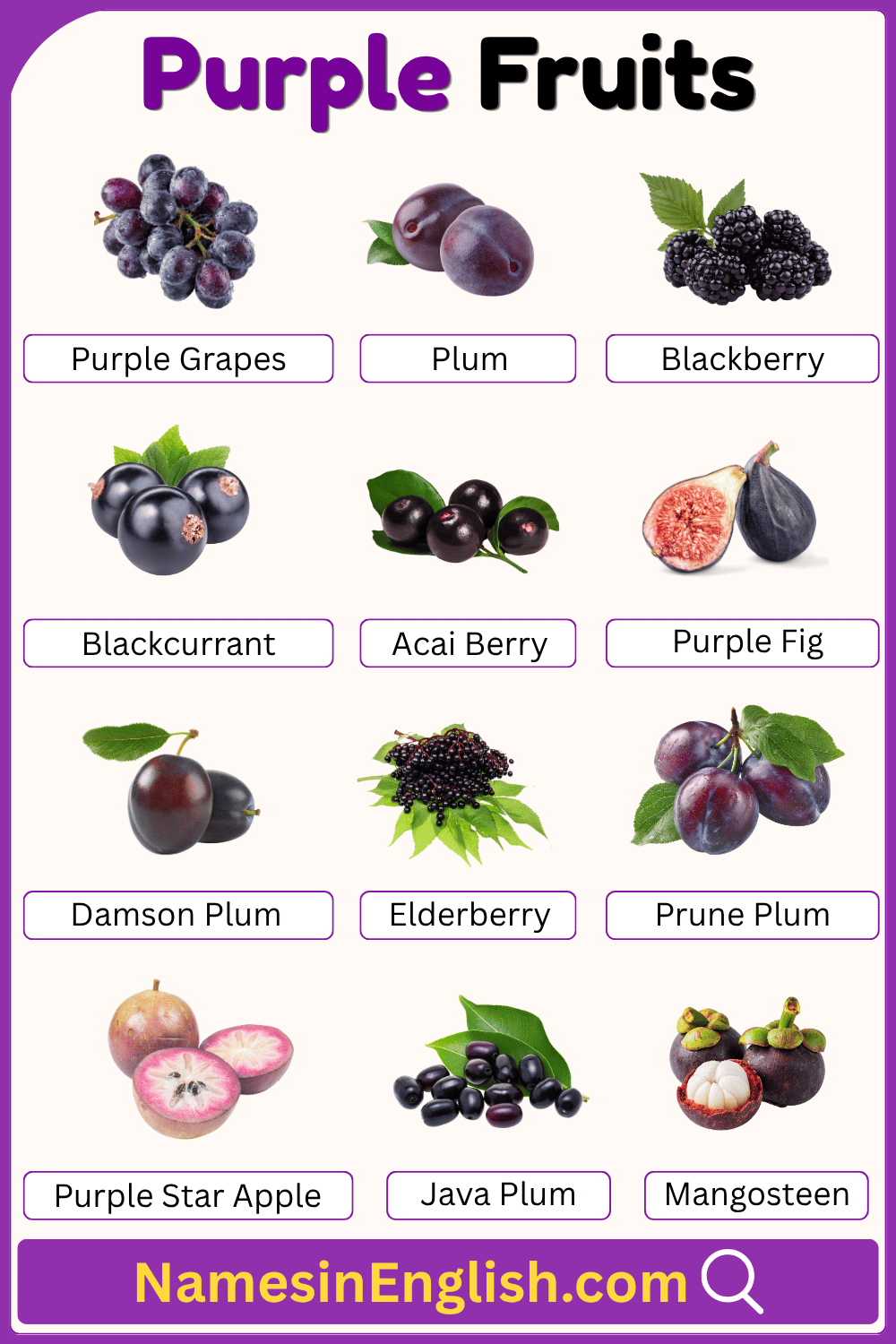
Purple Fruits Names in English
Common Purple Fruits with Their Characteristics
Learning a fruit name together with its appearance and taste makes the word easier to understand and remember. Here are some important purple fruits explained in simple English.
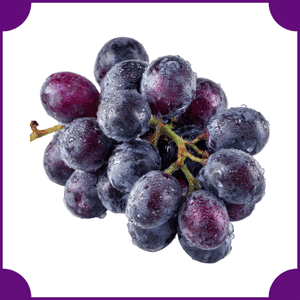
1. Purple Grapes
Purple grapes are small, round or oval fruits that grow together in bunches. Their smooth skin can range from reddish-purple to very dark purple.
The flesh is generally pale, juicy, and sweet. Different varieties may contain seeds or be seedless. Purple grapes are eaten fresh and are also used to make juice, jelly, raisins, and wine.
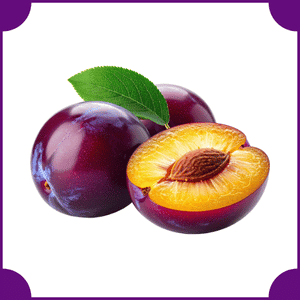
2. Plum
A plum is a round or oval stone fruit with smooth skin and juicy flesh. Purple varieties may have reddish-purple, violet, blue-purple, or very dark skin.
A plum contains one hard stone, also called a pit, in the center. Depending on the variety and ripeness, its taste can range from sweet to slightly tart.
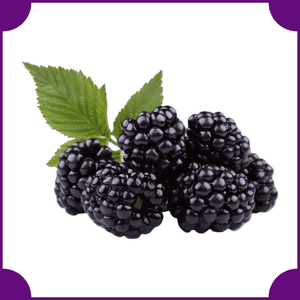
3. Blackberry
A blackberry is a small fruit made up of many tiny sections called drupelets. Ripe blackberries usually look black or very dark purple.
They are soft and juicy and normally have a mixture of sweet and tart flavors. Blackberries are eaten fresh and commonly used in jams, pies, desserts, and smoothies.
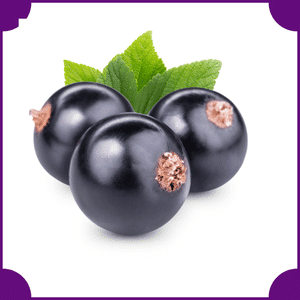
4. Blackcurrant
Blackcurrants are small, round fruits that grow in clusters. When fully ripe, their skin becomes such a deep purple that the fruits often appear black.
They have a strong tart flavor and are commonly used to make juices, jams, syrups, sauces, and desserts.
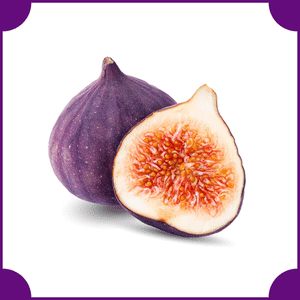
5. Purple Fig
A purple fig is a soft fruit with purple or violet skin. Its inside may be pink, red, or amber and contains numerous tiny edible seeds.
Ripe figs are naturally sweet and have a soft, slightly chewy texture. They can be eaten fresh or dried.
6. Purple Passion Fruit
Purple passion fruit is a round or oval tropical fruit with a firm purple rind. As it ripens, its skin may become darker and slightly wrinkled.
Inside the fruit is aromatic yellow-orange pulp containing many edible black seeds. Its flavor is usually sweet, tangy, and refreshing.
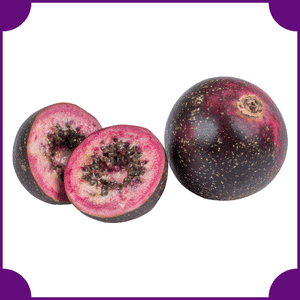
7. Acai Berry
The acai berry is a small, round, deep purple fruit that comes from the acai palm, which is native to tropical South America.
The fruit contains a relatively large seed with only a small amount of edible pulp around it. Acai is commonly available as frozen pulp, puree, juice, or powder rather than as fresh berries.
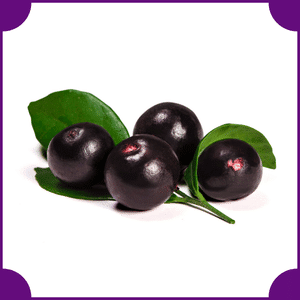
8. Elderberry
Elderberries are tiny round fruits that grow together in large clusters. Mature berries generally have a dark purple or almost black appearance.
They have a tart flavor and are commonly cooked or processed into syrups, jams, jellies, and other products.
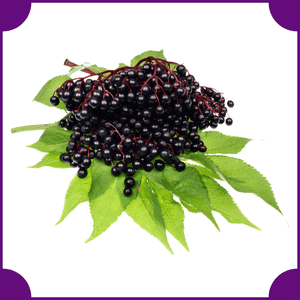
9. Damson Plum
A damson plum, often simply called a damson, is a small type of plum with dark blue-purple skin.
Its flesh is usually yellowish or greenish. Damsons have a sharper and more astringent flavor than many sweet plums, so they are frequently used for jams, preserves, and cooking.
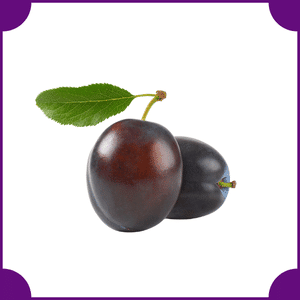
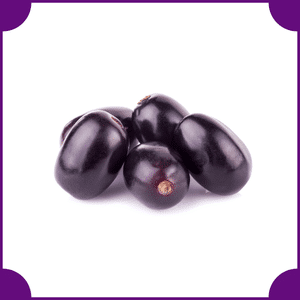
10. Java Plum
Java plum, commonly known as jamun in South Asia, is an oblong fruit that develops a deep purple or nearly black color when fully ripe.
The flesh is juicy, and the taste can be sweet, acidic, and slightly astringent. Its scientific name is Syzygium cumini.
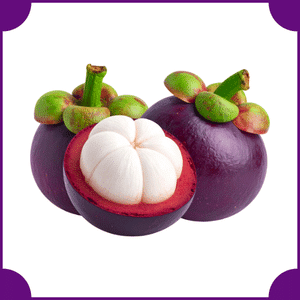
11. Mangosteen
Mangosteen is a round tropical fruit with a thick reddish-purple rind. When opened, it reveals soft white segments of edible flesh.
The flesh has a delicate sweet and slightly tangy flavor. Mangosteen is a good example of a fruit that is purple outside but not purple inside.
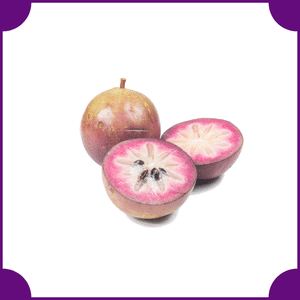
12. Purple Star Apple
The purple star apple is a tropical fruit with smooth purple skin and soft, sweet pulp.
When the fruit is cut across the middle, the arrangement of its seeds and inner sections can form a star-like pattern. This characteristic is one reason for its English name.
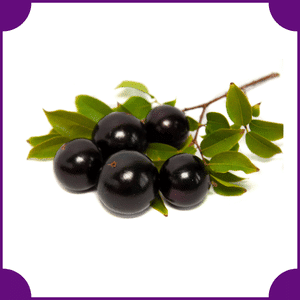
13. Jabuticaba
Jabuticaba is a small Brazilian fruit with thick, dark purple skin and pale, juicy flesh.
An unusual characteristic of the jabuticaba tree is that its fruits can grow directly on its trunk and larger branches. The fruit can be eaten fresh or used to prepare jellies and beverages.
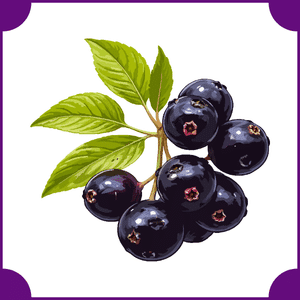
14. Maqui Berry
The maqui berry is a small, dark purple berry native to parts of southern South America.
It has a mildly sweet and tart taste. Its deep color comes from naturally occurring plant pigments, including anthocyanins.
15. Purple Mulberry
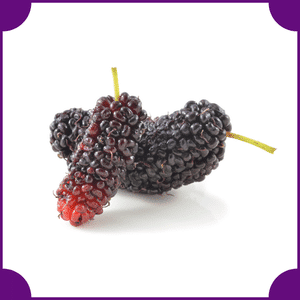
Purple mulberries are elongated fruits made up of many small fruitlets. Their color changes as they ripen and can progress from red to dark purple or almost black.
Fully ripe dark mulberries are usually soft, juicy, and sweet.
Purple Fruits with Purple Skin
Some fruits are included among purple fruits mainly because their outer skin or rind becomes purple when ripe. Their flesh may be a completely different color.
| Fruit | Skin or Rind | Flesh or Pulp |
|---|---|---|
| Purple Grape | Purple | Pale green or translucent |
| Purple Plum | Purple | Yellow, red, or amber |
| Purple Fig | Purple | Pink, red, or amber |
| Passion Fruit | Purple | Yellow-orange |
| Mangosteen | Reddish-purple | White |
| Java Plum | Dark purple | Whitish to purple |
| Star Apple | Purple | White to purple |
| Damson | Blue-purple | Yellow-green |
| Jabuticaba | Dark purple | Pale or translucent |
| Muscadine Grape | Dark purple in some varieties | Translucent |
This difference is useful when learning English because it introduces words such as skin, rind, flesh, pulp, seed, and pit.
Small Purple Fruits and Berries
A large number of purple fruits are small and berry-like. Common examples include:
- Blackcurrant
- Elderberry
- Maqui Berry
- Bilberry
- Huckleberry
- Chokeberry
- Serviceberry
- Acai Berry
- Black Raspberry
- Saskatoon Berry
In everyday English, many small fruits are called berries. However, the everyday use of the word berry does not always match its strict botanical meaning.
For English learners, it is usually best to learn and use the commonly accepted English name of each fruit.
Tropical Purple Fruits
Purple fruits are not limited to grapes, plums, and berries. Several tropical regions produce unusual fruits with beautiful purple skins.
Some examples are:
- Mangosteen
- Purple Passion Fruit
- Java Plum
- Purple Star Apple
- Jabuticaba
- Acai Berry
- Cocoplum
These names are especially useful for students who want to expand their vocabulary beyond common supermarket fruits.
Dark Purple Fruits
Some fruits develop such a deep purple color that they can appear almost black when fully ripe.
Examples include:
- Blackberry
- Blackcurrant
- Java Plum
- Jabuticaba
- Purple Mulberry
- Maqui Berry
- Black Raspberry
- Chokeberry
This explains why some fruits with the word black in their names may also appear in lists of dark purple fruits. Their exact appearance can change with ripeness, variety, and lighting.
Why Are Some Fruits Purple?
Many purple, blue, and reddish fruits contain natural pigments known as anthocyanins. These plant compounds belong to a larger group called flavonoids.
The amount and type of pigment can influence the visible color of a fruit. Growing conditions, variety, maturity, and other natural factors can also affect its final shade.
This is why two varieties of the same fruit may have noticeably different colors. One plum may be red, for example, while another may have deep purple skin.
How to Describe Purple Fruits
When describing a fruit in English, you can mention its name, color, size, shape, texture, taste, and important physical features.
For example:
A plum is a small round or oval fruit. Some varieties have smooth purple skin and juicy flesh. It contains one hard pit in the center. A ripe plum can taste sweet or slightly tart.
A useful pattern for ESL learners is:
Name + size + shape + color + texture + taste + special feature
For example:
Purple grapes are small, round fruits with smooth purple skin. They are juicy and usually sweet. They grow together in bunches.
This structure can be useful in speaking exercises, vocabulary tests, descriptive writing, and classroom activities.
Purple Fruits and Their Shapes
Fruit vocabulary can also be learned by connecting each fruit with its general shape.
| Purple Fruit | Common Shape |
|---|---|
| Purple Grape | Round or oval |
| Plum | Round or oval |
| Blackberry | Rounded or oblong |
| Blackcurrant | Round |
| Purple Fig | Pear-shaped |
| Passion Fruit | Round or oval |
| Acai Berry | Round |
| Java Plum | Oval or oblong |
| Mangosteen | Round |
| Star Apple | Round |
| Jabuticaba | Round |
| Damson | Oval |
| Elderberry | Round |
| Maqui Berry | Round |
| Mulberry | Elongated |
These descriptions refer to the usual appearance of the fruits. Individual varieties can differ slightly in size and shape.
Purple Fruits and Their Tastes
Another useful way to build vocabulary is to group fruits according to taste.
Sweet Purple Fruits
Some purple fruits are usually sweet when fully ripe, including:
- Purple Grapes
- Purple Figs
- Purple Mulberries
- Star Apple
- Mangosteen
- Muscadine Grapes
Sweet and Tart Purple Fruits
These fruits often combine sweetness with noticeable acidity:
- Blackberries
- Plums
- Passion Fruit
- Huckleberries
- Black Raspberries
- Jabuticaba
Tart or Astringent Purple Fruits
Some fruits naturally have a sharper flavor:
- Blackcurrants
- Damsons
- Chokeberries
- Davidson’s Plum
- Some Java Plums
Taste can change according to variety and ripeness, so these descriptions should be treated as general characteristics rather than fixed rules.
Difference Between Purple Fruits and Purple Vegetables
Purple fruits and purple vegetables may look similar in color, but they belong to different food groups in everyday language.
Common purple fruits include grapes, plums, figs, blackberries, and passion fruit. Foods commonly described as purple vegetables include eggplant, purple cabbage, purple cauliflower, and purple carrots.
Botanically, a fruit develops from the flower of a plant and contains, or is associated with, seeds. Culinary classification is based more on taste and how a food is prepared, so botanical and everyday classifications do not always agree.
Common Questions About Purple Fruits
What Are Some Common Purple Fruits?
Some common purple fruits are purple grapes, plums, blackberries, blackcurrants, figs, passion fruit, and dark mulberries. These fruits may have purple skin, purple flesh, or a very dark purple appearance.
Which Fruit Is Purple Outside and White Inside?
Mangosteen is one of the best-known examples. It has a thick reddish-purple rind with soft white edible segments inside.
Some varieties of purple grapes can also have dark purple skin with pale or translucent flesh.
What Is the Purple Fruit Called Jamun in English?
Jamun is commonly called Java plum in English. It is also known as jambolan. Its scientific name is Syzygium cumini. A fully ripe Java plum normally has deep purple to almost black skin.
Is Blackberry a Purple Fruit?
A blackberry is normally described as black when fully ripe. However, its very dark pigmentation can give it a purple-black appearance, so it is often included in lists of dark purple fruits based on visible color.
Are All Purple Fruits Purple Inside?
No. Some fruits are purple only on the outside. Mangosteen, purple passion fruit, many purple grapes, and some plums have purple outer coverings but differently colored flesh or pulp.
What Is a Small Purple Fruit?
There are many small purple fruits, including blackcurrants, elderberries, maqui berries, acai berries, bilberries, huckleberries, and purple grapes.
Which Purple Fruit Grows in Bunches?
Grapes are a familiar example of purple fruits that grow in bunches. Elderberries, currants, and some other small fruits also grow together in clusters.
Easy Purple Fruits List for Beginners
Beginners and young English learners can start by memorizing these common names:
- Purple Grapes
- Plum
- Blackberry
- Blackcurrant
- Purple Fig
- Purple Passion Fruit
- Acai Berry
- Elderberry
- Damson Plum
- Java Plum
- Mangosteen
- Purple Star Apple
- Jabuticaba
- Purple Mulberry
- Maqui Berry
Start with familiar names such as grape, plum, fig, and blackberry before moving to less familiar vocabulary such as jabuticaba, maqui berry, and star apple.
Final Thoughts
Learning purple fruits with names in English is a simple way to improve food, color, taste, and descriptive vocabulary at the same time. Purple grapes, plums, figs, blackberries, passion fruit, mangosteen, Java plum, and many berries are useful examples to recognize.
For ESL learners, it is helpful to learn more than just the fruit name. Words such as skin, flesh, pulp, rind, seed, pit, ripe, juicy, sweet, tart, round, and oval make it easier to describe fruits accurately in speaking and writing. Combining these words with clear pictures and example sentences can make fruit vocabulary easier to understand, remember, and use naturally.
Learn More Helpful Articles