
Birds are fascinating animals found in forests, gardens, wetlands, deserts, mountains, and cities around the world. They come in many varieties, including eagles, parrots, owls, sparrows, flamingos, and woodpeckers, each having different colors, sizes, habitats, and behaviors. Learning bird names in English is a useful way to improve vocabulary while developing a better understanding of birds and nature. In this article, you will learn names of birds from A to Z with clear pictures, helping kids, students, teachers, bird lovers, beginners, and English learners easily identify, understand, remember, pronounce, and use these common bird names with confidence.
What Is a Bird?
A bird is a warm-blooded vertebrate animal with feathers, a beak, two wings, and two legs. Birds belong to the scientific class Aves. All living birds have feathers, but not all birds can fly. Ostriches, penguins, emus, kiwis, cassowaries, and several other birds are naturally flightless.
Birds reproduce by laying eggs with hard shells. Depending on the species, they may eat seeds, fruits, insects, fish, nectar, small animals, or carrion.
Names of Birds from A to Z
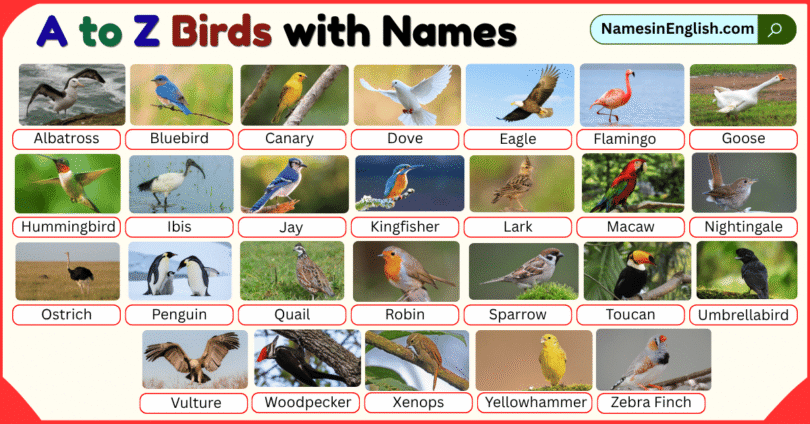
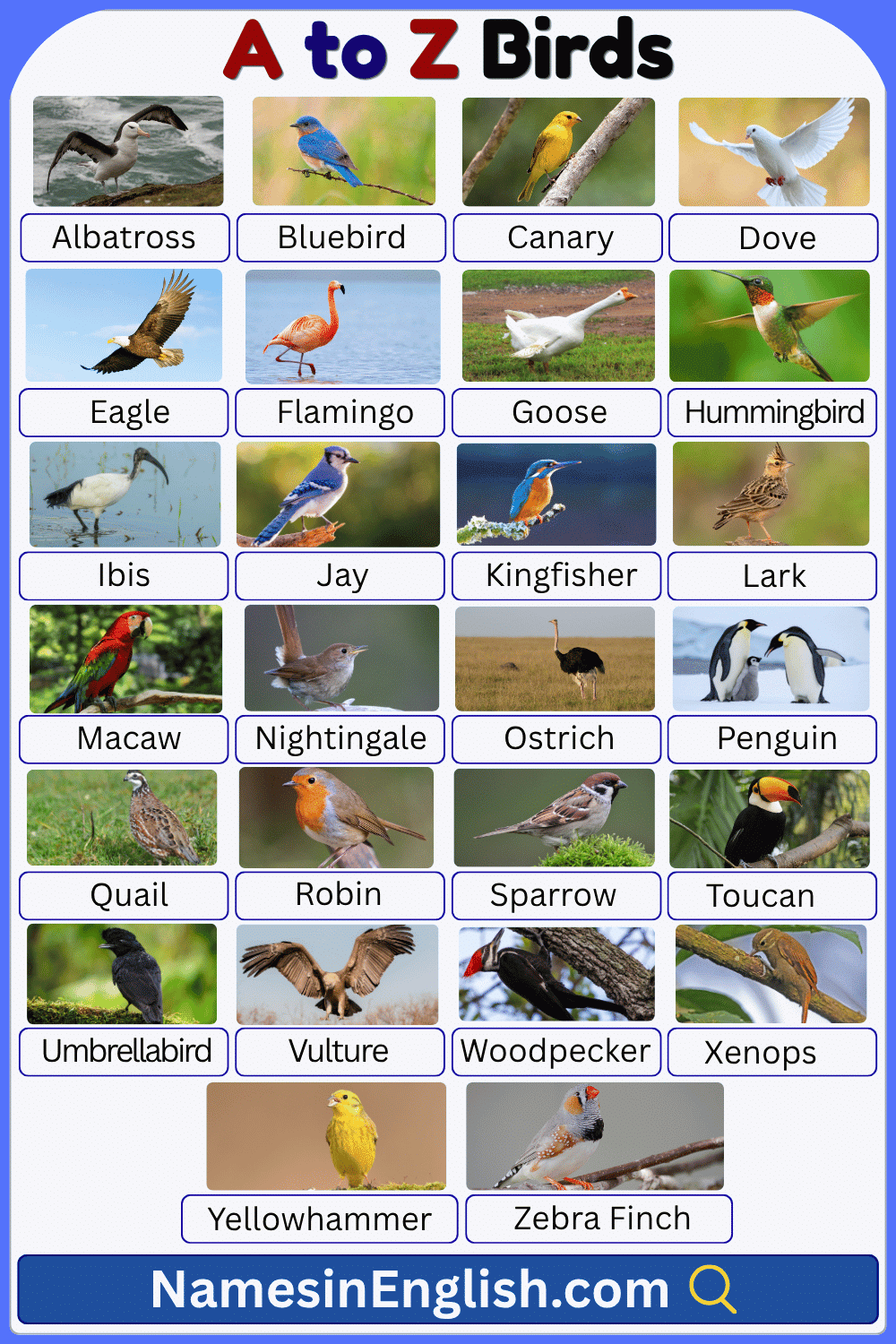
The following A to Z bird list gives one bird name for each letter of the English alphabet. Each bird includes a simple explanation and an easy example sentence.
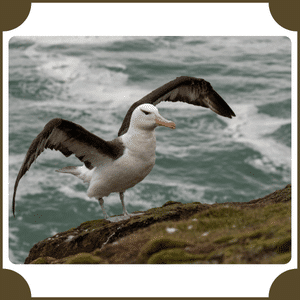
A for Albatross
An albatross is a large seabird with very long and narrow wings. It is famous for gliding over the ocean for long distances while using relatively little energy.
Albatrosses spend much of their lives at sea and mainly feed on marine animals such as squid and fish.
Example: The albatross glided above the ocean.
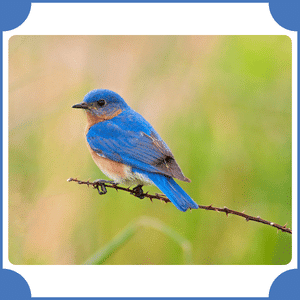
B for Bluebird
A bluebird is a small bird known for the blue coloring found on much of its plumage. Some species also have reddish or orange feathers on the chest.
Bluebirds live mainly in North America and are often found in open woodland, farmland, parks, and gardens.
Example: A bluebird was sitting on the fence.
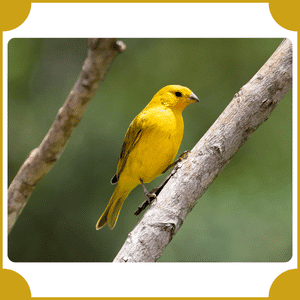
C for Canary
A canary is a small songbird that belongs to the finch family. Domestic canaries are especially famous for their bright yellow feathers, although they can appear in other colors.
Canaries are also known for their pleasant singing and are commonly kept as companion birds.
Example: The canary sang beautifully in the morning.
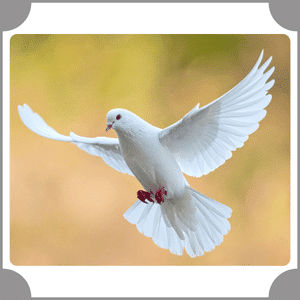
D for Dove
A dove is a small or medium-sized bird belonging to the pigeon family, Columbidae. Doves generally have rounded bodies, relatively small heads, and short bills.
They commonly eat seeds, grains, fruits, and other plant material.
Example: A dove landed beside the tree.
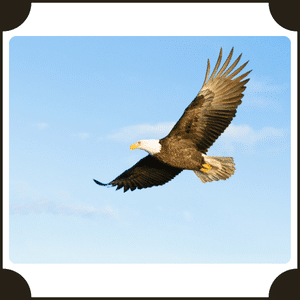
E for Eagle
An eagle is a large bird of prey with powerful wings, a hooked beak, strong feet, and sharp talons. Eagles are known for excellent eyesight and strong hunting abilities.
Different eagle species may hunt fish, mammals, birds, reptiles, or other animals.
Example: The eagle flew high above the mountain.
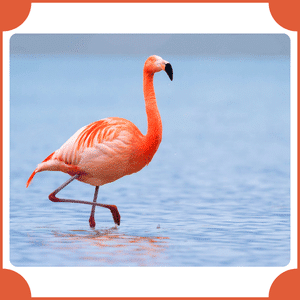
F for Flamingo
A flamingo is a tall waterbird with long legs, a long neck, and a specially shaped bill. Adult flamingos are often pink because of pigments called carotenoids obtained from their food.
They commonly live around shallow lakes, lagoons, salt flats, and wetlands.
Example: The pink flamingo stood in shallow water.
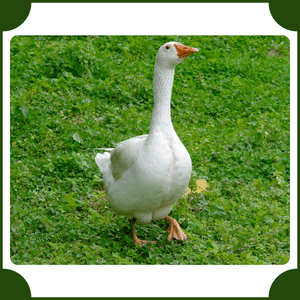
G for Goose
A goose is a large waterbird related to ducks and swans. It has a relatively long neck, a strong body, and webbed feet that help it move through water.
Many geese live near lakes, rivers, wetlands, fields, and grasslands.
Example: The goose walked beside the pond.
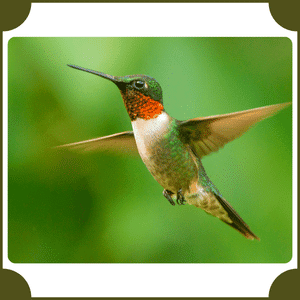
H for Hummingbird
A hummingbird is a very small bird famous for rapid wingbeats and its ability to hover in one place while flying.
Hummingbirds feed heavily on flower nectar but also eat small insects and spiders. They are native to the Americas.
Example: The hummingbird hovered beside the flower.
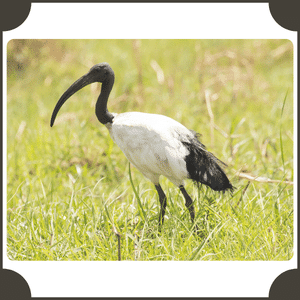
I for Ibis
An ibis is a long-legged bird with a long bill that usually curves downward. Ibises are commonly associated with wetlands, marshes, riverbanks, mudflats, and shallow water.
They use their bills to search for insects, worms, crustaceans, and other small animals.
Example: The ibis searched for food in the mud.
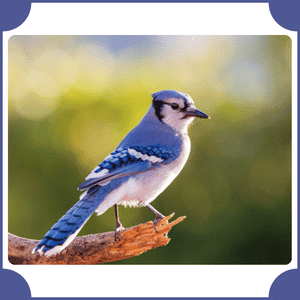
J for Jay
A jay is a medium-sized bird belonging to the crow family, Corvidae. Many jays have colorful plumage and are known for their intelligence, loud calls, and active behavior.
Their diet can include nuts, seeds, fruits, insects, eggs, and small animals.
Example: The jay carried a nut to the tree.
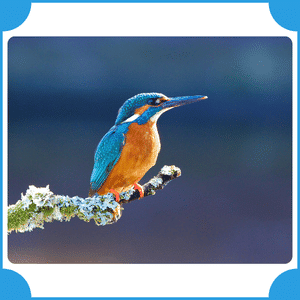
K for Kingfisher
A kingfisher is a bird with a large head, strong pointed bill, and often brightly colored feathers. Many kingfishers live near rivers, lakes, ponds, and streams.
Fish-eating species often catch prey by diving quickly into the water.
Example: The kingfisher caught a small fish.
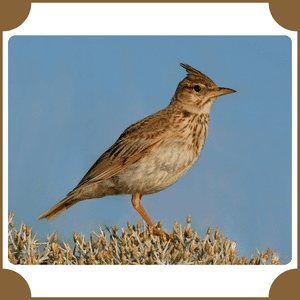
L for Lark
A lark is a small or medium-sized bird often associated with open countryside and musical songs. Many species live in grasslands, fields, deserts, and farmland.
Larks commonly eat seeds and insects and spend considerable time on the ground.
Example: We heard a lark singing in the field.
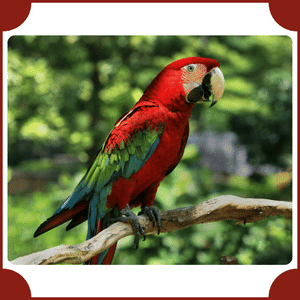
M for Macaw
A macaw is a large, colorful parrot with a strong curved beak and a long tail. Macaws are native to tropical regions of Central and South America.
They commonly feed on fruits, nuts, seeds, flowers, and other plant material.
Example: The colorful macaw sat on a branch.
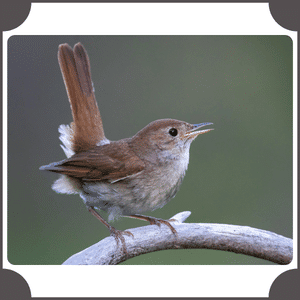
N for Nightingale
A nightingale is a small songbird famous for its rich and complex song. Its plumage is generally brownish rather than brightly colored.
Nightingales occur naturally in parts of Europe, Asia, and Africa and often live in areas with thick vegetation.
Example: The nightingale sang during the evening.
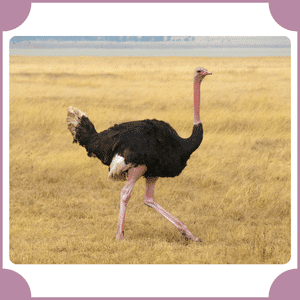
O for Ostrich
An ostrich is the largest living bird in the world. It has a long neck, powerful legs, and a heavy body, but it cannot fly.
Ostriches are native to Africa and are excellent runners capable of moving quickly across open land.
Example: The ostrich ran across the grassland.
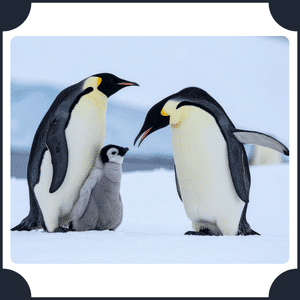
P for Penguin
A penguin is a flightless seabird with a streamlined body and wings modified into flippers. Penguins are highly adapted for swimming underwater.
All wild penguin species live naturally in the Southern Hemisphere, although not all live in icy environments.
Example: The penguin jumped into the water.
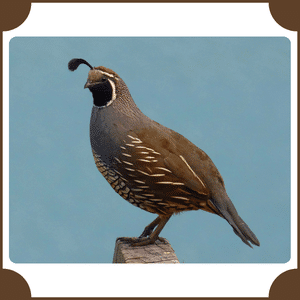
Q for Quail
A quail is a small, round-bodied bird that usually spends much of its time on or near the ground.
Quails generally eat seeds, grains, leaves, and small insects. Different species occur in several parts of the world.
Example: A quail was hiding in the grass.
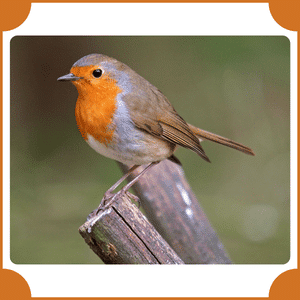
R for Robin
A robin is a common name used for several birds in different parts of the world. For example, the European robin and American robin are not members of the same bird family.
Robins are commonly found in gardens, parks, woodlands, and other open habitats.
Example: The robin searched for food in the garden.
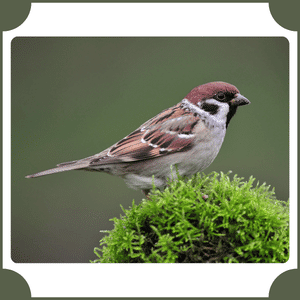
S for Sparrow
A sparrow is a common name used for several groups of small birds. Many have short, strong bills that are well suited to eating seeds.
Sparrows are often seen around houses, farms, parks, fields, gardens, and cities.
Example: A sparrow sat on the roof.
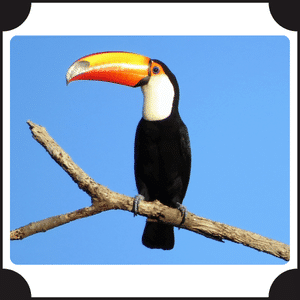
T for Toucan
A toucan is a tropical bird famous for its very large and often colorful bill. Toucans belong to the family Ramphastidae.
They live mainly in Central and South American forests and commonly eat fruits, although they may also consume insects and small animals.
Example: The toucan picked up fruit with its bill.
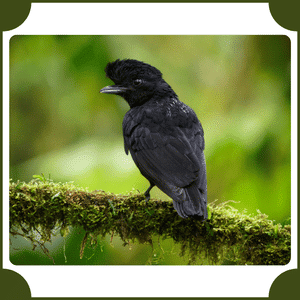
U for Umbrellabird
An umbrellabird is a tropical bird named for the large crest of feathers on the head of the male.
Umbrellabirds live in forests of Central and South America. They mainly eat fruits but may also eat insects and other small animals.
Example: The umbrellabird rested high in the forest.
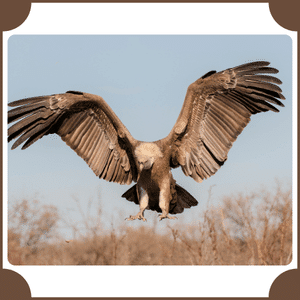
V for Vulture
A vulture is a large scavenging bird that mainly feeds on carrion, meaning the bodies of dead animals.
Vultures are environmentally important because they help remove animal remains and recycle nutrients within ecosystems.
Example: The vulture circled high above the land.
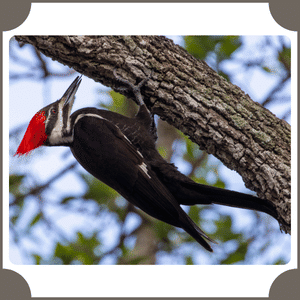
W for Woodpecker
A woodpecker is a bird specially adapted for climbing trees and striking wood with its bill. Many species search under bark or inside wood for insects.
Woodpeckers may also drum on trees and other surfaces to communicate.
Example: The woodpecker pecked the tree trunk.
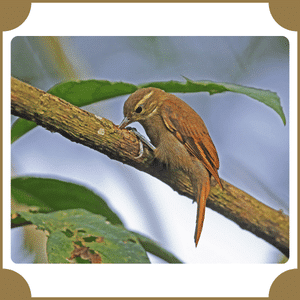
X for Xenops
A xenops is a small forest bird found in tropical parts of Central and South America. It has a slender body and a slightly upturned bill.
Xenops move along branches and tree trunks while searching for insects and other small invertebrates.
Example: The xenops searched the bark for insects.
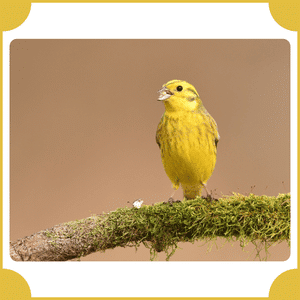
Y for Yellowhammer
A yellowhammer is a small bunting found across much of Europe and parts of Asia. Adult males are especially noticeable because of their bright yellow heads and underparts.
Yellowhammers commonly live in farmland, hedgerows, grasslands, and open countryside.
Example: The yellowhammer sat on a bush near the field.
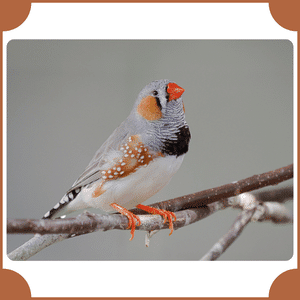
Z for Zebra Finch
A zebra finch is a small finch named for the striped markings visible on parts of its plumage. It is native mainly to Australia.
Zebra finches are social seed-eating birds and are also commonly kept in captivity.
Example: The zebra finch was eating small seeds.
A to Z Bird Names Quick Reference Table
| Letter | Bird Name | Main Feature |
|---|---|---|
| A | Albatross | Long-winged seabird |
| B | Bluebird | Small blue-colored bird |
| C | Canary | Small songbird |
| D | Dove | Member of the pigeon family |
| E | Eagle | Powerful bird of prey |
| F | Flamingo | Long-legged pink waterbird |
| G | Goose | Large waterbird |
| H | Hummingbird | Can hover in flight |
| I | Ibis | Long curved bill |
| J | Jay | Intelligent crow-family bird |
| K | Kingfisher | Strong pointed bill |
| L | Lark | Known for song |
| M | Macaw | Large colorful parrot |
| N | Nightingale | Famous songbird |
| O | Ostrich | Largest living bird |
| P | Penguin | Flightless swimming seabird |
| Q | Quail | Small ground bird |
| R | Robin | Familiar garden bird name |
| S | Sparrow | Small common bird |
| T | Toucan | Very large bill |
| U | Umbrellabird | Large head crest |
| V | Vulture | Carrion-eating scavenger |
| W | Woodpecker | Pecks and climbs trees |
| X | Xenops | Small tropical forest bird |
| Y | Yellowhammer | Yellow-colored bunting |
| Z | Zebra Finch | Small striped finch |
Common Types of Birds
Birds can be divided into groups in several ways. People often group them according to habitat, diet, behavior, appearance, or relationship with humans.
These everyday groups are useful for English learners, but they should not always be confused with scientific classification. Scientists classify birds more precisely into orders, families, genera, and species according to evolutionary relationships.
Birds of Prey
Birds of prey, also called raptors, are hunting birds with strong feet, sharp talons, hooked beaks, and good eyesight.
Common examples include:
- Eagle
- Hawk
- Falcon
- Owl
- Osprey
- Harrier
Many raptors catch living prey, although some also eat carrion.
Waterbirds
Waterbirds are birds strongly associated with rivers, lakes, ponds, marshes, wetlands, coasts, or other aquatic habitats.
Examples include:
- Duck
- Goose
- Swan
- Flamingo
- Heron
- Egret
- Pelican
- Grebe
“Waterbird” is a useful everyday ecological category rather than one single scientific family.
Seabirds
Seabirds spend much of their lives around oceans and obtain much of their food from marine environments.
Examples include:
- Albatross
- Petrel
- Puffin
- Gull
- Tern
- Frigatebird
- Penguin
Different seabird species have very different feeding, nesting, and migration habits.
Songbirds
The word songbird is commonly used for birds known for musical calls or songs. Scientifically, it usually refers more specifically to oscine passerines.
Examples include:
- Nightingale
- Lark
- Wren
- Blackbird
- Finch
- Robin
Not every bird that makes an attractive sound belongs to the scientific songbird group.
Flightless Birds
Most birds can fly, but some species have lost the ability to fly during evolution.
Examples include:
- Ostrich
- Penguin
- Emu
- Kiwi
- Cassowary
- Kakapo
Flightless birds have other useful adaptations. Ostriches are powerful runners, while penguins are highly efficient swimmers.
Domestic and Farm Birds
Some birds have been domesticated by humans for food, eggs, feathers, companionship, or other purposes.
Examples include:
- Chicken
- Turkey
- Duck
- Goose
- Pigeon
- Quail
Domestic birds may have many breeds that differ greatly in size, color, behavior, and body shape.
Pet and Companion Birds
Some bird species are commonly kept by people as companion animals.
Examples include:
- Canary
- Budgerigar
- Cockatiel
- Lovebird
- Parrot
- Cockatoo
- Zebra Finch
“Pet bird” is not a scientific classification. It simply describes a bird that people commonly keep in captivity.
Common Birds for Kids and Beginners
Young learners can begin with easy and familiar bird names before learning less common vocabulary.
| Bird | Simple Meaning |
|---|---|
| Duck | A waterbird with webbed feet |
| Crow | A usually black bird in the genus Corvus |
| Owl | A bird with large forward-facing eyes |
| Parrot | A bird with a strong curved bill |
| Eagle | A large bird of prey |
| Swan | A large waterbird with a long neck |
| Chicken | A common domestic bird |
| Penguin | A flightless swimming seabird |
| Peacock | An adult male peafowl |
| Pigeon | A bird belonging to the dove family |
| Sparrow | A common name for several small birds |
| Woodpecker | A bird adapted for pecking wood |
Main Parts of a Bird
Learning the main parts of a bird helps students describe birds more accurately in English.
Beak or Bill
The beak, also called a bill, is the hard structure around a bird’s mouth. Different birds have differently shaped bills depending on their feeding adaptations.
For example, eagles have hooked beaks, while many kingfishers have long pointed bills.
Wings
Wings are modified forelimbs. Most birds use them for flying, but flightless birds may use them for swimming, balance, display, or other purposes.
Penguins, for example, use their wing-like flippers underwater.
Feathers
Feathers cover a bird’s body. They provide insulation, protection, and help most birds fly.
Feathers can also be important for camouflage, courtship displays, identification, and communication.
Tail
The tail consists mainly of specialized feathers. It can help a flying bird steer, balance, slow down, and change direction.
Some birds also use their tails during courtship displays.
Feet and Toes
Bird feet differ according to lifestyle. Ducks have webbed feet, while many birds of prey have strong toes equipped with sharp claws.
Woodpeckers have feet adapted for gripping vertical tree trunks.
Talons
Talons are strong, curved claws especially associated with birds of prey.
Eagles, hawks, falcons, and owls use their talons to catch, hold, or kill prey.
Bird Names by Habitat
Birds live in many different environments.
| Habitat | Common Bird Examples |
|---|---|
| Forest | Woodpecker, Owl, Toucan |
| Wetland | Heron, Ibis, Flamingo |
| Ocean | Albatross, Penguin, Petrel |
| Grassland | Lark, Ostrich |
| Desert | Roadrunner, Sandgrouse |
| Mountain | Eagle, Condor |
| Garden | Robin, Sparrow, Bluebird |
| Farm | Chicken, Goose, Duck |
| River | Kingfisher, Heron |
| Tropical Forest | Macaw, Toucan, Umbrellabird |
A single bird species may use more than one habitat during different seasons or stages of life.
Bird Names by Diet
Birds eat many different kinds of food. Their diets are often linked to their beaks, feet, habitats, and hunting behavior.
Seed-Eating Birds
Many birds eat seeds as an important part of their diet.
Examples include:
- Finch
- Sparrow
- Canary
- Quail
- Zebra Finch
Some of these birds also eat fruits, insects, or other foods.
Fruit-Eating Birds
Several tropical and forest birds eat large amounts of fruit.
Examples include:
- Toucan
- Macaw
- Hornbill
- Umbrellabird
Their diets may also contain seeds, insects, flowers, or small animals.
Nectar-Feeding Birds
Hummingbirds are famous for drinking nectar from flowers.
However, they do not survive on nectar alone. They also eat insects and other small arthropods, which provide protein and other nutrients.
Fish-Eating Birds
Several birds are specially adapted for catching fish.
Examples include:
- Kingfisher
- Osprey
- Pelican
- Cormorant
- Penguin
The exact diet varies by species and habitat.
Scavenging Birds
Vultures are among the best-known scavenging birds.
They mainly eat carrion and play an important ecological role by helping remove dead animals from the environment.
Important Differences Between Common Birds
Some bird names are easily confused. Understanding these differences helps ESL learners use the correct vocabulary.
Eagle vs. Hawk
Both eagles and hawks are birds of prey.
The word eagle is generally used for various larger, powerful raptors, while hawk is applied to several other types of raptors. However, these everyday names do not represent a simple scientific division based only on size.
Crow vs. Raven
Crows and ravens belong to the genus Corvus.
Ravens are generally larger than many crows and often have heavier bills and different calls. Exact identification depends on the particular species.
Pigeon vs. Dove
Pigeons and doves belong to the same family, Columbidae.
There is no universal scientific rule that separates every bird called a pigeon from every bird called a dove. The distinction is mainly based on common naming traditions.
Peacock vs. Peafowl
Peafowl is the general name for these birds.
An adult male is a peacock, while an adult female is a peahen. A young bird may be called a peachick.
Therefore, peacock should not technically be used for every peafowl.
Duck vs. Goose
Ducks and geese both belong to the waterfowl family Anatidae.
Geese are generally larger and longer-necked than many ducks, but bird classification is more complex than body size alone.
Male, Female, and Young Bird Names
Some birds have special English names for males, females, and young birds.
| Bird | Male | Female | Young |
|---|---|---|---|
| Chicken | Rooster or Cock | Hen | Chick |
| Duck | Drake | Duck or Hen | Duckling |
| Goose | Gander | Goose | Gosling |
| Turkey | Tom or Gobbler | Hen | Poult |
| Peafowl | Peacock | Peahen | Peachick |
| Swan | Cob | Pen | Cygnet |
These terms are especially useful in farming, wildlife study, and animal vocabulary.
Useful Bird Vocabulary in English
| Word | Simple Meaning |
|---|---|
| Bird | A feathered vertebrate animal |
| Feather | One of the structures covering a bird’s body |
| Wing | A body part used for flight in most birds |
| Beak | The hard mouth structure of a bird |
| Nest | A place used for laying eggs and raising young |
| Egg | The reproductive structure containing a developing young bird |
| Chick | A young bird |
| Flock | A group of birds |
| Perch | To sit or rest on a branch or similar place |
| Migrate | To move seasonally from one region to another |
| Hatch | To come out of an egg |
| Plumage | All the feathers covering a bird |
| Talons | Strong curved claws of birds of prey |
| Flightless | Unable to fly |
| Songbird | A bird belonging to a group known for complex vocalizations |
Easy English Sentences About Birds
These simple examples can help beginners use bird vocabulary correctly.
- The bird is sitting in the tree.
- An eagle has strong talons.
- The duck is swimming in the pond.
- A parrot has a curved beak.
- The owl is sitting on a branch.
- We saw a flock of birds in the sky.
- The chick came out of the egg.
- The penguin cannot fly.
- A hummingbird can hover in the air.
- The woodpecker is climbing the tree.
- Some birds migrate every year.
- The bird built a nest in the tree.
Interesting Facts About Birds
- All living birds have feathers.
- Modern birds are living descendants of theropod dinosaurs.
- The ostrich is the largest living bird.
- Penguins are birds even though they cannot fly through the air.
- Hummingbirds are capable of sustained hovering flight.
- Some birds migrate thousands of kilometers between seasonal habitats.
- Bird beaks come in many shapes because different species are adapted to different foods.
- Not every bird builds a typical nest.
- Vultures help ecosystems by consuming carrion.
- Woodpeckers have adaptations that help them climb and peck trees.
- Some parrots and corvids show advanced problem-solving abilities.
- Birds communicate through calls, songs, body movements, colors, and displays.
Frequently Asked Questions About Names of Birds from A to Z
What are the names of birds from A to Z?
One easy A to Z sequence is Albatross, Bluebird, Canary, Dove, Eagle, Flamingo, Goose, Hummingbird, Ibis, Jay, Kingfisher, Lark, Macaw, Nightingale, Ostrich, Penguin, Quail, Robin, Sparrow, Toucan, Umbrellabird, Vulture, Woodpecker, Xenops, Yellowhammer, and Zebra Finch.
What bird name begins with X?
Xenops is a bird name beginning with X. Xenops are small forest birds found in tropical parts of Central and South America.
What bird name begins with Q?
Quail is an easy bird name beginning with Q. Other examples include quetzal and quelea.
Which bird is the largest living bird?
The ostrich is the largest living bird. It is a flightless bird native to Africa and has powerful legs adapted for running.
Which birds cannot fly?
Examples of flightless birds include ostriches, penguins, emus, cassowaries, kiwis, and kakapos.
Are pigeons and doves different?
Pigeons and doves belong to the same bird family, Columbidae. There is no strict scientific rule that completely separates all pigeons from all doves.
Is a peacock the name of both male and female birds?
No. A peacock is the adult male peafowl. The female is called a peahen, while the general group is called peafowl.
What is the easiest way for kids to learn bird names?
Kids can learn bird vocabulary more easily by studying one bird for each alphabet letter, looking at pictures, repeating the names aloud, and using each word in a short sentence.
Conclusion
Learning the names of birds from A to Z gives kids, beginners, and ESL learners a simple way to build useful English vocabulary while learning about animals and nature. From Albatross for A to Zebra Finch for Z, each letter introduces a different bird with its own appearance, habitat, diet, and behavior.
Learners can also improve their English by understanding bird groups, body parts, food habits, and words such as beak, feather, wing, nest, flock, plumage, talon, perch, hatch, and migrate. These words make it easier to describe birds correctly in speaking, reading, and writing.
A to Z Birds with Names and Pictures
Learn More helpful articles