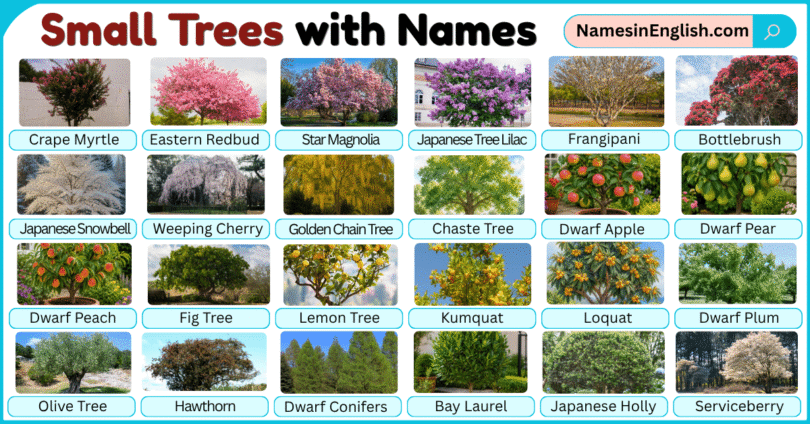

Small trees are attractive and useful plants that can add shade, greenery, flowers, and natural beauty to gardens and outdoor spaces without requiring as much room as larger trees. They include varieties such as Japanese maple, dogwood, crabapple, redbud, and dwarf magnolia, each having different leaves, flowers, shapes, and growing needs. Learning the names of small trees is a useful way to improve English vocabulary while becoming familiar with different plants. In this article, you will learn small tree names in English with clear pictures, helping kids, students, teachers, gardeners, nature lovers, and English learners easily identify, understand, remember, and use these tree names with confidence.
What Are Small Trees?
Small trees are woody perennial plants that usually grow shorter and more compact than large trees. In gardening and landscaping, many small trees mature at roughly 3 to 8 meters (10 to 25 feet) tall, although there is no single universal height that defines every small tree.
Some naturally grow as small trees, while others can appear as either large shrubs or small trees depending on their species, growing conditions, and pruning.
Small trees are commonly planted where space is limited because they can provide shade, flowers, fruit, privacy, and ornamental value without developing the very large crowns or root systems associated with many full-sized trees.
Small Trees with Names in English
| Small Tree Name | Common Height | Main Feature |
|---|---|---|
| Japanese Maple | 10–25 ft | Colorful leaves |
| Crape Myrtle | 10–30 ft | Summer flowers |
| Eastern Redbud | 20–30 ft | Pink-purple spring flowers |
| Flowering Dogwood | 15–30 ft | Attractive spring display |
| Star Magnolia | 15–20 ft | White star-shaped flowers |
| Serviceberry | 15–25 ft | Flowers and edible fruit |
| Crabapple | 15–25 ft | Flowers and small fruits |
| Hawthorn | 15–30 ft | Flowers and berries |
| Japanese Tree Lilac | 20–30 ft | Creamy white flowers |
| Smoke Tree | 10–15 ft | Cloud-like flower clusters |
| Amur Maple | 15–20 ft | Autumn color |
| Paperbark Maple | 20–30 ft | Peeling bark |
| Dwarf Apple Tree | 6–12 ft | Edible apples |
| Dwarf Peach Tree | 4–8 ft | Edible peaches |
| Dwarf Pear Tree | 8–15 ft | Edible pears |
| Pomegranate | 6–20 ft | Red flowers and fruit |
| Fig Tree | 10–30 ft | Edible figs |
| Olive Tree | 20–30 ft | Evergreen leaves and olives |
| Loquat | 10–30 ft | Evergreen foliage and fruit |
| Lemon Tree | 10–20 ft | Citrus fruit |
| Kumquat | 8–15 ft | Small citrus fruits |
| Bottlebrush | 10–20 ft | Brush-like flowers |
| Frangipani | 15–25 ft | Fragrant flowers |
| Desert Willow | 15–30 ft | Trumpet-shaped flowers |
| Chaste Tree | 10–20 ft | Purple flower spikes |
| Dwarf Magnolia | 10–20 ft | Large flowers |
| Weeping Cherry | 15–25 ft | Drooping flowering branches |
| Japanese Snowbell | 20–30 ft | Hanging white flowers |
| Golden Chain Tree | 15–25 ft | Hanging yellow flowers |
| Strawberry Tree | 15–30 ft | Evergreen leaves and red fruit |
Types of Small Trees
Small trees can be grouped according to their flowers, foliage, fruit, leaf habit, climate, and landscaping use.
Small Flowering Trees
Small flowering trees are popular because they produce noticeable blossoms while remaining manageable in gardens and smaller landscapes.
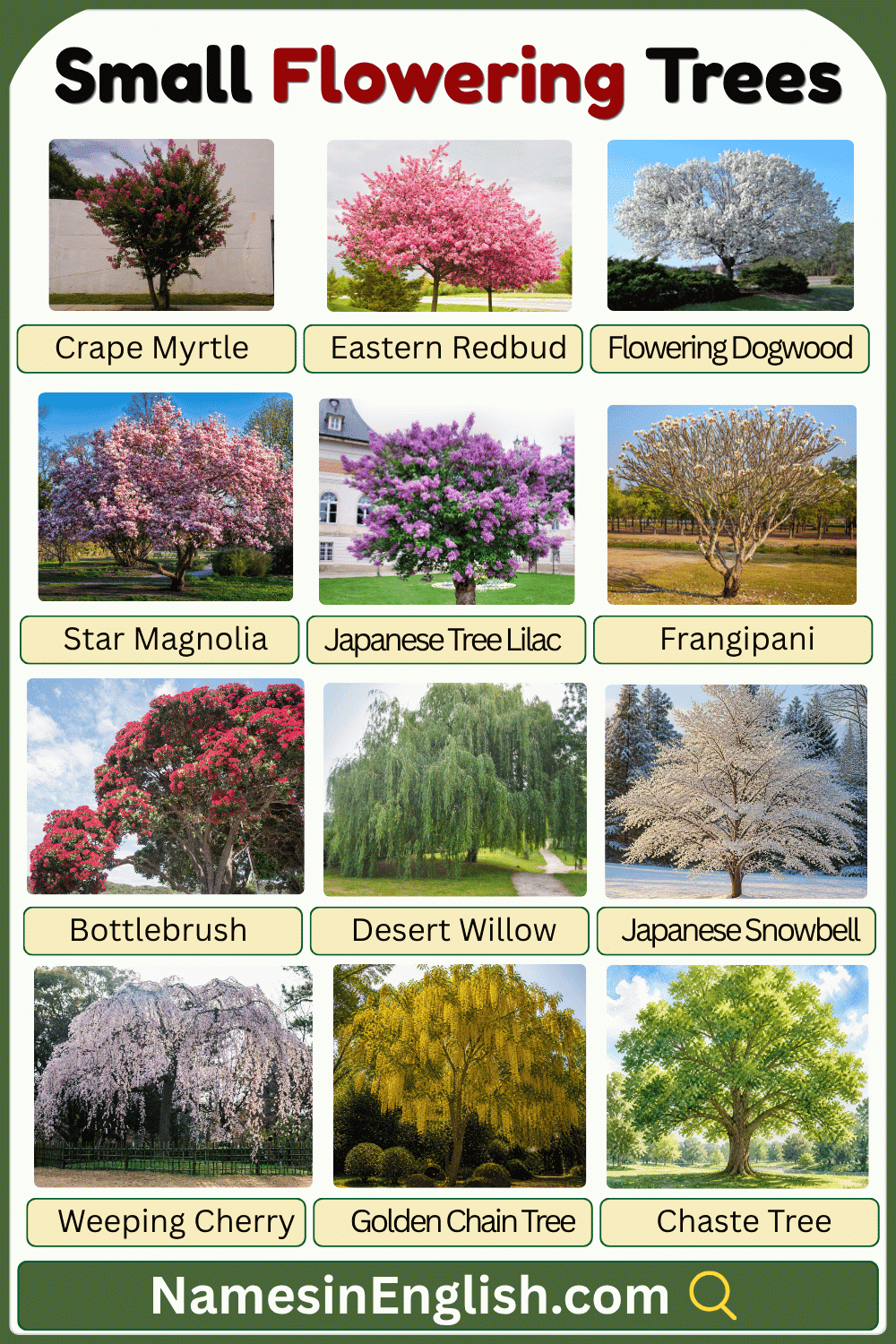
Common examples include:
- Crape Myrtle
- Eastern Redbud
- Flowering Dogwood
- Star Magnolia
- Japanese Tree Lilac
- Frangipani
- Bottlebrush
- Desert Willow
- Japanese Snowbell
- Weeping Cherry
- Golden Chain Tree
- Chaste Tree
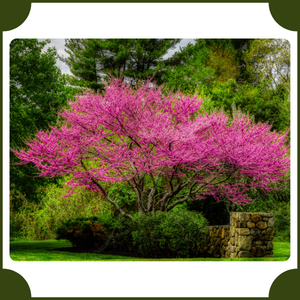
Eastern Redbud
The Eastern redbud is a small deciduous tree known for its bright pink to purple flowers that appear on bare branches in spring. It commonly grows around 20 to 30 feet tall and is frequently used as an ornamental landscape tree.
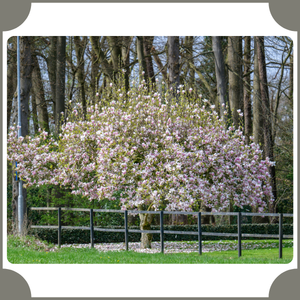
Star Magnolia
The star magnolia is a small deciduous tree or large shrub that produces white, star-shaped flowers in early spring. It generally has a compact form, which makes it suitable for small gardens.
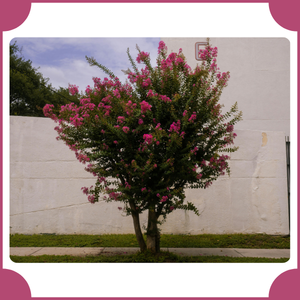
Crape Myrtle
The crape myrtle is a flowering tree valued for its long-lasting summer flower clusters and attractive bark. Different cultivars vary greatly in height, so some remain small while others can become medium-sized trees.
Small Flowering Trees
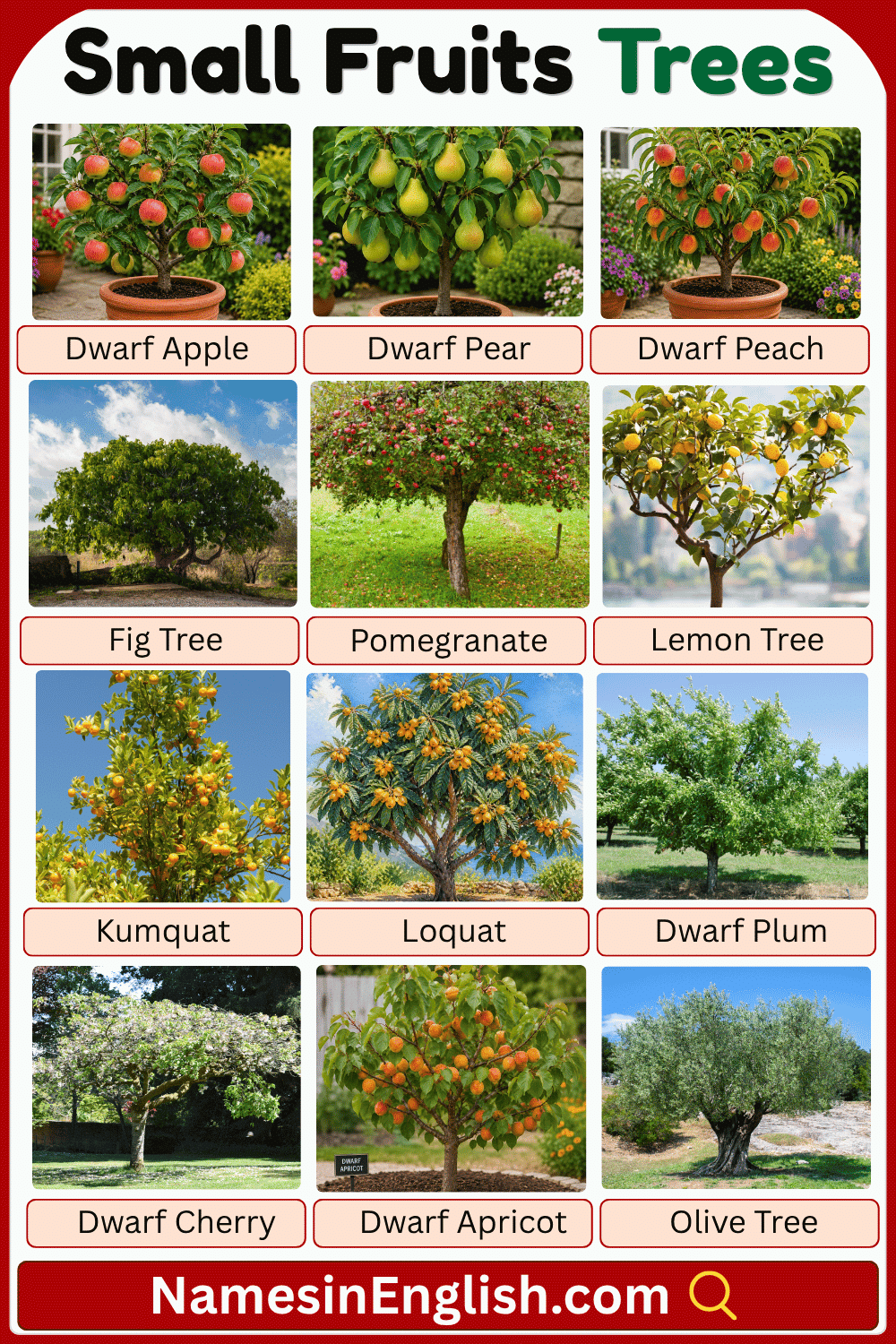
Small Fruit Trees
Small fruit trees are useful for home gardens because they can provide edible fruit without requiring as much space as standard-sized trees.
Common examples include:
- Dwarf Apple Tree
- Dwarf Pear Tree
- Dwarf Peach Tree
- Fig Tree
- Pomegranate
- Lemon Tree
- Kumquat
- Loquat
- Dwarf Plum Tree
- Dwarf Cherry Tree
- Dwarf Apricot Tree
- Olive Tree
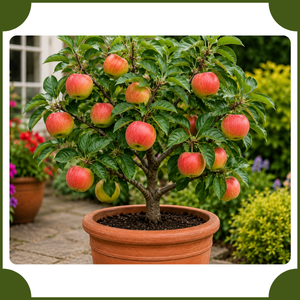
Dwarf Apple Tree
A dwarf apple tree is usually produced by growing an apple cultivar on a dwarfing rootstock. Many dwarf apple trees mature at approximately 6 to 12 feet, although their final size depends on the rootstock, cultivar, and growing conditions.
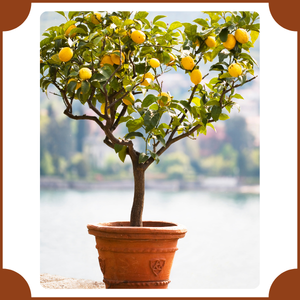
Lemon Tree
A lemon tree is a small evergreen citrus tree that produces yellow lemons. Many garden varieties remain compact enough for small yards, and dwarf forms can also be grown in large containers.
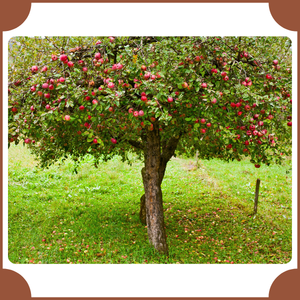
Pomegranate Tree
A pomegranate can grow as either a large shrub or a small tree. It produces attractive red-orange flowers followed by round fruits containing many juicy seeds.
Small Fruit Trees
Small Evergreen Trees
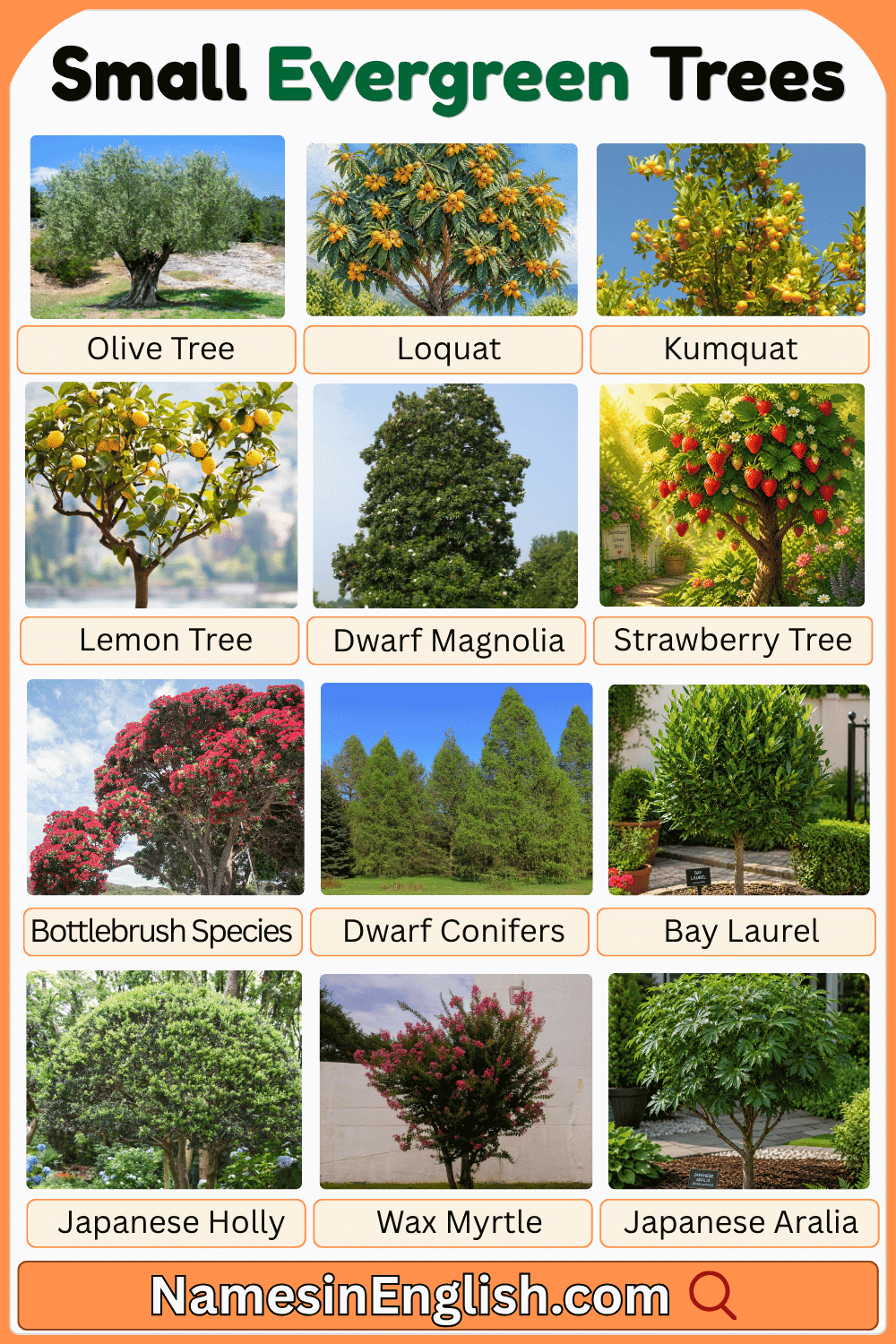
Evergreen trees retain living foliage throughout the year and can provide color and structure even during seasons when deciduous trees are bare.
Examples include:
- Olive Tree
- Loquat
- Kumquat
- Lemon Tree
- Dwarf Magnolia
- Strawberry Tree
- Some Bottlebrush Species
- Dwarf Conifers
These trees are especially useful where year-round foliage is desired.
Small Evergreen Trees
Small Deciduous Trees
Deciduous trees lose all their leaves during a particular season.
Common small deciduous trees include:
- Japanese Maple
- Eastern Redbud
- Flowering Dogwood
- Star Magnolia
- Serviceberry
- Crabapple
- Hawthorn
- Amur Maple
- Paperbark Maple
- Japanese Tree Lilac
Many are valued for spring flowers or colorful autumn foliage.
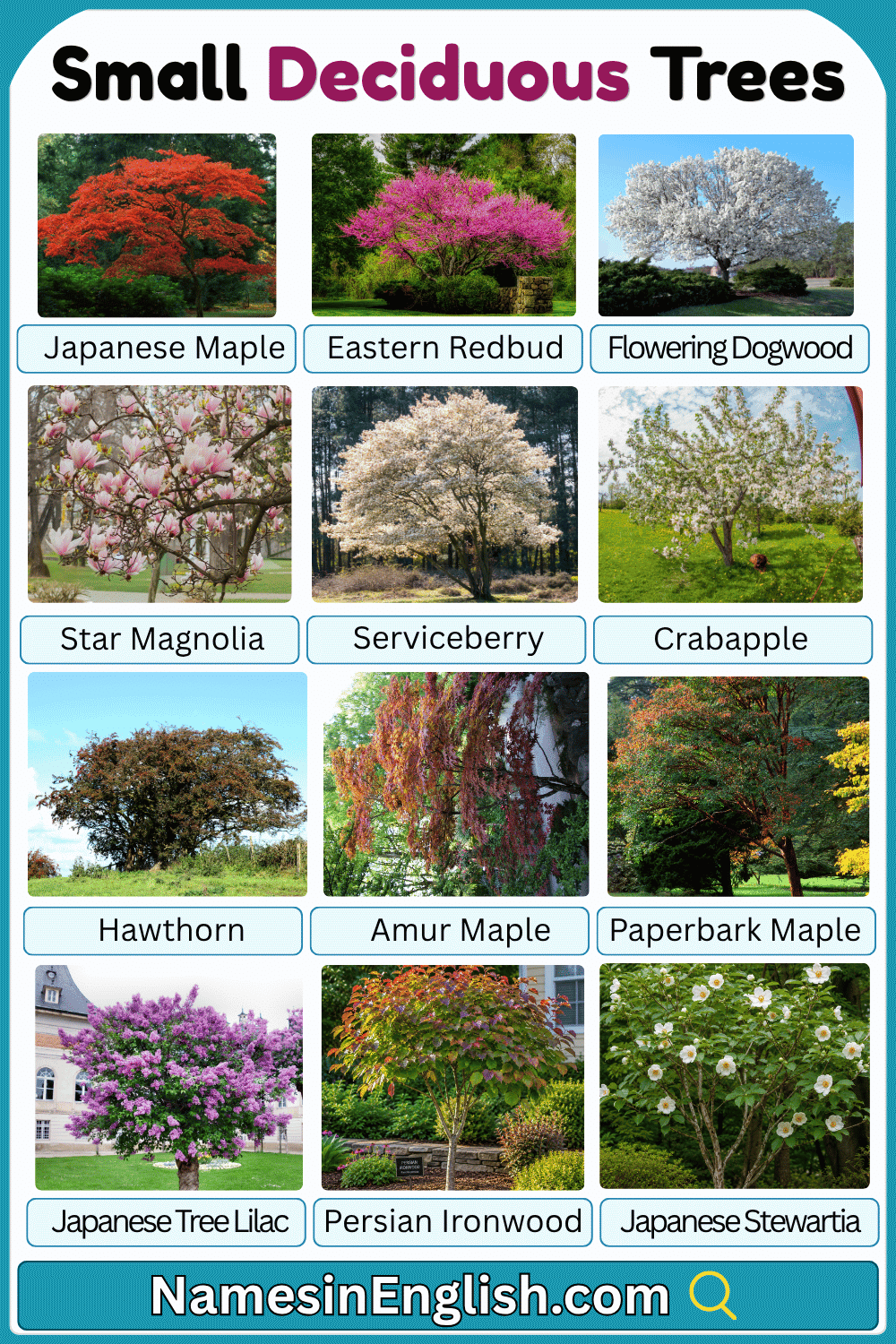
Small Deciduous Trees
Small Trees for Gardens
Small gardens require trees that do not become too tall or develop extremely wide crowns.
Popular choices include:
- Japanese Maple
- Star Magnolia
- Flowering Dogwood
- Serviceberry
- Crape Myrtle
- Japanese Snowbell
- Dwarf Crabapple
- Dwarf Magnolia
- Chaste Tree
- Smoke Tree
A tree should always be selected according to its mature size, rather than its size when purchased.
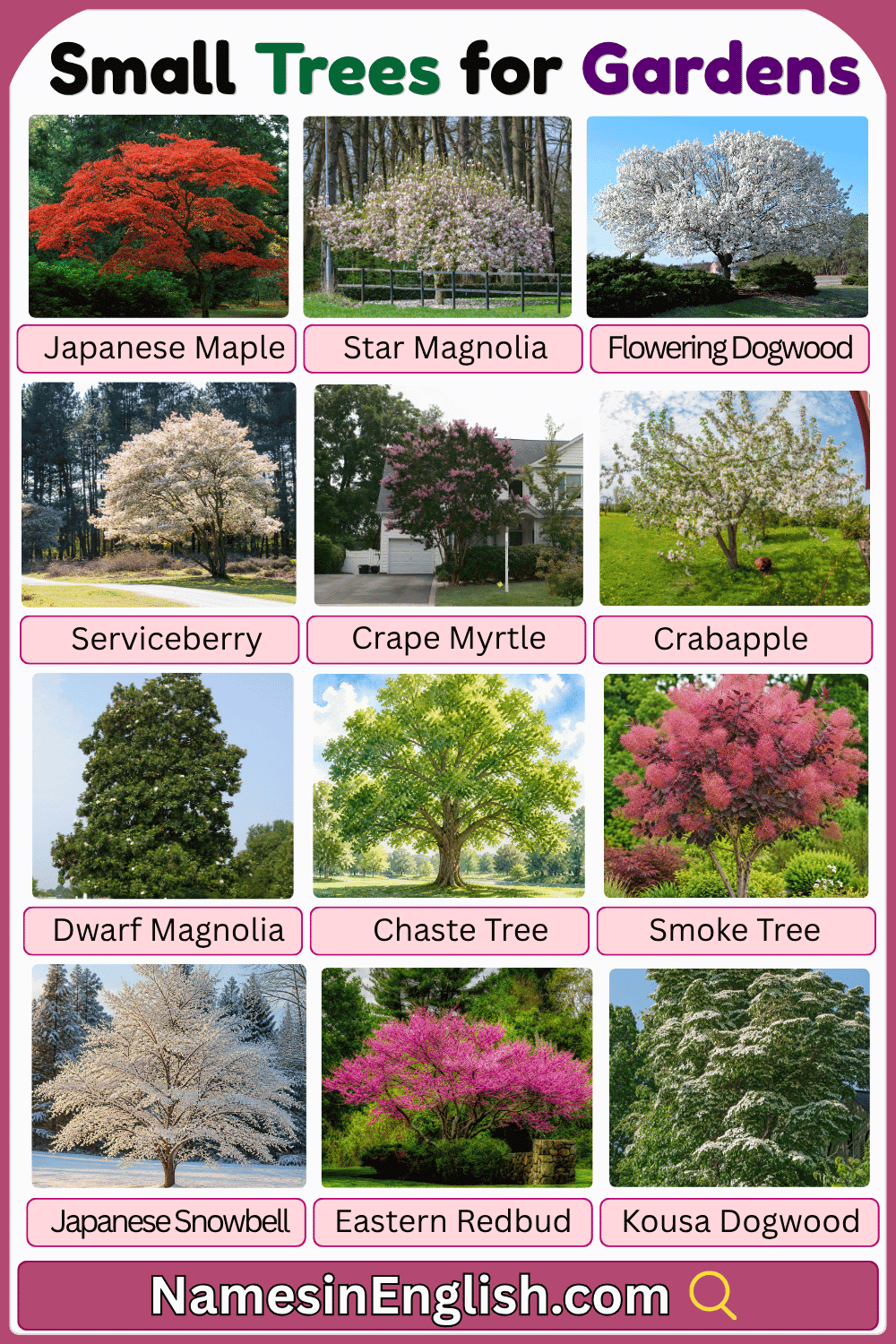
Small Trees for Gardens
Small Trees for Front Yards
A small front-yard tree can add height, shade, flowers, or seasonal color without blocking windows or overwhelming the property.
Common options include:
- Eastern Redbud
- Japanese Maple
- Flowering Dogwood
- Crabapple
- Star Magnolia
- Crape Myrtle
- Serviceberry
- Paperbark Maple
Before planting, consider the tree’s expected height, crown width, roots, sunlight requirements, and distance from buildings.
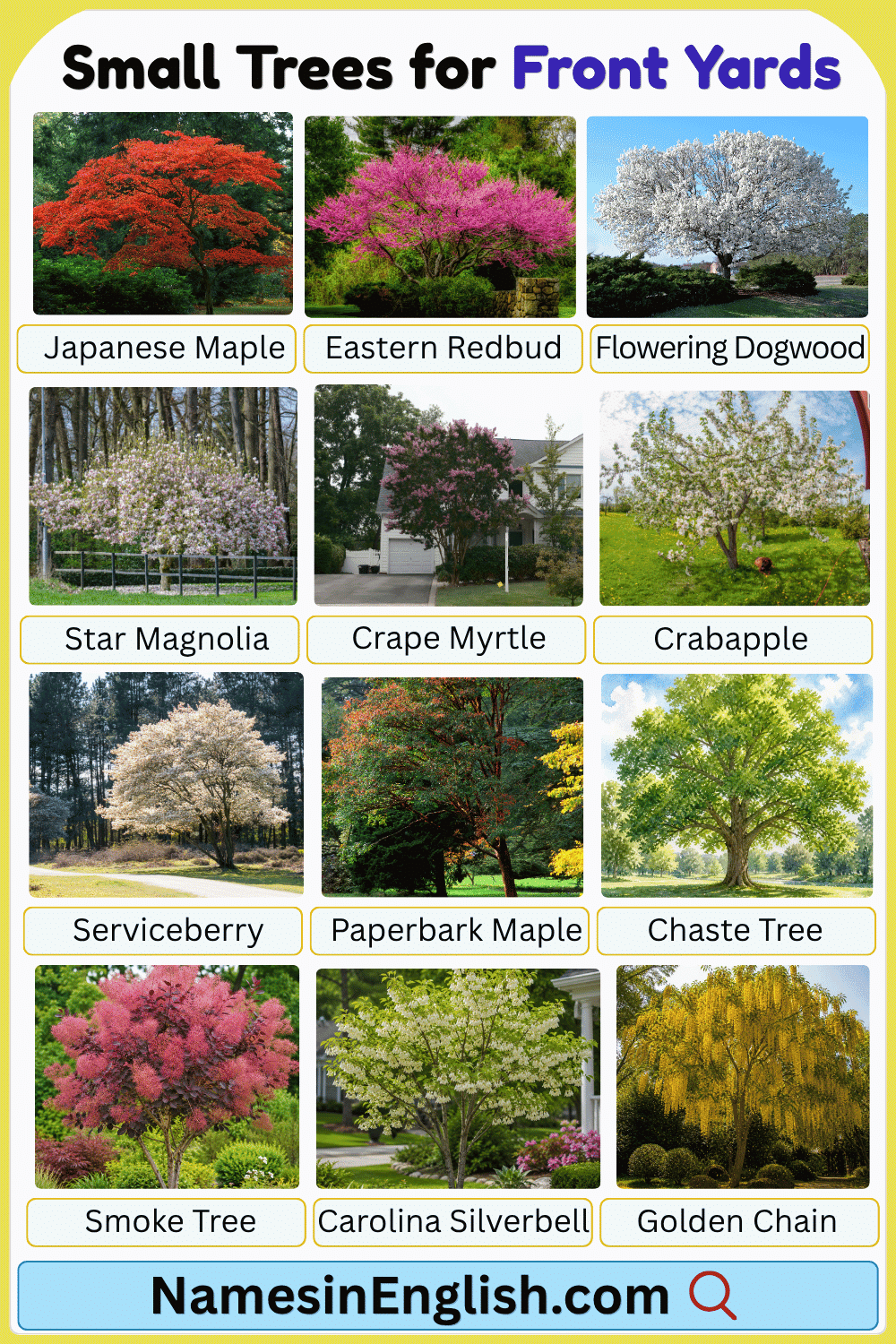
Small Trees for Front Yards
Small Trees with Beautiful Flowers
| Tree Name | Typical Flower Color |
|---|---|
| Eastern Redbud | Pink, Purple |
| Flowering Dogwood | White, Pink |
| Star Magnolia | White |
| Crape Myrtle | Pink, Red, Purple, White |
| Frangipani | White, Yellow, Pink, Red |
| Bottlebrush | Red, Pink |
| Golden Chain Tree | Yellow |
| Japanese Snowbell | White |
| Weeping Cherry | Pink, White |
| Chaste Tree | Purple, Blue, White |
| Japanese Tree Lilac | Creamy White |
| Desert Willow | Pink, Purple, White |
Flower color can vary by species and cultivar, so not every tree of the same common name produces exactly the same color.
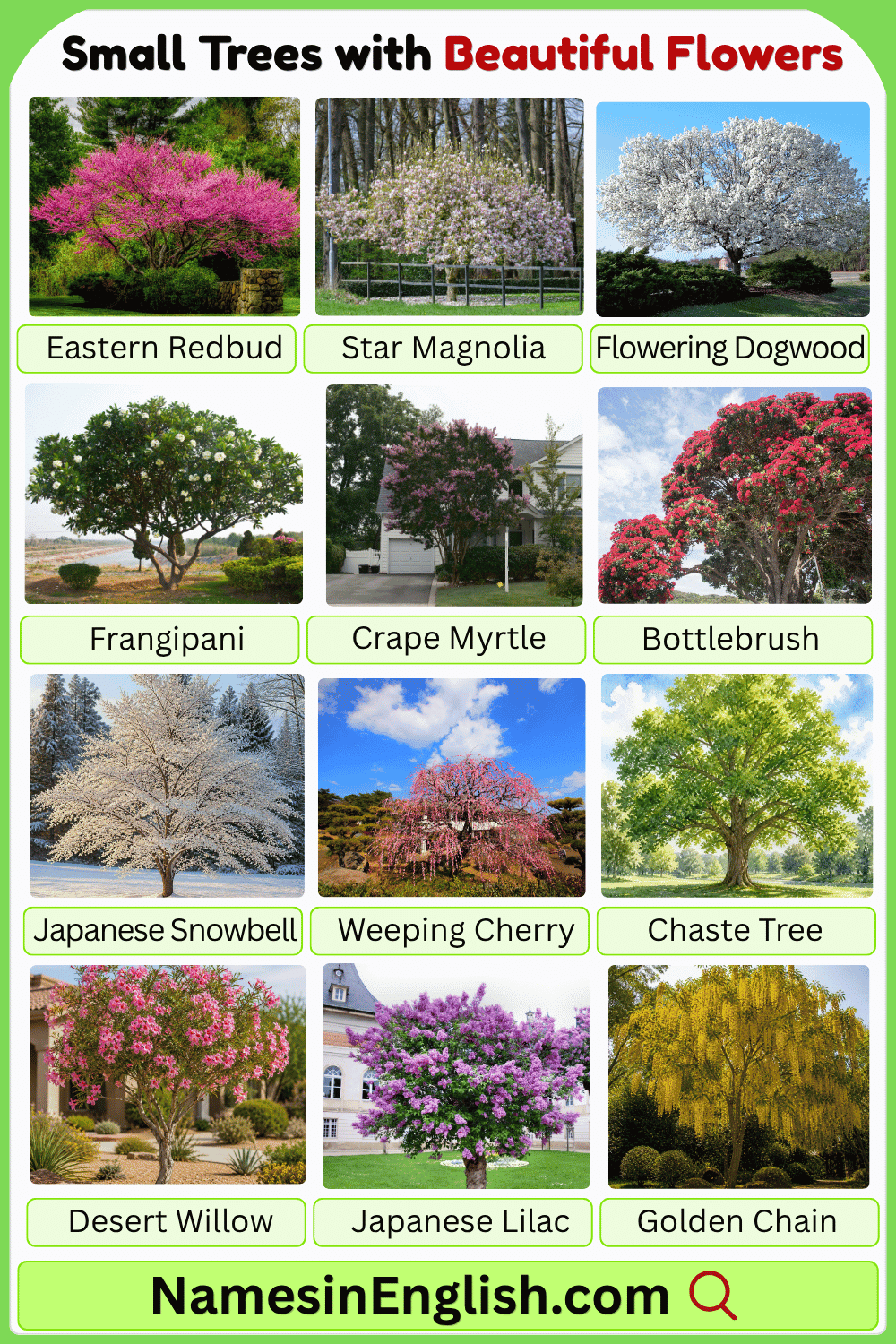
Small Trees with Beautiful Flowers
Small Trees with Colorful Leaves
Some small trees are grown mainly for their foliage rather than their flowers.
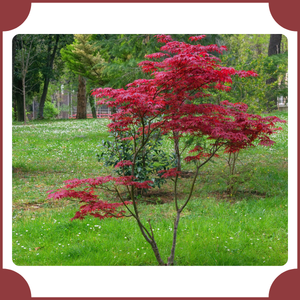
Japanese Maple
Japanese maples are famous for leaves that may appear green, red, purple, orange, or golden, depending on the cultivar and season.
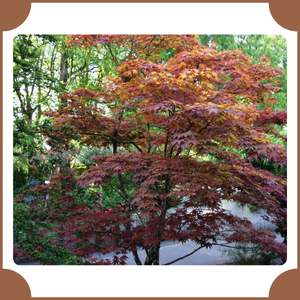
Amur Maple
The Amur maple is a small deciduous tree known for its bright autumn colors, which can include yellow, orange, and red.
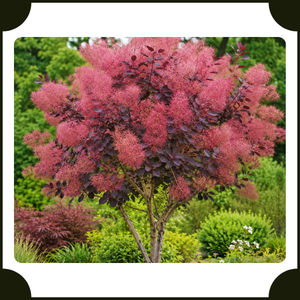
Smoke Tree
Smoke trees may have green, purple, or golden foliage depending on the cultivar. Their airy flower clusters also create a smoky appearance.
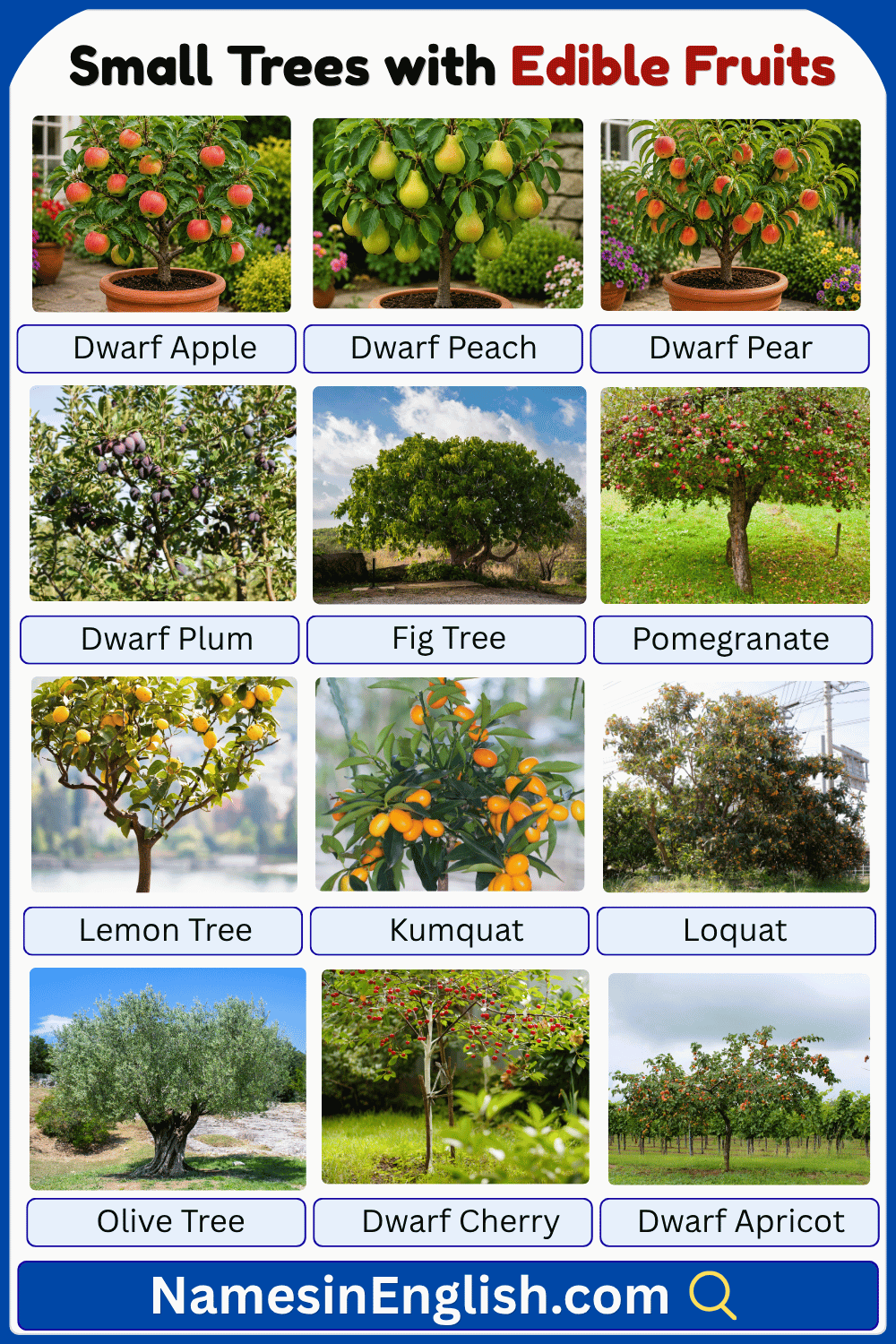
Small Trees with Edible Fruits
| Tree Name | Fruit Produced |
|---|---|
| Dwarf Apple Tree | Apple |
| Dwarf Peach Tree | Peach |
| Dwarf Pear Tree | Pear |
| Dwarf Plum Tree | Plum |
| Fig Tree | Fig |
| Pomegranate | Pomegranate |
| Lemon Tree | Lemon |
| Kumquat | Kumquat |
| Loquat | Loquat |
| Olive Tree | Olive |
| Dwarf Cherry Tree | Cherry |
| Dwarf Apricot Tree | Apricot |
When growing fruit trees, remember that some cultivars require another compatible tree for pollination, while others can produce fruit on their own.
Small Trees with Edible Fruits
Small Trees for Pots and Containers
Some naturally compact trees and dwarf cultivars can grow successfully in large containers.
Examples include:
- Dwarf Lemon Tree
- Kumquat
- Dwarf Olive Tree
- Dwarf Fig Tree
- Dwarf Peach Tree
- Japanese Maple
- Bay Laurel
- Dwarf Pomegranate
Container-grown trees need suitable drainage, soil, sunlight, watering, root space, and winter protection according to the species.
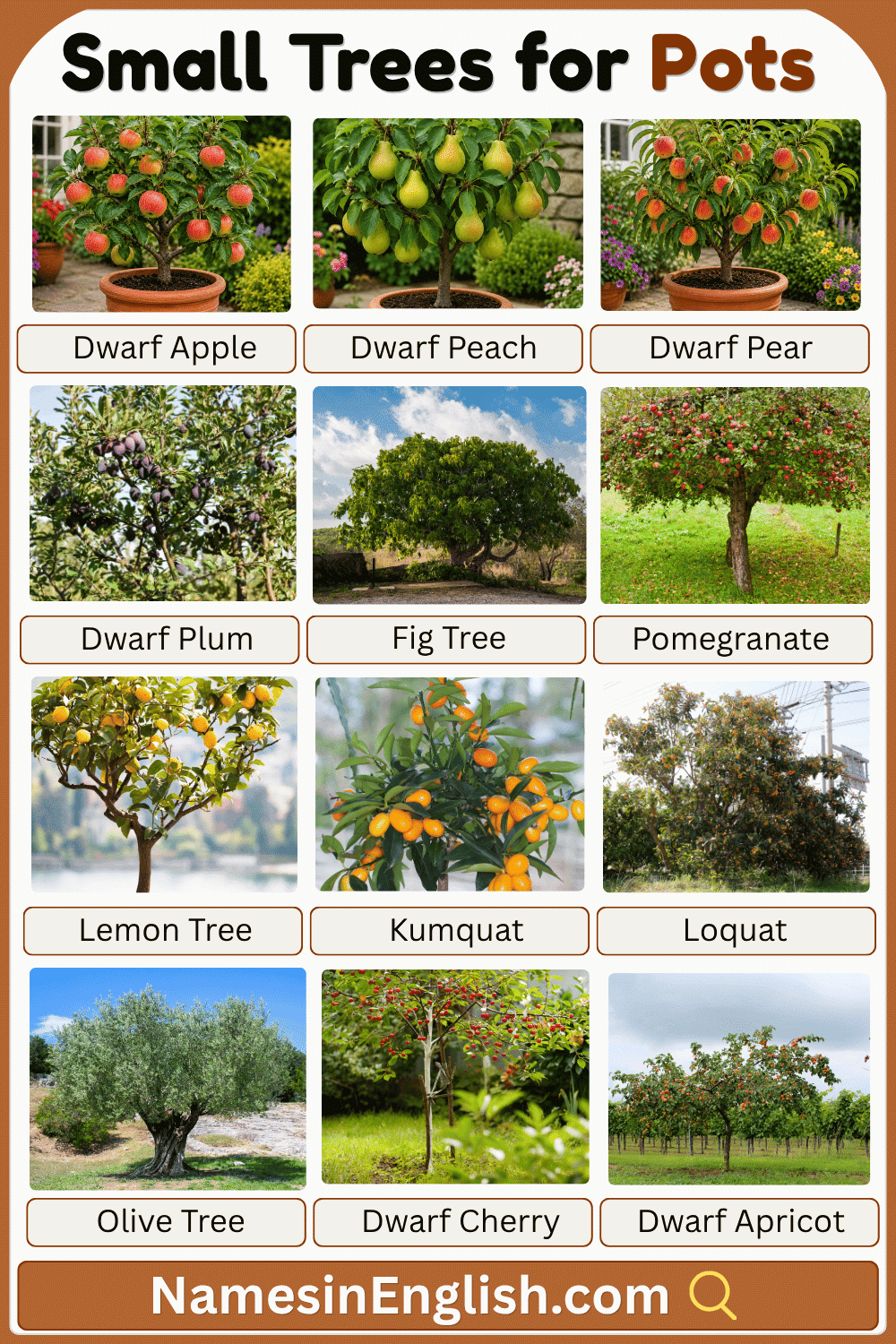
Small Trees for Pots and Containers
Small Trees for Warm Climates
Warm regions can support many compact flowering and fruiting trees.
Examples include:
- Frangipani
- Bottlebrush
- Lemon
- Kumquat
- Loquat
- Pomegranate
- Olive
- Crape Myrtle
- Chaste Tree
- Desert Willow
The suitability of each species depends on the local temperature range, rainfall, soil, and humidity.
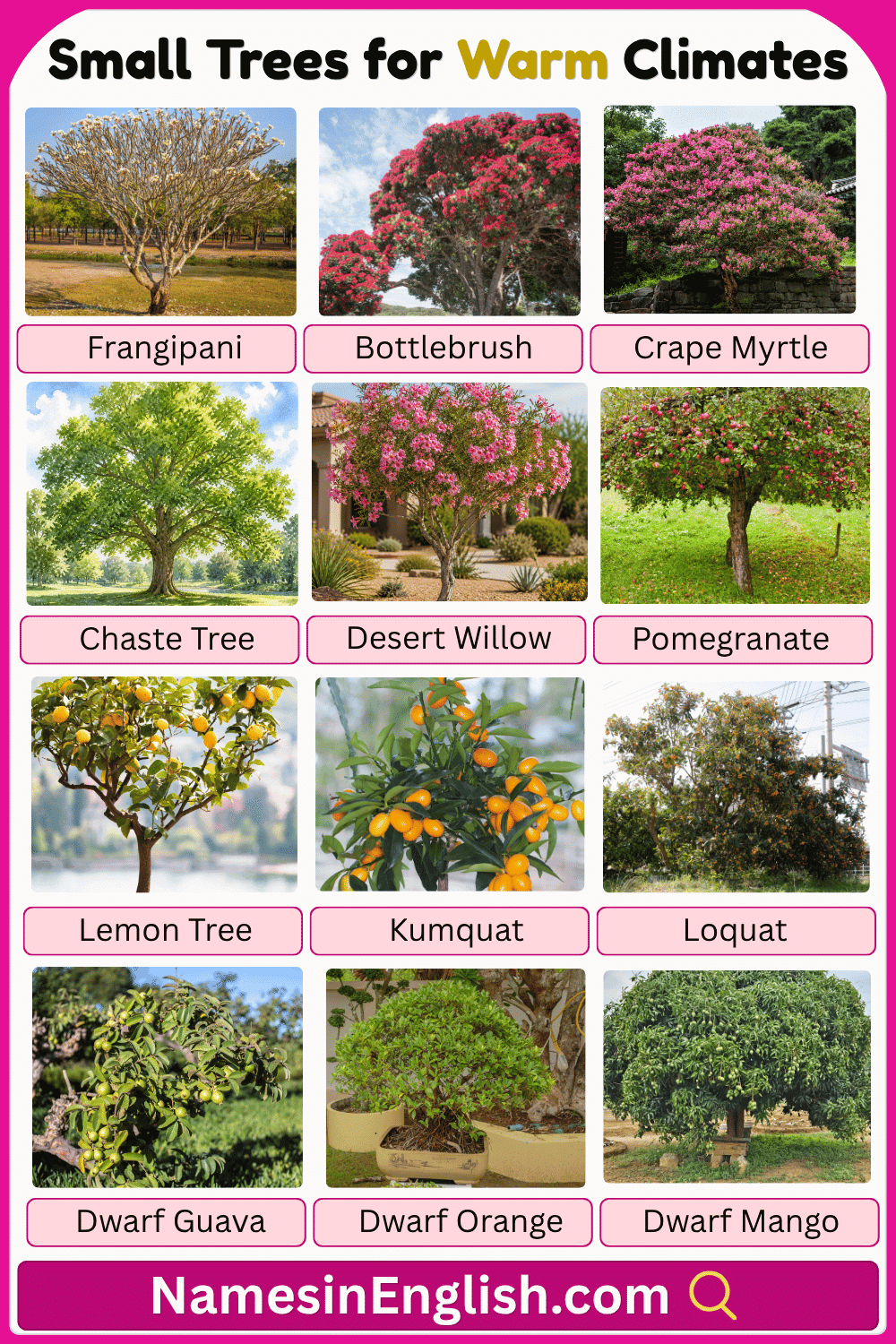
Small Trees for Warm Climates
Small Trees for Cooler Climates
Some small trees tolerate cold winters better than tropical species.
Examples include:
- Japanese Maple
- Serviceberry
- Flowering Dogwood
- Crabapple
- Hawthorn
- Amur Maple
- Paperbark Maple
- Japanese Tree Lilac
- Star Magnolia
Cold tolerance can differ significantly between cultivars, so local growing-zone information should be checked before planting.
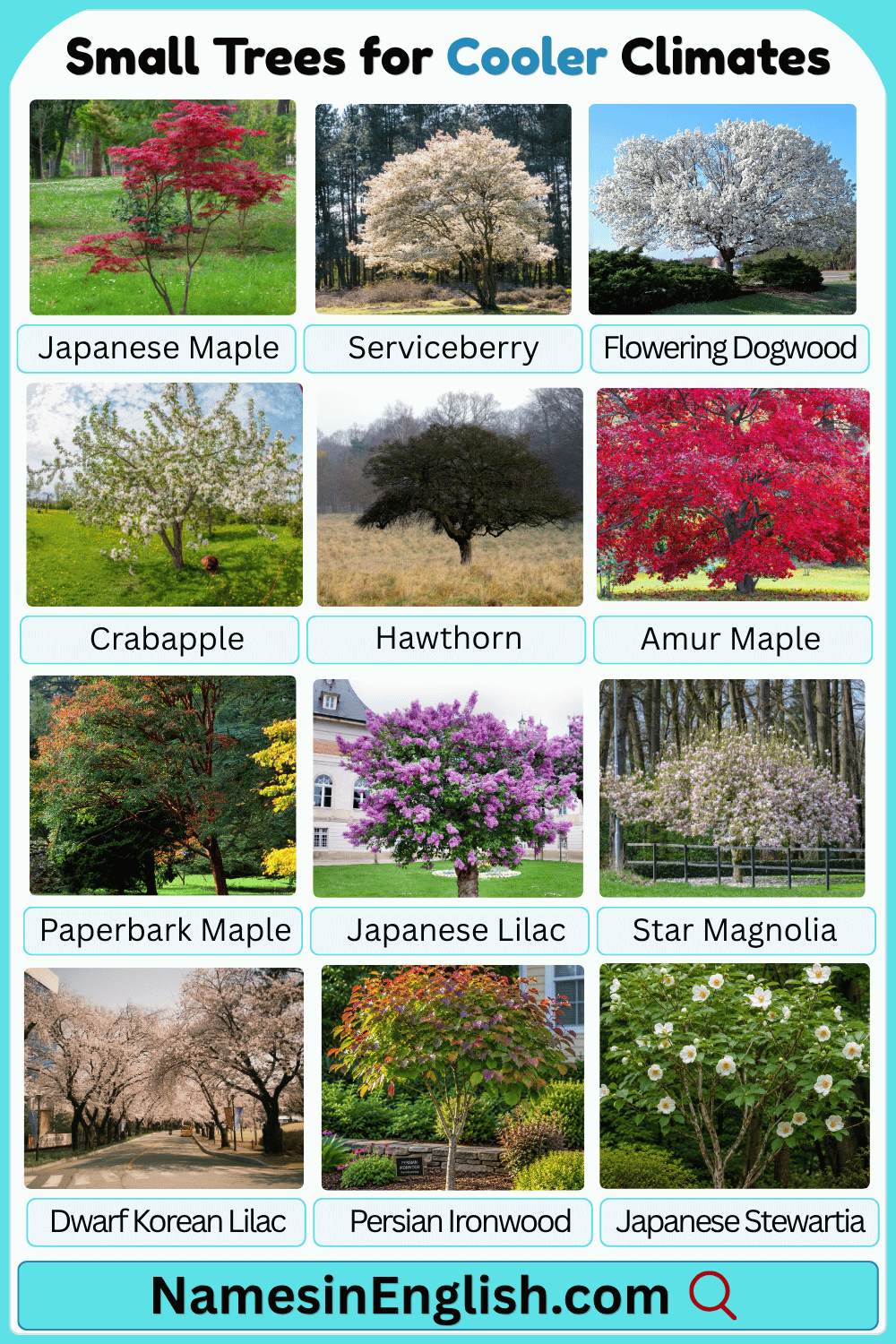
Small Trees for Cooler Climates
Small Shade Trees
Some compact trees develop broad enough crowns to provide useful shade without reaching the height of large forest trees.
Examples include:
- Japanese Maple
- Redbud
- Serviceberry
- Amur Maple
- Crape Myrtle
- Loquat
- Chaste Tree
The amount of shade depends on the tree’s crown density, height, age, and planting location.
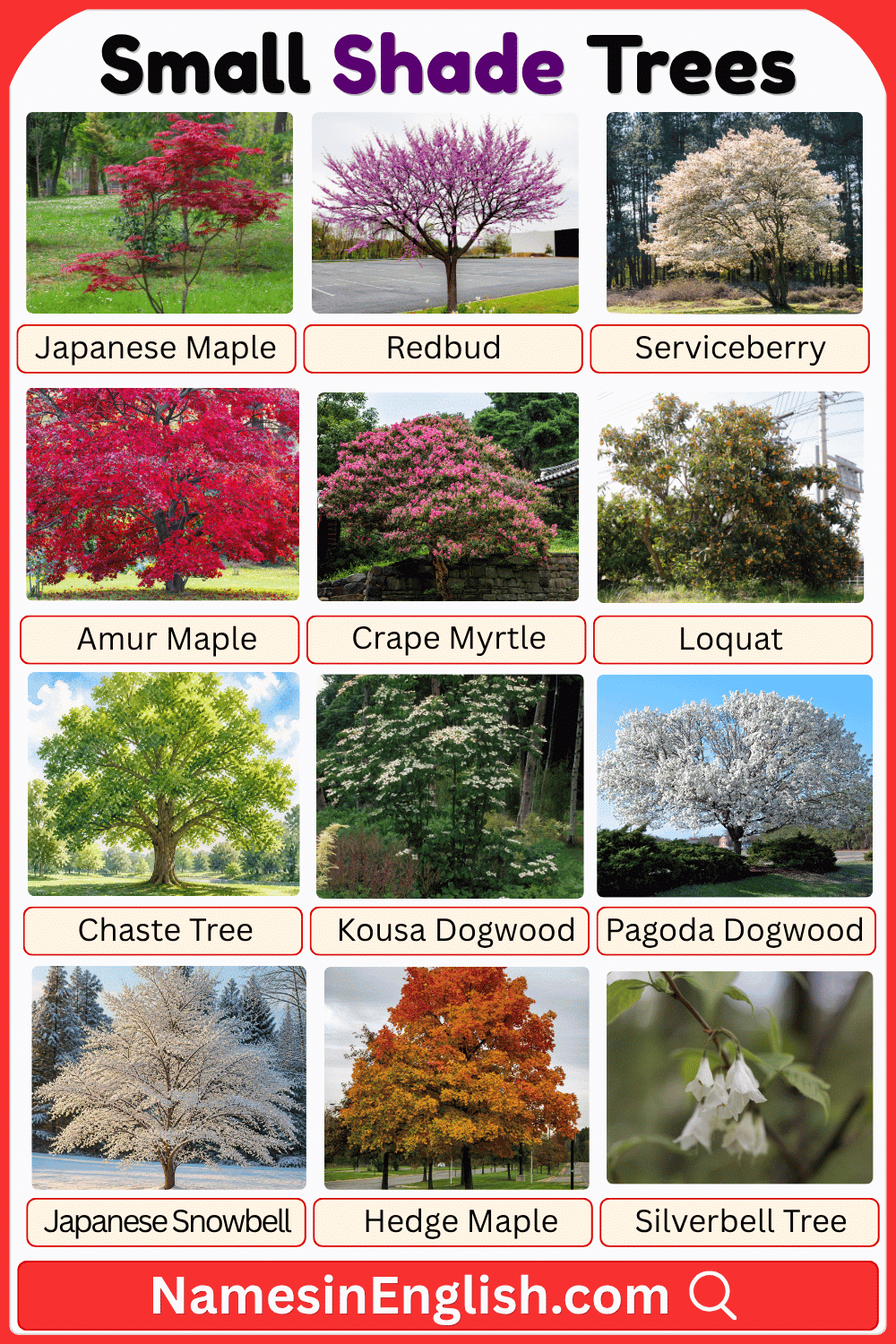
Small Shade Trees
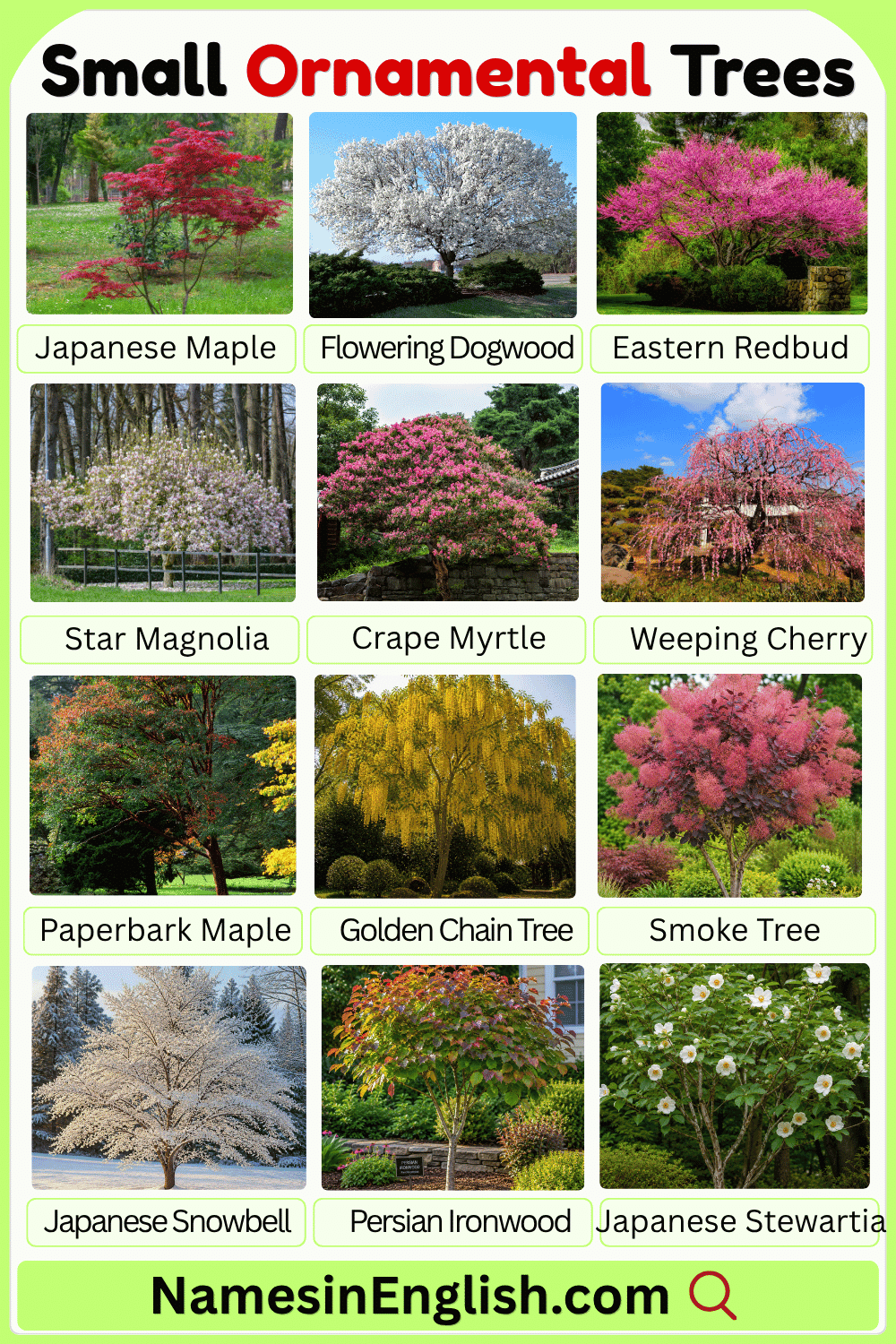
Small Ornamental Trees
An ornamental tree is planted mainly because of its flowers, foliage, bark, shape, or overall decorative appearance.
Popular small ornamental trees include:
- Japanese Maple
- Flowering Dogwood
- Eastern Redbud
- Star Magnolia
- Crape Myrtle
- Japanese Snowbell
- Weeping Cherry
- Paperbark Maple
- Golden Chain Tree
- Smoke Tree
The word ornamental describes how the tree is used rather than identifying a botanical group.
Small Ornamental Trees
Small Tree, Shrub, and Dwarf Tree: What Is the Difference?
| Term | General Meaning |
|---|---|
| Small Tree | A naturally compact woody plant usually having a recognizable trunk |
| Shrub | A woody plant commonly having several stems from near the ground |
| Dwarf Tree | A tree intentionally bred, selected, or grafted to remain smaller than standard forms |
| Standard Tree | A normal-sized form of a tree species or cultivar |
The distinction is not always strict. Some plants, such as pomegranate, smoke tree, and serviceberry, may grow as either a large shrub or a small tree depending on the species and how they are trained.
Parts of a Small Tree in English
| Tree Part | Meaning |
|---|---|
| Roots | Underground structures that anchor the tree and absorb water |
| Trunk | Main woody stem |
| Bark | Protective outer layer |
| Branch | Woody growth extending from the trunk |
| Twig | Small branch |
| Leaf | Plant organ commonly used for photosynthesis |
| Crown | Upper part formed by branches and leaves |
| Flower | Reproductive structure of flowering plants |
| Fruit | Structure developing from the ovary after flowering |
| Seed | Structure capable of producing a new plant |
How to Choose a Small Tree
Choosing the right tree requires more than simply selecting an attractive species. Consider its mature height and width, because a young tree can become much larger over time.
Important factors include:
- Available space
- Mature height
- Crown width
- Sunlight
- Soil type
- Drainage
- Climate
- Water requirements
- Root growth
- Flowers or fruit
- Maintenance needs
- Distance from walls and utilities
Selecting a species suitable for local conditions generally produces healthier growth and reduces future maintenance problems.
Common Mistakes When Choosing Small Trees
One common mistake is assuming that a tree sold at a small size will remain small. Nursery trees are often young and may eventually become much larger.
Another mistake is planting too close to a house, wall, driveway, or overhead utility line.
It is also important not to confuse the words dwarf and young. A dwarf tree is genetically or horticulturally kept smaller, while a young tree may simply not have reached its mature size yet.
Frequently Asked Questions About Small Trees
What is considered a small tree?
In landscaping, small trees commonly mature at around 10 to 25 feet tall, although definitions vary and some species may grow somewhat taller.
What are some common small tree names?
Popular examples include Japanese maple, redbud, flowering dogwood, star magnolia, serviceberry, crabapple, crape myrtle, Japanese snowbell, and smoke tree.
Which small trees produce fruit?
Dwarf apple, dwarf pear, dwarf peach, fig, pomegranate, lemon, kumquat, loquat, and some dwarf cherry trees produce edible fruit.
Which small trees have beautiful flowers?
Good examples include redbud, flowering dogwood, star magnolia, crape myrtle, Japanese snowbell, weeping cherry, and golden chain tree.
Can small trees grow in pots?
Yes. Some compact or dwarf trees, including dwarf citrus, Japanese maple, dwarf olive, fig, and pomegranate, can grow in large containers when properly maintained.
Are dwarf trees naturally small?
Not always. Some dwarf trees result from naturally compact genetics, while many fruit trees remain smaller because they are grafted onto dwarfing rootstocks.
Is a small tree the same as a shrub?
No. A small tree usually develops a recognizable trunk, while a shrub commonly has several woody stems emerging close to the ground. However, some species can grow in either form.
What are good small evergreen trees?
Depending on climate, examples include olive, loquat, kumquat, lemon, strawberry tree, and some dwarf magnolias and conifers.
Conclusion
Learning small trees with names in English helps ESL learners build useful vocabulary while understanding how compact trees differ in size, appearance, leaves, flowers, fruit, and uses. Popular examples include Japanese maple, flowering dogwood, redbud, star magnolia, serviceberry, crape myrtle, dwarf apple, pomegranate, lemon, and Japanese snowbell. Small trees can be flowering, fruit-bearing, evergreen, deciduous, ornamental, or suitable for containers. Understanding their names and basic features makes it easier to describe trees accurately in English conversations, classroom activities, vocabulary exercises, descriptive writing, and exams.
Learn More Helpful Articles