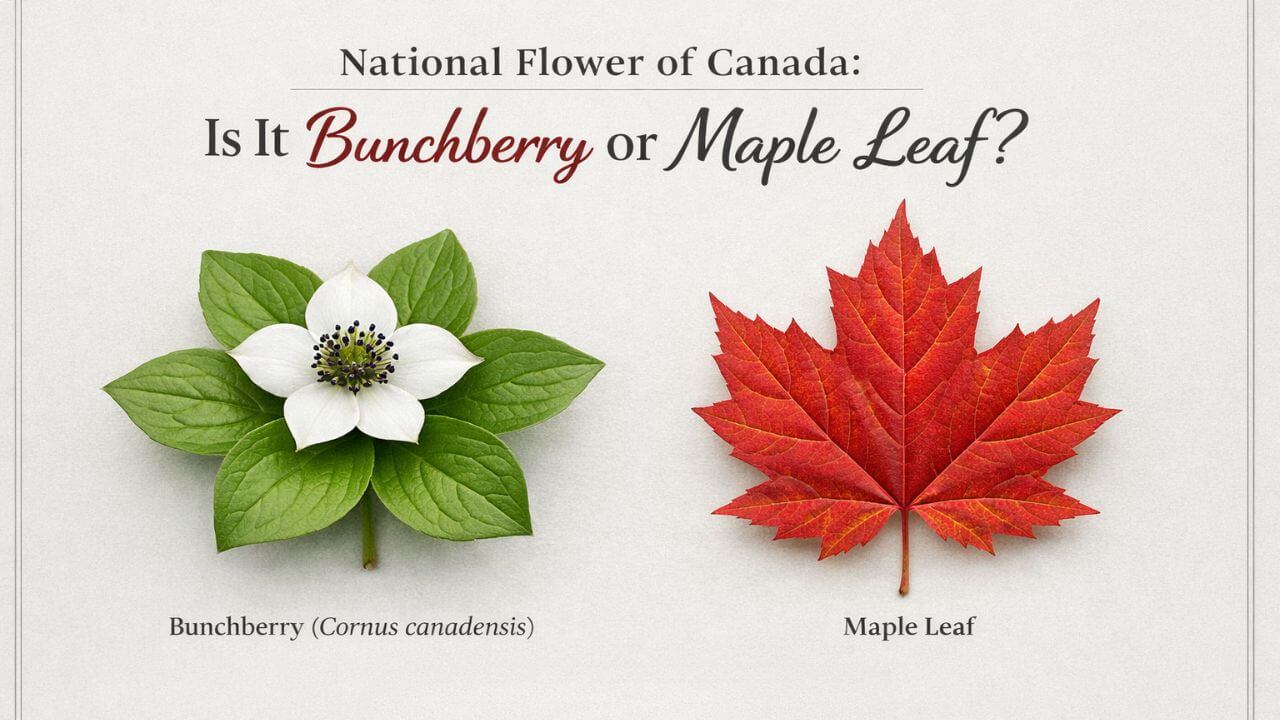

The National Flower of Canada is a unique topic because Canada does not have a single official national flower. Instead, the country is widely represented by the maple leaf, while each province and territory has its own official floral emblem, and the delicate bunchberry is sometimes informally recognized as a national flower. In this article, you’ll learn the fascinating story behind the National Flower of Canada, discover why there is no official nationwide flower, compare the bunchberry and maple leaf, and learn about their symbolism, history, and cultural significance.
The National Flower of Canada
- Canada does not have an official national flower at the federal level.
- The Maple Leaf is a national emblem, not a flower. It appears on the flag and in government symbols.
- The Bunchberry has cultural and popular recognition, especially after the 2017 Canada 150 public vote, but it is not legally recognized as a national flower.
- Officially, Canada has provincial and territorial flowers, but there is no single flower representing the entire nation.
This is the answer that trivia fact-checkers, educators, and curious Canadians alike can rely on.
The Maple Leaf Became a Symbol Long Before the Flag
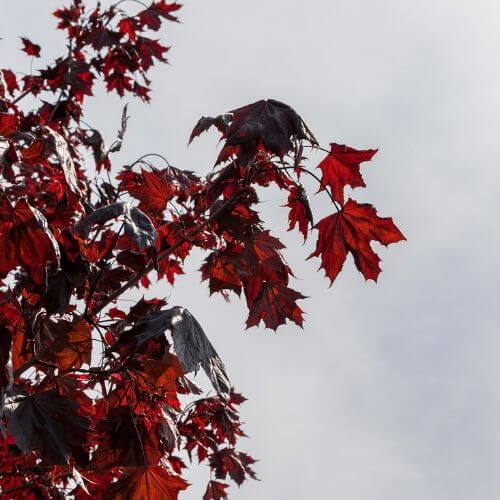
The Maple Leaf has a deep-rooted history in Canadian culture. French Canadians used the symbol as early as the 18th century, placing it on military insignia and civic banners. By the mid-19th century, the Maple Leaf had appeared in poetry, art, and emblems of growing Canadian identity. Its adoption on the Canadian flag in 1965 cemented its status as a national emblem, recognized officially by the government. While the Maple Leaf is visually iconic, it is not a flower. It is a leaf of the maple tree, and its symbolism comes from endurance, unity, and strength. This distinction matters because many casual sources conflate a leaf with a flower when speaking about national symbols. The leaf’s legal recognition as an emblem makes it the true official plant symbol, even if it is not a flower.
80 Percent of Canadians Chose a Flower and Parliament Stayed Silent
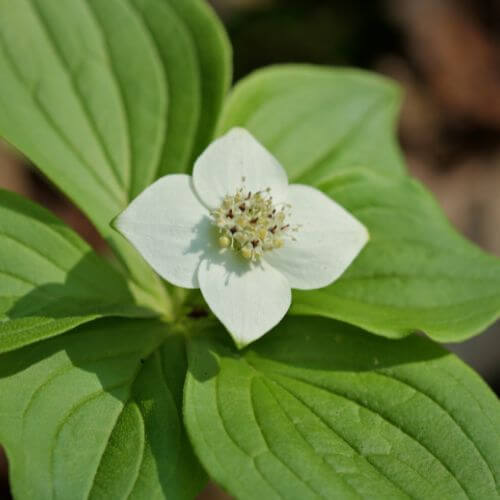
In 2017, as part of Canada’s 150th anniversary, the Master Gardeners of Ontario organized a nationwide poll to select a “national flower.” The Bunchberry (Cornus canadensis) won with approximately 80 percent of votes, capturing the hearts of Canadians across the provinces. Families, gardeners, and botanical enthusiasts celebrated the plant for its delicate white blooms and bright red berries, seeing it as a uniquely Canadian native species. Despite this overwhelming public support, the government never passed legislation to make the Bunchberry official. Parliament did not move forward with a private member bill, leaving the flower unofficial. The story is a mix of civic enthusiasm, cultural pride, and political reality, and it explains why many Canadians still believe the Bunchberry holds formal recognition. For a reliable account of this vote, see Government of Canada – National Symbols.
Cornus canadensis: The Plant That Quietly Covers the Country
Cornus canadensis, commonly known as the Bunchberry, is a small, ground-covering plant with a surprisingly wide presence. Its species name, canadensis, literally means of Canada, emphasizing its deep connection to the country. It grows in every province and territory, thriving in forests, shaded areas, and boreal regions where winters are long and cold. The plant produces tiny white flowers arranged in clusters called bracts, which are often mistaken for petals. After flowering, bright red berries appear, feeding birds and small mammals while contributing to forest ecology. The Bunchberry supports pollinators and other wildlife, making it ecologically significant. Its unassuming spread across the Canadian landscape makes it emblematic, even if it has no official federal status.
A Country of Provincial Flowers but No Federal Bloom
Canada’s provinces and territories each have designated flowers. For example:
- Ontario: White Trillium
- Quebec: Blue Flag Iris
- Alberta: Wild Rose
- British Columbia: Pacific Dogwood
These provincial symbols represent local ecosystems, cultural heritage, and botanical pride. However, at the federal level, there is no national flower. This gap reflects how Canada manages symbols: provinces are empowered to celebrate local identity, but the federal government has chosen not to legislate a floral emblem. The absence of a national flower leaves room for interpretation, nostalgia, and debate.
The Legal Mechanics of Becoming a National Symbol in Canada
Becoming a national symbol in Canada is a formal process. A bill must be introduced, usually by a private member in Parliament, then debated and passed in both houses. Following legislative approval, it requires Royal Assent to become official. Even with widespread public support, bills can stall due to political priorities, procedural delays, or the complexity of representing the entire nation fairly. The Bunchberry’s lack of legislation illustrates how popular support alone is not sufficient to create a federal symbol. Canada’s legal system emphasizes formal approval over cultural enthusiasm, which is why the Maple Leaf remains the only federally recognized emblem, despite the Bunchberry’s popularity.
Maple Leaf vs Bunchberry
| Feature | Maple Leaf | Bunchberry (Cornus canadensis) |
|---|---|---|
| Type | Leaf | Flowering plant |
| Federal Recognition | Official emblem | Unofficial |
| Appearance | Single leaf, red in fall | White blooms with red berries |
| Cultural Role | National icon, flag, coins | Canada 150 vote, garden symbol |
| Geographic Range | Widespread in Canada | All provinces and territories |
| Ecological Role | Minimal | Supports pollinators, forest wildlife |
Growing Bunchberry at Home in Canadian Climates
For gardeners interested in cultivating Bunchberry, it is moderately easy to grow if you respect its natural needs.
- Soil: Prefers moist, acidic soil with good drainage
- Shade: Thrives in partial to full shade
- Moisture: Requires consistent water, especially in dry summers
- Hardiness Zones: Zones 2–7, tolerant of cold winters
- Wildlife Benefits: Attracts birds and pollinators
While it does not grow as a showy ornamental like roses, its delicate white blooms and red berries offer a subtle, authentic Canadian garden touch.
The Bigger Picture of Canadian National Symbols
Canada’s national identity is expressed through multiple symbols beyond flowers. These include:
- Beaver: National animal and symbol of industriousness
- Maple Tree: Source of the national leaf emblem and maple syrup industry
- Coat of Arms: Represents monarchy, provinces, and heritage
- Floral Gap: Absence of a federally legislated flower shows flexibility in identity
These symbols together demonstrate that Canada values representation, history, and cultural inclusivity over a single definitive plant.
FAQs About National Flower of Canada
What is the official national flower of Canada?
Technically, Canada does not have an official national flower at the federal level. While the Maple Leaf is the national emblem and appears on the flag, it is a leaf, not a flower. The Bunchberry (Cornus canadensis) is the most widely recognized 'unofficial' national flower.
What is the most famous flower in Canada?
The White Trillium is arguably the most famous, but it is specifically the provincial flower of Ontario. Nationally, the Bunchberry gained fame after winning a 2017 cross-country poll to celebrate Canada’s 150th anniversary.
What are the two main symbols of Canada?
The two most prominent official symbols of Canada are the Maple Leaf (national emblem) and the Beaver (national animal). Both were chosen to represent the nation’s history, industriousness, and natural landscape.
Is there a 'Flower City' in Canada?
Yes, Brampton, Ontario, is officially known as 'The Flower City' of Canada. This nickname stems from its historical roots in a massive greenhouse industry that once supplied flowers to much of North America.
Why isn't the Maple Leaf considered a flower?
Botanically, the Maple Leaf is part of the foliage of the Maple tree. While Maple trees do produce small, inconspicuous flowers in the spring, it is the distinctive shape of the leaf that serves as Canada's legal national symbol.
What happened to the bill to make the Bunchberry the official flower?
Despite receiving 80 percent of the public vote during the 'Canada 150' celebrations in 2017, the Canadian Parliament never passed the legislation required to make the Bunchberry an official federal symbol. It remains a 'people’s choice' rather than a legal one.
Final Clarity for Anyone Settling the Argument
To settle the debate once and for all: Canada does not have an official national flower. The Maple Leaf is a nationally recognized emblem, while the Bunchberry has popular, cultural, and ecological significance but remains unofficial. Both hold value in Canadian identity: the Maple Leaf for legal and visual recognition, and the Bunchberry for native beauty, resilience, and public affection. Canadians can celebrate both, understanding the difference between legal recognition and cultural symbolism. Whether for trivia nights, school lessons, or gardening, clarity about this distinction helps everyone appreciate the rich tapestry of Canada’s national symbols.
If you enjoyed learning about Canada’s flowers, explore the national flowers of other countries to discover how plants tell stories and shape identities around the world: