
Choosing a baby name is one of the most meaningful decisions parents make, and Flower Names for Boys offer a unique blend of nature, beauty, and timeless charm. While flower-inspired names are often associated with girls, many floral names for boys are strong, distinctive, and rich in history and symbolism. In this article, you’ll learn 23 unique baby names inspired by flowers, along with their meanings, origins, and why they make wonderful choices for modern parents. Whether you’re looking for a rare, elegant, or nature-inspired name, this guide will help you find the perfect floral name for your little boy.
Why Choose Flower Names for Boys?
Botanical names provide several advantages for parents considering uncon ventional choices. These names often carry deep symbolic meanings rooted in various cultures and historical traditions. Unlike trendy names that may feel dated within a generation, flower names possess inherent timelessness through their connection to nature.
The strength of flower names lies in their versatility. Many botanical names sound inherently masculine or gender-neutral, making them suitable across different cultural contexts. Names like Rowan, Ash, and Sage have already gained mainstream acceptance, paving the way for more explicitly floral options.
Additionally, flower names offer built-in conversation starters and memorable identity markers. In professional settings, a distinctive name can enhance personal branding and memorability-valuable assets in competitive environments.
The 23 Most Unique Flower Names for Boys
Classic Flower-Inspired Names
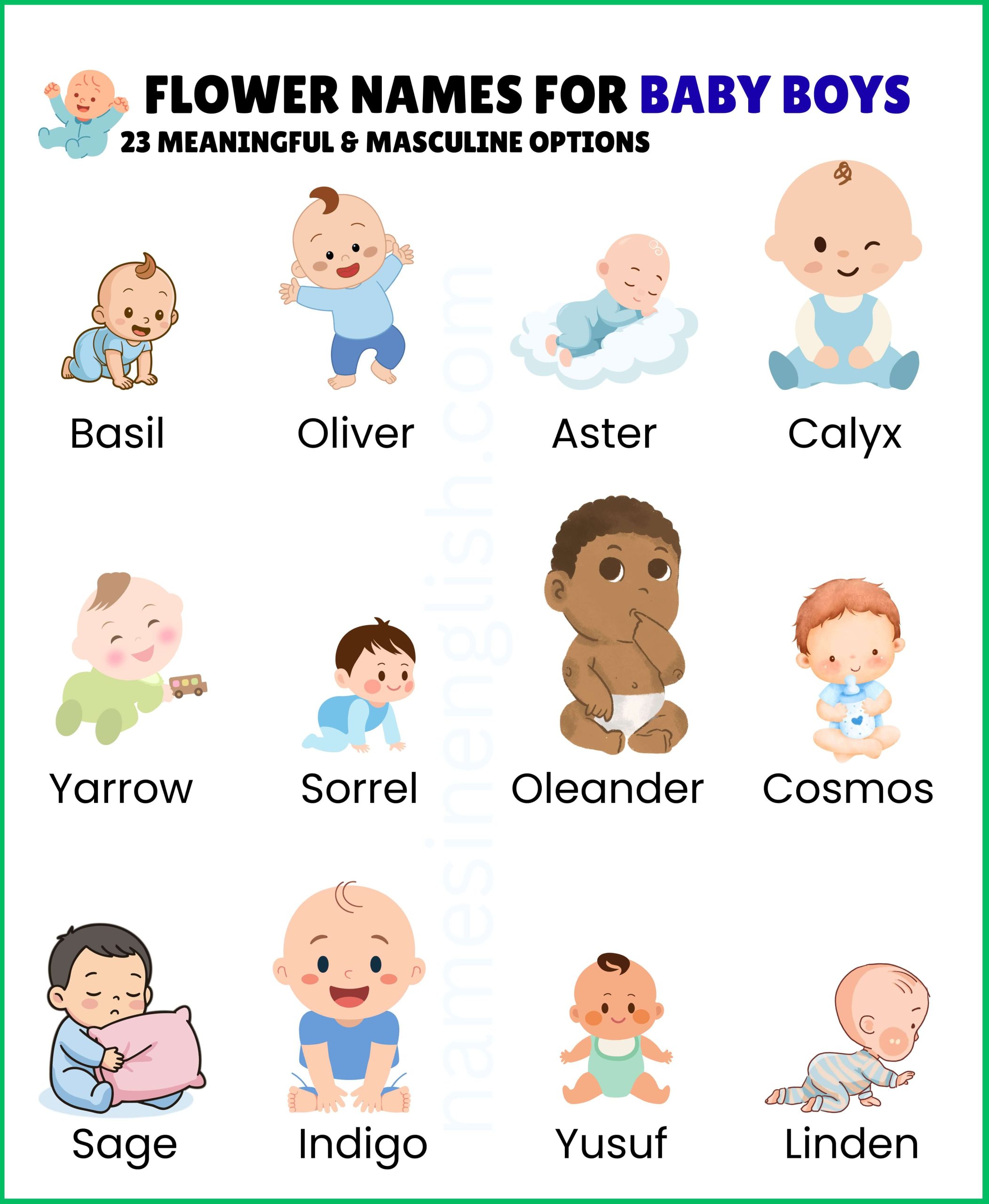
- Basil (Meaning: Royal) Named after the aromatic herb with small white or purple flowers, Basil carries deep culinary and medicinal associations. Derived from the Greek word for “royal,” the name lends an air of quiet sophistication and Mediterranean charm. It’s a subtle botanical choice that feels both traditional and refreshingly unconventional today.
- Oliver (Meaning: Olive Tree) Derived from the olive tree, which produces delicate white flowers before bearing fruit, Oliver ranks among the most popular names globally. The olive branch symbolizes peace and victory, giving the name a profoundly positive and timeless meaning. Its widespread acceptance makes it a safe yet elegantly botanical choice.
- Florian (Meaning: Flowering) This elegant European name comes directly from the Latin word flos (flower) and means “flowering” or “blossoming.” It was the name of a third-century Roman saint, lending it deep historical roots and sophistication. Florian is perfect for parents seeking a distinct, strong name with an undeniable floral meaning.
- Aster (Meaning: Star) A star-shaped perennial flower, Aster works beautifully for boys, possessing a modern, classic sound. The name comes from the Greek word for “star,” and the flower traditionally symbolizes patience and elegance. It is short, punchy, and provides a nature connection without being overly soft or common.
- Calyx (Meaning: Bud) Calyx is the Greek and botanical term for the protective outer casing of a flower bud before it opens. It offers a unique, sophisticated, and rare choice that still feels inherently masculine due to its strong structure and “X” ending. It subtly celebrates the strength and promise of new growth and natural protection.
Unique Flower Names for Boys
- Yarrow (Meaning: Healing) This rugged wildflower name has a slightly masculine, earthy sound while maintaining botanical authenticity. The plant has been used medicinally for centuries, symbolizing healing and courage in folklore. Yarrow is an excellent choice for parents seeking an authentic nature name with a subtle, wild edge and historical significance.
- Sorrel (Meaning: Reddish) Sorrel is the name of a herb known for its delicate reddish flowers and tart, peppery leaves used in gourmet cooking. The name offers a distinctive choice with earthy, rustic appeal and a sophisticated culinary connection. It is short, easy to pronounce, and is a rare name guaranteed to stand out from the crowd.
- Oleander (Meaning: Evergreen) A bold choice, Oleander is a Mediterranean flowering shrub known for its resilience and vibrant, striking blooms. It carries mystique and strong literary connections, often appearing in classical mythology and poetry. This name is ideal for parents looking for a long, powerful name with an impactful botanical source.
- Peregrine (Meaning: Traveler) Though not a flower itself, this unique name strongly connects to the wandering nature of pollinating creatures and wind-scattered seeds. Derived from the Latin for “traveler,” it shares its name with the powerful Peregrine Falcon, giving it an airy, adventurous spirit linked to nature’s movement and discovery.
- Cosmos (Meaning: Harmony, Order) This orderly, daisy-like flower translates from Greek to “harmony” and “order,” offering a philosophical depth rare in botanical names. Cosmos is a name that sounds bold and sophisticated, embodying both the beauty of the flower and the complexity of the universe. It’s an unexpected choice that maintains an elegant simplicity.
- Saffron (Meaning: Yellow Spice) Saffron is the world’s most expensive spice, derived from the brilliant purple stigmas of the Saffron Crocus flower. The name itself invokes luxury and warmth and has a strong, distinctive sound that works well for boys. It provides an unexpected link to the floral world through color, flavor, and high value.
- Sage (Meaning: Wise) Sage is the name of an aromatic herb and a descriptor of wisdom, making it a powerful and sophisticated choice. It has quickly become mainstream for boys and offers a soft yet strong nature connection. The name symbolizes immortality and good health across various cultures, lending it profound symbolic weight.
- Indigo (Meaning: Indian Dye) A deep blue-purple color derived from flowering plants, Indigo offers modern, artistic, and unique appeal. The strong “G” sound lends it a masculine edge, and its vibrancy makes it a memorable choice. It is a fantastic option for parents looking for a name that links color, nature, and art.
- Yusuf (Meaning: To Increase in the Flower) Yusuf is the Arabic form of Joseph, but in Islamic tradition, it is often interpreted to mean “to increase in the flower” or “God increases.” This provides a beautiful, cross-cultural, and well-established name with a deeply spiritual connection to blossoming and growth, making it a powerful choice.
- Kunal (Meaning: Lotus) This beautiful Sanskrit name means “lotus” or “the bird of the Himalayas.” The lotus symbolizes purity, rebirth, and spiritual enlightenment in Eastern traditions. Kunal offers a sophisticated, multicultural option that is easy to pronounce and carries profound, positive meaning for parents seeking spiritual depth.
Nature-Inspired Baby Boys Names
- Rowan (Meaning: Little Redhead) The Rowan tree produces beautiful clusters of white flowers followed by bright red berries and carries deep Celtic heritage. Associated with protection and courage in mythology, Rowan has a solid, masculine sound and is a well-established choice in the nature category.
- Ash (Meaning: Ash Tree) Short for both the sturdy tree (which produces flowers known as “keys”) and the biblical name Asher, Ash provides flexibility and strength. The Ash tree symbolizes connection and strength, making it a grounded and traditionally masculine choice with deep mythological roots across Europe.
- Hawthorne (Meaning: Hedge of Thorns) A beautiful flowering shrub name, Hawthorne has strong literary connections and vintage charm. The name itself is sophisticated and rugged, linking the child to a plant known for both beautiful, fragrant flowers and protective thorns, suggesting a dual nature of gentleness and resilience.
- Briar (Meaning: Thorny Bush) Briar refers to thorny flowering plants, particularly wild roses. It sounds strong, distinctive, and slightly mysterious. It has gained popularity as a gender-neutral name, providing a powerful, grounded connection to the beautiful yet tenacious wild rose.
- Linden (Meaning: Linden Tree) The Linden tree is known for its fragrant, star-shaped flowers that bloom in summer. It provides a gentle yet clearly masculine and established option. In Germanic mythology, the Linden was a sacred tree symbolizing peace, love, and justice.
- Forrest (Meaning: Dweller by the Woods) While the name refers to a location, it encompasses all flowering woodland plants. Forrest offers a deep, grounded connection to nature and is a classic American surname choice that evokes freedom, wildness, and strong, healthy growth.
- Florin (Meaning: Flower) This name is a Romanian and Italian variant of Florian, directly meaning “flower.” It is an established, sophisticated option that also links to an old gold coin, giving it an international edge and a subtle tie to wealth and value.
- Sylvan (Meaning: Of the Forest) Sylvan comes from the Latin word for “forest” (silva), meaning “of the forest.” It provides an evocative, romantic name that encompasses the entire flowering woodland ecosystem. It is subtle, elegant, and very rare, perfect for parents seeking an authentic nature name.
What Makes a Flower Name Work for a Boy?
Several factors determine whether a botanical name translates successfully for male children. Phonetic strength plays a crucial role names with hard consonants (K, T, D) or short syllables tend to sound more traditionally masculine. However, modern parents are increasingly moving beyond these constraints.
Cultural context matters significantly. Names like Basil and Sage have achieved widespread acceptance, while more explicitly floral options like Lotus or Dahlia may face resistance in certain regions. Understanding your community’s naming conventions helps gauge potential reception.
Pronunciation ease represents another practical consideration. Names that require constant correction or explanation may frustrate children as they navigate social situations. However, uniqueness shouldn’t be entirely sacrificed for convenience – the right balance depends on family values and priorities.
Popular Flower Names for Boys (Trending in 2025)
Current naming data reveals interesting patterns in botanical name adoption. Sage leads the category, appearing in the top 200 boys’ names nationally. Rowan and Ash follow closely, demonstrating mainstream acceptance of nature-inspired choices.
Celebrity influence continues shaping trends. Several high-profile parents have chosen botanical names recently, increasing visibility and acceptance. This cultural shift helps normalize flower names for boys across demographic groups.
Regional variations show coastal and urban areas embracing these names more readily than rural communities, though gaps are narrowing. The digital age allows naming trends to spread more rapidly than previous generations experienced.
Rare and Unique Flower Names for Boys
For parents seeking truly distinctive options, lesser-known botanical names offer untapped potential. Amaranth, meaning “unfading flower,” provides mythological depth. Kunal, Sanskrit for “lotus,” introduces cross-cultural possibilities. Zahir, Arabic for “blooming,” combines floral meaning with contemporary sound.
International flower names expand options considerably. Japanese names like Ren (lotus) or Haru (spring/bloom) offer multicultural appeal. Scandinavian choices like Bjorn (connected to forest flowers) provide Nordic heritage connections.
These rare selections require careful consideration of pronunciation, spelling complexity, and cultural appropriation concerns. Research the name’s origins and meanings thoroughly before committing, ensuring respectful usage of culturally specific names.
How to Choose the Perfect Flower Name for Your Son
Practical Considerations
Start by saying the name aloud repeatedly. Does it flow naturally? How does it sound with your surname? Consider potential nicknames both affectionate and schoolyard variations. Testing the name in various contexts (professional introductions, playground scenarios, formal documents) helps identify potential issues.
Middle Name Pairings
Flower names for boys often pair well with traditional middle names, creating balance between unique and familiar. A botanical first name with a classic middle name (Sage Alexander, Rowan James) provides flexibility. Children can choose which name to emphasize as they mature.
Conversely, a traditional first name with a botanical middle name (Michael Florian, Daniel Sage) offers botanical connection without frontloading uniqueness. This approach may appeal to parents wanting nature-inspired elements without full commitment.
Meaning and Symbolism
Research the flower’s symbolic meanings across cultures. Some flowers carry universally positive associations (strength, growth, renewal), while others have complex or contradictory symbolism. Ensure the name’s meaning aligns with values you hope to instill.
The Meaning Behind Popular Flower Names
Understanding botanical symbolism adds depth to name selection. The lotus represents purity and enlightenment in Eastern traditions. Sage symbolizes wisdom and immortality across cultures. Yarrow carries associations with healing and courage, having been used medicinally throughout history.
These meanings provide children with rich narratives about their names, fostering positive identity development. Many parents appreciate that flower names come with built-in stories and educational opportunities about nature, culture, and language.
The historical context of botanical naming reveals fascinating patterns. During the Victorian era, the language of flowers allowed people to communicate through botanical symbolism. This tradition connects modern flower names for boys to centuries of cultural practice.
Frequently Asked Questions About Flower Names for Boys
Are flower names too feminine for boys?
This concern reflects outdated gender stereotypes. Many flower names for boys, like Sage, Rowan, and Ash, sound inherently masculine or neutral. As society moves toward more flexible gender expression, naming conventions are evolving accordingly. The name’s meaning and family significance matter more than traditional gender associations.
What are the most popular flower names for boys?
Currently, Sage ranks as the most popular, followed by Rowan, Ash, Basil, and Oliver. These names have achieved mainstream acceptance while maintaining botanical connections. Forrest and Linden are rising in popularity, suggesting continued growth in this category.
Will my son face teasing with a flower name?
Any name can become a target for teasing, regardless of origin. However, as botanical names become more common, they’re less likely to stand out negatively. Strong, confident namesakes and positive family attitudes about the name matter more than the name itself in determining social reception.
Can I use a flower name if I have no botanical expertise?
Absolutely. You don’t need gardening knowledge to appreciate botanical names. The aesthetic appeal, meaning, and personal significance matter most. Many parents choose flower names for boys simply because they sound beautiful or carry meaningful symbolism, not because of horticultural interest.
Do flower names work in professional settings?
Modern professional environments increasingly value diversity and individuality. Many successful professionals carry nature-inspired names without career limitations. Names like Oliver, Basil, and Sage are already well-established in business contexts. As younger generations enter the workforce, botanical names will become even more normalized.
Final Thoughts
Flower names for boys represent more than a passing trend they signal a fundamental shift in how parents approach naming. These choices reflect desires for meaningful, distinctive names that honor nature while breaking free from restrictive gender norms.
The 23 names presented here offer starting points for exploration. Each carries unique qualities, meanings, and aesthetic appeals suited to different family preferences. Whether you gravitate toward classic options like Oliver and Basil or prefer unique choices like Yarrow and Cosmos, botanical names provide rich possibilities.
Key Takeaways:
- Flower names for boys have increased 34% in popularity over five years
- Names with strong consonants and short syllables tend toward traditional masculine sounds
- Cultural context and regional acceptance vary but are rapidly evolving
- Middle name pairings can balance uniqueness with tradition
- Botanical names carry rich symbolic meanings and cultural heritage
- Professional acceptance of nature-inspired names continues growing
If you enjoyed exploring flower names for boys, you might also like these:
🌸 National Flower of Sri Lanka – The Blue Water Lily: Discover the story and symbolism behind Sri Lanka’s serene national flower.
🧡 25 Orange Flowers with Names and Pictures: Bright, warm, and full of energy – explore these vibrant blooms.
💙 100 Types of Blue Flowers with Pictures: A stunning guide to the most beautiful blue blossoms found around the world.
Each of these guides dives deeper into the beauty and meaning of flowers – perfect if you love learning about flower colors and symbolism.