
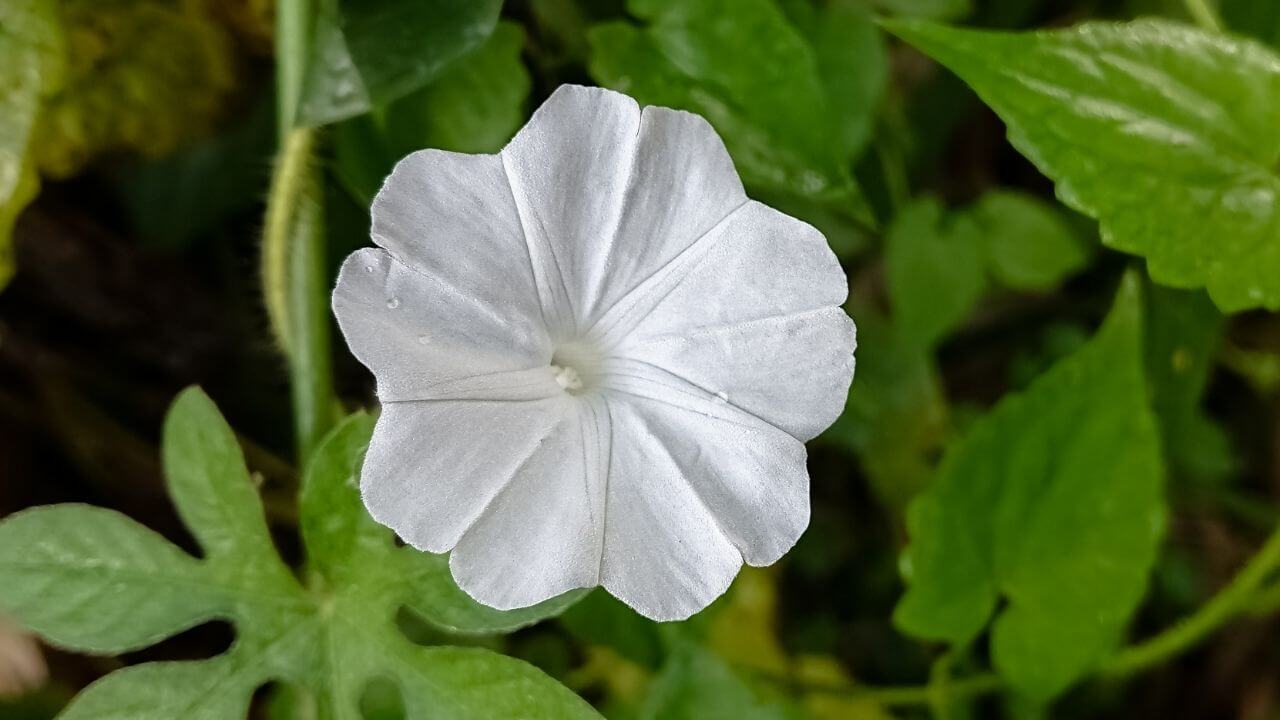

Most flowers open their petals in the warmth of daylight, but some save their most beautiful display for the evening. Night-blooming flower names refer to unique plants that blossom after sunset, filling the air with sweet fragrance and adding a magical touch to moonlit gardens. These fascinating flowers are not only admired for their beauty but also play an important role in attracting nighttime pollinators like moths and bats. In this article, you’ll learn 17 stunning night-blooming flower names, learn the meaning and symbolism behind each one, and explore what makes these extraordinary blooms so special for gardeners, nature lovers, and flower enthusiasts alike.
What Are Night-Blooming Flowers
Night-blooming flowers open their petals after sunset instead of during the day. Many of them are pale or fragrant because moths and other nighttime pollinators rely more on scent than color. These plants often handle warm climates better since blooming at night helps them avoid harsh sunlight. They’re perfect for gardeners who enjoy soft evening scents and calm outdoor spaces.
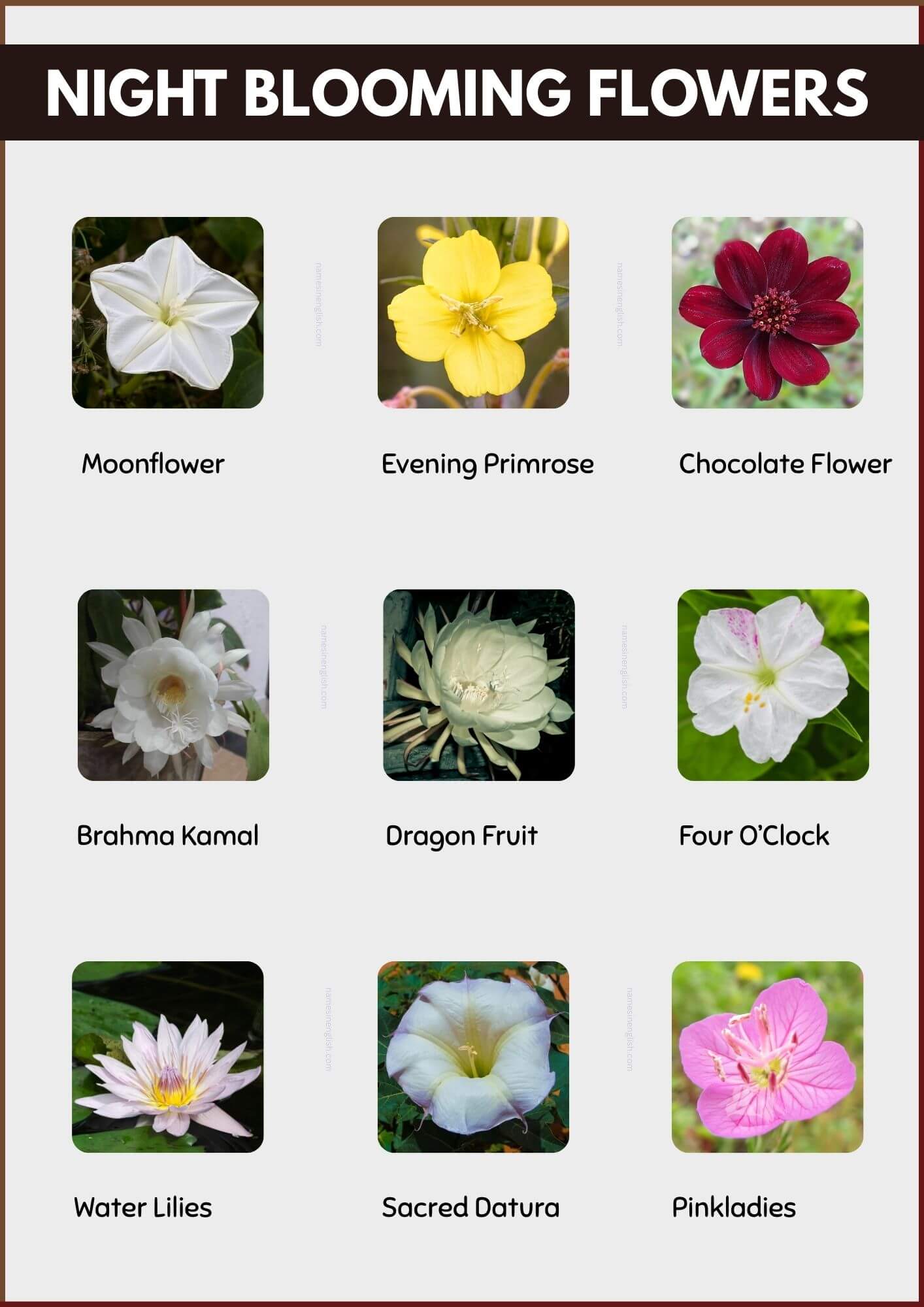
Night-Blooming Flower Names (Quick List)
- Moonflower
- Night-Blooming Jasmine
- Evening Primrose
- Tuberose
- Pinkladies
- Chocolate Flower
- Brahma Kamal
- Night-Blooming Cactus
- Dragon Fruit Flower
- Night Gladiolus
- Four O’Clock Flower
- Casablanca Lily
- Night-Blooming Water Lilies
- Night-Scented Orchid
- Sacred Datura
- Night-Scented Stock
- Night-Blooming Cereus
Why Do Some Flowers Bloom Only at Night
Cooler temperatures protect delicate petals and help the flowers conserve moisture. Many night bloomers are designed for moth and bat pollination, which means stronger scents and softer colors work better in the dark. Cactus species, such as night-blooming cereus, open at night because desert heat during the day is too intense. Some yellow night blooming flowers, like evening primrose, also choose the evening to avoid stress and attract the right insects.
17 Night-Blooming Flowers and Their Meanings
1. Moonflower (Ipomoea alba)
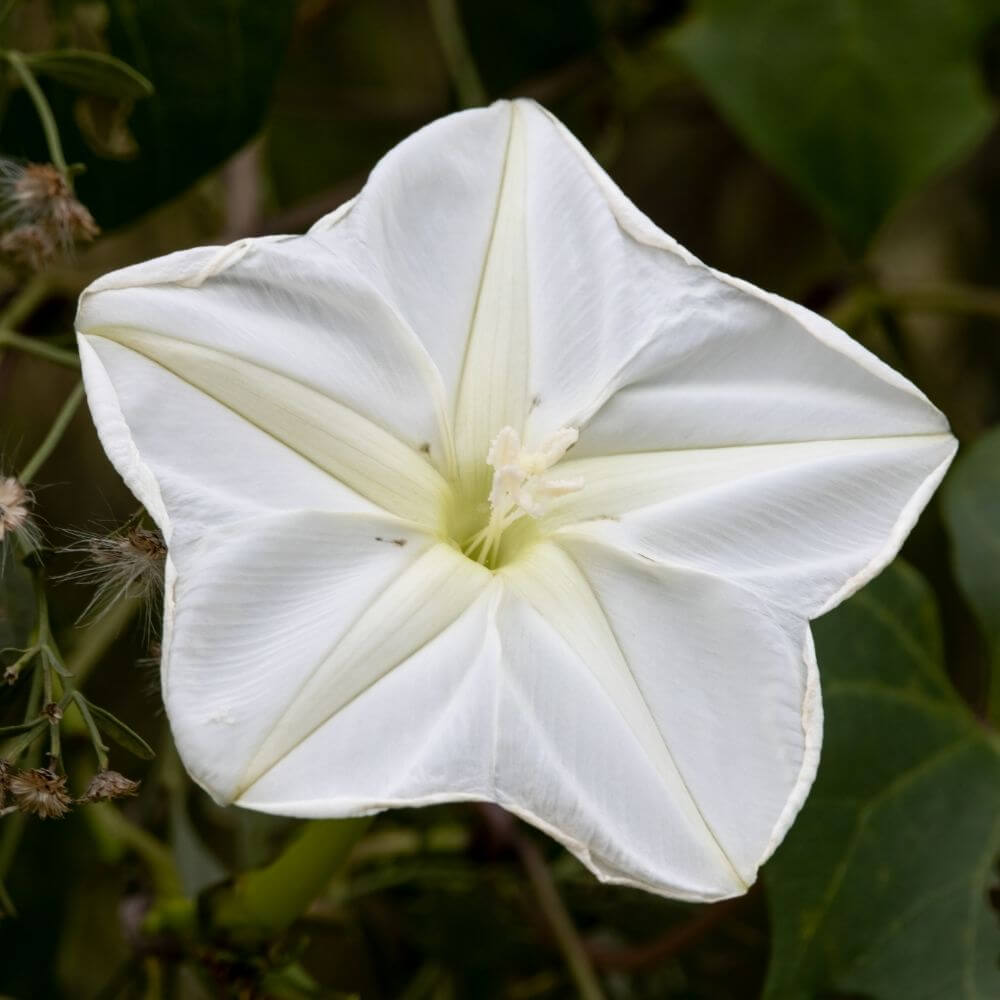
Moonflowers are known for their glowing white petals that unfurl dramatically after sunset. I love their fast growth and soft fragrance that fills the air at night. They symbolize new beginnings and spiritual clarity. The flowers close once the sun rises, giving them a magical one-night charm. They’re perfect for evening corners, fences and entryways.
Care & Growing Conditions
- Meaning: New beginnings, spiritual clarity
- Blooming season: Summer to early fall
- USDA zone: 9 to 11
- Water needs: Moderate, keep soil slightly moist
- Soil type: Well-drained, loose soil
- Sun requirement: Full sun to partial shade
- More suited for: Trellises, fences and moon gardens
- Extra note: Seeds need scarification for better germination
2. Night-Blooming Jasmine (Cestrum nocturnum)
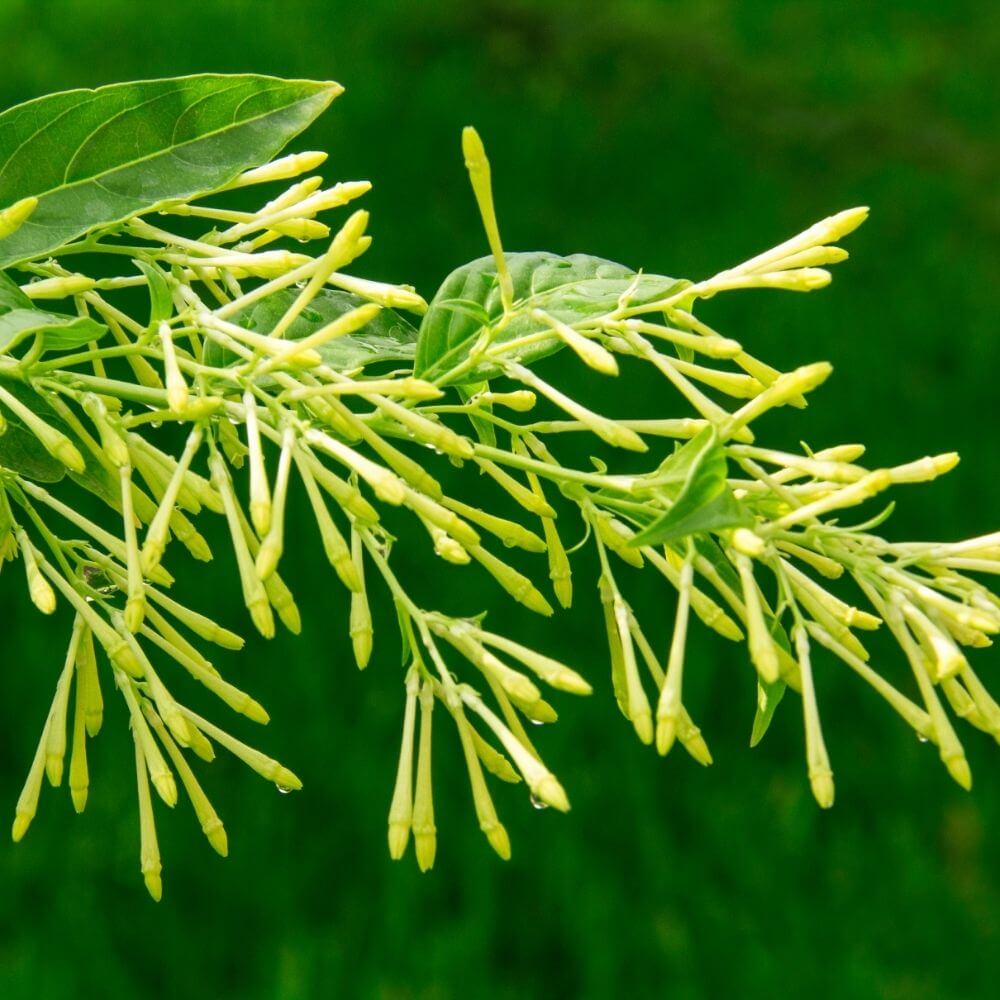
Night-blooming jasmine releases a strong, sweet scent after dusk that many gardeners enjoy. It’s not a true jasmine but produces small white flowers that glow in low light. Its meaning centers on purity, healing and comfort. The plant grows quickly and performs well in warm regions. It’s ideal for patios or doorways where fragrance can be enjoyed.
Care & Growing Conditions
- Meaning: Purity, healing, comfort
- Blooming season: Spring to fall
- USDA zone: 8 to 11
- Water needs: Moderate
- Soil type: Rich, well-drained soil
- Sun requirement: Full sun
- More suited for: Fragrance-focused gardens
- Extra note: Can grow large, so pruning helps manage size & it is highly toxic
3. Evening Primrose (Oenothera biennis)
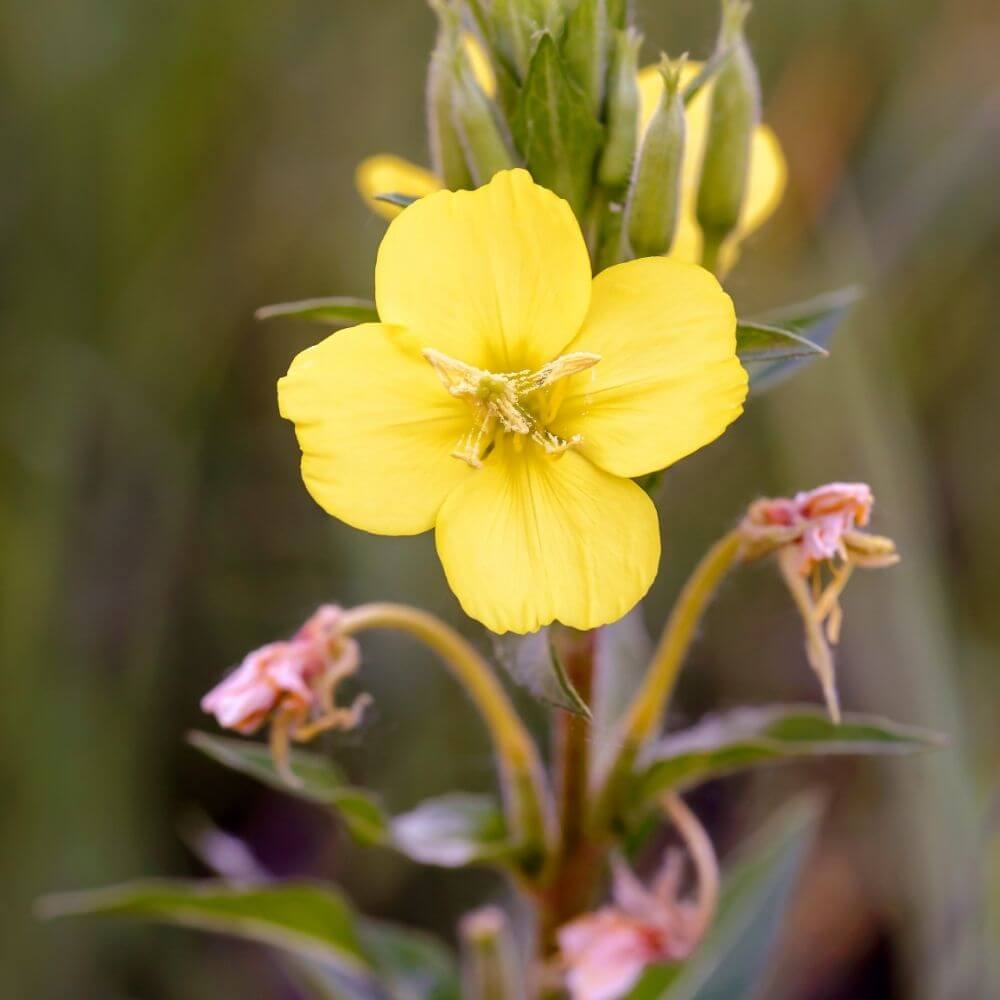
Evening primrose opens its soft yellow petals at dusk, making it one of the best yellow night blooming flowers. It attracts nighttime pollinators and has a gentle lemony scent. Its meaning is hope, renewal and quiet strength. The plant spreads easily and works well in natural cottage-style gardens. The blooms close by morning.
Care & Growing Conditions
- Meaning: Hope, renewal, quiet strength
- Blooming season: Late spring to summer
- USDA zone: 4 to 9
- Water needs: Low to moderate
- Soil type: Sandy or loamy soil
- Sun requirement: Full sun
- More suited for: Pollinator gardens
- Extra note: Can self-seed heavily if not managed
4. Tuberose (Polianthes tuberosa)
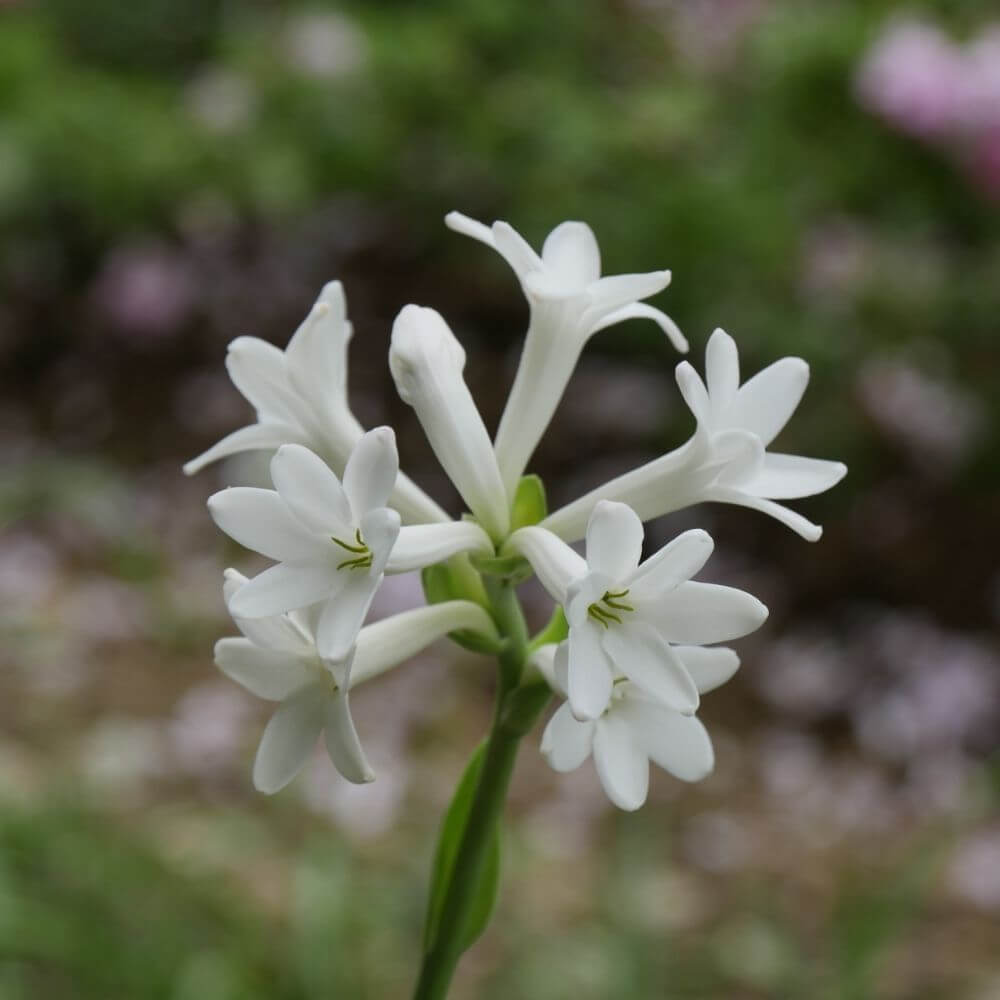
Tuberose is famous for its strong perfume that intensifies at night. The waxy white flowers grow on tall spikes and are often used in perfumes. Its meaning is passion, love and deep emotion. Gardeners appreciate its elegance and long-lasting blooms. It adds height and fragrance to any moon garden.
Care & Growing Conditions
- Meaning: Passion, deep emotion, love
- Blooming season: Mid to late summer
- USDA zone: 7 to 10
- Water needs: Regular watering
- Soil type: Rich, well-drained soil
- Sun requirement: Full sun
- More suited for: Cut-flower gardens
- Extra note: Bulbs need frost protection in cooler zones
5. Pinkladies (Oenothera speciosa)
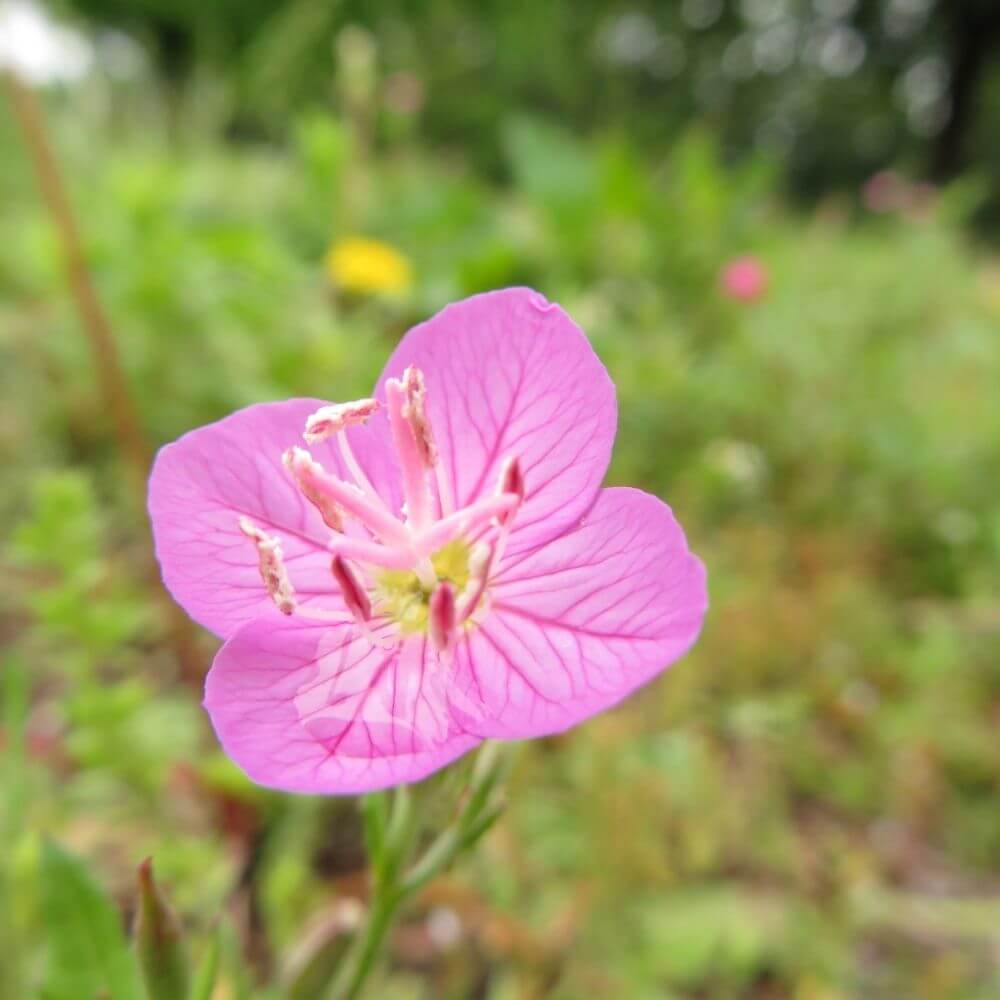
Pinkladies are charming pink night bloomers with delicate, cup-shaped flowers that open in the evening and close by morning. I love how its soft scent fills the garden air at dusk, creating a peaceful, inviting atmosphere. This flower is popular among gardeners for its easy growth and beautiful clusters that add a splash of gentle color to moon gardens or borders. Its meaning centers on healing, resilience, and quiet beauty. It’s a wonderful choice if you want a night bloomer that’s both visually striking and fragrant.
Care & Growing Conditions
- Meaning: Healing, resilience, quiet beauty
- Blooming season: Late spring to summer
- USDA zone: 4 to 9
- Water needs: Low to moderate
- Soil type: Well-drained sandy or loamy soil
- Sun requirement: Full sun to partial shade
- More suited for: Moon gardens, borders, naturalistic landscapes
- Extra note: Can spread readily, so occasional thinning keeps it tidy
6. Chocolate Flower (Berlandiera lyrata)
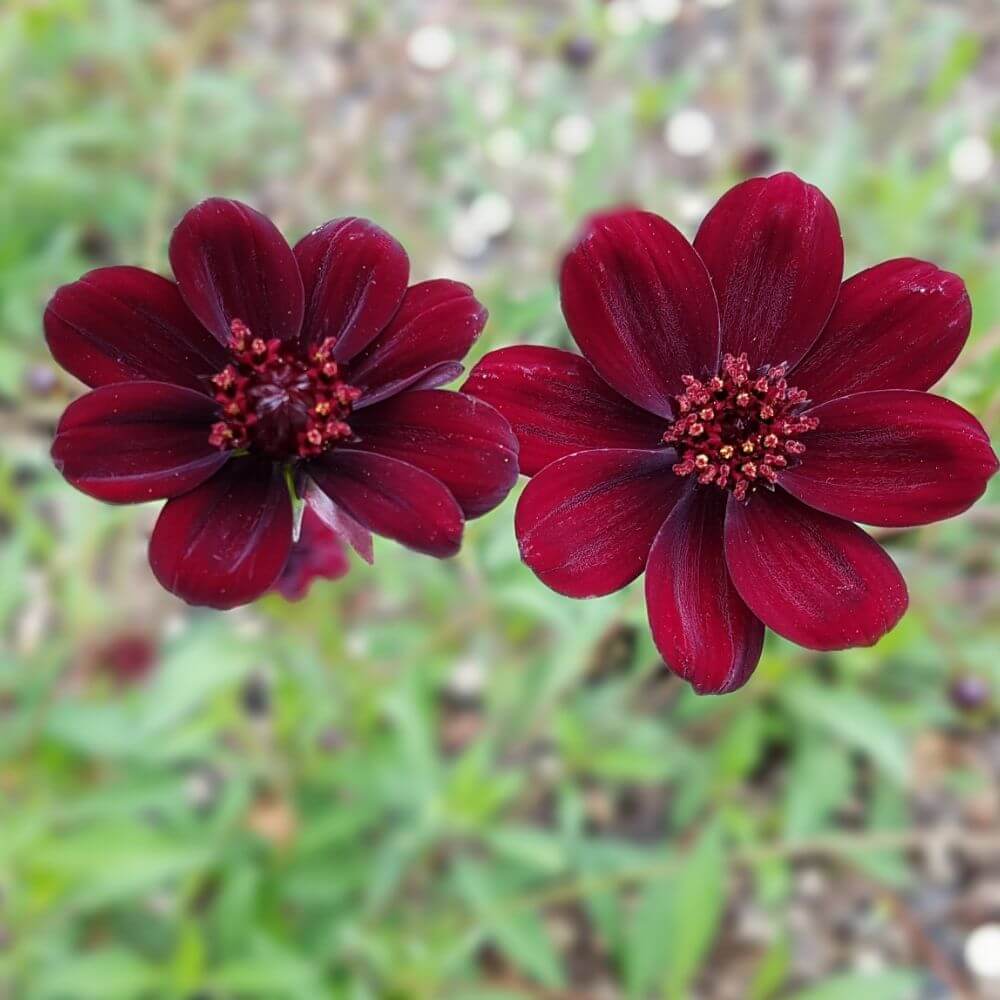
Chocolate flowers smell like rich cocoa when they open before dawn. Their yellow petals surround a dark brown center, giving them a cheerful look. The meaning focuses on joy, grounding energy and appreciation. These flowers thrive in warm, dry climates and attract pollinators easily. They’re a favorite for low-maintenance landscapes.
Care & Growing Conditions
- Meaning: Joy, warmth, appreciation
- Blooming season: Late spring to fall
- USDA zone: 4 to 9
- Water needs: Low
- Soil type: Sandy, fast-draining soil
- Sun requirement: Full sun
- More suited for: Dry gardens and rock gardens
- Extra note: Avoid overwatering
7. Brahma Kamal (Saussurea obvallata)
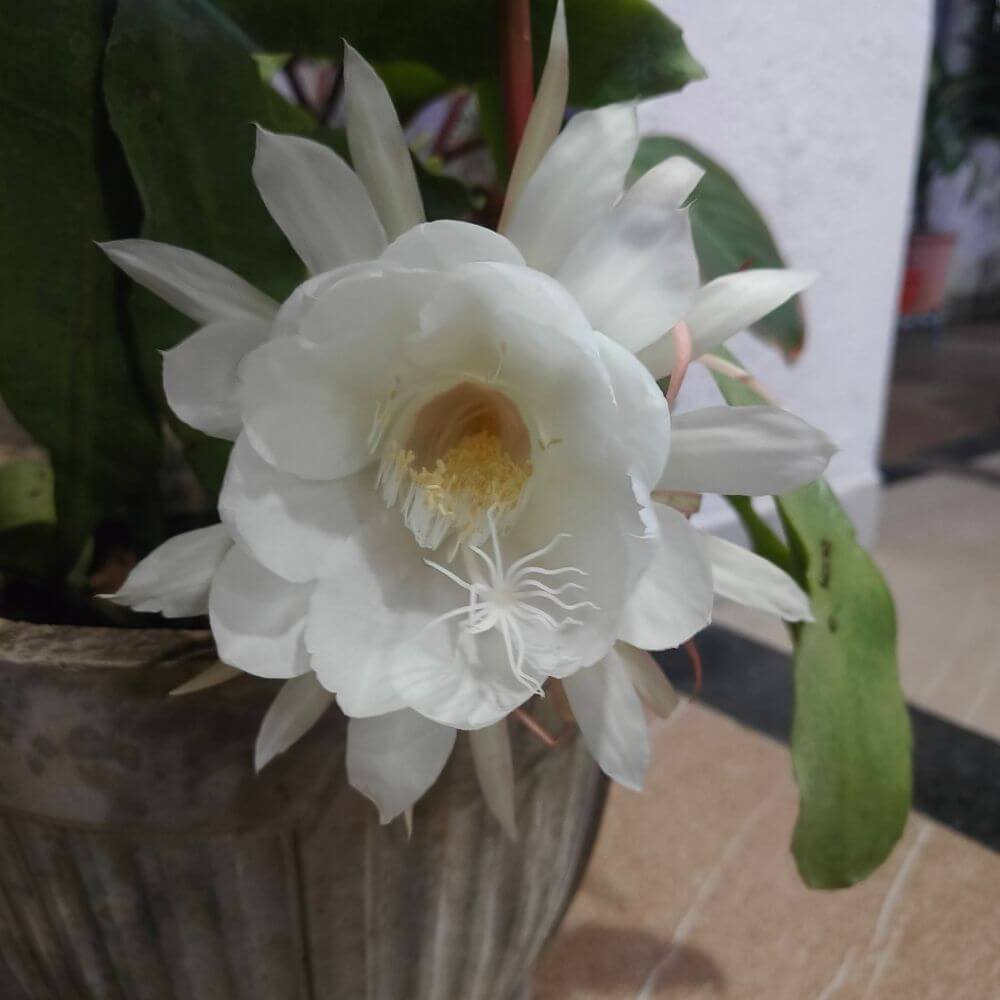
Brahma Kamal is considered sacred in Himalayan culture and blooms only once a year at night. The large white flowers are breathtaking and symbolize purity, blessings and spiritual growth. Many gardeners grow it for its deep cultural value. The bloom opens quietly and wilts before sunrise. It’s ideal for collectors or those who enjoy meaningful plants.
Care & Growing Conditions
- Meaning: Blessings, purity, spiritual growth
- Blooming season: Mid-summer
- USDA zone: 10 to 11
- Water needs: Light watering
- Soil type: Light, porous soil
- Sun requirement: Bright, indirect light
- More suited for: Containers
- Extra note: Protect from humidity
8. Night-Blooming Cactus (Epiphyllum oxypetalum)
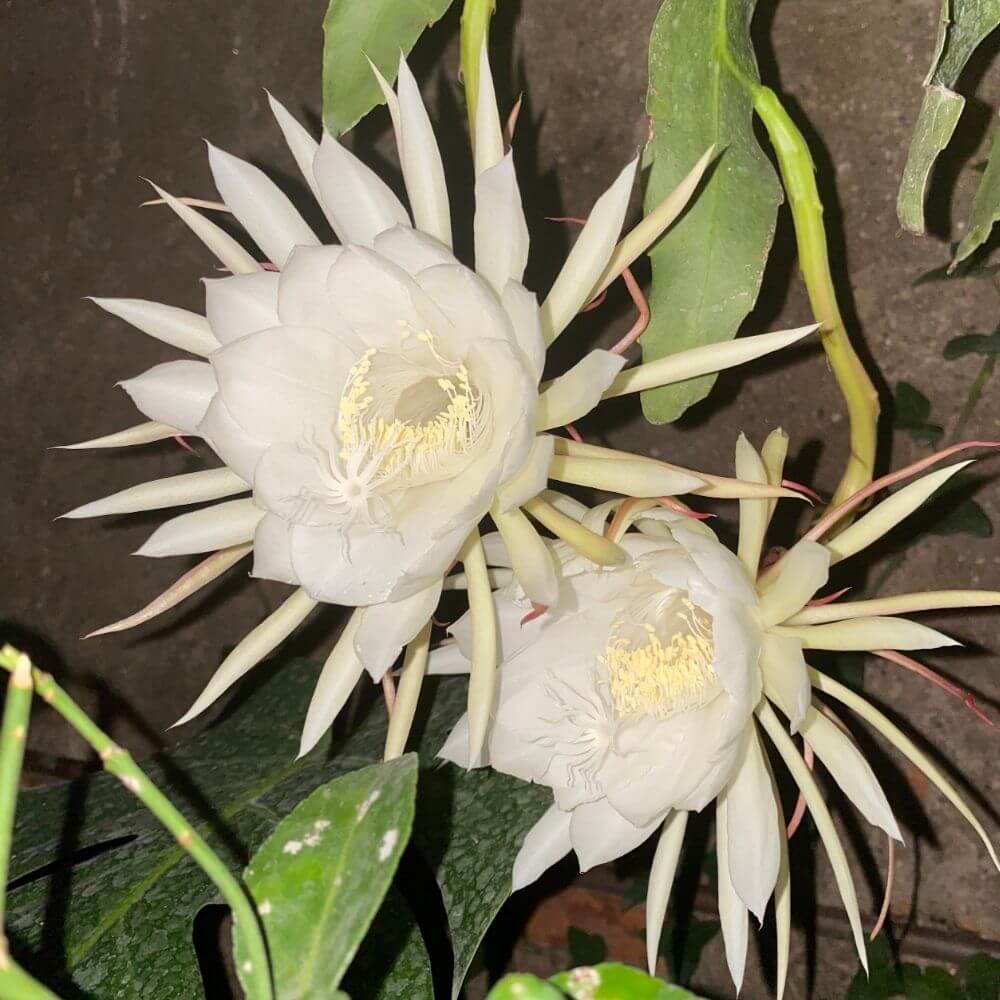
The Queen of the Night cactus is one of the most famous night blooming flowers in cactus varieties. Its giant white blooms open for only a single night. The meaning is transformation, rare beauty and inner power. The plant grows long, flat stems and looks ordinary until the night of flowering. Its dramatic bloom makes it a showstopper.
Care & Growing Conditions
- Meaning: Transformation, rare beauty, inner strength
- Blooming season: Summer
- USDA zone: 10 to 12
- Water needs: Low
- Soil type: Cactus mix
- Sun requirement: Bright, indirect sun
- More suited for: Warm, dry regions
- Extra note: Do not overwater
9. Dragon Fruit Flower (Hylocereus undatus)
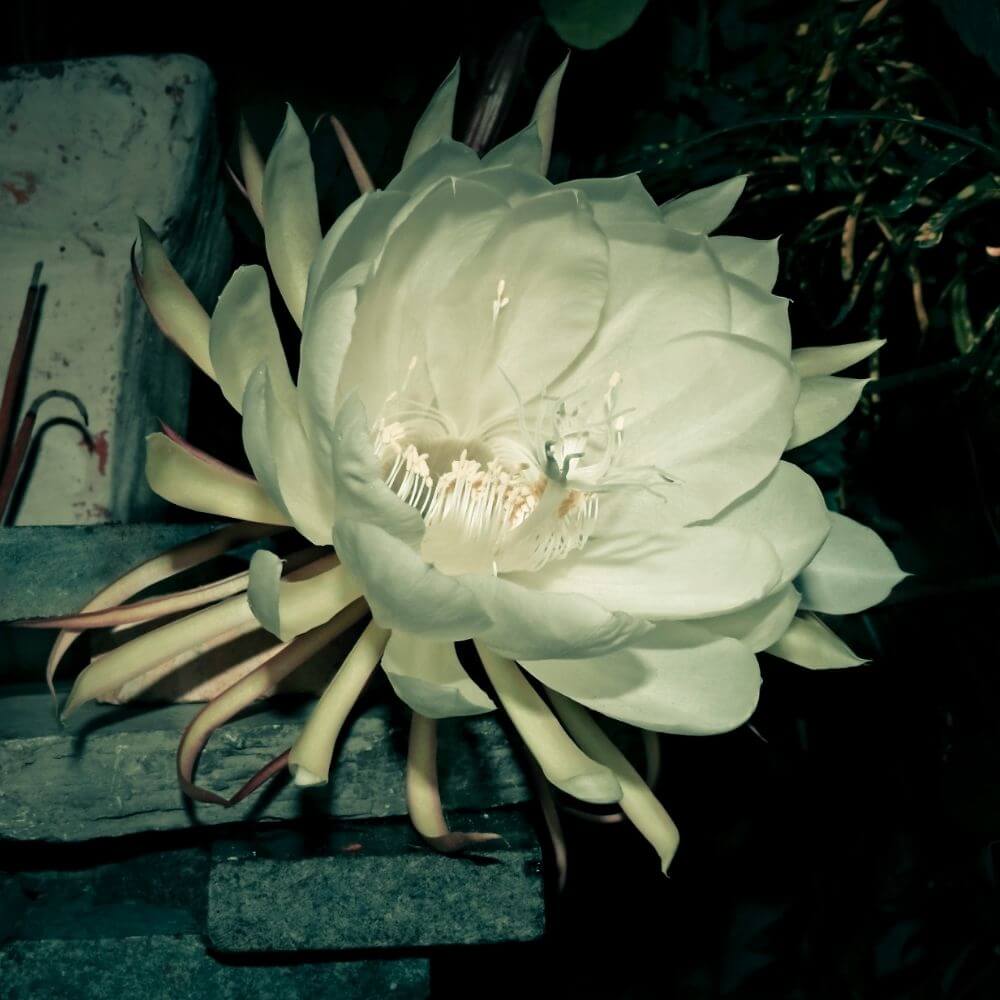
The dragon fruit cactus produces huge night blooms that last one night before closing. The meaning connects with good fortune and nourishment. These flowers later turn into the well-known dragon fruit. Their size and beauty make them popular with gardeners in warm regions. They’re also excellent for attracting moths.
Care & Growing Conditions
- Meaning: Good fortune, nourishment, abundance
- Blooming season: Summer
- USDA zone: 10 to 12
- Water needs: Low to moderate
- Soil type: Sandy or cactus soil
- Sun requirement: Full sun
- More suited for: Tropical or desert gardens
- Extra note: Needs support to climb
10. Night Gladiolus (Gladiolus tristis)
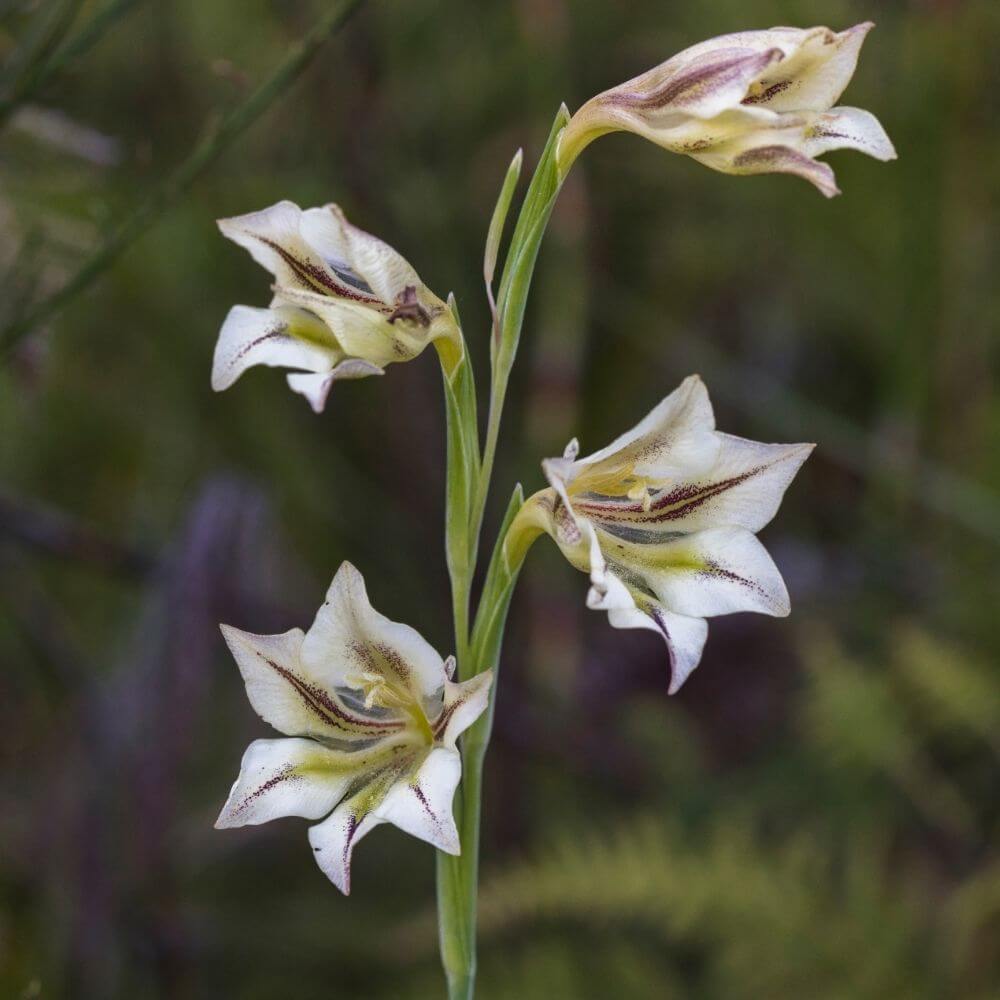
Night gladiolus has pale yellow flowers that release a soft, spicy fragrance at night. It symbolizes calmness and devotion. Many gardeners like its upright shape and subtle scents. It’s also a good choice for cut flowers. This plant brings elegance to moon gardens.
Care & Growing Conditions
- Meaning: Calmness, devotion, peaceful energy
- Blooming season: Late spring to mid-summer
- USDA zone: 7 to 10
- Water needs: Moderate
- Soil type: Well-drained, sandy soil
- Sun requirement: Full sun
- More suited for: Flower beds
- Extra note: Lift corms in cold regions
11. Four O’Clock Flower (Mirabilis jalapa)
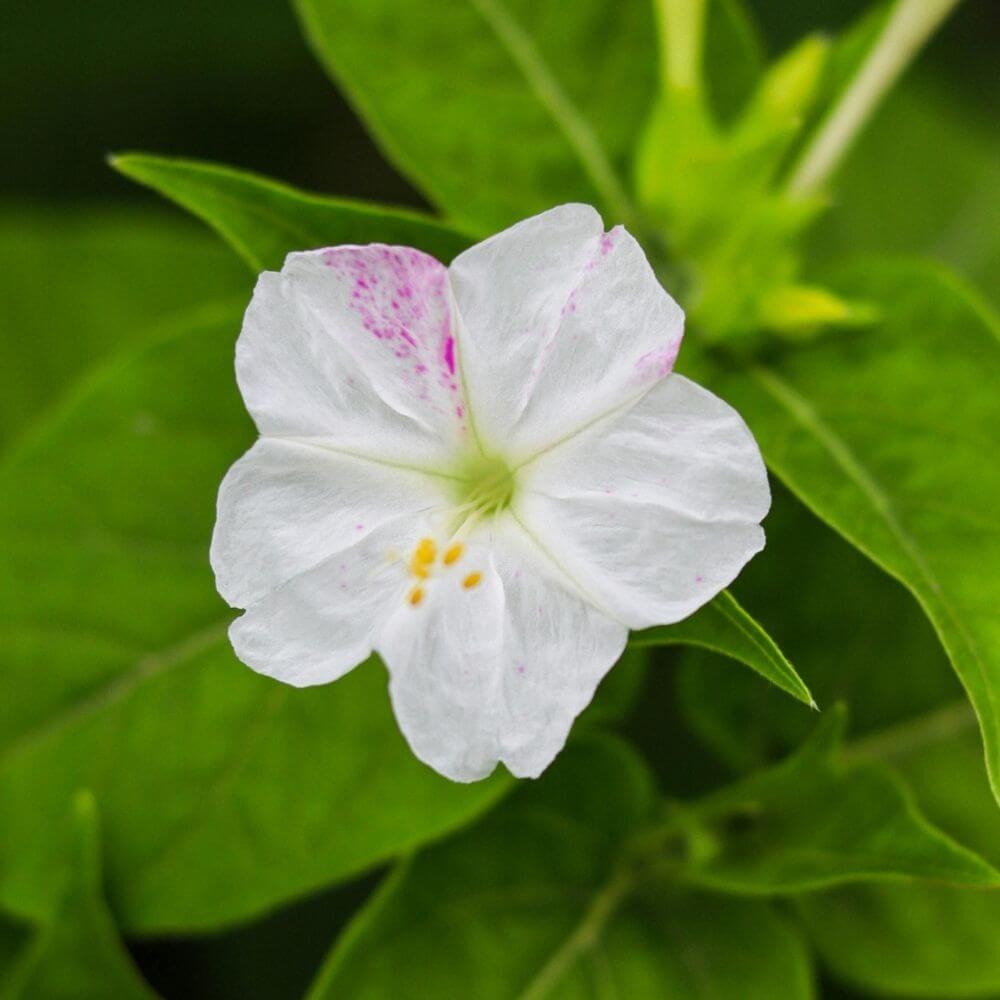
Four o’clocks open late in the afternoon and stay open well into the night. They come in many colors including red, pink, white and yellow. Their meaning is patience and adaptability. You will love their easy growth and colorful display. They often reseed themselves naturally.
Care & Growing Conditions
- Meaning: Patience, adaptability
- Blooming season: Summer
- USDA zone: 7 to 11
- Water needs: Moderate
- Soil type: Average garden soil
- Sun requirement: Full sun
- More suited for: Informal gardens
- Extra note: Seeds are poisonous if eaten
12. Casablanca Lily (Lilium ‘Casa Blanca’)
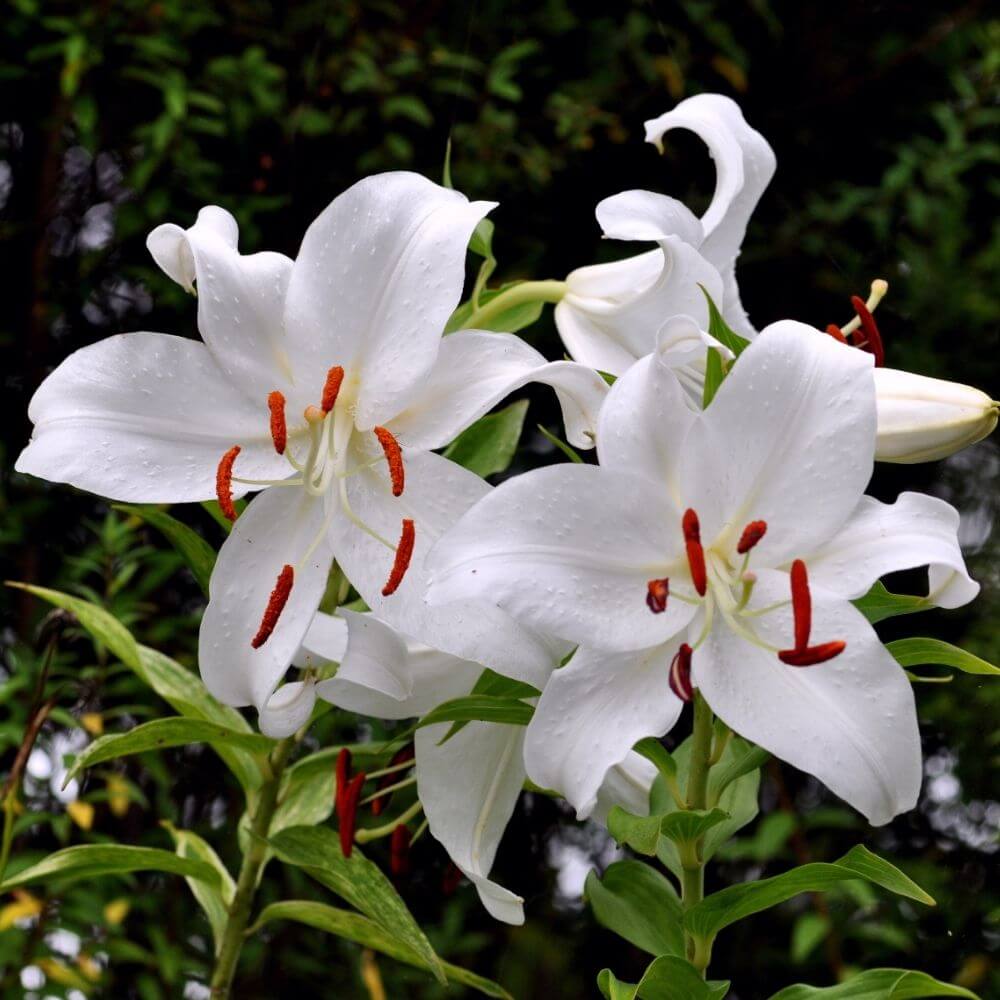
Casablanca lilies open slowly at night and fill the air with a gentle perfume. Their pure white petals represent elegance, peace and sincerity. They’re popular for both gardens and bouquets. These lilies grow tall and produce large, showy blooms. They work beautifully in formal landscapes.
Care & Growing Conditions
- Meaning: Peace, sincerity, elegance
- Blooming season: Mid to late summer
- USDA zone: 5 to 9
- Water needs: Regular watering
- Soil type: Loose, rich soil
- Sun requirement: Full sun to partial shade
- More suited for: Borders and cut-flower gardens
- Extra note: Avoid standing water
13. Night-Blooming Water Lilies (Nymphaea species)
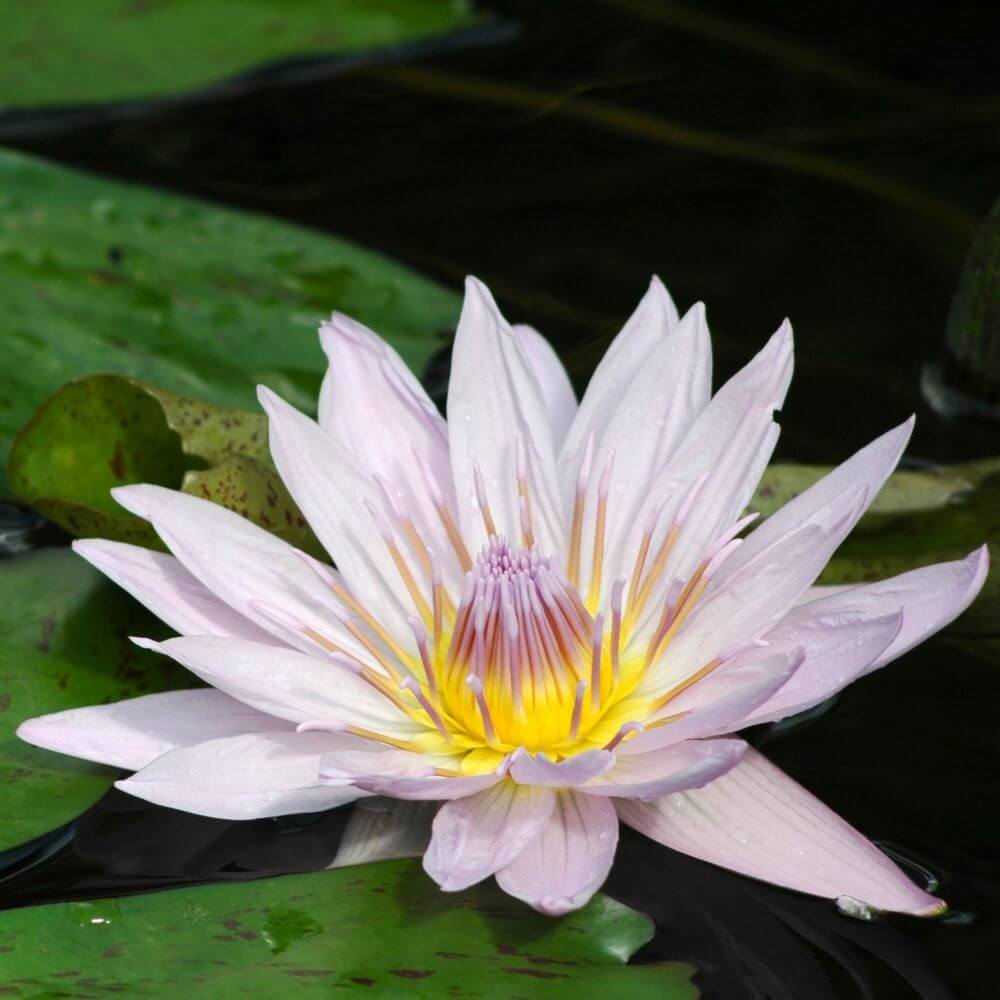
Night-blooming water lilies open on still water surfaces after sunset. Their bright petals create a beautiful reflection under moonlight. They symbolize purity, peace and emotional clarity. Gardeners enjoy their calming presence in ponds. These flowers help create a soothing nighttime atmosphere.
Care & Growing Conditions
- Meaning: Emotional clarity, purity, peace
- Blooming season: Summer
- USDA zone: 9 to 11 (Tropical, often grown as annuals or stored indoors in cooler climates)
- Water needs: Requires still water
- Soil type: Clay-based aquatic soil
- Sun requirement: Full sun
- More suited for: Ponds
- Extra note: Protect from cold water
14. Night-Scented Orchid (Epidendrum nocturnum)

Image by Hans Hillewaert, licensed under CC BY-SA 3.0. Source: https://commons.wikimedia.org/ File Link: https://commons.wikimedia.org/wiki/File:Epidendrum_nocturnum_%28flower%29.jpg
This orchid opens at night and releases a sweet scent for moth pollination. Its meaning is mystery, delicacy and hidden beauty. Gardeners grow it for its elegant shape and soft colors. It thrives in warm, moist environments. The blooms add a refined look to any shaded area.
Care & Growing Conditions
- Meaning: Hidden beauty, delicacy, mystery
- Blooming season: Summer
- USDA zone: 10 to 12
- Water needs: Moderate, keep humid
- Soil type: Orchid bark mix
- Sun requirement: Indirect light
- More suited for: Shaded gardens
- Extra note: Needs humidity to thrive
15. Sacred Datura (Datura wrightii)
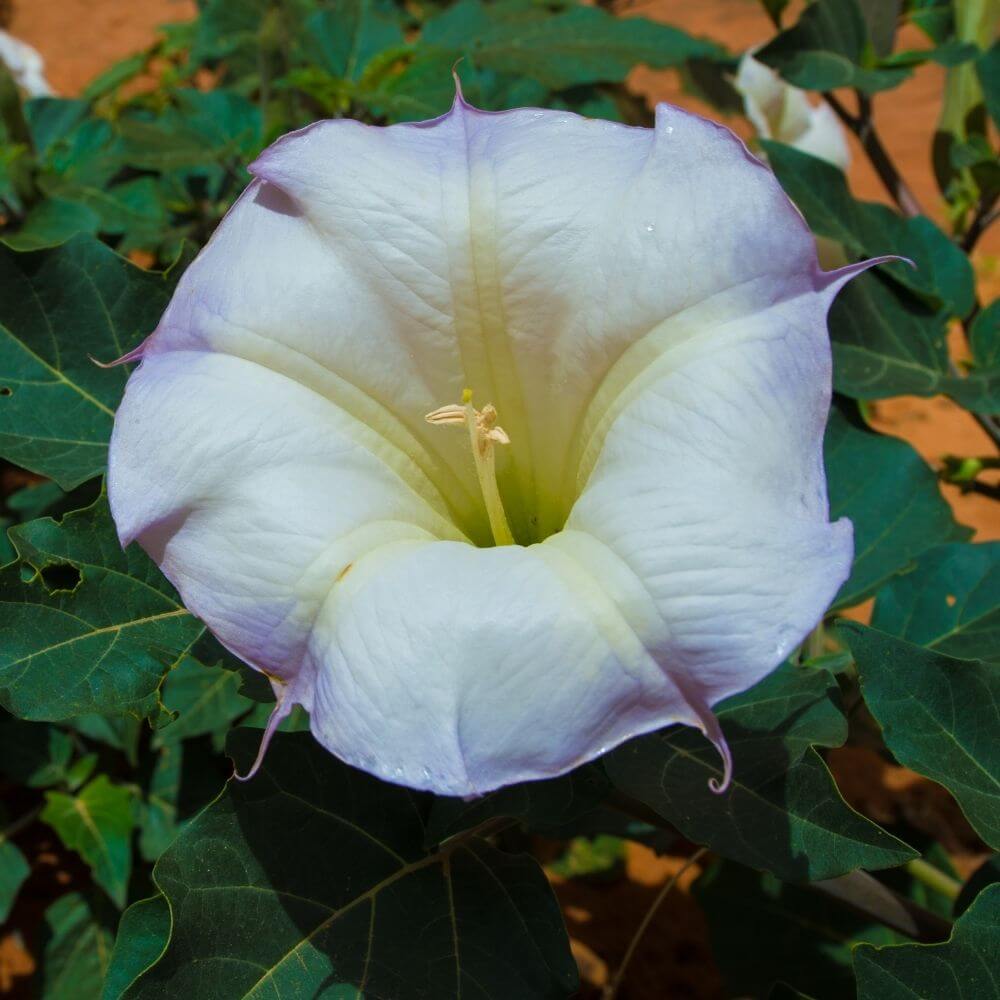
Sacred datura has huge white trumpet-shaped flowers that open at night and close by morning. It symbolizes mystery and protection. The plant is dramatic and grows well in dry climates. Although beautiful, all parts of the plant are toxic. It adds a bold shape to desert-style gardens.
Care & Growing Conditions
- Meaning: Protection, mystery, transformation
- Blooming season: Summer
- USDA zone: 7 to 10
- Water needs: Low
- Soil type: Sandy, dry soil
- Sun requirement: Full sun
- More suited for: Arid gardens
- Extra note: Handle with care due to toxicity
16. Night-Scented Stock (Matthiola longipetala)
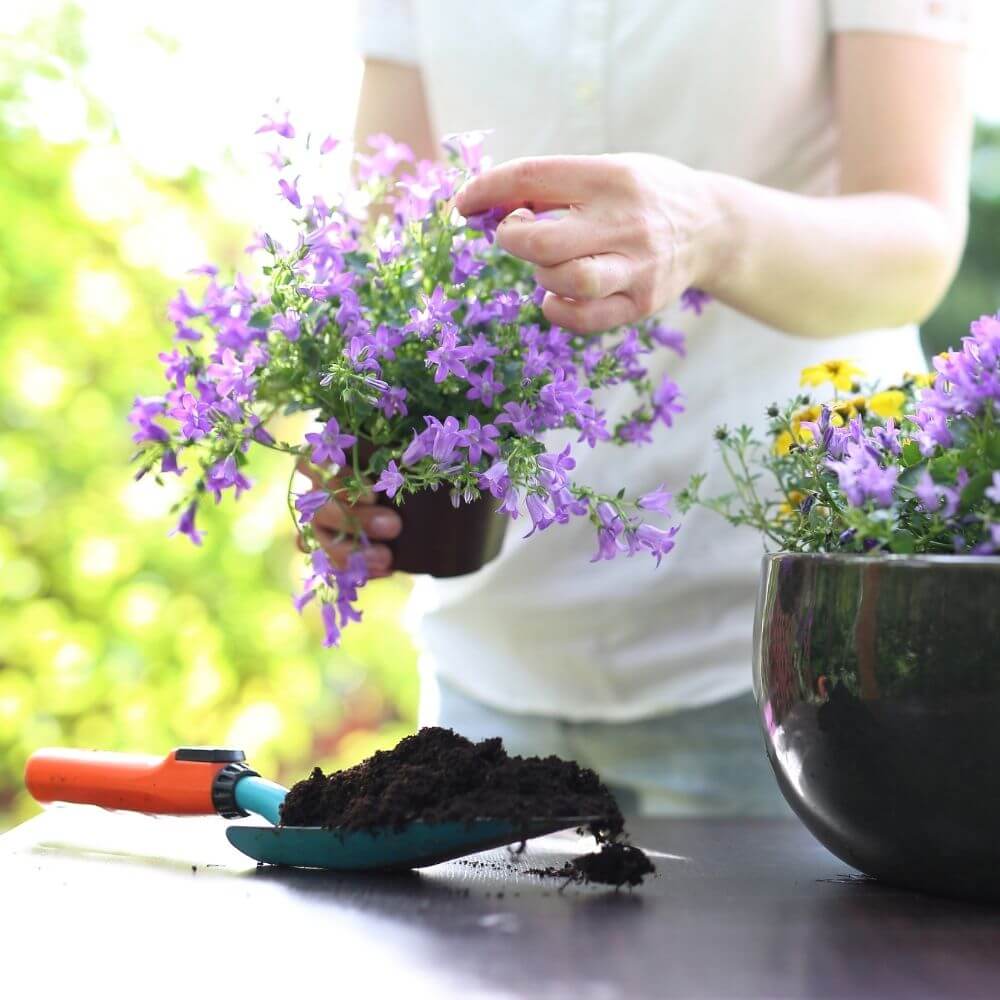
Night-scented stock produces tiny blooms that release a sweet, surprising scent. It symbolizes comfort, warmth and gentle energy. Gardeners often grow it near patios for evening fragrance. The plant stays short and simple but smells wonderful. It’s perfect for relaxed, family-friendly spaces.
Care & Growing Conditions
- Meaning: Comfort, warmth, gentle energy
- Blooming season: Late spring to summer
- USDA zone: 7 to 10
- Water needs: Moderate
- Soil type: Moist, rich soil
- Sun requirement: Full sun
- More suited for: Patio planters
- Extra note: Sow seeds directly for best results
17. Night-Blooming Cereus (Selenicereus grandiflorus)
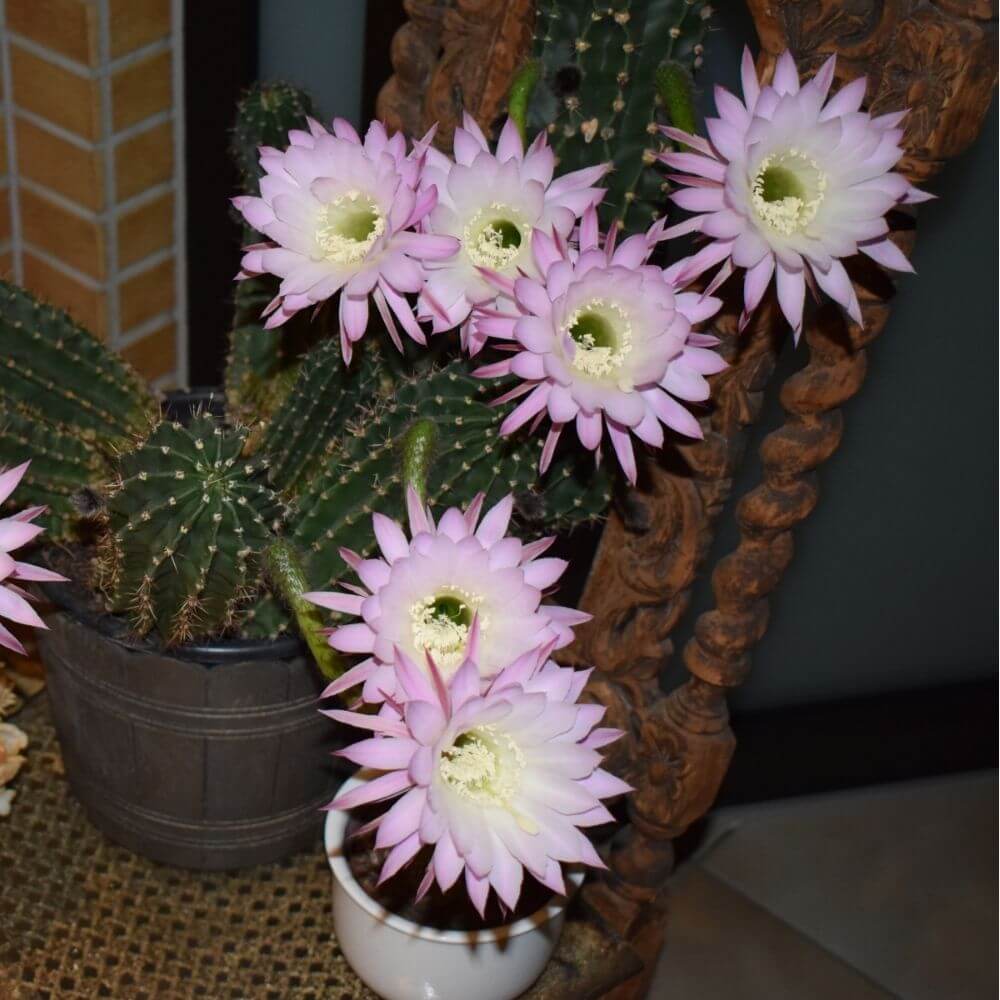
Night-blooming cereus also called Queen of the Night is famous for its rare, once-a-year blossoms. The giant white flowers open for only a few hours at night. Its meaning centers on hope, hidden strength and the beauty of patience. Gardeners often gather to witness its bloom. It’s one of the most loved night-blooming cactus plants.
Care & Growing Conditions
- Meaning: Hope, patience, inner strength
- Blooming season: Summer
- USDA zone: 10 to 12
- Water needs: Low
- Soil type: Cactus mix
- Sun requirement: Indirect sunlight
- More suited for: Warm climates and indoor pots
- Extra note: Needs dry periods to encourage blooming
Which Flowers Bloom at Night and Die in the Morning
Some flowers open only for one night and close or fade by sunrise. These include:
- Moonflower
- Sacred datura
- Queen of the Night
- Dragon Fruit Flower
These species rely on cooler nights for pollination and close once the light returns.
“Queen of the Night” is a common name used for several night-blooming cactus species, including both Epiphyllum oxypetalum and Cereus repandus.
Night-Blooming Flowers Symbolism
Night-blooming flowers often carry deep spiritual meanings. Many represent mystery and transformation because their beauty shows up in darkness. White night bloomers reflect purity and hope. Others are linked with new beginnings or emotional healing. They’re meaningful choices for thoughtful gardeners.
How to Grow and Care for Night-Blooming Flowers
Most night-blooming flowers like well-drained soil, steady warmth and moderate watering. Cactus varieties need dry conditions and strong light. Avoid overwatering, especially with desert species. These plants enjoy calm, sheltered spots where nighttime scents can move freely. Good mulching and occasional pruning keep them healthy.
Popular Uses of Night Blooming Flowers in Gardening
Night-blooming flowers fit beautifully in moon gardens, patios and walkways. They’re perfect for people who spend evenings outdoors. Many gardeners also use them to attract moths and nighttime pollinators. Their pale colors shine in low light and add softness to outdoor spaces.
Key Takeaways
- Night-blooming flowers rely on scent and brightness to attract nighttime pollinators
- Several species open for only one night
- Many cactus flowers bloom after sunset to avoid heat
- Yellow night blooming flowers like evening primrose brighten low light areas
- Night-blooming plants are ideal for moon gardens
- Some flowers close by morning as a natural protection
- These plants offer unique fragrance and symbolism
Conclusion
Night-blooming flowers bring a calm beauty that daytime gardens often miss. Their gentle scents and glowing colors create peaceful evenings and attract helpful pollinators. If you want a garden that feels alive after sunset, starting with one of these flowers is a great choice. You can also explore more of my guides if you want ideas for state flowers, colorful blooms or detailed plant care.