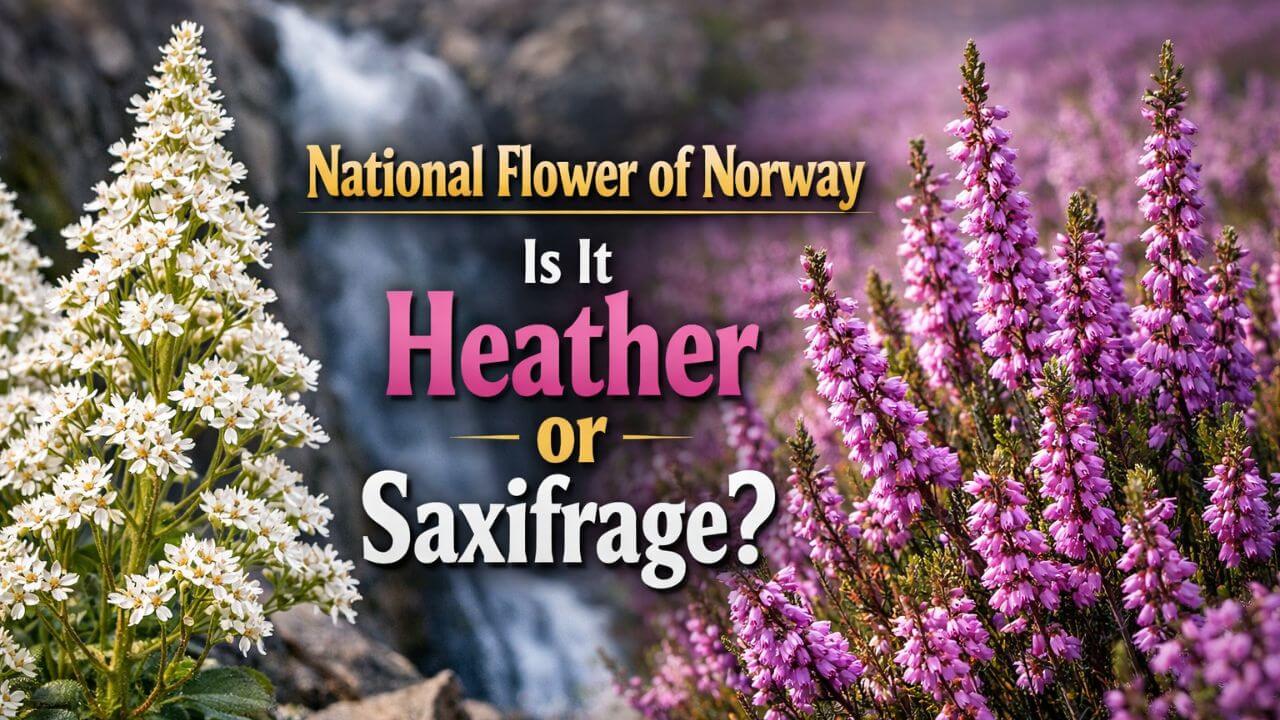

The National Flower of Norway is often surrounded by confusion, with many people wondering whether it is Heather or Purple Saxifrage. While Heather is strongly associated with Norway’s scenic landscapes, the flower most widely recognized as the country’s national flower is the Purple Saxifrage (Saxifraga oppositifolia), a hardy alpine plant that thrives in harsh mountain climates. In this article, you’ll learn the truth behind Norway’s national flower, why it is sometimes confused with Heather, its symbolism, unique characteristics, and where it naturally grows.
What Is the National Flower of Norway?
Purple Heather (Calluna vulgaris) is the official National Flower of Norway.
However, Saxifrage (Saxifraga cotyledon) was selected earlier by botanists and is sometimes referred to as Norway’s “botanical national flower.”
Here’s how it happened:
- In 1935, a Norwegian Botanical Congress selected Saxifrage.
- In 1976, a nationwide radio vote chose Purple Heather (Røsslyng).
- The 1976 public vote is considered the official cultural decision.
So if you need one clear winner for trivia purposes: Purple Heather wins.
Now let’s explore why both flowers still matter.
Why Does Norway Have “Two National Flowers”?
This is where culture and science quietly disagreed.
In 1935, the Norwegian Botanical Association organized a professional vote. Botanists favored Saxifraga cotyledon, commonly called mountain saxifrage. It grows dramatically on rocky cliffs and symbolizes resilience in harsh Nordic landscapes.
But that decision stayed within academic circles.
Four decades later, in 1976, Norwegian radio held a nationwide public poll. Citizens voted for the flower that felt most connected to everyday Norwegian identity. The winner was Purple Heather, known locally as røsslyng.
That vote had broader participation and stronger public legitimacy. Over time, Purple Heather became widely recognized as the National Flower of Norway in cultural contexts.
This difference reflects something deeply Norwegian. Norway often balances expert opinion with public consensus. In this case, the people’s voice carried more cultural weight.
Purple Heather (Calluna vulgaris): Norway’s Official Choice
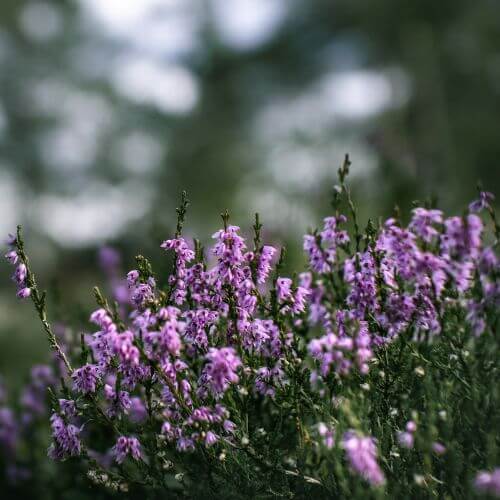
Let’s look closely at the winner.
Scientific name
Calluna vulgaris
Norwegian name
Røsslyng
Habitat
- Moorlands
- Coastal heathlands
- Open forests
- Mountain slopes
Purple Heather covers large parts of Norway in late summer. Whole landscapes turn soft violet. If you’ve seen Nordic travel photography filled with endless purple fields, chances are you were looking at heather.
Why Norwegians Chose Heather
There are practical and emotional reasons.
- It grows almost everywhere in Norway.
- It survives cold, wind, and poor soil.
- It blooms late in summer when other flowers fade.
- It’s part of rural life and folklore.
Heather symbolizes endurance. That matters in a country shaped by fjords, long winters, and rugged terrain.
In Norwegian folklore, heather is associated with protection and strength. Farmers historically used it for bedding livestock and even roofing. It wasn’t just decorative. It was useful.
From a cultural standpoint, Purple Heather feels authentically Norwegian.
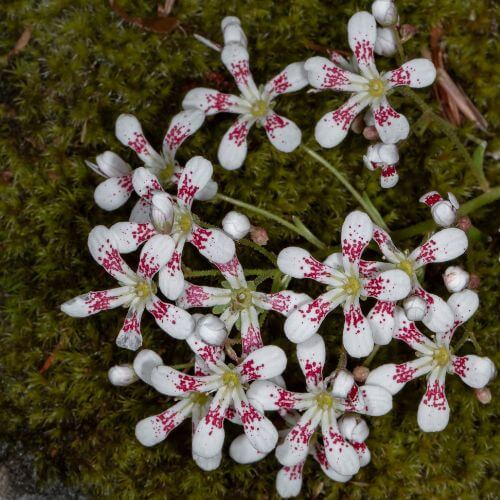
Saxifrage (Saxifraga cotyledon): The Botanical Favorite
Now let’s talk about the other contender.
Scientific name
Saxifraga cotyledon
Norwegian name
Bergfrue
Habitat
- Rocky cliffs
- Mountain ledges
- Alpine regions
Saxifrage grows in dramatic vertical landscapes. It often appears as delicate white flower clusters rising from harsh rock faces.
The name Saxifraga literally means stone-breaker. These plants thrive in cracks in rock, appearing where life seems unlikely.
Why Botanists Preferred Saxifrage
Botanists often look for uniqueness and symbolism.
Saxifraga cotyledon:
- Is native to Scandinavian mountain regions.
- Represents alpine resilience.
- Has a striking, elegant appearance.
- Feels geographically specific to Nordic terrain.
In 1935, experts valued these traits. They saw Saxifrage as a perfect botanical symbol of Norway’s rugged mountain identity.
Scientifically speaking, it’s a compelling candidate.
Cultural Identity vs Botanical Purity
Here’s something rarely discussed in ranking articles.
The debate isn’t really about flowers. It’s about how nations choose symbols.
Purple Heather represents the people. It’s common, widespread, woven into daily life.
Saxifrage represents geography. It grows in extreme landscapes and embodies the dramatic beauty Norway is famous for internationally.
Which one better represents a country?
- The plant everyone sees?
- Or the one that captures its most iconic terrain?
That tension explains why both flowers continue to appear in discussions of Norwegian national symbols.
Norway’s Landscape and Why Flowers Matter Here
Norway has a rich variety of plants. According to research, there are about 2,700–2,800 species of vascular plants in the country. They grow in many different places, from coastal moors to high mountains. The cold winters and short summers mean only strong, hardy plants can survive. Source: Geography of Norway – Wikipedia
Purple Heather (Calluna vulgaris) grows well in acidic soil and open moorlands. Its purple flowers bloom in late summer and provide food for insects and birds. Saxifrage (Saxifraga cotyledon) grows in rocky mountain areas and can survive harsh alpine conditions. Both plants show how life adapts to Norway’s tough climate.
Scientific data shows that Calluna vulgaris is found across Norway and much of northern Europe. Source: Kew Science Plants of the World Online
Heather is not just a flower. It supports wildlife and covers large areas, which is why it has become Norway’s national flower. Saxifrage is less common but important in the mountains. Together, they represent the strength and beauty of Norwegian nature.
What Makes Purple Heather So Photogenic?
Nature photographers often prefer heather for one simple reason: scale.
When heather blooms, it blankets landscapes in purple tones. The effect is cinematic.
Tourism campaigns frequently use heather-covered moors in promotional material. It aligns with the soft, atmospheric aesthetic associated with Nordic Noir visuals.
Saxifrage, on the other hand, is more intimate. It requires hiking into mountainous areas and photographing steep rock faces.
So if you’re planning a photography trip:
- Visit coastal or inland moorlands in late summer for heather fields.
- Explore alpine cliffs in early summer for saxifrage blooms.
Both offer beauty, just in very different moods.
Does Norway Even Need a National Flower?
Here’s a question few articles ask.
Norway doesn’t legally formalize many national symbols in the same way other countries do. Some symbols emerge organically through culture rather than official legislation.
So perhaps the dual-flower identity isn’t confusion. It might reflect Norway’s democratic and decentralized character.
In some ways, having both Heather and Saxifrage feels more authentic than forcing a single answer.
It allows space for:
- Scientific recognition
- Public sentiment
- Regional pride
Instead of seeing it as a contradiction, it can be viewed as a layered identity.
Heather vs Saxifrage Comparison
Purple Heather (Calluna vulgaris)
- Official public choice (1976)
- Widespread across Norway
- Blooms in late summer
- Symbolizes endurance and rural life
Saxifrage (Saxifraga cotyledon)
- Chosen by botanists (1935)
- Alpine mountain habitat
- Blooms in early summer
- Symbolizes rugged mountain resilience
For trivia or quick reference, Heather is the accepted National Flower of Norway.
5 Fast Facts About Norway’s National Flower
- Purple Heather is called røsslyng in Norwegian.
- Saxifrage means “stone-breaker.”
- Heather landscapes are vital for pollinators.
- Norway’s 1976 public vote shifted the cultural answer.
- Both flowers thrive in cold, challenging climates.
Related Norwegian Symbols Worth Knowing
If you enjoy learning about national symbols, you may also find these interesting:
- Norway’s national animal: The Lion (from the royal coat of arms)
- Norway’s national bird: The White-throated Dipper
- Norway’s national tree: Norway Spruce
Understanding these together paints a clearer picture of Norwegian identity.
Why This Question Keeps Appearing
Search trends show ongoing confusion because different websites list different answers.
Some rely on older botanical sources. Others cite the public vote. Many fail to explain the timeline. When someone searches “National Flower of Norway,” they’re usually looking for clarity, not a debate. Now you have both the short answer and the full story.
National Flower of Norway: Heather vs. Saxifrage FAQs
What is the national flower of Norway?
Norway actually has two national flowers: the Purple Heather (Calluna vulgaris) and the Pyramidal Saxifrage (Saxifraga cotyledon). The Heather was chosen by a popular radio vote in 1976, while the Saxifrage was designated during an international botanical congress in 1935.
Is it Heather or Saxifrage that represents Norway?
Both do! Purple Heather is generally considered the 'people’s choice' and is the national floral emblem. However, the Pyramidal Saxifrage is officially recognized as the national flower in scientific and academic circles.
What is the meaning of the Heather flower in Norway?
In Norway, Purple Heather (Røsslyng) symbolizes independence, luck, and resilience. It is a hardy plant that thrives in the rugged Norwegian mountains and moors, reflecting the strength of the Norwegian spirit.
Why is the Pyramidal Saxifrage called the 'Queen of the Mountains'?
Though native to Norway, it is nicknamed the 'Queen' because of its majestic plumes of white flowers that can grow up to 60cm long, clinging to steep, rocky mountain cliffs where few other plants can survive.
What is Norway's national plant?
While the Heather and Saxifrage are the national flowers, Norway’s national tree is the Norway Spruce (Picea abies), which is a vital part of the country’s landscape and timber industry.
Can you find Purple Heather and Saxifrage in the same location?
Rarely. Heather prefers acidic, peaty moors and heathlands at lower to middle altitudes, while the Pyramidal Saxifrage is a 'lithophyte,' meaning it grows directly on calcium-rich mountain rock faces and cliffs.
Is Purple Heather edible or useful?
Yes! Historically, Norwegians used Heather to flavor ale, brew tea, and even as a dye for wool. It is also a critical source of nectar for 'Heather Honey,' which is a prized delicacy in Norway.
Final Thoughts: So Which Flower Truly Represents Norway?
If you need a definitive answer for a quiz, article, or classroom discussion, say this confidently:
Purple Heather (Calluna vulgaris) is the official National Flower of Norway, chosen by public vote in 1976.
Saxifrage remains historically significant as the botanists’ earlier choice. Both flowers tell part of Norway’s story. One speaks for the people. The other speaks for the mountains. And in a country shaped by both community and landscape, maybe that balance feels exactly right.
If you enjoy uncovering surprising facts about national symbols, consider exploring more cultural plant stories. They often reveal more about a country than a flag ever could.