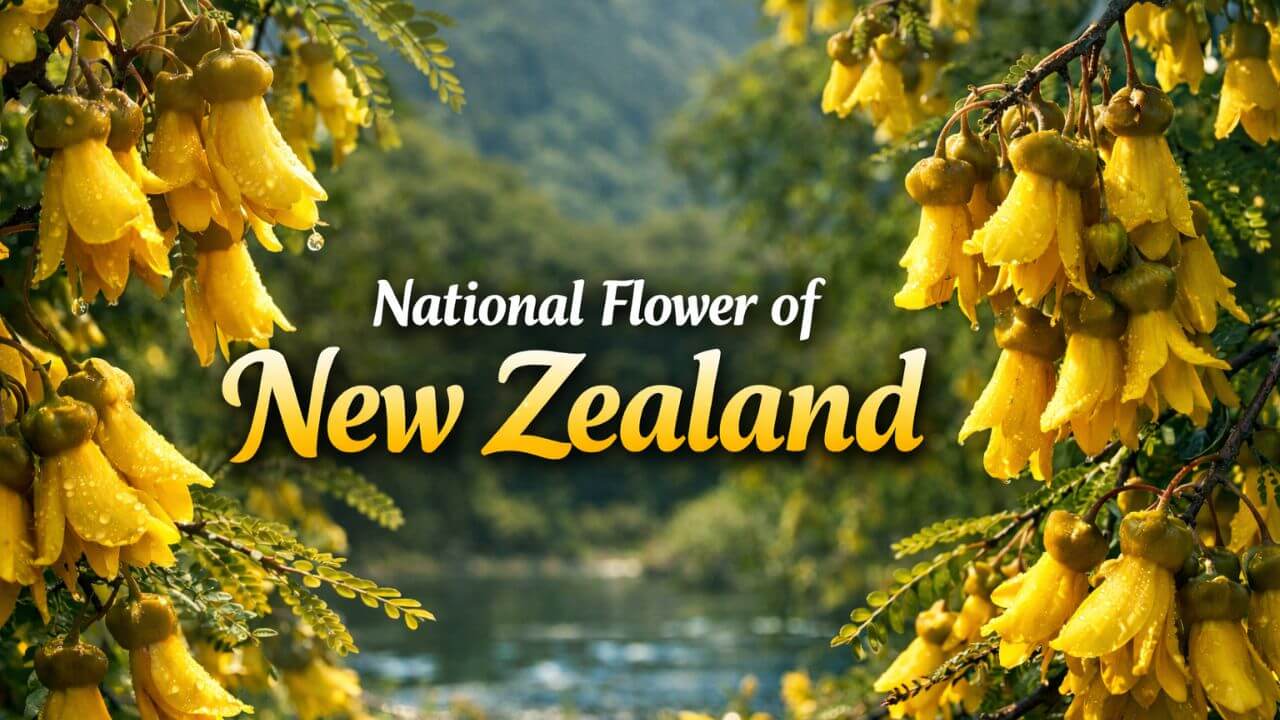

The National Flower of New Zealand is the stunning Kōwhai, a native tree famous for its bright yellow blossoms that signal the arrival of spring. Loved for its beauty and its role in supporting native birds like the tūī and bellbird, the Kōwhai has become a powerful symbol of New Zealand’s natural heritage. But there is much more to this iconic tree than its colorful flowers. In this article, you’ll learn 5 fascinating secrets of the Kōwhai, including its cultural significance, unique features, blooming season, wildlife benefits, and why it holds such a special place in New Zealand.
What Is the National Flower of New Zealand?
New Zealand does not legally recognize an official national flower. However, the kōwhai (Sophora species) is widely regarded as the national flower due to:
- Its vibrant yellow blossoms
- Its deep connection to Māori culture
- Its strong presence in New Zealand landscapes
- Its symbolism of renewal and resilience
Many people mistakenly think the Silver Fern is the national flower. The Silver Fern is a national emblem, but it is not a flower. It is a fern species used in sports, military, and national branding.
That’s the simple answer.
Now let’s go deeper.
Why Everyone Gets It Wrong: Kōwhai vs. Silver Fern
If you’ve ever seen an All Blacks jersey, you’ve seen the Silver Fern. It appears on passports, government logos, and international sports uniforms.
Naturally, many assume it must be the national flower.
But botanically speaking:
- The Silver Fern is not a flower.
- It does not produce blossoms.
- It belongs to a completely different plant group.
The kōwhai, on the other hand, produces bright golden flowers in spring. These blossoms are unmistakable. When they bloom, entire hillsides light up.
The confusion exists because the Silver Fern functions as a national symbol, while the kōwhai functions as a cultural and natural symbol.
They represent different layers of identity.
The Kōwhai: A Golden Signal of Spring
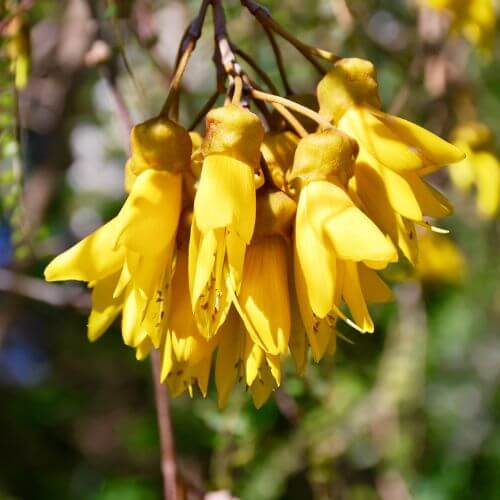
The word kōwhai literally means yellow in te reo Māori.
Several species of kōwhai grow throughout New Zealand. According to New Zealand Department of Conservation (DOC), there are eight native species of Sophora in New Zealand, each adapted to different environments, from coastal areas to mountain valleys.
In late winter and early spring, when much of the landscape still looks muted, kōwhai trees burst into golden bloom.
This timing is important.
For generations, the flowering of kōwhai signaled seasonal change. It marked:
- The arrival of warmer weather
- The return of migratory birds
- A shift in food gathering patterns
It wasn’t just pretty. It was practical.
5 Secrets of National Flower of New Zealand
1. The Drunken Bird
The Kōwhai is essentially nature’s open bar. Its nectar is so abundant that it can actually ferment within the flower, frequently leaving native Tūī or Kererū hilariously ‘tipsy’ and uncoordinated. If you’ve ever seen a bird lose its balance in the Kiwi bush, you’ve likely witnessed the potent power of this golden icon.
2. The Lethal Beauty (Cytisine)
While it looks delicate, every part of the Kōwhai, Especially its bright yellow seeds, is highly poisonous. They contain a toxin called cytisine. The secret for gardeners is that the seeds are so tough they usually pass through a human or animal harmlessly unless they are crushed or chewed, which is why poisonings are rare despite the plant being everywhere.
3. The Māori Calendar Tree
Ancient Māori used the Kōwhai as a biological clock. The secret is that the blooming of the Kōwhai (known as Te Ura o te Kōwhai) was the exact signal to plant kūmara (sweet potato). If you missed the bloom, you missed the planting season. It was also a sign that the kina (sea urchin) were fat and ready for harvest.
4. It’s a Legume in Disguise
Most people see a beautiful flowering tree, but botanically, it’s a member of the pea family (Fabaceae). Its secret superpower is nitrogen fixing. Like beans or peas, the Kōwhai pulls nitrogen from the air and puts it into the soil, acting as a natural fertilizer for the entire forest around it.
5. The Silver Fern Rivalry
The biggest secret is the one you already caught: New Zealand has no official national flower by law. While the Silver Fern is the national emblem, the Kōwhai is the de facto national flower. There was a time when the government considered making it official, but it remains unofficial to this day. A fact that surprises 90% of searchers.
The Science Behind the Gold
The brightness of kōwhai flowers is not accidental. Research on pollination biology shows that high-contrast colors increase visibility to birds. Kōwhai flowers evolved tubular shapes and vibrant pigmentation that suit native bird species like tūī.
While the Kōwhai is a cultural icon, it is also a biological masterpiece. According to research supported by the Royal Horticultural Society, high-contrast flowers are essential for maintaining healthy pollinator populations. A principle that explains why the Kōwhai’s brilliant yellow beacon is so effective at attracting New Zealand’s native birds.
In simple terms, kōwhai blooms are designed to be seen. That visibility may also explain why they became symbolic. Humans notice what stands out.
Is the Kōwhai Officially Recognized?
No formal law declares the kōwhai as the National Flower of New Zealand.
New Zealand also lacks an officially legislated national animal or tree. Instead, identity forms through public consensus and cultural practice. The Ministry for Culture and Heritage acknowledges various national symbols, including the Silver Fern and kiwi bird, but does not list an official flower.
This is interesting.
Some countries define identity through legislation. New Zealand’s botanical identity evolved organically. That makes the kōwhai’s status feel more authentic, not less.
Does New Zealand Need an Official Flower?
Here’s a thought that rarely appears.
What if the absence of an official national flower reflects something deeper about New Zealand identity? Aotearoa is built on partnership between Māori and the Crown. Its modern identity embraces diversity, environmental awareness, and evolving cultural dialogue. Fixing one plant as official might oversimplify that complexity.
Perhaps the kōwhai thrives symbolically precisely because it was chosen by people, not declared by decree.
Sometimes cultural legitimacy is stronger than legal recognition.
Where You’ll See Kōwhai Today
To understand its living presence, look beyond textbooks.
You’ll see kōwhai in:
- Public parks across Wellington and Auckland
- School emblems and local council logos
- Children’s books introducing native flora
- Conservation education programs
- Residential gardens as ornamental trees
Native planting initiatives across New Zealand continued expanding under ecological restoration projects aimed at increasing biodiversity and supporting bird populations. Kōwhai remains a popular planting choice because it supports native wildlife and adapts well to different soils.
Its role today combines beauty, ecology, and cultural memory.
How the Kōwhai Fits Into a Larger Cultural Landscape
Understanding the National Flower of New Zealand requires understanding New Zealand itself. This country does not treat nature as background decoration. Land, plants, and rivers are woven into identity. The Whanganui River, for example, was granted legal personhood in 2017. That legal decision reflects Māori worldview concepts recognizing natural entities as living ancestors. Within that context, the kōwhai is not just a decorative plant. It exists within a relational framework between people and environment. That worldview shapes how symbols gain meaning.
If You’re Visiting New Zealand
If you’re planning a trip during late winter or early spring, look for hillsides glowing yellow.
Visit:
- Wellington Botanic Garden
- Auckland Domain
- Christchurch Botanic Gardens
Observe which birds gather around the blossoms. Listen to the tūī’s distinctive song. Notice how locals react when the first flowers appear. There’s often a sense of relief.
Spring has arrived.
Why the Kōwhai Endures as the National Flower of New Zealand
Even without formal status, kōwhai continues to dominate conversations about national flora.
It:
- Signals seasonal change
- Supports native birds
- Connects to Māori cultural traditions
- Represents resilience and renewal
- Appears widely across the country
Most importantly, people feel attached to it. National identity is emotional before it is legal.
FAQs About New Zealand National Flower
What is the official national flower of New Zealand?
Technically, New Zealand does not have an 'official' national flower declared by law. However, the Kōwhai (Sophora spp.) is internationally recognized as the de facto national flower due to its deep cultural significance and widespread presence across the country.
Is the Silver Fern New Zealand's national flower?
No. While the Silver Fern (Cyathea dealbata) is the most famous national emblem, used by the All Blacks and on government logos, it is a fern (pteridophyte), not a flower. The Kōwhai holds the title of the national floral representative.
Why is the Kōwhai considered the national flower?
The Kōwhai is iconic for its brilliant yellow blooms that signal the start of spring. It is deeply rooted in Māori tradition, used historically as a seasonal calendar and for its medicinal properties (rongoā), making it a symbol of the Kiwi spirit and landscape.
How many species of Kōwhai are there in New Zealand?
According to Manaaki Whenua – Landcare Research, there are eight distinct native species of Kōwhai (Sophora) in New Zealand. These range from the widespread Sophora microphylla to the unique prostrate variety found in rocky alpine areas.
Is the Kōwhai flower poisonous?
Yes. While the nectar is a favorite for native birds like the Tūī, all parts of the Kōwhai tree, especially the bright yellow seeds, contain the toxin cytisine. They are highly poisonous if ingested by humans or livestock, though they are generally safe to handle.
Why do birds act drunk around Kōwhai trees?
Kōwhai flowers produce high volumes of nectar that can ferment in the sun. Native birds like the Kererū (wood pigeon) often consume large quantities of this fermented nectar, leading to 'drunk' behavior where they appear uncoordinated or fall from branches.
Can you grow the national flower of New Zealand in a garden?
Absolutely. Kōwhai are popular garden trees because they attract native birds and provide high-contrast color. They are hardy and thrive in most NZ environments, provided they have well-drained soil and plenty of sunlight to encourage their signature golden blooms.
Final Thoughts About National Flower of New Zealand
The National Flower of New Zealand might not exist on paper. But in lived experience, the kōwhai holds that space. It corrects a common misconception about the Silver Fern. It connects ecology to culture. It reminds people that beauty can arrive before everything else is ready.
If you’re exploring the symbols of Aotearoa, don’t stop at the jersey logo. Look for the yellow blossoms lighting up a quiet hillside. That’s where the deeper story begins.
If you enjoy uncovering the stories behind national symbols, you might also like:
- National Flower of Australia
- National Flower of Japan
- Netherlands National Flower
- National Flower of Chile
Each one reveals how countries express identity through nature.