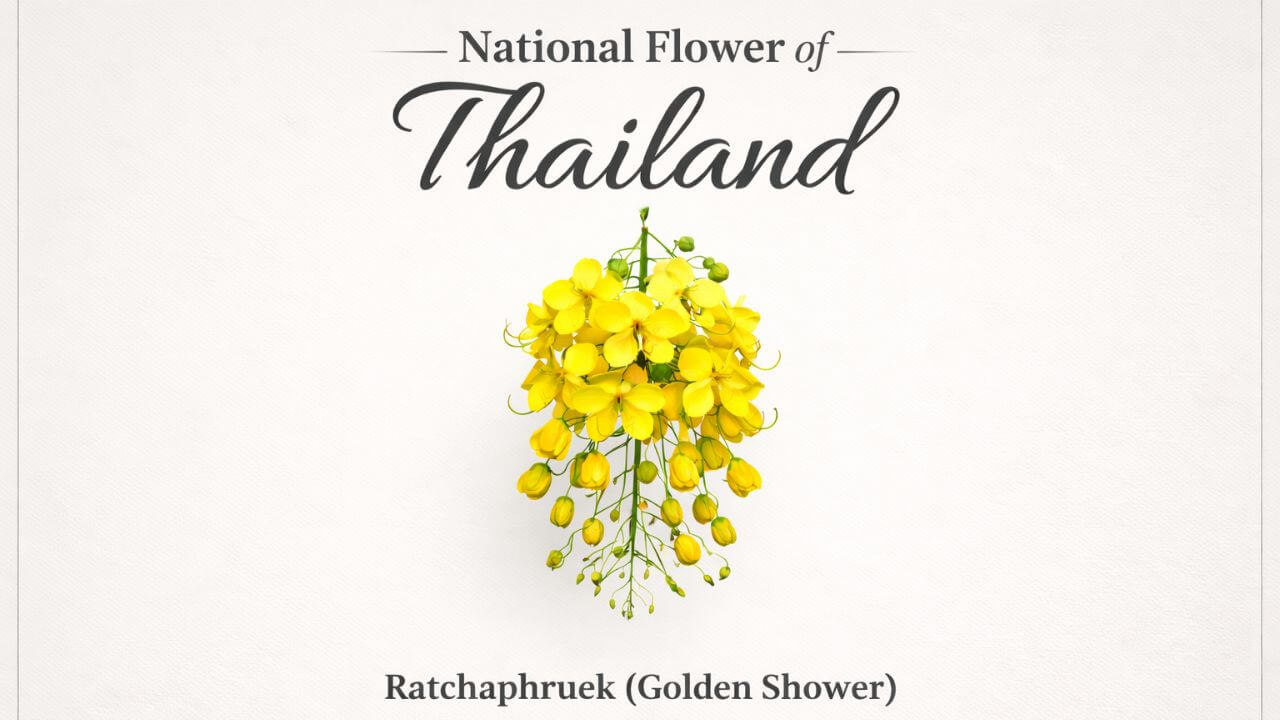

The National Flower of Thailand
The National Flower of Thailand is the radiant Ratchaphruek, also known internationally as the Golden Shower tree. When it blooms, entire streets glow in cascading yellow clusters that look almost unreal against the tropical sky. But this tree is far more than a beautiful sight. It carries royal symbolism, spiritual meaning, and national identity woven deeply into Thai culture. To understand Thailand fully, you must understand this golden tree.
Officially, Thailand recognizes the Ratchaphruek as its national flower. The Thai government confirms this designation through its official portal, where the tree is described as a symbol of unity and prosperity: https://thailand.go.th Yet the story does not stop at recognition. The real meaning lies in why this particular tree was chosen and how it continues to shape the Thai landscape and identity today.
A Tree of Gold and Kings
The Ratchaphruek tree, scientifically known as Cassia fistula, produces long hanging clusters of bright yellow flowers that resemble flowing gold. In Thailand, yellow is not simply a color. It represents royalty, particularly the late King Bhumibol Adulyadej, who was born on a Monday. In Thai tradition each day of the week has a color and Monday’s color is yellow. Because of this association, the blooming of the Golden Shower feels almost ceremonial. During national celebrations streets are decorated in yellow. Public buildings display yellow banners. When the Ratchaphruek blooms it mirrors that royal tone in nature itself. The symbolism runs deeper than aesthetics. The Thai word for this tree is “Ratchaphruek,” meaning royal tree. It embodies loyalty and respect toward the monarchy. In a country where the monarchy holds deep cultural reverence, selecting this tree as a Thai national symbol was both meaningful and unifying. In 2006, during the Royal Flora Ratchaphruek International Horticultural Expo held in Chiang Mai, millions of visitors witnessed how the tree represented national pride. The expo attracted over 3 million visitors according to official reports from the event organizers. It was not just a flower exhibition. It was a declaration of identity.
The Sacred Meaning of Khoon and the Promise of Prosperity
Locally the tree is often called “Khoon.” In Thai language the word carries the meaning of support, increase, and prosperity. That is why many households plant it near their homes. It is believed to attract good fortune and stability. During the Songkran festival flowers are often used in water blessing ceremonies. While jasmine is common, Songkran festival flowers sometimes include yellow blossoms symbolizing renewal and merit. The Ratchaphruek fits naturally into that spiritual environment. Buddhist symbolism also reinforces its importance. Yellow is associated with monks’ robes. It represents humility, wisdom, and devotion. When the Ratchaphruek tree bursts into bloom at the height of the hot season it feels like a reminder of endurance and reward. Some feng shui practitioners in Southeast Asia even refer to it as the prosperity tree Thailand. Whether one believes in energy symbolism or not, the cultural belief itself influences behavior. Families plant it during new house construction. Businesses include it in landscape design for symbolic blessing. Symbols shape action. Action shapes culture.
When Thailand Turns Gold
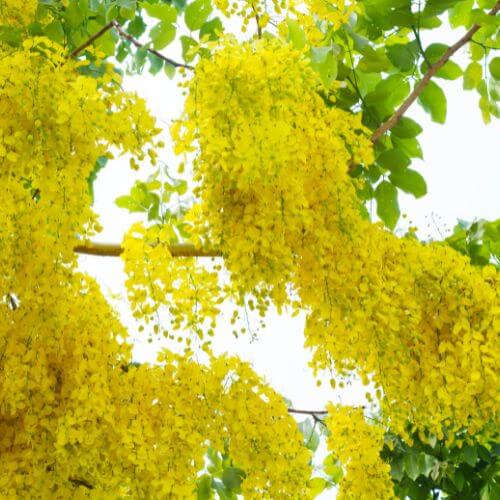
Between March and May Thailand experiences intense heat. Many trees appear tired under the sun. Yet this is precisely when the Golden Shower tree begins its dramatic bloom. Large clusters hang downward sometimes reaching 40 centimeters in length. Against the blue sky the effect is breathtaking. In Bangkok public parks such as Chatuchak and Lumphini become bright corridors of gold. In Chiang Mai the transformation feels even more theatrical because of the mountainous backdrop. Travelers often photograph these blooms without knowing their meaning. Tour guides explain that this is not random decoration. It is the flowering of the Flower at its peak. The timing is significant. The blooming season aligns closely with Thai New Year in April. Renewal. Heat. Brightness. New beginnings. Nature and culture move together. For visitors seeking authentic “Thainess,” witnessing the Ratchaphruek in bloom offers insight beyond temples and beaches. It shows how landscape and national identity intertwine.
Botanical Profile of Cassia fistula
The Ratchaphruek is a master of adaptation, thriving in the intense heat where other trees falter. In the Thai landscape, it isn’t just a plant. it is a symbol of endurance. During the height of the dry season, when the ground is parched and the air feels heavy, this tree redirects its vitality into a brilliant, golden display. This survival strategy has made it more than just a garden ornament; it’s a living testament to resilience. Its presence in the Thai heartland is tied to the cycle of the sun and the arrival of the Thai New Year, marking a season of renewal that resonates deeply with local culture and spiritual tradition.
Quick Facts About the The National Flower of Thailand
Below is a comprehensive overview summarizing the most essential details we discussed.
| Category | Essential Information | Cultural or Practical Significance |
|---|---|---|
| Common Name | Ratchaphruek or Golden Shower tree | Official National Flower of Thailand |
| Scientific Name | Cassia fistula | Recognized in botanical classification |
| Family | Fabaceae | Legume family known for resilience |
| Bloom Color | Bright golden yellow | Represents Thai royal color yellow |
| Bloom Season | March to May | Aligns with Thai New Year |
| Height | 10–20 meters | Suitable for avenues and public parks |
| Native Range | South Asia | Adopted as a Thai national symbol |
| Local Name Meaning | Khoon | Signifies prosperity and support |
| Climate | Tropical and drought tolerant | Ideal for Southeast Asian landscapes |
| Seed Pods | Long dark cylindrical pods | Used in traditional medicine |
| Major Event | 2006 Royal Flora Expo | Reinforced national identity |
Growing the Golden Shower in Your Own Garden
Gardeners often ask whether they can grow this prosperity tree Thailand outside its native range. The answer depends largely on climate. The tree thrives in USDA zones 9 to 11. It demands full sun. Partial shade reduces flowering. Soil should drain well because waterlogging damages young roots. Propagation from seed is common. Seeds require scarification before planting. Soaking them in warm water for 24 hours improves germination rates. Once established the tree becomes relatively low maintenance. Landscape designers in tropical cities often use it to line roads because it drops minimal leaf litter compared to many flowering trees. In Sri Lanka and parts of southern India homeowners plant it near entrance gates for symbolic welcome. One practical note. Avoid planting too close to buildings. Mature trees spread wide and produce long pods that fall seasonally. For gardeners seeking a dramatic flowering canopy with minimal upkeep, few trees rival the Ratchaphruek tree.
The Deeper Cultural Insight You Should Not Miss
Many guides simply state that Cassia fistula is beautiful and symbolic. Few explore the subtle contradiction. The tree is not originally native solely to Thailand. So why did it become such a strong emblem? Because identity is aspirational. Thailand chose a flower that reflects qualities it values. Brightness. Loyalty. Prosperity. Royal respect. Consider Canada’s maple leaf. It represents unity though many maple species grow beyond Canada. Symbols operate at the level of shared imagination rather than strict geography. The Ratchaphruek became powerful because its bloom visually echoes royal yellow across the landscape. When citizens see entire avenues turn gold they feel continuity between nature and nation. That emotional reinforcement is what makes a symbol endure.
FAQs About National Flower of Thailand
What is the official national flower of Thailand?
The official national flower of Thailand is the Golden Shower Tree (Cassia fistula), known in Thai as 'Ratchaphruek.' It was selected to represent the nation due to its vibrant golden-yellow color, which is considered the color of the Thai monarchy.
Is the Lotus the national flower of Thailand?
No, the Lotus (Bua) is not the official national flower, though it is the most sacred flower in Thailand. It holds deep spiritual significance in Thai Buddhism and is used in daily offerings, but the Ratchaphruek holds the official state title.
Why is the Golden Shower Tree (Ratchaphruek) so significant?
Beyond its beauty, the Ratchaphruek is culturally significant because its golden-yellow blossoms are believed to bring luck. The term 'Ratchaphruek' translates to 'Royal Tree,' reinforcing its connection to the King and the Thai people.
What is Thailand's 'sacred' flower?
The Lotus (Bua) is Thailand's sacred flower. It represents purity, enlightenment, and spiritual awakening. You will see it placed in front of Buddha statues and used in ceremonies across the country, symbolizing the journey toward nirvana.
What is the most expensive flower in Thailand?
While prices fluctuate by market demand, rare orchid hybrids. Specifically certain Vanda or Cattleya varieties are often the most expensive due to the intricate care and time required to grow them to show-quality standards.
Does the Golden Shower Tree have any practical uses?
Yes, in traditional Thai medicine, various parts of the Ratchaphruek are used in herbal remedies. However, it is primarily valued for its ornamental role in landscaping, where its long, hanging clusters of yellow flowers create a 'golden rain' effect.
Final Thoughts on Thailand’s National Flower
The Ratchaphruek tree continues to bloom each year regardless of political change or modernization. Its golden cascades return with the heat reminding citizens of continuity. It represents monarchy yet also belongs to ordinary people. It thrives in city parks and rural fields alike. That balance between royal symbolism and everyday presence gives it lasting strength. The Flower is not preserved behind glass. It lives on sidewalks and highways. It flowers above markets and temples. If you enjoy exploring how countries express themselves through flowers, consider reading about the National Flower of Canada, the National Flower of Haiti, or the National Flower of Indonesia to see how symbolism differs across Asia. Understanding a country’s flower often reveals more than a history textbook ever could.