
The National Flower of Nepal
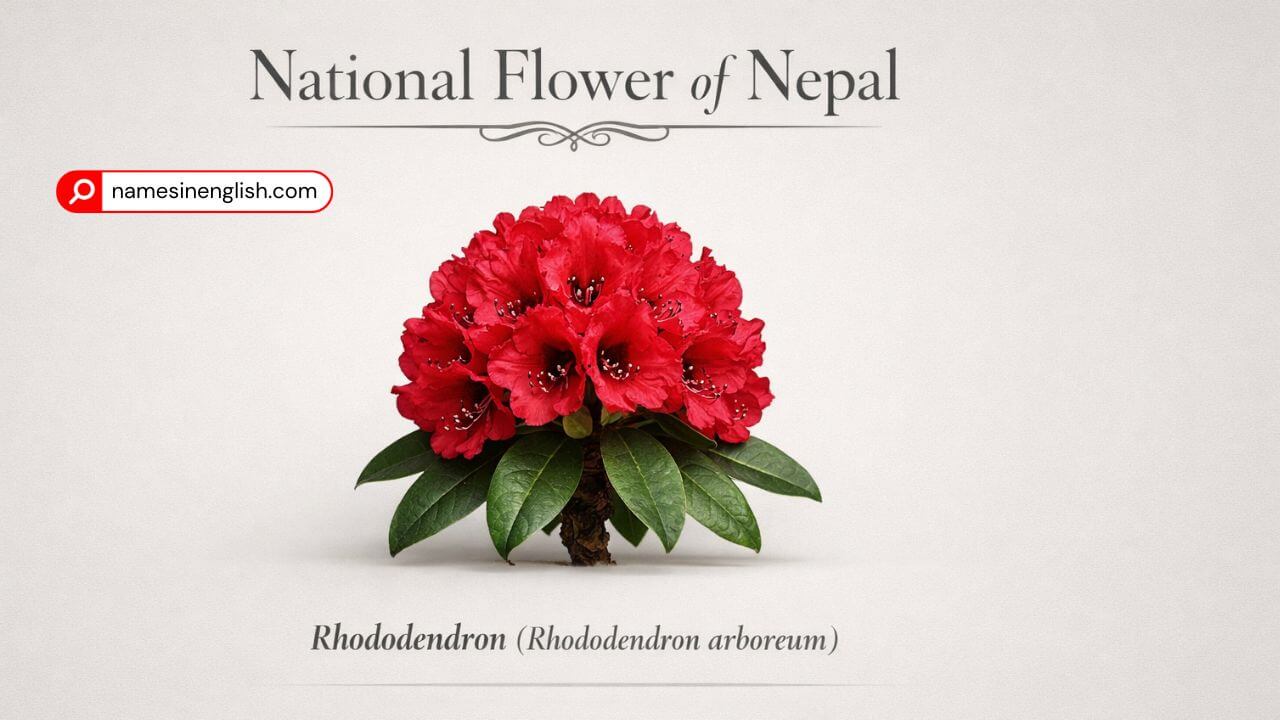
Lali Gurans, scientifically known as Rhododendron arboreum, was officially declared Nepal’s national flower in 1962. It represents resilience, unity, and the vibrant spirit of the Himalayan landscape. It was chosen because it grows widely across the mid-hills of Nepal, from about 1,500 to 3,600 meters in elevation. Unlike many alpine plants, it is not fragile. It thrives in cold, rugged terrain and bursts into brilliant red bloom each spring, symbolizing strength and vitality. The government recognized that this flower was already deeply rooted in rural life, local tradition, and mountain identity. Rather than selecting an ornamental or rare species, Nepal honored a flower that everyday citizens knew and cherished.
Essential Facts About Lali Gurans
| Feature | Details |
|---|---|
| Common Name | Lali Gurans |
| Scientific Name | Rhododendron arboreum |
| Family | Ericaceae |
| Native Range | Himalayan region including Nepal |
| Elevation Range | 1,500 – 3,600 meters |
| Bloom Season | March to May |
| Flower Colors | Deep red (most common), pink, white |
| Declared Nepal National Flower | 1962 |
| Ecological Role | Supports pollinators and stabilizes mountain soils |
According to the Royal Botanic Gardens, Kew, Rhododendron arboreum is widely distributed across the Himalayas and can grow into a small tree reaching up to 20 meters in height. This makes it one of the few rhododendron species that develops into a full tree rather than remaining a shrub.
Source: powo.science.kew.org
That botanical strength mirrors Nepal’s own mountainous character.
Lali Gurans in Full Bloom: A Living Crown Across the Himalayas
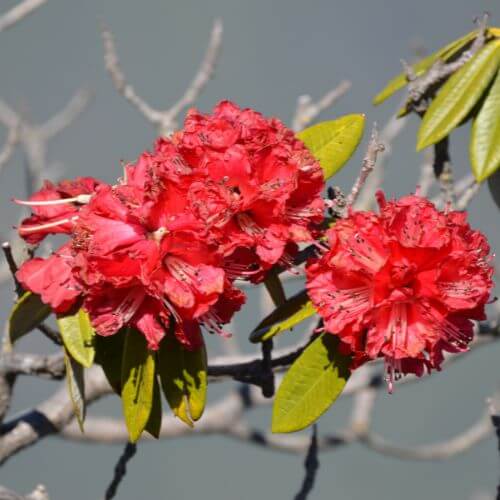
Late March in central Nepal feels different. The cold edge of winter softens. Hillsides slowly begin to blush red. By April, entire ridges look like they are painted with fire.
The bloom usually peaks between late March and mid-April at mid-elevations. Higher altitudes bloom slightly later, sometimes stretching into early May. Lower hills begin earlier.
If you are planning a trip to Nepal specifically to witness the rhododendron forests in full bloom, aim for:
- Late March for Annapurna foothills
- Early April for Langtang Valley
- Mid to late April for higher elevations
Temperature and snowfall can shift bloom timing slightly. A warmer winter often causes earlier flowering. A heavier snowfall may delay it.
Recent ecological research, such as a 2022 study on Himalayan plant life, has observed that changing temperatures are causing some species to shift their flowering cycles. Because rhododendrons are sensitive to these climate trends, it is always a smart idea to check for local updates or ask your guide for the latest trail conditions before you head out.The experience is not subtle. Walking through a blooming rhododendron forest feels immersive. Fallen petals cover trails. Sunlight filters through thick clusters of red blossoms. Bees hum constantly. The forest smells faintly sweet. Photographers often describe the light at sunrise in these forests as magical. Soft golden rays catch the red petals and create contrast against snow peaks in the background.
The Best Trekking Routes to Witness the Rhododendron Forests
Nepal offers several rhododendron-rich trekking regions, each with distinct scenery and density of bloom.
Ghorepani Poon Hill Trek
This route in the Annapurna region is arguably the most famous for rhododendron forests. The trail between Ulleri and Ghorepani passes through dense red canopies. During peak bloom, entire sections feel enclosed by flowers.
Annapurna Base Camp Route
Lower sections of this trek showcase thick rhododendron forests before the landscape transitions into alpine terrain. The contrast between blooming forests and snowy Annapurna peaks creates dramatic views.
Langtang Valley Trek
This region combines rhododendron forests with quieter trails. Bloom here often extends into late April due to slightly higher elevations.
Eastern Nepal Trails
Less crowded but equally impressive. These areas offer deeper biodiversity and sometimes white and pink rhododendron varieties alongside the iconic red.
Travel tip: Morning light between 6:30 and 8:30 AM provides the richest color saturation for photography. Afternoon sun can flatten the depth of the red tones.
Botanical Identity and Scientific Classification
Lali Gurans belongs to the genus Rhododendron, one of the largest genera of woody plants in the world. The family Ericaceae also includes blueberries and heathers. Nepal is considered one of the global hotspots for rhododendron diversity. Species range from dwarf shrubs hugging rocky slopes to tall tree-like forms. The most iconic and widely recognized species remains Rhododendron arboreum, but it is only part of a much larger botanical family present in the country.
How Many Rhododendron Species Are Native to Nepal?
Nepal is home to over 30 native rhododendron species, according to the Department of Plant Resources of Nepal and multiple Himalayan biodiversity surveys.
These species vary dramatically:
- Some grow under one meter in height
- Others develop into towering trees
- Flower colors include red, pink, white, purple, and even yellow in rare cases
The country’s sharp altitude gradients allow such diversity. From subtropical forests to alpine meadows, different species dominate different ecological zones. Botanists value Nepal as a natural laboratory for studying altitude-based plant adaptation. This makes the national flower not just symbolic but scientifically significant.
Ecological Importance in Nepal’s Mountain Ecosystem
Rhododendron forests play a stabilizing role in fragile Himalayan terrain. Their root systems anchor soil on steep slopes and reduce erosion during heavy monsoon rains. They also provide shelter and nectar for birds, bees, and insects. In some mid-hill regions, rhododendron nectar supports local honey production. According to the International Union for Conservation of Nature, Himalayan forest ecosystems are under pressure from climate change and land use shifts. Rhododendron forests help buffer these ecosystems by maintaining biodiversity and stabilizing soil layers. Without them, landslide risks could increase in certain areas. These forests are not decorative. They are functional ecological shields.
Soil, Climate, and Cultivation Requirements for High-Altitude Varieties
For horticulturists interested in cultivation, rhododendrons demand specific conditions. They prefer acidic soil with a pH between 4.5 and 6.0. Drainage must be excellent. Roots are shallow and sensitive to waterlogging. Cool temperatures are ideal. High-altitude species tolerate frost but struggle in intense heat. Shade or filtered sunlight mimics their natural forest environment. Propagation typically occurs through seeds or cuttings. However, growing high-altitude Himalayan varieties outside similar climates requires careful soil preparation and moisture control. A botanical garden in the UK successfully cultivated Himalayan rhododendrons by replicating acidic woodland conditions and using pine needle mulch to maintain soil structure. This demonstrates that with proper understanding, even alpine species can adapt.
Lali Gurans in Nepali Culture, Folklore, and Traditional Medicine
In rural Nepal, Lali Gurans is more than a forest flower. Petals are used to prepare a traditional drink believed to support heart health and relieve mild altitude discomfort. Some communities use dried flowers in herbal remedies. The flower also appears in folk songs. It symbolizes youthful beauty and fleeting spring moments. In some villages, blooming season marks celebration periods tied to local identity. School textbooks across Nepal reference it as a symbol of unity. Its red color often appears in decorative art and community events. This blend of ecological and cultural presence strengthens its role as a national emblem.
Climate Change and the Future of Nepal’s Rhododendron Forests
Recent Himalayan climate data suggests warming trends are shifting flowering altitudes upward. In some areas, rhododendrons are blooming earlier than historical averages. This shift has two consequences. First, trekkers may find bloom windows changing year to year. Second, alpine ecosystems may gradually compress upward, reducing habitat space. Responsible travel matters here. Staying on trails protects root systems. Avoiding flower picking preserves pollination cycles. Tourism brings awareness and economic benefit. But unmanaged tourism can stress fragile forests. The future of the national flower of Nepal may depend on careful ecological balance.
Practical Field Tips for Trekkers and Nature Enthusiasts
Use a polarizing filter to deepen red saturation and reduce glare. Shoot upward angles to frame blossoms against Himalayan peaks. Include local architecture or prayer flags for cultural context in your compositions. Overcast mornings often produce softer light that prevents harsh shadows. Carry spare batteries. Cold mountain temperatures drain power quickly. Small adjustments can transform a simple snapshot into a powerful image.
Lali Gurans Truly Represents the Spirit of Nepal
Nepal is a country shaped by mountains, endurance, and vibrant culture. Lali Gurans reflects those qualities. It survives harsh winters. It blooms boldly. It connects villages across elevations. Unlike rare ornamental flowers, this one belongs to the people. It grows along trails walked by farmers and trekkers alike. Its red blossoms against snow peaks feel symbolic of resilience rising from rugged terrain. That symbolism feels earned, not assigned.
FAQs About National Flower of Nepal
What is the national flower of Nepal?
The official national flower of Nepal is the Rhododendron, known locally as 'Lali Gurans.' It is a vibrant, showy blossom that thrives in the Himalayan regions and serves as a symbol of the country's beauty and resilience.
Is there a flower that is only found in Nepal?
While Nepal is home to approximately 246 species of flowering plants that are endemic (meaning they are found nowhere else in the world), the national flower, the Rhododendron, is found across other Himalayan regions, including parts of India, Bhutan, and China.
Why is the Rhododendron (Lali Gurans) considered the most beautiful flower in Nepal?
The Rhododendron is cherished not only for its stunning red, pink, and white blooms that paint the mountainsides during spring but also for its deep cultural roots in Nepalese folklore, traditional medicine, and its role as a seasonal herald for the country.
Does Nepal have other flowers that are famous?
Yes, Nepal has incredibly rich floral biodiversity. Besides the Rhododendron, flowers like the Marigold ('Sayapatri'), which is essential for festivals like Tihar, and various rare species of wild orchids are iconic symbols of Nepal’s natural landscape.
Is the Rhododendron an official national symbol?
Yes, the Rhododendron is one of Nepal’s most prominent national symbols, representing the ruggedness and natural splendor of the Himalayan landscape.
Final Thoughts on National Flower of Nepal
The National Flower of Nepal is not just a botanical fact. It is a seasonal experience, a cultural symbol, and a scientific treasure. If your goal is to witness rhododendron forests in their full glory, plan your trek between late March and April. Choose routes like Ghorepani or Langtang for immersive bloom views. Respect the forest. Photograph responsibly. Support local communities. If you are fascinated by plant diversity, cultural symbols, and the way nature reflects national identity, don’t stop at Nepal. Explore how different countries express their heritage through their official blooms. Every nation’s flower carries a story shaped by its land, history, and people. Continue your journey and discover the national flowers of other countries to see how nature unites cultures across the world.